Friday, December 26, 2025
Home Blog Page 1269

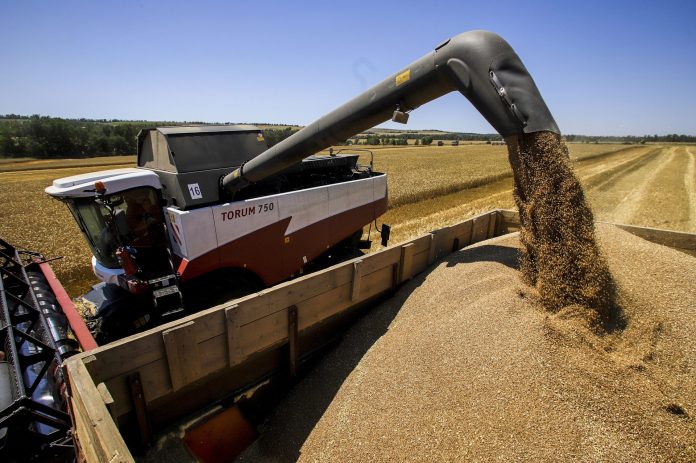
Turkey warns any grain route plans leaving out Russia bound to fail

Grain Deal

“In the grain corridor process, we believe that any initiative that isolates Russia is bound to fail, its success is of very little possibility,” the Turkish leader said after the G20 Summit in New Delhi.

Erdogan also noted that Turkey and Qatar were placing great significance on grain supplies to Africa, where food scarcity has had a serious impact.

“When meeting with [Russian Foreign Minister] Sergey Lavrov, I proposed that we do not limit ourselves to 1 million tonnes [of grain supplies to Africa], but send even more grain instead, since African countries need it,” he added.

Earlier, Russian President Vladimir Putin announced after a meeting with his Turkish counterpart, Recep Tayyip Erdogan, that his country would soon ship free grain to six African countries in a bid to alleviate food shortages on the continent.

On July 18, the Turkey- and UN-mediated Black Sea Grain Initiative, or grain deal as it is commonly called, which provided for a humanitarian corridor to enable exports of Ukrainian grain over the past year amid the Russian military operation expired as Moscow did not renew its participation in the deal. The Kremlin announced that the deal’s component on facilitating Russian grain and fertilizer exports had not been fulfilled.

On Saturday, Turkish officials told Bloomberg that Erdogan is trying to persuade G20 leaders to fulfill promises made to Moscow in line with an agreement allowing the shipment of Ukrainian grain through the Black Sea.

Erdogan has approached the heads of state of the world’s top economies on the issue of reviving the Black Sea Grain Initiative in closed-door meetings on the sidelines of the G20 summit in New Delhi, the news agency reported on Saturday.

The Turkish leader wants his counterparts to agree to facilitate the insurance of Russian food and fertilizer exports by Lloyd’s of London, and to reconnect Moscow to the SWIFT international payments system, the sources stated.

An Indian official who spoke to Bloomberg also said Erdogan has frequently brought up the grain deal in meetings at the summit.

The news outlet suggested that the Turkish president’s “efforts aren’t likely to sway Ukraine’s allies in the US and Europe.”

Kremlin Press Secretary Dmitry Peskov stressed on Saturday that Moscow remains unsatisfied with the conditions for the resumption of the grain deal that are currently being offered to it.

“For example, it’s now said that the West is allegedly ready to promise to allow access to SWIFT to the subsidiary of [Russian agricultural bank] Rosselkhozbank. But the fact is that the agreement states that access to SWIFT should be restored for Rosselkhozbank, not its subsidiary,” Peskov added.

Russia has every right to wait until the terms of the initial deal are fulfilled, he continued.
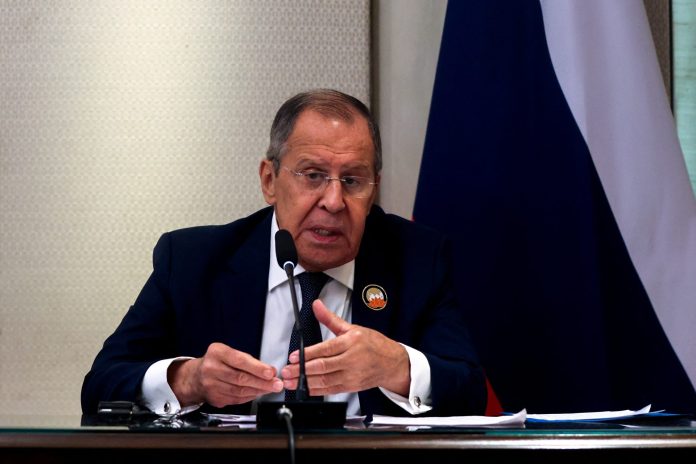
Moscow calls West’s ultimatum to Russia in G20 declaration ‘ridiculous’

“What the media write – I read different assessments [about the content of the G20 summit declaration] – [in particular] by the Financial Times, that this is the West’s failure …On the other hand, someone else, as far as I remember, [it was] Reuters [that] wrote that the West approved this piece of the joint declaration and passed it on as an ultimatum to the Russian Federation – that is ridiculous! Adults are spreading rumors that simply cannot be taken seriously,” Lavrov said indignantly.

Talking to reporters, the Russian ministers noted that the text of the declaration is available for reading.

“I think that the Western leaders you mentioned (UK Prime Minister Rishi Sunak and German Chancellor Olaf Scholz), if they consider everyone such naive people and explain to everyone that this text is a condemnation of Russia, then [ It should be noted that Russia is never mentioned there. Things are mentioned there that – I repeat it – reflect the persistent work of both the Indians and other like-minded people who did not allow the activities of the structure that was created to solve the problems of the world economy and world finance to turn into some kind of a politicized circle,” the top diplomat added.

Lavrov emphasized that Russia thanked India for “standing its watch with honor and making a significant contribution to creating the foundation for further work to democratize international economic and financial relations.”

The unified position of the Global South prevented the West from focusing the agenda of the G20 summit in New Delhi too much on Ukraine, Lavrov said.

“Largely thanks to the consolidated position of the Global South on protecting its legitimate interests, Western attempts to focus the agenda on Ukraine to the detriment of discussing the pressing issues the developing world is facing failed,” he told reporters.

According to Lavrov, as the G20 chair, India has for the first time in the history of the forum managed to consolidate representatives of the Global South. Apart from India, Russia’s BRICS allies, too, were particularly active, he added.

The G20 New Delhi Leaders’ Declaration mentions the Ukraine crisis only once “exclusively in the context of the need to resolve all ongoing conflicts globally” in a manner consistent with the purposes and principles of the UN Charter, Lavrov stressed.

Taking into consideration the new centers of global development, the West will be unable to maintain its dominance and hegemony, Lavrov stated.

“The West will not be able to maintain its hegemony, given that new centers of global development emerged objectively a long time ago and are gaining strength,” the minister said.

Lavrov added that in the summit’s final declaration, “a very healthy solution was found regarding the need to achieve a fair and equitable balance of interests.”

Lavrov stressed the importance of the West accurately assessing the outcomes of the G20 summit, taking into account the perspectives of developing countries.

“The most important thing at the end of this summit, given the rather serious, turning-point changes in the approaches of the developing world, is that the West draws the right conclusions from what we approved here and from what it saw in the actions of developing countries,” he continued.

The minister stated that the methods announced by the Indian side hosting the summit “mark the beginning of a very important trend – a transition from agreeing on some papers that are then not fulfilled, to the obligations will still have to be fulfilled.” And the developing countries at this summit were much more consolidated and persistent in promoting their fair demands,” he underlined.

At the same time, Lavrov stressed that “no one advocates that these demands be implemented to the detriment of the West.”

“We support the G20. It is, after all, a representative structure comprised of countries accounting for roughly 80% of the global economy, and everyone is interested in cooperating. In working honesty, seeking a balance of interests, and not promoting one’s own interests at the expense of the interests of others,” he underscored.

Saudi envoy submits credentials to Iran foreign minister

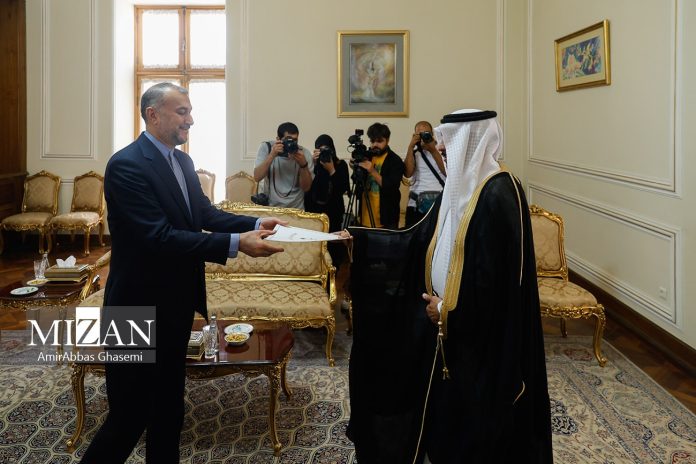
Saudi Arabia’s first ambassador to Iran since the resumption of diplomatic relations arrived in Tehran on Tuesday and held a meeting with the Iranian foreign minister on Sunday.

A Saudi Foreign Ministry statement quoted Anzi as saying that the country’s leadership recognizes the “importance of strengthening ties, increasing engagement… and taking the (relationship) to broader horizons.”

Iran’s new Ambassador to Saudi Arabia Alireza Enayati arrived in Riyadh on Tuesday to start his highly-anticipated diplomatic mission. He was welcomed by the officials of the Ministry of Foreign Affairs of Saudi Arabia and his colleagues at the Embassy of the Islamic Republic of Iran.

Back in March, Iran and Saudi Arabia agreed to a Chinese-brokered deal to revive relations after the ties were severed in 2016.

Iran officially reopened its embassy in Riyadh in June, followed by its consulate in Jeddah and its representative office with the Organization of Islamic Cooperation.

The Saudi embassy in Tehran and its consulate in Mashhad have also resumed operations.

Last month, Amir-Abdollahian visited Saudi Arabia, where he held “frank and fruitful” talks with Crown Prince Mohammed bin Salman.

UN cautions Afghanistan meth trade increases as Taliban clamps down on heroin

“The surge in methamphetamine trafficking in Afghanistan and the region suggests a significant shift in the illicit drug market and demands our immediate attention,” said Ghada Waly, executive director of the U.N. Office of Drugs and Crime (UNODC).

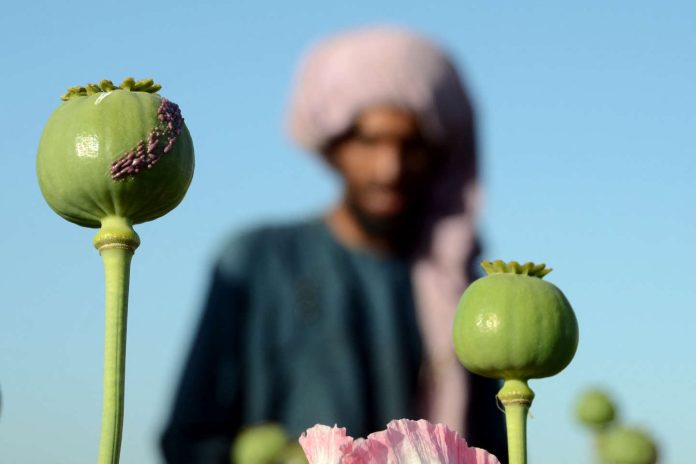
The Taliban, which regained power in August 2021, announced a ban the following April on the production of narcotics in Afghanistan, the world’s main opium producer. Taliban officials say its security forces are clamping down on Afghan poppy farmers and destroying crops.

While heroin trafficking has slowed, the UNODC announced in a statement, meth trafficking “has intensified since the ban”.

Meth seizures in and around Afghanistan jumped 12-fold in the five years through 2021. Between 2019 and 2022, nearby countries such as Iran and Pakistan also reported increased seizures. Countries as far away as France and Australia have reported seizing methamphetamine that likely originated in Afghanistan, it added.

The UNODC said much of the meth from Afghanistan was made with pre-cursor ingredients such as those found in some cold and flu medication.

Afghanistan is home to the ephedra plant, which can be used to make methamphetamine, but the UNODC said the quantities needed to produce the drug and the risk of unreliable crops meant that Afghanistan’s production did not depend on the plant alone.

“Common cold medications and industrial-grade chemicals are more efficient and cost effective for the manufacture of methamphetamine and thus pose a far bigger threat,” the UNODC added.

Turkey’s Erdogan, Egypt’s Sisi meet in person, 1st in decade

Erdogan Sisi

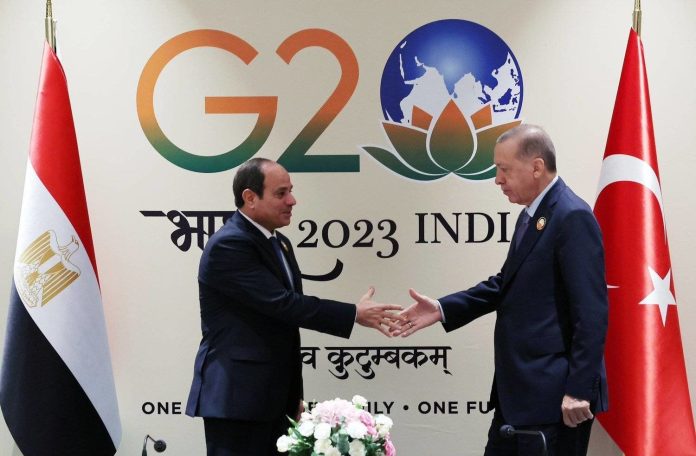
Images broadcast live by Turkish television channels showed the two leaders held talks, accompanied by several members of their delegations. Erdogan and Sisi have discussed bilateral ties and energy cooperation between Turkey and Egypt, as well as regional and global issues.

“The meeting addressed bilateral relations between Turkey-Egypt, efforts to increase trade volume, new cooperation in the field of energy and regional and global issues,” Ankara’s directorate of communications also said in a statement.

It added: “Pointing out that relations have entered a new era with the mutual appointments of ambassadors, President Erdogan expressed his belief that bilateral relations will reach the level they deserve as soon as possible.”

In July, after a decade of strained relations, Egypt and Turkey took significant steps toward improving their diplomatic ties by mutually assigning ambassadors to their respective capitals.

Also, the directorate stated: “Emphasizing that the Egyptian administration’s support to Turkish investors and companies is essential, President Erdogan stressed that they attach importance to reviving cooperation in the fields of LNG, nuclear energy, culture and education.”

Ties between Egypt and Turkey have been strained since Egypt’s army, led by Sisi, ousted Muslim Brotherhood President Mohammed Mursi, a close ally of Erdogan, in 2013.

Cairo designates the Muslim Brotherhood as terrorist organization. Erdogan’s AK Party supported Mursi’s short-lived Egyptian government. Many Brotherhood members and their supporters have fled to Turkey since the group’s activities were banned in Egypt.

The two countries also clashed over maritime jurisdiction and offshore resources, as well as differences in Libya, where they backed opposing sides in the civil war.

After trading insults and accusations for years, Ankara and Cairo started softening their public rhetoric towards one another in 2021.

Erdogan and Sisi agreed on the immediate start of upgrading diplomatic relations and to exchange ambassadors in May.

Armenia says ready for ‘urgent’ talks with Azerbaijan

Pashinyan Aliyev

According to a readout of Pashinyan’s phone call with French President Emmanuel Macron on Saturday, the prime minister lamented the “deepening humanitarian crisis in Nagorno-Karabakh.”

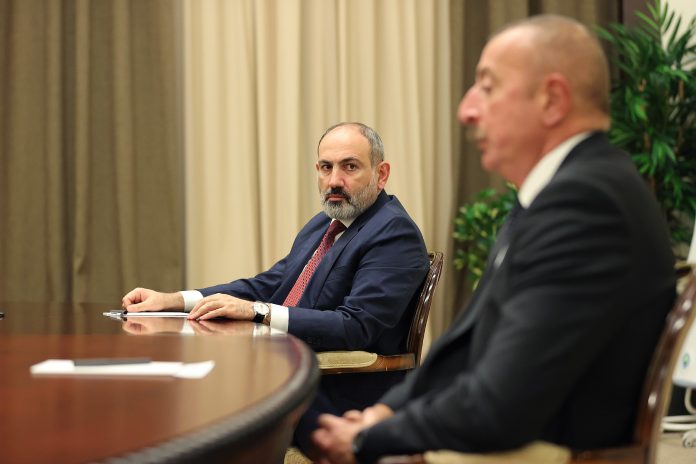
During the conversation, however, Pashinyan “expressed readiness to hold urgent discussions with the president of Azerbaijan [Ilham Aliyev] aimed at reducing tensions,” while pledging to resolve the disagreements diplomatically.

At the same time, Pashinyan also claimed that the current humanitarian crisis was caused by “the illegal blocking of the Lachin Corridor [and] the accumulation of Azerbaijani troops around Nagorno-Karabakh.”

Baku has repeatedly denied accusations that it is blocking this crucial road, which serves as the only link between the contested region and Armenia.

Pashinyan’s pledge comes after the two countries traded barbs on Thursday over the tensions in the region, which resulted in clashes last week that left several Armenian service members dead.

Also on Saturday, ethnic Armenian authorities in Nagorno-Karabakh agreed to let in aid shipments from Baku-held territory for the first time in decades, in return for the restoration of road links to Armenia.

The moves – initially reported by Armenia’s Armenpress state news agency and confirmed by Baku – appear at least partly to grant Azerbaijan’s decades-old demand to restore transport links between Azeri government-held territory and the province, which broke free of Baku’s rule in the 1990s.

Armenpress cited Karabakh authorities as saying that they had “decided to allow access of the Russian goods to our republic through the town of Askeran,” referring to a Karabakh town close to the frontline with Azerbaijan.

“At the same time, an agreement has been reached to restore humanitarian shipments by the Russian peacekeepers and the International Committee of the Red Cross along the Lachin Corridor,” the Armenpress report added, referring to the area through which the road linking Karabakh to Armenia passes.

It reported the move was driven by “severe humanitarian problems” in the blockaded region.

Hikmet Hajiyev, a foreign policy advisor to Azerbaijani President Ilham Aliyev, confirmed to Reuters that both routes would be opened simultaneously, while an Azerbaijani checkpoint on the road to Armenia would stay in place. He restated Baku’s longtime position that the Karabakh separatist authorities must dissolve and disarm.

The two Caucasian nations have been embroiled in a conflict over Nagorno-Karabakh since the late 1980s, when the predominantly ethnic Armenian region moved to break away from Azerbaijan and join Armenia. With the Soviet Union on the verge of collapse, tensions erupted into a major war in the early 1990s that claimed thousands of lives. The fighting ended with the signing of a ceasefire in 1994, although fighting has broken out sporadically since.

One of the bloodiest clashes – which is often referred to as the Second Nagorno-Karabakh War – took place in 2020 and resulted in Azerbaijan taking control of a significant amount of territory. The hostilities ended in a Russia-mediated ceasefire.

Earlier this year, however, both sides signaled a readiness to end the long-running territorial dispute. In May, Pashinyan and Aliyev confirmed that they were prepared to normalize relations on the basis of “mutual recognition of territorial integrity.”

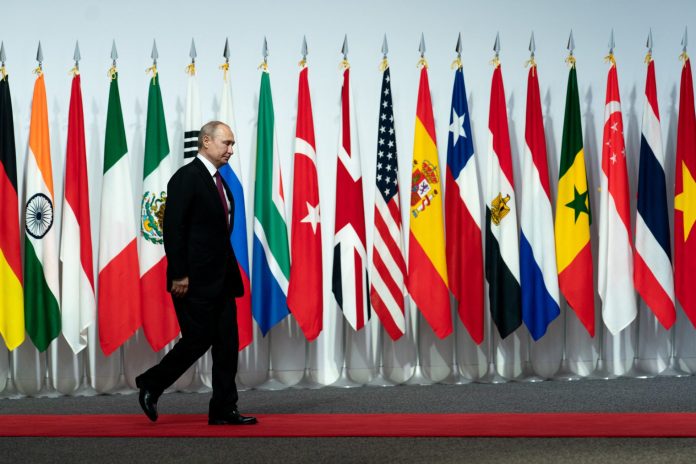
Putin would not be arrested in 2024 G20 meeting: Brazil

Vladimir Putin G-20

Interviewed on the sidelines of the G20 meeting in Delhi by news show Firstpost, Lula said Putin would be invited to next year’s event, adding that he himself planned to attend a BRICS bloc of developing nations meeting due in Russia before the Rio meeting.

“I believe that Putin can go easily to Brazil,” Lula stated.

“What I can say to you is that if I’m president of Brazil, and he comes to Brazil, there’s no way he will be arrested.”

The International Criminal Court issued an arrest warrant against Putin in March, accusing him of the war crime of illegally deporting hundreds of children from Ukraine. Russia has denied its forces have engaged in war crimes, or forcibly taken Ukrainian children.

Putin has repeatedly skipped international gatherings, and was not present at the G20 get-together in Delhi, sending Foreign Minister Sergei Lavrov.

Brazil is a signatory to the Rome Statute which led to the founding of the ICC. Lula’s office did not immediately respond to a request for comment.

On Saturday, the G20 nations adopted a consensus declaration that avoided condemning Russia for the war in Ukraine but called on all states not to use force to grab territory.

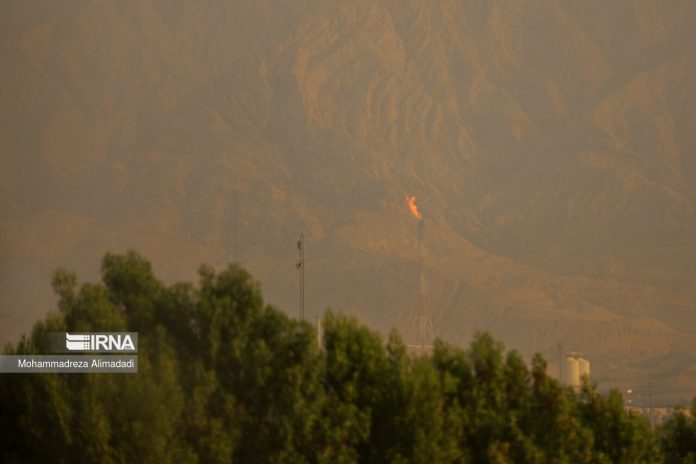
Gas leak at Iran refinery leaves one dead, two injured

Iran Gas Oil

The incident happened early Sunday when gas leaked from the reactor of a refinery at the South Pars Gas Complex in Asaluyeh along the Persian Gulf.

Three workers of the overhaul section were gassed during the incident; one of them died and the other two were taken to hospital and are currently under treatment.

Iran’s Shah Cheragh terror attack suspects go on trial

Shiraz Shah Cheragh Terror Attack

Three of the defendants along with their attorneys, the next of kin of those martyred in the attack and eye witnesses to the terror incident were present at the trial held in the city of Shiraz in southern Fars province.

At the start of the court session, the provincial public prosecutor’s representative read out the indictment while elaborating on “the divisive plots hatched by the ISIS terrorist group aimed at disrupting security in the Muslim world and, in particular, inciting unrest in Iran.”

Defendant number one Rahmatollah Nourosov alias Aslam is of Tajik nationality and, by his own confession, a member of the ISIS.

He was charged with Moharebeh (waging war against God), corruption on earth and membership in the ISIS terror group with the intention of acting against national security.
The other two defendants were charged with being accessories to the crimes and colluding with the ISIS to act against national security.

While making confessions in the court session, Nourosov pleaded guilty to the charges leveled against him.

Proceedings were adjourned until the next court day.

The Shah Cheragh holy shrine in Shiraz in Fars province came under a terrorist attack in August 2023. It was the second such attack on the shrine in less than a year.

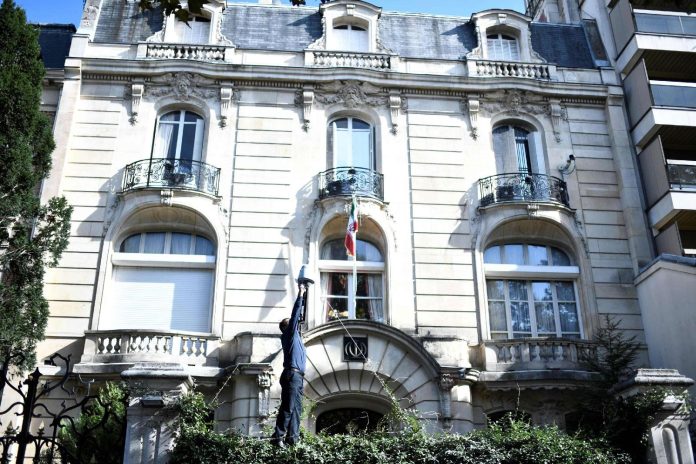
Iran Paris embassy operating normally after attack: Official

Iran Embassy France

The announcement was made by a spokesperson for the embassy on Saturday after members of anti-Iranian counterrevolutionary groups attacked the building’s consular section.

They assailants burnt tires in front of the entrance to the building’s consular section, inflicting some minor damage on its door.

“The fire was put out after a few minutes following the presence of the police and fire brigade,” said the spokesperson who was not named.

The spokesperson added, “Necessary steps have been taken with the French Foreign Ministry as well as police officials to launch a judicial probe into the incident and identify those behind this criminal act.”

According to the spokesperson, all those who embarked on “the cowardly attack” on Iran’s diplomatic building in the French capital will be prosecuted to the full extent of the law.