Thursday, December 25, 2025
Home Blog Page 1254

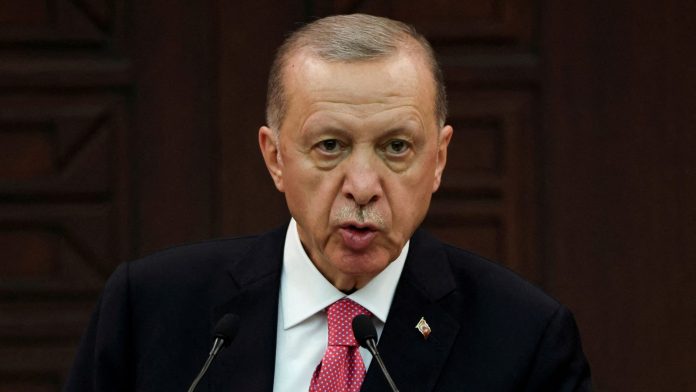
Erdogan says Turkey never needed help, support from EU

Recep Tayyip Erdogan

When asked whether Turkey was ready to abandon the process of joining the European Union, Erdogan commented that Istanbul attaches great importance to EU decisions but that it’s not wholly reliant on the body.

“If the EU would take such a step forward by making such a decision, we would welcome it,” he stated.

“Turkey has been lingering at the doorstep of the EU for the last five decades, and we were always self-sufficient. We never relied on contributions or support we received from the EU, so it’s not even necessary for us.”

Turkey signed the Ankara Agreement, or the Agreement Creating an Association Between the Republic of Turkey and the European Economic Community (EEC, the predecessor of the EU), in 1963 and applied for full membership in 1987. The negotiations on Turkey’s accession to the EU began in 2005; however, talks stalled over the bloc’s concerns about human rights violations in Turkey.

In an earlier scathing report, the European Commission outlined Turkey’s steps toward membership was on uncertain ground for what officials deemed “serious backsliding in the areas of democracy, rule of law, fundamental rights and the independence of the judiciary.”

In turn, Turkey cited the report as being riddled with “unjust accusations and prejudices.” Erdogan subsequently admitted that Ankara could part ways with the EU.

A dream comes true! Iranian boy meets Ronaldo

Ronaldo Adrian

Adrian, whose crying outside Tehran’s Espinas Palace hotel for not being able to meet Ronaldo went viral, was noticed by the Saudi club’s officials and was taken to the decorated player’s room.

Ronaldo had a friendly chat with Adrian, gave him a shirt with his autograph on it and posed for a picture.

Persepolis will play against Al-Nassr in the Asian Football Confederation (AFC) Champions League later on Tuesday at the 100,000-seater Azadi stadium behind closed doors because of a ban by the AFC over licensing regulations.

Iran says won’t cave into US sanctions

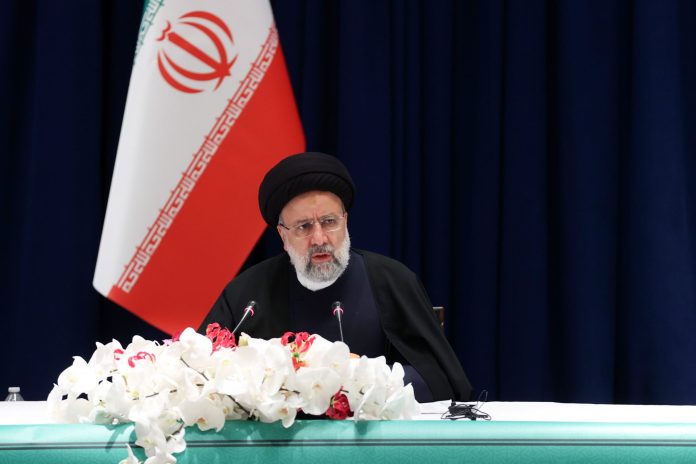
After arriving in New York to attend the 78th United Nations General Assembly, the Iranian president held a meeting with a group of American media executives and editors on Monday.

In the meeting, the senior managers of NBC, Wall Street Journal, Washington Post, Newsweek, Politico, Reuters and NBC asked questions about the exchange of prisoners, the new approach of the Iranian government in the development of the neighborhood policy, the Joint Comprehensive Plan of Action (JCPOA) negotiations and the lifting of sanctions, the normalization of the relations of some Arab countries with the Zionist regime, and the claim that Iran sold weapons to Russia in the Ukraine war.

At the beginning of the meeting, Raisi asked the present media to observe the requirements of professional media work in knowing and expressing the facts of Iranian society, the president’s official website reported.

Regarding the release of Iran’s blocked financial resources and the exchange of prisoners, the president described the exchange of prisoners between Iran and the US as a humanitarian act, stating that the blocked assets belong to the Iranian people and will be used to meet their needs and said, “Certainly, any step taken to fulfill the commitments will be a confidence builder for us.”

Regarding the JCPOA negotiations and the lifting of sanctions, Raisi stated that the repeated violation of commitments by the Americans has created an atmosphere of distrust in the negotiations, and referring to the International Atomic Energy Agency’s acknowledgment in its 15 quarterly reports that Iran’s peaceful nuclear activities have no deviation.

He stated, “During the nuclear agreement, the only party that fulfilled its commitments was the Islamic Republic of Iran, and the United States and European countries violated their commitments and did not fulfill their commitments.”

The president continued, “Now it is the Americans who should ask their government why, despite the implementation of commitments by Iran and the non-deviation of nuclear activities, the policy of pressure and sanctions against Iran continues?”

Raisi described the development and promotion of relations with neighboring countries as one of the central policies of his government and emphasized, “What caused some disruptions in the relations of regional countries was the intervention of outsiders, including the United States.”

“The presence of Americans in the region will not create security in any way, just as the normalization of relations with some Arab countries by the Zionist regime will not create security for this regime,” the Iranian president warned.

Raisi added that if the Americans are looking for a real solution to the Palestinian issue, after 70 years of occupation, infanticide and destruction by the Zionist regime, they should turn to democracy and leave the right to self-determination to the Palestinian people.

“Referring to the votes of the Palestinian people, including Muslims, Christians and Jews living in Palestine to determine the future of this country, which was first proposed by the wise Leader of the Islamic Revolution, will definitely end the occupation and oppression of the Palestinian people.”

He also mentioned the issue of last year’s riots in Iran and said, “What you should know is that America and some western countries miscalculated that if they manage a part of the riots in Iran, they will achieve their goals, unaware that the Iranian nation did not go along with the rioters and disturbers of the order and security of the country, and this conspiracy of America and some European countries failed and another victory was registered in the name of the Iranian nation.”

Referring to the failure of the policy of maximum pressure and sanctions against Iran, the president stated, “My suggestion to you, American media managers, is to ask your officials to reconsider the imposition of sanctions against the Iranian nation, because the nation Iran is determined to overcome its problems and will not give in to sanctions.”

Raisi called issues such as hijab, human rights and Iran’s nuclear activities cited by the US and the West as mere excuses to attack the Islamic Republic of Iran as an independent country and said, “Last year, more than a thousand Americans were killed by the police forces of this country, and in recent days, a pregnant woman was killed by the American police just because of the suspicion of robbery. Why is the American media silent about these crimes?”

“Why are the years of assault on the rights of people of color, the banning of girls wearing hijab from studying in France, the existence of hundreds of nuclear warheads in the arsenals of the Zionist regime, and 20 years of killing and destruction by the US in Afghanistan under the title of human rights, not questioned by the American media?” he asked.

Referring to the repeated accusations against Iran regarding the sale of arms to Russia in the Ukraine war, Raisi clarified that despite Iran’s declaration of readiness to accept convincing documents in this regard, no documents have been presented by the Ukrainians.

“Iran’s relations with Russia in various political, economic and defense fields started years before the Ukraine war, and any interaction and exchange between the two countries in the field of defense is also related to before the Ukraine war.”

Emphasizing the readiness of the Islamic Republic of Iran to mediate between Ukraine and Russia and end this war, the president stressed, “Instead of fanning the flames of this war to sell more weapons, the Americans should try to end it.”

He considered truth-seeking and stating the facts as essential for the professional work of the media and added, “During the disturbances of last year in Iran, more than 136 thousand lies were produced in the media against Iran within 48 weeks, which cannot be justified by any standard.”

Russia and China tout cooperation ahead of Putin’s expected visit

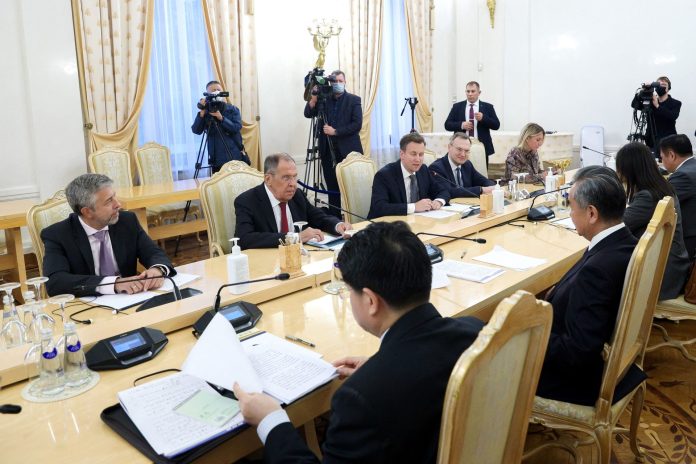
The two countries would continue “well-coordinated work” at the UN General Assembly (UNGA), which opened a new session this week, and other summits and high level meetings, Russian Foreign Minister Sergey Lavrov told visiting Chinese counterpart Wang Yi in opening remarks.

In his meeting with Lavrov, Wang said China and Russia should work together on the formation of a “multi-polar world,” adding that the two countries bear a “special responsibility” in terms of maintaining global strategic stability and peace.

“In the face of unilateral actions, hegemony and confrontation, China and Russia should … continue to strengthen strategic cooperation … and push forward the development of global governance in the direction of greater fairness,” Wang added, according to a readout from China’s Foreign Ministry, using terms Beijing typically employs to refer to actions from the US.

The readout appeared to allude to the expected visit from Putin to China next month, with the Chinese ministry quoting Lavrov as saying Russia would “prepare for the next high-level exchanges between the two countries.”

Russia’s war in Ukraine has shifted the self-declared “no limits” partnership between the two — making sanctions-hampered Moscow increasingly reliant on Beijing as its most powerful economic and diplomatic partner.

China has also attempted to frame itself as a potential peace broker and neutral party in the conflict, even as it provides an economic lifeline for Russia and has not called for Moscow to cease its onslaught or withdraw troops.

In a statement Monday, Russia’s Foreign Ministry said Lavrov and Wang agreed that Moscow’s interests must be considered in resolving the conflict in Ukraine.

“The parties discussed in detail the current state of affairs in Ukraine, noting the futility of attempts to resolve the crisis without taking into account interests and, especially, without the participation of Russia,” the statement added.

China’s summary only presented its position as “consistently adhering” to the direction of peace talks and noted its pledge to “play a constructive role” in a “political settlement of the crisis.”

Iran President to Guterres: UN tasked to stand up against greedy powers

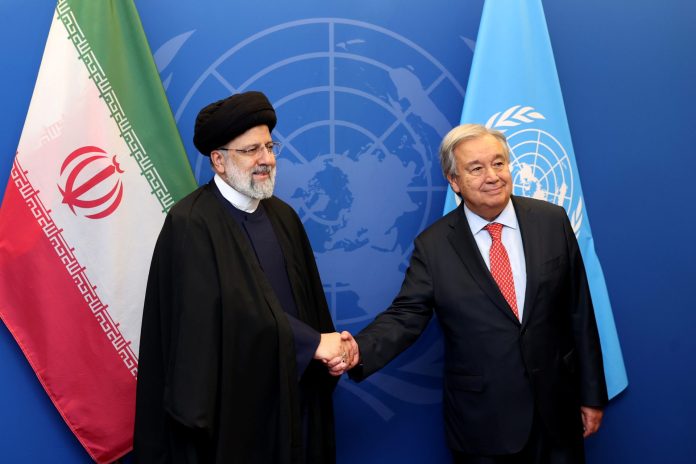
Ebrahim Raisi and António Guterres

President Raisi, who met the UN chief on the sidelines of the 78th United Nations General Assembly (UNGA) Session on Monday, expressed concerns over the social and political situation in crisis-hit and war-wracked countries, including Afghanistan, Yemen and Syria, as well as the separatist moves in Africa.

He said Iran is ready to help the UN reverse the trend and push for prevalence of peace and security in the world and prevent oppression of nations by the big powers.

Raisi also sought to dismiss mainstream Western media reports on Iran, saying the “Islamic Republic is a rare example of abiding by gender equality in the world” and cited the presence of Iranian women in various scientific, sports, social and cultural fields as evidence.

Meanwhile, Guterres expressed his willingness to promote cooperation between the United Nations and Iran.

He also welcomed the recent resumption of ties between Iran and Saudi Arabia, as two heavyweights in the region, and appreciated Tehran’s role in efforts to put an end to the crisis in Yemen.

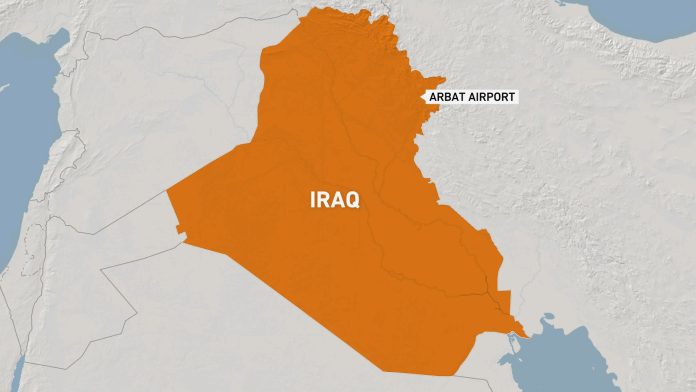
At least 6 killed in drone attack on airport in Iraq’s Kurdish region

Iraq’s Kurdish region

The Arbat airport, located 50km (30 miles) to the east of Sulaimaniya, has been used by the “anti-terrorism” combat apparatus that is part of Sulaymaniyah security forces.

“Whether all the victims are from the anti-terrorism apparatus remains to be known,” Al Jazeera’s Mahmoud Abdelwahed said.

The airport was used for agricultural purposes in the past.

Two members of the Kurdish security forces were wounded in the attack and were rushed to a military hospital in Sulaimaniya under tight security, a police source told Reuters.

Abdelwahid added that Turkish drones have been hovering in the area for the past three days.

“The Sulaymaniyah province is home to anti-Turkish and anti-Iran groups, and both these countries have been conducting air raids in and around Sulaymaniyah,” Abdelwahid said, adding that we still do not know who is behind the attack.

The attack comes on a day when Iraq’s federal government gave the administration of the semi-autonomous Kurdish region more funding to allow it to pay salaries.

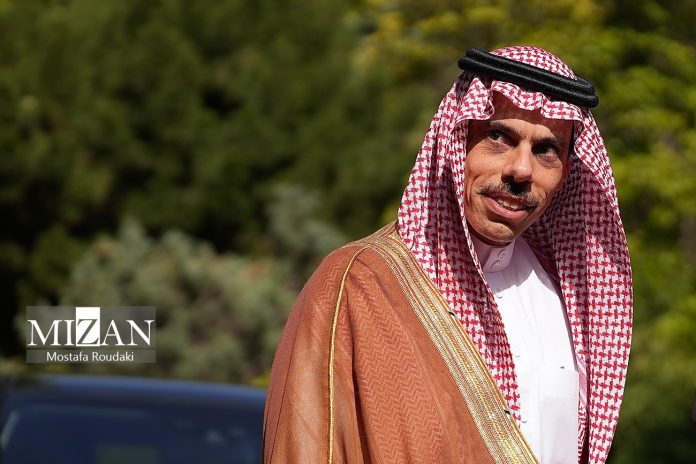
Saudi Arabia says two-state solution in Palestine must return to forefront

Faisal bin Farhan Al-Saud

“The two-state solution must return to the forefront,” he said in remarks to state TV.

The comments from the Saudi minister come ahead of the United Nations General Assembly this week in New York, where world leaders will gather for a week of meetings and speeches to the international body.

Earlier this month, a Palestinian delegation travelled to Saudi Arabia for talks to discuss the Palestinian Authority’s (PA) role in a possible normalisation deal between Riyadh and Israel.

Palestinian sources with knowledge of the trip told Middle East Eye that PA officials would discuss issues raised by the kingdom without presenting specific demands.

A source told MEE that some elements within the PA are reconsidering their previous approach, in which they rejected similar normalisation deals between Israel and several Arab countries that were brokered under the Donald Trump administration.

“They think normalisation is happening with or without us, so they may as well benefit from it, at least politically and financially,” the source added.

For months, the US has been leading an effort to strike an agreement between Saudi Arabia and Israel that would see them normalise relations – similar to the agreements struck between Israel and the United Arab Emirates, Bahrain and Morocco.

Saudi Arabia has held out on the offer to normalise ties with Israel since 2002, sticking to the Arab Peace Plan, which calls for an independent Palestinian state in the West Bank and Gaza Strip, with East Jerusalem as its capital.

In exchange for normalising ties, Saudi Arabia also wants security guarantees from the US, help in developing a civilian nuclear programme, and fewer restrictions on US arms sales.

An Arabic media report over the weekend stated that Riyadh was “pausing talks” with Israel due to the far-right government in Israel currently led by Prime Minister Benjamin Netanyahu.

The US State Department offered a quick and firm denial of the report on Sunday, stressing on X: “Talks are ongoing, and we look forward to further conversations with both parties.”

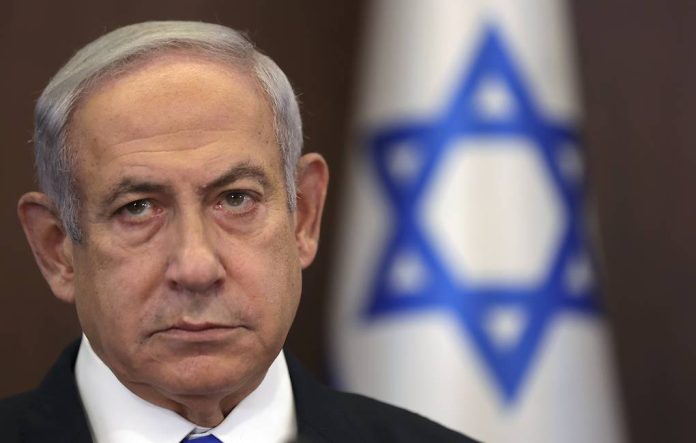
Israeli officials warn Netanyahu ‘dismantling’ military

Benjamin Netanyahu

The letter, signed by 51 former officials from the Israeli military, Mossad, Shin Bet, police, defence ministry and National Security Council, claimed Netanyahu was “leading acts aimed at harming the Israeli judicial system and the Supreme Court in a way that will nullify the independence of the Israeli judiciary and subordinate it to Netanyahu and his fellow politicians.”

Netanyahu’s planned judicial overhaul has split opinion within Israel’s political establishment and triggered widespread protests since it was first floated in January.

Advocates, including far-right members of Netanyahu’s government, say the reform-stripping power from a secular-leaning court system is overdue in a country that has swung more conservative and religious in recent years.

Opponents fear the changes may lead to a more authoritarian government by removing judicial oversight of decisions made by the government and ministers.

Many elite members of Israel’s military have strongly opposed the judicial overhaul on the grounds it weakens Israeli security.

In August, the Israeli military intelligence unit, known as Aman, sent four letters to Netanyahu, warning that his judicial overhaul would damage Israeli deterrence against Iran and Hezbollah, and estimated that the likelihood of escalation is the highest it has been since the 2006 war in Lebanon.

Meanwhile, thousands of soldiers from all military units – air force, navy, infantry, cyber, intelligence, and other special units – have announced they will not show up for duty or training. Some of the most vocal have been skilled combat pilots, helicopter pilots and drone operators.

In their letter, the 51 officials said Netanyahu’s efforts were “transforming the State of Israel from a democracy based on the principles of our Declaration of Independence to an autocracy that harms Israel’s national strength through the dismantling the IDF, its defense establishment, economy, financial stability, and risks the social fabric of the people and the State of Israel”.

Among the dozens of signatories to the letter are former defence minister and Israeli military chief of staff, Moshe Ya’alon; former Mossad chief, Tamir Pardo; and former prime minister, defence minister, and Israeli army chief of staff, Ehud Barak.

Pardo, who was in charge of Mossad from 2011 to 2016, made headlines in September when he said that Israel is enforcing an apartheid system against Palestinians in the occupied West Bank, equating the treatment of Palestinians as similar to the racial separation implemented in South Africa, a system that ended in the 1990s.

The letter comes as Netanyahu set off for a visit to the US. His first stop is in San Jose, California. He is then expected to travel to New York to address the UN General Assembly and meet with US President Joe Biden.

The potential meeting is being carefully watched because of tensions between Israel and the US over the judicial overhaul and Netanyahu’s inclusion of far-right ministers in his cabinet. Biden stated in an interview with CNN this summer that the current iteration of the government in Israel is the most extreme he has seen since he started working with Israeli prime ministers.

Netanyahu has yet to secure a visit to the White House, and two far-right members of his coalition, Itamar Ben Gvir and Bezalel Smotrich, have so far been snubbed by the Biden administration.

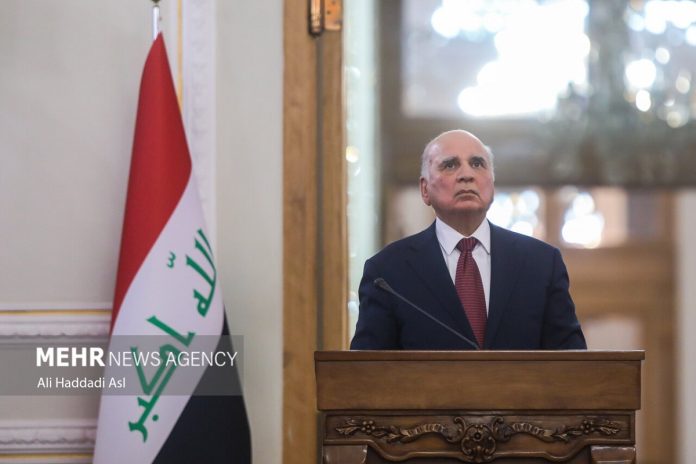
Iraq says Kurdish armed groups handed over heavy weapons, will be relocated to camps

Iraq’s foreign minister Fuad Hossein

Speaking on Monday, Hussein said the armed groups and their families will be relocated to five camps, which have been set up in Iraq’s Kurdistan region.

The top Iraqi diplomat reiterated his country’s commitment to the security agreement with Iran, stating the Kurdistan Regional Government (KRG) has taken necessary measures in accordance with Baghdad’s agreement with Tehran.

Stressing that Iraq pursues peaceful approaches based on dialogue and respect for its neighbors, Hussein added Baghdad opposes any act of violence against its national sovereignty.

Back in March, Iran and Iraq concluded a security agreement under which the Iraqi government has promised to disarm terrorist and separatist groups based in the Kurdistan region by September 19, vacate their military barracks, and transfer them to the camps established by the Baghdad government.

Iran’s Defense Minister Brigadier General Mohammad Reza Ashtiani said on Sunday that Tehran will not extend the ultimatum given to Iraq to disarm Kurdish separatist groups along the border with Iran, warning Baghdad of an “eleventh-hour decision” on the matter.

“We do not have any extension [to the deadline]. We will act in due time in accordance with the agreement made [with Iraq],” he added.

Reports say Iraq’s national security advisor, KRG minister of interior, and special representative of the United Nations’ secretary general for Iraq have met in Erbil, the capital of the Kurdistan region, and discussed the implementation of the security pact.

Iraqi media also reported on Saturday the country’s border guards have managed to gain full control over an area on the Kurdistan region’s border with Iran and drive out terrorist groups following fierce clashes.

Iraq’s Shafaq News Agency cited the country’s Border Guard Forces as saying in a statement late on Friday that they had seized border points in Erbil Province and raised Iraq’s national flag in the area after clashes with the “outlaws.”

The security agreement between the two countries came after anti-Iranian terrorist groups residing in Iraqi Kurdistan region increased their malign activities, especially in border areas.

Responding to their activities, Iran’s Islamic Revolution Guards Corps (IRGC) has launched several rounds of strikes against their positions since September 24 last year, vowing to continue the attacks until the groups are disarmed.

Iran has, on countless occasions, warned Iraqi Kurdistan’s local authorities that it will not tolerate the presence and activity of terrorist groups along its northwestern borders, saying the country will give a decisive response should those areas become a haven for anti-Tehran terrorists.