US Defence Secretary raises concerns over conflict spreading
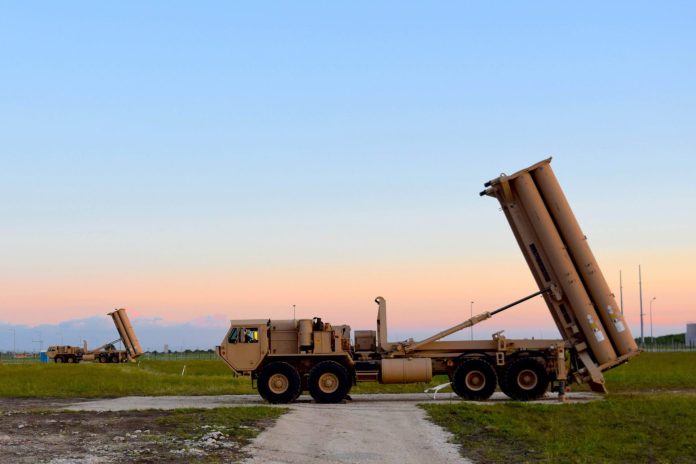
US Defence Secretary Lloyd Austin has raised concerns over the current war spreading, and escalating around the region.
“We’re concerned about potential escalation. In fact, what we’re seeing … is the prospect of a significant escalation of attacks on our troops and our people throughout the region,” Austin told ABC’s “This Week” program.
“If any group or any country is looking to widen this conflict and take advantage of this very unfortunate situation … our advice is: don’t,” he added.
Rafah crossing bombed as second aid convoy enters Gaza, two wounded
A blast was heard at the Rafah crossing between Egypt and Gaza, with ambulances arriving at the scene, according to Reuters.
The bombing took place as a second aid convoy entered Gaza from the Egyptian side, an eyewitness told Reuters.
According to Hossam Bahgat, the Executive Director for the Egyptian Initiative for Personal Rights (EIPR), two Egyptians have been wounded in the attack, and an Egyptian watchtower was also destroyed.
Initial reports in local Egyptian media state that the aid still entered Gaza.
‘Drop in the ocean’: WFP chief says aid that entered Gaza so far not enough
The head of the UN World Food Program (WFP) described the situation in Gaza as “catastrophic” as only 0.002 percent of the coastal enclave’s immediate relief needs have entered so far.
Cindy McCain described the 20 aid trucks that were allowed to enter via Egypt on Saturday as a “drop in the ocean”.
Speaking on ABC’s This Week programme, McCain stated aid agencies needed secure and sustainable access to the enclave.
She added that the WFP is doing its very best to ensure aid gets to the people who need it but that Gaza was a war zone and that “things happen”.
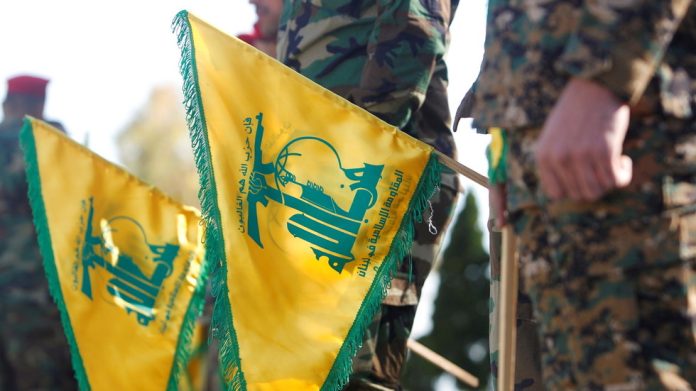
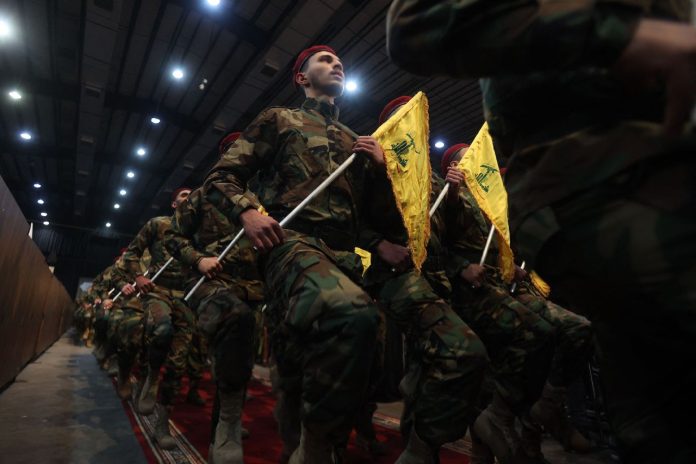
Hezbollah entering war would be devastating: Netanyahu
Prime Minister Benjamin Netanyahu warned Hezbollah against opening a second war front with Israel, saying that doing so would bring Israeli counter-strikes of “unimaginable” magnitude that would wreak “devastation” upon Lebanon.
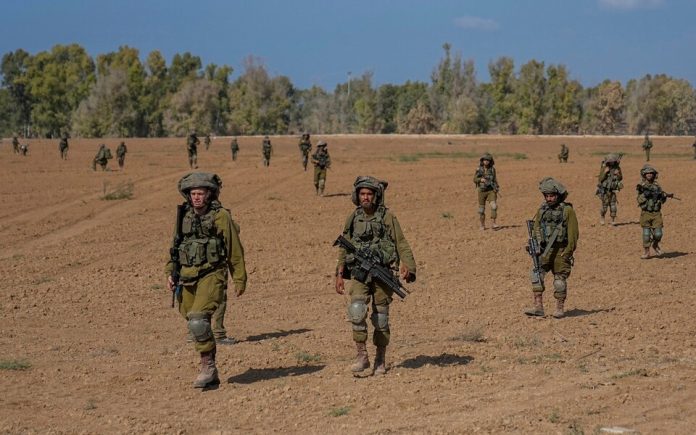
In an official transcript of a briefing Netanyahu gave Israeli commandos near the Lebanese border, he also stated: “I cannot tell you right now if Hezbollah will decide to enter the (Gaza) war fully.”
The conflict is “do or die” for Israel, he added.
‘We need fuel’: UNRWA’s Gaza director
Thomas White, director of UN’s Palestine refugee agency in Gaza, warns that fuel is the most important commodity missing from the second convoy of 17 trucks entering Gaza from Egypt.
“The key commodity for us right now is fuel. The commodities that are coming in are important – food and medicine – but they don’t include fuel,” White told Al Jazeera from the Rafah border crossing, noting that there is enough power for three extra days only, as we reported a while back.
“This fuel runs desalination plants to provide drinkable water, provides food [by powering] bakeries, allows hospitals to keep running and for our big logistics operations here, it fuels our cars and generators.”
UN agency for Palestinian refugees says it will run out of fuel in three days
The head of the UN agency for Palestinian refugees stated it will run out of fuel supplies in the Gaza Strip in three days.
“Without fuel, there will be no water, no functioning hospitals and bakeries. Without fuel, aid will not reach many civilians in desperate need. Without fuel, there will be no humanitarian assistance,” Philippe Lazzarini said in a written statement.
Gaza death toll rises to 4,651
The death toll in Gaza since October 7 has risen to 4,651 with more than 14,245 wounded, according to the Palestinian Ministry of Health in Gaza on Sunday.
The ministry has received 1,450 calls concerning missing people believed to be under the rubble, 800 of whom are children, spokesperson Dr. Ashraf Al-Qidra has confirmed.
Over 1,200 Israeli soldiers wounded since start of flare up
The Israeli military announced 1,210 members of the armed forces were wounded since the Hamas-led surprise attack on 7 October, the Israeli Channel 12 reported on Sunday.
Around 70 percent of them received treatment in emergency rooms but have been released from hospital since. At least 307 soldiers have been killed with dozens believed to be held as prisoners of war in Gaza.
Overall, around 1,400 people in Israel have been killed in the past 16 days, with more than 5,000 wounded. Around 300 people remain hospitalised, according to the Israeli health ministry.
Police have identified the bodies of 1,075 of those killed, including 769 civilians. Another 200 bodies or so have yet to be identified.
Orders to evacuate Gaza hospitals are “a death penalty” for patients: Palestinian Red Crescent
Demands by Israel for the evacuation of Gaza hospitals amount to “a death penalty for patients,” according to the Palestinian Red Crescent.
The organization announced the Israeli military issued three evacuation orders for the Al-Quds hospital on Friday.
Spokesperson Nebal Farsakh told CNN Sunday: “We do not have the means to evacuate them safely. Most of the patients are with critical injuries.”
A total of 24 hospitals, including Al-Quds, are under the threat of “being bombed at any second due to Israeli evacuation orders,” Farsakh added.
The World Health Organization has condemned “Israel’s repeated orders for the evacuation of 22 hospitals treating more than 2,000 inpatients in Northern Gaza.”
Farsakh stated her team is counting on the international community to take action ahead and “stand for humanity.”
At least 120 incubator babies at risk after Israel cuts Gaza fuel: UN
The lives of at least 120 newborn babies on incubators in Gaza’s hospitals are at risk as fuel runs out in the besieged enclave, according to the UN children’s agency.
“We have currently 120 neonates who are in incubators, out of which we have 70 neonates with mechanical ventilation, and of course this is where we are extremely concerned,” said UNICEF spokesman Jonathan Crickx.
More than 1,700 children have already been killed by Israeli attacks launched against the Gaza Strip since October 7, according to the Palestinian health ministry.
Death toll update: Nearly 5,000 in Palestine, 1,400 in Israel, 27 in Lebanon
The following death tolls in Palestine, Israel and Lebanon are accurate as of Sunday.
They are sourced from Palestinian, Israeli, Lebanese and Hezbollah officials.
Palestine
Gaza
- Killed: 4,385 (1,756+ children, 1,000 women) – Data on combatant casualties not yet available
- Wounded: 13,561
West Bank and East Jerusalem
- Killed: 90 (30 children, one woman)
- Wounded: 1,400
Israel
- Killed: 1,400 (769 civilians, 307 soldiers, 57 police officers) – Data on children and women casualties not yet available
- Wounded: 5,007 (299 hospitalised)
Lebanon
- Killed: 27 (3 civilians, 18 Lebanese fighters, 6 Palestinian fighters)
- Wounded: Data not yet available
Thirty-one mosques destroyed in Gaza by Israeli attacks
The number of mosques destroyed in the Gaza Strip since October 7 has risen to 31, Gaza’s ministry of endowments said.
In the statement quoted by Turkish and Arabic media outlets, the ministry announced that the number increased from 26 to 31 after recent Israeli attacks destroyed five more mosques in the territory.
Jenin mosque strike a “dangerous escalation”: Palestinian Foreign Ministry
The Palestinian Foreign Ministry has said it views the strike on a refugee camp in the city of Jenin as a “dangerous escalation.”
The Israeli military announced it launched an airstrike early Sunday against a mosque in the West Bank city of Jenin to thwart what it called “an imminent terror attack”.
“The Ministry views with great seriousness the bombing of the Jenin camp yesterday, and considers it a dangerous escalation using warplanes, resulting in Palestinian civilian casualties and terrorizing them, including children and women,” the Palestinian Foreign Ministry said in a statement following the air strike.
It labelled the strike as “an attempt to generalize the model of bombing the Gaza Strip to areas in the occupied West Bank.”
The ministry also criticized the international community “for its failure to move so far to stop this Israeli killing and destruction against Gaza and its people, and considers that its responses are weak, selective and biased and do not rise to the level of the extent of the genocide that the Gaza Strip is being exposed to.”
Jenin mosque death toll rises to three, total West Bank death toll increases to 90: Palestinian Health Ministry
The death toll following an Israeli raid on a mosque in the occupied West Bank has risen to three, according to the Palestinian Health Ministry.
The strike took place in a refugee camp in the city of Jenin.
Separately, following clashes in Toubas and Nablus, two people were killed, the ministry has confirmed.
This brings the total number of those killed in the occupied West Bank since October 7 to 90.
Israel to evacuate 14 communities near Lebanon border
The Israeli military said they are planning to evacuate another 14 communities close to the Lebanese border, as Hezbollah and Israel have exchanged fire in the last two weeks.
The residents will be taken to state-funded guesthouses, according to the defence ministry’s National Emergency Management Authority.
The plan was approved by defence minister Yoav Gallant.
Shortage of basic supplies is pushing Gaza to the “edge of catastrophe”: World Food Programme
Civilian lives in Gaza are being pushed “to the edge of catastrophe,” the United Nations World Food Programme (WFP) has said, citing acute shortages of food, water and medical supplies to the enclave.
The agency announced it urgently requires $74 million to sustain its emergency response in Gaza for the next 90 days.
The coastal enclave’s stores have food reserves of less than a week and the ability to replenish these stocks is “compromised by damaged roads, safety concerns, and fuel shortages,” the WFP added.
The report also cites a steady decline in food commodities such as vegetables, wheat flour, and eggs, along with a rise in their prices.
“The UN agency appealed “for the protection of vital infrastructure and the safeguarding of civilians so they can access humanitarian aid points and services.” ”
Three WFP trucks were part of the convoy of 20 aid trucks that moved through the Rafah border crossing into Gaza on Saturday. Another 40 WFP trucks are waiting at Al-Arish, Egypt, to go through the Rafah border crossing to enter Gaza, according to the report.
Israel bombs mosque in Jenin
Israeli forces have bombed a mosque in the West Bank city of Jenin, according to several Palestinian news agencies.
Videos shared on social media showed some damage to the side of al-Ansar mosque.
The Israeli military claimed it struck a compound beneath the mosque that was being used by fighters to organize attacks.
At least one Palestinian has been killed and several others wounded in the Israeli shelling, which took place in the early hours of Sunday morning.
Israeli forces previously stormed al-Ansar mosque earlier this year during the two-day aerial campaign on Jenin, which has become a centre of Palestinian armed resistance in the West Bank.
Russia wants another UNSC meeting on Gaza war
Russia is planning to convene another session of the United Nations Security Council to discuss the humanitarian situation in Gaza, the country’s deputy permanent representative to the UN has announced.
“We will definitely convene a new meeting of the Security Council. As practice has shown, no one but us dares to do so,” Dmitry Polyansky stated in an interview to Solovyov Live TV channel.
He did not provide any details when it would hold the meeting.
Canadian intelligence has “high degree of confidence” Israel was not behind strike on Al-Ahli Hospital
Independent analysis by the Canadian Forces Intelligence Command indicates with “a high degree of confidence that Israel did not strike the Al-Ahli hospital” in Gaza City on October 17, according to a statement released by Canada’s Department of National Defence and the Canadian Armed Forces Saturday.
“Based on analysis of open source and classified reporting, the Department of National Defence and the Canadian Armed Forces assess that the strike was more likely caused by an errant rocket fired from Gaza,” the statement said.
“This assessment is informed by an analysis of the blast damage to the hospital complex, including adjacent buildings and the area surrounding the hospital, as well as the flight pattern of the incoming munition,” the statement added.
“Reporting from Canada’s allies corroborates DND/CAF’s findings. We will continue to provide updates as new information becomes available.”
The blast that ripped through the packed Al-Ahli Hospital killed hundreds of people. Palestinian militants and the Israeli government have dueling accounts over who is culpable.
US Blinken talks to Lebanon’s Mikati about risk of escalation
The US State Department announced top diplomat Antony Blinken spoke with Lebanese caretaker Prime Minister Najib Mikati, noting “growing concern over rising tensions along Lebanon’s southern border”.
“The secretary reiterated the importance of respecting the interests of the Lebanese people, who would be affected by Lebanon being drawn into the conflict instigated by Hamas’ terrorist attack on Israel,” it said.
Blinken “expressed his condolences to the families of Lebanese civilians who have tragically lost their lives as a result of the conflict and underscored continued US support for the Lebanese Armed Forces and Internal Security Forces, the sole legitimate guarantors of Lebanon’s stability and territorial integrity”, it added.
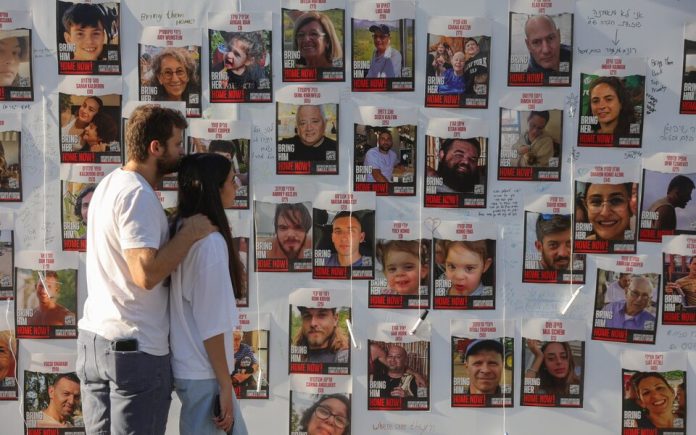
Over 200 foreign nationals have died and 74 are still missing following Hamas attack: Israel
At least 235 foreign nationals have died and 74 remain missing following Hamas’ attack on Israel, the Israeli government announced Saturday.
The affected foreign nationals come from 41 different countries, according to the government’s updated count.
At least 13 killed in airstrikes in West Bank refugee camp: UN
At least 13 Palestinians, including five children, were reported killed in an Israeli security forces’ operation that lasted 28 hours in a West Bank refugee camp, according to the United Nations Relief and Works Agency for Palestine Refugees (UNRWA).
The operation took place in Nur Shams, the UNRWA director in the West Bank, Adam Bouloukos, said.
The statement added that the UNRWA has suspended schools, health services, and solid waste collections in the camp.
The Palestinian Ministry of Health has reported that at least 84 Palestinians have been killed in the occupied West Bank since October 7.
Egypt says Israel-Hamas war revealed “shortcoming” in international approach to crises
After a peace summit in Cairo aimed at de-escalating the war between Israel and Hamas, Egypt criticized the international community for not doing enough to address the root causes of the conflict.
“The international scene over the past decades has revealed a serious deficiency in finding a just and lasting solution to the Palestinian issue, because it sought to manage the conflict, and not end it permanently,” reads a statement issued by the Egyptian presidency on Saturday.
“The ongoing war has also disclosed a shortcoming in the values of the international community in addressing crises,” it said.
“While we see one place rushing and competing to promptly condemn the killing of innocent people, we find incomprehensible hesitation in denouncing the same act in another place. We even see attempts to justify this killing, as if the life of the Palestinian human being is less important than that of other people,” it added.
Egypt hopes that in light of the current crisis “a new political spirit and will” will emerge that “pave the way for unlocking a real and serious peace process,” reads the statement.
“This shall lead, in a short period of time, to the establishment of an independent Palestinian State, along the June 1967 borders, with East Jerusalem as its capital,” it noted.
Final joint statement won’t be issued following Cairo peace summit due to “differences”: Officials
A final joint statement won’t be issued following Saturday’s Cairo peace summit due to “differences” between the delegations on the wording, an official and a diplomat with knowledge of the matter confirmed to CNN on Saturday.
One of them also said this was expected even before the start of the summit.
Egyptian President Abdel Fattah el-Sisi stated he gathered world leaders in the Egyptian capital to find a “roadmap” to end the “humanitarian tragedy” unfolding in Gaza.
Palestinian Authority President Mahmoud Abbas joined representatives from 34 countries, the United Nations and international bodies for the summit. Israel was absent from the gathering.
Abbas was defiant in remarks at the meeting, telling the assembled leaders “we will remain on our land.”
King Abdullah II of Jordan called for an “immediate end to the war on Gaza”, urgent humanitarian aid, the rejection of displacement of Palestinian people and a lasting resolution “on the basis of the two-state solution.”
The foreign ministers of France and Germany noted Saturday that although Israel has the right to self-defense, it also has a responsibility to protect the civilian population of Gaza.
Israel: Not saying Gazans who don’t evacuate are ‘terrorists’
Israel’s military denied it is telling civilians in north Gaza they will be considered “terrorists” if they do not heed evacuation orders.
The military, in a post in English on X, said: “The translation from Arabic that has now spread across platforms is imprecise. To clarify, the IDF has no intention of considering those who have yet to evacuate as a member of a terrorist group.”
Residents had been receiving phone calls saying they would be considered “a collaborator with terrorism if they do not evacuate the city”. Leaflets dropped by Israel in northern Gaza, and viewed by Al Jazeera, also added those who did not leave could be viewed as collaborators with a “terrorist group”.
The Israeli military announced residents should evacuate north Gaza and would be endangering themselves if they did not.
IDF flyers warn Palestinians in Gaza to evacuate south or possibly be considered “a partner for terrorist organization”
The Israel Defense Forces (IDF) has dropped flyers in the Sabrah neighborhood of Gaza City that urgently warn residents to evacuate to the south or face the possibility of being considered “a partner for the terrorist organization”
The flyer reads in Arabic:
“Urgent warning!
To the residents of Gaza Strip
Your presence north of Wadi Gaza puts your life in danger
Everyone who choses not to evacuate from the north of the strip to the south of Wadi Gaza might be considered as a partner for the terrorist organization.
Israel Defense Forces
The IDF confirmed it had dropped the flyers in a statement, adding there was “no intention to consider those who have not evacuated from the affected area of fighting as a member of the terrorist group.”
The IDF “treats civilians as such, and does not target them,” the statement said.
The United Nations has warned that the Israeli order to evacuate the entire population of northern Gaza, which is approximately 1.1 million people, is “impossible” without causing major humanitarian consequences.
There are currently 2.2 million people in Gaza.
The IDF said they continue to urge residents in northern Gaza to evacuate “for their own safety.”