Sunday, January 18, 2026
Home Blog Page 1196

Diplomats privately warn White House of growing fury against US in Arab world

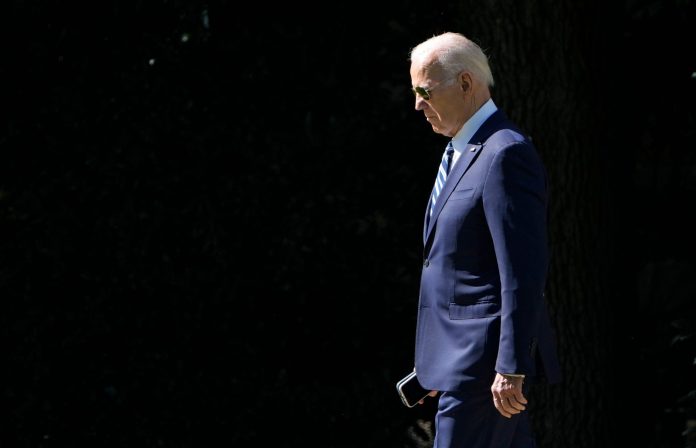
Joe Biden

The cable stresses profound concern among American officials about the growing anger against the United States that erupted soon after Israel launched its operations against Hamas.

“We are losing badly on the messaging battlespace,” reads a cable from the US Embassy in Oman, citing conversations with “a wide range of trusted and sober-minded contacts”.

The robust US support for Israel’s actions is being seen, the cable warns, “as material and moral culpability in what they consider to be possible war crimes”.

The cable from the embassy was written by the second-highest US official in Muscat and sent to, among others, the White House’s National Security Council, the CIA and the FBI. While it’s just one cable from a regional embassy, it provides a private snapshot of the alarm over the growing anti-US wave sweeping the Middle East.

Another cable obtained by CNN from the American embassy in Cairo relayed back to Washington, as part of a daily media summary, the commentary in a state-run Egyptian newspaper that “President Biden’s cruelty and disregard for Palestinians exceeded all previous US presidents”.

Biden has been under growing pressure domestically and abroad over US support of Israel amid images of destruction in Gaza and the dire humanitarian crisis in the region. While the administration has resisted calls for a ceasefire, officials have worked to ramp up aid going into Gaza and pushed for humanitarian pauses to allow more assistance to flow into the enclave and to allow civilians to flee away from the fighting.

In recent days, US allies in the Arab world have made clear their deep anger at the humanitarian crisis in Gaza.

Last weekend, Secretary of State Antony Blinken attended a summit convened by the Jordanian foreign minister that was attended by the top diplomats from Egypt, Qatar, the United Arab Emirates, and Saudi Arabia, as well as the secretary general of the Palestine Liberation Organization.

At the summit, the Arab leaders called for an immediate ceasefire in Gaza while Blinken reiterated US opposition, arguing that it would give Hamas time to regroup and launch another attack on Israel.

The White House announced Thursday that Israel had agreed to move forward with daily four-hour pauses of military operations in areas of Northern Gaza.

Blinken had an agreement in principle on the pauses after his meetings in Israel last week, even though Prime Minister Benjamin Netanyahu came out against the idea of humanitarian pauses on Friday, US officials told CNN. That was seen as the Israeli prime minister playing to his coalition, and the officials noted it was similar to when the Israeli government opposed humanitarian aid getting into Gaza before deciding to allow it.

Although Israel had already been instituting such pauses, American officials see this agreement as progress because the Israelis are using the language of “pauses”, which is something the US believes it can build on.

Still, within the administration, concerns have grown over US support for Israel.

CNN previously reported that some senior officials privately say there are aspects of Israel’s military operations they simply cannot stomach defending; calls for the US to back a ceasefire are growing among government employees; and others are distraught by the incessant images of Palestinian civilians being killed by Israeli airstrikes.

Biden has also been confronted by the frustration growing domestically.

The president was confronted by a protester calling for a ceasefire at a private fundraiser last week; pro-Palestinian protests have been a daily occurrence near the White House compound; and this week, one of the entrances near the West Wing was covered in bright-red handprints – meant to mimic blood – and words like “genocide Joe.”
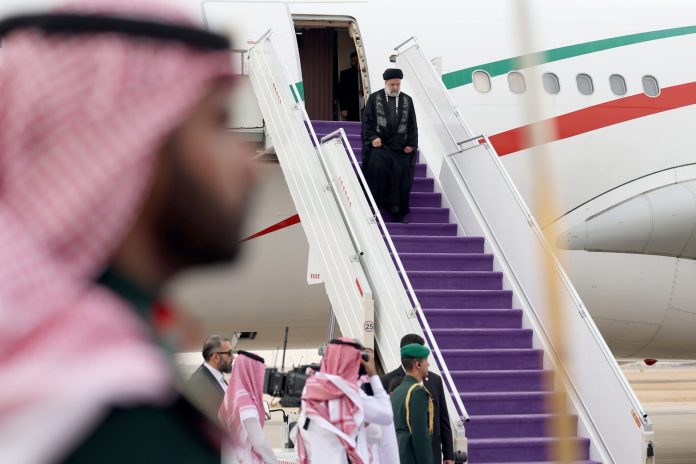
Iran president arrives in Saudi Arabia to attend OIC summit on Palestine

Ebrahim Raisi in Saudi Arabia

“The president arrived in Riyadh after 11 years wearing a Palestinian keffiyeh in support of the oppressed residents of Gaza,” said the Public Relations Office of the Presidential Office.

Before heading to the Saudi capital, the president had said US is blocking the establishment of a ceasefire in Gaza.

Over 11,000 Palestinians have died in Israel’s military campaign in Gaza over the past few weeks. Around 4,500 of the dead are children while 2,500 of them are women.

Poll suggests most Israelis want to negotiate for hostages but continue fighting, over 11,000 killed so far

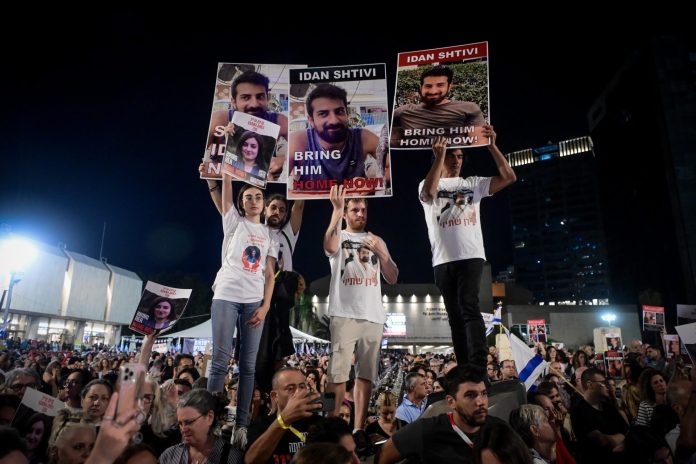
Israel Hostages

Nearly four out of 10 Israelis (38%) expressed the opinion in a survey by the Viterbi Family Center for Public Opinion and Policy Research at the Israel Democracy Institute.

That’s a rise from 32% saying Israel should negotiate while fighting when the survey was last conducted about two weeks earlier.

Another 22% – about one in five – said Israel should not negotiate at all to trade Hamas prisoners in Israeli jails for hostages.

One in 10 (10%) said Israel should negotiate only when the fighting is over, while about one in five (21%) said Israel should begin negotiations immediately, even if it meant halting the fighting.

The survey of 606 men and women was carried out online and by phone on November 5-6, 2023. Some 502 interviews were in Hebrew and 104 were in Arabic. The margin of error on the full sample is four points.

An informed source told the official Israeli Broadcasting Corporation Friday that there has been significant progress in talks to release Israeli hostages.

More than 240 people, including Israeli soldiers and civilians, as well as foreigners from numerous countries, were taken captive by Hamas and other Palestinian armed groups during a deadly assault on Israel on October 7 that Israeli authorities say killed more than 1,500 people.

Five hostages have been released thus far, most of them following negotiations through diplomatic channels with assistance from countries including Qatar and Egypt, and one after a ground incursion by Israeli soldiers inside Gaza.

The Palestinian group Hamas has announced it is ready to conclude a deal on swapping prisoners with the Israeli side.

Hamas Spokesman Hazem Kasem has recently told Al Jazeera the movement is ready to release all the prisoners held by it in exchange to all those held by Israel.

There are 19 prisons within Israel and one inside the occupied West Bank that hold thousands of Palestinian prisoners.

Israeli soldiers close in on Gaza’s al-Shifa Hospital, trapping thousands

Israeli Army

Israeli forces had fully encircled the al-Shifa Hospital as of early on Saturday morning, preventing ambulances from entering or leaving the facility, where medical supplies and food are running low.

“They are attacking and destroying the front gates of the main medical complex in the Gaza Strip as patients and thousands of Palestinians are still residing inside the yard of this hospital,” Al Jazeera’s Tareq Abu Azzoum said.

“Those people are really trapped right now by Israeli forces who are stationed in different sectors encircling the entire place. They are no longer able to move ambulances to bring victims and wounded people from the areas targeted. People are trapped and they lack food.”

Abu Azzoum added that Israeli snipers and artillery were also targeting anyone moving outside the hospital.

Al-Shifa director Muhammad Abu Salmiya described the area around the hospital as a “battlefield”, but said the hospital’s staff have pledged to stay with patients until the “last moment”.

“We will not leave, because we know if we leave the hospital, dozens of patients will die,” Abu Salmiya told Al Jazeera.

The escalating bombardment comes after an Israeli strike on the al-Shifa Hospital early on Friday killed many people and wounded several others, according to the Health Ministry in the Hamas-governed enclave.

Health officials stated later on Friday that Israeli tanks were closing in on at least four hospitals in northern Gaza from all directions.

As fighting escalated on Friday night, Marwan Jilani, director general of the Palestine Red Crescent Society, condemned Israel for attacking hospitals at the UN Security Council in New York.

“Displaced people at the hospitals are getting shot at as we speak,” Jilani said.

“They are asking, ‘What can we do? Where can we go?’ Thousands of innocent lives are under imminent threat.”

World Health Organization (WHO) chief Tedros Adhanom Ghebreyesus echoed his concerns, stating he was “extremely disturbed” by the situation at the al-Shifa Hospital.

“Many of the thousands sheltering at the hospital are forced to evacuate due to security risks, while many still remain there,” he posted on X, formerly known as Twitter.

“WHO is very concerned about the safety of patients, health workers and those sheltering in hospitals. They need immediate protection,” he added.

The area around al-Shifa has been bombed at least five times since Thursday, according to Gaza health officials, while Israeli forces have also struck al-Nasr Medical Centre, al-Quds Hospital and al-Rantisi Hospital.

The WHO has confirmed that half of Gaza’s 36 hospitals are not functioning and two-thirds of its primary care facilities are out of commission amid the fighting.

At least 11,000 Palestinians have been killed in Israeli attacks on Gaza since the start of the Israel-Hamas war, according to Palestinian health officials.

The Palestinian Health Ministry in Gaza asked “international institutions to come immediately to al-Shifa [Hospital] complex and hospitals in the northern Gaza Strip to protect them and enable them to carry out their humanitarian work”.

Hamas, Israel in talks on release of hostages: Report

Israel Hostages

“Under one proposal being discussed, Hamas would release 10 to 20 civilian hostages – Israeli women and children as well as foreigners, including Americans – in exchange for a brief pause in hostilities,” the daily reports, citing unnamed Israeli officials and others briefed on the talks.

“That could be followed by a larger release of about 100 civilians if terms are met,” it says.

In return for the release of captives, Hamas is said to be seeking a brief pause in fighting, more humanitarian aid, fuel for hospitals and the release of women and children in Israeli prisons, an official told the newspaper, adding that the Israeli authorities had expressed uncertainty about releasing their prisoners.

Qatar has been the main mediator in the negotiations, and senior US officials are also involved, according to the report.

More than 240 people, including Israeli soldiers and civilians, as well as foreigners from numerous countries, were taken captive by Hamas and other Palestinian armed groups during a deadly assault on Israel on October 7 that Israeli authorities say killed more than 1,500 people.

Five hostages have been released thus far, most of them following negotiations through diplomatic channels with assistance from countries including Qatar and Egypt, and one after a ground incursion by Israeli soldiers inside Gaza.

The Palestinian group Hamas has announced it is ready to conclude a deal on swapping prisoners with the Israeli side.

Hamas Spokesman Hazem Kasem has recently told Al Jazeera the movement is ready to release all the prisoners held by it in exchange to all those held by Israel.

There are 19 prisons within Israel and one inside the occupied West Bank that hold thousands of Palestinian prisoners.

NATO says Russian victory against Ukraine ‘a tragedy’

Russia Ukraine War

Washington and its allies and partners are supporting Ukraine not just because they “agreed” to it at various meetings, but also because “it is in our interests to do so”, Stoltenberg told reporters on Friday at a joint press conference with German Defense Minister Boris Pistorius in Berlin.

“We have to remember and understand that if [Russian] President [Vladimir] Putin wins in Ukraine, it is a tragedy for Ukrainians but it is also dangerous for us,” Stoltenber said, claiming that a Russian triumph would encourage “authoritarian leaders” to use force and “violate international law” to “get what they want.”

“That will make us more vulnerable,” Stoltenberg continued, adding that he was “confident that North America and Europe together will continue to support Ukraine” and that this was the only way to achieve a “negotiated peaceful solution to this conflict.”

“We know that the stronger Ukraine is on the battlefield, the stronger their hand will be at the negotiating table.”

His comments came as the Pentagon warned that military aid for Kiev was about to run dry if American lawmakers did not approve a new funding package for Ukraine.

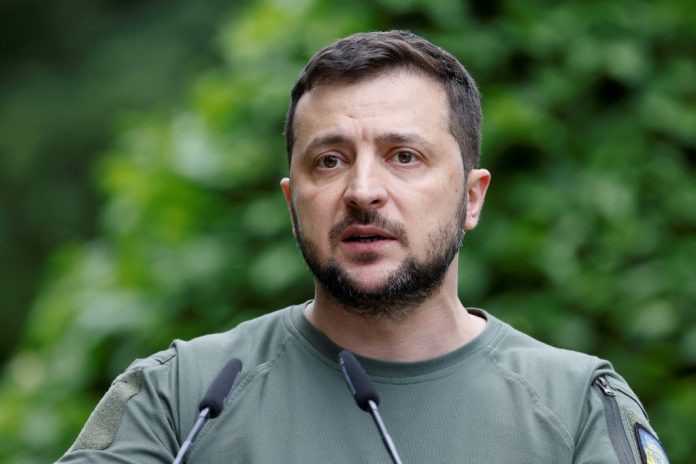
Kiev has repeatedly ruled out any talks with Moscow, demanding a complete withdrawal of Russian troops from all territories Ukraine claims as its own. Ukrainian President Volodymyr Zelensky reiterated this demand in an interview with Reuters this week, adding that Kiev would continue the fight even without US aid, if need be.

Zelensky has denied reports in some media outlets that Ukraine’s Western backers allegedly encouraged Kiev to engage in peace negotiations with Moscow.

“This is not going to happen,” he said last week, during a joint press conference with EU Commission President Ursula von der Leyen.

In October 2022, Zelensky signed a decree banning Ukraine from holding any talks with Russian President Vladimir Putin.

Russia has repeatedly signaled its readiness to engage in negotiations with Kiev but has insisted that such talks should take Moscow’s security interests and the “reality on the ground” into account. In the autumn of 2022, four former Ukrainian territories – including the two Donbass republics – officially joined Russia, following a series of referendums.

Kiev declared the votes a “sham” and has sought to reclaim control over the four territories, as well as Crimea, which joined Russia in 2014 following another referendum.

Zelensky says Ukraine will fight against Russia without US

Ukraine President Volodymyr Zelensky

Should Washington halt its military and financial assistance to Kiev, Ukraine would just go on with the conflict without it, Zelensky maintained when asked if he was “worried” about potential changes in US foreign policy in the case of Donald Trump’s 2024 presidential election victory in particular.

Earlier, Trump repeatedly vowed that he would have a peace deal between Moscow and Kiev worked out “within 24 hours” if elected in 2024. Speaking to Reuters on Wednesday, Zelensky brushed off such promises as a plan by Trump to “fix” the conflict for himself, with no regard for the “price” Ukraine would supposedly have to pay.

“If it will change your foreign policy, so what can I say? Ok, we will fight without you,” Zelensky stated, adding that it was supposedly the will of the Ukrainian people.

He went on to say that the only “real way to stop the war” was for Russian forces to withdraw from all the territories claimed by Kiev. He also added he was sure that Moscow’s troops “will do it,” without elaborating.

In his interview with Reuters, the Ukrainian leader also stressed that “any” US president would help Ukraine if they knew “all the challenges and the result and the damage of the war”.

Earlier, in a separate interview with broadcaster NBC last Sunday, Zelensky invited Trump to Ukraine, vowing to convince the former American president that he would be unable to strike any deals with Russia in “24 minutes”. Trump rejected the offer in a written statement to US media outlet Newsmax. Such a trip would create “a conflict of interest” at a time when President Joe Biden’s administration was officially dealing with Kiev, he said.

Earlier this week, Zelensky also claimed that Kiev had a “plan” that would help it prevail on the battlefield and show some “results” by the end of the year. His words came as Ukraine’s much-touted summer offensive had barely brought about any changes to the frontlines following months of heavy fighting and massive material and personnel losses on the Ukrainian side.

Ukraine’s top commander, General Valery Zaluzhny, told the Economist last week that the conflict between Moscow and Kiev had entered a World War I-style stalemate in which Russia had an upper hand due to larger resources. The Pentagon also announced this week that it only had around $1 billion left for military aid to Kiev and would have to ration it from now on.

Iran President: US preventing ceasefire in Gaza

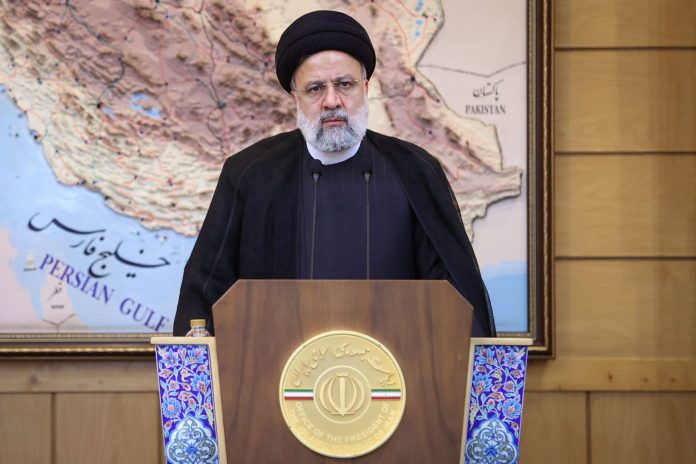
“The US sends the message that it wouldn’t like the war [in Gaza] to spread, but the fuel for the war machine in Gaza is supplied by the Americans; the US is preventing the establishment of a ceasefire in Gaza,” said Ebrahim Raisi before leaving Tehran for Riyadh, Saudi Arabia, to attend an extraordinary summit of the Organization of Islamic Cooperation (OIC).

“This emergency summit is being held with the issue of Palestine on its agenda; Iran had made a call for the meeting a month ago, but it was postponed several times for some reason,” the president explained.

“Heads of Islamic states are expected to adopt a single decision on the question of Palestine, which is the most pressing issue in the world, and to fully implement it,” he said.
Raisi then dismissed the Israeli brutalities against Palestinians as “war crimes,” calling for action rather than words to stop the Israeli war machine.

Palestinian rights groups urge ICC to investigate Israel war crimes in Gaza

Gaza War
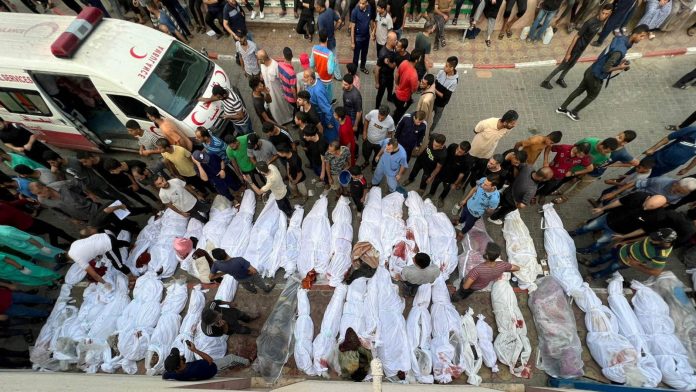
Bodies have started to pile up in Jabalia camp in Gaza following Israel's intensive bombing.

The three organisations – Al Haq, Al Mezan and the Palestine Human Rights Campaign – asked the ICC to look into Israeli air strikes on densely populated civilian areas in Gaza, the siege of the enclave and the mass forcible displacement of its population.

“These actions amount to war crimes and crimes against humanity, including genocide and incitement to genocide,” they stated in a joint statement.

The ICC announced it had received communication from the groups and would assess the information.

Israel is not a member of court, based in the Hague, and does not recognise its jurisdiction. However, the ICC can investigate nationals of non-member states in some circumstances, including when alleged crimes are  committed in the territories of member states. Occupied Palestine is a member of the ICC.

Last week, families of Israeli victims of Hamas’ surprise attack on 7 October filed papers at the ICC urging the court to look into Hamas crimes.

In a post on Telegram, the Israeli army announced that it has hit more than 15,000 targets in the besieged enclave since the war began in early October.

It added that “6,000 weapons”, including anti-tank missiles, rockets and ammunition, had been located in Gaza.

“In recent days, combined Israeli forces have continued to strike numerous terror targets in the Gaza Strip, including operational command centres, terror and rocket infrastructure, weapons and logistics depots, launch posts, terror tunnels, [and] numerous Hamas terrorists,” it said.

Earlier, the Gaza government’s media office said about 32,000 tonnes of explosives had been dropped on Gaza since the start of the war. It called the destruction “unprecedented”, stressing that more than 50 percent of Gaza’s housing units had been damaged in the bombardment.

Israel has launched relentless air and ground attacks on the Gaza Strip since a cross-border attack by Hamas a month ago.

At least 11,000 Palestinians, including more than 4,500 children and over 3,000 women, have been killed since then. The Israeli death toll, meanwhile, is nearly 1,600, according to official figures.

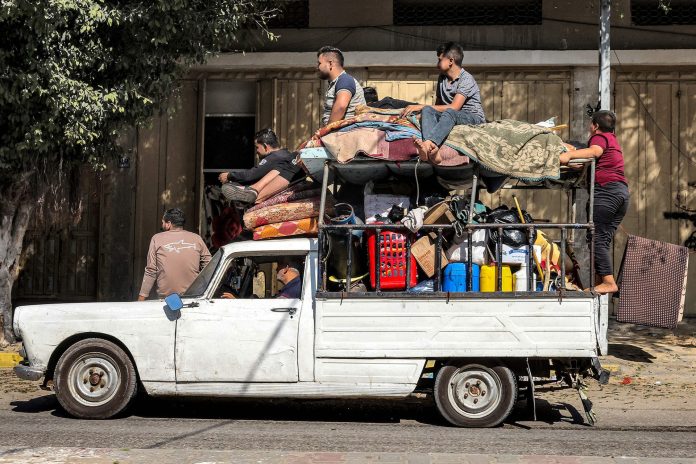
Besides the large number of casualties and massive displacements, basic supplies are running low for Gaza’s 2.3 million residents due to the Israeli siege.

Food shortages affecting every single person in Gaza: WFP

Gaza War

“Before 7 October, 33% of the population were food insecure,” Kyung-nan Park, the director of emergencies for the UN agency, told Reuters.

“We can safely say that 100% are food insecure at this moment.”

She cited the lack of fuel and supplies to explain why only one of the 23 bakeries contracted by the agency is still functioning.

“Right now we are entering 40 to 50 trucks,” Kyung-nanstated.

“For just WFP food assistance, we would need 100 trucks a day to be able to provide any meaningful humanitarian food to the people in Gaza.”

She continued: “There are stories of people going there, being in line for 10 days and leaving empty handed … It’s quite serious.”

At least 11,000 Palestinians, including more than 4,500 children and over 3,000 women, have been killed since then.

Besides the large number of casualties and massive displacements, basic supplies are running low for Gaza’s 2.3 million residents due to the Israeli siege.