Sunday, December 28, 2025
Home Blog Page 116

Spanish parliament approves arms embargo against Israel

The parliament backed the decree announced in September by Sanchez with 178 votes for to 169 against.

Spain’s socialist prime minister banned buying or selling weapons to Israel shortly after Israel’s assault on Gaza began following the Hamas-led 7 October attack on southern Israel.

A growing chorus of historians, legal experts and scholars has labelled Israel’s war a genocide. Sanchez has become one of the most virulent critics among world leaders of Israel’s devastating two-year-old war in the Palestinian territory.

In September, he announced a decree to “consolidate in law” the embargo he imposed as part of a series of measures against Israel’s genocide.

“Israel’s response to the terrible attacks committed by terrorist group Hamas on October 7, 2023 has ended up becoming an indiscriminate attack against the Palestinian population that the majority of experts have called genocide,” reads the preamble of the law.

It bans all exports of defence equipment, products or technology to Israel and imports of such goods from Tel Aviv.

The decree also outlaws the transit of aviation fuel with potential military use and bans the advertising of products “coming from illegal colonies in Gaza and the West Bank”.

The text allows the government to make exceptions for dual-use defence equipment, “if the application of the ban harmed general national interests”.

Spain’s leftwing Podemos party, which has four MPs and had criticised the decree for not going far enough, eventually joined other parties that comprise Sanchez’s leftist minority coalition.

Sanchez has criticised the international community for failing to halt Israel’s genocide, accusing major powers of being mired between “indifference” and “complicity” with Israeli Prime Minister Benjamin Netanyahu.

Spain was one of the first European countries to recognise the state of Palestine last year. Several other major Western countries, including Canada, the UK and France, took the step last month.

UK court ruling on Iranian oil firm building was biased, unfair: NIOC

The National Iranian Oil Company announced in a statement on Wednesday that a ruling issued by the UK Court of Appeal earlier this week, upholding an earlier verdict that had ordered the seizure of the NIOC House in London, was “unfair and biased”.

The NIOC said that it would use “all the existing legal and judicial capacities” to appeal the ruling, including the services of the Iranian Presidency’s Center for International Legal Affairs.

It added its building in London is considered an asset of NIOC staff and workers, adding that it would seek to overturn the ruling to protect their rights.

The statement comes two days after the UK Court of Appeal dismissed objections raised against the initial court ruling, including the fact that the NIOC House in London was a property of its pension fund. The court thereby allowed the building to be seized to satisfy a $2.4 billion arbitration award.

The arbitration case is related to Crescent Petroleum, a company based in the United Arab Emirates, which claims the Iranian company has failed to comply with the terms of a 2001 contract for the supply of natural gas from Iran’s Salman gas field.

Reports published in the Iranian media in the past few days have estimated that the NIOC House in London is worth £100 million ($125 million).

Iran’s official IRNA news agency reported on Monday that NIOC lawyers plan to ask the UK Supreme Court to review the building seizure case if their appeal against the latest ruling is rejected.


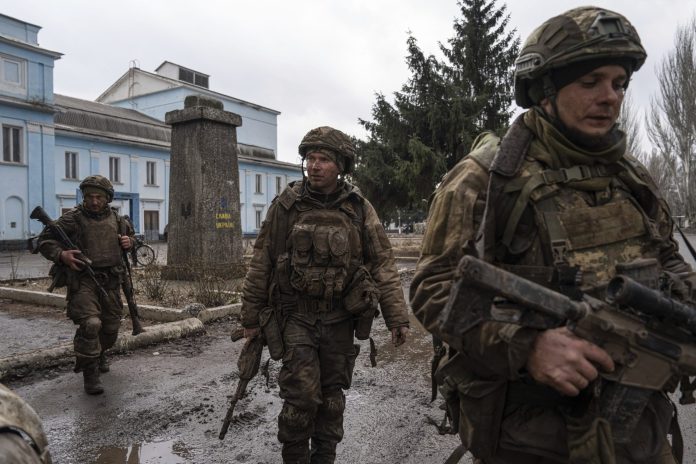
Tomahawk deliveries could force Russia to ‘sober up’ and negotiate: Ukraine

During a meeting with journalists, Zelensky said that U.S. President Donald Trump “can give Ukraine some far-reaching things” that will significantly strengthen Kyiv’s position in any future talks.

“Right now, it is important to send a signal that Ukraine will be strengthened by all means possible. And this is one of those means that is important to me — Tomahawks,” he stated.

“All such things can strengthen Ukraine and force the Russians to sober up a little, sit down at the negotiating table.”

The president added he first raised the issue with Trump last fall in New York, when Trump was still a presidential candidate.

During their latest meeting on the sidelines of the United Nations General Assembly, Zelensky said Trump did not rule it out and “promised to work on a technical level and consider such a possibility.”

The Ukrainian president noted that Kyiv had previously requested the long-range cruise missiles during former U.S. President Joe Biden’s term, but the appeal was rejected.

The Tomahawk is a subsonic, long-range cruise missile designed for precision strikes. With a range of 1,600 to 2,500 kilometers (995 to 1,550 miles), it would allow Kyiv to reach targets as far as Siberia.

Ukraine currently depends largely on domestically produced long-range drones to strike deep inside Russia, weapons that carry tens rather than hundreds of kilograms of explosives.

The Kremlin has warned that any Tomahawk deliveries to Ukraine would sharply escalate the war.

Speaking at the Valdai Forum, Russian President Vladimir Putin said such a move would mark a “new stage of escalation” and could undermine any progress in U.S.-Russia relations.

The U.S. president has stated that he has “sort of made a decision” on whether to supply Ukraine with Tomahawk long-range missiles, but wants “to find out what they’re doing with them.”

The discussion over Tomahawk deliveries comes as Trump’s administration begins supplying weapons to Ukraine through a NATO-supported framework.

The first aid package, approved in mid-September, included Patriot and HIMARS missiles.

Iran among top 10 countries with full satellite manufacturing and launch capabilities

Iran satellite

That’s according to Director of the Iranian Space Agency Hassan Salarieh.

Salarieh told Tasnim News agency that out of more than 200 countries, only a handful, including Russia, China, the US, Japan, and some European nations with long-standing space industries, have achieved complete satellite and launch vehicle capabilities.

He noted that Iran has developed its satellite and launcher programs simultaneously using domestic expertise.

Salarieh added that while satellite production in Iran was traditionally carried out individually, the launch of the General Soleimani satellite constellation project marked a shift toward multi-satellite production.

He underlined that Iran’s human resources wave began in the mid-2000s with satellite programs at top universities, including Sharif, Amirkabir, Iran University of Science and Technology, and Malek Ashtar University.

Salarieh also said a milestone in Iran’s space journey was the successful launch of the Omid satellite in 2008, which established national confidence in the country’s ability to place payloads into orbit.

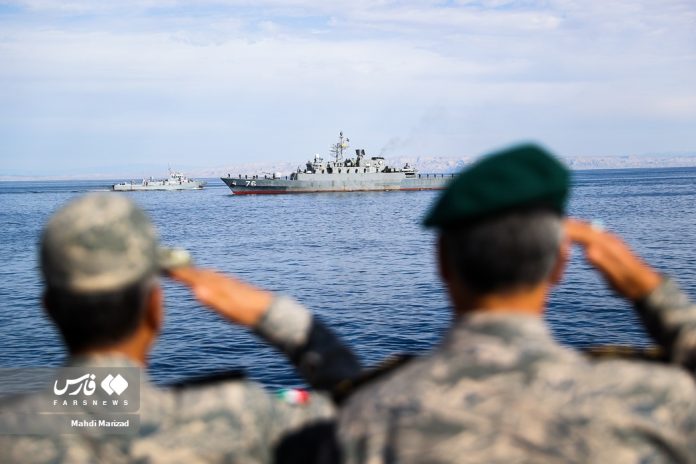
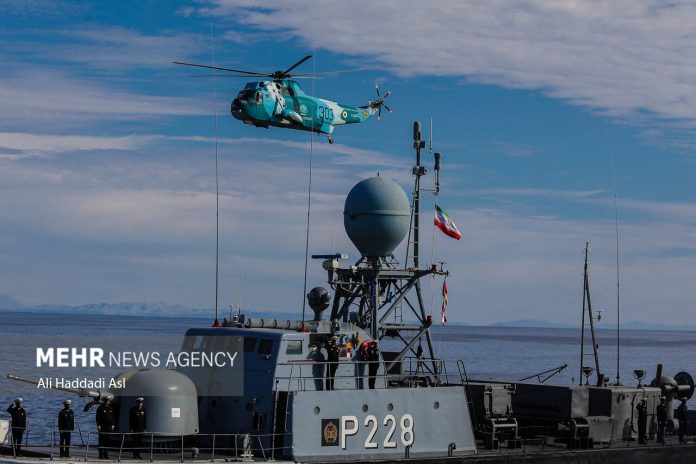
Iran’s Navy signs strategic cooperation document with Caspian littoral countries

The agreement was signed on Wednesday during a meeting of the four Caspian littoral states in the Russian city of St. Petersburg.

Rear Admiral Shahram Irani, Commander of the Iranian Navy, represented Tehran at the summit and signed the document on behalf of the country.

The agreement aims to strengthen comprehensive cooperation among the Caspian littoral states, particularly in ensuring sustainable security in the shared waters.

According to the provisions of this document, no foreign country or extra-regional power will be allowed to interfere in the internal affairs of the Caspian Sea.

“This sea belongs to five littoral countries, and accordingly, ensuring security and issues related to the Caspian Sea can only be done by the decision of the littoral countries,” the navy commanders stated.

Admiral Irani, who arrived in St. Petersburg on Sunday evening, delivered a speech on Tuesday at a meeting of naval commanders of the Caspian littoral countries, where he noted that the Caspian Sea “is not a place where there is room for maneuvering by extra-regional powers.”

The Iranian commander said all the Caspian Sea states share the objective of maintaining regional maritime security.

The Caspian, vital for its $3 trillion energy reserves, remains a strategic hub as Iran and Russia expand military partnership.

In July, the naval forces of Iran and Russia staged a major three-day joint search-and-rescue drill in the Caspian Sea.

The CASAREX 2025 was held under the banner “Together for a Safe and Secure Caspian Sea.”


Iran’s VP for legal affairs: Conditional accession to CFT a tool against Israeli crimes

Speaking to reporters after the weekly cabinet meeting, Ansari said joining the convention would empower the Judiciary and the president’s office for legal affairs to file stronger legal cases on terrorist acts targeting Iran and to prosecute Israel as a terrorist entity.

He added that one of the possible outcomes of joining the convention could be Iran’s removal from the FATF blacklist and placement on the grey list, though he noted that sanctions have reduced the significance of this issue for Iran.

Ansari underlined that Iran already has stricter domestic laws concerning the issues addressed in the Palermo and CFT bills.

He said Iran has long been a victim of terrorism and that earlier ratification of such conventions could have helped the country legally pursue terrorist groups like the MKO, which has killed over 17,000 Iranians.

On another issue, Ansari confirmed that the court of appeal has upheld the initial verdict in the Crescent case. He further expressed hope that through diplomacy or settlement, Iran could recover assets belonging to its oil pension fund.

Indian refiners asked to pay for Russian oil with Chinese yuan: Reuters

Russia Oil
A view shows the Russian oil producer Gazprom Neft's Moscow oil refinery on the south-eastern outskirts of Moscow on April 28, 2022. (Photo by Natalia KOLESNIKOVA / AFP) (Photo by NATALIA KOLESNIKOVA/AFP via Getty Images)

Indian Oil Corp, the country’s leading state-owned refiner, has recently purchased two to three cargoes of Russian oil using Chinese yuan, sources told Reuters.

Russia has been increasingly turning to the yuan for international trade in the wake of Western sanctions imposed over the full-scale invasion of Ukraine in 2022.

Yuan has also been on the rise in oil trade settlements as an alternative to the petrodollar.

Since the outbreak of the all-out war, India has become one of Russia’s leading buyers of crude, along with China.

Energy exports account for roughly one-third of Russia’s federal revenue and play a crucial role in sustaining the country’s wartime economy.

Indian buyers made payments for Russian oil with the Chinese currency in 2023, but ceased due to heightened tensions between India and China at the time.

Recent months have seen a thaw between the two Asian powers, as U.S. President Donald Trump’s steep tariffs on India — imposed over Indian purchases of Russian oil — prompted New Delhi to seek alternative economic partnerships.


Zoroastrians celebrate Mehregan worldwide    

Mehregan, dedicated to Mithra (or Mehr), the ancient deity of light, covenant, and affection, dates back thousands of years to pre-Islamic Iran. Traditionally, it was regarded as a time to express kindness and renew bonds of unity among family and friends.

Beyond its religious roots, Mehregan has also gained recognition in recent years as a cultural heritage celebration, reflecting Iran’s ancient traditions of peace, truthfulness, and respect for nature.

Zoroastrians around the world, including in Iran itself and also in the US, Australia and Europe, are observing the occasion, which is one of the most ancient Persian festivals celebrating love, friendship, and gratitude. The ceremonies feature prayers, offerings of flowers and fruits, and the recitation of hymns from the Avesta.

Many participants wear colorful garments and set up beautifully decorated tables symbolizing prosperity, purity, and harmony.

Zoroastrianism is an officially recognized religion in Iran, and Zoroastrian Iranians enjoy full civil rights under the Iranian Constitution.

They are also free to profess their faith and observe their religious rituals.

Ukraine claims Tomahawk missiles can ‘pressure’ Russia

Washington first signaled last month that it was considering supplying Tomahawk cruise missiles to Ukraine. The weapons, which cost about $1.3 million each and have a range of 2,500km (1,550 miles), could reach targets deep inside Russia, including Moscow. President Donald Trump said on Monday that he had “sort of made a decision” on the matter, but added that “I’m not looking to see escalation.”

Egor Cherniev, deputy chairman of the Ukrainian parliament’s national security, defense, and intelligence committee, suggested that the missiles could be deployed in phases, with one scenario being that they would not be fired at all, or only used against a narrow range of targets.

“First they will give us rockets, but a few pieces, or a couple of dozen, but they will not allow us to shoot them at once and we will see the Kremlin’s reaction,” he stated, as quoted by The Telegraph.

If Russia does not respond, he added, “the envelope increases, allowing strikes on the Russian border.” Eventually, he suggested, in order to push Moscow towards talks, all restrictions might be lifted “except perhaps strikes on the Kremlin and directly on [Russian President Vladimir] Putin.”

“This whole epic could take at least a few months. But it’s already real pressure,” Cherniev argued.

Putin warned last week that sending Tomahawks to Ukraine would “lead to the destruction of [Russia-US] relations, or at least the positive tendencies that have appeared in these relations.”

The Russian leader has also pointed out that Ukrainian forces would be unable to operate the system without “direct participation of American military personnel,” adding that the deliveries would not alter “the balance of power on the battlefield.”

Putin recalled previous shipments of long-range ATACMS missiles to Ukraine, which he said at first “caused some damage, but in the end, Russia’s air defense systems adapted.”


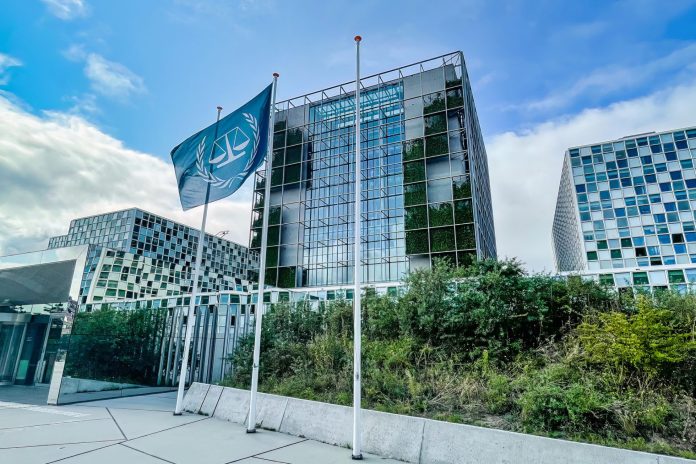
Italy’s PM says ICC complaint accused her of Gaza genocide complicity

Meloni made the statement during an interview with state television company RAI, in the first public comment on the situation, which has not been confirmed by the international court.

Meloni said Defence Minister Guido Crosetto and Foreign Minister Antonio Tajani have also been “denounced”, referring to when the court is officially alerted to a possible crime. She said that she believes that Roberto Cingolani, head of Italian weapons and aerospace company Leonardo, might also have been named.

The complaint, dated October 1, was signed by some 50 people, including law professors, lawyers, and several public figures who accused Meloni and others of complicity by supplying arms to Israel.

“By supporting the Israeli government, particularly through the supply of lethal weapons, the Italian government has become complicit in the ongoing genocide and the extremely serious war crimes and crimes against humanity committed against the Palestinian people,” the authors of the court filing against the Italian leaders wrote.

The Palestinian advocacy group behind the complaint naming Meloni is calling for the court to assess the possibility of opening a formal investigation into the charge of genocide against the Italian prime minister.

Last month, a UN Independent Inquiry found that Israel’s war on Gaza is a genocide, adding to similar assessments from a broad range of experts in human rights, genocide and international law.

The ICC has outstanding arrest warrants for Israeli Prime Minister Benjamin Netanyahu and former Defence Minister Yoav Gallant over charges of war crimes and crimes against humanity in Gaza, including starvation, murder and persecution.

However, neither Netanyahu nor Gallant has been charged with genocide specifically.

The ICC also issued arrest warrants for Hamas officials; however, those named have all since been killed in Israeli attacks.

“I don’t think there is another case in the world or in history of a complaint of this kind,” Meloni said of the complaint against her in the televised comments.

According to data from the Stockholm International Peace Research Institute (SIPRI), Italy was one of only three countries to export “major conventional arms” to Israel from 2020 to 2024, although the United States and Germany were responsible for 99 percent of the exports of the larger weapons category, which include aircraft, missiles, tanks and air defence systems.

The major arms that Italy provided to Israel in this period included light helicopters and naval guns, SIPRI said. It is also one of several countries involved in making parts for F-35 fighter jets, under a US-led programme, SIPRI added.

“Concerns about the potential use of the F-35 by Israel to carry out violations of international humanitarian law have led to much criticism of transfers of the aircraft or its parts to Israel,” SIPRI announced in a recent report.

Italy’s Defence Minister Guido Crosetto has stated that Italy is only sending deliveries of arms to Israel under contracts signed before October 7, 2023 and that Italy has sought assurances from Israel that the weapons would not be used against civilians in Gaza, after Deputy Prime Minister Antonio Tajani had earlier claimed Italy had stopped sending the weapons altogether.

Meloni’s acknowledgement of the complaint against her comes as hundreds of thousands of people have taken to the streets in mass protests against Israel’s war on Gaza in recent weeks.

Italy’s major labour unions have actively supported the protests. The country’s dockworkers have threatened strike action over Israeli forces preventing the Sumud Global Flotilla from delivering aid to Gaza.

Following earlier protests, Meloni’s government sent naval ships to accompany the fleet of international vessels, but the Italian navy pulled back before Israeli forces intercepted the boats in international waters and detained close to 500 international activists.

Six crew members remained in Israeli detention as of Tuesday, according to the flotilla’s organisers.

The latest complaints against Italian leaders join a growing number of legal challenges to Israel’s actions in Gaza, alongside the ICC case against Netanyahu and Gallant.

At the International Court of Justice (ICJ), South Africa has submitted a case against Israel, accusing it of breaching the 1948 UN Genocide Convention.

In April this year, the ICJ ruled against pursuing a case brought by Nicaragua that accused Germany of aiding genocide in Gaza for its role in selling arms to Israel.

The US, which is the largest exporter of weapons to Israel, is not a member of the ICC.

It has also actively pushed back against the ICC pursuing charges against Israel.

Last month, US Secretary of State Marco Rubio announced that the US was imposing sanctions on three Palestinian human rights organisations, Al-Haq, the Palestinian Centre for Human Rights (PCHR) and Al Mezan Center for Human Rights, for engaging in efforts to “investigate, arrest, detain, or prosecute Israeli nationals” at the ICC.