Wednesday, December 31, 2025
Home Blog Page 1129

UN chief says existing challenges of salvaging JCPOA complicated

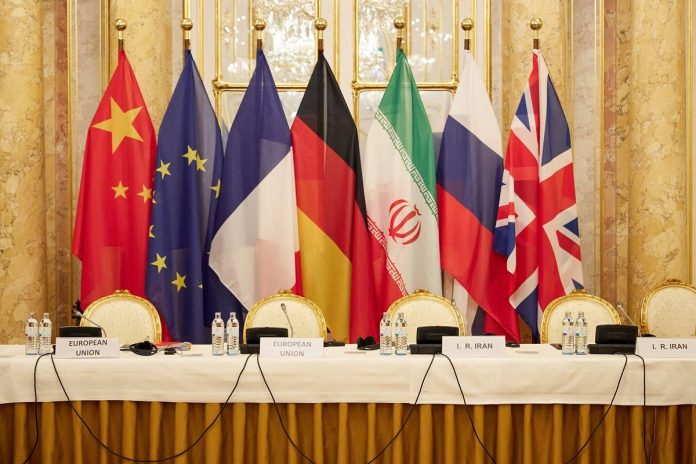
Nuclear Negotiations in Vienna

Guterres made the comments in his 16th report on the UN Security Council Resolution 2231 that endorsed the 2015 Iran nuclear deal called the Joint Comprehensive Plan of Action, or the JCPOA.

The report was read by UN Under-Secretary-General Rosemary DiCarlo as the Security Council met Monday on the JCPOA implementation.

Guterres said that diplomatic efforts to revive the JCPOA have been stopped, adding that while the existing challenges have become complicated, he still believes that the JCPOA is the best option to ensure the peaceful nature of Iran’s nuclear program.

He repeated accusations made by some Western states as well as the Israeli regime regarding Iran’s ballistic missile program and its relation with missiles fired by Yemeni armed forces against Israeli positions.

Iran has time and again said that its nuclear program is only meant for peaceful purposes, and that nukes have no place in its defense doctrine.

The country has also blamed stalled efforts to revive the JCPOA on what it calls excessive demands by the Western parties to the deal, namely the EU, the UK, France, Germany, as well as the US which withdrew from the JCPOA in May 2018.

The Islamic Republic also says that its missile program is aimed at deterrence and defending its territory in the face of threats.

Gas stations in Iran back online after cyberattack

Iran Petrol Station

Jafar Salari Nassab said over 40 percent of the total 33,000 gas stations across the country are connected to the smart system for fueling at subsidized prices.

Salari Nassab also said the rationing allocated to the motor vehicles is unaffected and dismissed reports that plans are underway to increase fuel prices in the country.

A software error knocked fuel rationing system in Iran offline on Monday, however, fueling system at non-subsidiary prices was not affected.

A group dubbed ‘Predatory Sparrow’ claimed responsibility for the hacking.

Officials assured citizens there are no shortages of supply and advised motor vehicle users not to rush to the gas stations if they do not urgently need to refuel.

US launches multinational operation in response to Houthi strikes in Red Sea

US Ship

The Pentagon has turned to the UK, France and other allies to help secure shipping traffic through the Red Sea after a series of missile and drone attacks launched by Yemen’s Houthi rebels scared away major transport operators from the key maritime route.

US Secretary of Defense Lloyd Austin announced the coalition’s initiative on Monday, stating Operation Prosperity Guardian would work to ensure freedom of navigation through the Red Sea and the Gulf of Aden.

“This is an international challenge that demands collective action,” he said in a statement, adding that the group would bolster “regional security and prosperity”.

Other members of the coalition include Canada, Norway, Bahrain, Italy, the Netherlands, Spain and Seychelles. The group springs from the Combined Maritime Forces, a 39-nation partnership that collaborates to secure maritime traffic through key international shipping lanes. About one-sixth of the world’s commercial shipping traffic typically passes through the Bab-al-Mandeb Strait, from the Red Sea into the Gulf of Aden.

Dozens of ships have been rerouted around the Cape of Good Hope, at the tip of South Africa, in recent weeks amid the Houthi attacks, which came in response to the Israel-Hamas war. Several major maritime carriers have steered clear of the area.

The Houthis have defended their strikes as justified retaliation for “the oppression of the Palestinian people”. They have vowed to “prevent the passage” of any ship headed to Israel or otherwise connected to Tel Aviv, stressing such vessels are legitimate targets as long as West Jerusalem carries out “ugly crimes … against our brothers in Gaza and the West Bank”.

The US, UK, and France have already worked together to shoot down Houthi missiles and drones in the region.

Iran cautioned the US against attempting to flex its muscles in the area and threatened to bring about “extraordinary problems”. Defense Minister Mohammad Reza Ashtiani told reporters, “Nobody can make a move in a region where we have predominance.”

Hamas video shows Israeli captives pleading for release

Israel Hostages

The Palestinian group’s armed wing, the Qassam Brigades, posted the one-minute video, titled Don’t Let Us Grow Old Here, on its Telegram account on Monday.

The men – identified by Israeli officials as 79-year-old Chaim Peri, 80-year-old Yoram Metzger and 84-year-old Amiram Cooper – were taken to Gaza on October 7 when Hamas launched attacks inside Israeli territory, killing 1,200 people and taking about 240 captives.

Nearly half of those captives were released as part of a weeklong truce between Israel and Hamas last month.

In the video, Peri, seated between the two other captives, said in Hebrew that he was being held along with other elderly hostages with chronic illnesses and that their conditions were harsh.

“We are the generation who built the foundation for the creation of Israel. We are the ones who started the IDF military. We don’t understand why we have been abandoned here,” he added, referring to the Israeli armed forces.

“You have to release us from here. It does not matter at what cost. We don’t want to be casualties as a direct result of the IDF military air strikes. Release us with no conditions,” he continued.

The video concludes with the three men saying in unison: “Don’t let us grow old here”.

Israeli media reported the three hostages came from the Nir Oz kibbutz along the Israeli border, which was targeted in the October 7 attacks.

Peri was at his house in Nir Oz during the attack, Israeli media reports said. He tried to repel the gunmen while hiding his wife behind a sofa, his son told the Reuters news agency. He eventually gave himself up to save his wife, who remained hidden, the report added.

The Israeli military claimed Hamas had released a “criminal, terrorist video”.

“Chaim, Yoram and Amiram, I hope that you hear me this evening,” military spokesman Daniel Hagari stated in a televised briefing.

“Know this – we are doing everything, everything, in order to return you back safely.”

Israel has in the past labelled such videos as a form of psychological warfare by Hamas.

After the release of the latest video, families of Israelis held captive by Hamas in Gaza protested outside Israeli Ministry of Defense headquarters in Tel Aviv, demanding the immediate release of their loved ones.

The protest came amid growing outrage within Israel after the Israeli military last week admitted it mistakenly shot dead three Israeli captives in Gaza despite them waving a white flag.

Meanwhile, as diplomatic efforts continue to end the war in Gaza and release prisoners taken on both sides, the Israeli military has intensified its bombardment of the enclave, killing nearly 19,500 people since October 7 – most of them women and children.

The air and ground strikes on Gaza have flattened the besieged enclave, burying thousands of people under the rubble.

In absence of the required aid not being allowed to flow into the strip, international aid agencies have warned of a humanitarian disaster with widespread hunger and spread of diseases.

Yemen says hit two more ships in Red Sea

In a statement on the X social media platform on Monday, spokesman of Yemen’s armed forces Brigadier General Yahya Saree identified the two ships attacked in the Red Sea earlier in the day as Swan Atlantic and MSC Clara.

The statement said the Yemenis had used naval drones to hit the ships, adding that the attacks were “in solidarity with the Palestinian people in light of the aggression against Gaza.”

The attacks are the latest under Yemen’s campaign of pressuring the Israeli regime and the US and other allies to end a war on Gaza that has killed over 19,400 people since early October.

The campaign is part of larger regional anti-Israeli military drive that also involves resistance groups in Iraq and Lebanon.

Commander of Yemen’s Fifth Military Zone Major General Yusuf al-Madani stated earlier on Monday that the Arab country is ready for any reaction to its ant-Israeli attacks in the region.

Al-Madani added that Yemen’s armed forces could significantly increase their fire power to respond to any threat from “any party that seeks to drive a wedge between us and Palestine.”

He also warned that any move that intensifies tensions in Gaza would lead to an increase in tensions in the Red Sea.

The warnings came amid reports suggesting that the United States and allies may form a regional maritime task force to counter threats to shipping in the Red Sea.

It also came just hours before oil giant BP announced in a statement that it had decided to suspend oil transit activity via Red Sea routes because of threats emanating from the Yemeni forces.

On Monday, Evergreen joined five other big shipping firms who have already suspended operations: the Hong Kong-based OOCL, Denmark’s Maersk, France’s CMA CGM, Germany’s Hapag-Lloyd and the Italian-Swiss-owned Mediterranean Shipping Company.

Later, Belgian oil tanker firm Euronav announced it would avoid the Red Sea area until further notice amid the recent attacks on vessels.

Major international shipping companies have changed the course of their vessels in the region after the Yemenis said earlier this month that any ship bound for the Israeli-occupied Palestine will be a legitimate target until the Israeli regime completely halts its aggression against Gaza.

A spokesman for the Houthis has also tried to reassure global markets that vessels not linked to Israel are safe transiting the Red Sea, after the groups attacks led to a flurry of international firms not linked to Israel avoiding the route.

“We reiterate that the shipping lanes in the Red Sea and the Arabian Sea are safe and there is no danger to the ships of any country except for ships belonging to the enemy entity or those heading to its ports,” Abdul Salam Salah wrote in a social media post.

The spokesman’s comments, which slammed “biased and unrealistic American propaganda” for striking fear in the global shipping industry, are unlikely to reassure industry executives, who are sending their vessels around Africa instead of the Red Sea.

4,300 aid trucks enter Gaza between Oct. 21-Dec.16: Palestinian Red Crescent

Gaza War

The Red Crescent said in a statement the trucks were loaded with water, food, and other relief and medical supplies.

It noted that only 310 trucks reached the northern parts of the Gaza Strip including Gaza City and the northern areas during the week-long humanitarian pause which ended on Dec. 1.

The number is, yet, far from meeting the growing humanitarian needs amid the ongoing Israeli devastating onslaught against the Gaza Strip.

The UN World Food Programme warned of the possibility of a famine in the Gaza Strip, stressing that the supplies are woefully insufficient to address the hunger levels in Gaza.

Human Rights Watch (HRW) also said in a statement that Israel is deliberately depriving Palestinians of access to food, water and other basic necessities. The use of hunger against the civilian population is a war crime, the NGO stated, calling for world leaders to act.

Israel resumed its military offensive on the Gaza Strip on Dec. 1 after the end of a week-long humanitarian pause with the Palestinian group Hamas.

At least 19,453 Palestinians have been killed and more than 52,286 others injured in relentless air and ground attacks on the enclave since Oct. 7 following a cross-border attack by Hamas.

The Israeli death toll in the Hamas attack stood at 1,200, according to official figures.

Nearly 300 people in UNRWA shelters killed and over 1,000 injured since October 7: UN

Gaza War

More than 1,000 displaced Palestinians taking refuge in those shelters were also injured, the OCHA statement read, adding that UNRWA schools in the strip were also damaged.

“Seventy of the schools damaged are UNRWA schools, with at least 56 serving as shelters for IDPs [internally displaced persons],” the statement read.

“Several schools, including UNRWA schools, have been directly hit by Israeli airstrikes or tank shells.”

Overall, about 1.9 million Palestinians, constituting over 85% of Gaza’s population, have been displaced across the strip since October 7, according to UNRWA. A majority of them, roughly 1.4 million people, are sheltering in UNRWA facilities.

Gaza’s southernmost area has now become the most densely populated area in the enclave, with a density of 12,000 people per square kilometer, following the arrival of tens of thousands of displaced people there in search for safety since December 3, OCHA announced.

At least 19,453 Palestinians have been killed in Israeli attacks on the Gaza Strip since Oct. 7, the Health Ministry announced Monday.

Ministry spokesman Ashraf al-Qudra stated at a press conference that 52,286 other people have also been injured in the offensive.

Israel has bombarded the Gaza Strip from the air and land, imposed a siege, and mounted a ground offensive in retaliation for a cross-border attack by Hamas on Oct. 7.

Tens of thousands of Israelis internally displaced near Lebanon borders: Report

Israeli Settlers

Israel told the United States it wants Hezbollah pushed back 9.6 kilometers (6 miles) from its border, stressing that Tel Aviv couldn’t accept tens of thousands of its citizens being internally displaced because of border clashes, Axios has reported.

The US has no direct public channel with Hezbollah, which is the largest political and military force in Lebanon, but has been negotiating behind the scenes through intermediaries to try and deescalate tensions.

Israeli Prime Minister Benjamin Netanyahu and Defence Chief Yoav Gallant delivered the message to US Secretary of Defense Lloyd Austin during his visit to Tel Aviv.

Israel had publicly demanded Hezbollah withdraw 30 kilometers (18 miles) to the Litani river in the north, as required by United Nations Security Council Resolution 1701, which ended the 2006 war between the two.

According to Axios, Austin asked Israel to allow the US time and space to make diplomatic efforts. Netanyahu and Gallant said they wanted to see progress in “the next few weeks”.

Lebanon’s border with Israel is “dangerous” with ongoing exchanges of fire between Hezbollah and Israel, the head of the UN peacekeeping force there warns.

“The situation now, as everybody knows – it is tense. It is difficult, it is dangerous,” stated Aroldo Lazaro, the head of the UN Interim Force in Lebanon.

“We are trying to continue with our liaison and coordination role … in order to avoid miscalculations, misinterpretations that could be another trigger for escalation,” Lazaro told journalists.

More than 130 people have been killed in hostilities on the Lebanese side. On the Israeli side, four civilians and seven soldiers have been killed.

Amid the conflict in the Gaza Strip between Israeli troops and Hamas, tension has flared along the border between the Israeli-occupied territories and Lebanon, with exchanges of fire between Israeli forces and Hezbollah.

Hezbollah and the Israeli regime have been exchanging sporadic fire since October 8, a day after the Zionist regime started bringing the Palestinian territory of the Gaza Strip under a relentless and indiscriminate war.

The Lebanese resistance movement has announced the group’s “guns and rockets” were with Palestinian fighters, and stressed that it will intensify its attacks against Israel if necessary.

Gallant has recently told senior Israeli officials that Hezbollah is “ten times stronger than Hamas”, Israel’s Kan public broadcaster has reported.

President Joe Biden and his aides have advised Israeli Prime Minister Benjamin Netanyahu not to launch pre-emptive strikes against Hezbollah in Lebanon, The New York Times daily newspaper has reported.

Hezbollah has already fought off two Israeli wars against Lebanon in 2000 and 2006, forcing a humiliating retreat upon the Tel Aviv regime’s military in both cases.

The resistance movement has vowed to resolutely defend Lebanon in case of any Israeli-imposed war.

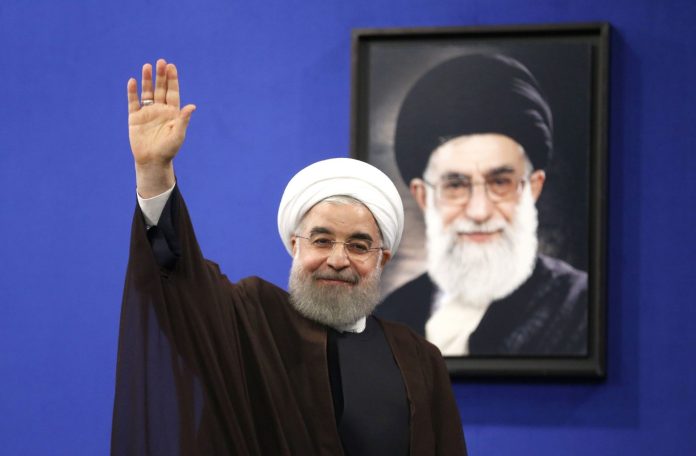
Aide: Iran’s ex-pres. Rouhani to run for Assembly of Experts vote with 16-member list

Hassan Rouhani

Mohammad Bagher Nobakht, Secretary of Iran’s Moderation and Development Party, who used to serve as the Rouhani administration’s spokesman, added that the 16 candidates on this list including Rouhani himself, will run for the Assembly’s seats from the constituency of the capital Tehran.

He noted that Rouhani views himself as an “establishment insider” and believes that he should serve the country whenever it’s necessary.

All candidates to the Assembly are vetted by the Guardian Council of Iran. Rouhani has been recently qualified to run for the body.

Iran’s Assembly of Experts and the parliamentary elections will be held in next March.

The 88-member Assembly of Experts is empowered to select Iran’s Leader.

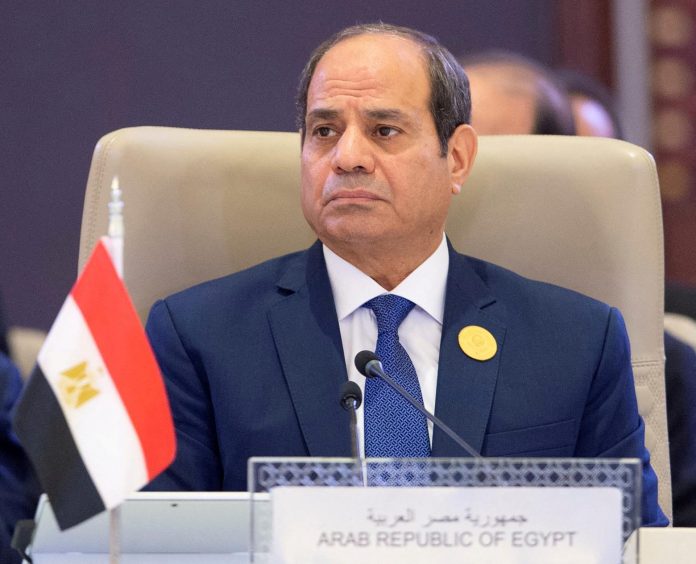
Sisi declared victorious in Egypt presidential election with 90% of votes

Sisi

Sisi won 89.6 percent of the vote, the National Elections Authority said on Monday.

Turnout reached an “unprecedented” 66.8 percent of voters, stated authority head Hazem Badawy.

Over 39 million Egyptians cast their ballots for Sisi, a former army chief who has ruled the most populous Arab country for a decade.

The vote, the result of which was in little doubt, took place as Egypt dealt with various crises, including the Israel-Hamas war in neighbouring Gaza and the country’s worst-ever economic crisis.

Despite Egypt’s afflictions, a decade-long crackdown on dissent has eliminated any serious opposition to Sisi, the fifth president to emerge from within the ranks of the military since 1952.

Sisi was running against three other candidates, none of whom were high profile. The most prominent potential candidate ended his run complaining that his campaign had been impeded and dozens of his supporters arrested.

Runner-up Hazem Omar, who leads the Republican People’s Party, received 4.5 percent of the vote.

Next came Farid Zahran, leader of the left-leaning Egyptian Social Democratic Party, and Abdel-Sanad Yamama from the Wafd, a century-old but relatively marginal party.

Sisi is now set to serve his third – and, according to the constitution, final – term in office, starting in April.

Sisi came to power after the 2013 overthrow of the country’s first popularly elected president, Mohamed Morsi. He was re-elected in 2018. In both previous elections he won with 97 percent of the vote.

Sisi extended the presidential mandate from four to six years and amended the constitution to raise the limit on consecutive terms in office from two to three.

Under his rule, Egypt has jailed thousands of political prisoners, and while a presidential pardons committee has freed about 1,000 in one year, rights groups say that three to four times that many were arrested over the same period.

His supporters credit him with engineering a return to calm in the country after the chaos that followed the 2011 uprising that overthrew President Hosni Mubarak.