Thursday, January 1, 2026
Home Blog Page 1089

Hundreds of thousands starving in Gaza as famine arrives at “incredible speed”: UN aid chief

Gaza War

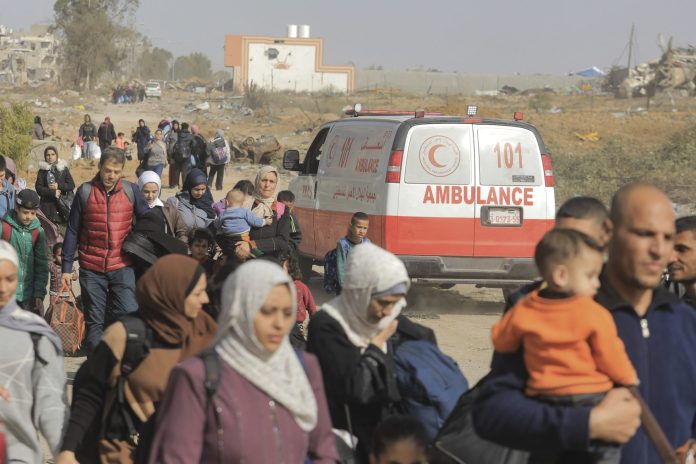
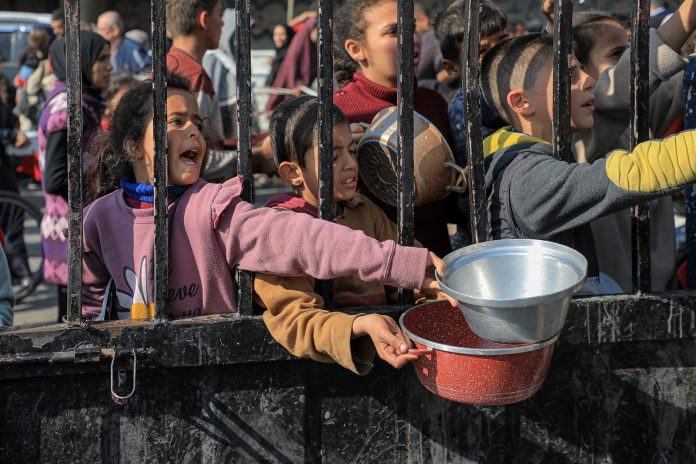
The “great majority” of 400,000 Gazans characterized by UN agencies as at risk of starving “are actually in famine, not just at risk of famine”, UN Under-Secretary-General for Humanitarian Affairs and Emergency Relief Coordinator Martin Griffiths told CNN’s Christiane Amanpour.

“It’s been an extraordinary and holy unwelcome aspect of the Gazan war,” he said, adding, “It has brought famine with such incredible speed to the front of the lines.””

Aid has been trickling into Gaza slowly from two border crossings in the south.

Last week, the UN Office for the Coordination of Humanitarian Affairs announced Israel had denied critical supplies from entering northern Gaza. But Israel has accused the UN’s Palestinian refugee agency of not doing enough and “stalling” the progress.

Griffiths told CNN Monday that work to provide humanitarian aid to 300,000 Gazans who remain in the north of the strip continues to be a challenge.

“If you cannot rely on deconfliction of access routes of people in need, If you cannot rely on hospitals not being attacked … if you cannot rely on people having to move from one place of insecurity to another place of insecurity, those are the issues that make humanitarian aid deliveries.”

“It’s not a matter of the number of trucks that can get in,” he continued.

More than 24,000 people have been killed in Gaza and more than 60,000 others injured since October 7, the Hamas-run Ministry of Health reported Monday. Meanwhile, nearly 90% of Gaza’s pre-war population has been displaced, according to the UN.

Griffiths warned Monday that the dire humanitarian situation in the enclave could create “generational hatred”.

US-led strikes on Houthi targets in Yemen are another “serious consequence” of the war in Gaza, Griffiths said, as he lamented the negative impact on ordinary Yemenis following years of conflict in the country.

It was disappointing to see the prospect of peace in Yemen “snatched away”, Griffiths told CNN.

Griffiths stated he was “not blaming one side or the other”, adding, “But it’s one more terrible consequence. And it is a really serious consequence of the war in Gaza.”

In solidarity with the Palestinians in besieged territory, the Yemeni armed forces have targeted ships in the Red Sea with owners linked to Israel or those going to and from ports in the occupied territories.

In response, the US has formed a military coalition against Yemeni forces in the Red Sea and endangered maritime navigation in the strategic waterway.

The US and the UK, backed by Bahrain, Australia, Canada and the Netherlands, struck more than 60 targets at almost 30 locations in Yemen on Friday, killing five people and injuring six others.

On Saturday, the US Central Command (CENTCOM) announced that a “follow-on action” was conducted against a Yemeni radar facility in Sana’a by the Navy destroyer USS Carney using Tomahawk land attack missiles.

The assaults prompted Yemen’s Supreme Political Council to issue a statement, saying “all American-British interests have become legitimate targets”.
President Raisi calls for immediate implementation of Iran-India agreements

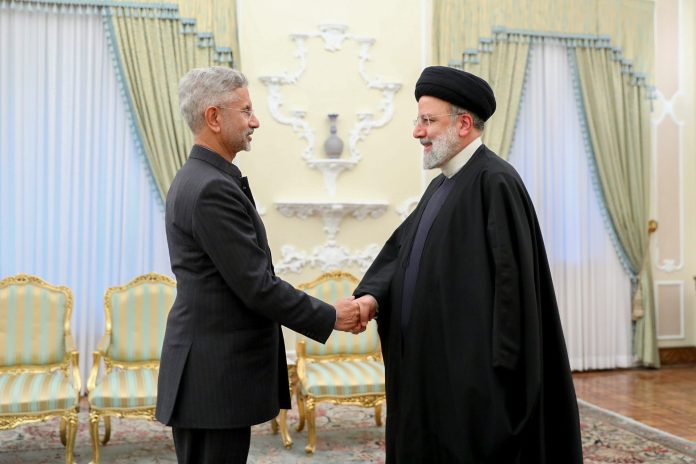
Ebrahim Raisi and Subrahmanyam Jaishankar

In a meeting with Indian Minister of External Affairs Subrahmanyam Jaishankar in Tehran on Monday, Raisi said the two countries should adopt strategies to compensate a delay in the implementation of the agreements.

India has been developing a part of Chabahar on the Iranian southeastern coast along the Gulf of Oman in order to expand trade with Iran, Afghanistan and Central Asian nations.

Pointing to deep-rooted ties between Tehran and New Delhi, Raisi called on the two sides to boost the level of relations in various sectors, including politics, economy, science and technology, transportation and energy.

Elsewhere in his remarks, the Iranian president stated Israel’s atrocities against the Palestinian people in Gaza are a clear example of “war crimes and crimes against humanity”.

“An end to [Israel’s] attacks on Gaza, punishment of the Zionist regime and fulfillment of the Palestinian people’s rights are the only way to restore stability and security to the region,” he emphasized.

He added that India can play an important role in putting an end to Israel’s bombings in Gaza, lifting the blockade against the Strip and restoring the rights of the Palestinian people.

For his part, Jaishankar said India is keen to conclude comprehensive and long-term cooperation agreements with Iran.

India is fully committed to all its obligations regarding the development of Chabahar port and promotion of cooperation with Iran, he added.

Raisi and Jaishankar also exchanged views about the two countries’ common stance on the fight against terrorism and organized crimes, cooperation to establish stability and security in Afghanistan, promotion of mutual trade, especially through national currencies and maintenance of shipping security in international waters.

Jaishankar arrived in Tehran earlier on Monday at the head of a delegation to hold talks with senior Iranian officials. Earlier in the day, he sat down with his Iranian counterpart Hossein Amirabdollahian and attended a joint press conference with him.

US to send 1,500 soldiers to Iraq, Syria amid regional standoff: Report

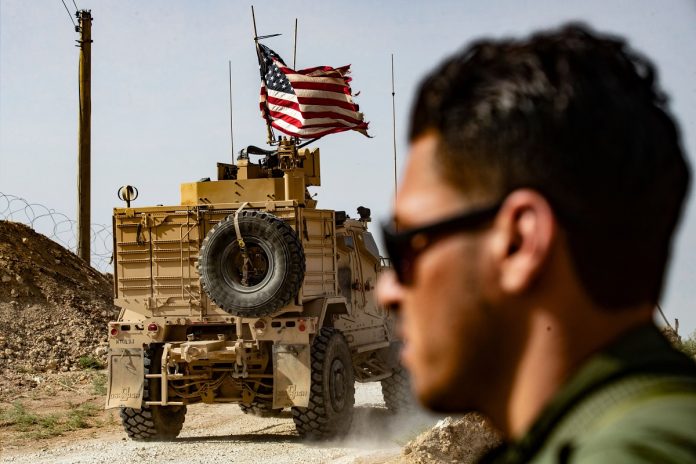
US Troops in Syria

A report by US outlet CBS News showed soldiers from the New Jersey Army National Guard being celebrated and honoured by New Jersey state Governor Phil Murphy before their deployment, which is reportedly their largest since 2008.

The soldiers will first head to Fort Bliss in Texas for training before going to the Middle East.

This is happening while US-opposed forces in Iraq and Syria have targeted US bases at least 130 times since the start of the war in Gaza.

The government of Syria considers US forces to be an “occupying” force, and Iraqi Prime Minister Mohammed Shia al-Sudani stated last week that he wants a “quick” exit of US troops.

The US has occasionally retaliated against these attacks and has accused Iran of “actively facilitating” rocket and drone attacks by Iranian-backed proxy groups on its forces.

In November, US Secretary of Defense Lloyd Austin asserted in a statement that Washington “does not seek conflict and has no intention nor desire to engage in further hostilities”, but he added that “these Iranian-backed attacks against US forces are unacceptable and must stop”.

Iran’s Minister of Foreign Affairs Hossein Amirabdollahian has stated that Tehran “neither gives orders to the resistance groups across the region, nor stops them from taking decisions in their own countries based on their own interests”.

We cannot allow what has been happening in Gaza to continue: UN chief

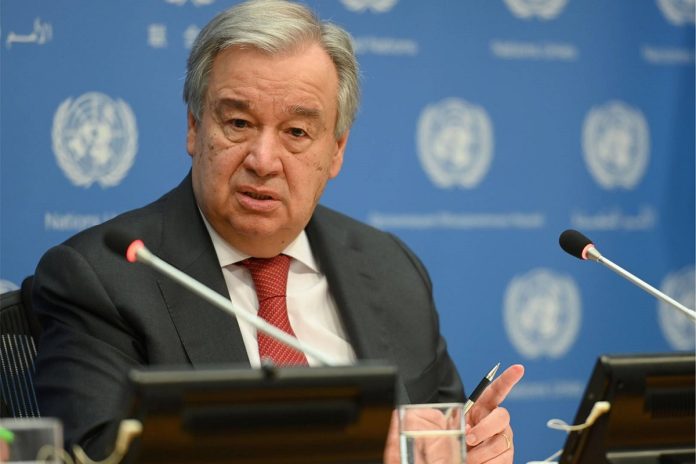
United Nations Secretary General Antonio Guterres

Guterres didn’t hold back on renouncing the horrific Hamas attacks, the unprecedented civilian casualties and catastrophic humanitarian conditions in Gaza since Israel launched war on Hamas, the taking of and the fate of the hostages in Gaza and the tensions spilling over across the region.

He said the only solution is an immediate humanitarian ceasefire and demanded the immediate and unconditional release of all hostages in Gaza.

The UN Secretary General also called for all accounts of sexual violence committed by Hamas and others on October 7 to be rigorously investigated and prosecuted.

He went on to add that the “onslaught on Gaza by Israeli forces over these 100 days has unleashed wholesale destruction and levels of civilian killings at a rate that is unprecedented during my years as Secretary-General”.

“Nothing can justify the collective punishment of the Palestinian people.”

“The longer the conflict in Gaza continues, the greater the risk of escalation and miscalculation. We cannot see in Lebanon what we are seeing in Gaza. And we cannot allow what has been happening in Gaza to continue,” Guterres finished his speech by saying.

Israel has launched a deadly onslaught on the Gaza Strip since the Hamas attack, killing at least 24,100 people and injuring 60,834 others, while nearly 1,200 Israelis are believed to have been killed.

The offensive has left 85% of Gaza’s population internally displaced amid acute shortages of food, clean water and medicine, while 60% of the enclave’s infrastructure was damaged or destroyed, according to the UN.

Gaza scene of largest displacement of Palestinians since 1948: UN

Gaza War

The UN agency on Monday provided some updates about the Israeli bombardment in 100 days and the ensuing displacement of masses.

In a statement posted on X, UNRWA said, “An entire generation of children is traumatized, thousands have been killed, maimed, and orphaned. People live through the unliveable.”

The UN agencies and aid groups say almost two million people, nearly 90 percent of the population, have been displaced since October 7, 2023, when Israel launched its aggression against the besieged territory.

UNRWA also posted a video that went through 100 days of hostilities in Gaza in 100 seconds.

Philippe Lazzarini, the UNRWA chief, recently labeled Israel’s onslaught on the besieged Palestinian territory a stain for humanity.

“The massive death, destruction, displacement, hunger, loss, and grief of the last 100 days are staining our shared humanity.”

In a statement released on Sunday, the Palestinian Ministry of Foreign Affairs and Expatriates announced 100 days have passed “and the Israeli occupation has turned Gaza into an uninhabitable place, committed horrific crimes, and forcibly displaced approximately 2 million people.”

On May 15, 1948, some 750,000 Palestinians were forcibly evicted from their land by Israeli forces and took refuge mainly in the occupied Wes Bank, the Gaza Strip and Palestine’s neighboring states. Today, around 5 million Palestinians are still displaced and are denied the right to return to their homeland.

Israel has killed nearly 24,000 people in Gaza since early October.

The civilian infrastructure there has sustained extensive damage as a result of the relentless Israeli bombing.

Latest figures show nearly 100 schools and universities and more than 140 mosques in the Gaza Strip have been completely destroyed. More than 80 hospitals and health centers are already out of service.


Iran strikes terrorists, Mossad bases in Syria, Iraq’s Kurdistan

Iran Missile

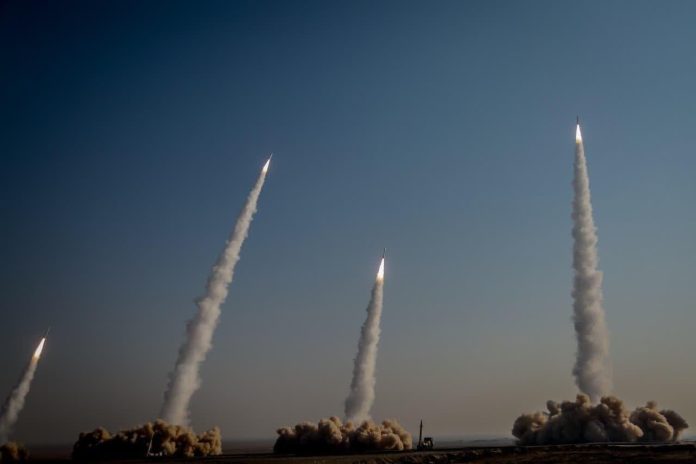
The IRGC said in a statement on Tuesday that the first barrage of missiles overnight hit the headquarters of terror groups in the militant-held areas in Syria.

The statement said they were involved in the recent terrorist attacks in the Iranian cities of Kerman and Rask.

The Iranian forces also targeted an espionage center used by Israel’s Mossad spy agency in Iraq’s Kurdistan region to plan terrorism plots in the region, according to a second statement by the IRGC.

The statement also said the operation was in response to the recent assassinations of the commanders of resistance fronts by Israel.

The operation came after a twin terrorist bomb explosion in Kerman claimed by Daesh killed nearly 100 people and injured hundreds of others who had convened on January 3 to commemorate Iran’s senior commander General Qassem Soleimani on his martyrdom anniversary.

Another terrorist attack hit a police station in the city of Rask in Sistan and Baluchestan Province last month, which claimed the lives of 11 police officers and left at least six others injured.

Israel withdraws one of four military divisions from Gaza

Israeli Army

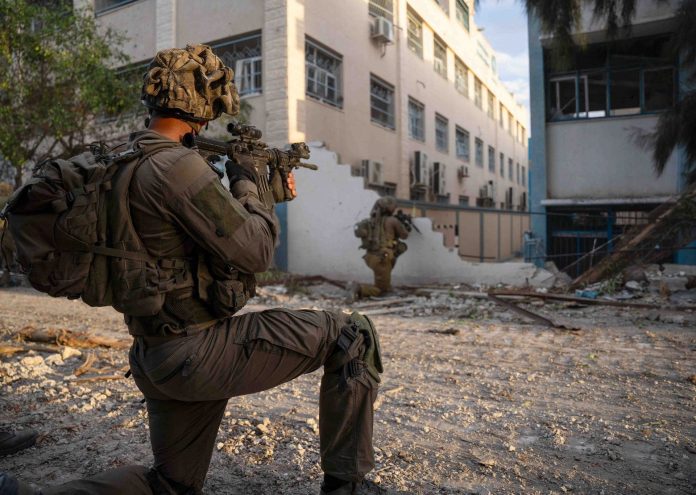
The division will return to Israel for rest and training before any decision is made as to whether it will be redeployed. The other three divisions will remain in Gaza.

Israel has announced it is wrapping up its intense phase of the fighting in the blockaded territory and will shift to a lower intensity phase in the war.

The 36th division had been deployed to northern Gaza, the area hit hardest by Israel’s military campaign in the first few months of the conflict.

Israel has launched a deadly onslaught on the Gaza Strip since Hamas’ Oct. 7 attack, killing at least 24,100 people and injuring 60,800 others, while nearly 1,200 Israelis are believed to have been killed.

The offensive has left 85% of Gaza’s population internally displaced amid acute shortages of food, clean water and medicine, while 60% of the enclave’s infrastructure was damaged or destroyed, according to the UN.

Hamas popularity boosted in Gaza and West Bank: Poll

Hamas Group

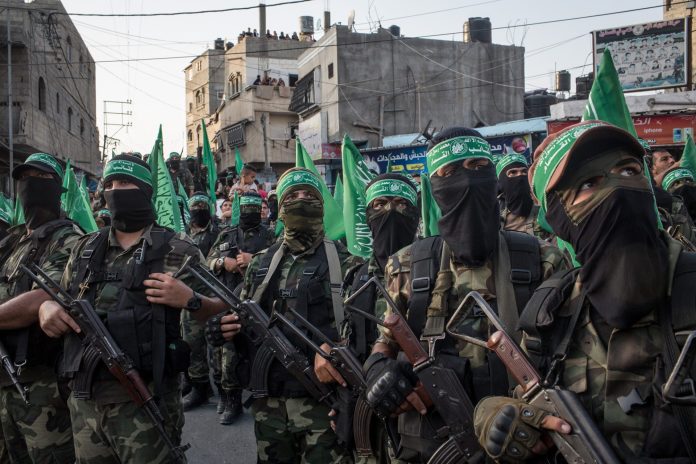
“Support for Hamas in the West Bank increased considerably by more than three times to 44 percent but increased slightly in the Gaza Strip to 42 percent. Support for Fatah [a secular political party that dominates the government of the Palestinian Authority] dropped considerably to 17 percent only (16 in the West Bank and 18 in the Gaza Strip),” according to the findings.

It also added the war has also led to a significant decline in support for the Palestinian Authority.

The poll also found that the war has also led to a significant rise in support for armed struggle in the occupied West Bank.

In mid-December, a wartime opinion poll among Palestinians showed a rise in support for Hamas, which appears to have ticked up even in the Israeli-bombarded Gaza Strip.

The survey also shows an overwhelming rejection of Western-backed President Mahmoud Abbas, with nearly 90% saying he must resign.

Israel has launched relentless air and ground attacks on the Gaza Strip since a cross-border attack by Hamas which Tel Aviv says killed 1,200 people.

At least 24,100 Palestinians have since been killed, mostly women and children, and 60,800 injured, according to Palestinian health authorities.

According to the UN, 85% of the population of Gaza is already internally displaced amid acute shortages of food, clean water, and medicine, while 60% of the enclave’s infrastructure is damaged or destroyed.

UK to “wait and see” on possible further strikes against Yemen’s Houthis: Defense secretary

Yemen Houthis

“Our intention is not to go into Yemen or anything like that, but simply to send a very clear, I hope, unambiguous message to the Iranian-backed Houthis, that their behavior in the Red Sea is completely unacceptable,” Grant Shapps said when asked by Sky News if the UK would support further strikes on Houthi targets.

“We will now watch and monitor the situation very carefully,” he added.

“Let’s wait and see what happens, because it’s not that we want to be involved in action in the Red Sea. But ultimately freedom of navigation is an international right.”

Prime Minister Rishi Sunak also gave the assessment to parliament, days after the UK participated in air strikes with the US on Houthi targets in Yemen.

“Our military strike against the Houthis was limited and proportionate and came in response to a direct threat to our ships and, therefore, to the UK itself,” Sunak said, adding that the UK had conducted 13 raids on the Houthis with no civilian casualties.

He also stated Houthi attacks on shipping in the Red Sea were “nothing to do with Israel and Gaza and target maritime navigation”.

The British government announced there was no time to have a session in parliament to debate the strikes before they were conducted and, therefore, Sunak’s comments on Monday are his first to parliament explaining why the UK participated.

In solidarity with the Palestinians in besieged territory, the Yemeni armed forces have targeted ships in the Red Sea with owners linked to Israel or those going to and from ports in the occupied territories.

In response, the US has formed a military coalition against Yemeni forces in the Red Sea and endangered maritime navigation in the strategic waterway.

The US and the UK, backed by Bahrain, Australia, Canada and the Netherlands, struck more than 60 targets at almost 30 locations in Yemen on Friday, killing five people and injuring six others.

On Saturday, the US Central Command (CENTCOM) announced that a “follow-on action” was conducted against a Yemeni radar facility in Sana’a by the Navy destroyer USS Carney using Tomahawk land attack missiles.

The assaults prompted Yemen’s Supreme Political Council to issue a statement, saying “all American-British interests have become legitimate targets”.
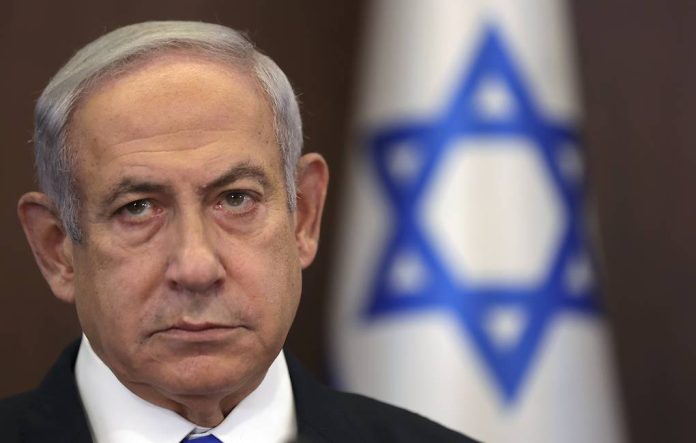
Netanyahu ‘unfit’ to run Gaza war: Opposition leader

Benjamin Netanyahu

“The State of Israel needs change now, and there is no possibility of waiting any longer,” Lapid wrote on X.

“This government does not know how to manage a war, and it is pushing us into a deep economic crisis that hurts every citizen’s pocket, and has landed us in The Hague,” he added.

South Africa has filed a lawsuit before the International Court of Justice accusing Israel of perpetrating genocide against Palestinians in the Gaza Strip during its deadly military offensive. It also requested provisional measures from the court to protect the Palestinian people, including by calling upon Israel to immediately halt its military attacks.

“This government is not fit to manage the war, and Netanyahu is not fit to run the country,” Lapid said.

The opposition leader stressed that his party is ready to vote in favor of an alternative government to be led by another prime minister.

Calls have grown for holding fresh elections in Israel amid criticism of Netanyahu over his failure to acknowledge responsibility for a cross-border attack by Hamas on Oct. 7.

Opinion polls conducted by Israeli media in the past few days suggested that if early elections were held now, Netanyahu would be unable to form a government, while former Defense Minister and war cabinet member Benny Gantz is considered the most likely to succeed.

Israel has launched a deadly offensive on the Gaza Strip since Oct. 7, killing at least 24,285 people and injuring 61,154 others, while nearly 1,200 Israelis are believed to have been killed.

The deadly onslaught has left 85% of Gaza’s population internally displaced amid acute shortages of food, clean water and medicine, while 60% of the enclave’s infrastructure was damaged or destroyed, according to the UN.