Thursday, January 1, 2026
Home Blog Page 1085

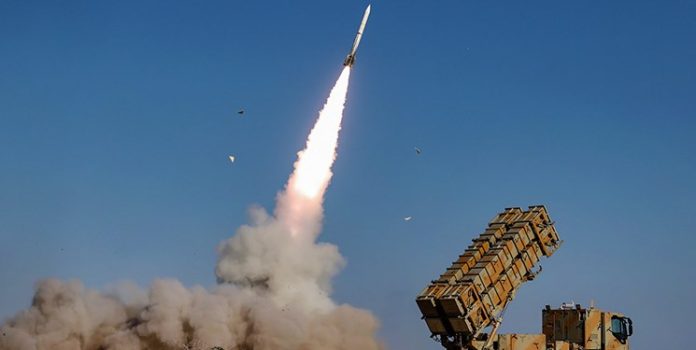
Day two of Iranian air defense drills features e-warfare tactics

The maneuvers featured operations using air defense systems to counter electronic and cyber attacks.

During the exercises, participating troops practiced shooting down targets at low altitude using, for the first time, a domestically developed short-range air defense system called ‘The Ninth of Day.’

The units involved in the drills also used drones to electronically disrupt radars as well as air reconnaissance systems.

The maneuvers also involved intelligence satellites, unmanned aerial vehicles and air defense radars as well as intelligence gathering systems used to spot and take out mock enemy targets.

The drills are carried out jointly by the Iranian Army and Iran’s Islamic Revolution Guards Corps (IRGC).

The war games are being conducted along Iran’s southern coastline with the Persian Gulf and the Sea of Oman.

Dozens of jets and drones display a raft of modern warfare tactics at different altitudes by hitting mock targets.

Furthermore, a number of advanced military systems are used for the first time during the drills.

Iran’s Armed Forces regularly hold maneuvers to hone their skills and showcase their military prowess.

In recent years, Iranian experts and engineers have made remarkable breakthroughs in developing and manufacturing a broad range of equipment, making the Armed Forces self-sufficient.
Iran says took preventive measure against terrorists in Pakistan before their infiltration

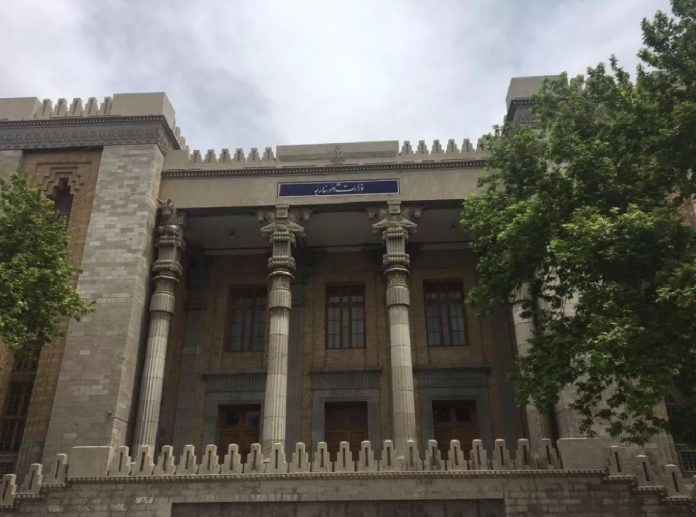
The Iranian Foreign Ministry

The Iranian Ministry of Foreign Affairs issued a statement on Thursday evening, adding it adheres to the policy of good neighborliness vis-à-vis Pakistan.

The ministry also condemned Pakistan’s drone attack on an Iranian village on the border between the two countries.

The full statement of Iran’s Foreign Ministry is as follows:

The Ministry of Foreign Affairs of the Islamic Republic of Iran condemns Pakistan’s unbalanced and unacceptable drone attack on non-Iranian villagers on the border of the two countries.

At the same time, the Islamic Republic of Iran adheres to the policy of good neighborliness and brotherhood between the two nations and the two governments of the Islamic Republic of Iran and Pakistan. It does not allow enemies to strain the amicable and brotherly relations of Tehran and Islamabad.

The Islamic Republic of Iran considers the security of its people and its territorial integrity as a red line and strongly expects the friendly and brotherly government of Pakistan to adhere to its obligations in preventing the establishment of bases and the deployment of armed terrorist groups on its soil.

On Tuesday, 16 January 2024, the Border Taskforce of the Islamic Revolution Guards Corps (IRGC) Ground Force, situated in Sistan and Baluchistan Province, took a preventive action against a terrorist group preparing to infiltrate the territory of the Islamic Republic of Iran to carry out another terrorist operation similar to the criminal and terrorist attack in Rask.

The action was carried out against the terrorist group’s barracks and headquarters located in the heights of the region, kilometers away from residential areas––a procedure which is part of the inherent duties of the border forces of the Islamic Republic of Iran to “proportionately deal” with any “imminent terrorist threat” against the people and citizens of the country.

It is emphasized that the Islamic Republic of Iran differentiates between Pakistan’s friendly and brotherly government and armed terrorists. The Islamic Republic of Iran always adheres to its policy of good neighborliness and does not allow its enemies and terrorist allies to strain these relations, especially when the genocide and crimes of the Zionist regime are the foremost issue affecting the Islamic world.

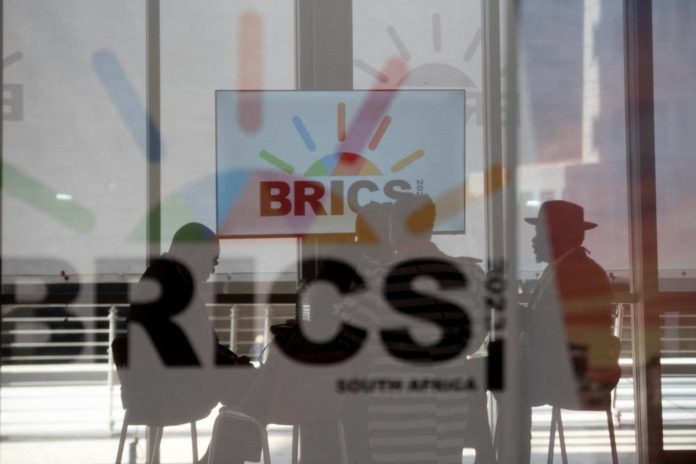
Dozens of states want to join BRICS: Russia

BRICS

Discussing the results of Russian diplomacy in 2023, Lavrov argued that one of the most significant steps toward strengthening the global position of BRICS was the decision to expand the group of emerging economies.

BRICS officially announced the addition of new member countries at its 2023 summit in August, marking its first expansion since South Africa joined in 2010. As well as the founding members of Brazil, Russia, India, and China, the association also now includes Egypt, Ethiopia, Iran, and the United Arab Emirates.

A range of other states have expressed their desire to become BRICS members, including Venezuela, Thailand, Senegal, Cuba, Kazakhstan, Belarus, Bahrain, and Pakistan – all of which have formally submitted applications to join.

Other countries such as Syria, Turkey, Nicaragua, Indonesia, and Zimbabwe have also expressed interest in joining the group but have yet to file official accession applications.

Given this increased interest in aligning with BRICS, Lavrov stated that the group has “a great future ahead”. He further pledged that Russia, which assumed the rotating BRICS chairmanship on January 1, will help ensure that new members “organically fit into our common work and contribute to the strengthening of positive trends not only within BRICS, but also on the international arena in the interests of the world majority”.

According to the International Monetary Fund (IMF), BRICS currently accounts for as much as 36% of global GDP in terms of purchasing power parity, surpassing the G7 group of Western countries.

Earlier this month, media reports also suggested that Saudi Arabia – the biggest economy in the Arab world – had joined the BRICS group. Riyadh later dismissed the reports, clarifying that while it has received an invitation to attend BRICS, it has not yet decided to officially join the organization.

Last year, Argentina also accepted an invitation to become an official BRICS member, but made a U-turn after the newly-elected president, Javier Milei, opted out of the group, declaring he would not “ally with communists”.

Pakistan respects sovereignty, territorial integrity of all countries: President

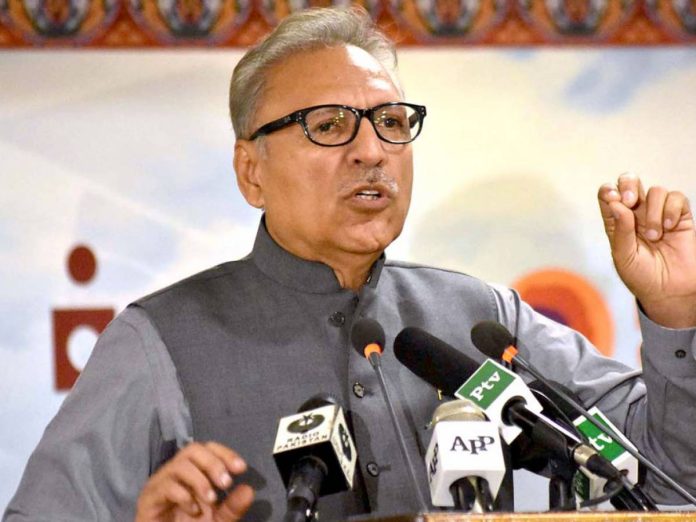
“Pakistan would not compromise on its national security and territorial integrity and would take all necessary measures to defend its soil,” Alvi stated.

He called terrorism a “common challenge that required global efforts for its elimination”.

“Pakistan fully respected the sovereignty and territorial integrity of all states and expected the same from other nations not to violate international law,” Alvi continued, adding that Pakistan and Iran are “brotherly countries and they needed to resolve issues through dialogue and mutual consultation”.

Pakistan announced it undertook a series of “highly coordinated and specifically targeted precision military strikes” against “terrorist hideouts” in Iran’s Sistan-Baluchestan province, killing a number of “terrorists”.

Earlier, deputy governor of the province Alireza Marhamati said ten non-Iranian nationals, including women and children, were killed in the attack.

The move came after Iran on Tuesday launched attacks in Pakistan targeting what it described as bases for the militant group Jaish al-Adl in the border town of Panjgur in Balochistan, prompting strong condemnation from Islamabad. Pakistan also recalled its ambassador and suspended high-level visits with Tehran.

Pakistan on Thursday said that Islamabad has “no interest in escalating any situation” with Tehran after the country’s military carried out strikes against “terrorist hideouts” inside Iran.

“Pakistan considers people of Iran as our friends and brothers and we have no interest in escalating any situation,” stated Mumtaz Zahra Baloch, the Pakistani Foreign Ministry spokesperson, told a news conference in Islamabad.

Baloch emphasized that Pakistan believes in dialogue and cooperation, adding: “We also believe that dialogue and cooperation is essential for confronting common challenges, including the menace of terrorism and we would like to continue to engage with all neighbors including Iran.”

Netanyahu rejects deal for release of Hamas-held hostages in Gaza: Report

Israel Hostages Hamas

Israel’s Channel 13 reported that unnamed Israeli ministers outlined the general framework of an agreement in recent days aimed at securing the release of Israeli captives held by Hamas.

Negotiations were expected to proceed through an unnamed mediator, but Netanyahu reportedly rejected the move.

The decision to reject the proposal, as indicated by the channel, was made without coordinating with war cabinet ministers Benny Gantz and Gadi Eisenkot.

Channel 13 also reported statements from unnamed political officials claiming that Netanyahu was hindering efforts towards an agreement for the release of the hostages.

Regarding the negotiations, Netanyahu’s office announced the condition demanded by Hamas, which the prime minister categorically rejected, is the end of the war.

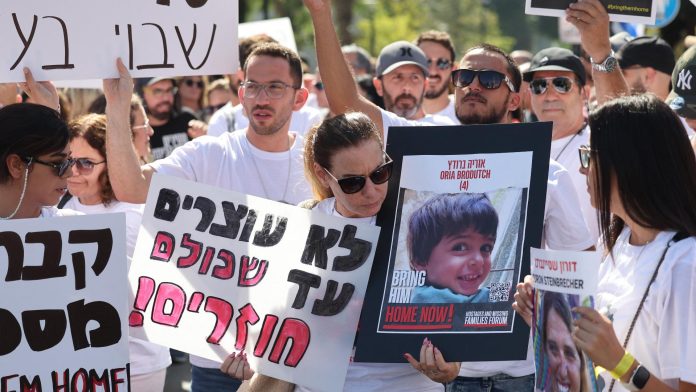
Netanyahu’s office said Wednesday that 253 people had been taken hostage to Gaza on October 7, announcing a firm number for the first time.

Previously Israel had been saying “more than 250”, Netanyahu’s office told CNN.

Hamas and other armed groups operating in Gaza seized the hostages in a surprise attack, killing about 1,200 others that day.

Following hostage releases and one rescue, Israel now believes 132 hostages from October 7 are still being held in Gaza – 105 of them alive and 27 dead.

The Israeli army has been conducting a devastating war in Gaza since Oct. 7, resulting in 24,448 deaths and 61,504 injuries.

The conflict has led to the displacement of more than 85% of the population in the Gaza Strip — approximately 1.9 million residents — according to Palestinian authorities and the UN.

Tehran condemns Pakistan’s raid on Iran’s soil, summons Islamabad envoy

Nasser Kanaani

The Pakistani diplomat was summoned to the foreign ministry on Thursday in the absence of the country’s ambassador to Tehran for an explanation regarding several explosions in different areas around the city of Saravan in Sistan and Baluchestan province, close to the border with Pakistan earlier in the day.

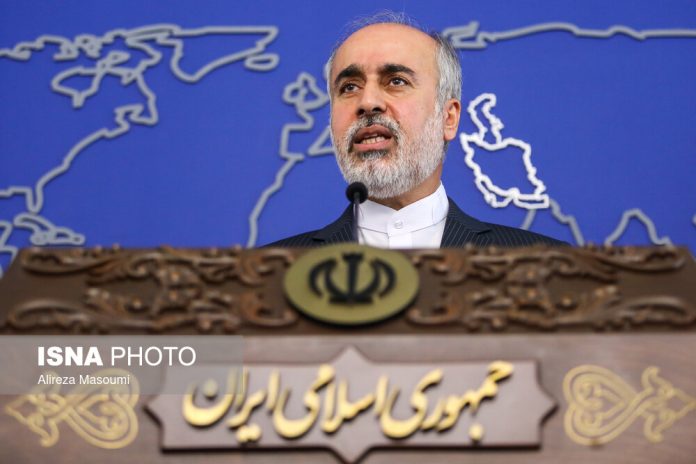
Iranian Foreign Minister Nasser Kanaani later condemned the assault and confirmed that the Pakistani chargé d’affaires had been summoned by the ministry to convey Tehran’s protest to Islamabad and provide an explanation about the attack.

Deputy governor of the province Alireza Marhamati said nine non-Iranian nationals, including two men, three women and four children, were killed in the attack.

He added that Iranian security officials are investigating the issue.

Pakistan on Thursday said it struck “terrorist hideouts” in Iran, less than two days after Tehran launched airstrikes which Islamabad called a violation of its airspace.

“This morning Pakistan undertook a series of highly coordinated and specifically targeted precision military strikes against terrorist hideouts in Siestan-o-Baluchistan province of Iran,” the Foreign Ministry announced in a statement.

Pakistan stressed that Islamabad has “no interest in escalating any situation” with Tehran after the country’s military carried out strikes against “terrorist hideouts” inside Iran.

“Pakistan considers people of Iran as our friends and brothers and we have no interest in escalating any situation,” said Mumtaz Zahra Baloch, the Pakistani Foreign Ministry spokesperson, told a news conference in Islamabad.

Baloch emphasized that Pakistan believes in dialogue and cooperation, noting: “We also believe that dialogue and cooperation is essential for confronting common challenges, including the menace of terrorism and we would like to continue to engage with all neighbors including Iran.”

Iranian MP: No anti-Pakistan terror group based in Iran

Pakistan Attack Iran

The remarks by Moin al-Din Saeedi came after Pakistan launched a series of military strikes on Thursday allegedly ‘against terrorist hideouts’ in the Iranian city of Saravan, in Sistan and Baluchestan province, bordering Pakistan.

The attack apparently came in response to Iran’s attack on Pakistan a day earlier to target an anti-Iran terrorist group known as Jaish al-Adl.

Saeedi called on both sides to show restraint and pursue the matter through a probe into the developments.

The Iranian lawmaker said there are no exact figures on the casualties after Pakistan’s strikes, adding all hospitals in the region are on alert.

According to initial official figures, nine non-Iranian nationals have been killed in misslie attack by Pakistan.

Medicine, aid for Palestinians, hostages arrive in Gaza: Qatar

Gaza War

“Over the past few hours, medicine & aid entered the Gaza Strip, in implementation of the agreement announced yesterday for the benefit of civilians in the Strip, including hostages. Qatar, along with its regional and international partners, continues mediation efforts at the political and humanitarian levels,” Al-Ansari wrote on X, formerly Twitter, late Wednesday.

Two Qatari Armed Forces aircraft carrying 61 tons of aid — including food and medicine —arrived in El Arish, Egypt, earlier Wednesday. The aid was provided by Qatar and France, according to Qatar’s Foreign Ministry. Ansari stated Wednesday Qatar and its regional and international partners are continuing mediation efforts at the political and humanitarian levels after the aid arrived in Gaza.

The aid arrives after Qatar announced on Tuesday it brokered a deal between Israel and Hamas to allow medication into Gaza for Palestinians and Israeli hostages. France also took part in helping with the Qatari-led mediation, Qatar’s foreign ministry has announced.

On Oct. 7, Hamas carried out an attack on Israeli settlements near Gaza, resulting in the death of 1,200 Israelis, injury to 5,500 and the capture of at least 240 hostages.

Hamas released around a half of its hostages during the week-long truce in November. According to the Israeli authorities, it currently holds 132 people, while 25 captives have been killed in the fighting. Israel estimates the presence of “137 hostages still held in the Gaza Strip”, according to media reports and statements from Israeli officials.

Israel has launched relentless air and ground attacks on the Gaza Strip since the cross-border attack by Hamas. At least 24,285 Palestinians have since been killed, mostly women and children, and 61,154 injured, according to Palestinian health authorities.

According to the UN, 85% of the population of Gaza is already internally displaced amid acute shortages of food, clean water and medicine, while 60% of the enclave’s infrastructure is damaged or destroyed.

Palestinian labour minister warns of impending societal implosion as a result of skyrocketing unemployment

Gaza War

“Poverty and unemployment could lead to the destruction of Palestinian society and could lead to emigration,” warned Abu Jaish, who told Al Jazeera that 500,000 jobs had been lost in the occupied West Bank and Gaza.

“Living conditions in the Gaza Strip are very hard and tragic, beyond what can be imagined,” Abu Jaish added.

“We can see that there is an inability to provide food and that Palestinians in Gaza are finding it difficult to obtain their basic needs, particularly food. What international and Palestinian bodies are doing has not filled the needs of the citizens.”

The minister stated that authorities were doing everything they could to bring more food into Gaza, but that Israeli policies were preventing sufficient amounts from entering.

New data from the International Labour Organization (ILO) and the Palestinian statistics office showed nearly 66 percent of jobs have been lost in the Gaza Strip since the start of the war between Israel and Hamas on October 7.

Palestinians have seen their employment reduced by two-thirds in the Gaza Strip – equivalent to 192,000 jobs – since the outbreak of the war, the ILO and Palestinian Central Bureau of Statistics (PCBS) reported.

The spillover effect on the economy of the occupied West Bank was also significant, with a one-third reduction in employment – equivalent to 276,000 jobs.

experts have warned that Israel’s war on the Gaza Strip has completely destroyed the besieged enclave’s economy.

Official: Ten killed in missile raid, fired from Pakistan, on southeast Iran, Tehran demands explanation

Iran Pakistan

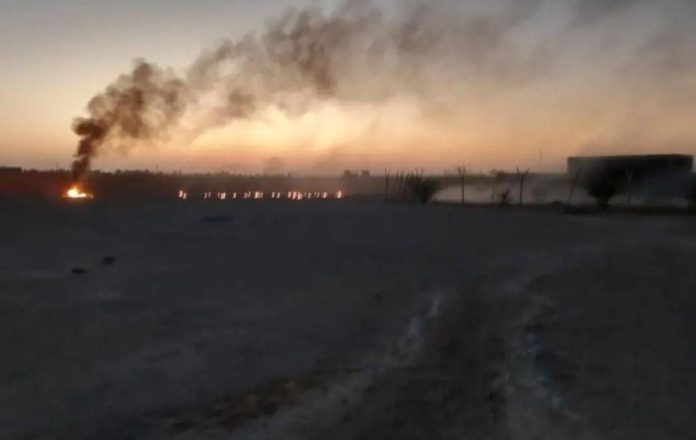
An Iranian security official said several explosions were heard in different areas around the southeastern city of Saravan in Sistan and Baluchestan province, close to the border with Pakistan early on Thursday morning.

Deputy governor of the province Alireza Marhamati stated that ten non-Iranian nationals, including women and children, were killed in the strike.

An informed source said Iran has demanded Pakistan’s “immediate explanation” about the incident.

In a press release on Thursday, Pakistan’s Foreign Ministry confirmed that the country undertook “a series of highly coordinated and specifically targeted precision military strikes against terrorist hideouts” in Iran’s Sistan and Baluchestan province.

“This morning’s action was taken in light of credible intelligence of impending large-scale terrorist activities,” it added.

The ministry reiterated Pakistan’s full respect for Iran’s sovereignty and territorial integrity and said, “We have always emphasized dialogue and cooperation in confronting common challenges including the menace of terrorism and will continue to endeavor to find joint solutions.”

It emphasized that the action showed Pakistan’s “unflinching resolve to protect and defend its national security against all threats” and vowed to continue to take all necessary steps to preserve the safety and security of the country’s people.

The blasts occurred after Iran on Tuesday carried out simultaneous drone and missile attacks into two bases of the so-called Jaish al-Adl terrorist group in Pakistan adjacent to Iranian borders.

Speaking at the World Economic Forum in Davos on Wednesday, Iranian Foreign Minister Hossein Amirabdollahian stressed members of the terrorist group are Iranians who have taken shelter in Pakistan and that Tehran had repeatedly warned Islamabad to prevent their anti-Iran cross-border operations.

Jaish al-Adl, which was formed in 2012, has carried out several attacks on Iranian soil in recent years.

The group claimed responsibility for an attack in December on a police station in the southeastern city of Rask that killed at least 11 Iranian police officers.

On January 10, another attack by the group on a police station in the city killed a policeman.