Saturday, December 27, 2025
Home Blog Page 1076

IRGC colonel assassinated in Iran’s Sistan and Baluchestan

IRGC

The IRGC Ground Force’s Quds Base said in a statement that Colonel Hossein-Ali Javdanfar, a serviceman at IRGC’s Salman unit in the province, was killed in a targeted shooting attack on the road linking Khash city to the provincial capital city of Zahedan.

The statement described Javdanfar as an IRGC advisor, who had traveled to Saravan County on a mission to oversee cultural activities and projects there.

Efforts are underway to identify the attackers, it noted.

This came on the same day that the IRGC Ground Force managed to fight off a team of militants affiliated with the Pakistan-based so-called Jaish al-Adl terrorist group in the same Iranian province.

According to a statement released by the IRGC Ground Force’s Quds Base, IRGC servicemen, having fully detected the fully-armed terrorists and been informed of their plans for terrorist activities, clashed with them in Kastag village of Rask County.

The statement added that a terrorist was killed in the operation, while the rest fled the area into southwestern Pakistan. An amount of ammunition, weapons and explosives was also recovered from the militants.

Sistan and Baluchestan province, which borders Pakistan, has witnessed several terror attacks targeting both civilians and security forces over the past years.

Iran’s security forces have invariably protected the border areas and managed to repel almost all terrorist attacks by foreign-backed anti-revolution elements across the country.

Back on December 15 last year, the Jaish al-Adl terrorist group claimed responsibility for a vicious terrorist assault on Rask County’s police headquarters.

Alireza Marhamati, deputy provincial governor in security and political affairs, stated at the time that 11 police forces, including officers and conscripts, were killed in the attack.

US re-designates Yemen’s Houthis as specially designated global terrorists

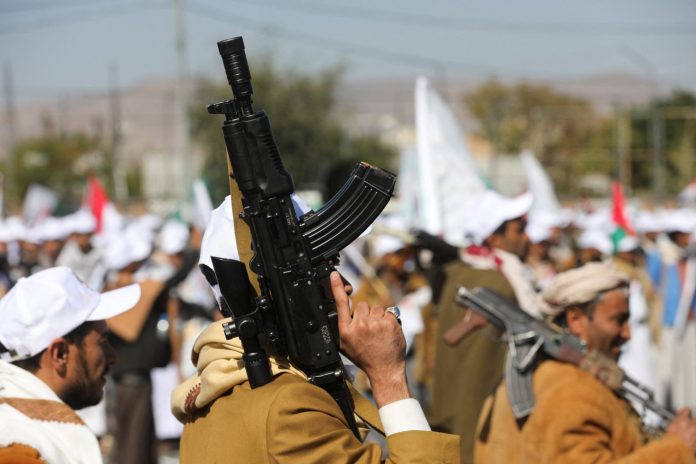
Yemen Houthis

The White House’s National Security Adviser Jake Sullivan made the announcement on Wednesday, saying it was a response to Houthi attacks on shipping in the Red Sea.

“Today, in response to these continuing threats and attacks, the United States announced the designation of Ansarallah, also known as the Houthis, as a Specially Designated Global Terrorist,” Sullivan stated in a statement.

However, he added that the designation – which comes into effect in 30 days – could be reevaluated if the Houthis cease attacks in the Red Sea and the Gulf of Aden.

Administration officials say the designation is aimed at deterring the Houthis from their ongoing aggression in the Red Sea.

It is the latest in a series of US actions targeting the armed group, and comes as the specter of a wider regional war in the Middle East looms large amid Israel’s war against Hamas in Gaza.

The Biden administration claimed that the re-designation of the Houthis, which comes with harsh sanctions, will not have a negative impact on the people of Yemen since the sanctions will include “unprecedented” humanitarian carve-outs.

“We are sending a clear message: commercial shipments into Yemeni ports on which the Yemeni people rely for food, medicine and fuel should continue and are not covered by our sanctions,” the White House announced in a news statement on Wednesday.

The administration removed the Houthis’ SDGT designation and de-listed it as a foreign terrorist organization (FTO) in February 2021, after it was designated by former President Donald Trump’s administration in its final weeks.

Rights advocates have warned that blacklisting the Houthis would complicate the work of humanitarian organisations operating in areas under the group’s control. Yemen is enduring one of the world’s worst humanitarian crises where millions of people are dependent on international aid.

A spokesman for the Yemeni group has stated that the attacks on ships in the Red Sea heading to Israel will continue, despite the designation.

The US designation of Yemen’s Houthis as a terrorist group will not affect their operations to prevent Israeli ships or ships heading to Israel from crossing the Red Sea, the Arabian Sea, and the Bab al-Mandab Strait, Houthi spokesman Mohammed Abdulsalam told Reuters on Wednesday.

In solidarity with the Palestinians in besieged territory, the Yemeni armed forces have targeted ships in the Red Sea with owners linked to Israel or those going to and from ports in the occupied territories.

In response, the US has formed a military coalition against Yemeni forces in the Red Sea and endangered maritime navigation in the strategic waterway.

The US and the UK, backed by Bahrain, Australia, Canada and the Netherlands, struck more than 60 targets at almost 30 locations in Yemen on Friday, killing five people and injuring six others.

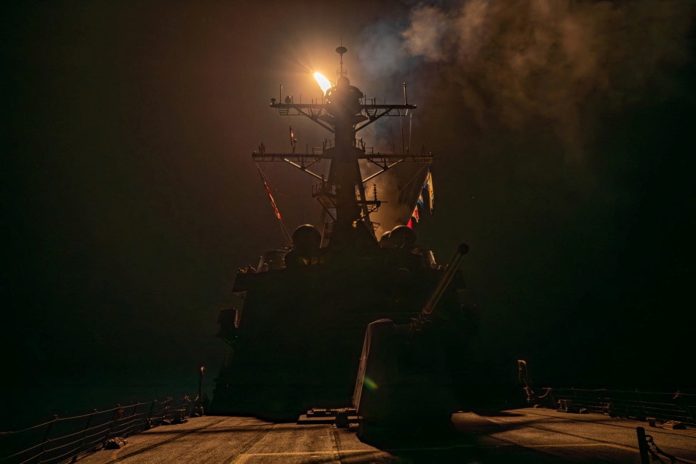
On Saturday, the US Central Command (CENTCOM) announced that a “follow-on action” was conducted against a Yemeni radar facility in Sana’a by the Navy destroyer USS Carney using Tomahawk land attack missiles.

“We cannot have in Lebanon another Gaza”: UN chief

António Guterres

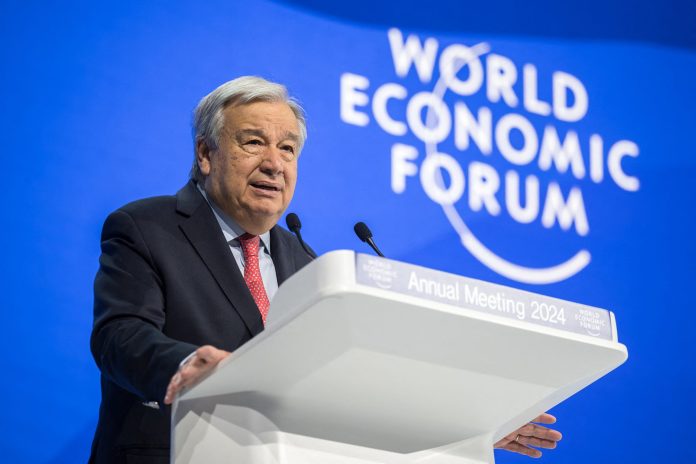
Speaking at the World Economic Forum in Davos, Guterres warned that he is “extremely worried about Lebanon”.

“We cannot have in Lebanon another Gaza,” said Guterres, adding that he sees serious efforts being made by the Lebanese government, the United States and other parties.

“It is absolutely crucial to avoid a messy confrontation in Lebanon that will be the devastation of the country.”

Guterres also called for a humanitarian ceasefire in order to facilitate the liberation of hostages “immediately and unconditionally”, to provide “effective humanitarian aid to the people of Gaza” and to “facilitate a serious negotiation for de-escalation in Lebanon”.

Tensions have flared along the border between Lebanon and Israel amid intermittent exchanges of fire between Israeli forces and Hezbollah in the deadliest clashes since the two sides fought a full-scale war in 2006.

Dozens of Hezbollah members have been killed in clashes with Israeli forces near Lebanon’s border with Israel since the outbreak of the Gaza conflict on Oct. 7.

The border tension comes amid an Israeli military offensive in the Gaza Strip following a cross-border attack by the Palestinian group Hamas on Oct. 7.

Israel has pounded Gaza since then, killing nearly 24,500 Palestinians and injuring 61,000 others, according to local health authorities.

About 85% of Gazans have been displaced, while all of them are food insecure, according to the UN. Hundreds of thousands of people are living without shelter and ⁠less than half the aid trucks are entering the territory than before the start of the conflict.

Pakistan recalls envoy from Tehran, bars Iranian ambassador from returning to post over missile, drone attacks

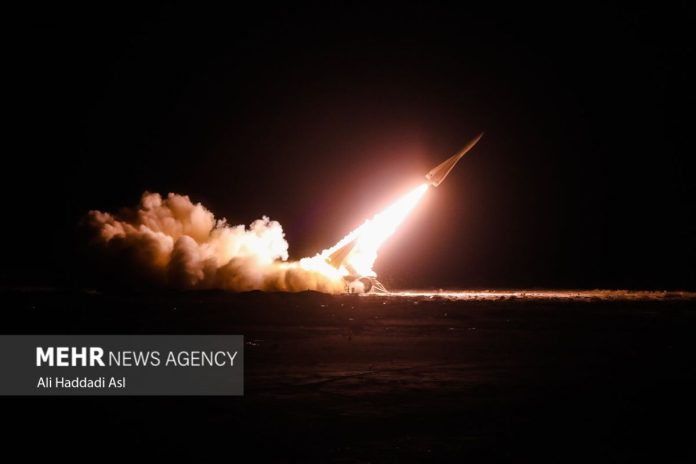
Iran’s missile defense systems

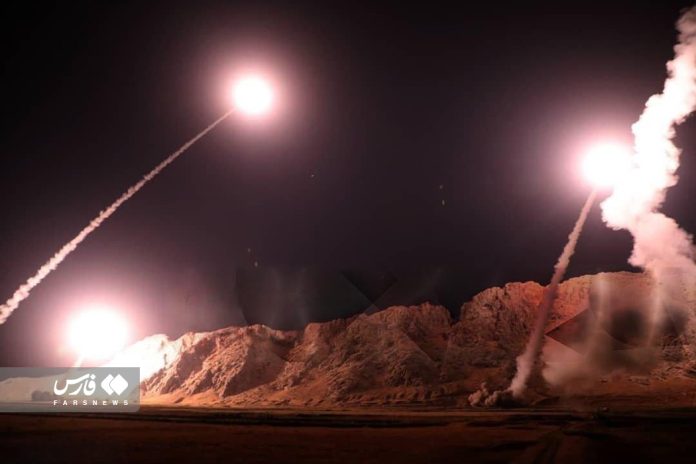
The Islamic Revolution Guards Corps (IRGC) has targeted two main bases of the anti-Iran terror group the so-called Jaish al-Adl in Pakistan’s southwestern province of Balochestan on Tuesday night. These headquarters were destroyed by missiles and drones.

“Last night’s unprovoked and blatant breach of Pakistan’s sovereignty by Iran is a violation of international law and the purposes and principles of the Charter of the United Nations,” foreign ministry spokeswoman Mumtaz Zahra Baloch said in a statement on Wednesday.

She told reporters Islamabad had summoned home its back its ambassador from Iran and that his Iranian counterpart, who is travelling, “may not return for the time being”.

Following the attacks, Pakistan’s Ministry of Foreign Affairs said it had lodged a “strong protest” and summoned the Iranian charge d’affaires over what it called an “unprovoked violation” of its airspace by Tehran.

“This violation of Pakistan’s sovereignty is completely unacceptable and can have serious consequences,” the ministry noted in a statement posted to its website.

“It is even more concerning that this illegal act has taken place despite the existence of several channels of communication between Pakistan and Iran,” it added.

“Pakistan has always said terrorism is a common threat to all countries in the region that requires coordinated action. Such unilateral acts are not in conformity with good neighbourly relations and can seriously undermine bilateral trust and confidence.”

Jaish al-Adl is a terrorist group which largely operates across the border in Pakistan. It is also a U.S.-designated terrorist group.

Last month, the terrorist group claimed responsibility for a deadly attack on a police station in the southeastern Iranian city of Rask. The terrorist attack left 11 police officers dead and six others injured.

Pakistan PM urges joint Tehran-Islamabad fight against terror

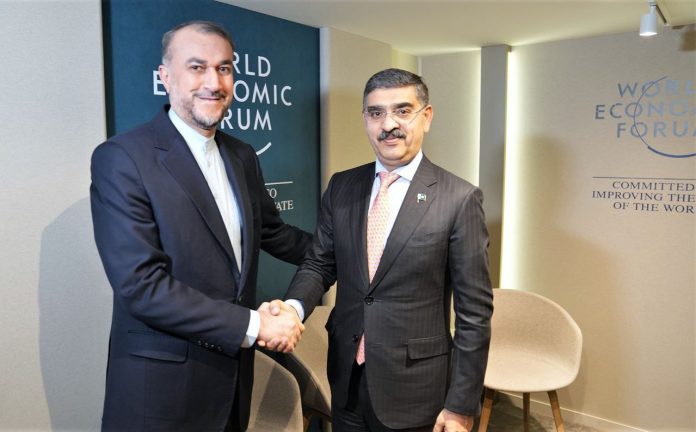
Pakistan's Caretaker Prime Minister Anwar ul Haq and Iranian Foreign Minister Hossein Amirabdollahian

Anwar ul Haq raised the matter in a meeting with Iranian Foreign Minister Hossein Amirabdollahian on the sidelines of the World Economic Forum’s Annual Meeting in Davos, Switzerland.

In the meeting, Amirabdollahian termed Tehran-Islamabad relations as deep-rooted and age-old, highlighting Iran’s readiness to further enhance bilateral ties.

He expressed content with the growing trend of bilateral ties, adding both countries’ leaders have set the $5billion target for mutual trade, which currently stands at $2.5.
“We need to reach the common target through joint efforts,” he said.

Amirabdollahian welcomed efforts to expand border markets between the two countries, adding Iran is prepared to boost cooperation with Pakistan in the domains of energy, namely oil, gas and electricity.

Iran’s diplomacy chief said the issue of fighting terrorism is of utmost importance to both countries, underscoring the need to follow up on the implementation of agreements already reached between the two countries on fighting terror.

The Iranian foreign minister also referred to the Gaza crisis, adding the crisis is spreading from Palestine to other parts of the region.

He said it is essential that Islamic countries, namely Iran and Pakistan, step up their efforts to help end the Israeli regime’s war against Gaza.

Pakistan’s caretaker prime minister, in turn, said Pakistan and Iran face common challenges in the region, and touched upon the recent terrorist attack in the Iranian city of Kerman.

Anwar ul Haq highlighted the need for both countries to work together closely to rein in such terrorist threats.

He touched upon the crisis in Gaza, and dismissed as unjustifiable and indefensible the killing of civilians, including women and children, in Gaza.

He underscored the need to establish a ceasefire as well as a corridor to send in humanitarian aid to Gaza.

Biden to officially relist Yemen’s Houthis as terrorist group

Yemen Houthi

The source stated on Wednesday the Biden administration is expected to announce plans in which it will redesignate the Houthi movement in Yemen as specially designated global terrorists.

The administration removed the Houthis’ Specially Designated Global Terrorist (SDTG) designation and de-listed it as a Foreign Terrorist Organization (FTO) in February 2021, after it was designated by the Donald Trump administration in its final weeks.

At the time, Secretary of State Antony Blinken said the decision to remove the group’s designations was driven by concerns that it could imperil the ability to deliver crucial assistance to the people of Yemen.

He added it was “a recognition of the dire humanitarian situation in Yemen”.

Both the designations trigger an asset freeze, but only an FTO designation imposes immigration restrictions on members, according to the State Department.

The SDGT designation also does not impose sanctions on those who provide “material support” to the group.

Pressure has grown on the administration to reimpose the designations as the group carries out attacks on vessels in the Red Sea.

In solidarity with the Palestinians in besieged territory, the Yemeni armed forces have targeted ships in the Red Sea with owners linked to Israel or those going to and from ports in the occupied territories.

In response, the US has formed a military coalition against Yemeni forces in the Red Sea and endangered maritime navigation in the strategic waterway.

The US and the UK, backed by Bahrain, Australia, Canada and the Netherlands, struck more than 60 targets at almost 30 locations in Yemen on Friday, killing five people and injuring six others.

On Saturday, the US Central Command (CENTCOM) announced that a “follow-on action” was conducted against a Yemeni radar facility in Sana’a by the Navy destroyer USS Carney using Tomahawk land attack missiles.

The assaults prompted Yemen’s Supreme Political Council to issue a statement, saying “all American-British interests have become legitimate targets”.

Pakistan threatens Iran with ‘serious consequences’ following missile, drone attacks

Iran Missile

Several Iranian news outlets reported on Tuesday evening that missiles and drones were launched at the headquarters of Jaish al-Adl, a group that Tehran has accused of the attack that killed a dozen Iranian police in December.

“Pakistan strongly condemns the unprovoked violation of its airspace by Iran and the strike inside Pakistani territory which resulted in the death of two innocent children while injuring three girls,” the Foreign Ministry in Islamabad said in a statement, adding that the violation of Pakistan’s sovereignty was “completely unacceptable and can have serious consequences”.

Terrorism is a threat to all countries in the region and requires “coordinated” action rather than unilateral moves that are “not in conformity with good neighborly relations and can seriously undermine bilateral trust”, the ministry noted.

The Iranian charge d’affaires has been summoned to receive a protest note about the “blatant violation” of Pakistani sovereignty, while an appropriate demarche was sent to Tehran as well, the Pakistani Foreign Ministry announced.

A series of explosions were reported on Tuesday night in Panjgur, a city in the Pakistani province of Baluchistan, near the Iranian border. According to Iranian media, “two key strongholds” of Jaish al-Adl were “obliterated by precision strikes” by the Islamic Revolutionary Guard Corps (IRGC).

Qatar announces humanitarian deal between Hamas and Israel

Israel Hostages

“Medicine along with other humanitarian aid is to be delivered to civilians in the Gaza Strip, in the most affected and vulnerable areas, in exchange for delivering medication needed for Israeli captives in Gaza,” the Qatari Ministry of Foreign Affairs posted to its X account on Tuesday.

The agreement was reached in cooperation with France, according to the statement, adding that the medications and aid will depart from “Doha tomorrow for the city of Al-Arish in the sisterly Arab Republic of Egypt, on board two Qatari Armed Forces aircraft, in preparation for their transport into the Gaza Strip,” the ministry added.

The agreement is a joint effort between Qatar and France, Qatari Foreign Ministry spokesperson Majid bin Mohammed Al Ansari told Qatar News Agency (QNA).

Al Ansari added the humanitarian aid is scheduled to be dispatched Wednesday to the Egyptian city of El Arish utilizing two Qatari Armed Forces planes before reaching the Gaza Strip.

The office of Israel’s prime minister has confirmed that the delivery of medicines to Israeli hostages in the Gaza Strip will start Wednesday, following a deal brokered by Qatar and France to allow medicine and aid into the enclave.

”On instruction from Prime Minister Benjamin Netanyahu and pursuant to the Director of the Mossad’s agreement with Qatar on providing medicines to the Israeli hostages, two Qatari Air Force planes are expected to fly tomorrow to Egypt with medicines that have been purchased in France, according to a list that was compiled in Israel, according to the medical needs of the hostages,” Benjamin Netanyahu’s office said Tuesday in a statement on X.

”Upon the planes’ arrival in Egypt, the medicines will be transferred by Qatari representatives to their final destination inside the Gaza Strip,” it added.

The statement also noted that “Prime Minister Netanyahu conveys his appreciation to all those who have assisted in the endeavor”, adding that ”Israel insists that all the medicines reach their destination.”

On Oct. 7, Hamas carried out an attack on Israeli settlements near Gaza, resulting in the death of 1,200 Israelis, injury to 5,500 and the capture of at least 240 hostages.

Hamas released around a half of its hostages during the week-long truce in November. According to the Israeli authorities, it currently holds 132 people, while 25 captives have been killed in the fighting. Israel estimates the presence of “137 hostages still held in the Gaza Strip”, according to media reports and statements from Israeli officials.

Israel has launched relentless air and ground attacks on the Gaza Strip since the cross-border attack by Hamas. At least 24,285 Palestinians have since been killed, mostly women and children, and 61,154 injured, according to Palestinian health authorities.

According to the UN, 85% of the population of Gaza is already internally displaced amid acute shortages of food, clean water and medicine, while 60% of the enclave’s infrastructure is damaged or destroyed.

Israel needs ‘years’ to break up Gaza tunnels: Report

Gaza War Hamas Tunnel

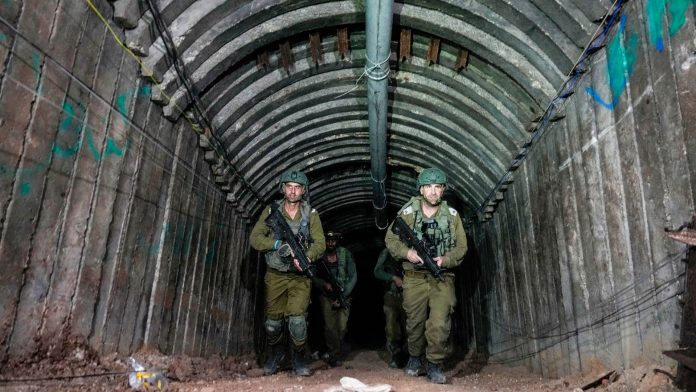
The tunnel network was originally estimated to include 250 miles (400 km) of underground passages and bunkers. Israel Defense Forces (IDF) has since revised these estimates to 350-450 miles (560-725 km) or more.

Two officials, who spoke on condition of anonymity, said there were close to 5,700 separate shafts leading into the tunnels under Gaza. None of the numbers could be independently verified, however.

It could take “years” to disable the tunnels, one Israeli official told the New York Times. They need to be mapped, checked for Israeli captives, and “made irreparable”, he stated, acknowledging that the recent attempts to destroy the tunnels by flooding them with seawater “have failed”.

According to another official, Israel is using a “triangle” model to locate the tunnels, which assumes they will be found under any hospital, school or mosque in Gaza.

The Israeli military has underestimated the “extent and importance” of the tunnels to Hamas, which the Times described as an “intelligence failure”.

The IDF has not disclosed the number of soldiers killed and wounded in tunnel warfare. Officially, almost 190 soldiers have been killed and 240 or so seriously wounded in the fighting since the start of the ground campaign in Gaza.

One soldier, who spoke with the Times on condition of anonymity, said that he took had taken part in destroying about 50 tunnels in Beit Hanoun, in the northeast of Gaza. All of them were rigged with bombs and other explosives, wired to be activated remotely.

The Palestinian group Hamas, which maintains de facto control over Gaza, struck at nearby Israeli settlements on October 7, claiming the lives of approximately 1,200 Israelis. Another 240 were taken into the Palestinian enclave as captives. Israel responded by declaring war on Hamas and launching air and artillery strikes on Gaza, followed by ground troops in November.

Almost 24,000 Palestinians have been killed and another 60,000 wounded in the first 100 days of fighting, according to the Gaza health ministry.

French president explains decision not to join US-led strikes on Houthis

US UK Yemen Attack

But French forces would continue work to ensure freedom of navigation in the Red Sea, he stated at a news conference in Paris on Tuesday.

“We interrupted missiles and drones which were going to strike Norwegian ships. And so we act to protect our own equipment and the equipment of our allies,” Macron added.

France joined a multinational naval task force in December to protect ships from Houthi attacks in the Red Sea.

In solidarity with the Palestinians in besieged territory, the Yemeni armed forces have targeted ships in the Red Sea with owners linked to Israel or those going to and from ports in the occupied territories.

In response, the US has formed a military coalition against Yemeni forces in the Red Sea and endangered maritime navigation in the strategic waterway.

The US and the UK, backed by Bahrain, Australia, Canada and the Netherlands, struck more than 60 targets at almost 30 locations in Yemen on Friday, killing five people and injuring six others.

On Saturday, the US Central Command (CENTCOM) announced that a “follow-on action” was conducted against a Yemeni radar facility in Sana’a by the Navy destroyer USS Carney using Tomahawk land attack missiles.

The assaults prompted Yemen’s Supreme Political Council to issue a statement, saying “all American-British interests have become legitimate targets”.