Tuesday, December 30, 2025
Home Blog Page 1052

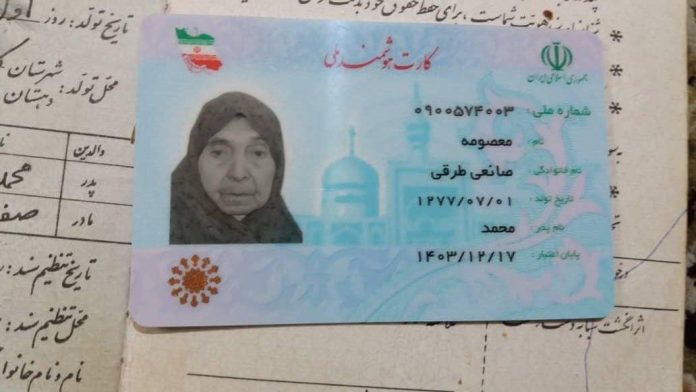
Oldest woman in Iran passes at 126

Oldest woman in Iran

Born in 1898, she lived in three Qajar, Pahlavi and Islamic Republic eras in the country.

However, the point is as there was no accurate civil registration in Iran in the past, it is hard to determine the exact age of the oldest people in the country.

There may be older people in Iran, but it is difficult to identify them.

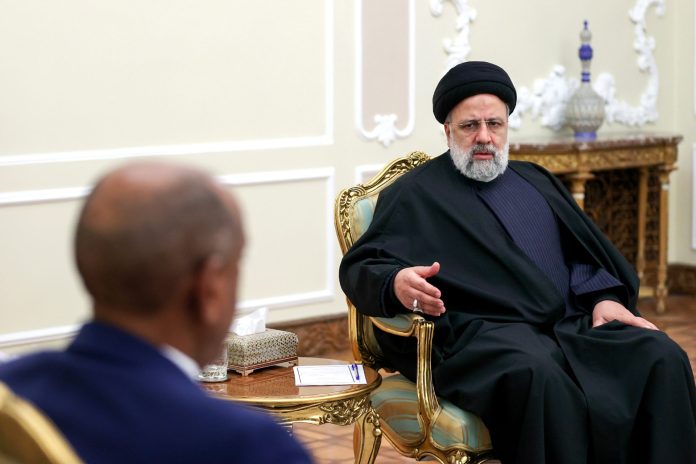
Tehran’s core policy supports distancing of states from Israel: Iran president

Ebrahim Raisi

“Negligence by some Muslim countries with respect to this principled policy of the Islamic Republic of Iran has inflicted a heavy blow to the Islamic Ummah,” Raisi said in a meeting with Sudanese Foreign Minister Ali al-Sadiq Ali in Tehran on Monday.

He added that the criminal Israeli regime has always hatched plots to obstruct Muslim countries’ path towards progress.

Israel would be neither a friend of Muslim countries nor interested in their development, he emphasized.

The Iranian president criticized some Muslim countries’ move to normalize relations with the Tel Aviv regime, which he said runs counter to their nature.

“Had these countries tried to cut off their relations with the Zionists, today we would not have witnessed the continuation of attacks and bombings against the oppressed and Muslim people of Gaza,” Raisi pointed out.

Four Arab countries – the United Arab Emirates, Bahrain, Sudan and Morocco – agreed to normalize relations with Israel under US-brokered agreements in 2020, when former US President Donald Trump was in office.

Spearheaded by the UAE, the move has sparked widespread condemnations from the Palestinians as well as nations and human rights advocates across the world, especially within the Muslim world.

Palestinians see the accords as a stab in their back and a direct affront to their cause to liberate their lands from Israeli occupation.

Elsewhere in his remarks, Raisi said Iran fully supports Sudan’s territorial integrity and the establishment of a powerful government in the African country.

He also welcomed revival of mutual relations after seven years of hiatus.

Pointing to the two countries’ capacities and determination to promote political, economic and cultural relations, he added that the exchange of ambassadors and the reopening of embassies in Tehran and Khartoum have prepared an appropriate ground for enhanced relations.

Back in October 2023, Iran and Sudan agreed to restore diplomatic relations after seven years to serve the two countries’ interests.

Tehran and Khartoum decided to restore relations after Iran and Saudi Arabia signed a China-brokered agreement in March 2023 to resume ties following a seven-year break.

Riyadh closed its diplomatic missions in Tehran in 2016 after they were ransacked by protesters enraged by the Saudi execution of top Shia cleric Nimr Baqir al-Nimr.

For his part, the Sudanese foreign minister stressed his country is keen to restore its political and diplomatic relations with Iran.

He commended Iran’s political support for Sudan in international circles and said Khartoum is ready to develop economic and commercial cooperation with Tehran.

In a meeting earlier in the day, Iranian Foreign Minister Hossein Amirabdollahian and his Sudanese counterpart expressed the determination of their countries to strengthen cooperation.

US admits it did not give Iraq notice of attacks despite earlier claims

US Attack Iraq

State Department deputy spokesman Vedant Patel said on Monday that Iraqi officials were only informed after the strikes on “Iranian-linked targets”.

“Iraq, like every country in the region, understood that there would be a response after the deaths of our soldiers. As for this specific response on Friday, there was not a pre-notification,” Patel told reporters.

“We informed the Iraqis immediately after the strikes occurred.”

The clarification came after White House National Security Council spokesman John Kirby on Friday said that Washington had informed the Iraqi government in advance.

Kirby stated on Monday that he had responded to reporters’ questions with the “information that I had been provided at the time”.

“It was not as specific as it could have been, and I regret any confusion caused,” he added.

“That said, we had made no secret – both to Iraqi officials and in public channels – that we would respond to the attacks on our troops. And, we did, in fact, officially notify Iraq, as appropriate with standard procedure.”

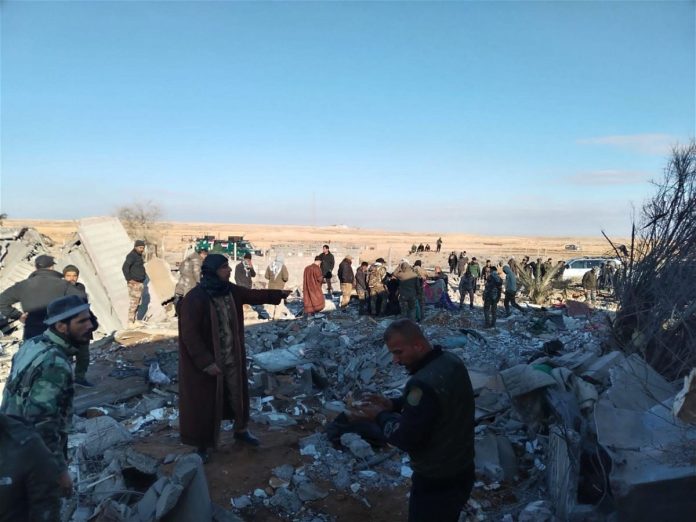
US President Joe Biden on Friday ordered air raids against 85 targets in Iraq and Syria, following a drone attack in Jordan that killed three US troops.

Iraq condemned the strikes, which officials said killed 16 people, including civilians, as a violation of its sovereignty that placed the security in the region on the “brink of the abyss”.

Iraqi government spokesman Bassem al-Awadi rejected the suggestion that his country had helped to coordinate the attacks, accusing Washington of making a “false claim aimed at misleading international public opinion and disavowing legal responsibility”.

Tensions between Washington and Baghdad have escalated in recent months as the Biden administration has carried out strikes inside Iraq in response to a surge in attacks on US forces since the start of the war in Gaza that it has blamed on Iran-aligned groups.

About 2,500 US troops are stationed in Iraq, a legacy of the US-led coalition’s war against the Daesh group.

Last month, US Defense Secretary Lloyd Austin stated Washington would begin talks with Baghdad on the withdrawal of US-led forces in the country while maintaining security ties between the sides.

Iran says committed to Iraq’s security, stability

Ali Akbar Ahmadian

Ahmadian, who is in Baghdad for a one-day visit, made the remark in a meeting with Iraqi Prime Minister Mohammed Shia al-Sudani on Monday and expressed Iran’s interest in the continuation of cooperation with Iraq based on a joint security agreement signed last year to safeguard the security of both neighbors.

Back on March 19, 2023, Tehran and Baghdad signed a security agreement in the Iraqi capital, which includes coordination in protecting the common border between the two countries.

Under the agreement, the Iraqi government pledged to disarm anti-Iran terrorist and separatist groups based in the country’s northern Kurdistan region and relocate them from the border areas.

During the Monday meeting, al-Sudani, for his part, voiced Iraq’s commitment to the principles of good neighborliness and forging strong relations with countries in the region and across the world.

Stressing that Iraq will not compromise on its sovereignty and national security, al-Sudani said, “In line with the common interests of the people of the region, Iraq has made and will continue to make a lot of effort to maintain stability and achieve peace.”

The presence of Kurdish terrorist groups, including Komala, the so-called Kurdistan Democratic Party, Kurdistan Free Life Party, and the Kurdistan Freedom Party, has been a source of tension between Iran and Iraq for years, with these groups often carrying out terrorist attacks on Iranian soil.

Iran has, on countless occasions, warned Iraqi Kurdistan’s local authorities that it will not tolerate the presence and activity of terrorist groups along its northwestern borders, saying the country will give a decisive response should those areas become a haven for anti-Tehran terrorists.

Last month, the Islamic Revolution Guards Corps (IRGC) targeted with barrages of ballistic missiles an Israeli espionage center in the Iraqi Kurdistan region and also struck Syrian bases of terrorists who were involved in recent attacks in Iran.

Earlier in the day, Ahmadian met with Iraqi National Security Advisor Qasim al-Araji and discussed the political and security situation in the region, also exchanging views on the consolidation of Tehran-Baghdad ties.

Pointing to the deep-rooted and historical relations between the two countries, Iran’s top security official said, “All issues can be resolved through meaningful and constructive negotiations.”

Al-Araji, for his part, described the Iran-Iraq relations as distinguished and strategic, stressing that the two neighboring countries enjoy many commonalities.

“Iraq has always sought to strengthen its relations with other countries in a way that common interests are protected based on the principle of mutual respect,” he stated.

The Iraqi official added that engagement in constructive talks would resolve emerging problems.

UN says to probe Palestinian refugee agency for ‘neutrality’

UNRWA

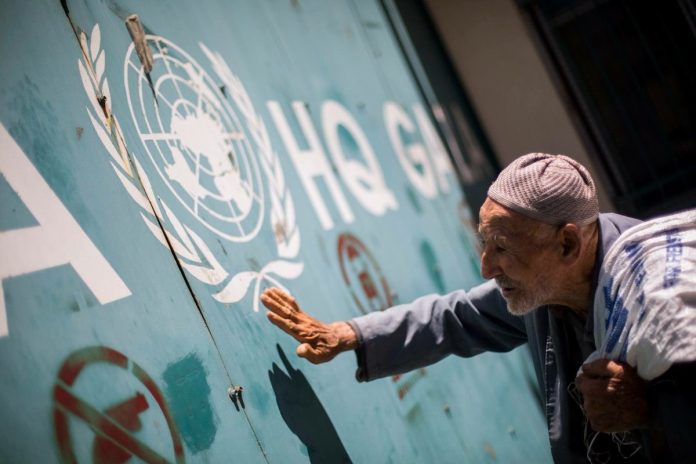
UN Secretary General Antonio Guterres announced the move in a statement on Monday, saying he had established an “independent review group” to probe “allegations of serious breaches” at the UN Relief and Works Agency for Palestine Refugees in the Near East (UNRWA).

The UN chief stated the probe would seek to “identify the mechanisms and procedures that the Agency currently has in place to ensure neutrality and to respond to allegations or information indicating that the principle may have been breached”.

Though Guterres stopped short of outlining the alleged breaches, Israeli officials have repeatedly accused 12 UNRWA workers of involvement in last year’s Hamas attack, which killed around 1,200 people in Israel and saw nearly 250 taken hostage by Palestinian fighters.

Israeli Foreign Minister Israel Katz later hailed the decision, saying “We will submit all evidence highlighting UNRWA’s ties to terrorism and its harmful effects on regional stability”.

Guterres previously acknowledged that nine of the 12 UN staffers allegedly linked to Hamas had been fired, two remained unidentified and another had since been killed. Though the Israeli allegations have yet to be independently confirmed, more than a dozen countries have already opted to cut off funding to the refugee agency amid the controversy, including the United States, Sweden, Britain and Germany.

Last week, a spokesman for the US State Department stated that $300,000 set aside for UNRWA would be withheld pending the results of the investigation. Around $121 million had already been distributed to the agency since October 1, as Washington typically devotes up to $400 million to the office each year.

While the review panel will focus on UNRWA’s “neutrality”, Guterres noted that a separate investigation into Israel’s charges would continue under the UN Office of Internal Oversight Services. He also went on to stress the agency’s critical role in Gaza, adding that more than 2 million people “depend on it for their survival amidst one of the largest and most complex humanitarian crises in the world”.

Israel’s ongoing military response to the October 7 attack has claimed more than 27,000 lives in Gaza, according to local Hamas-run health officials. The UN has warned of looming calamity in the Palestinian enclave, where hundreds of thousands have been displaced and face extreme shortages of food, medicine and other essentials. In a statement on Monday, UN humanitarian chief Martin Griffiths warned that Israel’s “indiscriminate bombing of densely populated areas” could “amount to war crimes”, and pointed to a “public – and mental – health disaster” in the making in Gaza.

Amnesty says Israel used unlawful lethal force against Palestinians in West Bank

Israel Palestine

The human rights organisation said in a report released that Israel’s actions in the territory have intensified during its war on Gaza and its military and other bodies are committing numerous illegal acts of violence that amount to clear violations of international law.

The world’s eyes are mostly on the Gaza Strip, where the Israeli military has killed more than 27,500 Palestinians, mostly women and children, since the start of the war on October 7. But Israeli forces are also carrying out unlawful killings in occupied Palestinian territories, Amnesty added in the report.

The document was compiled with remote interviews with witnesses, first responders and local residents as well as verified videos and photos.

“Under the cover of the relentless bombardment and atrocity crimes in Gaza, Israeli forces have unleashed unlawful lethal force against Palestinians in the occupied West Bank, carrying out unlawful killings and displaying a chilling disregard for Palestinian lives,” said Erika Guevara-Rosas, Amnesty International’s director of global research, advocacy and policy.

“These unlawful killings are in blatant violation of international human rights law and are committed with impunity in the context of maintaining Israel’s institutionalized regime of systematic oppression and domination over Palestinians.”

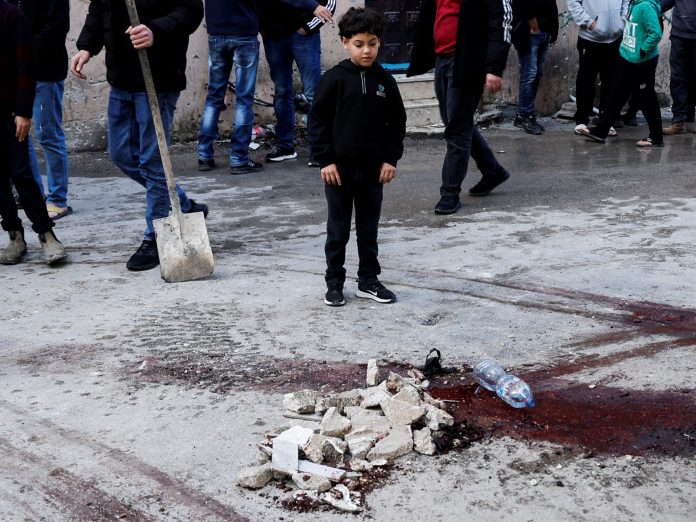
Palestinians in the West Bank were already experiencing deadly Israeli raids on a regular basis even before the war, but there has been an explosive increase in the number of Israeli attacks since October.

According to figures by the United Nations Office for the Coordination of Humanitarian Affairs (OCHA), Israel killed at least 507 Palestinians in the occupied West Bank in 2023, including at least 81 children, making it the deadliest year since the organisation started recording casualties in 2005.

UN numbers also show that 299 Palestinians were killed from the start of the war until the end of 2023, a 50 percent increase compared with the first nine months of the year. At least 61 more Palestinians, including 13 children, were killed by Israeli forces in January, the UN announced.

Amnesty International’s analysis of a 30-hour-long Israeli raid on the Nour Shams refugee camp in Tulkarem that took place on October 19 demonstrates the tactics employed by the Israeli military.

In that raid, Israeli soldiers used a large number of military vehicles and soldiers to storm more than 40 homes. They destroyed personal belongings, drilled holes in walls for sniper outposts, cut off water and electricity to the refugee camp, and used bulldozers to destroy public roads, electricity networks and water infrastructure.

By the end of the raid, they had killed 13 Palestinians, including six children, four of them under the age of 16, and had arrested 15 Palestinians.

One Israeli border police officer was killed after an improvised explosive device was used against a military convoy.

Among those killed during the raid was an unarmed 15-year-old named Taha Mahamid, whom Israeli forces shot dead in front of his house as he came out to check whether Israeli forces had left the area, Amnesty said.

“They did not give him a chance,” Fatima, Taha’s sister, stated, adding, “In an instant, my brother was eliminated. Three bullets were fired without any mercy. The first bullet hit him in the leg. The second in his stomach. Third in his eye. There were no confrontations. … There was no conflict.”

Taha’s father, Ibrahim, tried to carry his son to safety while unarmed but was shot and suffered serious internal injuries.

“This unnecessary use of lethal force should be investigated as possible war crimes of wilful killing and wilfully causing great suffering or serious injury to body or health,” Amnesty added.

But that was not the end of the Israeli operation for the family. About 12 hours after Taha’s killing, the Israeli military stormed his family’s home and locked his family members, including three children, in a room under the supervision of a soldier for about 10 hours.

They also drilled holes in the walls of two rooms to position snipers overlooking the neighbourhood. One witness said the soldiers searched the house, beating a member of the family, and one was seen urinating on the doorstep.

The extensive damage done by Israeli bulldozers to the narrow streets of the refugee camp meant that ambulances could not get through, hampering medical evacuation of the injured.

Amnesty also documented instances in which Israeli forces directly opened fire on ambulances and medical staff.

The obstruction of medical assistance to Palestinians by Israeli forces is now “routine practice”, the human rights organisation said.

It documented one instance in which Israeli soldiers prevented ambulances from reaching victims who ended up bleeding to death.

“The victims were later collected by an Israeli military ambulance, and their bodies have yet to be returned to their families,” Amnesty added.

The organisation also documented how the Israeli military cracks down on peaceful Palestinian protests held in solidarity with the people of Gaza, firing live bullets and tear gas canisters into crowds.

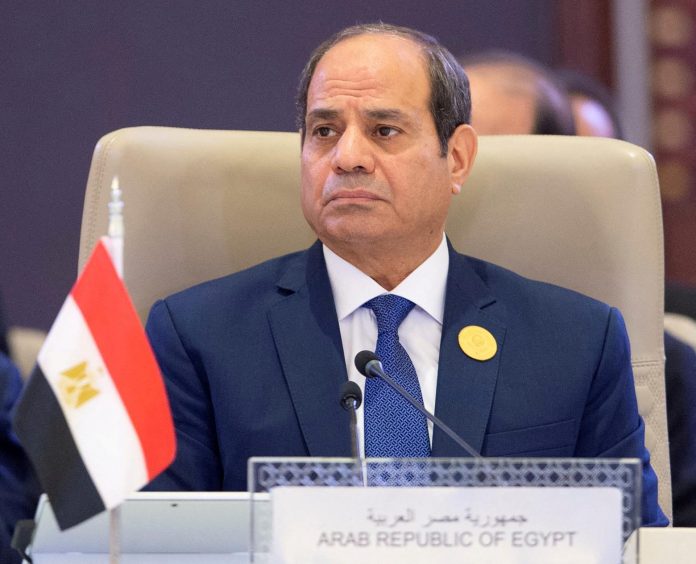
Egypt’s Sisi starts new term with law expanding military power to arrest civilians

Sisi

Dubbed the law on Securing and Protecting the State’s Public and Vital Facilities, the bill was passed on 28 January, about six weeks after President Abdel Fattah el-Sisi secured a third term in office.

Sisi’s reelection came amid a backdrop of rising popular discontent with a deteriorating economic situation characterised by record debt, a freefalling currency, and skyrocketing inflation, almost 10 years after he first became president.

“The timing of the legislation, and the extensive domestic security powers it grants the military, indicate that Egyptian authorities seek to further transform the military into a police force and use it to suppress potential public discontent or mass protests through expanding their mandate to arrest civilians and refer them to military courts,” a statement by the Cairo Institute for Human Rights Studies (CIHRS) said.

An amendment to Article 200 of Egypt’s constitution in 2019 already placed the military above all institutions, including the Supreme Constitutional Court, by giving it the powers to “preserve the constitution and democracy, protect the basic principles of the state and its civil nature, and protect the people’s rights and freedoms”.

The new law is an amendment of Law No 136 of 2014, which granted the armed forces the powers to assume policing responsibilities to protect public and vital facilities, such as public roads, electricity stations, gas pipelines, and railroads.

In addition to the power to arrest civilians and refer them to military tribunals, stipulated in the older version, the amendment added another article that empowers military officers to “face acts and transgressions that undermine the work of the state’s public facilities, or the services it provides, especially crimes that harm the society’s basic needs of goods and commodities”.

CIHRS noted the term “society’s basic needs” is vague and provides a loophole whereby Sisi or those he delegates have the discretion to determine what those social needs are. Accordingly, the rights group warned that the president will be granted expansive powers by virtue of the new law “to determine the military’s jurisdiction to arrest civilians and refer them to military courts”.

The rights group pointed out that since Sisi became president in 2014, thousands of civilians have been prosecuted by military courts, and at least 363 violations of the right to fair trial have been documented during that period.

“CIHRS believes that further consolidating the military with policing and judicial powers, thereby putting the military on a collision course with popular discontent against economic and human rights policies, will only exacerbate the risk of instability,” the statement read.

“The only way out of the current crisis is to admit previous mistakes, end President Sisi’s monopoly over decision making, restore independence to state institutions, including accountability and oversight institutions, and open up public space to allow citizen engagement in governance issues that impact their everyday lives.”

Egypt’s Sisi, a former army general, came to power after a military coup in 2013 against the country’s first democratically elected civilian president Mohamed Morsi.

Since then, Egypt has been under de facto military rule, with most of the country’s civilian and economic institutions dominated by the military, in what pro-democracy forces consider a counter-revolution following the 2011 uprising.

At least 65,000 political opponents of Sisi are held in jail, according to estimates by the Arabic Network for Human Rights Information.

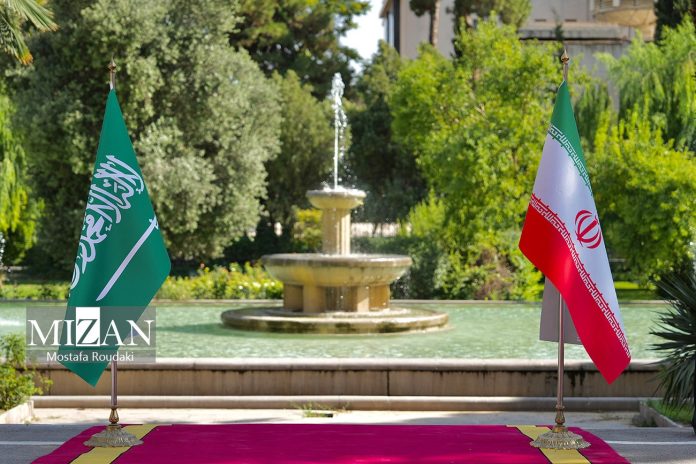
Iranian military delegation visits Saudi Arabia 

Iran and Saudi Arabia Flags

That’s according to the Iranian ambassador to Riyadh. Alireza Enayati added that the talks with top Saudi General Fayyad Al-Ruwaili happened on the sidelines of the defensive exhibition in the Saudi capital Riyadh.

Enayati did not give further details.

Iran and Saudi Arabia have been expanding bilateral ties in various fields since they restored diplomatic relations in March 2023 with China acting as a mediator.

The expansion of their relations has caused worries among Israeli officials.

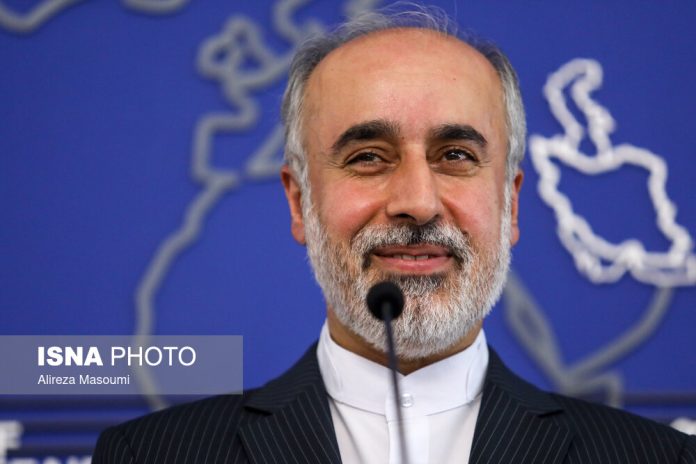
Iranian Foreign Ministry: US National not banned from travelling to Iran

Nasser Kanaani

Kanaani added that he had no idea which US citizen has visited Iran, noting that the Foreign Ministry has nothing to do with trips by foreign nationals to Iran.

Meanwhile, Iran’s Tasnim News Agency said on its website that Ms. Wright did not visit Iran upon an Iranian invitation, an individual or organization.

Tasnim also said the US adult film actress traveled to Iran after obtaining a visa on her own.

Earlier, pictures of Ms. Wright made the round on social media, showing her at the former US embassy in Tehran and in other places.

The woman is said to be a supporter of the Palestinian cause and a critic of Israel’s war on Gaza.

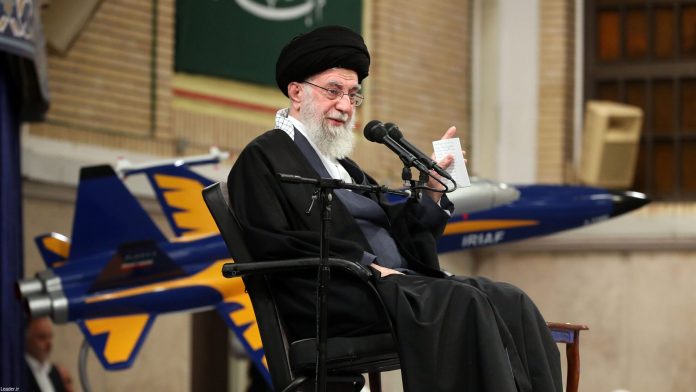
Iran’s leader calls on elites in Muslim world to create public demand to severe ties with Israel

Ayatollah Khamenei

Ayatollah Khamenei made the remarks in a meeting with a group of commanders and personnel of the Iranian Air Force and Army’s Air Defense Force in Tehran on Monday.

The meeting was held on the anniversary of a historic development that came days before the 1979 victory of Iran’s Islamic Revolution that overthrew the former US-backed Pahlavi regime.

The event saw Homafaran, Pahlavi’s air force officers, breaking away from the monarchical regime and pledging allegiance to the late founder of the Islamic Republic, Imam Khomeini.

The Leader warned of the enemy’s “specific plot” against the Iranian elites inside and outside the country, saying the enemy primarily seeks to prevent the elites’ growing role in the country and raise doubts among them.

He urged the Iranian elites to thwart the enemy’s plots aimed at raising doubts in the country.

The Leader asserted that national power boosts national security, saying that the enemy’s plots will be neutralized when it witnesses the Iranian people’s presence and preparedness as well as the Islamic establishment’s power.

Ayatollah Khamenei added that the elites can play a major role in high-turnout parliamentary elections on March 1, whose outcomes, he contended, would boost national might.

The Leader further stated the elites’ negligence toward their duties would lead to a devastating blow to the Iranian nation.

Elsewhere in his remarks, the Leader noted that before the victory of the Islamic Revolution, the air force’s military equipment and heads were under US control.

However, after the 1979 victory of the Islamic Revolution, the air force’s pious elements managed to change its US-controlled nature into an Iranian force, Ayatollah Khamenei stressed.

He added that although the force’s weapons and equipment were US-made in the immediate aftermath of the revolution, Iranian commanders and staff were the ones making decisions about the country.