Saturday, December 27, 2025
Home Blog Page 1017

US-UK joint strikes on Yemen to intensify regional insecurity and instability: Iran

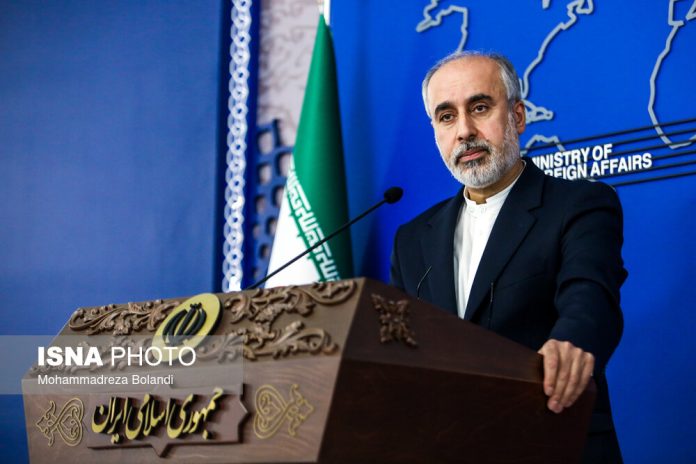
Nasser Kanaani

“Such arbitrary and adventurous attacks are in breach of internationally recognized regulations and principles and in violation of Yemen’s territorial integrity and sovereignty,” said the spokesman.

“The United States and Britain proved once again that they are ardent supporters of the Zionist regime’s war crimes and genocide in the Gaza Strip and the West Bank and prioritize commitment to the occupying and criminal Zionist regime’s security and illegitimate interests over international peace and security, and to that end, trample underfoot all moral and human principles as well as international rules and the UN Charter,” he explained.

“With such strikes, the US and Britain seek to stoke tension and crises in the region, spread war and instability, deflect public opinion from the Zionist regime’s war crimes and buy time for the perpetuation of the war crimes by this regime, which is accused of genocide,” the spokesman noted.

“Instead of taking effective and immediate measure to tackle the root cause of insecurity and instability, which is the Zionist regime’s warmongering and killing of hundreds of Palestinians, including women and children, on a daily basis, the US and Britain conduct military attacks on a country which seeks to put this killer regime under pressure one way or another and stop its killing machine.”

“Definitely, such arbitrary and aggression-oriented military operations will bring no gain for the aggressor countries other than the escalation of insecurity and instability in the region,” he added.

On Saturday, the Pentagon announced that that American and British military forces had carried out a joint operation against 18 targets across Yemen.

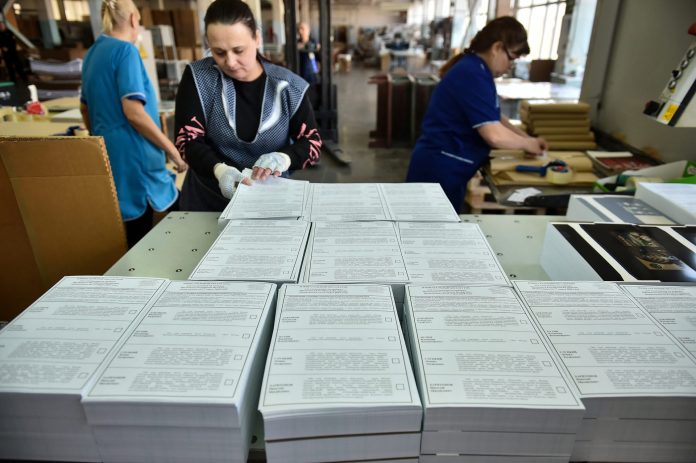
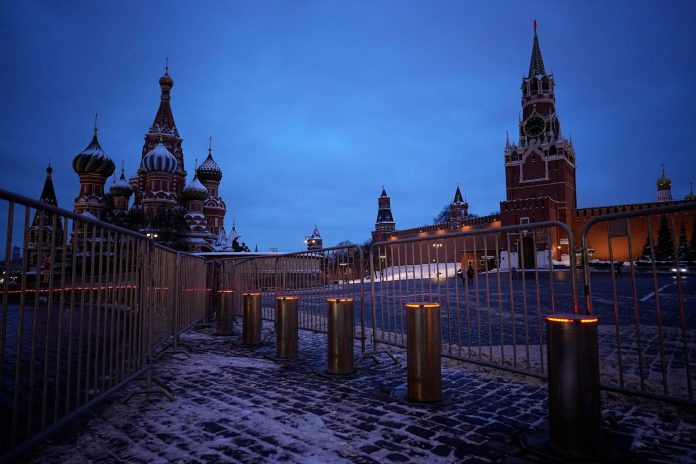
Early voting for Russian presidential election kicks off in several regions

Russia Election

According to the rules, regions may launch the early voting period after February 25, but it must be completed by March 14.

Russia’s Central Election Commission told TASS news agency that in the previous presidential election in 2018, around 180,000 people voted early, and 31,000 people voted at polling stations on ships at sea.

Voting has already started in Zaporozhye Region for people who live near the front line. In Kherson Region, early voting will start on Tuesday, and in the Donetsk and Lugansk People’s Republics, it will begin on March 10 and 11. These four former Ukrainian territories all voted to become part of Russia in referendums in 2022.

The main voting period for the 2024 presidential election will be from March 15-17. This is the first time a presidential election will be held over multiple days in the country. This format has been used in other elections in Russia after it was first introduced during the Covid-19 pandemic.

Four people have been approved by the commission to run for president: Vladislav Davankov of the New People party, the current president, Vladimir Putin, who is running as an independent and is the frontrunner, Leonid Slutsky of the nationalist LDPR party, and Nikolay Kharitonov of the Communist Party.

Ukrainian officials detail EU promises of financial aid and ammunition as war enters third year

Russia Ukraine War Weapons Arms

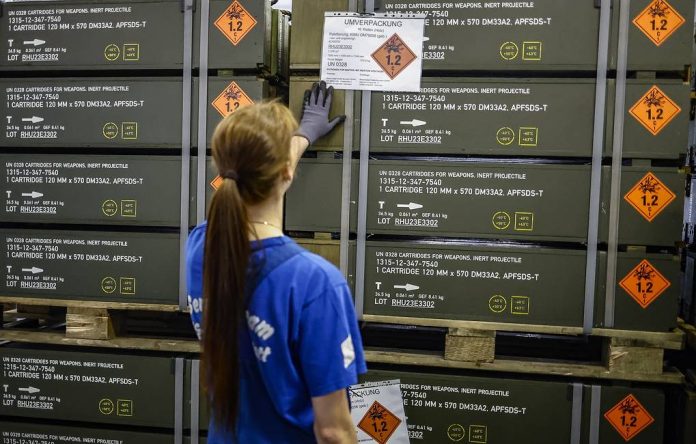
In a statement on X, Ukrainian Foreign Affairs Minister Dmytro Kuleba said he had had a call Saturday with European Union Foreign Affairs Chief Josep Borrell and received assurances that European states would step up deliveries of critically needed artillery ammunition.

“Artillery shells are the absolute priority right now,” Kuleba wrote.

“By the end of March, the EU plans to deliver almost 170.000 rounds to Ukraine and is working to further increase the volume of deliveries.”

In an interview with CNN, Kuleba said Ukrainian troops are suffering from a major shortage of artillery ammunition and other weapons, adding, “We are suffering from a severe shortage of artillery shells and other types of weapons.”

He stated that Ukrainian troops are under pressure from superior Russian forces. The White House had previously warned that the funds at its disposal to support Ukraine are exhausted, and there will be no new supplies of weapons and ammunition until the US Congress approves additional funding.

The EU has fallen short on previous commitments to boost ammunition production to supply Ukrainian forces, who have been significantly outgunned by Russian artillery.

Ukrainian Prime Minister Denys Shmyhal also stated in a statement he had met with Ursula von der Leyen, president of the European Commission, during her visit to Kyiv.

The European Union recently agreed a funding deal worth more than $50 billion for Ukraine after funds had been blocked by Hungary’s Prime Minister Viktor Orban.

Smyhal added von der Leyen informed him that a first tranche of EUR 4.5 billion ($4.9 billion) from that package would be disbursed in March.

The Ukrainian prime minister noted the two also discussed the situation on the Ukrainian-Polish border, where Polish farmers have blockaded the border to protest cheap Ukrainian agricultural imports.

Also on Saturday, NATO’s Secretary-General Jens Stoltenberg said Ukraine’s accession to the military alliance is only a question of time, though NATO leaders are still seeking to overcome divisions on the second anniversary of the war with Russia.

Stoltenberg made the remarks in a recorded message to mark the second anniversary of “Russia’s military operation” in Ukraine.

“Ukraine will join NATO. It is not a question of if, but of when. As we prepare you for that day, NATO will continue to stand with Ukraine. For your security, and for ours.”

Stoltenberg added Russian President Vladimir Putin had started the operation to close the door to eventual NATO membership for Kiev, “but he has achieved the exact opposite”.

“Ukraine is now closer to NATO than ever before.”

Stoltenberg also said the battlefield situation in Ukraine “remains extremely serious”, but underscored the commitment of allies to continue delivery of weapons and economic support for Kyiv.

“The situation on the battlefield remains extremely serious,” he stated, adding, “President Putin’s aim to dominate Ukraine has not changed.

“And there are no indications that he is preparing for peace. But we must not lose heart.”

EU slams new Israeli settlement plans in West Bank as ‘Inflammatory, dangerous’

Israel settlement expansion

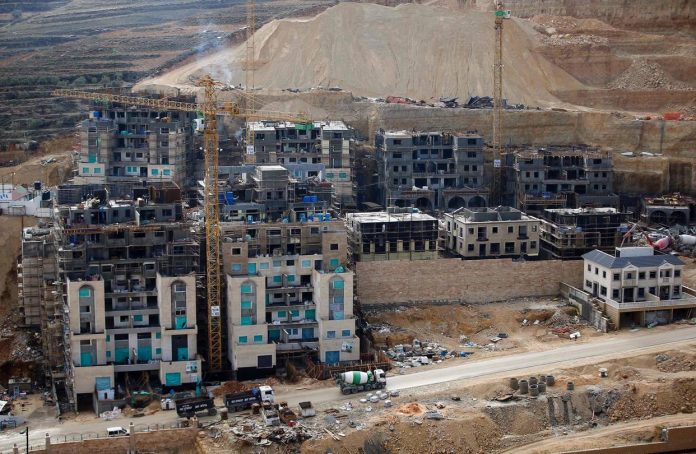
“The announcement by Israeli Minister (Bezalel) Smotrich to build 3,300 new units in illegal West Bank settlements is inflammatory and dangerous,” he said on X.

“Settlements make Israelis and Palestinians less safe, fuel tensions, obstruct peace efforts, and constitute a grave breach of international law,” he added.

Estimates indicate about 700,000 Israeli settlers live in roughly 300 illegal settlements in the occupied West Bank and East Jerusalem.

All Jewish settlements in the occupied territories are considered illegal under international law.

Tensions have been running high across the West Bank since Israel launched a deadly military offensive against the Gaza Strip following an Oct. 7 Hamas attack.

Nearly 400 Palestinians have since been killed and 4,400 others injured by Israeli army fire in the occupied territory, according to the Health Ministry.

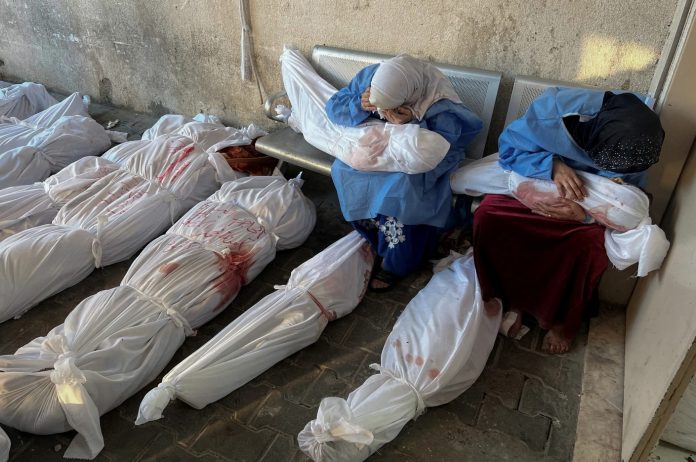
Israel stands accused of genocide at the International Court of Justice over its deadly onslaught on the Gaza Strip, which has left more than 28,600 people dead.

In an interim ruling in January, the Hague-based court ordered Tel Aviv to stop genocidal acts and take measures to guarantee that humanitarian assistance is provided to civilians in Gaza.

Israel waging war instead of US: Palestinian presidency

Gaza War

It came in a speech during the extraordinary meeting of information ministers of member states of the Organization of Islamic Cooperation in Istanbul where he pointed out that the US has obstructed several resolutions in the UN Security Council for a cease-fire and has sent aircraft carriers to the Mediterranean Sea for Israel, meaning the war is run by US and implemented by Israel.

The spokesperson urged Arab and Islamic countries to pressure the US to stop the war on the Palestinian people and not to settle for statements.

“Gaza is an integral part of the state of Palestine. Israel will not win any war against the Palestinians. We have the will, determination, and sanctities. We will not surrender, and we have been struggling against occupation for a hundred years,” he said.

“Jerusalem and its sanctities are witnessing unprecedented violations by the Israeli occupation, the latest of which was the intention of the Israeli occupation to impose restrictions on the entry of worshipers to Al-Aqsa Mosque during the upcoming month of Ramadan, which requires an Arab and Islamic stance in support of our people’s resilience,” he added.

He also urged the world to stand with the Palestine Liberation Organization, representing all segments of the Palestinian people.

Israeli Prime Minister Benjamin Netanyahu has also said Saturday that he is set early next week to approve “operational plans” related to Rafah, a city in the southern Gaza Strip hosting over 1 million uprooted Palestinians.

“At the beginning of the week, I will meet with the War Cabinet to approve operational plans in Rafah, including the evacuation of civilian residents,” Netanyahu stated in a news conference.

For weeks, Israeli threats to launch a ground operation in Rafah, adjacent to the border with Egypt, have been escalating despite mounting regional and international warnings of potential catastrophic consequences.

Netanyahu added, “We are working to reach another framework for the release of our hostages, as well as the completion of the elimination of the Hamas battalions in Rafah”, referring to the Gaza-based Palestinian resistance group.

“That is why I sent a delegation to Paris and tonight, we will discuss the next steps in the negotiations.”

Talks for a prisoner swap deal between Israel and Hamas began Friday in Paris with an Israeli delegation led by Mossad chief David Barnea, CIA Director William Burns, Qatari Prime Minister Mohammed bin Abdulrahman Al Thani, and Egyptian intelligence chief Abbas Kamel.

Israeli media reported Saturday that the Israeli team had returned from Paris and spoke of “good negotiations and positive atmosphere”.

Daily newspaper Yedioth Ahronoth quoted informed unnamed officials as saying that the talks were “good, even lasting longer than planned,” though there is still ground to cover.

The talks focused on four demands by Hamas that Tel Aviv opposes, including the return of all residents of the northern Gaza Strip and the evacuation of all Israeli army forces from that area, according to Israel’s official broadcasting authority.

Three more “contentious issues” exist, it reported, including stepped up humanitarian aid, the duration of the cease-fire, and the number of Palestinian prisoners to be released.

A previous cease-fire between Hamas and Israel had lasted for a week from Nov. 24 to Dec. 1, during which prisoners were exchanged, and humanitarian aid began to trickle into the besieged enclave. It had been mediated by Qatar, Egypt, and the US.

Tel Aviv estimates that there are around 134 Israeli hostages in Gaza, while it detains at least 8,800 Palestinians in its prisons, according to official sources from both sides.

Rafah city is witnessing a large influx as it hosts at least 1.4 million Palestinians, including more than a million displaced individuals who fled to it due to Israeli army operations in the northern and central parts of the Gaza Strip, claiming it to be a “safe zone”.

Israel has pounded the Gaza Strip since an attack by the Palestinian resistance group Hamas. The ensuing Israel attack has killed at least 29,600 Palestinians and injured nearly 70,000. Less than 1,200 Israelis are believed to have been killed in the Hamas attack.

According to the UN, the Israeli war on Gaza has pushed 85% of the territory’s population into internal displacement amid acute shortages of food, clean water, and medicine, while 60% of the enclave’s infrastructure has been damaged or destroyed.

Since its establishment in 1948, Israel, for the first time, has been accused of genocide at the International Court of Justice, the highest judicial body of the United Nations, for its war against Gaza.

An interim ruling in January ordered Tel Aviv to stop genocidal acts and take measures to provide and guarantee humanitarian assistance to civilians in Gaza.

UK PM says west should be ‘bolder’ in seizing Russian assets

Kremlin

In an article for the Sunday Times marking the two-year anniversary of the start of the Ukraine conflict, Sunak warned that Russia “continues to pose the greatest threat to global security”.

“We must be bolder in hitting the Russian war economy. Our collective sanctions have deprived Russia of $400 billion for their war effort – enough to finance the invasion for another four years… And we must be bolder in seizing the hundreds of billions of frozen Russian assets,” the prime minister stated.

He explained that, in his opinion, tapping “the billions in interest these assets are collecting and sending it to Ukraine” should only be the first step in taking over these funds, and urged Kiev’s Western supporters to go further and “find lawful ways to seize the assets themselves and get those funds to Ukraine too”.

The West has frozen roughly $300 billion in assets belonging to the Russian central bank since the start of the Ukraine conflict. The UK and US have recently demanded the outright seizure of these funds in order to fund the government in Kiev, while the EU has been more cautious, opting instead for a plan to seize the interest earned from the funds held at the clearinghouse Euroclear. Many European countries have warned that an outright confiscation of the funds would reflect badly on the Western financial system and erode trust in the euro.

The EU has frozen an estimated €196.6 billion ($211 billion) worth of Russian central bank reserves, and generated nearly €4.4 billion in income on these funds. European Commission President Ursula von der Leyen announced earlier this week that the legal framework for the confiscation of this income is nearly ready.

The West has also frozen billions of dollars in funds belonging to sanctioned Russian individuals and companies.

Moscow has repeatedly challenged the legitimacy of the asset freezes, slamming the practice as “thievery” and warning of countermeasures should the West move to confiscate the funds.

Pakistani terrorist arrested in southern Iran

Iran Police

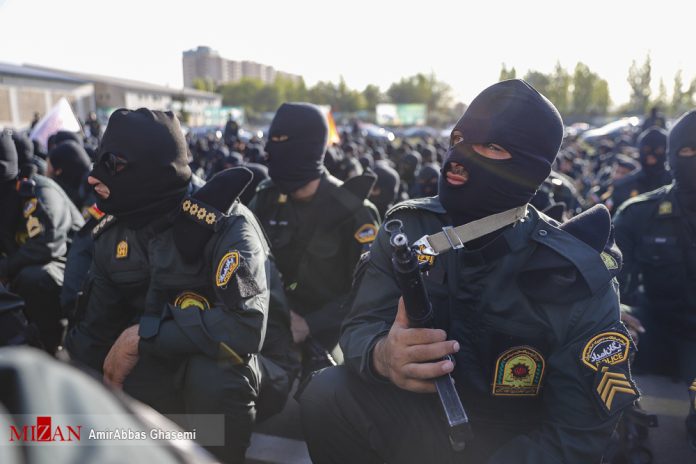
“Through an intelligence, manhunt and surveillance operation, police agents arrested an individual identified as Akram Lahouri accused of working for anti-Shiite terrorist group The Sipah-e-Sahaba and attending bomb making training courses in Pakistan. The individual was captured on the coastal boulevard while heading for Qeshm Island,” said the Hormozgan Police.

The Sipah-e-Sahaba is a Pakistani terrorist group banned by Islamabad along with dozens of other terrorist groups.

The group has conducted numerous acts of terror and targeted killings of prominent religious figures, political activists and intellectuals. The group’s actions have sparked a cycle of violence and assassinations.

Moreover, several of its leaders have been killed, including Haq Nawaz Jhangvi in 1990, Isar ul-Qasmi in 1991, Zia ul-Rehman Farooqi in 1997, and Azam Tariq in 2003.

Israeli police use water cannon at anti-Netanyahu protest

Israel Protest

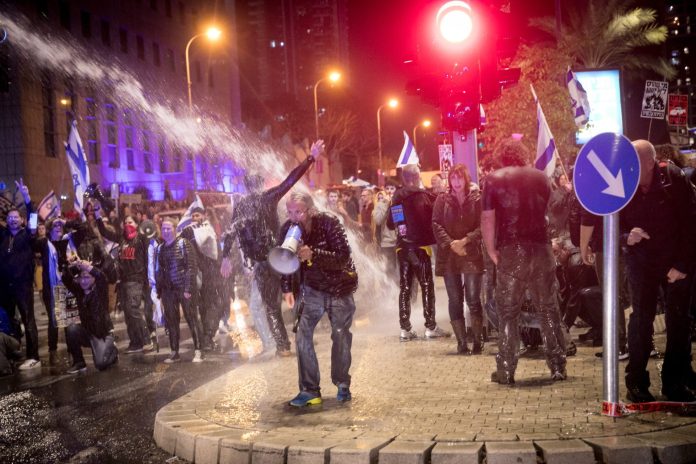
The rallies were held in the coastal city of Tel Aviv on Saturday, when the police deployed water cannons to disperse the participants.

The tactic prompted scuffles between the demonstrators and the police, who rounded up at least 21 people, Israeli paper Ha’aretz reported.

“The police created this mess,” the daily quoted one protest leader as saying.

“The number of protesters was not greater than in previous weeks. When they activated the water cannon…they turned it into a significant event that drew people,” he added.

The protesters have been holding similar monumental rallies across the occupied territories, mainly in Tel Aviv, every week for months on end, urging Netanyahu to step down over the charges of bribery, fraud, and breach of trust, for which he is being tried.

Over the past weeks, however, the weekly rallies have been protesting the premier and his cabinet’s failure to sign a deal to enable the release of scores of captives, who are being held by the Palestinian resistance movement Hamas.

Hamas and its fellow Gaza-based resistance group of the Islamic Jihad ensnared the captives on October 7, 2023 during al-Aqsa Storm, a surprise operation against the occupied territories.

The regime responded with a war that has so far killed close to 30,000 Palestinians, mostly women and children.

Hamas says it refuses to release the 130 captives it still holds until complete cessation of the Israeli aggression. Netanyahu, however, insists on keeping up the war until achieving “victory”, including through, what he calls, ouster of Hamas from Gaza’s rule.

A poll conducted among Israelis recently showed that a majority of them believed that it was not possible for the Israeli regime to achieve “absolute victory” in the coastal territory.

Some 55.3 percent of the participants in the survey by the so-called “Israel Democracy Institute” think tank said there was a “fairly low” or “very low likelihood” of such an outcome.

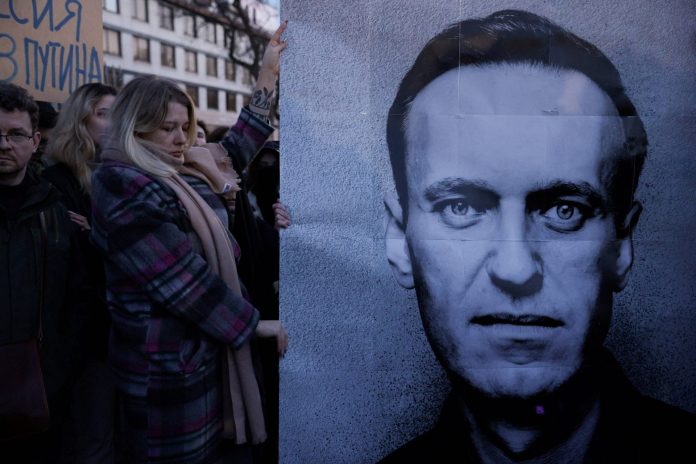
Navalny’s body handed over to his mother

Alexei Navalny

Navalny’s family and supporters have accused Russian President Vladimir Putin of having him killed, an accusation that the Kremlin has rejected. He survived a poisoning attempt in 2020 and years of harsh treatment in prison, including long spells in solitary confinement.

Navalny’s team said on X on Thursday that his death certificate says he died of natural causes.

In a video recorded before the release of the body, Navalny’s widow Yulia Navalnaya accused “demonic” Putin of “torturing” the corpse of a political opponent.

Navalny’s allies urged supporters “not to relax” and his spokeswoman, Kira Yarmysh, wrote on X there was no certainty that Russian authorities would let relatives hold a funeral “the way the family wants and the way Alexei deserves”.

Leaders of the Group of Seven (G7) major democracies, in a statement pledging support for Ukrainian President Volodymyr Zelensky on the second anniversary of the war in Ukraine, urged Moscow to fully clarify the circumstances around Navalny’s death and to free “all unjustly detained prisoners”.

“We will hold those culpable for Navalny’s death accountable, including by continuing to impose restrictive measures in response to human rights violations and abuses in Russia and taking other actions,” the G7 added.

In her six-minute video published on YouTube, Navalnaya stated she would continue the fight against “Putin’s regime”, questioned the president’s faith, and accused him of holding her husband’s body “hostage”.

On Friday Navalny’s mother Lyudmila said Russian investigators were refusing to release his body from a morgue in Salekhard until she agreed to lay him to rest without a public funeral.

She added an official had told her that she should agree to their demands, as Navalny’s body was already decomposing.

On Saturday, Navalny aides stated the authorities had threatened to bury him in the remote prison colony where he died unless his family agreed to their conditions.

Report: US sees no chance of Ukraine peace before election

Russia Ukraine War

“Officials in Washington and European capitals are skeptical about the prospects of any peace talks with Russia and discount any possibility of a deal before the US presidential elections in November,” the Wall Street Journal has reported.

Kiev has insisted that Russian forces vacate all of Ukraine’s internationally recognized territory, the outlet added, while US support could crumble if Donald Trump defeats incumbent President Joe Biden.

The political stakes are even higher than when the Ukraine crisis began two years ago because Western leaders have invested billions of dollars in Kiev’s defense while repeatedly vowing to continue their backing “as long as it takes”, the daily reported. A Ukrainian defeat could shatter Washington’s geopolitical credibility, especially if Biden’s government fails to continue providing aid.

“The level of US investment in the project of Ukraine’s independence has increased, and therefore the extent to which US credibility is judged based on Russia’s ability to accomplish or not accomplish its objectives in Ukraine,” Samuel Charap, a senior political scientist at Washington think tank RAND Corp., told the newspaper.

“If there were to be a dramatic reversal of fortunes in Ukraine, there would be a whole lot more confidence in the emerging pseudo-bloc of Russia, China, North Korea and Iran.”

Moscow has always been open to peace negotiations and would welcome any US efforts to end the Ukraine conflict, Russian President Vladimir Putin told American journalist Tucker Carlson in an interview earlier this month. Russian Foreign Minister Sergey Lavrov said this week that neither Ukraine nor its Western backers are willing to end the bloodshed, leaving Moscow no choice but to continue fighting until its objectives are achieved. He suggested that the US election has little bearing on the issue because both Republicans and Democrats view Russia as an “adversary and a threat”.

US House Republicans have meanwhile declined to approve Biden’s request for $60 billion in additional Ukraine funding. Washington ran out of money for Ukraine aid last month, after exhausting $113 billion in previously approved spending. Biden blamed Trump’s congressional allies for last week’s fall of Avdeevka, a key Donbass stronghold for Kiev, to Russian forces.

“It’s not just that American aid has been cut, but it’s been cut without warning and without giving us any time to adjust,” former Ukrainian Defense Minister Sergey Zagorodnyuk told the WSJ.

He added, “If this crisis is not resolved, and Ukraine doesn’t receive the assistance, it will become a huge gift to Putin.”

Washington’s European allies are so “spooked” by the potential loss of US protection that some German politicians have discussed seeking protection from nuclear-armed France and the UK, the report said.

“It tells you about the level of doubt and fear about the world that we are entering – the one with the US not being there for us and where the hostile superpowers of Russia and China are potentially lining up against us,” stated Thorsten Benner, director of the Global Public Policy Institute in Berlin.