Saturday, December 27, 2025
Home Blog Page 1012

Iran: Germany covering up human rights violations in Palestine

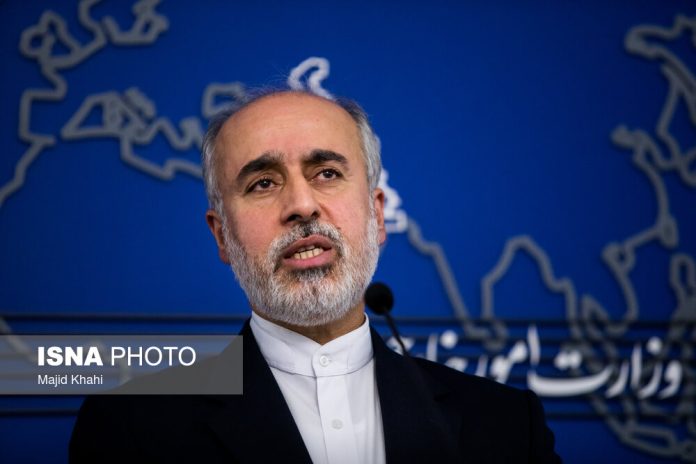
Nasser Kanaani

“It is painfully funny that some Western governments claim to be advocates of human rights while they have a history of offering all-out support to violators of human rights and playing a direct role in providing and equipping Saddam’s regime with chemical weapons during the imposed war on Iran as well as offering unflinching support to the Zionist regime’s genocide in Gaza,” the spokesman explained.

“Under the pretext of advocating human rights and, of course, by politicizing the issue, German officials interfere in the internal affairs of other countries and, at the same time, step up the activities of arms manufacturing companies to boost their country’s economy,” he noted.

“We recommend Germany not bring original and invaluable words ‘human rights’ into political games any further by offering ostensibly humanitarian, but untrue advice,” he said.

“The disastrous situation in Gaza and the West Bank along with the worrying condition of residents and Palestinian refugees in the Rafah region is further embarrassing, and remains a clear testament to the failure of the so-called advocates of human rights.”

“Accordingly, if Germany and its allies are really seeking to protect human rights, they should form a special fact-finding team on the Zionist regime for its merciless killing of over 30,000 humans and defenseless citizens, more than 70% of whom are women and children, in order to prove the sincerity of their claim to the world,” Kanaani concluded.

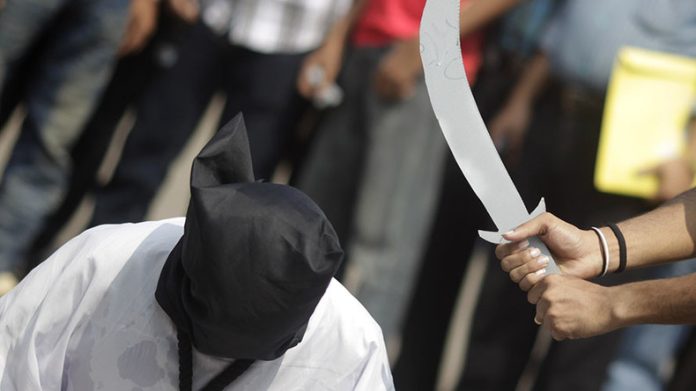
Saudi Arabia executes 7 men in a day, highest number in years

Execution in Saudi Arabia

The Specialised Criminal Court (SCC) convicted the men on terrorism charges, accusing them of betraying “their homeland, threatening its stability and endangering its security”, the Saudi Press Agency (SPA) reported, citing the interior ministry.

The men’s names were listed in the SPA announcement, which is often the only information released about executions in the kingdom, but with little further detail.

Riyadh has now executed 31 people this year, after putting at least 172 people to death in 2023, rights groups monitoring executions in Saudi Arabia have announced.

There were no public records or media reporting of any of the cases of the men executed on Tuesday, the European-Saudi Organisation for Human Rights (ESOHR) and UK-based Reprieve told Middle East Eye.

“It appears that these men were tried, convicted, sentenced and executed in complete secrecy,” said Jeed Basyouni, who leads Reprieve’s work in the Middle East and North Africa.

Over the past eight years, Duaa Dhainy, a researcher with ESOHR, stated her organisation only had knowledge about three percent of death penalty cases before executions were carried out.

“NGO and public information about people on death row is very limited,” Dhainy added.

Those executed in 2024 include 10 men convicted of terrorism charges by the SCC, which has been criticised for punishing activists and protesters.

Among those was Awn Hassan Abu Abdullah, who was executed on 30 January.

Abdullah was accused of joining a terrorist cell and financing terrorism, but ESOHR has reported that it believes he was arrested, tried and executed for “legitimate activities”, including expressing his opinions and participating in gatherings.

Basyouni stated while the official announcement lists Tuesday’s executions as terrorism cases, that definition has been used to “include children who joined protests, critics of the regime and people who merely disagreed publicly with Mohammed bin Salman”.

It is the highest number of people put to death in the kingdom since March 2022, a year in which the kingdom carried out more executions than any other country, according to Amnesty International.

“It is extremely disturbing that the Saudi authorities are executing prisoners en masse again, close to the two year anniversary of the worst mass execution in the kingdom’s history,” Basyouni added.

She noted next week’s LEAP conference which will draw technology industry figures to Riyadh and the Formula One in Jeddah the week after.

“Everyone involved in these two events should know that just by being in Saudi Arabia and turning a blind eye to mass executions, they are making further killings more likely and offering international legitimacy to a deeply repressive regime.”

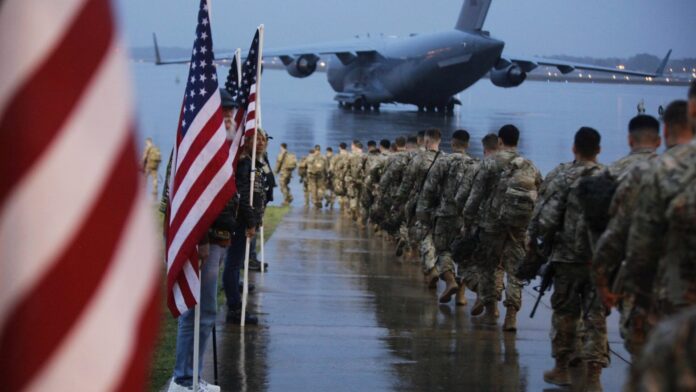
US says not to dispatch troops to Ukraine

US troops

President Joe Biden “has been clear that the US will not send troops to fight in Ukraine”, National Security Council spokeswoman Adrienne Watson said in a statement.

The only US military personnel in Ukraine were with the American embassy in Kyiv “doing important work” on the accountability of weapons provided to Ukraine, National Security Council spokesman John Kirby told reporters.

Kirby denied that US troops could be sent for demining, arms production or cyber operations, as French Foreign Minister Stephane Sejourne had suggested Western troops could be.

He added that it would be a “sovereign decision” for France or any other NATO country whether to send troops to Ukraine.

State Department spokesman Matthew Miller, asked whether the United States could send troops for other purposes such as training, stated the Biden administration opposed any deployment to Ukraine.

“We’re not sending boots on the ground in Ukraine. The president’s been very clear,” Miller told reporters.

Both the White House and State Department stressed the priority was for Congress to approve new military aid to Ukraine.

“Fundamentally, we think that the path to victory for Ukraine right now is in the United States House of Representatives,” Miller stated.

Several European states have announced they had no plans to send ground troops to Ukraine, after France hinted at the possibility, and the Kremlin warned that any such move would inevitably lead to conflict between Russia and NATO.

NATO’s secretary-general has also stressed there are no plans to send troops to Ukraine.

US, UK impose sanctions on IRGC, Yemen’s Houthi members over Red Sea tensions

Yemen Houthi

The move comes amid escalated tensions over the targeting of Israel-linked shipping in the Red Sea.

The US Treasury Department said in a statement on Tuesday that Brigadier General Mohammad Reza Fallahzadeh, the deputy commander of the IRGC’s Quds Force, and Ibrahim al-Nashiri, a member of the Yemeni movement, had been placed on Washington’s sanctions list.

The department also blacklisted Cap Tees Shipping Co., Ltd, which owns and operates a vessel for shipping Iranian commodities, over accusations of providing support both to the Quds Force and the Yemeni movement.

And Britain’s Foreign Office noted the UK’s sanctions targeted Fallahzadeh, three units of the Quds Force as well as Ali Hussein Badr al-Din al-Houthi, the commander of Yemen’s security forces, and Saeed al-Jamal, a financier who heads a network of vessels.

UK Foreign Secretary David Cameron accused Iran of backing the Yemeni resistance movement and claimed the Islamic Republic “bears responsibility” for latest attacks by the Yemeni military on ships either owned by Israel or sailing to the occupied territories in the Red Sea.

Iran has on numerous occasions asserted that the resistance forces across the region take no orders from the Islamic Republic and act independently on their own accord.

Yemenis have declared their open support for Palestine’s struggle against the Israeli occupation since the regime launched hostilities in Gaza on October 7, 2023, after resistance movements in the territory carried out the surprise Operation Al-Aqsa Storm.

The Yemeni armed forces have stressed they will not stop retaliatory strikes until Israel’s unrelenting ground and aerial operations in Gaza, which have killed nearly 30,000 people and wounded around 70,000, come to a complete end.

The maritime attacks have forced some of the biggest shipping and oil companies to suspend transit through one of the world’s most important maritime trade routes.

The United States and Britain have been carrying out strikes against Yemen since early January, after Washington and its allies offered Israel their full support amid attacks by Yemeni forces on those ships in the Red Sea.

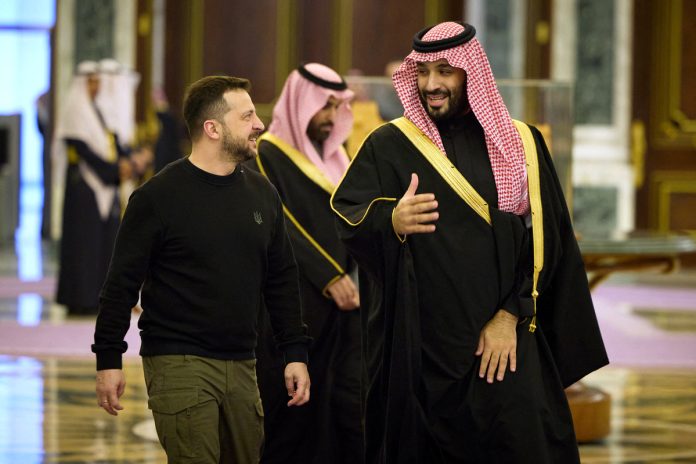
Zelensky, MBS discuss Russia-Ukraine crisis during Ukrainian leader’s surprise visit to Saudi Arabia

Zelensky MbS

A statement on Zelensky’s website said the two men discussed a Ukrainian plan to end the conflict, and added that the president had thanked MBS for his mediation role.

“The head of state [Zelensky] noted in particular Saudi Arabia’s strivings to help in restoring a just peace in Ukraine,” the statement read.

“Saudi Arabia’s leadership can help find a just solution.”

The state-run Saudi Press Agency said that MBS had “affirmed the Kingdom’s keeness and support for all international endeavours and efforts aimed at resolving the Ukrainian-Russian crisis”.

It later reported that Zelensky had left Saudi Arabia.

MBS has sought to position himself as a potential mediator to end the war between Ukraine and Russia – even as Riyadh remains closely aligned with Russia on energy policies through the OPEC+ group of countries.

Zelensky’s trip on Tuesday came as Kyiv’s forces are slowly being pushed back in eastern Ukraine. Russia has gained the initiative due to its big advantage in troop numbers and weapons supplies, military analysts say, as Kyiv waits for news of new provisions from its Western partners.

The Ukrainian military announced Tuesday that it has withdrawn its forces from two more villages near Avdiivka in the eastern Donetsk region following intense overnight fighting, according to a Ukrainian army spokesman.

Ukrainian troops have pulled back from Sieverne and Stepove, Dmytro Lykhovyi said on national television. The two villages had a population of some 100 people in total before the full-scale invasion, he added.

Ukraine continues to “rely on Saudi Arabia’s ongoing active support” in pushing forward with what has been described as a “Peace Formula” to end the full-scale invasion, which marked its second anniversary over the weekend, Zelensky wrote in a message on X.

Zelensky has presented a 10-point peace formula that, among other things, seeks the expulsion of all Russian forces from Ukraine and accountability for war crimes – at a time when the two sides are fighting from largely static positions along a roughly 1,500km (930-mile) front line. Such ideas are rejected out of hand by Moscow.

“The second topic is the return of POWs and deportees,” Zelensky wrote.

“The kingdom’s leadership has already contributed to the release of our people. I am confident that this meeting will also yield results.”

On Monday MBS also met with Russian State Duma Speaker Vyacheslav Volodin, the SPA reported, adding that they had discussed ways to boost parliamentary cooperation and “developments of common concern”.

In recent years, MBS – the de facto leader of Saudi Arabia – has reached a detente with Iran, pursued a peace deal with Yemen’s Houthis and also offered himself as a leader in other crises worldwide.

That is after facing widespread international condemnation for Saudi Arabia’s involvement in the war in Yemen and the 2018 killing of Washington Post columnist Jamal Khashoggi, which US intelligence agencies believe was carried out on his orders – a claim MBS denies.

In May, Zelensky travelled to Saudi Arabia for a meeting of Arab leaders and also met then with MBS.

Saudi Arabia, the United Arab Emirates and Qatar – all neighbours on the Arabian Peninsula – have been involved in prisoner exchanges since the war broke out in 2022.

Hamas says Gaza truce proposal not meeting Palestinian group’s demands

Gaza War

Speaking on NBC’s Late Night with Seth Myers on Monday, Biden said: “Ramadan is coming up, and there’s been an agreement by the Israelis that they would not engage in activities during Ramadan, as well, in order to give us time to get all the hostages out.”

“My national security adviser tells me that they’re close. They’re close. They’re not done yet. My hope is by next Monday we’ll have a ceasefire,” he added.

But Hamas officials suggested Biden’s comments were premature, and that no such agreement had been reached.

“The primary and main issues of the ceasefire and the withdrawal of Israeli forces are not clearly stated, which delays reaching an agreement,” an unnamed official told Reuters.

The leaked proposal, reported by Al Jazeera and Reuters, includes a temporary pause in fighting, a partial prisoner swap, a gradual and restricted return of displaced Palestinians to northern Gaza, the entry of 500 aid trucks, and the repair of hospitals and bakeries destroyed by Israel.

Osama Hamdan, a senior Hamas official, said that the leaked draft was being promoted for “propaganda” purposes.

“The Paris Summit draft is an American proposal and its goal is to give [Israeli Prime Minister Benjamin] Netanyahu more time to prepare for a new attack,” Hamdan added.

He also accused Israel of continuing to “evade its obligations”.

Hamdan stated Hamas still insisted on permanently ending Israel’s war on Gaza, lifting the Israeli siege and launching a reconstruction project in the besieged territory without Israeli restrictions.

Hamas is currently looking over a proposal discussed at a meeting in Paris last week between Israel, the United States and mediators from Egypt and Qatar.

Israel’s war on Gaza has killed nearly 30,000 Palestinians in Gaza since 7 October, according to the Palestinian health ministry. More than 70,000 others have been wounded and 7,000 are missing, who are believed to be dead and buried under rubble.

Over 70 percent of the victims are women and children, according to health officials.

According to Reuters, the first stage of the proposed truce would bring military operations to a complete halt for 40 days, and would include a prisoner exchange ratio of 10 Palestinian prisoners to one Israeli captive.

During the first stage, 40 Israeli captives listed under the humanitarian category are to be released, in exchange for approximately 400 Palestinian prisoners held in Israeli facilities.

The first stage also includes the gradual return of all Palestinian civilians – excluding men of military service age – to the northern Gaza Strip, after they were forcibly displaced from the area last year.

It also proposes that Israel will reposition its forces away from densely populated areas in the Gaza Strip.

In addition, it stipulates a commitment for 500 trucks a day of aid to be brought into the enclave, as well as 200,000 tents and 60,000 caravans.

It also states that bakeries and hospitals be allowed to be rehabilitated, and equipment and fuel brought in to aid this process.

Israel would also agree to allow heavy machinery and equipment into Gaza for humanitarian purposes, including to remove rubble.

Further stages of the truce would then be subject to future negotiations, according to Reuters.

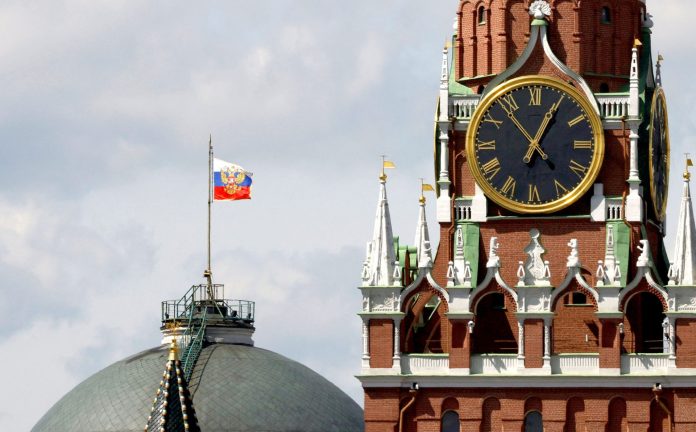
Direct conflict between NATO, Russia inevitable if West sends troops to Ukraine: Moscow

Kremlin

“In that case, it’s not going to be about probability, but inevitability – that’s how we assess it,” he said, when asked how the Kremlin assesses the probability of a direct conflict between NATO and Russia in the event that Western troops are sent to Ukraine.

Peskov also stated NATO countries “should also assess” the consequences of such actions and be aware of them.

They should “ask themselves whether this corresponds to their interests, and most importantly, to the interests of the citizens of their countries”, Peskov continued.

French President Emmanuel Macron earlier said at a news conference following a meeting of European leaders that there was no consensus about sending ground troops to Ukraine, but did not rule this out as an option for the future. He added that Western countries plan to do whatever is takes to prevent Russia from prevailing in the conflict.

Macron’s statements about the possible deployment of French troops to Ukraine shows a complete lack of awareness, Russian Foreign Ministry Spokeswoman Maria Zakharova said.

“As for Emmanuel Macron’s statements about potentially deploying NATO troops to Ukraine, <…> one gets a strong feeling that the French president realizes neither what his subordinates say nor what he says himself,” the diplomat wrote on Telegram.

Zakharova pointed out in this regard that just a month ago, the top French diplomat had denied that Paris was involved in recruiting mercenaries for the Kiev regime, slamming direct evidence as “crude Russian propaganda”.

The Russian Foreign Ministry spokeswoman drew Macron’s attention to some dubious moments in French history, stressing, “In April 1945, the French SS division Charlemagne was defending Berlin along with some other units. They were among the last ones to be awarded the Nazi Knight’s Cross in the Third Reich.”

“French members of the SS division Charlemagne were the last defenders of the Reichstag and the Reich Chancellery,” she added.

“Emmanuel, have you decided to form a Charlemagne deux (two) division to defend [Ukrainian President Volodymyr] Zelensky’s bunker?” Zakharova said, addressing the French president.

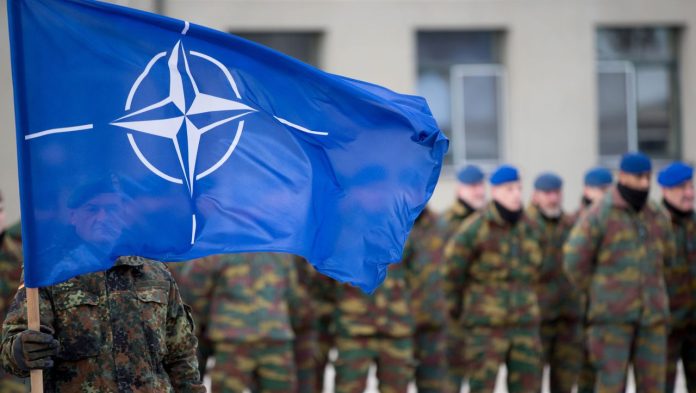
Several NATO states refuse to back France talk of sending forces to Ukraine

NATO

While there was no consensus about sending ground forces, Macron said on Monday following a pro-Ukraine summit in Paris that “in terms of dynamics, we cannot exclude anything” in the conflict between Moscow and Kiev.

There are “no plans for NATO combat troops on the ground in Ukraine,” the secretary-general of the US-led bloc, Jens Stoltenberg, told AP in response to Macron’s remarks.

British Prime Minister Rishi Sunak did not rule out sending troops in principle, but his spokesperson told reporters that “beyond the small number of personnel in [the] country supporting the armed forces [of Ukraine], we do not have any plans to make a large-scale deployment.”

Deploying troops is “not on the cards at all for the moment,” Swedish Prime Minister Ulf Kristersson told the public broadcaster SVT, adding that “for the moment, we’re busy sending advanced equipment to Ukraine”. Stockholm pledged military aid worth 7.1 billion kronor ($682 million) to Kiev last week.

Kristersson also said there is currently “no demand” from Ukraine for Western ground troops.

There was a “widely shared” perception at the summit in Paris against the use of NATO ground troops, Finnish President Sauli Niinisto told the outlet Yle.

He added that this is also Finland’s position.

German Chancellor Olaf Scholz was even more categorical, declaring that there will be “no ground troops, no soldiers on Ukrainian soil, who are sent there by European or NATO countries” in the future.

The US and its allies have sent over $200 billion worth of financial, military, and material aid to the Ukrainian government since the conflict with Russia escalated in February 2022, vowing to inflict a “strategic defeat” on Moscow while insisting they are not actually a party to the hostilities. Russia’s repeated warnings about the dangers of a direct confrontation have fallen on deaf ears.

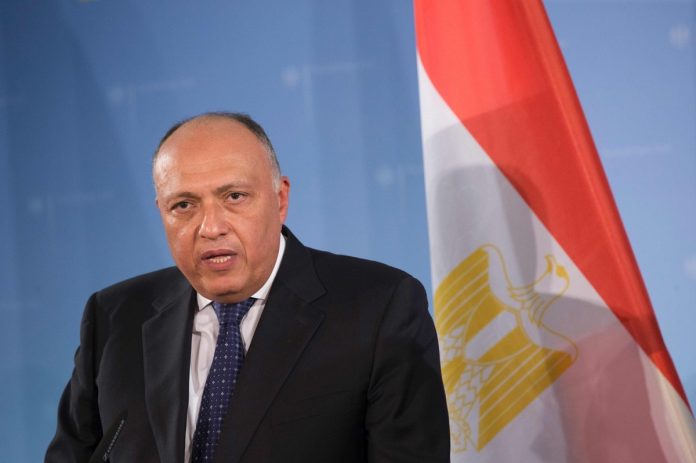
Egypt FM: Restoring ties with Iran among priorities

Sameh Shoukry

Sameh Shoukry and Hossein Amirabdollahian met on the sidelines of the UN Human Rights Council meeting In Geneva.
Shoukry expressed satisfaction with this meeting and expressed hope that these meetings will provide the basis for restoring relations between the two countries in line with the common interests of the two nations.

Shoukry considered the restoration of relations between the two countries based on mutual respect and common interests as one of Egypt’s priorities and said that Egypt’s policy is to try to establish joint cooperation based on common interests.

He said the relations between the two countries can be an important factor for the stability and containment of regional crises.

Expressing his satisfaction with the revival of relations between Iran and Saudi Arabia, Shoukry said: “We would like the future relations between Iran and Egypt to be built on solid foundations.”

He considered the joint membership of Egypt and Iran in the Non-Aligned Movement, the Organization of Islamic Cooperation, and the BRICS group as opportunities for cooperation between the two countries.

Shoukry considered the issue of Palestine as important for the two countries and the region and said: “Egypt and Iran are united in supporting the issue of Palestine and stopping the crimes against the Palestinian nation. We will do our best to support the Palestinian nation.”
Amirabdollahian, for his part, considered the agreement of the two countries’ presidents to review and speed up the relations between Tehran and Cairo as paramount.

He stressed that the Islamic Republic of Iran wants nothing but good for Egypt and the region, and said: “We consider the security of Egypt to be the security of Iran, and the cooperation of the two countries, including supporting Palestine, will have a positive impact on the entire region.”

Amirabdollahian called Egypt’s role in supporting Palestine and helping lift the human blockade of Gaza very important.

He called the Israeli regime the root cause of the crisis in the region and emphasized the need to continue joint efforts to stop the genocide of Palestinians and send humanitarian aid to the Palestinian nation.

Hamas studying Gaza truce proposals as Israel continues bombing campaign: Al Jazeera

Hamas

The Palestinian group has yet to officially comment on the proposal, which was hammered out several days ago in the French capital following mediated negotiations. US President Joe Biden has suggested a halt in the fighting could come within a week, but for now, the conflict, which has killed nearly 30,000 in the enclave, persists, with combat continuing and much of the 2.3 million population suffering from hunger.

The proposal envisages a pause in hostilities that could stretch for six weeks, Al Jazeera Arabic reports quoting informed sources. That would allow for the release of 40 Israeli captives held by Hamas in exchange for 400 Palestinians currently in Israeli prisons.

“That would include women, children, older men and those who might be suffering from medical conditions. It would involve the repositioning of the Israeli military to allow more people to move freely through the Gaza Strip,” said Al Jazeera’s Willem Marx, reporting from occupied East Jerusalem.

“It would include a cessation of aerial reconnaissance by the Israeli military for up to eight hours a day. That’s something we did see during the last series of prisoner swaps [last November] where drones in particular were moved away from areas where prisoners might be released,” he continued, adding that significantly increased flow of aid into Gaza is also part of the deal.

Reuters quoted an unnamed source as saying Gaza hospitals and bakeries would be repaired and as many as 500 aid trucks would be allowed to enter the enclave each day as part of an agreement.

The news agency also reported that the framework proposes the gradual return of all displaced Palestinian civilians – except men of military service age – to the northern Gaza Strip, and the repositioning of Israeli forces away from densely populated areas in the enclave.

Israeli and Hamas delegations are reported to be in the Qatari capital Doha for further, but separate, negotiations.

Mediators were reported to be hoping to get a deal in place before the start of the Muslim holy month of Ramadan, which is likely to start on March 10.

“Ramadan’s coming up and there’s been an agreement by the Israelis that they would not engage in activities during Ramadan as well, in order to give us time to get all the hostages out,” Biden stated in comments broadcast on US TV early on Tuesday.

Hamas is yet to comment officially, but sources reportedly suggested to Reuters that Biden’s comments on halting the fighting were “premature” and there are “still big gaps that need to be bridged”.

The need for a deal allowing accelerated humanitarian aid is becoming increasingly urgent as warnings of hunger rise.

Samantha Power, the administrator of the US Agency for International Development (USAID), said on Monday that Gaza needs more than 500 aid trucks per day, but has been receiving only about 85 in the past week, despite warnings from the United Nations of “catastrophic” consequences.

Hamas announced the same day that failure to get aid into Gaza “is a disgrace to humanity that history will not erase” and slammed the Biden administration for facilitating what the UN has called a “man-made disaster”.

One month after the International Court of Justice emergency ruling for Israel to prevent acts of genocide in Gaza, Hamas stressed the world “stands witness to the escalation of the occupation’s crimes and violations”.

Israeli Prime Minister Benjamin Netanyahu has repeatedly said that even if an agreement is achieved, it would only serve to delay a looming ground invasion of Rafah, the southernmost city in Gaza bordering Egypt where 1.4 million Palestinians are sheltering, most of whom have been displaced.

Alongside the push to win agreement on the Paris proposals, the US is trying to pass a UN resolution that expresses support for diplomatic efforts to “urgently” reach a “temporary ceasefire” agreement, according to a copy seen by Al Jazeera’s Rami Ayari.

US Ambassador to the UN Linda Thomas-Greenfield stated in an interview on Monday that she believed the US “alternative resolution” is “more relevant to supporting the efforts on the ground to get us to that temporary ceasefire”.

The new proposed text comes after the US vetoed a UNSC resolution put forward by Algeria last week. Thomas-Greenfield claimed at the time that Algeria’s resolution could interfere with the ongoing truce talks.