
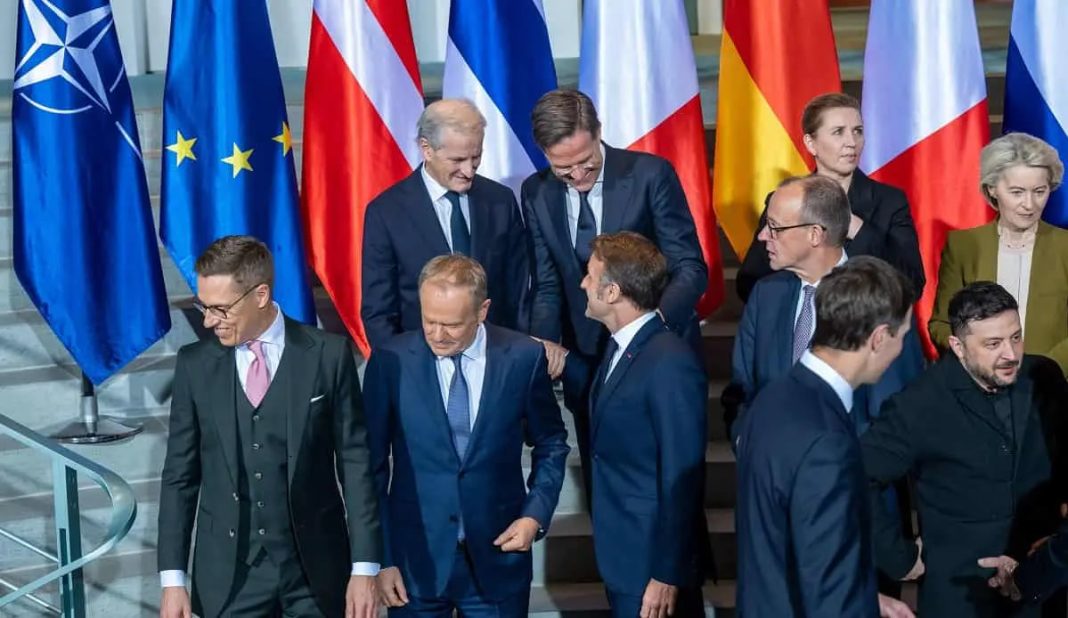
The leaders decided early on Friday to borrow cash on capital markets to fund Ukraine’s defence against Russia rather than use frozen Russian assets, diplomats noted.
“We have a deal. Decision to provide 90 billion euros [$105.5bn] of support to Ukraine for 2026-27 approved. We committed, we delivered,” Costa said in a post on social media early on Friday.
Costa did not specify the source of the funding, which came after EU leaders worked deep into Thursday night to reach an agreement.
But a draft text of the summit’s conclusions, seen by the Reuters news agency, said it would come from capital markets, secured against the EU budget, rather than the bloc proceeding with its contentious plan to use frozen Russian assets for a loan supporting Ukraine’s war effort.
At the same time, EU governments and the European Parliament will continue discussing setting up a loan for Ukraine that would be based on Russian central bank assets.
Friday’s deal will not affect the financial obligations of Hungary, Slovakia and the Czech Republic, which did not want to contribute to the financing of Ukraine, the text said.
Kyiv will only repay the EU loan based on joint borrowing once it receives war reparations from Moscow. Until then, the Russian assets will remain immobilised, while the EU has also reserved the right to use them to repay the loan, according to the text.
“It’s good in the sense that Ukraine will secure funding for two years,” one unnamed EU diplomat told Reuters.
The move followed hours of discussions among leaders on the technical and legal details of a loan based on frozen Russian assets – which turned out to be too complex or politically demanding to sort out at this stage, diplomats announced.
“We have gone from saving Ukraine to saving face, at least that of those who have been pushing for the use of the frozen assets,” a second EU diplomat added.
The main difficulty in the use of the Russian money was providing Belgium – where about 185 billion ($217bn) of the total 210 billion euros ($246bn) of frozen assets are held – with sufficient guarantees against financial and legal retaliation from Moscow.
The Kremlin has announced it will launch legal action and seize foreign assets in Russia should the plan to use its assets go ahead.
