Wednesday, December 24, 2025
Home Blog Page 977

Officials say China to boycott Ukraine peace talks without Russia

Russia Ukraine War
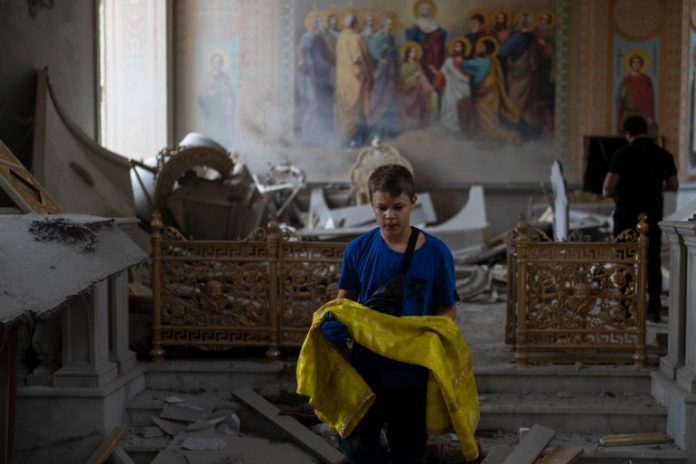
A boy helps salvage items at the Odesa Transfiguration Cathedral after it was heavily damaged in Russian missile attacks in Odesa, Ukraine, Sunday, July 23, 2023.

According to Politico, the message was “amplified” during Chinese Eurasia envoy Li Hui’s European tour earlier this month. During his March 7 trip to Kiev, Li met with Andrey Yermak, chief of staff of President Volodymyr Zelensky.

Ukraine will likely be discussed during German Chancellor Olaf Scholz’s visit to China next month. Chinese President Xi Jinping will then travel to Paris in early May and meet his French counterpart Emmanuel Macron, Politico added.

The South China Morning Post reported this month that Li told EU officials that a potential peace summit cannot turn into “a conference that produces a plan that is pushed down the Russians’ throat”.

Unlike many Western countries, China has refused to blame Russia for the ongoing conflict and stressed that the fighting can only be stopped through diplomatic means. In 2023, Beijing unveiled a 12-point roadmap to a peace settlement, urging both sides to de-escalate. Kiev has since rejected the Chinese proposal.

Ukraine insists that a tangible peace can only be negotiated on Zelensky’s terms, which include the withdrawal of Russian forces from the “illegally occupied” territory of Ukraine. Moscow has rejected this demand as a non-starter, stressing that it will not surrender Crimea and four other former Ukrainian regions that joined Russia after holding referendums on the matter.

Meaningful negotiations between Moscow and Kiev effectively broke down in the spring of 2022, with both sides accusing each other of making unrealistic demands. Russian President Vladimir Putin subsequently said that Ukrainian negotiators had initially agreed to some of Russia’s terms, but then abruptly reneged on the deal.

Kiev’s lead negotiator David Arakhamia revealed in November 2023 that his team’s main goal was to “buy time” for the Ukrainian military.

Switzerland has proposed to host a major peace summit sometime this year. However, no specific date has been yet set, and no list of potential participants has been revealed.

UN warns famine imminent in north Gaza

Gaza War

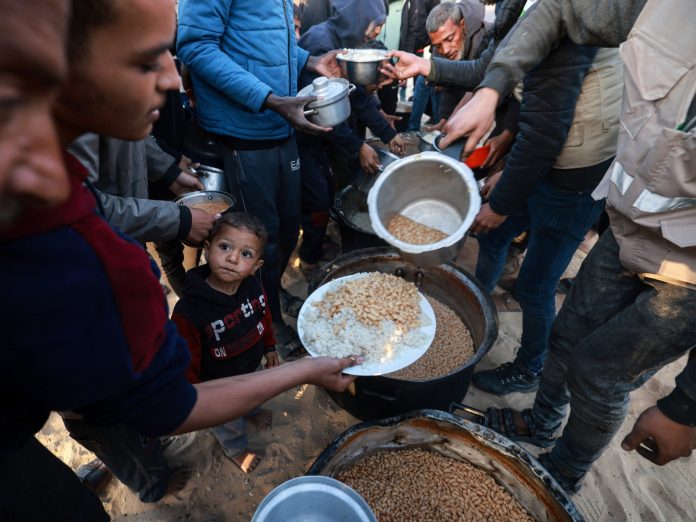
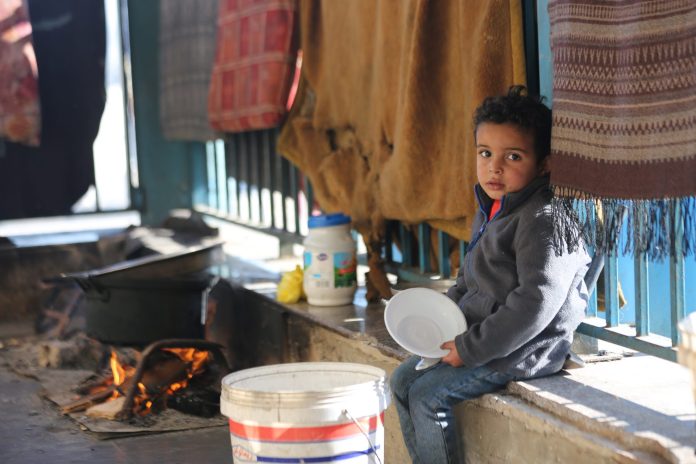
“People in Gaza are starving to death right now. The speed at which this man-made hunger and malnutrition crisis has ripped through Gaza is terrifying,” said Cindy McCain, head of the UN’s World Food Programme (WFP).

The Integrated Food Security Phase Classification (IPC) partnership on Monday estimated that 1.1 million people — half the population, according to UN data — were facing catastrophic conditions.

“To have 50 percent of an entire population in catastrophic, near-famine levels, is unprecedented,” Beth Bechdol, deputy director general of the UN’s Food and Agriculture Organization (FAO), told AFP.

The WFP announced that this was the “highest number of people ever recorded as facing catastrophic hunger” under the IPC system, originally developed in 2004.

The situation is particularly dire in the north of Gaza, where the UN says there are about 300,000 people — and where the IPC said famine was “imminent… projected to occur anytime between mid-March and May”.

Martin Griffiths, the UN’s humanitarian chief, called for Israel to allow unfettered access for aid to the besieged Palestinian territory, saying there was “no time to lose”.

“The international community should hang its head in shame for failing to stop this,” he added.

US State Department spokesman Vedant Patel stated the findings were “alarming”, and revealed a “heartwrenching” picture of “children who are starving”.

“That is why we believe so strongly that everything must be done to scale up the delivery of humanitarian assistance,” he added.

The bloodiest-ever Gaza war broke out after Hamas launched an unprecedented attack on Israel on October 7, to which Israel responded with a relentless bombing campaign and ground offensive in the Palestinian territory.

With aid agencies reporting huge difficulties gaining access to Gaza, particularly the north, the UN has warned for weeks that a famine is looming.

The IPC noted Monday that while the technical criteria for famine had not yet been met, “all evidence points towards a major acceleration of deaths and malnutrition”.

The report highlighted the horrific toll on children.

“Hunger is a slow and painful death,” said Hiba Tibi, country director for the CARE international aid group, who reported aid workers seeing children “who can barely talk and walk” for lack of food.

A famine is declared when 20 percent of households face an extreme food shortage — which is the case in Gaza, the UN says.

Other criteria are that one in three children are acutely malnourished, and that at least two in every 10,000 people die every day of starvation or malnutrition.

According to the WFP, “one in three children below the age of two is now acutely malnourished, or ‘wasted'”, meaning they are dangerously thin.

In a statement, the World Health Organization pointed to the lasting effects of malnutrition, particularly on children, warning that the “current situation will have long-term effects on the lives and health of thousands”.

“This compromises the health and well-being of an entire future generation,” it added.

WFP chief economist Arif Husain, stressed the final criteria for declaring a famine — the mortality rate — could be met within weeks.

The FAO said it could be already happening in the north, where data is patchy.

“Waiting for a retrospective famine classification before acting is indefensible,” the IPC added.

Donors have turned to deliveries by air or sea, but these are not viable alternatives to land deliveries, UN agencies say.

Aid charity Oxfam on Monday accused Israel of continuing to “systematically and deliberately block and undermine” the delivery of aid into Gaza, in violation of international humanitarian law.

Bechdol, of the FAO, told AFP that Gazans are “turning to alternative sources” for food, including animal feed and “inedible items, purely out of desperation”.

WFP said meeting basic food needs would require at least 300 trucks to enter Gaza every day, especially in the north.

The agency has managed to get only nine convoys into the north since January, the latest on Sunday night involving 18 truckloads of food supplies delivered to Gaza City.

“Our hope is we can still avert a full-fledged famine,” the WFP’s Husain stated, adding, “But the window is shutting and it is shutting very, very fast.”

Iran celebrates 73rd anniv. of oil industry nationalization

Iran Oil Gas

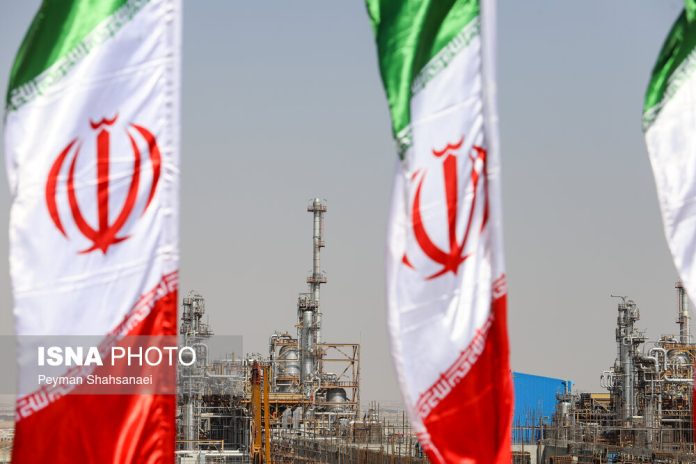
Led by then Prime Minister Mohammad Mossadegh on March 19, 1951, the move aimed to reclaim control of Iran’s oil resources from foreign entities, notably the Anglo-Iranian Oil Company (now BP).

Despite facing international pressure and sanctions, Mossadegh’s government successfully nationalized the industry, marking a crucial step towards asserting Iran’s sovereignty.

The anniversary serves as a poignant reminder of Iran’s enduring struggle for independence and control over its vital resources.

Now 73 years  into that historical event, according to the Iranian oil minister, the Islamic Republic aims to increase its oil production to the threshold of 4 million barrels per day in the coming year, despite the US-led sanctions.

With a reserve of 163 billion barrels of oil in place, Javad Owji said Iran is looking to ramp up production to 5.7 million barrels per day as part of its seventh development plan.

This milestone comes amid ongoing geopolitical tensions and economic challenges for Iran, underscoring the significance of the nationalization efforts in shaping the nation’s history and identity.

World labor body says over half a million Palestinian jobs lost due to war

West Bank

As of January 31, about 201,000 jobs were lost in the Gaza Strip, accounting for about two-thirds of total employment in the enclave, the ILO and the Palestinian Central Bureau of Statistics said on Monday.

“In addition to the devastating and catastrophic loss of life and with the people of Gaza on the brink of mass starvation, the war in Gaza has also caused an economic and social crisis that is unprecedented,” stated ILO Regional Director for Arab States Ruba Jaradat.

In addition, 306,000 jobs – or more than one-third of total employment – were also lost in the occupied West Bank, where economic conditions have been severely affected since the start of the war.

In early February, the United Nations announced it will take decades and substantial international aid to rebuild the socioeconomic conditions in the war-torn Gaza Strip to pre-conflict levels.

The assessment came in a report by the United Nations Conference On Trade And Development (UNCTAD) that outlined the severe social and economic deterioration experienced in Gaza since the initiation of military operations following attacks by the Palestinian resistance group, Hamas, on Israel in early October.

“UNCTAD’s assessment underscores that restoring pre-conflict socioeconomic conditions in Gaza will take decades and requires substantial foreign aid,” the UN body announced in a statement.

The report, drawing upon innovative satellite imagery and official data, meticulously quantifies the extent of the conflict.

The Gazan economy had already contracted 4.5% in the initial three quarters of 2023, according to UNCTAD’s findings. But the military operation has exacerbated the decline, resulting in a staggering 24% GDP contraction and a 26.1% drop in GDP per capita for the entire year.

“If the current military operation were to end immediately with reconstruction starting right away and the 2007-2022 growth trend persists with an average growth rate of 0.4 per cent, it would take Gaza until 2092 just to restore the GDP levels of 2022 with GDP per capita and socioeconomic conditions continuously declining.”

“However, even with the most optimistic scenario that GDP could grow at 10% annually it would still take Gaza’s GDP per capita until 2035 to pre blockade level of 2006,” it added.

“The recovery of Gaza’s economy from the current military operation will demand a financial commitment, several times the $3.9 billion that resulted from the 2014 military operation in Gaza and will involve a concerted international effort to restore pre-conflict socioeconomic conditions.”

Prior to the recent military escalation, Gaza endured dire socioeconomic conditions, with more than 2 million residents confined to one of the world’s most densely populated areas and basic necessities such as clean water and electricity were scarce, and unemployment rates soared.

The ongoing military operation has exacerbated Gaza’s plight, displacing 85% of its population and halting economic activities, it noted.

UNCTAD stressed the urgent need to break the cycle of economic destruction, cautioning against a return to the pre-conflict status quo.

“The possibility and speed of recovery in Gaza will depend on ending military operation, donors’ engagement and subsequent growth performance. An optimistic scenario suggests that even with an immediate end to the fighting bringing Gaza back to the socioeconomic conditions that prevailed prior to the outbreak of the current confrontation would take decades without a properly funded recovery programme fully backed by the international community,” it said.

Furthermore, it emphasized the crucial role of immediate financial support to the Palestinian government, warning of a wider collapse without sustained governance and essential public services.

Ultimately, UNCTAD asserted that the resolution of Gaza’s crises hinges upon ending the military operation and lifting the blockade, advocating for a two-state solution in accordance with international law and relevant United Nations resolutions.

“Donors and the international community are urged to recognize that the constraints on the Palestinian economy, specifically in Gaza, extend beyond the recent confrontation,” it added.

Israel has launched relentless air and ground attacks on the Gaza Strip since a cross-border attack by Hamas in October.

The onslaught has killed nearly 32,000 victims, mostly women and children, displaced 85% of the blockaded enclave’s population and created conditions for famine.

The International Court of Justice (ICJ), in its interim ruling on the genocide case filed by South Africa, ordered Israel to prevent acts of genocide in Gaza and enable the provision of urgently needed basic services and humanitarian assistance to address the adverse conditions of life faced by Palestinians.

Tel Aviv also has to submit a report to the ICJ on all measures taken to give effect to the order within one month.

Afghanistan’s Taliban government accuses Pakistan of bombing civilians

Taliban

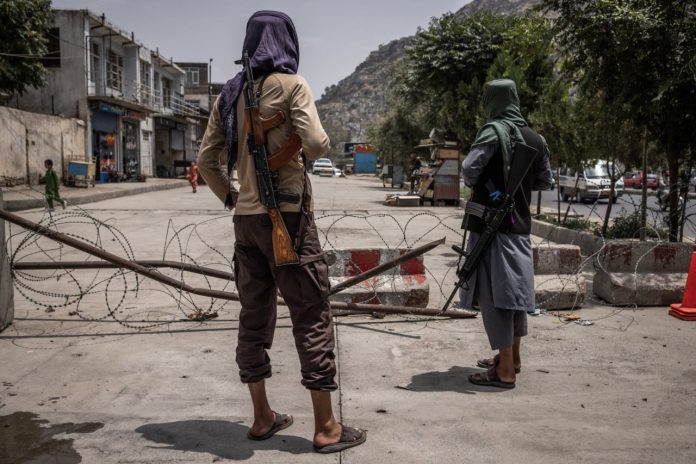
Pakistani jets “bombarded the homes of civilians” in the early hours of Monday morning, Taliban spokesman Zabihullah Mujahid said in a statement. Mujahid added that the bombing killed eight people in the provinces of Paktika and Khost, both of which border Pakistan.

The Pakistani Foreign Ministry did not comment on the alleged civilian casualties but said that the Pakistan Air Force had launched “intelligence-based anti-terrorist operations” against Taliban-sponsored terrorist groups operating in the two provinces. These groups include the Hafiz Gul Bahadur Group and Tehrik-i-Taliban Pakistan (TTP), which Islamabad says have used Afghanistan as a staging ground for attacks on Pakistani soil.

The Taliban denies sheltering the TTP. While Hafiz Gul Bahadur once led a Taliban faction in Pakistan, his current relationship with Kabul is unclear.

The most recent of these attacks was on Saturday, when a suicide bomber drove an explosives-laden truck into a military checkpoint in Pakistan’s Khyber Pakhtunkhwa province. A splinter group of the TTP claimed responsibility for the attack, which killed seven Pakistani soldiers.

Mujahid stated that Taliban fighters responded to Monday’s airstrikes by targeting Pakistani military outposts with heavy weapons. Pakistani officials told Al Jazeera that three soldiers and four civilians were wounded by mortar fire.

“The Islamic Emirate of Afghanistan, which has a long experience of freedom struggle against the superpowers of the world, does not allow anyone to invade its territory,” the Taliban spokesman added.

Although an American ally, Pakistan provided military and financial aid to the Taliban before and during the US invasion of Afghanistan. That relationship has since soured, with Pakistan fencing up its side of the Afghan border and deporting hundreds of thousands of Afghans late last year. Tit-for-tat killings have become commonplace along the frontier since 2022, with the Pakistani government accusing the Taliban of sheltering terrorists and Kabul accusing Islamabad of violating Afghan sovereignty.

Not a single country officially recognizes the Taliban government, which took power in Kabul in 2021 during the final stage of the withdrawal of US troops. The UN does not recognize the group’s authority over Afghanistan, and the Taliban has boycotted power-sharing talks in Qatar.

“Afghanistan has turned into major producer of methamphetamine”

Afghanistan methamphetamine

The international affairs director general of Iran’s Center for Fighting Drugs has said the organization’s success in reducing the demand for drug abuse meets the highest world standards.

Amirabbas Lotfi who is accompanying the head of the center at the Commission on Narcotic Drugs in Vienna made the remark in a meeting with the director general of the Dutch Ministry of Welfare and Sports.

Lofti also outlined Iran’s measures aimed at rehabilitating female drug addicts, which have been approved by the UN.

The official added that the challenges posed by narcotics are international and are not limited to a single country or a region.

In a meeting with a senior advisor to Norway’s Ministry of Health, Lotfi referred to Iran’s geographical position alongside Afghanistan, the largest producer of drugs.

He noted that Iran welcomes any decrease in the cultivation of narcotics in Afghanistan but noted that there has been no considerable reduction in drug-trafficking from the neighboring country.

He also said Afghanistan has turned into a major producer of methamphetamine, which must be taken seriously and be investigated.

Lotfi added that Tehran is worried about the situation in Afghanistan in this regard. The Norwegian side also said it’s impossible that drug production has reached zero in Afghanistan, adding that any reduction in the production of narcotics, if at all, will be temporary and Afghanistan will resume producing drugs.

He noted that as a European country, Norway should seek technical and specialized cooperation with Iran for the purpose of combating drugs, and given that Iran has high capabilities in this field, Norway needs to work with the country regardless of politics.

Iran’s fight against narcotics and drug-trafficking has cost the country dearly. Around 4,000 Iranians have been killed in fighting drugs over the past 40 years.

The UN has hailed Iran’s efforts to prevent drugs from reaching Europe through the Middle East.

Iran condemns Israel attack on Gaza hospital, warns of crimes

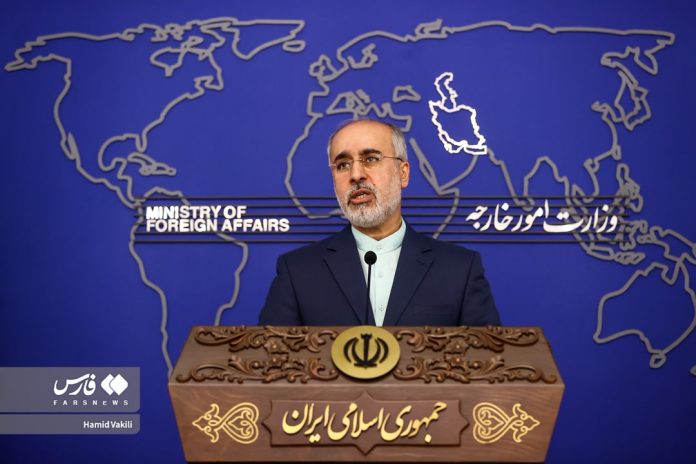
Nasser Kanaani

Kanaani said on Monday, “Unfortunately, it’s not the first time that the world is witnessing this bitter reality that the Zionist regime, by grossly violating international law, commits the crime of attacking a hospital, killing, beating or imprisoning the medical staff, patients and the wounded and violating the basic humanitarian laws.”

Kanaani pointed to the Israeli military campaign in Gaza, saying what is happening now in the Gaza Strip, is only a small part of the dark history of the Zionists, which not only was not met with a proper response from the international community, but was also supported by some known countries in the West.

He added that the painful tragedy of recent months in Gaza is unfolding before the eyes of the whole world, while in all wars and conflicts, hospitals and patients are protected by international law and have been defined and declared inviolable.

While reaffirming the responsibility of the international community regarding the painful situation of Palestine, especially the Gaza Strip, Kanaani once again asked the United Nations and the UN Security Council to fulfill their international duty in preventing the continuation of war crimes by the Israeli regime.

Israeli troops raided on Shifa Hospital on Monday, and according to the Palestinian cources, many people were killed and wounded during the attack.

Around 32,000 Palestinians have been killed in Israel’s relentless attacks on Gaza since early October 2023.

Israeli soldiers storm Gaza’s al-Shifa Hospital, killing and injuring several

Israeli Army

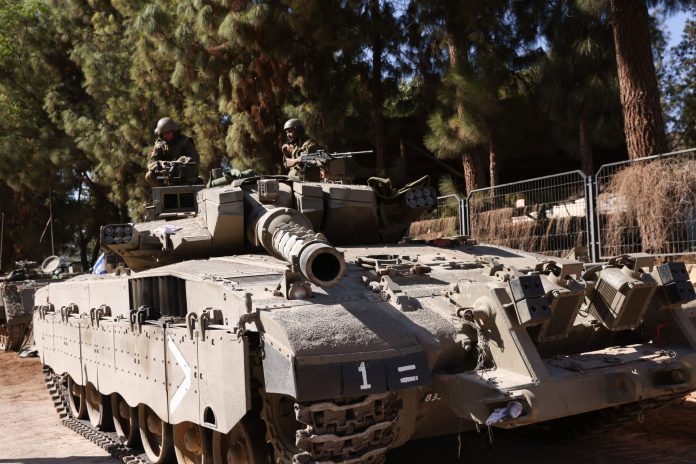
The Israeli military said in a statement on Monday that it is conducting a “precise operation” at the medical facility.

Gaza’s Ministry of Health announced about 30,000 people, including displaced civilians, wounded patients and medical staff are trapped inside the complex.

Israel, which wound down many of its operations in northern Gaza some weeks ago claiming to have destroyed Hamas’s military infrastructure, added in the statement that Hamas – which governs the enclave – has “regrouped” inside al-Shifa and is “using it to command attacks against Israel”.

In a message in English on Telegram, Gaza’s Ministry of Health said anyone “who tries to move is targeted by sniper bullets and quadcopter”. It added that the raid, which began at 2am (00:00 GMT), has resulted in a “number of martyrs and wounded”.

Israeli military spokesman Daniel Hagari stated in a video posted earlier on X that the Israeli military would be conducting a “humanitarian effort” during the assault, providing food and water. He also insisted that there is “no obligation” for patients and medical staff to evacuate the hospital.

However, Al Jazeera Arabic correspondents on the ground reported that Israeli troops used loudspeakers to order hundreds of people sheltering at the hospital to evacuate.

Footage verified by Al Jazeera’s Sanad verification unit shows dozens of Palestinians fleeing the hospital as Israeli forces launched operations in the area.

Palestinian journalist Wadea Abu Alsoud, trapped inside the medical complex, described the situation in the facility as “catastrophic” and reported “intense clashes”, in a video posted to Instagram.

“This might be my last video,” he stated.

“We’re now besieged inside al-Shifa Hospital. We’re being heavily shot at. The occupation suddenly raided the hospital and its vicinity. As you can hear now, there are intense clashes in the vicinity of al-Shifa Hospital. We’re hearing sounds coming from the gate. There is shrapnel falling over the hospital’s yard.”

The Government Media Office in Gaza condemned the operation, calling the attack a “war crime”.

“The Israeli occupation is still using its fabricated narratives to deceive the world and justify the storming of al-Shifa,” it announced in a statement.

The Health Ministry said it had received calls from people in the area around the hospital claiming there were dozens of casualties.

“No one could transport them to the hospital due to the intensity of gunfire and artillery shelling,” the ministry added.

According to the UN, 155 health facilities in the Gaza Strip have been damaged since the war began.

Gaza “graveyard” for most important principles of humanitarian law: EU top diplomat

Gaza War

“Gaza was, before the war, the greatest open-air prison. Today it is the greatest open-air graveyard. A graveyard for tens of thousands of people, and also a graveyard for many of the most important principles of humanitarian law,” Borrell told reporters at the doorstep of the EU foreign affairs meeting in Brussels on Monday.

The bloc’s foreign policy chief also stated the ministers will discuss the EU-Israel Association Agreement.

“We are not talking about full suspension association agreement. This would be something for the commission to propose. We are talking about the political dimension based on the respect to humanitarian law,” Borrell explained.

Israel launched a destructive military campaign in Gaza in response to an Oct. 7 attack by the Palestinian group, Hamas, which Tel Aviv said killed less than 1,200 people.

More than 31,700 Palestinians have since been killed, the majority of the 2.3 million population has been displaced and many are starving amid a worsening humanitarian catastrophe.

Earlier, the EU foreign policy chief had warned that Gaza is already “in a state of famine”, saying the situation is “entirely man-made” by Israel.

“In Gaza, we are no longer on the brink of famine, we are in a state of famine affecting thousands of people,” he stated

“This is unacceptable,” he stressed, adding: “Starvation is used as a weapon of war.”

Borrell warned that the besieged strip is “becoming a territory without any kind of order,” due to conflict that started last October.

“The territory of Gaza is very quickly becoming a territory without any kind of order, is more and more looking like Haiti, Somalia, Syria, or Mosul. This will be the first failed state before having existed,” he added.

He also voiced hope that “in the intermediate future the discussion of the United Nations Security Council will allow for a cease-fire in Gaza”.

Putin warns Russia-NATO conflict just one step from World War Three

Putin

It is no secret that fighters from NATO states are present on the ground in Ukraine, Putin said, noting that those service members are facing extremely grim prospects.

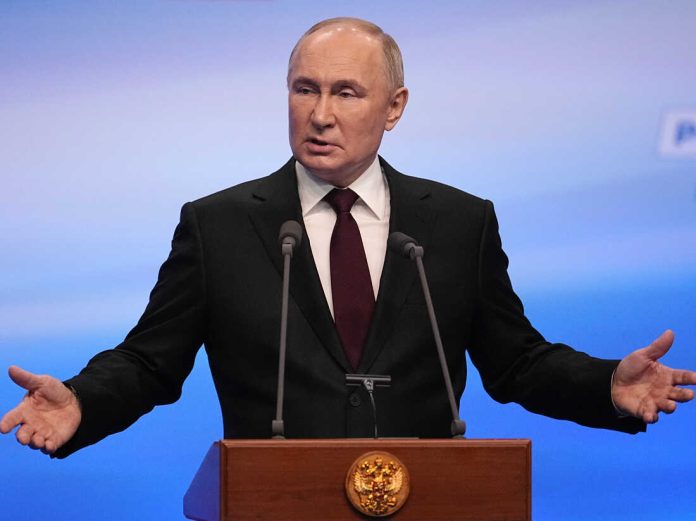
Speaking to his supporters and reporters after his landslide presidential election victory, Putin stressed that Moscow was well aware of the US-led military bloc’s push to deploy troops in Ukraine.

“We hear both French and English speech there. There is nothing good in this, first of all for them, because they die there and in large numbers,” he added.

He also weighed in on a potential full-scale conflict between NATO and Russia, warning that it could not be ruled out.

“Anything is possible in the modern world… But everyone knows that this would be one step shy of a full-scale World War II. I don’t think that anyone is interested in that.”

French President Emmanuel Macron suggested last month that the West “cannot exclude” the possibility of sending soldiers to aid Ukraine. Later, he also described Russia as an “adversary”, insisting, however, that Paris is not “waging war on” Moscow.

Commenting on Macron’s remarks, Putin noted that while NATO troops in Ukraine are expected to act as an auxiliary force, helping Kiev train its military, “this is not much different from what mercenaries are doing there now”. Russia, he added, wants France not to escalate the conflict but to help find a peaceful solution to hostilities.

In order to protect its people from Ukrainian strikes, Russia could “at some point” set up a buffer zone in Kiev-controlled territories, Putin told supporters and journalists.

Ukraine routinely launches artillery and drone strikes on Russian border regions, with many attacks targeting residential blocks, resulting in numerous civilian deaths.