Thursday, January 1, 2026
Home Blog Page 944

Israeli PM says potential US sanctions on IDF ‘absurd’ despite rights violations against Palestinians

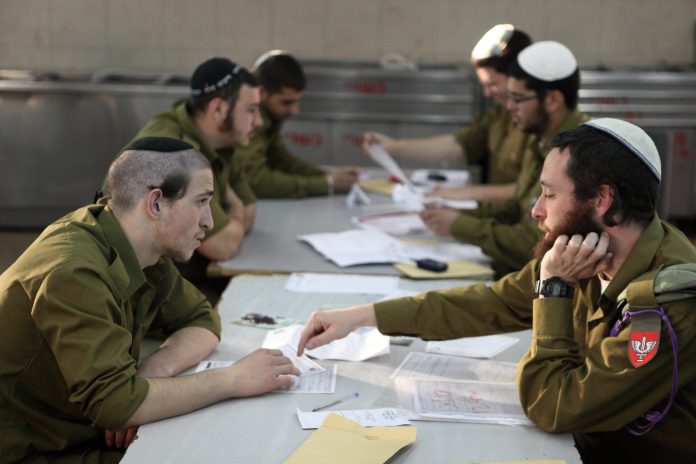
The Netzah Yehuda Battalion

The Netzah Yehuda Battalion is a special Israel Defense Forces (IDF) unit composed primarily of ultra-Orthodox Jews. US Secretary of State Antony Blinken is expected to announce sanctions on the unit for alleged human abuses committed in the West Bank, US news site Axios wrote on Saturday, citing three anonymous US sources.

Netanyahu condemned the idea of sanctioning the IDF in a post on Saturday, adding that he has been in touch with US officials to work against the potential decision.

At a time when the IDF is “fighting terrorist monsters”, this intention is “the height of absurdity and a moral low,” he wrote, adding his government will act “by all means against these moves”.

The secretary of state was questioned on Israeli human rights violations in a press conference in Italy on Friday.

“You’ll see results very soon. I’ve made determinations; you can expect to see them in the days ahead,” Blinken told journalists. He added that the US applies the Leahy Law “across the board”, and that it’s been gathering facts of the matter and analyzing them.

The Leahy Law – named after its principal sponsor, Senator Patrick Leahy – prohibits the Departments of State and Defense from extending military assistance to foreign armies and law enforcement units that are proven to have flagrantly violated human rights. Should the sanctions go through, the unit will be banned from receiving any kind of US training or material assistance.

According to one of Axios’ sources, the determination was based on incidents that occurred prior to the October 7 Hamas attack on southern Israel. One of the cases which brought attention to the unit was the 2022 death of 78-year-old Omar Assad, who was detained by Netzah Yehuda soldiers at a checkpoint in the West Bank, zip-tied, gagged, and left in a parking lot in the winter. An autopsy by three Palestinian physicians, noting injuries on his arms and legs, gave the cause of death as cardiac arrest from psychological stress resulting from physical violence, Israeli daily Haaretz reported at the time.

According to the newspaper, the unit was redeployed to the Golan Heights in Syria in January last year after a “relatively large number of incidents” in which soldiers were arrested for beating Palestinians.

Iran displays home-made drone at Iraq defense expo

Iran Drone

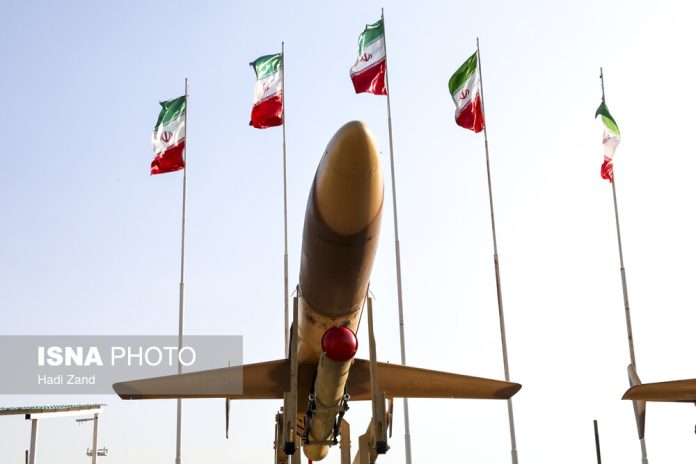
The UAV, manufactured by Iran’s Islamic Revolution Guards Corps (IRGC)’s Ground Force, is capable of carrying a multispectral surveillance payload and up to four precision-guided munitions.

The Iranian defense and military products stood out in this year’s exhibition, especially since Iran unveiled the Mohajer-6 combat drone for the first time, which attracted the attention of most of the foreign participants in the event.

Iran’s electronic industries have also taken part in the electronic warfare section.

Anti-UAV systems, border guard systems, and thermal cameras are also among the defense equipment Iran has put on display at the event.

The 12th International Security and Defense Exhibition in Iraq kicked off on Saturday in Baghdad and will last for four days.

Israel kills 10, mostly children, in Gaza’s Rafah

Gaza War

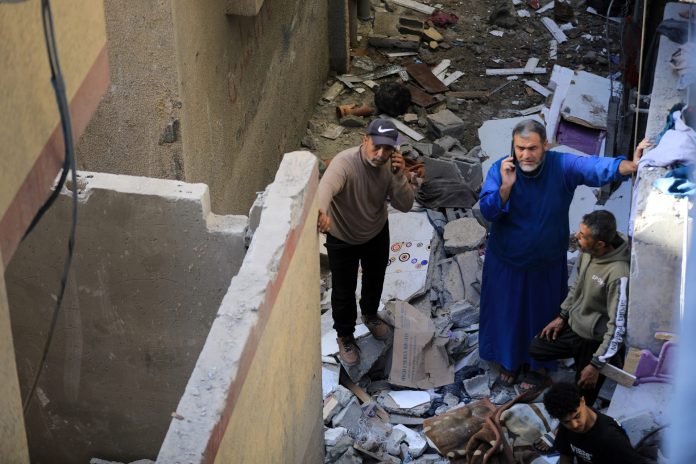
Funerals were held on Saturday for those killed in the deadly strike on Rafah’s western Tal as-Sultan neighbourhood the night before, according to Gaza’s civil defence.

At al-Najjar Hospital, the site of the area’s main morgue, relatives sobbed and hugged white-shrouded children’s bodies.

“Hamza my beloved. Your hair looks so pretty,” a mourning grandmother said.

The fatalities included Abdel-Fattah Sobhi Radwan, his wife Najlaa Ahmed Aweidah and their three children, according to his brother-in-law Ahmed Barhoum. Barhoum lost his wife, Rawan Radwan, and their five-year-old daughter, Alaa.

“This is a world devoid of all human values and morals,” Barhoum told The Associated Press, crying as he gently rocked Alaa’s body.

“They bombed a house full of displaced people, women and children. The only martyrs were women and children.”

The scene of bodies being transferred from al-Najjar Hospital to their final burial was heartbreaking, Al Jazeera’s Hani Mahmoud stated, reporting from Rafah.

“The majority were children, wrapped in white sheets soaked in blood … We spoke to a doctor from the hospital [where the children were brought] who described them as having devastating wounds, soaked in blood,” he added.

“Their burns were so bad that even if they made it to the hospital alive, they would have quickly lost their lives because there’s no way such injuries could be treated right away given the current situation.”

Al Jazeera’s reporters said the Israeli military continued its assault on the city on Saturday.

“There has been no let-up in the fighting,” stated correspondent Tareq Abu Azzoum.

Israel has been promising a major invasion into Rafah, which hosts more than half of Gaza’s population of about 2.3 million and is the only area in the territory to have been spared Israel’s ground forces so far.

According to two Gaza war monitors, the Institute for the Study of War (ISW) and the Critical Threats Project (CTP), United States and Israeli officials held a high-level “virtual meeting” on Thursday to discuss a Rafah incursion.

The US-based think-tanks said Israel shared with the US its plan to move some 1.4 million Palestinian civilians out of Rafah ahead of its promised ground invasion; however, the plan did not include “concepts for access to food, water and other civil services” according to reports.

Al Jazeera’s Abu Azzoum added Rafah has been witnessing a surge of Israeli military strikes in the past couple of weeks and these attacks could be seen as a sign that further military incursion could be carried out, specifically in light of Israel’s mobilisation of its troops near the border with Rafah.

“Right now, we are in central Rafah, and we can clearly see in the sky above the Kuwaiti Hospital, at least four Israeli military surveillance drones, hovering at a very low altitude.”

“Different areas have been attacked in Rafah … One of the latest strikes targeted an empty house on the western side of that very densely populated area.”

Additionally, there were Israeli strikes on other areas of the Gaza Strip on Saturday, including the Jabalia, Nuseirat, Maghazi and Bureij refugee camps, the correspondent continued.

More than 34,000 people have been killed and over 76,900 wounded in Israel’s war on Gaza since October 7.

Iran oil exports hit 6-year high amid US sanctions: Report

Iran Oil Tanker

Tehran sold an average of 1.56 million barrels a day during the first three months of the year, almost all of it to China and its highest level since the third quarter of 2018, according to data company Vortexa.

Iran’s success in exporting its crude underscores the difficulties facing the US and the EU as they seek to build up pressure on Tehran.

“The Iranians have mastered the art of sanctions circumvention,” said Fernando Ferreira, head of the geopolitical risk service at the Rapidan Energy Group in the U.S.

In Tehran, Tasnim News Agency reported on Wednesday that the country’s oil industry had found ways to get around sanctions.

Iran’s Oil Minister Javad Oji stated last month that oil exports had generated more than $35 billion in the preceding year. On another occasion, he said that while Iran’s enemies wanted to stop its exports, “today, we can export oil anywhere we want, and with minimal discounts”.

Earlier this month, The U.S. Energy Information Administration (EIA) said that Iran produced 3.25 million barrels per day (bpd) of oil in March 2024, 20,000 bpd more than the previous month.

According to the EIA report, Iran’s oil production in February stood at 3.23 million bpd.

Iran has produced an average of 3.2 million barrels of oil per day in the first quarter of this year, based on the report.

Iran’s oil production in the first quarter of this year has increased by 50,000 bpd compared to the fourth quarter of the previous year and by 630,000 barrels per day compared to the first quarter of 2023.

Iran produced 2.6 million bpd of oil in the first quarter of the previous year and 3.18 million bpd in the fourth quarter of the mentioned year.

With an increase of 630,000 barrels in oil production over the past year, Iran had the highest production rise among OPEC members, according to EIA.

Gabon, Nigeria, and Venezuela have been the only OPEC members to increase production over the past year. The production of Gabon increased by 10,000 bpd, Nigeria by 40,000 bpd, and Venezuela by 90,000 bpd.

OPEC oil production in the first quarter of last year was 27.380 million bpd, which has decreased by 720,000 barrels to 26.660 million in the first quarter of 2024.

Based on the EIA report, Iran maintained its position as the organization’s third oil producer in March.

Washington to pay for confiscating Moscow’s assets: Kremlin

Kremlin

“America will have to pay for this, if it is indeed so,” the Russian official said, referring to the potential confiscation.

Moscow set no time limits for responding to Washington’s actions, he stated, adding that Russia will tailor its response to “serve our interests in the best possible way.”

The US would hurt itself if it proceeds with such a plan, the Kremlin spokesman warned. Confiscating Russian assets undermine the principle of “inviolability of private… and state property”, he said.

Such a move would prompt many investors to withdraw their money from the US and cause “irreparable damage to the US image”, Peskov believes.

The spokesman did not elaborate on what specific measures Moscow could take in response to the seizure of its assets.

Earlier on Saturday, the US House of Representatives passed the Rebuilding Economic Prosperity and Opportunity (REPO) for Ukrainians Act, which essentially opened the way for the US government to liquidate frozen Russian assets and transfer the funds obtained to Ukraine.

The bill was adopted as part of a legislative package that also included authorizing $61 billion in additional spending on aid to Kiev. The emergency spending bill had been stalled in Congress since last fall as lawmakers were concerned that Washington lacked a strategy for victory or a peace settlement in the Ukraine conflict.

The EU and other G7 nations have blocked an estimated $300 billion in assets belonging to the Russian central bank since the start of the Ukraine conflict in 2022. Of that amount, €196.6 billion ($211 billion) is being held by the Belgium-based clearinghouse Euroclear. Since last year, those funds accumulated nearly €4.4 billion in interest.

The US, which holds only $6 billion out of the $300 billion in frozen Russian assets, had long been pushing its allies to seize the money outright. However, this approach has faced opposition from the European Central Bank (ECB) and criticism from the IMF and caused a rift among the G7 and EU political leadership.

Earlier in April, ECB President Christine Lagarde warned that seizing the assets would essentially amount to “a violation of the legal international order.”

Russia has repeatedly stressed that any actions taken against its assets would amount to “theft.” The Russian agency RIA Novosti also estimated in January that Moscow could respond to such an action by seizing assets belonging to the EU, G7, Australia, and Switzerland, all of which have investments in the Russian economy. The total volume of such holdings amounted to $288 billion at the end of 2022, according to RIA.

Israeli soldiers kill several Palestinians during refugee camp siege in West Bank

West Bank

The ministry said in a press statement sent to Xinhua that the bodies of the 14 Palestinian killed were transferred to Tulkarm Hospital from the Nour Shams Palestinian refugee camp east of the city.

The statement didn’t provide further details.

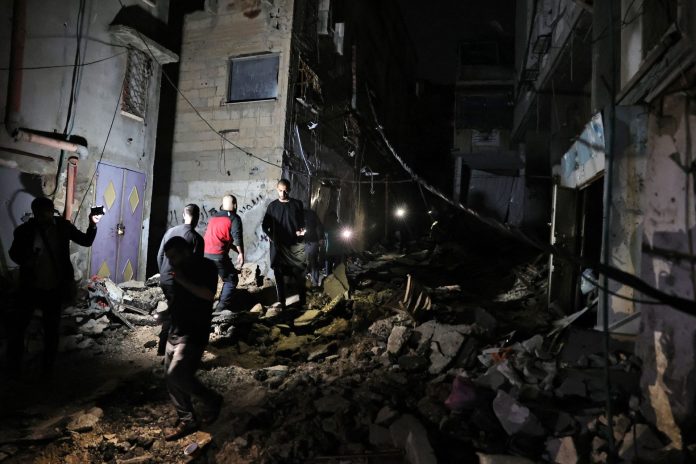
Palestinian security sources said that Israeli forces, accompanied by military bulldozers, entered the camp on Thursday, imposing a stringent siege and demolishing main streets, infrastructure, residential homes, and shops.

The sources added that the ongoing military operation, coinciding with power outages, water cuts, and the disruption of communication and internet networks in the camp, was the most severe in years.

Sniper units were deployed on the roofs of high-rise buildings while other forces detonated several houses with guided missiles.

Local sources and eyewitnesses reported clashes between the army and Palestinian gunmen, along with the sound of explosions caused by homemade explosive devices.

The Al-Quds Brigades, the armed wing of the Islamic Jihad Movement, and the Al-Aqsa Martyrs Brigades, the armed wing of the Palestinian National Liberation Movement (Fatah), announced in separate statements that their elements had engaged in fierce clashes with Israeli troops in the camp.

The Israeli public radio reported that the army, internal security agency Shin Bet, and the Israeli police killed a number of Palestinian militants in clashes during a wide-scale military operation in the refugee camp.

According to the radio, among those killed were Mohammed Jaber, also known as Abu Shuja, the commander of the Tulkarm Battalion of the Islamic Jihad Movement, and another activist named Ahmed Al-Aarif.

The radio cited a military spokesman claiming that during the ongoing operation, eight wanted persons were arrested, explosive devices and tunnels were seized, and workshops involved in manufacturing explosive devices within the camp were dismantled.

The West Bank has been witnessing escalating tension marked by armed confrontations between Israeli troops and Palestinians in cities, villages, and camps since the start of the Israel-Hamas conflict in the Gaza Strip on Oct. 7 last year.

Earlier in the day, a Palestinian ambulance driver was killed by Israeli gunfire in the city of Nablus in the northern West Bank.

Israel has killed more than 460 Palestinians with airstrikes and gunfire in various parts of the West Bank and east of Jerusalem since the outbreak of the conflict, according to the Palestinian Ministry of Health.

Palestine President Abbas says he will “reevaluate” U.S. relations after UN veto

Mahmoud Abbas

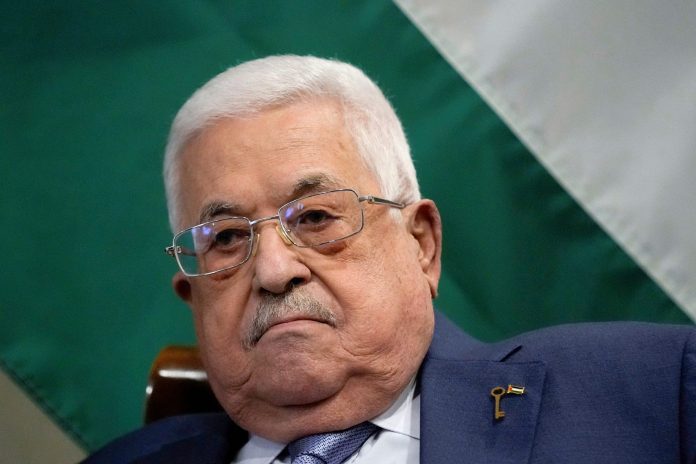
The practical implications of Abbas’ statement are unclear, but it is the harshest criticism of U.S. policy he has expressed since President Joe Biden assumed office.

The U.S. on Thursday voted no and vetoed a UN Security Council resolution to accept Palestine as a full member of the UN.

Ahead of the vote, the Biden administration pressed Abbas and his advisers to not move forward with their bid, but the Palestinian president rejected those requests, Axios reported.

Abbas told the official Palestinian news agency WAFA on Saturday that “the hostile positions” taken by the current Biden administration “have generated unprecedented anger among the Palestinian people and the region’s populations, potentially pushing the region towards further instability, chaos, and terrorism”.

He added Palestinian leadership will reconsider its bilateral relations with the U.S. to ensure the protection of Palestinian interests and rights.

“Palestine stands on the threshold of a new and challenging phase, with multiple options ahead…we are going to develop a new strategy to protect Palestinian national decisions independently and follow a Palestinian agenda rather than an American vision or regional agendas.”

US House approves aid for Ukraine, Israel

U.S. HOUSE AND SENATE

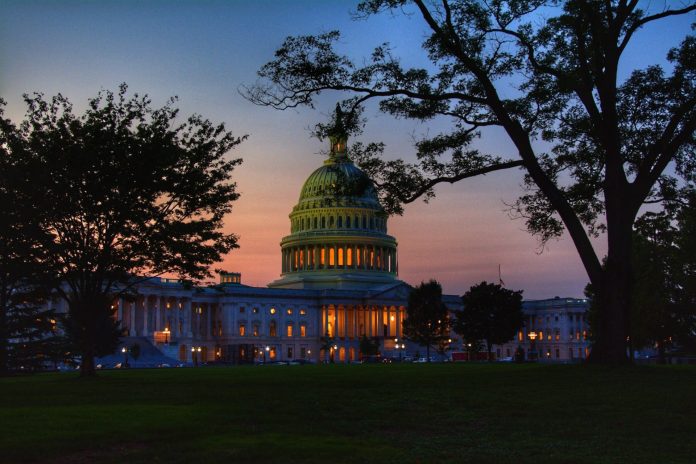
The rare weekend votes were the culmination of months of fierce debate within the House GOP conference over how — or even if — Congress should step in with another round of military help for Ukraine, Israel and Taiwan while providing humanitarian aid for civilian victims in Gaza and other war-torn regions around the globe.

The debate had split House Republicans into warring factions, pitting Reagan-minded traditionalists — who support strong interventions overseas to counter the imperial designs of Russia and China — against a newer brand of “America First” conservative who fought to limit the foreign spending and focus instead on domestic problems, particularly the migrant crisis at the southern border.

In the end, Speaker Mike Johnson (R-La.) defied his conservative critics, pushing to the floor a series of four bills providing the overseas assistance but detaching those funds from a separate border security bill, which failed on the floor during Saturday’s votes. He framed the aid as a simple, but crucial, continuation of America’s responsibility to democratic allies under siege from despots.

“I think providing lethal aid to Ukraine right now is critically important,” Johnson said this week.

“I really do believe the intel and the briefings that we’ve gotten. I believe Xi and Vladimir Putin and Iran really are an axis of evil.”

“To put it bluntly, I would rather send bullets to Ukraine than American boys,” he added.

“My son is gonna begin in the Naval Academy this fall, this is a live-fire exercise for me as it is so many American families. This is not a game. It’s not a joke. We can’t play politics with this, we have to do the right thing.”

Rep. Mike McCaul (R-Texas) said Johnson had reached the decision to charge ahead by a method that’s become routine for the devoutly evangelical Speaker: he turned to prayer.

“I think he was torn between trying to save his job and doing the right thing,” added McCaul, the chairman of the Foreign Affairs Committee who has pushed for months for more Ukraine aid.

“We’ve told him what’s at stake here, and you want to be on the right side of history. And he’s a man of faith. He doesn’t wear it on his sleeve, but he, obviously, the night before he made a decision, reached out for guidance, and the next day he made the call.”

Passage of the foreign aid bills marked a moral victory for the inexperienced Speaker, who took the gavel less than six months ago. The package — passed with four separate votes — includes roughly $61 billion for Ukraine, $26 billion for Israel, $8 billion for allies in the Indo-Pacific, and a package of additional national security measures that features a potential ban on the uber-popular TikTok app.

But it’s come with political risks, provoking conservatives who were already furious with his penchant for reaching across the aisle to seal deals with President Joe Biden on major legislation opposed by the Speaker’s right flank, including bills to fund the federal government and extend the spying powers of Washington’s intelligence agencies.

Those mounting frustrations have spurred a pale — but not powerless — effort to remove Johnson from the top job, which has gained steam in recent days as the Speaker made steps toward sending aid overseas. Rep. Marjorie Taylor Greene (R-Ga.) filed a motion to vacate late last month, which Reps. Thomas Massie (R-Ky.) and Paul Gosar (R-Ariz.) endorsed this week.

Greene has not yet said when she plans to force a vote on her ouster resolution, and her path forward was muddied last week after former President Donald Trump endorsed Johnson’s leadership — dealing a blow to the Georgia Republican, who considers Trump a close ally.

Still, even some of Johnson’s allies are bracing for the possibility that Greene might pull the trigger.

“With a lot of this behind us, you know, we can move forward with some more normalcy, I hope,” stated Rep. Mike McCaul (R-Texas), chairman of the Foreign Relations Committee.

“Unless we have a motion to vacate, which is foreseeable.”

Johnson, for his part, has brushed off the threat — especially in the face of moving aid for Ukraine — underscoring the important role the U.S. has in supporting Kyiv’s leaders at a critical moment in their battle against Russia.

“My philosophy is you do the right thing and you let the chips fall where they may. If I operated out of fear over a motion to vacate, I would never be able to do my job,” Johnson said, adding, “I could make a selfish decision and do something that’s different, but I’m doing what I believe to be the right thing.”

Hardline conservatives, however, fundamentally disagreed with that assessment. And while they were frequently grouped together during the debate, they had different reasons for their opposition.

Some were spending hawks wary of piling billions of dollars more on the federal debt. Others were isolationists, in the mold of Trump, who want to focus U.S. resources more squarely on domestic problems.

Another factor driving the opposition was less visible: A number of conservatives, particularly those most closely allied with Trump, simply don’t trust Ukrainian President Volodymyr Zelensky and are reluctant to help him. Zelensky had refused Trump’s entreaties in 2019 to launch an investigation into Biden and his family’s business dealings in Ukraine — a request that led directly to Trump’s first impeachment at the hands of House Democrats later that same year.

Yet the single greatest issue fueling the conservative outcry related to the migrant crisis.

Johnson had initially demanded that any new foreign aid be accompanied by provisions to bolster security at the southern U.S. border. But he went on to reject a Senate-negotiated border deal that was linked to foreign aid, and later abandoned his border requirement altogether in favor of a strict focus on assistance for allies overseas — a move that left conservatives incredulous.

“How much sense does it make to secure other countries and not secure America,” asked a frustrated Rep. Ralph Norman (R-S.C.).

Johnson has been careful to hear out the concerns of his conservative critics, hosting meetings in his Capitol office, delaying his initial plans for voting on the foreign aid package this week, and tacking a border vote onto Saturday’s calendar.

In an effort to appease his right flank, Johnson also proposed a series of changes to the Senate-passed bill — he called them “innovations” — that featured a number of Republican national security and foreign policy priorities. That GOP wish-list includes new sanctions on Iran; a potential ban on TikTok; and several proposals to ease the financial burden on U.S. taxpayers by providing part of the Ukraine aid in the form of a loan, while empowering the president to seize Russian assets and use them to help pay the enormous cost of Ukrainian reconstruction.

He also split the foreign aid priorities into separate bills, giving lawmakers in both parties a chance to vote yes or no on each specific measure rather than as a full package.

In large part, Johnson’s strategy failed to bring along the conservative critics: more than half of the GOP conference voted against the Ukraine funding, leaving Democrats to carry the vote. And the four bills will now be packaged together and sent to the Senate, angering the hardliners even further.

But if Ukraine aid divided Republicans, sending assistance to Israel fractured Democrats, though to a lesser degree.

Saturday’s vote came just over six months after Hamas launched a brutal attack on Israel that sparked a war in the Middle East — a conflict that has splintered House Democrats, pitting staunchly pro-Israel Democrats against progressives who have sounded the alarm about the mounting deaths and growing humanitarian crisis in Gaza.

The Israel bill included nearly $9.2 billion in humanitarian aid for Gaza, Ukraine and other war zones in the world, a provision Democrats had demanded as a condition of their support. But the money was not enough to get some liberals on board, who opposed the Israel bill Saturday largely because it did not place conditions on aid for Jerusalem.

“I believe that we need to have conditions enforced on U.S. military assistance,” Rep. Alexandria Ocasio-Cortez told reporters.

“We have to ensure that human rights are protected and international law is adhered to. Those conditions are not presently in this bill.”

Saturday was the third time in six months that Johnson tried to move assistance for Israel through the House. The first attempt, in November, was successful but fell largely along party lines, with the chamber approving $14.3 billion for Israel while also proposing the same amount in cuts to the IRS — a provision that sparked staunch Democratic opposition. The Senate refused to take up the measure.

Then in February, the House torpedoed a standalone Israel aid bill, with many Democrats opting against the $17.6 billion bill as the Senate worked towards a full foreign aid package.

On Saturday, they finally secured the elusive aid. The package now goes to the Senate, which is expected to pass it in the middle of next week.

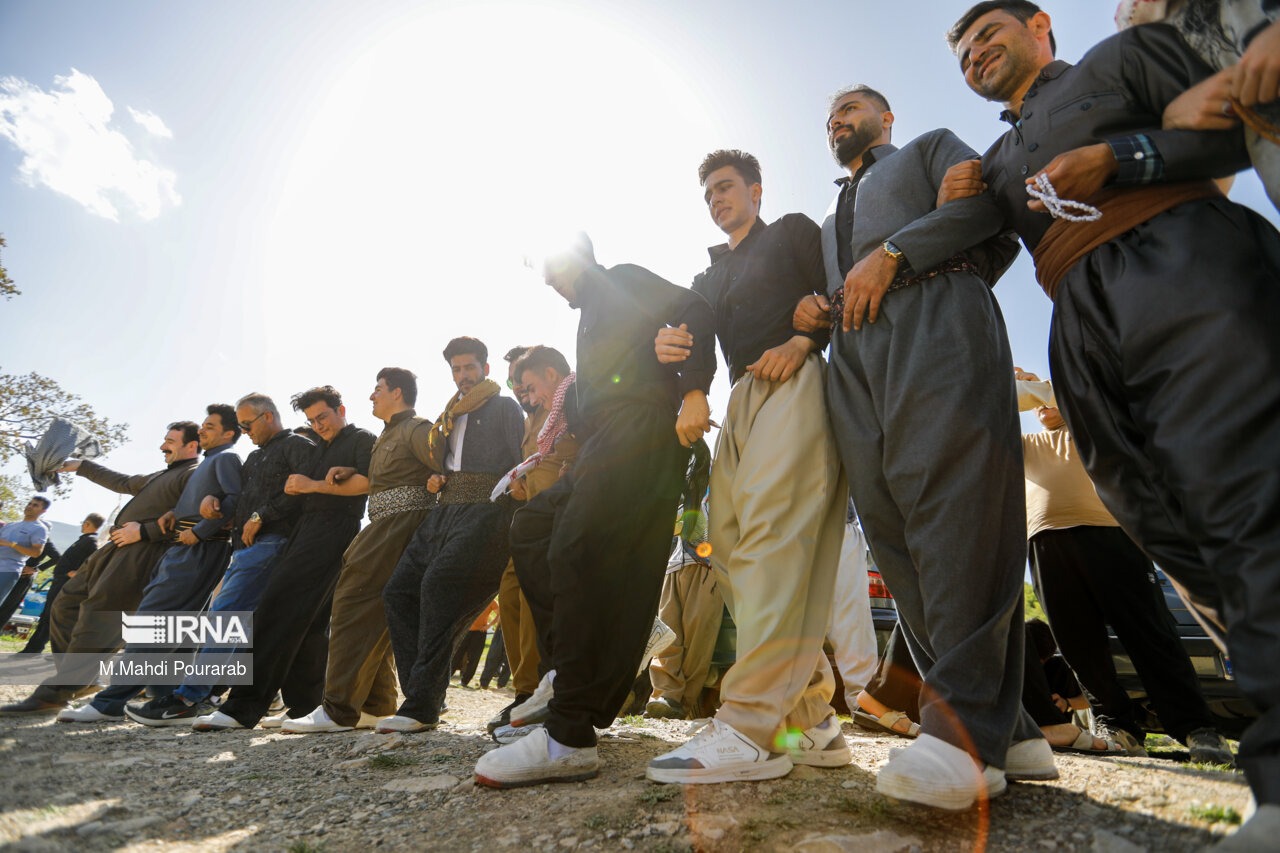
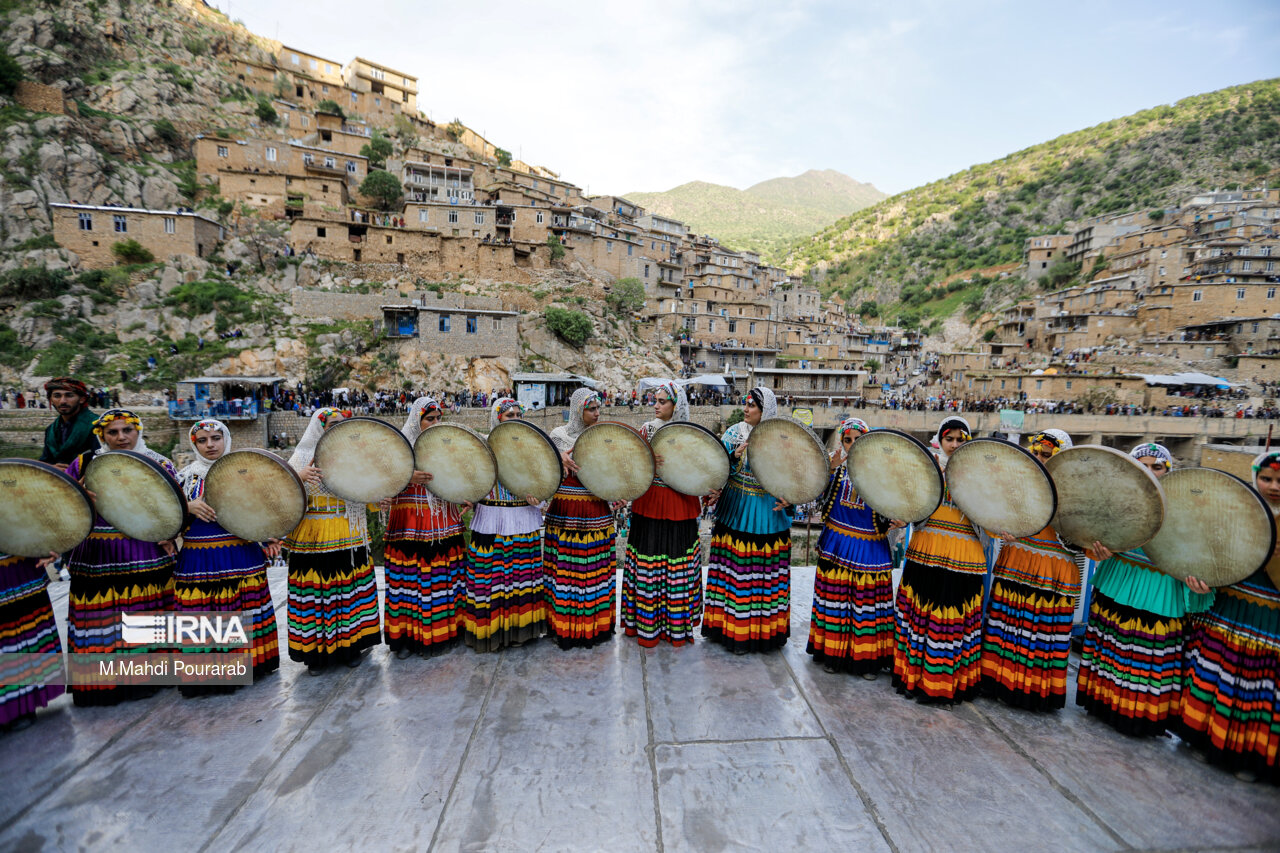
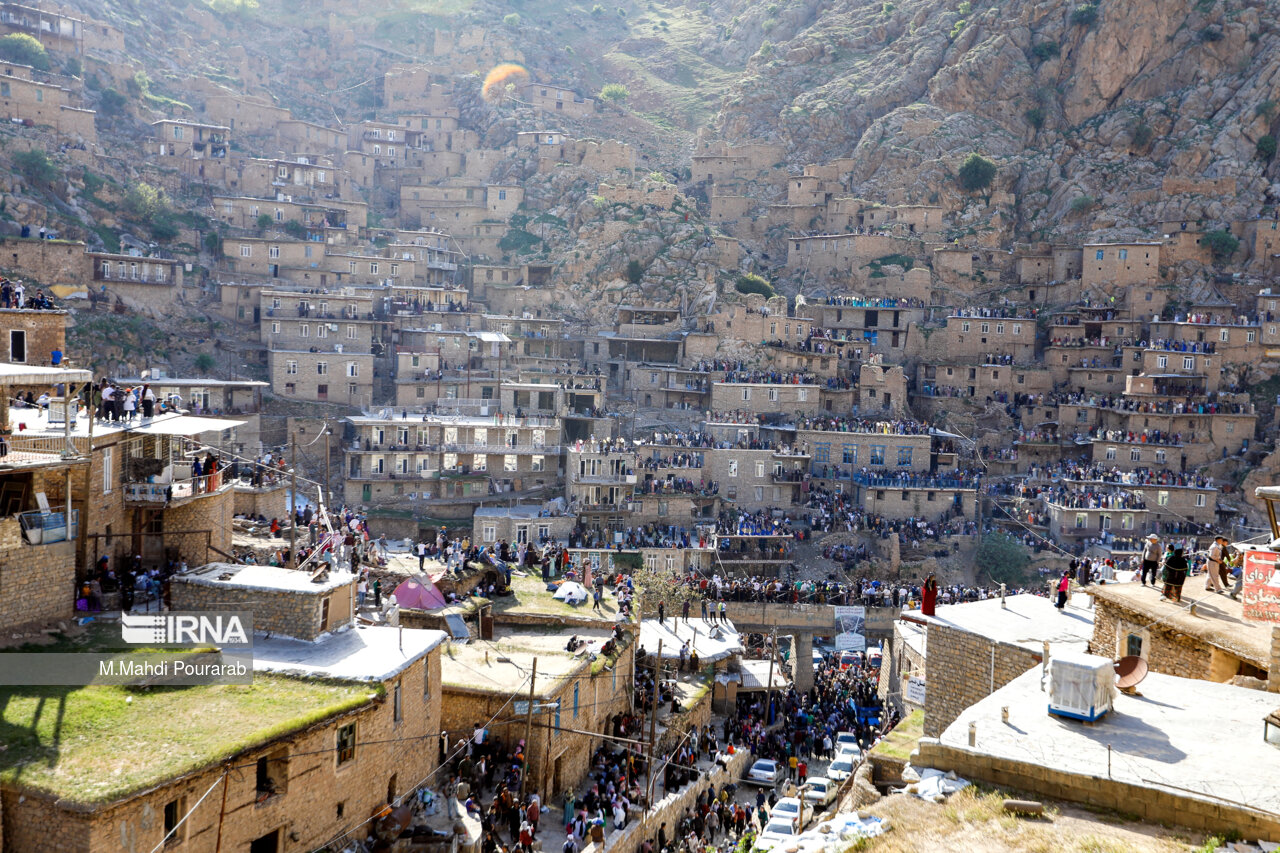
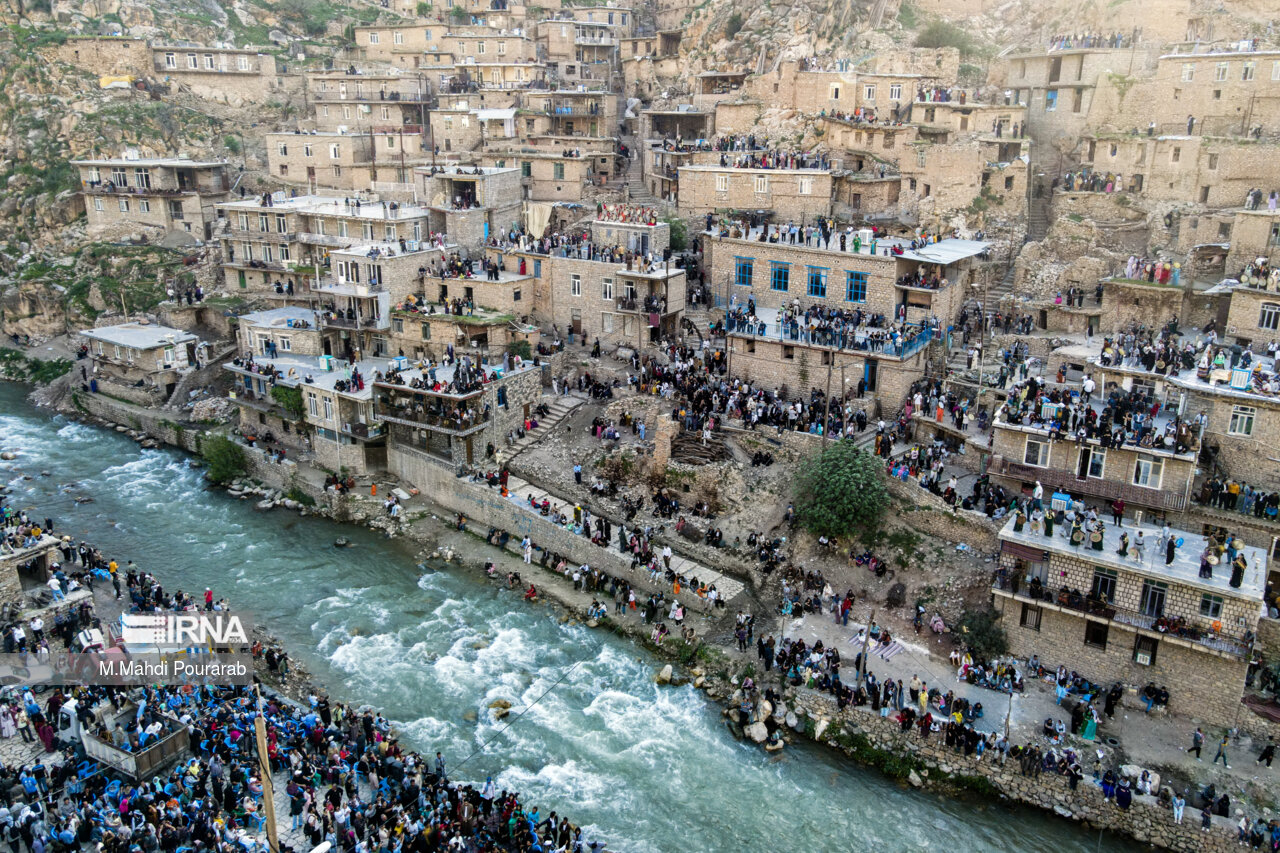
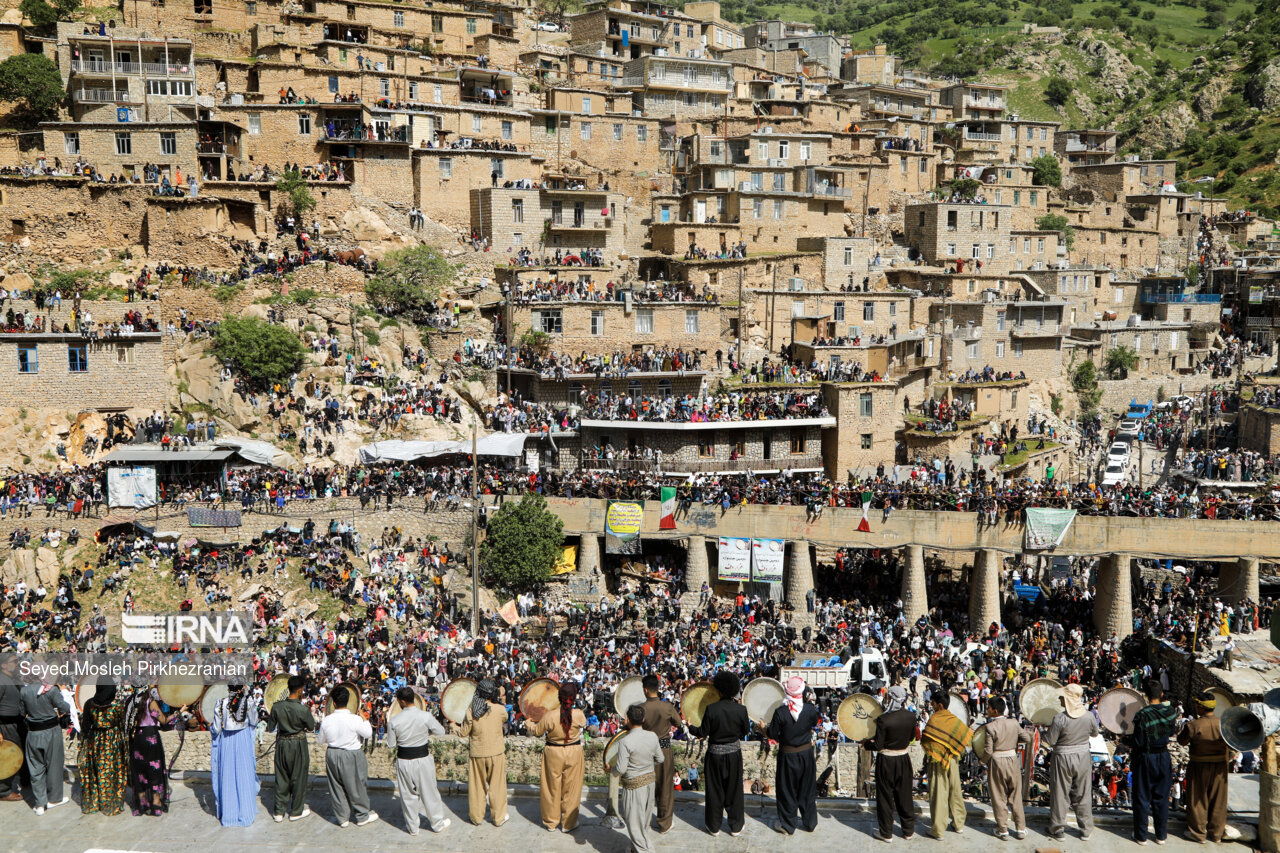
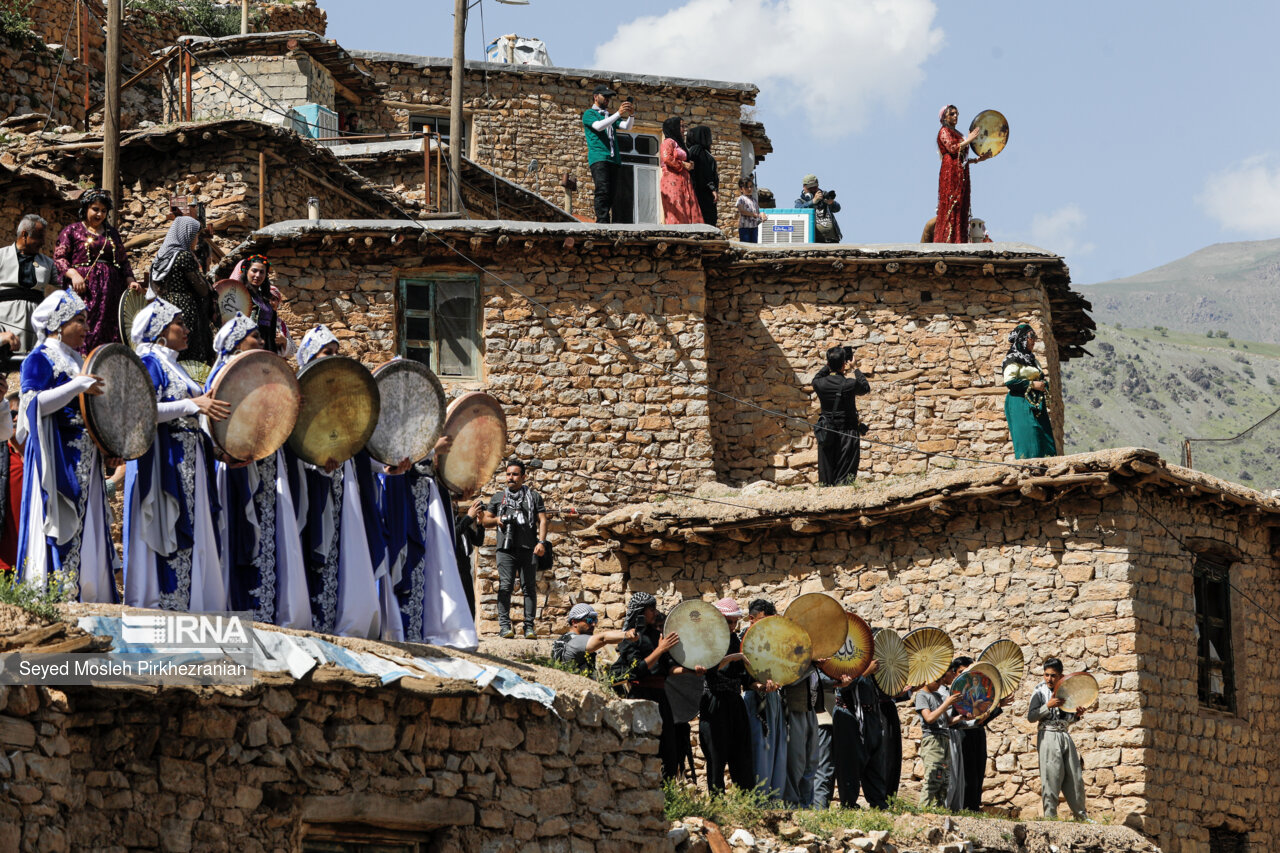
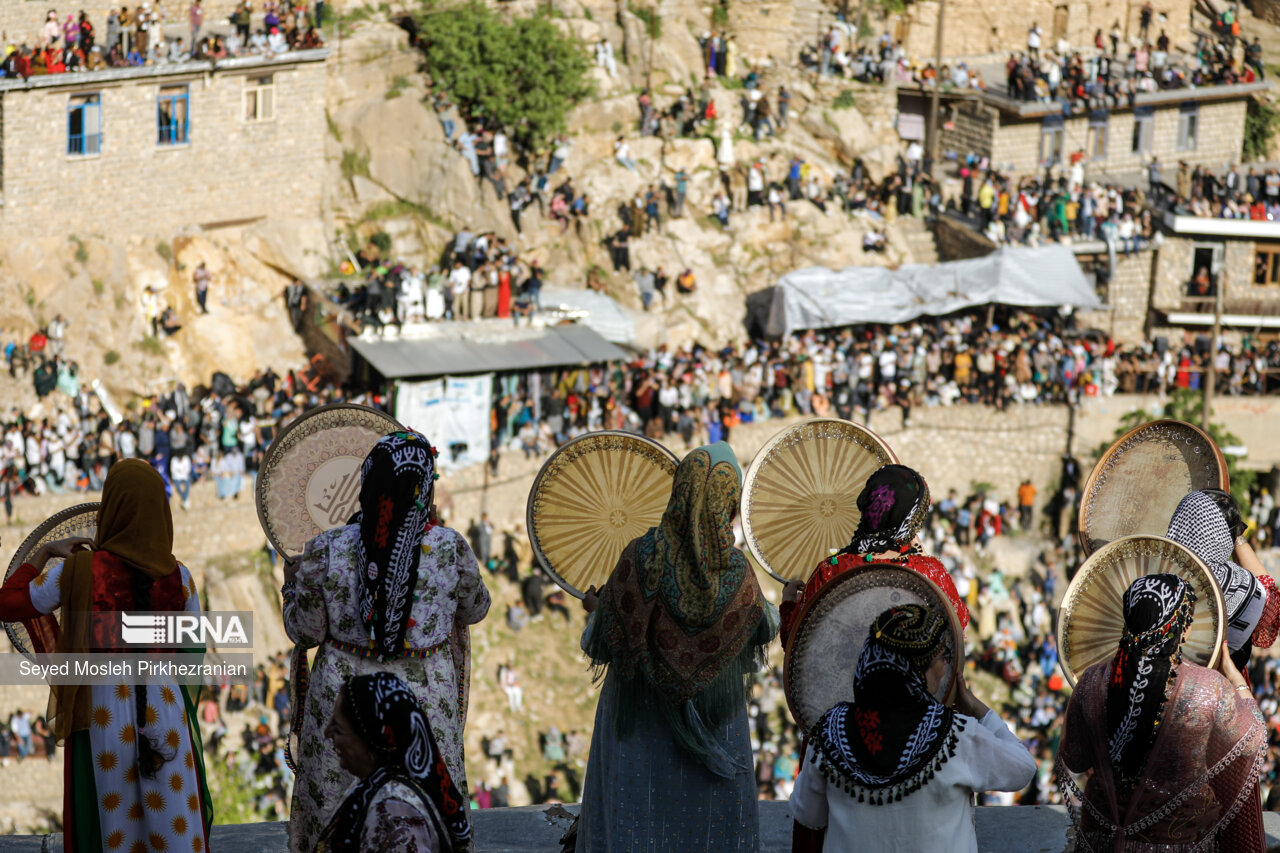
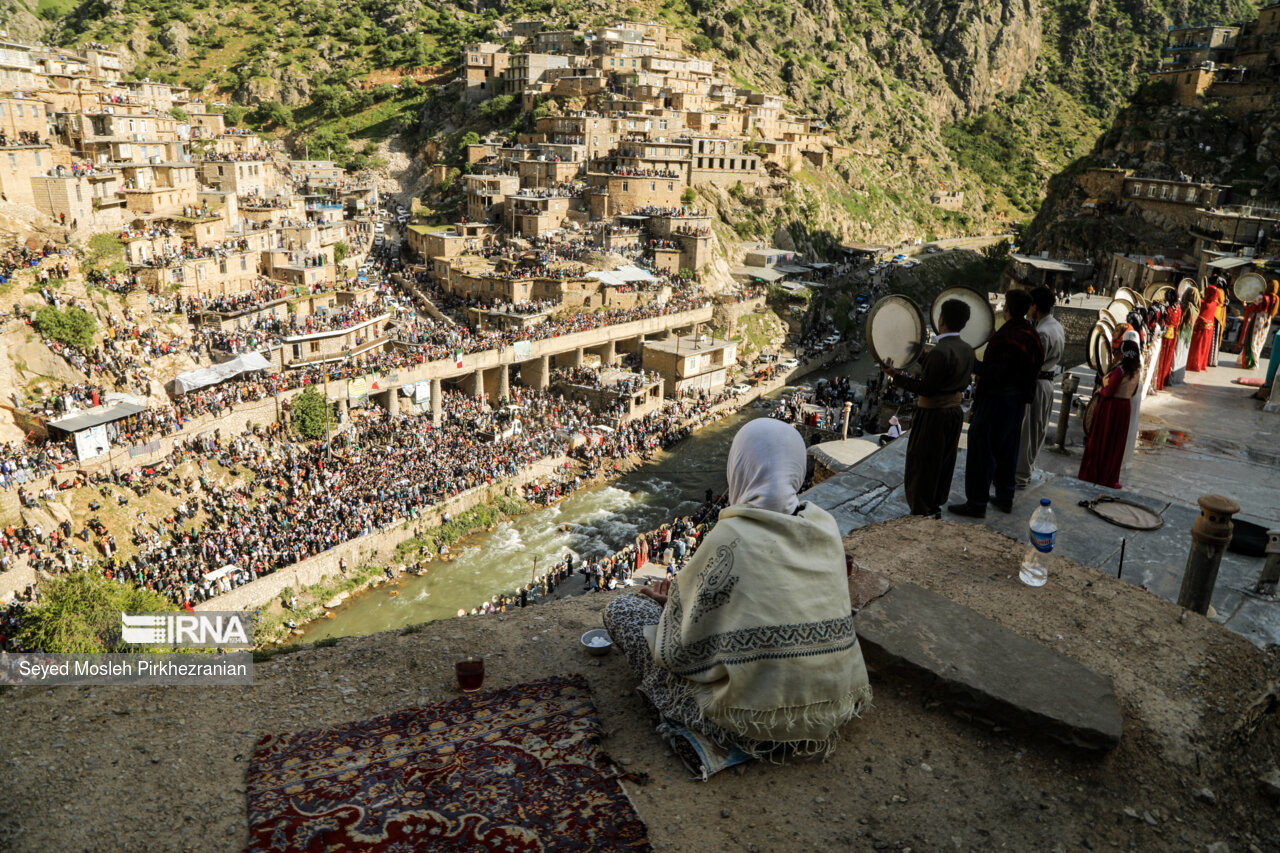
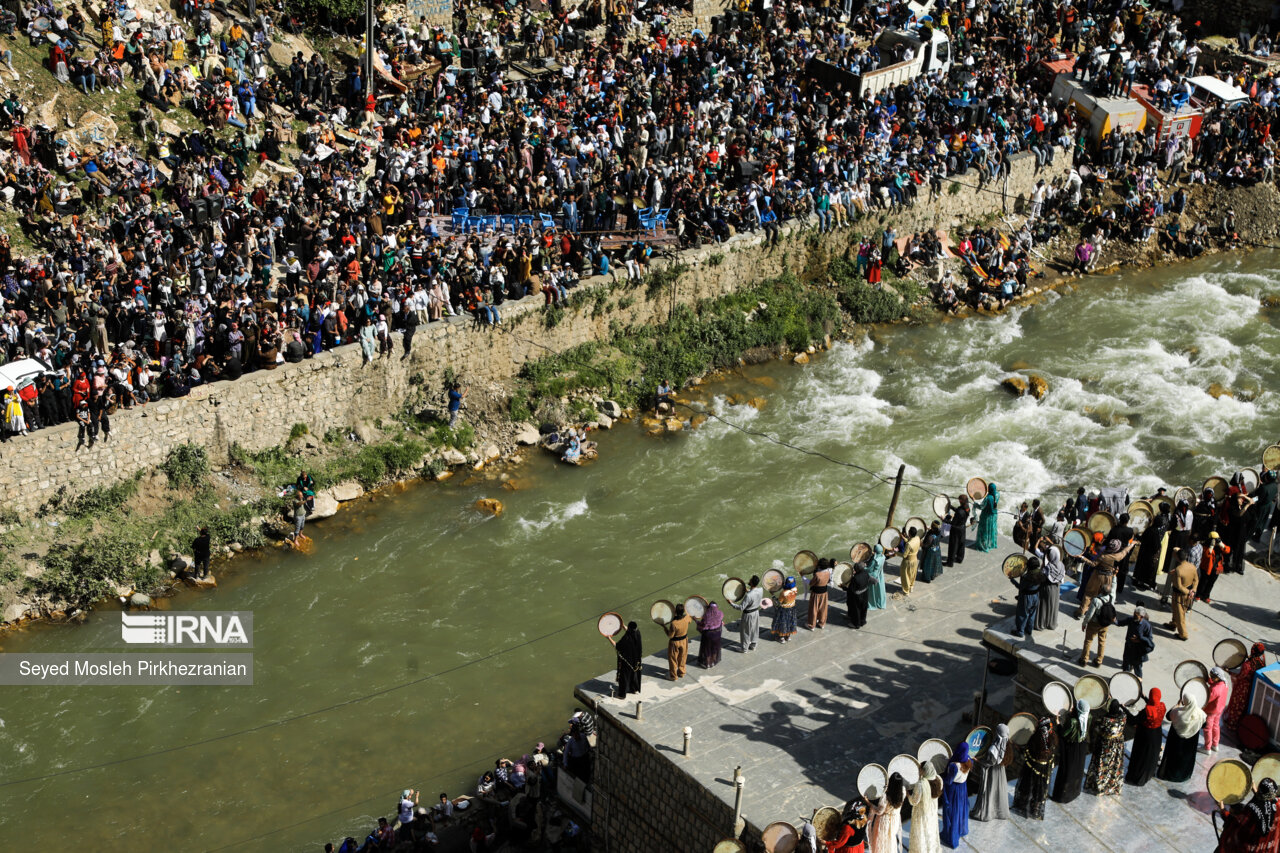
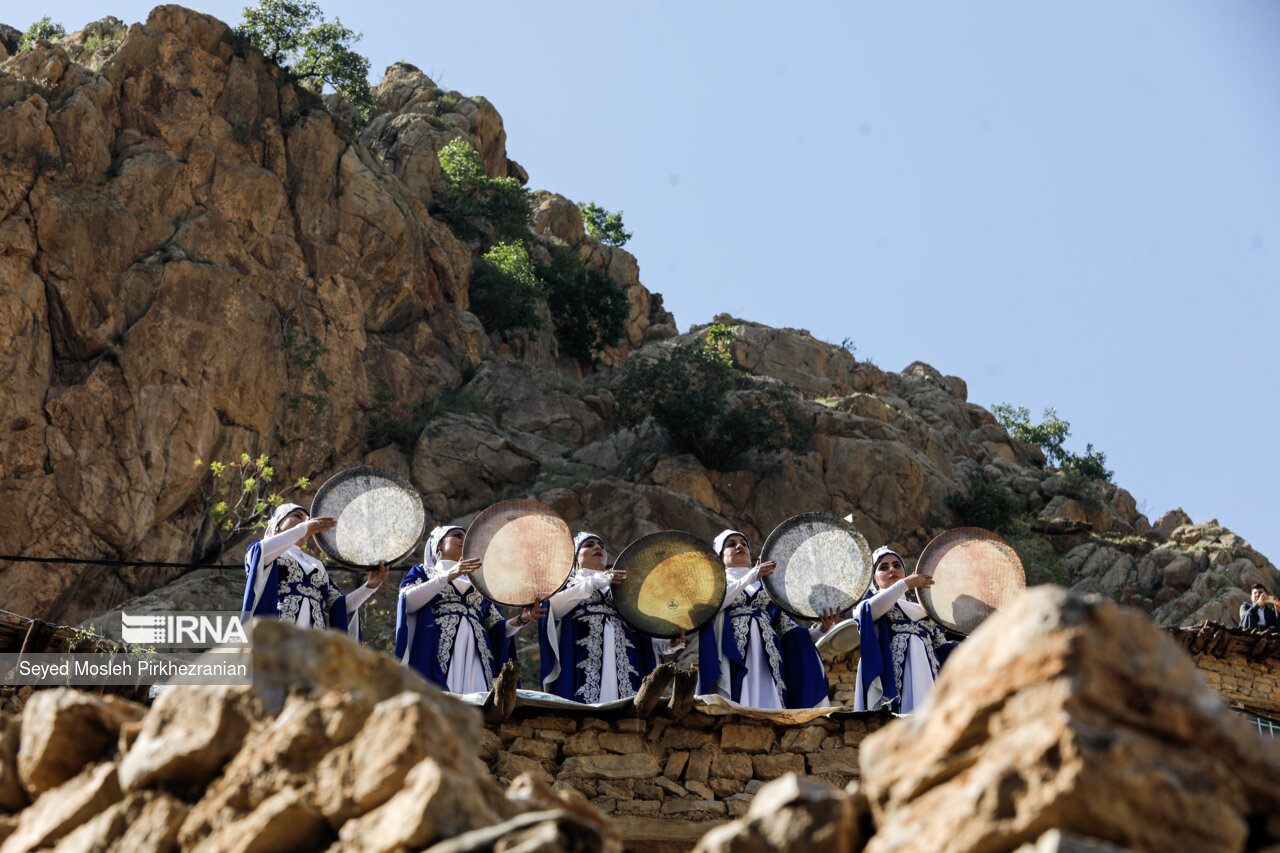
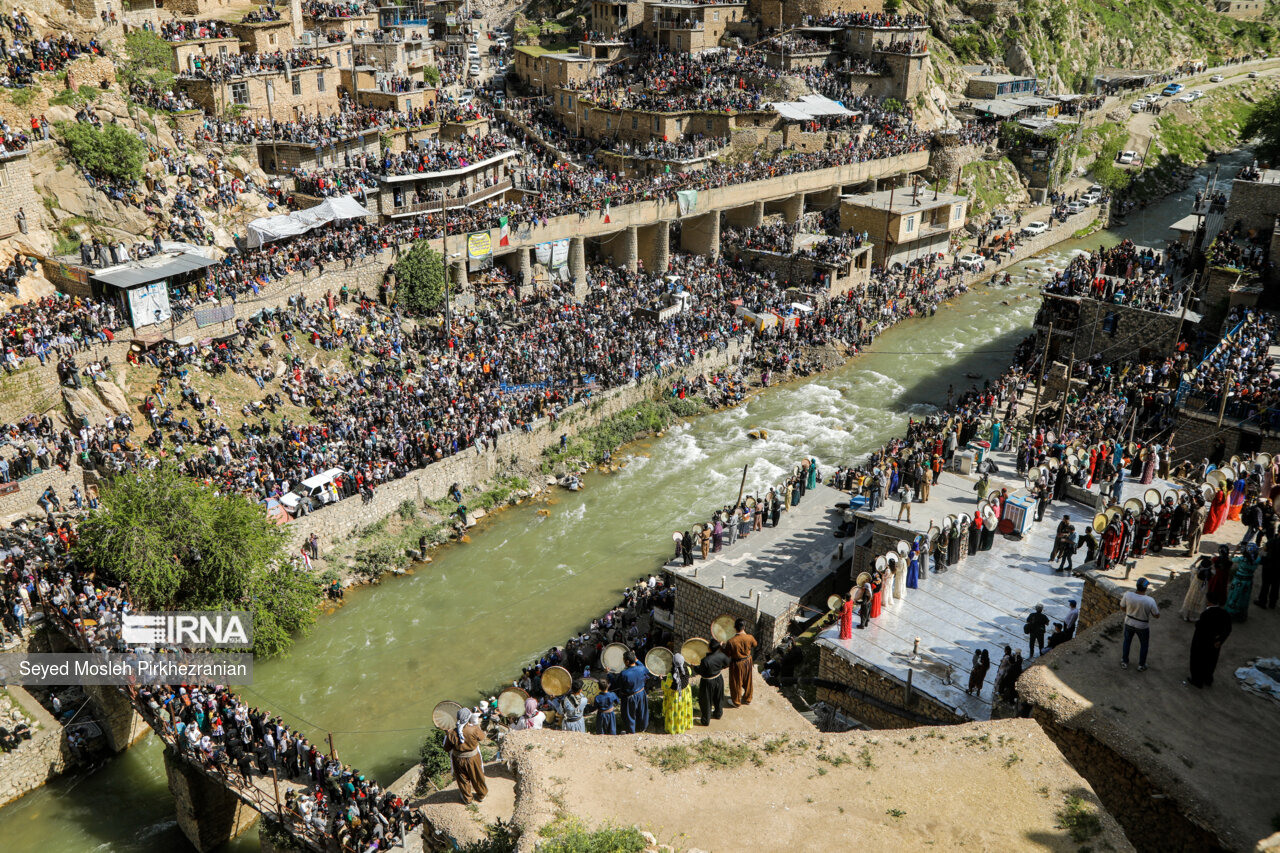
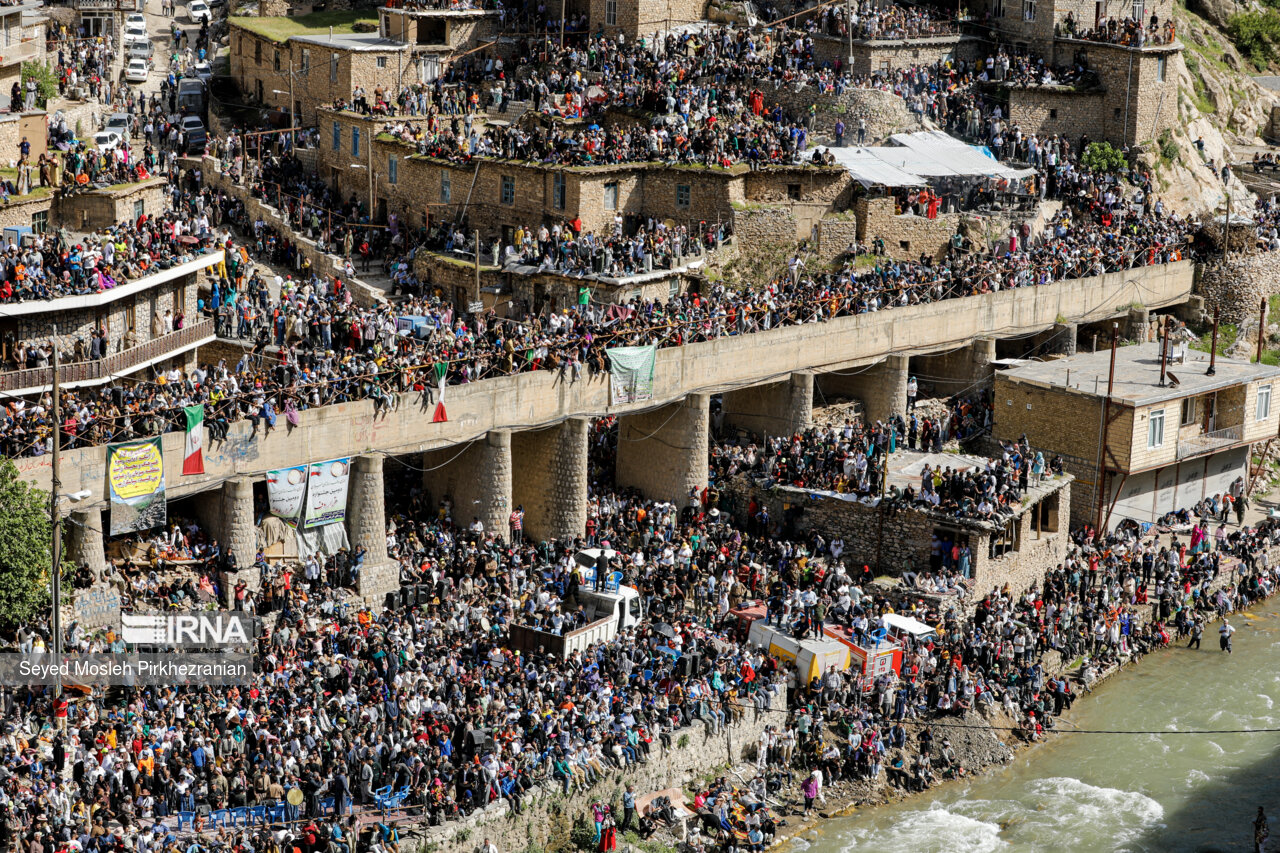
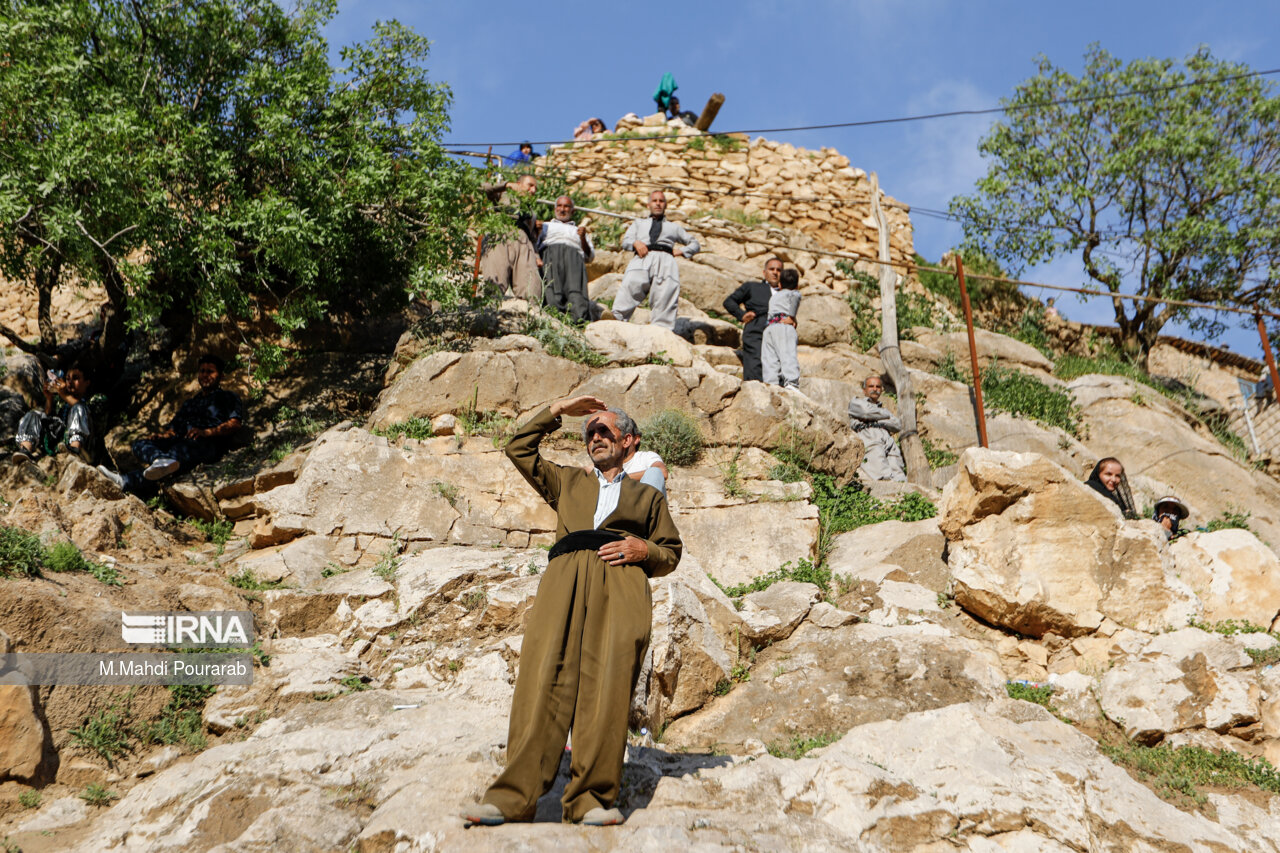
Tourist village in Iran’s Kurdistan hosts huge number of people for historical festival

Village in Iran's Kurdistan historical festival

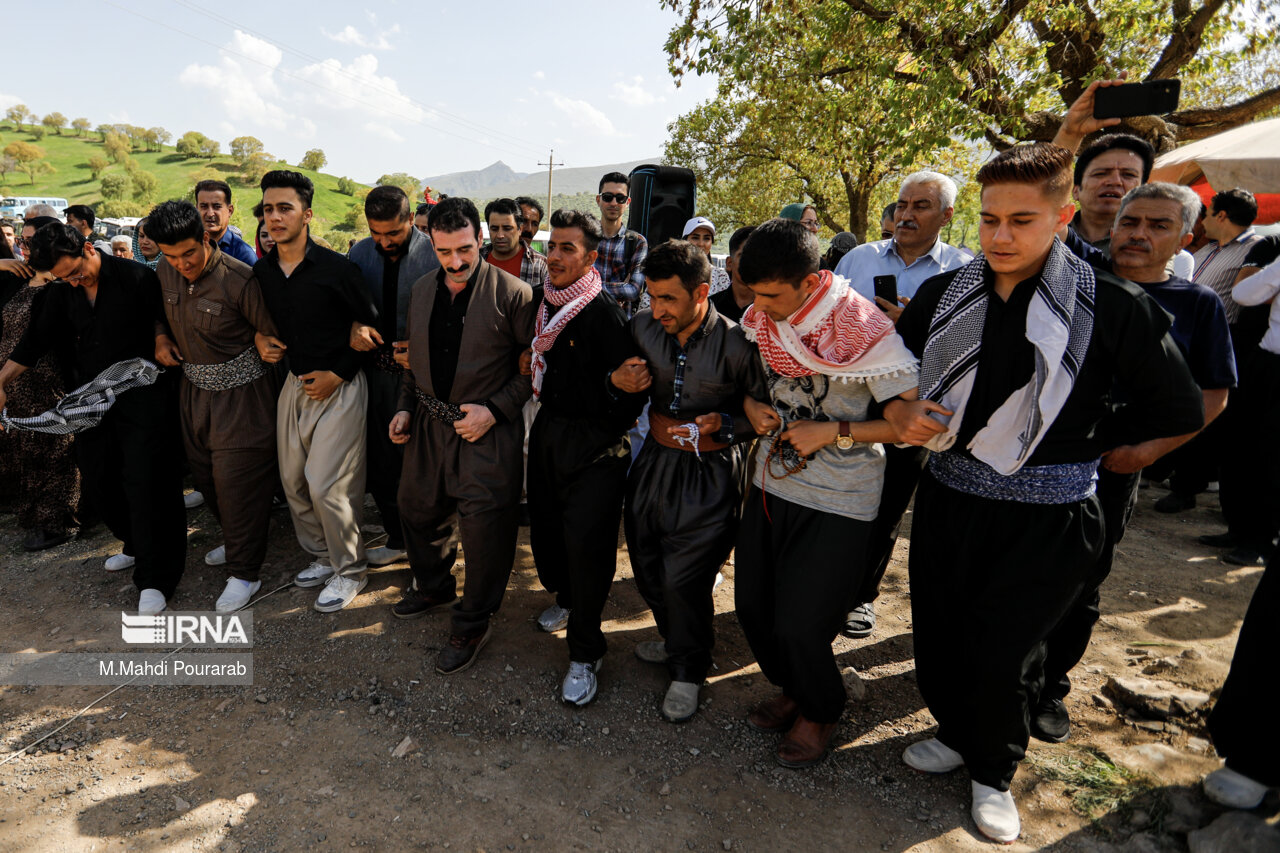
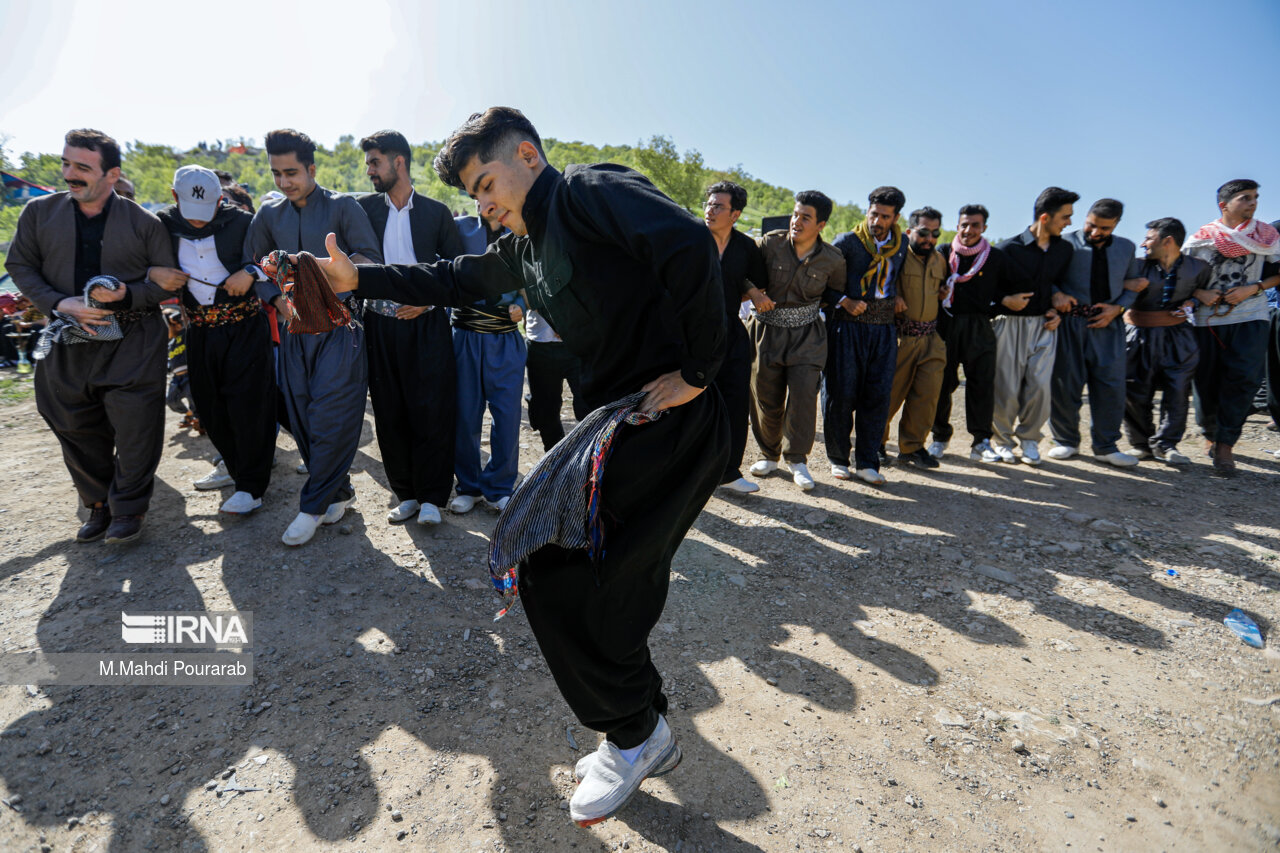
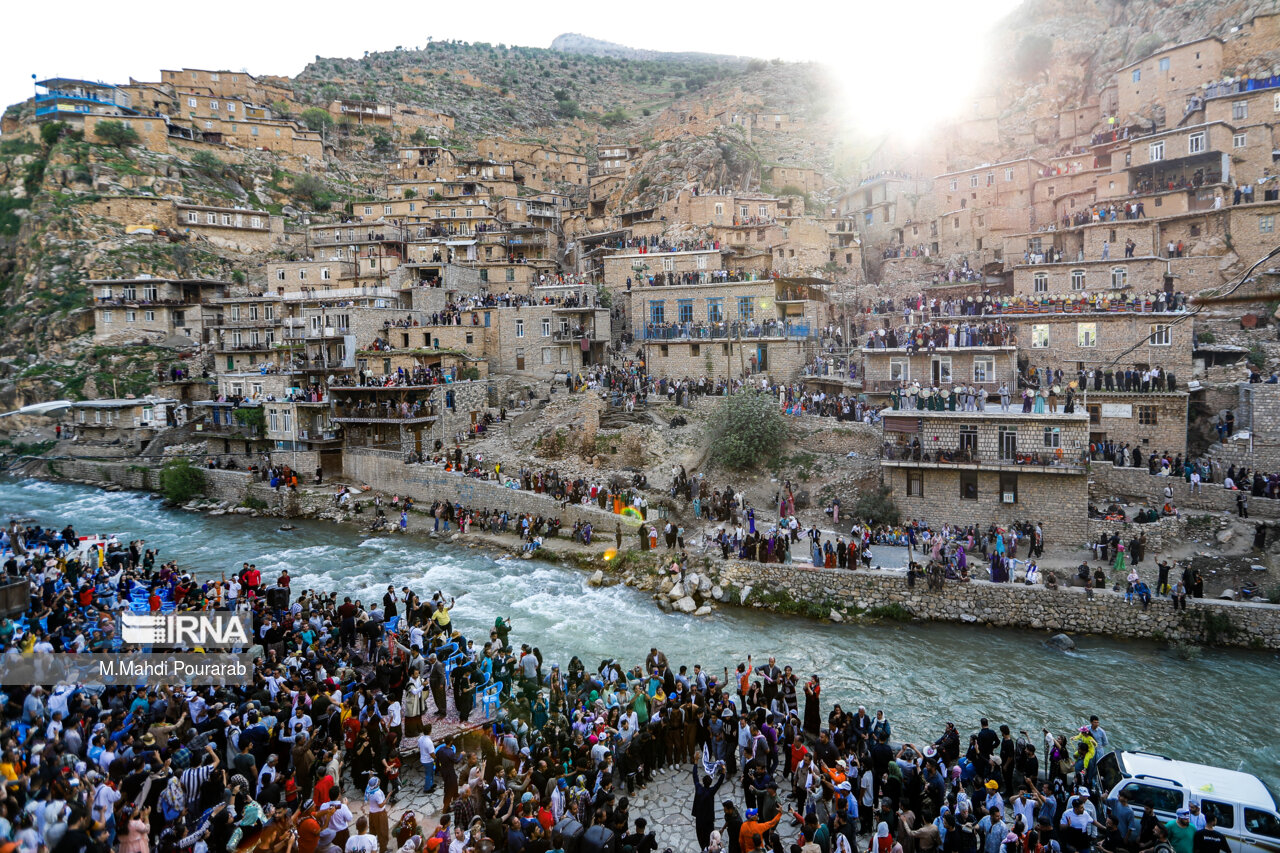
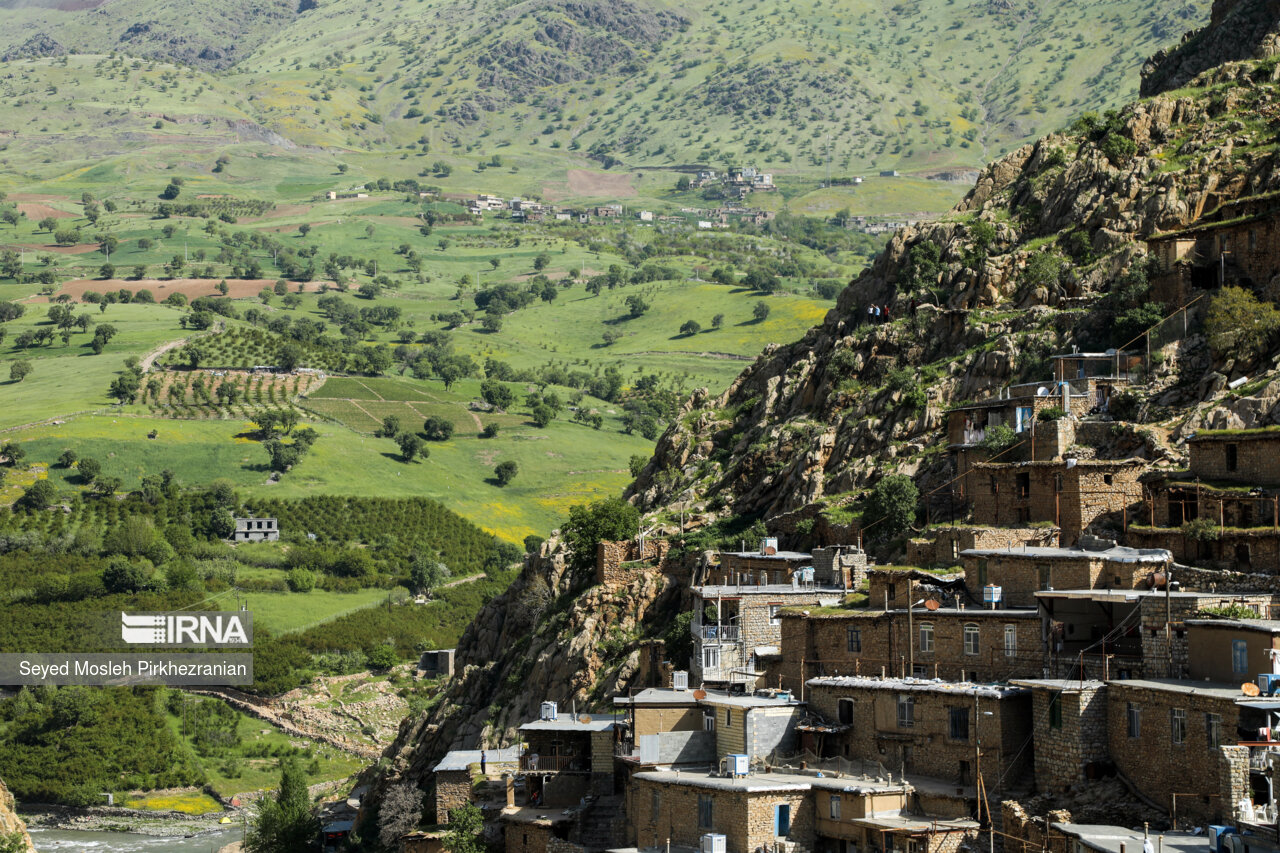
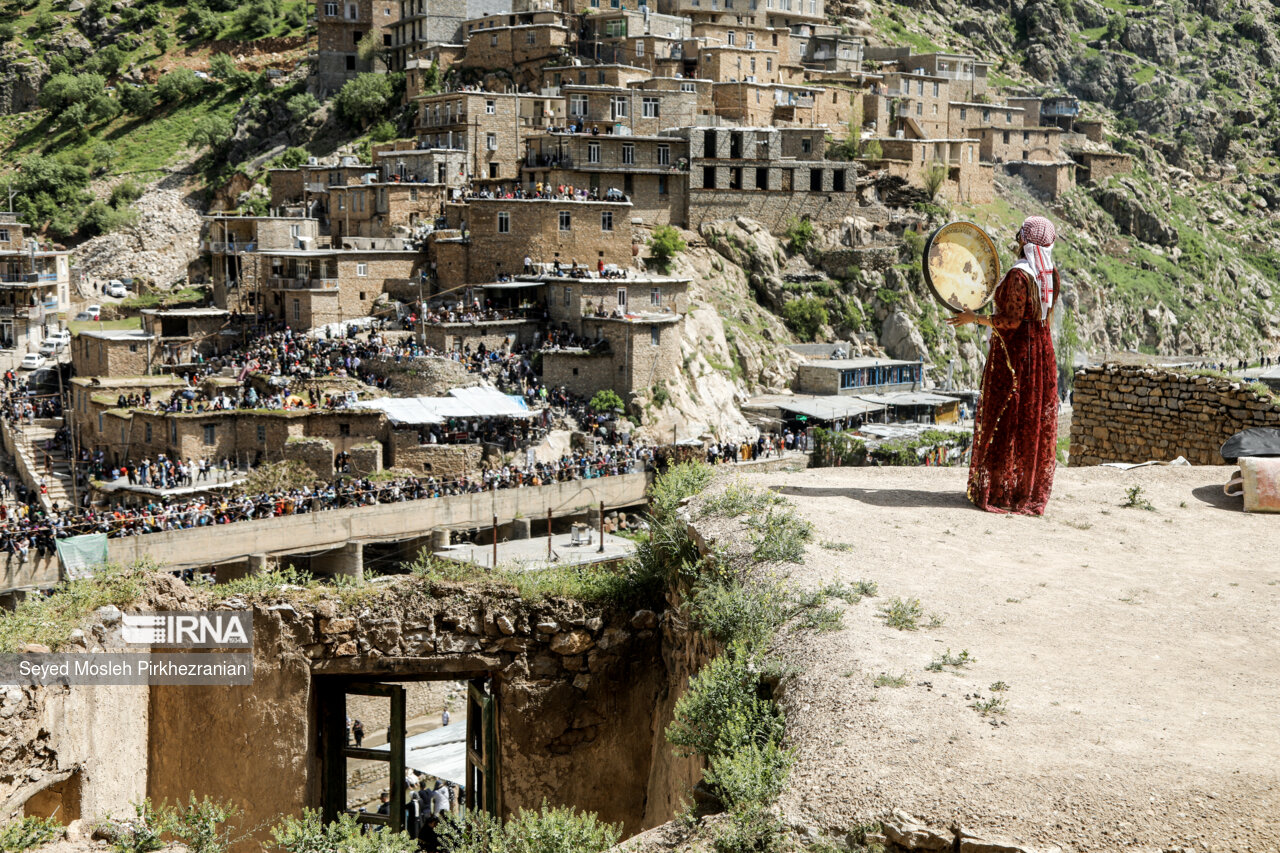
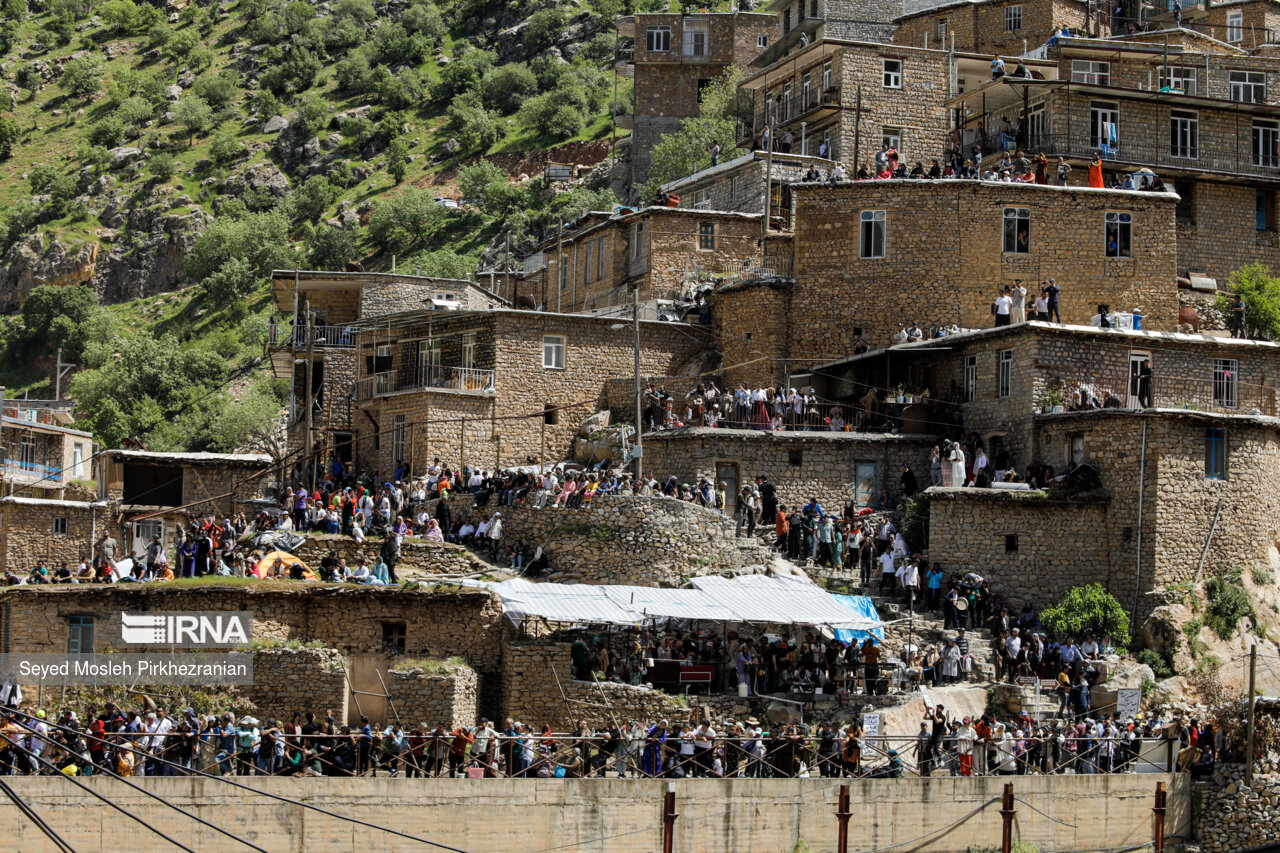
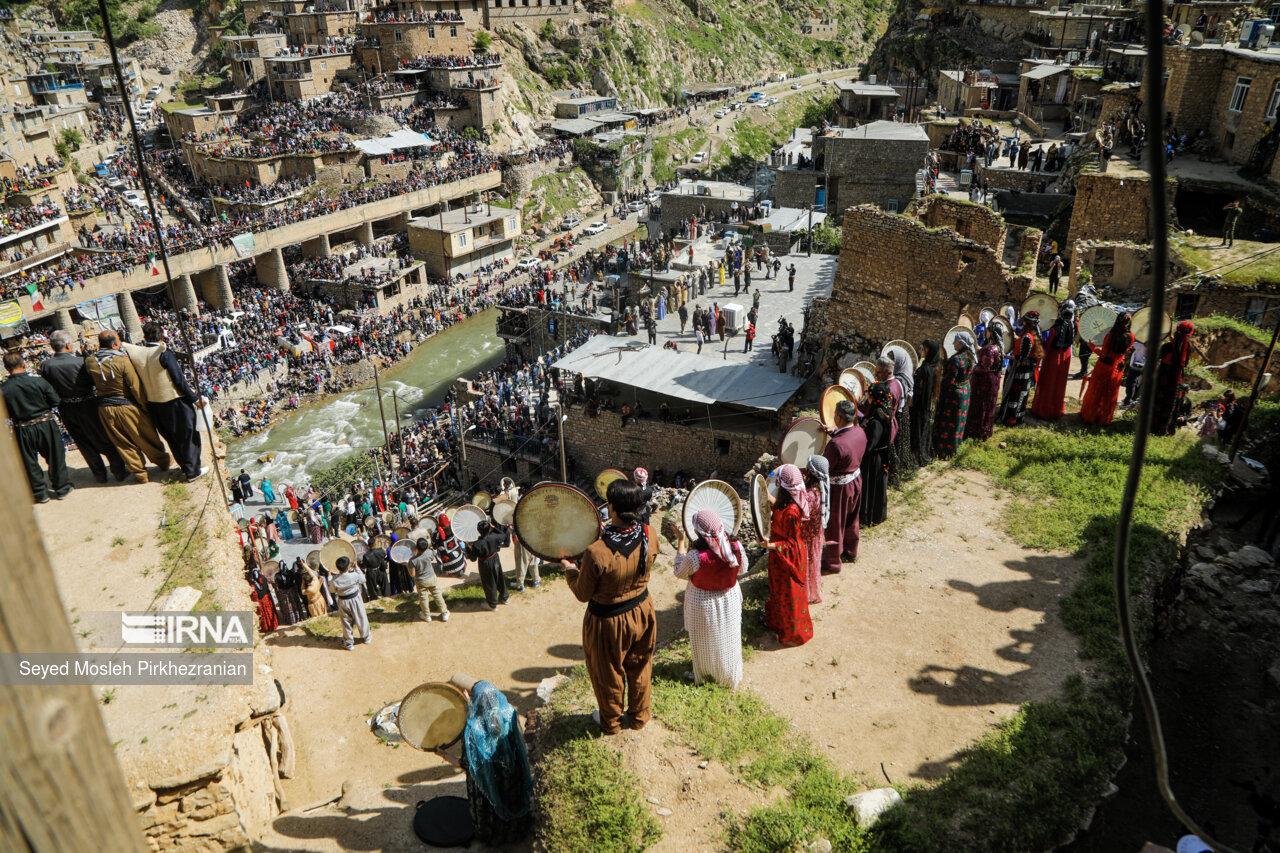
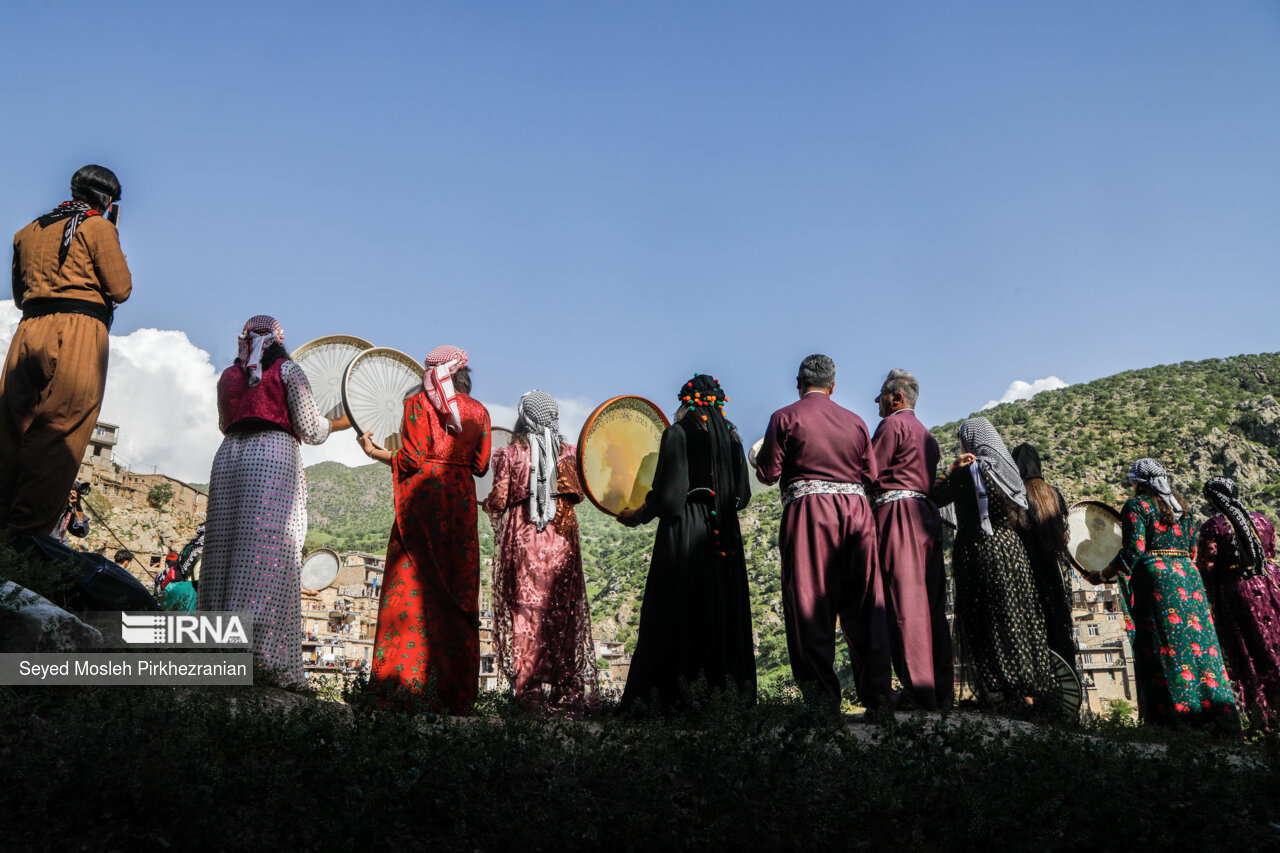
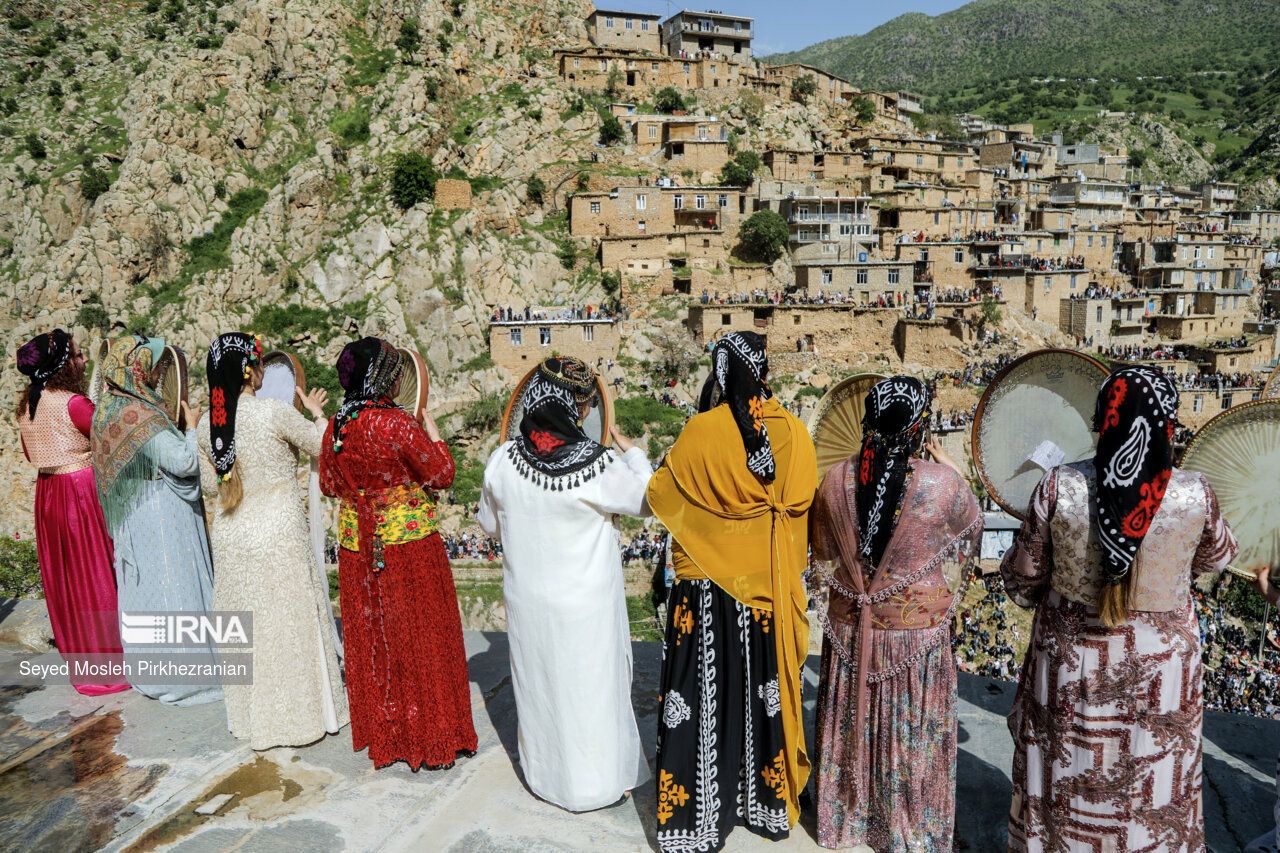
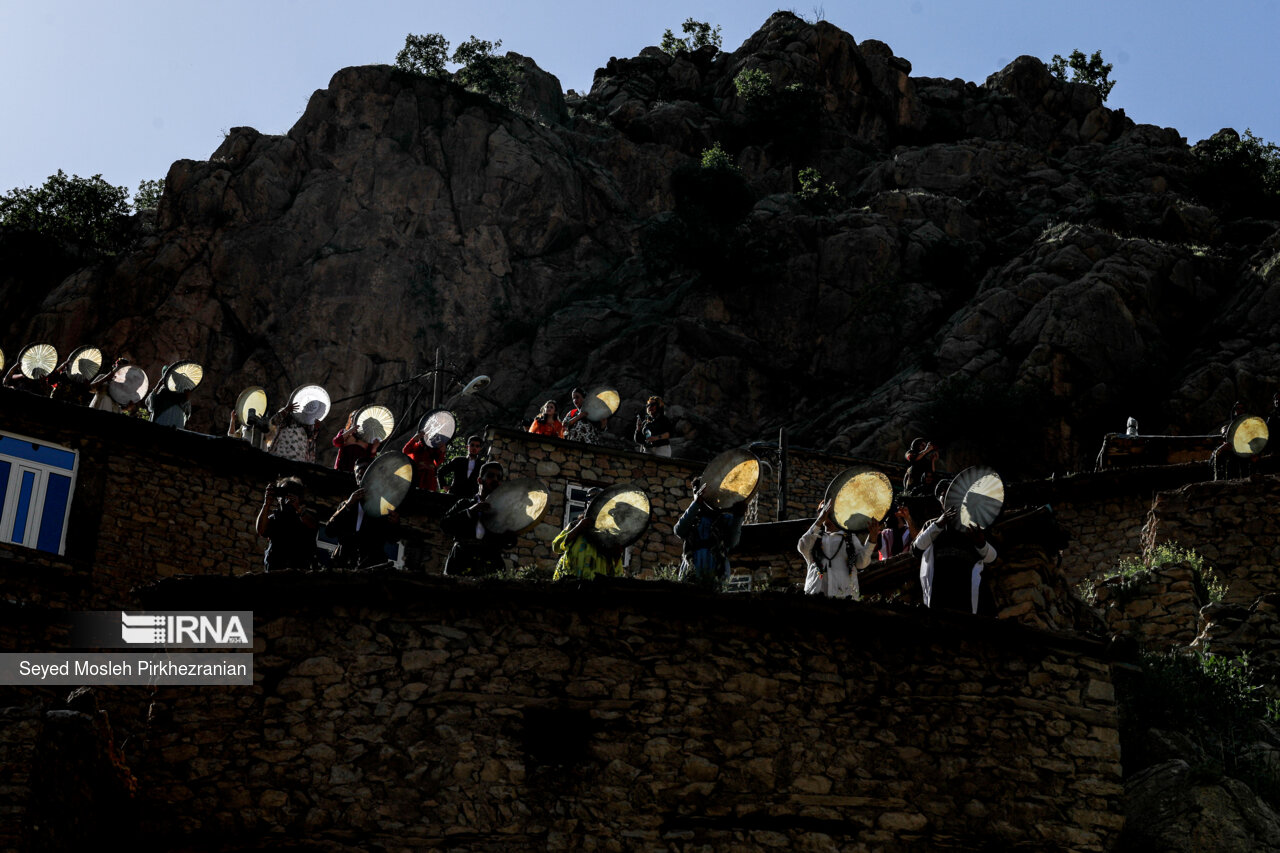
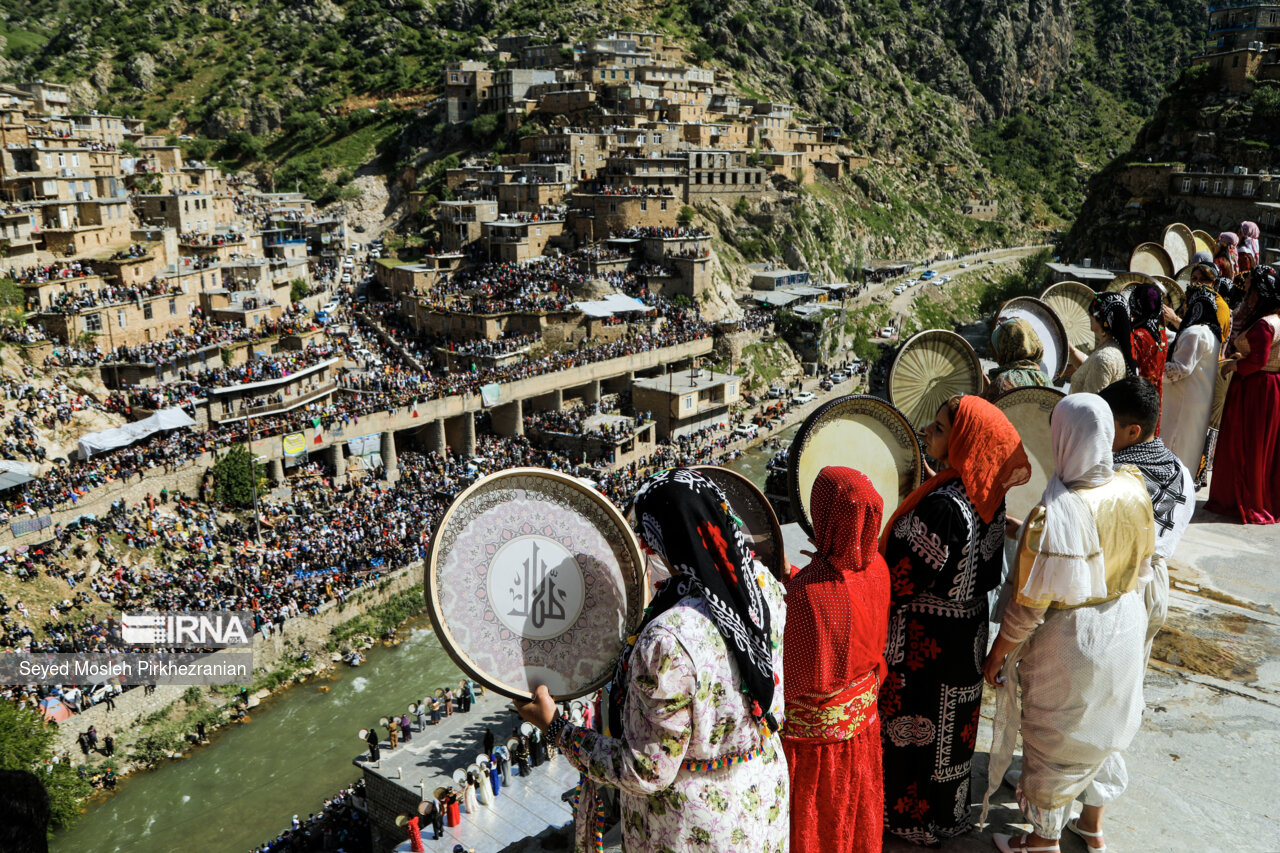
In this mystic ritual, the daf players stand on the roofs of the terraced houses in the village of Palangan, playing their dafs singing a mystic song.

Palangan is called the “Staircase Heaven of Kurdistan.”

It’s a tourist resort on the outskirts of the city of Kamiaran.

The natural scenery of the village is very beautiful and Palangan itself is in a unique geographical location, which is now The natural scenery of the village is very beautiful and Palangan itself is in a unique geographical location, which is now headed for going global. for going global.

Iran says targeted with ‘children’s toys’

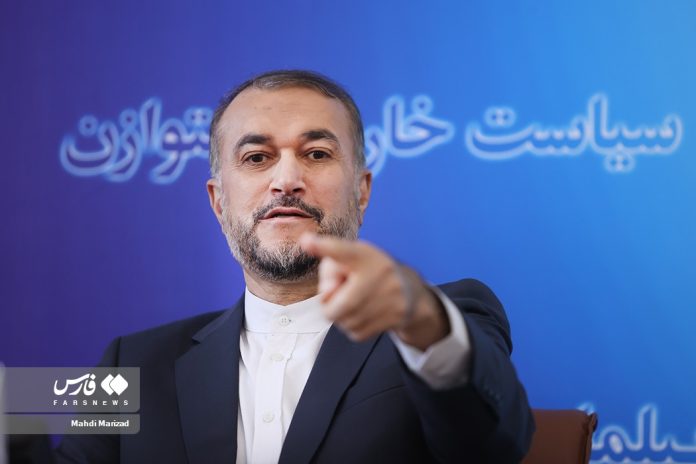
Hossein Amirabdollahian

The claims by some media outlets that explosions in the skies above the Iranian city of Isfahan, which hosts a major airbase, were a retaliatory strike by Israel are “not accurate”, Amirabdollahian said in an interview with NBC News on Saturday.

“What happened last night was not a strike,” he insisted, adding that the attack involved just two or three small UAVs, which “were more like toys that our children play with, not drones.”

The UAVs “took off from inside Iran, flew for a hundred meters and then they were struck by our air defense”, the minister added.

According to the Iranian foreign minister, Tehran is not planning any further actions against Israel.

“As long as there is no new adventurism by Israel against our interests, then we are not going to have any new reactions,” he explained.

However, if the Israeli authorities continue taking provocative steps, “our response will be immediate and to the maximum and will cause them to regret it”, the diplomat warned.

In early April, a strike on the Iranian consulate in Damascus, Syria, which Tehran blamed on Israel, left two generals and several other senior officers dead.

Tehran struck back last week by firing several hundred missiles and drones at military targets inside Israel.

Israel promised payback for the attack, while the US declared that it doesn’t want to see the conflict escalate. US President Joe Biden also reportedly urged Israeli Prime Minister Benjamin Netanyahu to show restraint in an effort to avoid a further military escalation.

The attack on Israeli territory was intended as “a warning”, Amirabdollahian said.

“We could have hit Haifa and Tel Aviv,” but didn’t do so because targeting civilians is a “red line” for Tehran, he added.