Sunday, December 21, 2025
Home Blog Page 935

UK expresses hope there would be no “retaliatory response” to Iran’s attack against Israel

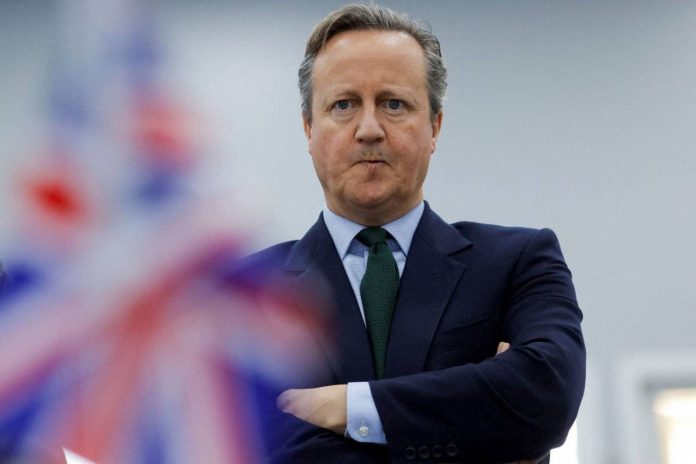
David Cameron

The Iranian strikes, which Israeli officials say involved around 300 drones and missiles of various types, came in response to the bombing of an Iranian consular compound in Syria earlier this month that left several senior Iranian military officers dead.

In an interview with Sky News on Monday, Cameron, who served as UK prime minister between 2010 and 2016 and was appointed foreign secretary last year, described the Iranian strike as a “double defeat”. He argued that the attack “was almost a total failure, and they’ve revealed to the world that they are the malign influence in the region”.

Pointing to the scale of the attack, Cameron remarked: “Of course if you’re sitting in Israel this morning you’re thinking quite rightly – ‘We have every right to respond to this’… But we are urging that they shouldn’t escalate.”

“I totally understand those in Israel who want to see more, but I think this is a time to think with head as well as heart and to be smart as well as tough,” he argued.

Cameron added that he hoped there would be no “retaliatory response”, and that the world would shift its focus back to Hamas and the hostages that had been captured by the Palestinian armed group after it attacked Israel last year.

Israeli officials claimed that the military shot down 99% of the incoming Iranian drones and missiles and that the attack did “only minor damage to the infrastructure at the Nevatim base”. Air force operations in the area were not affected, the officials added.

Iran, however, has insisted that the barrage was more successful than expected, claiming that “important military targets” had been destroyed, and that Nevatim air base was rendered inoperable. Tehran said that it had no intention of continuing the attacks but warned Israel of a harsh response if it were to retaliate.

Two Israeli officials familiar with the deliberations told CNN Israel’s war cabinet has been engaged in a heated debate about how and when to respond to Iran’s weekend strikes.

The war cabinet remains determined to respond to Iran’s attack, but as it convenes Monday afternoon, its members continue to debate the timing and scope of such a response, the officials said.

France calls for ‘isolation’ of Iran

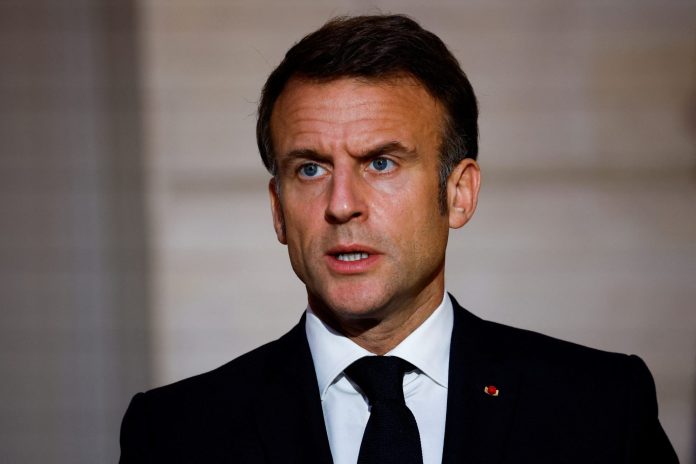
French President Emmanuel Macron

Tehran carried out a massive airstrike on the Israeli occupied-territory on Saturday and Sunday in response to the deadly bombing of the Iranian embassy in Damascus earlier this month.

In an interview to BFMTV and RMC radio, Macron condemned Iran’s response, calling it “disproportionate”.

“Instead of targeting Israeli interests outside Israel, [Tehran] went after Israel on its soil, and attacked from their own soil, which is a first,” he said, noting that the airstrikes had caused “a profound rupture” in already strained relations between the two Middle Eastern states, paving the way for further “dangerous reactions” on both sides.

Macron added the international community “will do everything to avoid escalation” in the conflict and urged Israel not to retaliate via military means. Instead, he stated the focus should be on “isolating“ Iran and called for more sanctions on Tehran, including “boosting pressure on its nuclear activities”, which he believes would help “find a path to peace in the region”.

Iran has justified the recent attack by citing its right of self-defense under Article 51 of the United Nations Charter. It also pledged not to take further action, unless Israel strikes again, but warned that a military response from the Zionist regime would prompt an even bigger escalation.

Iran has been the subject of various international sanctions for decades amid fears in the West that its nuclear enrichment program was aimed at producing a nuclear bomb. Tehran has repeatedly declared that its nuclear program remains purely peaceful as always and that the Islamic Republic had no intention of developing nuclear weapons as a matter of an Islamic and state principal.

Germany warns Iran against further attacks on Israel

German Chancellor Olaf Scholz

“We strongly condemn the Iranian attack and warn against any further escalation. Iran must not continue on this path,” Scholz told reporters during his visit to China.

“We will do everything we can to prevent further escalation and will therefore continue to pursue our current course. We can only warn everyone, especially Iran, against continuing this way,” he stressed.

Iranian Armed Forces launched hundreds of missiles and drones at the occupied territories in retaliation for the Israeli regime’s April 1 terrorist strike on the Islamic Republic’s consulate in Syria. Overnight on Saturday and early Sunday morning, more than 300 Iranian drones and missiles rained down on targets in the Israeli-occupied lands.

The large-scale operation came less than two weeks after Israeli warplanes bombed the consular annex of Iran’s embassy in the Syrian capital of Damascus, killing seven members of the Islamic Revolution Guards Corps (IRGC) who were on an advisory mission to the Arab country.

“Fortunately, the Israeli air defense forces were largely able to repel this attack, supported by the US and partners in the Arab world,” Scholz claimed.

“This is a good thing and something to be impressed by in terms of the efficiency of Israeli defense and air defense capabilities, as well as the cooperation with all partners,” he added.

Iran has justified the recent attack by citing its right of self-defense under Article 51 of the United Nations Charter. It also pledged not to take further action, unless Israel strikes again, but warned that a military response from the Zionist regime would prompt an even bigger escalation.

Iran says anti-Israel retaliatory attack ‘necessary, appropriate’

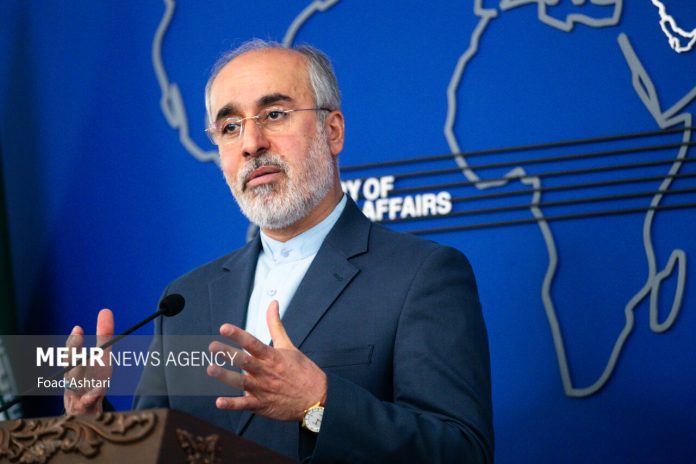
Nasser Kanaani

Kanaani made the remarks during a press briefing on Monday, a day after Iranian Armed Forces launched hundreds of missiles and drones at the occupied territories in retaliation for the Israeli regime’s April 1 terrorist strike on the Islamic Republic’s consulate in Syria.

“Iran’s action was necessary and proportionate and targeted military sites. Iran acted to defend its national security and interests given the lack of action by the UN Security Council and ensuing irresponsible behavior of the US, Britain and France,” he said.

Kanaani also stressed that the Islamic Republic does not seek an escalation of regional tensions, adding, however, that the country will act “more strongly” within the framework of the UN Charter to deter and punish an aggressor who crosses its red lines.

Overnight on Saturday and early Sunday morning, more than 300 Iranian drones and missiles rained down on targets in the Israeli-occupied lands.

The large-scale operation came less than two weeks after Israeli warplanes bombed the consular annex of Iran’s embassy in the Syrian capital of Damascus, killing seven members of the Islamic Revolution Guards Corps (IRGC) who were on an advisory mission to the Arab country.

Also in his remarks, the top diplomat stated that Iran, as “a power that creates security”, exercised its inherent right to defend itself under Article 51 of the UN Charter.

“Iran and its diplomatic apparatus and Armed Forces acted professionally… and delivered a legitimate response to the [Israeli] regime’s act of aggression. Iran acted logically and responsibly,” he added.

“We had issued necessary warnings before taking action …, acted powerfully and will continue to do so.”

Commenting on the Western countries‘ condemnation of the retaliatory operation, Kanaani said that they should take into account that the attack was legitimate and “appreciate Iran’s restraint concerning regional security and peace in recent months.”

“Instead of making accusations against Iran, they (the Western states) should ask themselves what they have done in the course of seven months of an open genocide and why they have not fulfilled their legal and moral responsibility towards Palestine,” he noted.

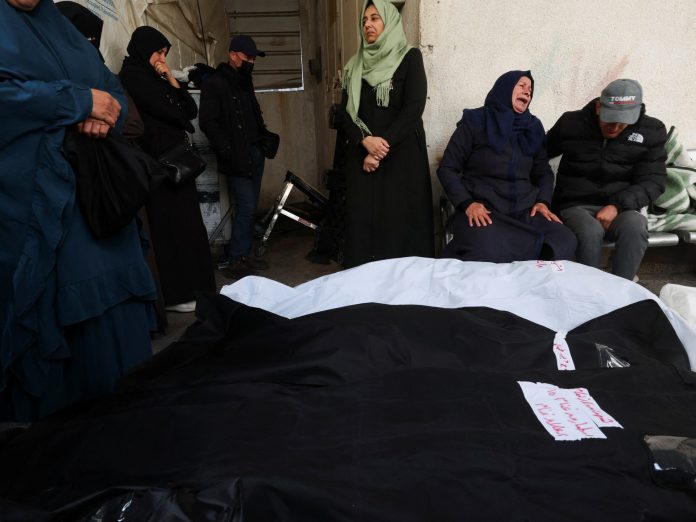
Israel waged a genocidal war on the Gaza Strip on October 7 after the Palestinian Hamas resistance group carried out a historic operation against the usurping entity in retaliation for the regime’s intensified atrocities against the Palestinian people.

So far, Israel has killed at least 33,800 Palestinians, mostly women and children, and injured 76,500 others.

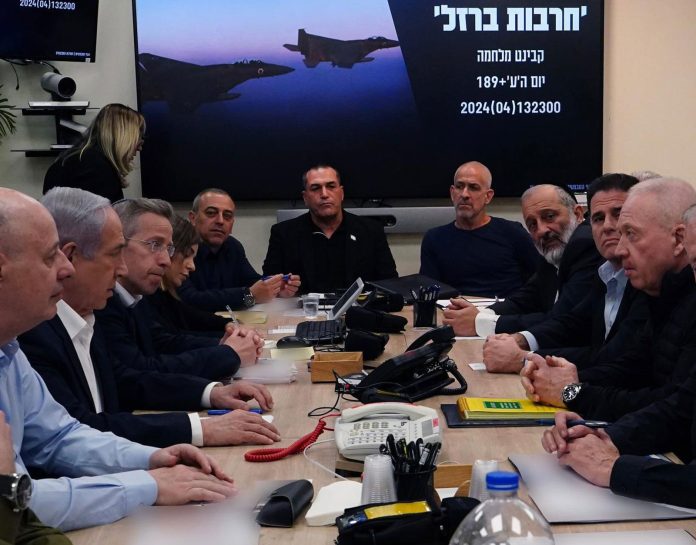
Israel says weighing response to Iranian military operation

Israel War Cabinet

Tehran launched several waves of drones, cruise missiles and ballistic missiles at Israel over the weekend, in response to the bombing of the Iranian embassy in Damascus earlier this month. The strike on the consulate killed seven members of the Iranian military, including two high-ranking generals.

“Just because we were successful in intercepting, we should not underestimate what Iran did,” Lerner stated.

The Israeli government is “currently reviewing the options” after the “IDF has presented what it believes could be done”, ABC quoted the spokesman as saying. The response could entail a “strike or no strike” Lerner continued, adding that the government could make a decision as early as Monday.

Despite “emotions running high” among the Israeli leadership following the airstrikes, US President Joe Biden has urged Israeli Prime Minister Benjamin Netanyahu to show restraint in an effort to avoid further military escalation, according to a senior administration official.

Tehran has warned that a military response would prompt an even bigger escalation. Iran’s Supreme National Security Council (SNSC) has warned of a “much harsher response” against any further action by Israel in the aftermath of the Islamic Republic’s retaliatory operation into the occupied territories.

More Americans want US to encourage Israel to cease military operation in Gaza: Poll

Gaza War

A new CBS News/YouGov poll found that 37 percent of surveyed Americans want Biden to encourage Israel to stop its military actions in Gaza — slightly up from the 31 percent who said the same in February. Another 23 percent said in the new poll that Biden should encourage Israel to decrease its military actions in Gaza.

Biden has amped up his criticism of Netanyahu in recent weeks as Israel continues its war against the Gaza Strip. Biden stated last week that Netanyahu’s approach to the war “is a mistake”.

The poll found that just 12 percent of those surveyed said Biden should urge Israel to increase its military actions in Gaza. Another 28 percent said that Biden should tell Israel to keep its military actions the same, which is down from the 32 percent who said so in February.

Overall, 33 percent of respondents said they approved of Biden’s handling of the Israel-Hamas war, which is the lowest percentage CBS News polling has recorded since the onset of the war. That figure is down from the 38 percent who approved of Biden’s handling in February and from the 44 percent who approved in October.

The poll, conducted before Iran’s drone and missile attack on Israel, also found that most surveyed Americans did not want the US to take military action against Iran if it attacked Israel.

Twenty-five percent of those surveyed said the US should take military action, 42 percent said the US should support Israel’s actions but not get involved militarily and 32 percent said the US should not get involved at all.

Zelensky says Ukraine struggling in Donbass, blames west

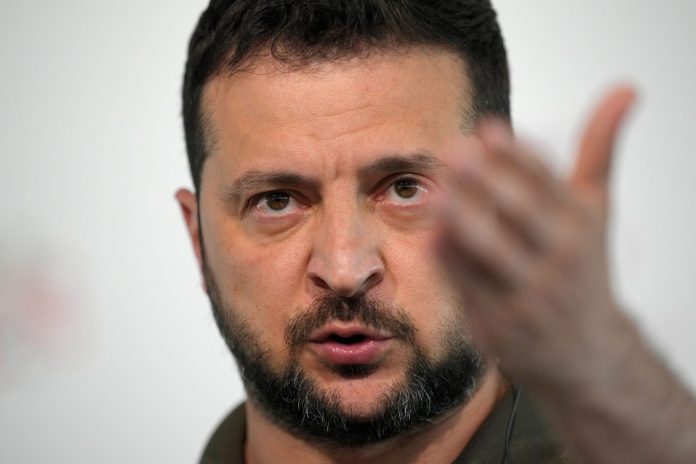
Volodymyr Zelensky

He echoed an earlier statement by the army’s commander-in-chief, Aleksandr Syrsky, who warned of a significant escalation in recent days, with Russian forces attacking Ukrainian positions near the cities of Lyman and Artyomovsk (known as Bakhmut by Ukraine) and advancing towards Chasov Yar.

“The situation on the front during a hot war is always difficult. But these days – and especially in the Donetsk areas – it’s getting harder,” Zelensky said in an address to the nation on Sunday.

He drew a comparison with Iran’s missile and drone attack on Israel on Saturday.

“Modern air power proves its effectiveness, modern air defense systems are capable of protecting lives – this was demonstrated in the Middle East,” Zelensky said, adding that the West is turning a deaf ear to Ukraine’s pleas for more funding.

“The whole world sees what real defense is. It seems that it is feasible,” he stressed, while criticizing the US Congress for holding up a proposed aid package that has been in limbo for months.

Since the beginning of the conflict between Russia and Ukraine in February 2022, Western backers have provided Kiev with billions of dollars in aid, with Washington alone giving over $113 billion. The White House has failed, however, to gain congressional approval for an extra $60 billion in military assistance, with Republicans in the House of Representatives insisting on stronger measures to curb illegal immigration on the southern US border.

Moscow has maintained that no amount of Western funding will change the course of its military operation.

Israel says not seeking war after Iran’s attack

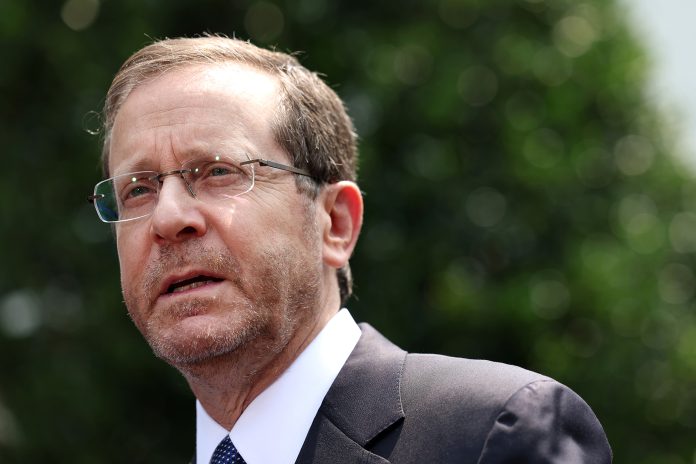
Isaac Herzog

Prime Minister Benjamin Netanyahu is speaking with many world leaders and there is “intimate dialogue with allies” in response to Iran’s actions, he said.

“We’re considering it all. We’re acting cool-headedly and lucidly,” Herzog stated.

“I think we’re operating in a very focused way and very responsible way and I’m sure there will be a decision accordingly that will make sure that we protect and defend the people of Israel,” the president added.

“This was a very aggressive and brutal attack, which looks like a declaration of war. But I also added immediately to say that we are not seeking war. We are seeking always peace.”

Tehran launched extensive missile and drone strikes against the occupied territories in response to Israel’s deadly attack on the Iranian diplomatic premises in Syria early this month.

Iranian officials have stressed their country’s military operation against Israel was “in the exercise of Iran’s inherent right to self-defence”, stressing Tehran is not seeking to escalate conflict in the region.

Members of the Israeli war Cabinet have vowed retaliation against Iran for the missile and drone launches, despite urging from the Joe Biden administration.

John Kirby, White House national security communications adviser, has stressed the Biden administration is “not looking” for a wider war with Iran.

Asked Sunday on NBC News’s “Meet The Press”, if the Middle East tensions have escalated into a wider war, Kirby said, “The president doesn’t believe that it needs to move in that direction whatsoever”.

“And also, Israel demonstrated again, as I said, that they’re not standing alone, that they have friends,” Kirby added.

“So the president’s been clear. We don’t want to see this escalate. We’re not looking for a wider war with Iran. I think, you know, the coming hours and days will tell us a lot.”


India urges Iran to release 17 Indian crew on board seized container ship

IRGC Israeli Ship

Prime Minister Benjamin Netanyahu is speaking with many world leaders and there is “intimate dialogue with allies” in response to Iran’s actions, he said.

“We’re considering it all. We’re acting cool-headedly and lucidly,” Herzog stated.

“I think we’re operating in a very focused way and very responsible way and I’m sure there will be a decision accordingly that will make sure that we protect and defend the people of Israel,” the president added.

Tehran launched extensive missile and drone strikes against the occupied territories in response to Israel’s deadly attack on the Iranian diplomatic premises in Syria early this month.

Iranian officials have stressed their country’s military operation against Israel was ‘in the exercise of Iran’s inherent right to self-defence’, stressing Tehran is not seeking to escalate conflict in the region.

Members of the Israeli war Cabinet have vowed retaliation against Iran for the missile and drone launches, despite urging from the Joe Biden administration.

John Kirby, White House national security communications adviser, has stressed the Biden administration is “not looking” for a wider war with Iran.

Asked Sunday on NBC News’s “Meet The Press”, if the Middle East tensions have escalated into a wider war, Kirby said, “The president doesn’t believe that it needs to move in that direction whatsoever”.

“And also, Israel demonstrated again, as I said, that they’re not standing alone, that they have friends,” Kirby added.

“So the president’s been clear. We don’t want to see this escalate. We’re not looking for a wider war with Iran. I think, you know, the coming hours and days will tell us a lot.”

Iran’s envoy warns Washington against initiating military action against Tehran

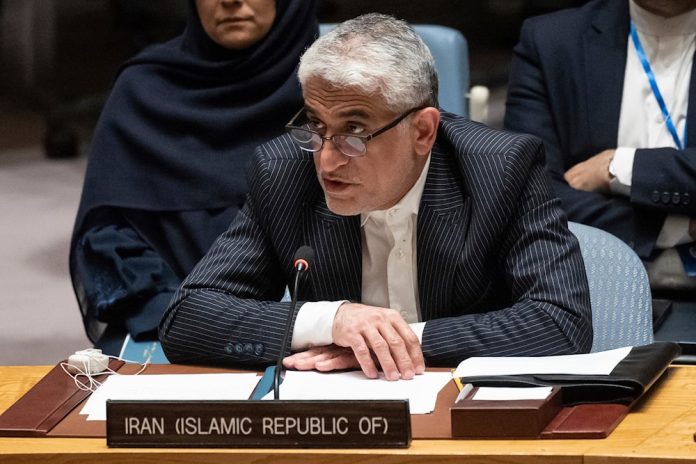
Amir Saeed Iravani

“Iran has no intention of engaging in conflict with the US in the region,” Iravani told a UN Security Council meeting on Sunday.

“However, if the US initiates military operations against Iran, its citizens, or its security and interests, Iran will use its inherent right to respond proportionately,” he added.

On April 1, the Israeli regime committed a terrorist attack against Iran’s diplomatic premises in the Syrian capital Damascus.

The Israeli attack resulted in the martyrdom of Brigadier General Mohammad Reza Zahedi, a commander of the Quds Force of Iran’s Islamic Revolution Guards Corps (IRGC), his deputy, General Mohammad Hadi Haji Rahimi, and five of their accompanying officers.

Retaliating against the attack, the IRGC targeted the occupied territories late on Saturday with a barrage of drones and missiles. The retaliatory attack, dubbed Operation True Promise, has inflicted damage on Israeli military bases across the occupied territories, but the extent of which is yet to be specified.

Following the reprisal, Iran both relayed the message that it viewed the matter as “concluded”, and also warned the US against trying to involve itself in the conflict.

Shortly after the retaliation, Iran’s permanent mission to the UN issued a statement, saying the conflict was one between the Islamic Republic and the rogue regime, “of which the United States should stay away.”

Iravani added, “We demonstrated our commitment to peace by exercising our restraint about involving the US Army in intercepting Iranian drones and missiles bound for military targets in the occupied Palestinian territories.”

“This underscores our dedication to de-escalating tensions and avoiding the expansion of conflict.”

Elsewhere in his remarks, the envoy lambasted the US and the UK for their protecting the Israeli regime against accountability.

“The US and the UK are fully responsible for all its (Israel’s) decades-long aggressions and other crimes and unlawful measures in our region,” he stated.

“Furthermore, they are responsible for all crimes of the Israeli regime, as it cannot commit any of such savage crimes in Gaza without the consent, order, and all-out political, financial, and military support of, and collaboration with, the United States and the UK.”

The envoy was referring to the regime’s October 7-present war against the Gaza Strip, which has so far claimed the lives of more than 33,700 Palestinians, mostly women and children.

Iravani cautioned that “the absence of accountability and the [Security] Council’s inaction in the face of the Israeli genocide and war crimes against the Palestinian people has only emboldened this regime to continue its violations unchecked.”