Tuesday, December 23, 2025
Home Blog Page 913

Ukrainian official says F-16s could arrive in Kiev this month

F-16

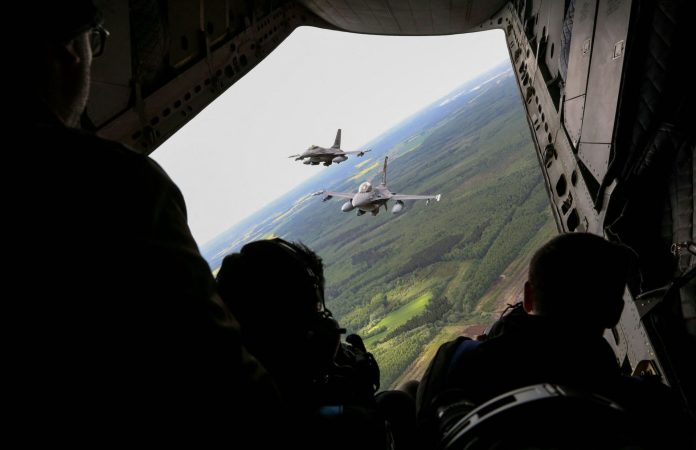
Speaking on national TV on Wednesday, Ukrainian Air Force spokesman Ilya Evlash predicted that Kiev could receive the first batch of the advanced jets after Orthodox Easter, which is celebrated on May 5 this year.

Still, he cautioned against getting hopes up.

“We are not guessing the future, because the date has been changed several times. That’s why we are waiting,” Evlash added.

The official stressed that the timeline for F-16 deliveries is out of Ukraine’s hands, and that Kiev’s military “will work with what it is given to it”.

Later, in an interview with the newspaper Ukrainskaya Pravda, Evlash elaborated that “‘after Easter’ is a drawn-out notion”, noting that Kiev would like to get the warplanes as soon as possible and vowing to make an announcement once they arrive. He added that Ukrainian pilots are currently training to fly the jets in Denmark and the US.

In March, Dutch Defense Minister Kajsa Ollongren said that the first batch of F-16 fighter jets would arrive in Ukraine from Denmark this summer. This timeline was also confirmed by Ukrainian Foreign Minister Dmitry Kuleba, who nevertheless acknowledged that more training is needed both for pilots and ground personnel.

Ukrainian officials have admitted that operating F-16s will be fraught with serious practical difficulties. Last month, Evlash stated that building bunkers for the jets will require “colossal funds”, adding that Kiev would try to use other methods to protect the aircraft from strikes, including dispersing them among different airfields.

Last year, Western countries announced an international coalition to help Ukraine procure the US-designed F-16s, with plans to provide Kiev with several dozen aircraft.

However, NATO Secretary General Jens Stoltenberg said last autumn that while the F-16s would certainly boost Ukraine’s military capabilities, they would not be “a silver bullet” capable of drastically changing the situation on the battlefield.

Kremlin spokesman Dmitry Peskov has stressed that F-16s will not change the outcome of the conflict, promising that the Russian military will destroy the planes as it has other Ukrainian hardware.

US increases pressure on Israel over Gaza aid as truce negotiations continue

US Blinken Israel

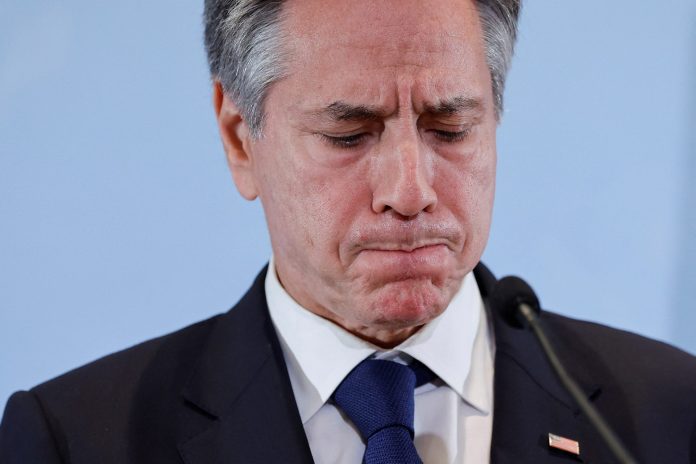
Blinken on Wednesday travelled to Kerem Shalom, an Israeli entry point into Gaza about 3km (2 miles) from the southern city of Rafah that is known to Palestinians as Karem Abu Salem. The top United States diplomat also visited Israel’s main port, Ashdod, highlighting “progress” made in recent weeks on humanitarian access, but stressed once again that more needs to be done.

“The progress is real but given the need, given the immense need in Gaza, it needs to be accelerated, it needs to be sustained,” he stated.

Blinken asked Israel’s government to take a set of specific steps to facilitate aid to Gaza, where nearly half the population are suffering catastrophic hunger.

Israel has sought to demonstrate it is not blocking aid to Gaza, especially since US President Joe Biden issued a stark warning to Israeli Prime Minister Benjamin Netanyahu, saying Washington’s policy could shift if Israel fails to take steps to address civilian harm, humanitarian suffering, and the safety of aid workers.

During his earlier meeting with Netanyahu, Blinken also reiterated that Washington would not support a military operation in Rafah without a plan to ensure civilians were protected.

“We cannot, will not support a major military operation in Rafah absent an effective plan to make sure that civilians are not harmed and no, we’ve not seen such a plan,” Blinken told reporters.

The United Nations and humanitarian groups have long warned that a military operation there, where more than 1.5 million people are crammed in, would cause a catastrophe.

“There are other ways, and in our judgement better ways, of dealing with the … ongoing challenge of Hamas that does not require a major military operation in Rafah,” he continued, adding that it was the subject of ongoing talks with Israeli officials.

But an Israeli government spokesperson said Israel remained determined to destroy the remaining Hamas fighting formations.

“When it comes to Rafah – we are committed to remove the last four of five Hamas battalions in Rafah – we are sharing our plans with Secretary of State Blinken,” the spokesperson told a regular briefing.

While facing international calls to hold off on any Rafah offensive, Netanyahu has faced pressure from the religious nationalist partners he depends on for the survival of his coalition government to press ahead.

Israel is the final stop on the top US diplomat’s Middle East tour amid renewed efforts to secure a ceasefire and exchange of hostages for prisoners.

Blinken urged Hamas to accept a truce deal proposed by Egyptian mediators, which would see 33 hostages released in exchange for a larger number of Palestinian prisoners and a halt to the fighting, with the possibility of further steps towards a comprehensive deal later.

“Israel has made very important compromises,” he stated, adding, “There’s no time for further haggling. The deal is there. They [Hamas] should take it.”

A senior official for Hamas said the group was studying the proposed deal and accused Blinken of failing to respect both sides and described Israel as the real obstacle.

“Blinken’s comments contradict reality,” Sami Abu Zuhri told Reuters.

Israel is holding off sending a delegation to Cairo for follow-up truce talks, pending a response from Hamas’s leader in Gaza, Yahya Sinwar, an Israeli official told Reuters.

“Only after he responds will we decide what to do”.

Israeli media reported on Wednesday that Netanyahu was still refusing to accept Hamas’s central demand that any deal would have to include a permanent ceasefire and a withdrawal of Israeli troops.

The Israeli news site Ynet, citing the Prime Minister’s Office, reported Netanyahu told Blinken a Rafah operation “was not contingent on anything” and that he rejected any truce proposals that would end the Gaza war.

Russia says attacked Ukrainian military HQ

Russia Ukraine War

In a statement, the ministry said that the military installation, Ukrainian troops and hardware, were hit by combined air, missile and artillery strikes.

Earlier in the day, citing local resistance members, RIA Novosti reported that the Russian military had targeted a Ukrainian HQ in the center of the port city of Odessa. According to the report, three explosions occured in the area, with a particularly powerful one near the facility itself. The local resistance reported numerous ambulances flocking to the HQ, adding that the area had been cordoned off by the Ukrainian authorities.

The head of the Odessa regional administration, Oleg Kiper, has confirmed there was a strike in the city, which he stated involved ballistic missiles and killed at least three people. However, he claimed that only civilian infrastructure had been damaged.

Russia has repeatedly stressed that it targets only military installations and facilities that support defense operations, insisting that it never targets civilian infrastructure.

RIA Novosti also reported, citing resistance fighters, that Russia bombed a Ukrainian troop deployment area in the suburbs of Kharkov, a city on the Russian border, adding that another attack destroyed a warehouse storing military hardware in the southern Nikolaev Region.

According to numerous reports, a pro-Russian resistance movement is active in at least several Ukrainian regions, gathering data and engaging in sabotage against Kiev’s military.

The latest barrage comes after Russian Defense Minister Sergey Shoigu pledged last month to intensify attacks on logistics hubs and warehouses with Western-supplied military equipment.

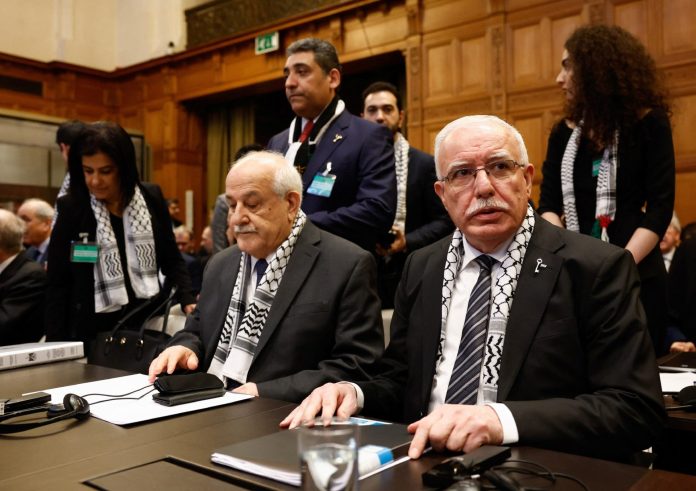
Turkey says to join S. Africa’s genocide case against Israel over Gaza war before ICJ

Palestine Israel ICJ

Fidan said during televised remarks that Turkey has been deliberating how to respond to Israel’s actions during the war on Gaza for a while and has already taken steps against Israel, such as restricted some exports.

“Our legal experts have been studying how to participate in the legal case against Israel at the ICJ,” Fidan added.

Turkish President Recep Tayyip Erdogan approved the officials’ plan, Fidan noted, so Turkey “will legally support South Africa’s case against Israel at the ICJ, and file our application to the court soon”.

Turkey aims to strengthen South Africa’s case with this step. Nicaragua and Colombia have previously tried to intervene in the same case with separate applications but the court is yet to make a judgment on their request.

It remains unclear what type of application for intervention Turkey, a party to the Genocide Convention, is seeking.

Nicaragua’s application was under Article 62 of the ICJ Statute, requesting intervention in South Africa’s case against Israel. Columbia, while expressing its support for South Africa’s case, has requested a different type of intervention under Article 63 of the Statute to assist the Court in construing the provisions of the Convention in question in this case.

Fidan said Turkey discussed the issue with some members of the Organisation of Islamic Countries, who said they are likely to also join the case.

Last month, Erdogan received a senior delegation from Hamas, including the group’s political leader Ismail Haniyeh.

The meeting was the first public encounter between Erdogan and Hamas’ leadership since the 7 October attack on southern Israel.

The meeting also came less than two weeks after Israel killed three of Haniyeh’s sons and four of his grandchildren in an air strike, triggering condemnation by the Turkish president and other senior ruling party officials.

Since the start of the war, Turkey has attempted to support key Arab states, like Qatar and Egypt, in brokering a ceasefire.

But in recent months, political pressure and losses in local elections have forced Erdogan to take a harder line on Israel as the death toll spirals in Gaza. More than 34,500 Palestinians have been killed by Israel in almost seven months.

The Turkish public dealt Erdogan and his party their biggest electoral blow three weeks ago, when the ruling Justice and Development Party (AKP) lost the popular vote in regions previously considered its stronghold.

Analysts say that economic strains, including nearly 70 percent inflation and a slowdown in growth brought on by an aggressive monetary-tightening regime, persuaded voters to punish the party.

Another, less mentioned, factor that led to the AKP’s losses was the government’s policy regarding Gaza.

Erdogan’s embrace of an increasingly nationalistic outlook and shift away from reformist Islamist ideas appears to have provided an opening for the New Welfare Party (YRP), a relatively new conservative Muslim party.

The YRP successfully campaigned against Erdogan by highlighting the continuing commercial ties between Turkey and Israel despite the allegations of genocide in Gaza.

Turkey officially backed South Africa’s case against Israel at the ICJ, has repeatedly condemned Prime Minister Benjamin Netanyahu and other Israeli officials for the Gaza onslaught, and become a top donor of humanitarian aid in the coastal enclave.

But for many Turkish voters, and countless others in the region, the optics of trading with Israel in the middle of a devastating humanitarian crisis showed Ankara wasn’t doing enough.

Colombia says to break diplomatic relations with Israel amid Gaza war

Gaza War

Petro has already heavily criticized Israeli Prime Minister Benjamin Netanyahu and requested to join South Africa’s case accusing Israel of genocide at the International Court of Justice.

“Here in front of you, the government of change, of the president of the republic announces that tomorrow we will break diplomatic relations with the state of Israel … for having a government, for having a president who is genocidal,” Petro told cheering crowds in Bogota who marched to mark International Worker’s Day and back Petro’s social and economic reforms.

Countries cannot be passive in the face of events in Gaza, he added.

Israeli Foreign Minister Israel Katz accused Petro of being “antisemitic and full of hate”. He said Petro’s move was a reward to the armed group Hamas, which on Oct. 7 led a deadly attack on Israeli military bases and communities.

Bolivia broke with relations with Israel at the end of October last year while several other countries in Latin America, including Colombia, Chile and Honduras, have recalled their ambassadors.

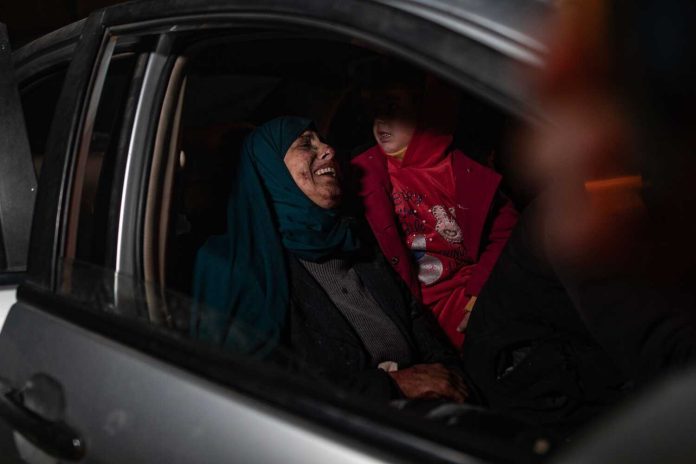
PA says US support behind Israel’s disregard for warnings against Rafah invasion

Gaza War

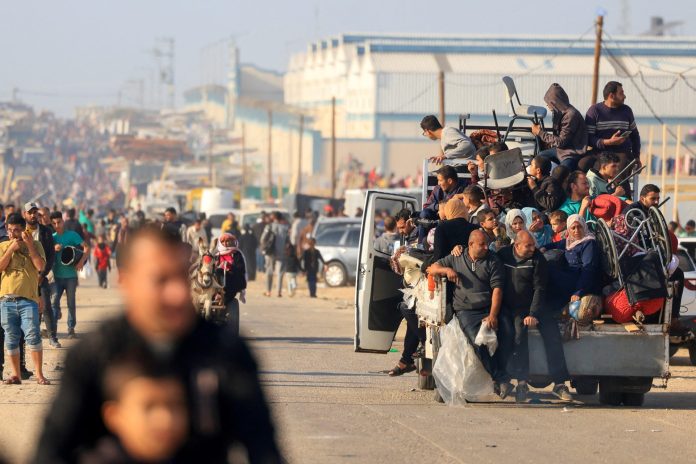
Israeli Prime Minister Benjamin Netanyahu vowed Tuesday to invade Rafah, home to more than 1.4 million displaced Palestinians, with or without a cease-fire deal with Hamas.

“Without US support, Netanyahu wouldn’t dare to defy international legitimacy and law by persisting in committing further genocide against the Palestinian people,” PA spokesman Nabil Abu Rideineh said in a statement.

He urged the US administration to immediately intervene “to compel Israel to halt the aggression on Gaza and to prevent it from invading Rafah”.

The spokesman warned that any Israeli invasion of Rafah would have “extremely serious consequences for the entire region and the world”.

UN Secretary-General Antonio Guterres on Tuesday joined warnings against a military operation in Rafah and called on “those with influence over Israel” to prevent further civilian casualties and displacement.

Rafah is the last remaining area in the enclave where Israel has not yet formally announced the entry of its troops to continue the onslaught against Palestinians.

Israel has waged a military offensive on Gaza since the Oct. 7, 2023 cross-border attack led by Hamas which killed some 1,200 people.

More than 34,500 Palestinians have since been killed in Gaza, the vast majority of whom have been women and children, with thousands of others injured amid mass destruction and severe shortages of necessities.

More than six months into the Israeli war, vast swathes of Gaza lay in ruins, pushing 85% of the enclave’s population into internal displacement amid a crippling blockade of food, clean water, and medicine, according to the UN.

Israel stands accused of genocide at the International Court of Justice. An interim ruling in January ordered Tel Aviv to stop genocidal acts and take measures to guarantee that humanitarian assistance is provided to civilians in Gaza.

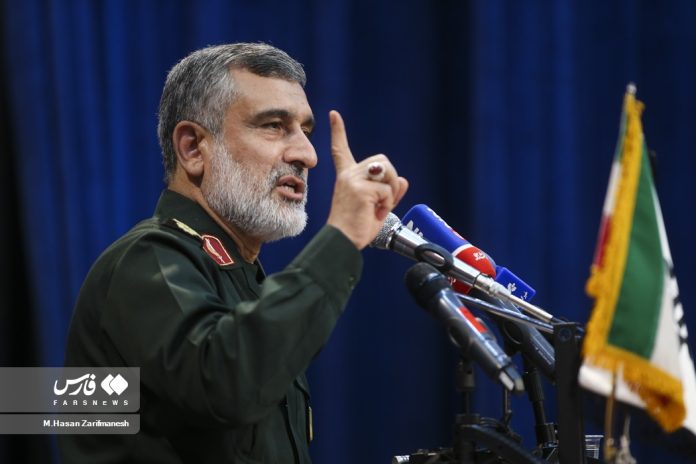
IRGC cmdr.: Iran used 20% of what prepared to respond to bombing of embassy by Israel

Amirali Hajizadeh

General Mohammad Reza Hajizadeh added that for the very 20 percent, there was a weird deployment on part of Iran’s adversaries and the US, which has previously claimed it would not intervene, but they did so and stood by the Zionist regime.

Operation True Promise was in response to the Zionist regime’s bombing of the Iranian Embassy in Damascus on April 1 that killed seven Iranian military advisors.

During the operation, Iran fired 300 drones and projectiles including cruise and ballistic missiles at the Zionist regime.

This was seen as a turning point in the history of tensions between the Zionist regime and Iran.

US claims Russia ties embolden North Korea

Putin Kim

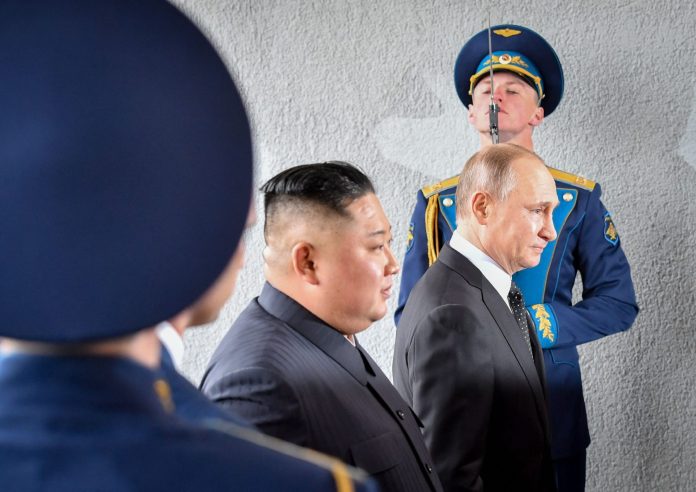
Austin made his comments in testimony to the US House Armed Services Committee on Tuesday. Ties between Moscow and the Democratic People’s Republic of Korea (DPRK) have deepened since Kim traveled to Russia last September for talks with President Vladimir Putin. The Russian and North Korean defense chiefs met last July in Pyongyang.

“North Korea, again, it’s becoming more confident because of its affiliation with Putin,” Austin told lawmakers.

He also cited expanding cooperation between Russia, North Korea, Iran and the People’s Republic of China (PRC).

“This is very concerning: something that we are going to have to watch, something that we are going to have to make sure that we have the capability and capacity to work with our allies to continue to deter and continue to promote peace and stability in each of the regions,” Austin stated.

He added, “The growing nexus between the PRC, Russia, the DPRK and Iran is concerning, and this is something that we are watching very closely.”

US Joint Chiefs of Staff General Charles Brown agreed, saying threats posed by Russia, China, North Korea and Iran are “interconnected”.

Austin also claimed Russia turned to the DPRK for additional artillery shells and other munitions to replenish its stockpiles in the Ukraine conflict. North Korean and Russian officials have denied accusations of arms transfers from Pyongyang. They have also accused the US and its Northeast Asian allies of worsening tensions in the region by preparing for war with the DPRK.

North Korea has ramped up missile tests since the Russia-Ukraine conflict began in February 2022, and it has ruled out the possibility of reunifying with South Korea. The North Korean Foreign Ministry said increasing cooperation with Russia would help defend the “core interests” of the two countries and help establish a “multi-polarized international order”.

Iran says has not barred IAEA inspectors

IAEA Team

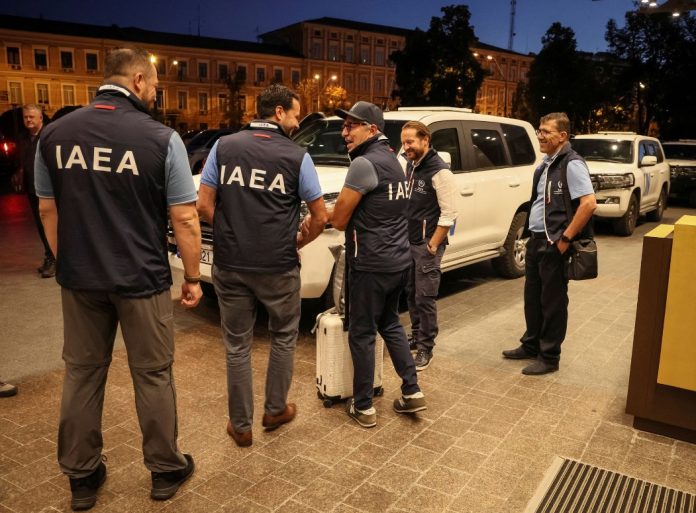
The chairman of the Atomic Energy Organization of Iran (AEOI) Mohammad Eslami told reporters on Wednesday after a weekly cabinet meeting that Rafael Grossi, the director general of the IAEA, has been invited as the special guest in the First International Conference on Nuclear Science and Technology in Iran to be held next week.

Eslami said Iran is continuing its interaction to resolve the outstanding issues over its nuclear activities with the IAEA.

He said the international atomic agency regularly carries out its inspection of Iran’s nuclear sites based on the safeguards to verify they are in accordance with international commitments.

The AEOI chief asserted that both sides have concluded their talks on two of the four “undeclared locations” in Iran as claimed by the IAEA, while discussions on the other two sites are ongoing.

“Our talks will take place on the sidelines of IAEA Director General Rafael Grossi’s visit to Iran. I believe that the unknown issues will disappear,” he said.

Eslami said the joint statement by Iran and IAEA issued last year is still valid and serves as the basis for cooperation between the two sides.

Blinken ceasefire comments meant to acquit Israel: Hamas official

Antony Blinken

Abu Zuhri told Reuters news agency the group was still studying the recent ceasefire offer.

Blinken has said Washington was determined to get a ceasefire in Gaza that brings captives home as he started talks with Israel’s leadership on Wednesday.

Blinken claimed “the only reason that that wouldn’t be achieved is because of Hamas”, despite Israeli Prime Minister Benjamin Netanyahu saying Tuesday that he will not agree to end the war.

Hamas has repeatedly stressed it will not sign off on any ceasefire deal that does not guarantee a permanent end to Israel’s assault on Gaza.

As the longwinded talks, mediated by Qatar and Egypt, continue, the Israeli military has continued deadly military operations inside the tiny enclave, which remains blockaded.

More than 34,500 Palestinians in Gaza have been killed, while the 2.3-million-strong population have been left in dire conditions, amid shortages of food, shelter and medicine.

The armed group continues to hold more than 100 captives taken from Israel during its raid across the enclave’s northern border on October 7, which killed more than 1,100.

A previous deal in November saw the release of 81 Israelis and 24 foreigners in exchange for 240 Palestinians, including 71 women and 169 children.