Wednesday, January 14, 2026
Home Blog Page 878

Acting Iranian FM: Iran, Iraq two pillars of regional stability

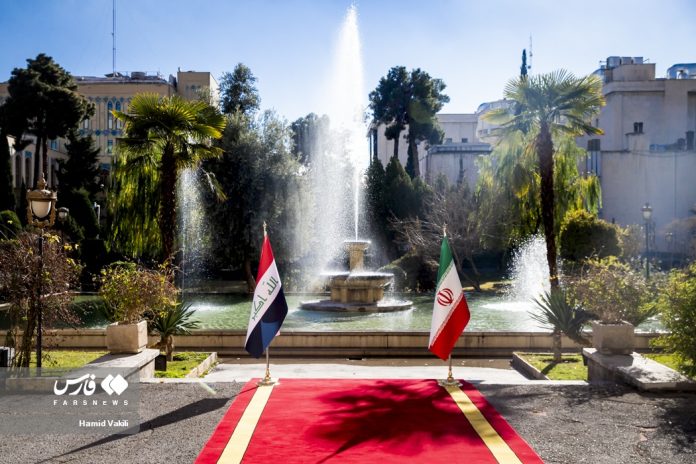
Iran and Iraq Flags

Ali Bagheri made the remarks on Thursday in Baghdad in a joint press conference with Iraq’s Foreign Minister Fuad Hussein.

The Iranian diplomat, who traveled to Iraq at the head of delegation on Thursday, said he discussed various bilateral and regional issues with his Iraqi counterpart earlier in the day.

He said both countries have a common view that the Israeli regime’s genocide in Gaza should stop.

Referring to the deadly Israeli strike on Iran’s diplomatic premises in Damascus in April, Bagheri noted that the occupying regime spread the scope of the conflict in the region after failing to achieve its goals in Gaza, calling the move a “serious and unwise strategic mistake.”

Iran retaliated the Israeli strikes in a massive drones and missiles operation dubbed True Promise, which the foreign minister said indicated “Iran uses all capacities to restore peace in the region and not allow anyone to interfere.”

Meanwhile, the Iraqi foreign minister hoped his country’s bilateral ties with Iran would continue to advance on the right track.

As for the developments in Gaza, Hussein welcomed Iran’s initiative to stop the ongoing massacre of Palestinians.

Hamas says Blinken part of problem in Gaza ceasefire negotiations

Gaza War

Osama Hamdan, the senior Hamas representative in Lebanon, stated that the Israeli occupation is the one hindering the ceasefire in Gaza.

“We told the mediators that the side rejecting the proposals is the Israeli side,” he said in an interview with the Al-Araby television on Wednesday.

“The American administration is complicit with Israel in evading any commitment to a permanent ceasefire proposal,” he added.

Blinken had earlier on Wednesday criticized Hamas’s response to the ceasefire plan outlined by US President Joe Biden and said some of the group’s demands are not workable.

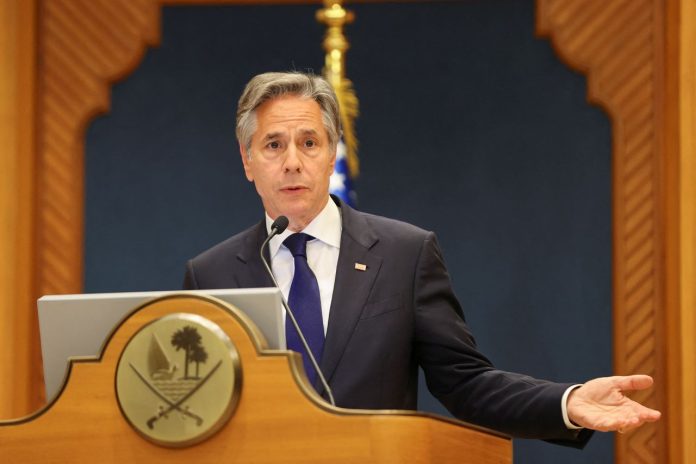
“We believe that some of the requested changes are workable and some are not,” Blinken told reporters in Doha, adding they would continue to work to seal a ceasefire agreement, but that the onus was on Hamas.

The plan Biden laid out on May 31 calls for an Israeli withdrawal from “major population centers” and a ceasefire for six weeks, which could then be extended if negotiators need more time to seek a permanent deal.

Hamas has reportedly proposed amendments including a clear ceasefire timeline and the complete withdrawal of Israeli troops from Gaza, according to sources.

In his remarks, Blinken also said that they’ll put forward proposals for the administration of Gaza following the ongoing war in the coming weeks.

Blinken added the proposals would cover how to handle Gaza governance, security, and reconstruction.

Hamdan rejected Blinken’s remarks on planning for the governance of post-war Gaza, saying that the “day after the war will be a Palestinian day in which we will decide our reality and our future”.

The Hamas official stated they demand guarantees from the mediators to prevent the Israeli occupation from evading its responsibilities.

“The Israeli proposal seeks a temporary ceasefire to catch its breath before resuming the war,” he stressed, referring to the Biden plan, which the US says has the regime’s support.

Hamas has also belied Blinken’s claim that the Israeli regime has “accepted” Biden’s proposal aimed at bringing about a truce in Tel Aviv’s ongoing genocidal war against the besieged enclave.

“While Blinken continues to talk about Israel’s approval of the latest proposal, we have not heard any Israeli official speak of this approval,” Hamas announced.

The group said the US top diplomat was trying to “exonerate the Zionist occupation, wash his hands stained with the blood of innocent children, women, and the elderly, and hold the movement responsible for obstructing conclusion of an agreement”.

This, Hamas added, amounted to “a continuation of the American policy of complicity in the brutal genocide war against our Palestinian people, and allowing the occupation to continue its crime with full American political and military cover”.

The movement finally called on Washington to rather “apply direct pressure on the fascist occupation government, which is determined to complete the mission of killing and genocide, in flagrant violation of all international laws and treaties.”

Hamas official Taher Al-Nunu has also accused Blinken of bias, saying that the top US diplomat has been acting like he is Israel’s foreign minister since the start of the war.

“He lacks neutrality. He lacks even-handedness. He operates with double standards. He is trying to portray the [Palestinian] resistance as if it is the party obstructing the deal,” Al-Nunu told Al Jazeera Mubasher later on Wednesday.

He said Hamas accepted the proposal presented by Qatar and Egypt on May 6 as it is, and it was Israel that added amendments to it. Hamas’s response on Tuesday was counter-revisions to some of the Israeli changes, Al-Nunu added.

According to Al-Nunu, Hamas’s notes aimed to ensure that Israel would not renege on the deal and resume the war after the first phase, which would see the release of some of its captives in Gaza.

Asked whether Hamas would be flexible about demands labelled “not workable” by Blinken, Al-Nunu stated it is “normal” for negotiating parties to accept or reject amendments to a proposal.

US claims Hamas has proposed “numerous changes” to Gaza ceasefire proposal

US Blinken

“Some of the changes are workable. Some are not,” Blinken said at a news conference in Doha. He did not immediately provide details on Hamas’ proposed changes.

“We discussed those changes last night with Egyptian colleagues and today with the Prime Minister,” Blinken stated after meeting with the Qatari Prime Minister Sheikh Mohammed bin Abdulrahman bin Jassim Al-Thani.

The top US diplomat reiterated that the proposed deal “was virtually identical” to a proposal that Hamas previously accepted.

“Hamas could have answered with a single word – yes,” he added.

Blinken noted while he believes the current gaps are “bridgeable”, it doesn’t mean they will be closed, saying it “ultimately depends on people saying yes.”

“It’s time for the haggling to stop and a ceasefire to start,” he added.

It is “crucial” to move from an “immediate ceasefire” in Gaza “to an enduring end” to the war, he continued.

Qatari officials also stressed Hamas and Israel’s fundamental differences need to be bridged to bring an end to the war in Gaza.

“We have seen the behavior from both parties (Israel and Hamas) on different occasions being counterproductive to the efforts; while we are respecting our role as mediator, we are trying our best not to consider ourselves as, you know, the party of that conflict,” Al-Thani said on Wednesday.

Al-Thani added the Qatari’s had been struggling “for a very long time” trying to work out how to bridge the “two fundamental differences between what Hamas wants as a permanent ceasefire, and what Israel wants as a hostage release and maybe a plan to continue the war”.

“What we are aiming for is one specific goal is to end the war, to end the suffering of the people in Gaza, and to get the hostages back.”

Washington had presented the plan late last month, saying that it would lead to an “enduring” ceasefire in Gaza.

Hamas submitted its response jointly with the Palestinian Islamic Jihad on Tuesday, describing it as “responsible” and “positive”.

When US President Joe Biden announced the multi-phased proposal on May 31, he stated it would include the withdrawal of Israeli soldiers from Gaza and a permanent cessation of hostilities.

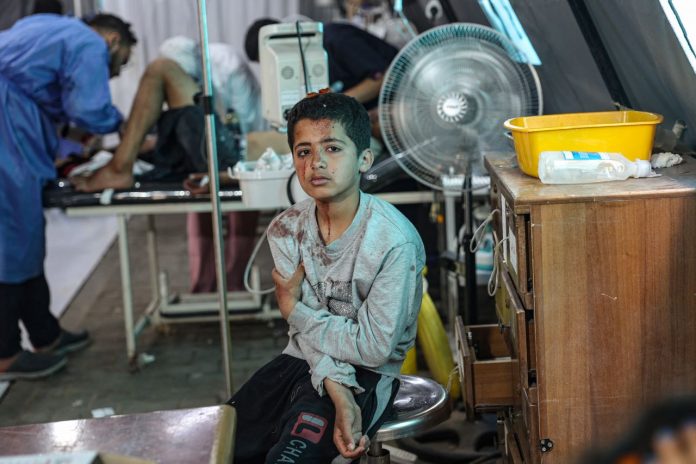
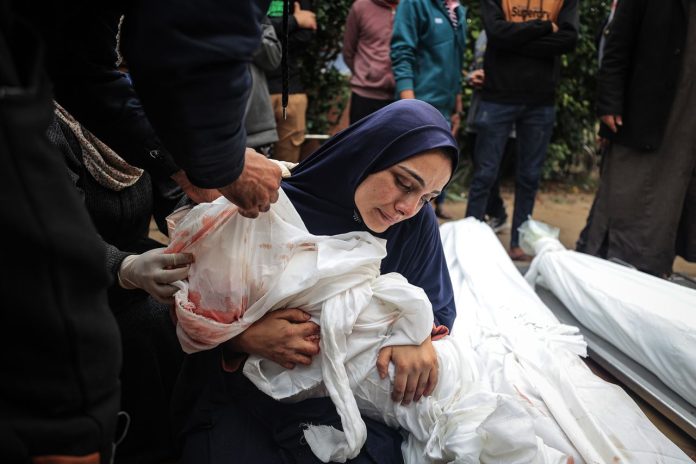
More than 37,000 Palestinians have been killed in the war in Gaza and about 85,000 others injured, according to data provided by the Ministry of Health in the enclave.

Acting Iran FM, OIC head urge Islamic states to adopt practical measures over Gaza war

Gaza War

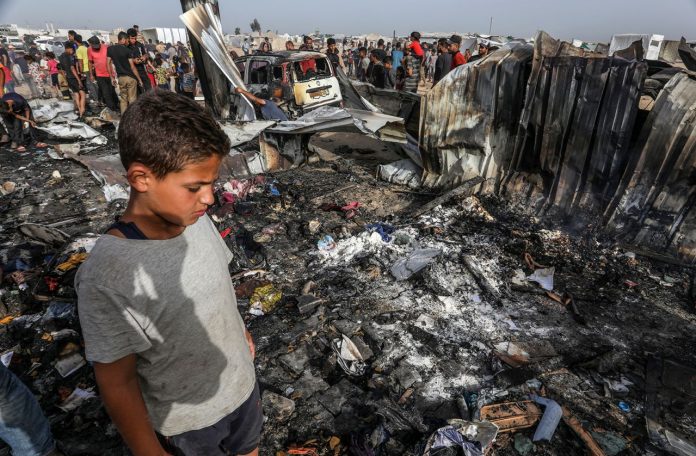
Bagheri had a telephone conversation with Brahim Taha on Wednesday and discussed the Zionist regime’s crime in Gaza and Rafah, saying that Islamic countries should act in this regard.

The acting foreign minister referred to the ongoing and escalating crimes by the Zionist regime in Rafah and highlighted the need on the part of Muslim states to take measures in order to halt the Zionists’ crimes.

Bagheri also pointed to the efforts by some countries, including South Africa to open a judicial case at The Hague, and cutting off ties between some Latin American countries and the Zionist regime.

The interim Iranian foreign minister, however, demanded Islamic states take more serious steps, and stressed on the need to hold an extraordinary meeting of foreign ministers of the Organization of Islamic Cooperation (OIC) member countries in this regard.

Meanwhile, Brahim Taha denounced the Zionist regime’s crimes and stressed on the necessity to take a practical measures against the Israeli regime.

He stressed on the need for practical steps and collaboration among Muslim states to stop the Zionists’ crimes in this regard.

UN finds several Israelis likely intentionally killed by army on 7 October

Israeli Army

The report by the UN Independent International Commission of Inquiry (COI) documented repeated uses of the so-called Hannibal Directive on 7 October as Israel was combatting Hamas fighters who entered southern Israel from Gaza.

The directive, when active, indicates that the Israeli army should use any and all means to prevent the capture of Israeli soldiers, even if it involves killing them.

Even though the secretive directive was officially and publicly revoked in 2016, several Israeli outlets have reported that the actions and rhetoric of the army during the Hamas-led attack imply it was re-activated in some form.

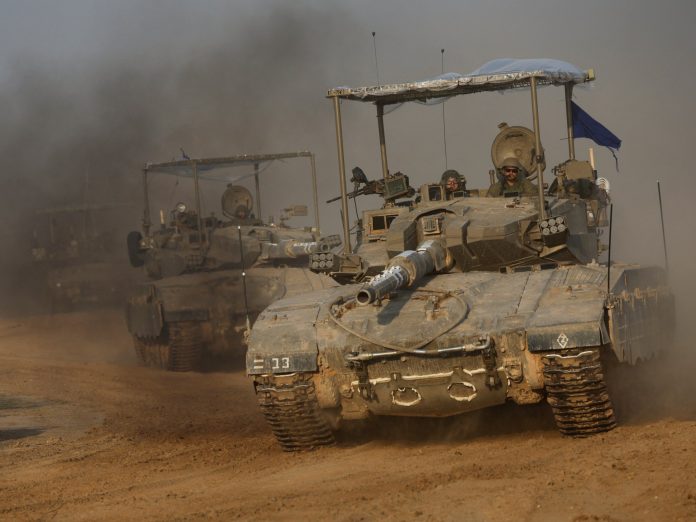
The COI said it had confirmed one statement by an Israeli security forces tank crew, “confirming that the crew had applied the Hannibal Directive by shooting at a vehicle which they suspected was transporting abducted [Israeli] soldiers”.

It added it also had verified information indicating that, in at least two other cases, the security forces had likely applied the Hannibal Directive, resulting in the killing of up to 14 Israeli civilians.

“One woman was killed by [Israeli] helicopter fire while being abducted from Nir Oz to Gaza by militants,” said the report, referring to one of the Kibbutzim from which people were abducted by Palestinian fighters.

“In another case the Commission found that Israeli tank fire killed some or all of the 13 civilian hostages held in a house in Beeri,” it added, referring to another Kibbutz.

Nearly 1,200 people were killed in the 7 October attack after Hamas and other armed groups broke through the barriers cutting Gaza off from southern Israel.

The New York Times reported on the attack on the house in Kibbutz Beeri in December.

According to that report, several Israeli captives being held by Palestinian fighters in Beeri were killed during crossfire with Israel’s military, in what was described as “a delayed and chaotic military response”.

The Israeli military launched a rocket-propelled grenade at the house, according to witnesses.

Barak Hiram, an Israeli general in charge of recapturing the kibbutz from Hamas fighters, recalled telling his men: “Break in, even at the cost of civilian casualties.”

Despite repeated criticism of his handling of the 7 October operation, Hiram was cleared of wrongdoing by an Israeli army investigation in April, which attributed the deaths of the captives to small arms fire.

Significant part of Gaza facing ‘famine-like situations’: WHO

Gaza War

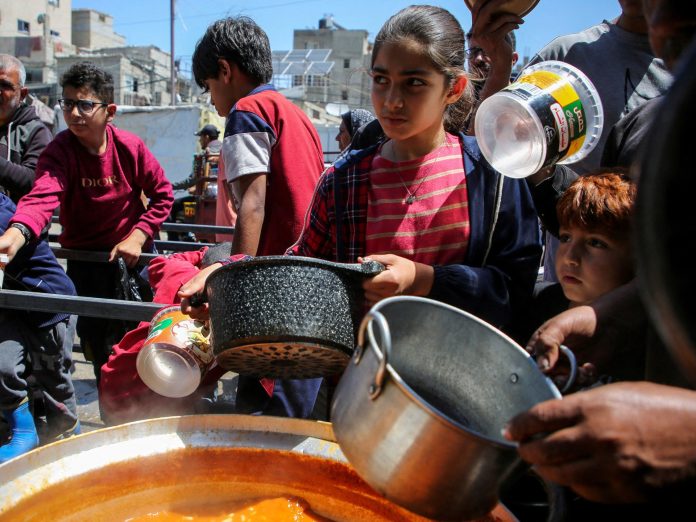
WHO chief Tedros Adhanom Ghebreyesus told reporters on Wednesday thousands of Palestinian children in Gaza have been diagnosed with malnutrition.

“Despite reports of increased delivery of food, there is currently no evidence that those who need it most are receiving sufficient quantity and quality of food.”

Tedros said 8,000 children under five years old have been diagnosed and treated for acute malnutrition in Gaza.

“However, due to insecurity and lack of access, only two stabilisation centres for severely malnourished patients can operate,” the WHO chief added.

Tedros stated 32 deaths in the besieged Palestinian enclave have been attributed to malnutrition.

United Nations officials have warned of the risk of famine as Israel continues its war on Gaza. In January, the International Court of Justice ordered Israel to “ensure the delivery of basic services and essential humanitarian aid to civilians in Gaza”.

The UN’s top court reasserted that ruling in March, demanding that Israel take “all necessary and effective measures to ensure, without delay… the unhindered provision at scale by all concerned of urgently needed basic services and humanitarian assistance”.

Some of Israel’s closest allies, including the United States, have also called for more aid to enter Gaza and reach people in need.

Last month, Israel seized and shut down the Palestinian side of the Rafah crossing between Gaza and Egypt, which had served as a major gateway for aid and humanitarian workers.

Last month, International Criminal Court prosecutor Karim Khan requested arrest warrants for Israeli Prime Minister Benjamin Netanyahu and Defence Minister Yoav Gallant on charges of alleged war crimes, including using “starvation of civilians as a method of warfare”.

A UN-backed independent commission also accused Israel of inflicting hunger on Palestinians.

“In relation to Israeli military operations and attacks in Gaza, the Commission found that Israeli authorities are responsible for the war crimes of starvation as a method of warfare, murder or wilful killing, intentionally directing attacks against civilians and civilian objects, forcible transfer, sexual violence, torture and inhuman or cruel treatment, arbitrary detention and outrages upon personal dignity,” the panel said in a report on Wednesday.

Israeli attacks have killed at least 270 aid workers in Gaza, including seven World Central Kitchen employees in April – an incident that sparked global outrage.

Several killed, injured in Russian missile attack on Ukraine’s Kryvyi Rih

Russia Ukraine War
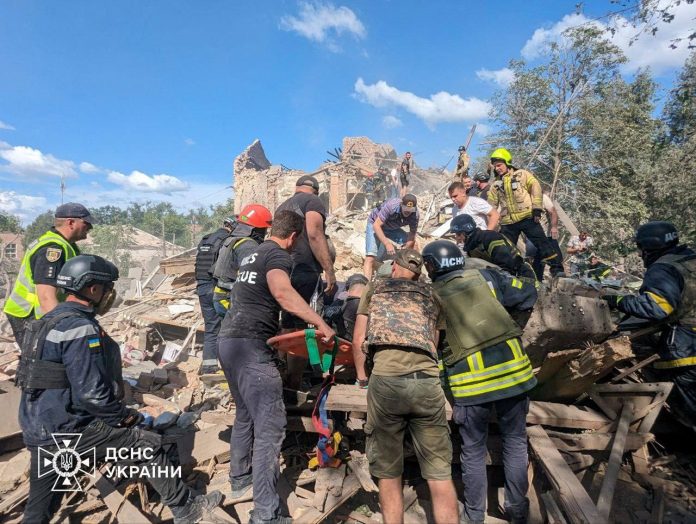
Rescuers work at a site of a Russian missile strike, amid Russia's attack on Ukraine, in Kryvyi Rih, Ukraine in this handout image released on June 12, 2024.

Nine people have been killed and 29 injured, including five children, after a Russian ballistic missile struck an apartment building in Kryvyi Rih. Klymenko confirmed the toll on Wednesday evening after recovery work ended at the site.

Photos shared by the emergency services showed rescue teams clambering over piles of rubble and timber to help the injured and the dead.

“Every day and every hour, Russian terror proves that Ukraine, together with its partners, should strengthen air defences,” Ukrainian President Volodymyr Zelensky said after the attack.

Kryvyi Rih, in southern Ukraine, is Zelensky’s hometown.

He posted video footage from the scene of the attack showing rescue workers looking for survivors in the ruins and renewed his appeal for Ukraine’s allies to step up deliveries of sophisticated air defence systems to ward off Russian air attacks.

The United States has agreed to send another Patriot missile system, two US officials said late on Tuesday in Washington. Assistance to Ukraine is a key issue at the annual Group of Seven (G7) summit, which will start in Italy on Thursday.

“Modern air defence systems can provide maximum protection for people, our cities and our positions. And we need them as much as possible,” Zelensky added.

About 635,000 people lived in Kryvyi Rih before Russia launched its full-scale invasion of Ukraine in February 2022.

The city has come under regular attack during the conflict.

It lies in the southern industrial Dnipropetrovsk region where officials said three people, including a 13-year-old boy, were injured in a Russian drone attack on Wednesday.

NATO says Ukraine must ‘prevail’ to join military alliance

NATO Ukraine

“I expect that allies will actually make important announcements between now and the summit and also at the summit for more military equipment … which is urgently needed to ensure that Ukraine prevails as a sovereign independent nation,” Stoltenberg told reporters during a meeting of defense ministers in Brussels.

“And without that, of course, there is no membership issue to be discussed. We need to ensure that Ukraine prevails – that’s an absolute minimum for Ukraine to become a member of the alliance.”

Ukraine formally applied to join the US-led alliance in September 2022, citing its ongoing armed conflict with Russia. Despite Kiev’s requests for an expedient path to membership, the alliance has so far refused to provide Ukraine with a timetable or a roadmap for accession. The allies have further ruled out admitting Ukraine until the conflict with Russia is resolved.

Ukrainian officials, nevertheless, have continued their push for concrete steps towards accession.

“We also expect specific decisions regarding Ukraine’s membership in NATO, in a package with other guarantees of continuity of military aid and increased interoperability,” Olga Stefanishina, Ukraine’s deputy prime minister responsible for Euro-Atlantic integration, told Politico magazine this month.

The White House, however, said that Ukraine would not become a member of the alliance during the upcoming summit in Washington. “We do not anticipate that there’ll be an invitation for Ukraine to join NATO, but we think there will be a substantial show of support for Ukraine as it works to win its war,” US Assistant Secretary for European and Eurasian Affairs James O’Brien stated in May.

Since 2023, Ukraine has signed bilateral security pacts with several NATO members, including the UK, France and Germany. These agreements do not have the same power as Article 5 of the NATO Charter, however, which stipulates that an attack against one member must be treated as an attack against the alliance as a whole.

Russia has cited Ukraine’s aspirations to join NATO and the alliance’s continued expansion eastward as one of the root causes of the current conflict. Moscow views NATO as a threat to its security and has insisted that Ukraine must become a neutral country with limited armed forces.

UN accuses Israel and Hamas of war crimes

Gaza War

Twin reports on the actions of Israel and Palestinian groups, released on Wednesday by the independent Commission of Inquiry (COI), constitute the UN’s first in-depth investigation into the events since October 7. Both sides stand accused of indiscriminate killings and sexual violence.

The use of the term “crimes against humanity”, as in the report against Israel, is usually reserved for the most serious international crimes knowingly committed as part of a widespread or systematic attack against civilians.

The findings, based on interviews with victims and witnesses, submissions, satellite imagery, medical reports and verified open-source information, were swiftly condemned by Israel, extending the antagonism between the Israeli government and international organisations.

The commission, set up by the UN Human Rights Council in 2021, will present the reports to the council next week. They cover the period from the attack on southern Israel by Palestinian groups on October 7 to the end of 2023.

The report on Israel’s actions says it committed acts including forced starvation, murder or wilful killing, collective punishment and intentional attacks on civilians. It takes note of “a widespread or systematic attack directed against the civilian population in Gaza” by the Israeli military.

“The immense numbers of civilian casualties in Gaza and widespread destruction of civilian objects and infrastructure were the inevitable result of a strategy undertaken with intent to cause maximum damage, disregarding the principles of distinction, proportionality and adequate precautions,” a COI statement says.

“The crimes against humanity of extermination; murder; gender persecution targeting Palestinian men and boys; forcible transfer; and torture and inhuman and cruel treatment were committed,” it reads.

The frequency, prevalence and severity of sexual and gender-based crimes against Palestinians by Israeli security forces during the period amounted to signs that some forms of such violence “are part of ISF operating procedures”, it adds.

More than 37,000 Palestinians have been killed in the war in Gaza and about 85,000 others injured, according to data provided by the Ministry of Health in the enclave.

Israel launched its war in Gaza after the October 7 attack, in which Palestinian groups killed about 1,200 people and took some 250 others to Gaza as captives. Israel has announced 116 captives remain in Gaza, of which 41 are reportedly dead.

The report on the actions of Palestinian groups says the military wings of Hamas and other armed Palestinian groups performed deliberate killings and mistreatment of civilians, hostage-taking, and sexual and gender-based violence during the attack. Civilians and members of the Israeli security forces were victims, it notes.

“These actions constitute war crimes and violations and abuses of [international humanitarian and human rights law],” the report says.

“Women were subjected to gender-based violence during the course of their execution or abduction,” it states. However, it adds that reports of rape could not be independently verified. Hamas has repeatedly denied allegations its fighters committed acts of sexual violence during the attack.

The COI says it was “particularly egregious that children were targeted for abduction”.

The report also adds that Israeli authorities “failed to protect civilians in southern Israel on almost every front”.

“Israel must immediately stop its military operations and attacks in Gaza,” COI chair Navi Pillay stated.

“Hamas and Palestinian armed groups must immediately cease rocket attacks and release all hostages. The taking of hostages constitutes a war crime.”

“It is imperative that all those who have committed crimes be held accountable,” he added.

Israel, which refused to cooperate with the team of experts, was swift to condemn the report. Rejecting the findings, it accused the COI of “systematic anti-Israeli discrimination”.

“The CoI has once again proven that its actions are all in the service of a narrow-led political agenda against Israel. Today’s reports confirm what we have repeatedly said: the Pillay Commission will never do justice to the Israeli victims of Palestinian terrorism,” stated Permanent Representative of Israel to the UN Meirav Eilon Shahar.

Israel has consistently accused international organisations, including the UN, of anti-Israel bias and anti-Semitism, with the claims increasing during its war in Gaza.

It reacted with fury last month as the chief prosecutor of the International Criminal Court (ICC) applied for arrest warrants against top Israeli and Hamas leaders, alleging war crimes.

US announces 300 new sanctions against Russia

Kremlin

The announcement comes as President Biden is set to meet with Ukrainian President Volodymyr Zelensky at a leader’s summit of the Group of Seven (G7) nations this week. The global grouping has been at the forefront of working to financially choke off Russian President Vladimir Putin’s ability to wage war.

“We are increasing the risk for financial institutions dealing with Russia’s war economy and eliminating paths for evasion, and diminishing Russia’s ability to benefit from access to foreign technology, equipment, software, and IT services,” Treasury Secretary Janet Yellen said in a statement.

“Every day, Russia continues to mortgage its future to sustain its unjust war of choice against Ukraine.”

Still, it’s unclear the impact the sanctions will have on harming Russia’s capability to wage war.

Independent analyses of Russia’s wartime economy have found that President Vladimir Putin has managed to implement deft policies to circumvent the punishment of sanctions.

High revenue from continued, and some illicit, oil sales is a major financial stream. Putin’s focus on domestic production and trade with countries like China, and others that have not joined sanctions, are key avenues for Russia to circumvent sanctions on certain blocked materials.

The Treasury Department and State Department announced Wednesday about 300 sanctions were issued on individuals and entities whose products and services enable Russia to sustain its war effort and evade sanctions, according to a statement from Treasury.

The sanctions target individuals and entities in Russia and across the world, including in Asia, the Middle East, Europe, Africa, Central Asia and the Caribbean.

The actions taken Wednesday also include new guidelines for foreign financial institutions, warning them of the risk of being sanctioned for transacting with Russia’s war economy. The Treasury identified foreign branches of Russian banks as sanctioned — citing branches in China, India and Kyrgyzstan.

The Treasury Department is also taking steps to impede the Russian government’s ability to employ IT consultancy services and design services, with these restrictions taking effect in September. The measures are meant to target the Russian government specifically, and not individuals, the agency added in its statement.

“Despite the new prohibitions, OFAC [Office of Foreign Assets Control] continues to maintain authorizations for certain telecommunication and internet-related transactions, as well as humanitarian transactions,” the Treasury announced in a statement.

Further sanctions target Russia’s pursuit of liquified natural gas exports. The sanctions also seek to disrupt Russia’s efforts to circumvent sanctions, by designating 90 individuals and entities across the world that are identified as part of the supply chains fueling the Russian military. The individuals and entities are identified as being located in Russia, Belarus, the British Virgin Islands, Bulgaria, Kazakhstan, Kyrgyzstan, the People’s Republic of China, Serbia, South Africa, Turkey and the United Arab Emirates.

Washington has sanctioned more than 4,000 Russian individuals and companies since February 2022, aiming to harm the country’s military efforts against Kiev. The move by the US comes before the G7 summit in Italy, where Washington had hoped to announce progress on the confiscation of frozen Russian sovereign assets. However, the US and its EU allies have reportedly been unable to agree on the next step.

Moscow “will not leave the aggressive actions of the US unanswered”, Russian Foreign Ministry spokeswoman Maria Zakharova stated in response to Washington’s announcement.