Wednesday, January 14, 2026
Home Blog Page 875

Iran calls on Muslim states to use all available tools to stop Gaza war

Gaza War

Bagheri had a telephone conversation with the Foreign Minister of the United Arab Emirates (UAE), Sheikh Abdullah bin Zayed Al Nahyan, to discuss issues of mutual interests and the latest developments in Gaza.

The Iranian interim foreign minister congratulated the UAE government and nation on Eid al-Adha.

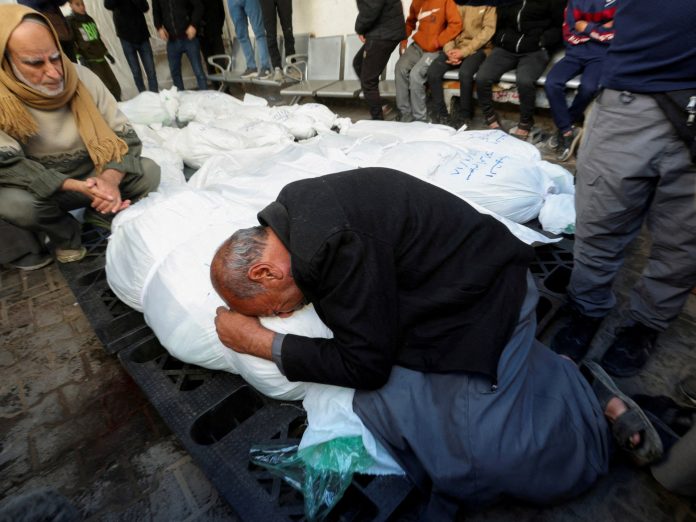
He also touched on the occupying Israeli regime’s savage crimes against the people in Gaza and other parts of Palestine, emphasizing that Muslim states should use all available means to put an immediate end to the Zionist regime’s genocide in Gaza and help the oppressed people in the region.

Meanwhile, the UAE foreign minister expressed his felicitations to the Iranian people and government on Eid al-Adha, and once again offered his condolences on the martyrdom of the late Iranian President Ebrahim Raisi and Foreign Minister Hossein Amirabdollahian.

Referring to a recent meeting in Jordan on Palestine, Al Nahyan underlined the significance of delivering humanitarian aid to the Gaza people and taking effective measures to stop the Zionist regime’s raids.

“The UAE is doing its best to stop the war and send humanitarian aid to the people in Gaza,” he noted, calling the move “our humanitarian task.”

Iran signs contracts worth $2bn to develop oil industry

Iran Oil Gas

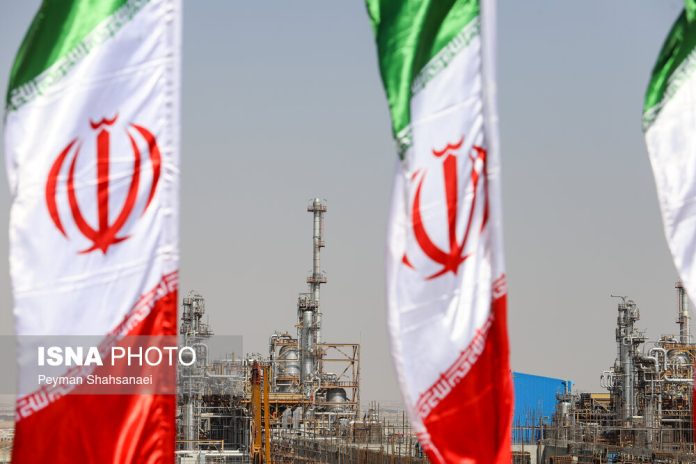
The head of the National Iranian Oil Company (NIOC) Mohsen Khojasteh Mehr signed the contracts on Sunday for the development of Changuleh and Band-e Karkheh oil fields in Iran’s west and southwest to hit the production target of 60,000 and 18,000 barrels of oil per day respectively.

Khojasteh Mehr said during the past 2 ½ years since the late Iranian President Ebrahim Raisi took office, the outgoing administration has signed 22.5 billion dollars’ worth of contracts, 88 percent of which were for oil fields.

He compared the figure to the contracts in the previous administrations which stood at 13 billion dollars for a four-year complete presidential term.

Iran’s Oil Minister Javad Owji also addressed the ceremony, saying the current administration has about 300 oil projects on the agenda, 153 of which have become operational.

He also echoed the late president’s view that the officials rely on indigenous expertise for major projects.

President Raisi and seven of his companions died in a helicopter crash on May 19. Iranians will go to the polls on June 28 to elect a successor.

UN officials warn ‘miscalculation’ could lead to wider Hezbollah-Israel conflict

Hezbollah

The United Nations special coordinator for Lebanon, Jeanine Hennis-Plasschaert, and the head of UN peacekeeping forces in Lebanon, Aroldo Lazaro, said they were “deeply concerned” about the recent escalation along Lebanon’s border.

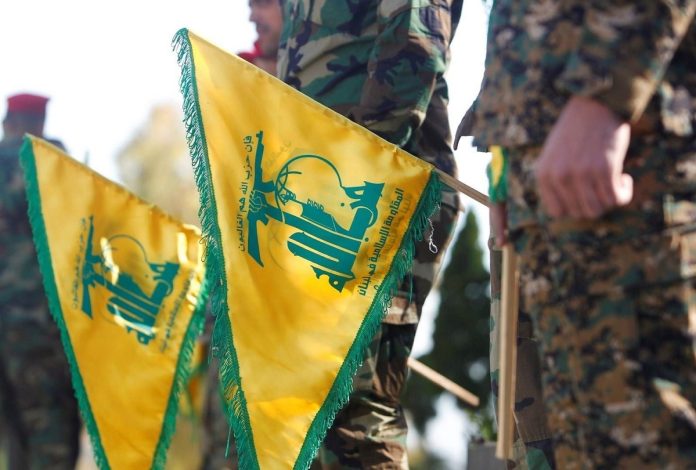
Hezbollah last week launched the largest volleys of rockets and drones yet in the eight months it has been exchanging fire with the Israeli military, in parallel with the Gaza war.

“The danger of miscalculation leading to a sudden and wider conflict is very real,” the two officials announced in a written statement on Saturday.

The United States and France are working on a negotiated settlement to the hostilities along Lebanon’s southern border.

Hezbollah warned the Israeli regime of a crushing and decisive response in case of expanding the scope of its war on Lebanese soil, stressing it will not halt fire unless Israel’s military offensive on Gaza stops.

The Israeli regime has repeatedly attacked southern Lebanon since October 7, 2023, when it launched a ferocious war on the besieged Gaza Strip that has so far killed about 37,300 Palestinians, most of them women and children.

In retaliation, Hezbollah has launched near-daily rocket attacks on Israeli positions in support of Palestinians in Gaza.

In its biggest attack since October 8, Hezbollah fired on Wednesday around 30 drones and 150 rockets at Israel in reprisal for the recent killing of Sami Abdallah.

Hezbollah has already fought off two Israeli wars against Lebanon in 2000 and 2006. The resistance forced the regime to retreat in both conflicts.

Over 50k children in Gaza require treatment for acute malnutrition: UN

Gaza War

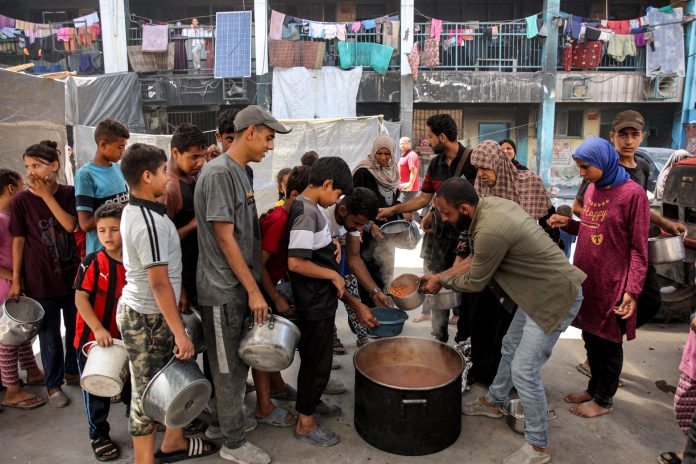
In a statement, the agency said that “with continued restrictions to humanitarian access, people in Gaza continue to face desperate levels of hunger.”

“Over 50,000 children require treatment for acute malnutrition,” it added.

“UNRWA teams work tirelessly to reach families with aid but the situation is catastrophic.”

Nearly 37,300 Palestinians have been killed in Gaza by the Israeli forces since October last year, most of them women and children, and almost 85,200 others injured, according to local health authorities.

More than eight months into the Israeli onslaught, vast tracts of Gaza lay in ruins amid a crippling blockade of food, clean water, and medicine.

Israel is accused of genocide at the International Court of Justice, whose latest ruling ordered Tel Aviv to immediately halt its operation in Rafah, where more than 1 million Palestinians had sought refuge from the war before it was invaded on May 6.

Israel’s hitting of Gaza schools ‘eroding foundation for societal growth’

Gaza War

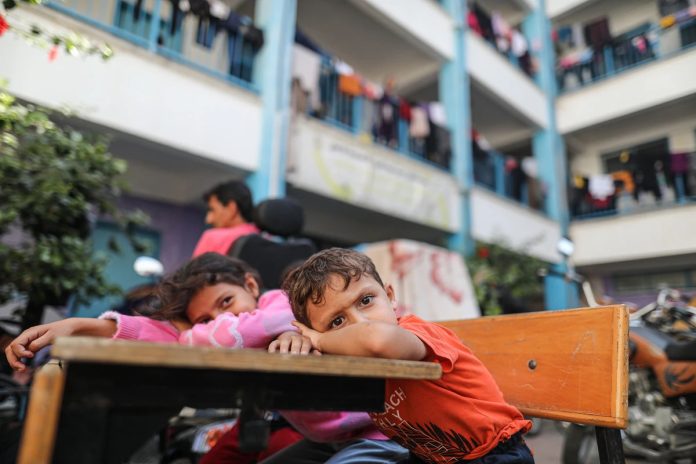
Based on satellite imagery collected in May, the new Education Cluster assessment highlights a “continuous spike in the direct targeting of schools” in the besieged and bombarded territory.

Of the school buildings used as shelters for displaced people in Gaza, 69 percent have been directly hit or damaged in attacks and more than 96 percent of the schools directly attacked – 296 in total – were located in areas subject to Israeli military evacuation orders, it added.

Israeli attacks on educational institutes in Gaza have not only “disrupted immediate educational activities but also eroded the foundation for sustained societal growth and development”, Talal al-Hathal, director of the Al Fakhoura Programme at Education Above All Foundation in Qatar, told Al Jazeera.

“Targeting critical educational infrastructure dismantles hope for many Palestinians in Gaza where education is an important and critical tool for survivability and equality, contributing to better outcomes for Palestinians in their future life,” al-Hathal said.

“Education serves as a critical tool for survival, empowerment, and long-term development in the region, offering a pathway to a more stable and prosperous future.”

“By targeting educational facilities, the aggressors strip away the prospects of enlightenment, opportunity and progress, deepening the cycle of despair and deprivation in the region,” al-Hathal added.

In April, the UN children’s agency UNICEF said eight out of 10 schools in Gaza are damaged or destroyed with an estimated 620,000 students out of school. Nearly half of Gaza’s population is under 18, and its education system was already struggling after several wars and escalations since 2008.

“To be able to learn, you need to be in a safe space. Most kids in Gaza at the moment have brains that are functioning under trauma,” said child psychiatrist Audrey McMahon of Doctors Without Borders (Medecins Sans Frontieres, or MSF). Younger children could develop lifelong cognitive disabilities from malnutrition, while teenagers are likely to feel anger at the injustice they have suffered, she said.

“The challenges they will have to face are immense and will take a long time to heal.”

Al-Hathal called the targeting of educational institutes across Gaza “shameful as we consider the global education crisis where we see that more than 250 million children are out of school globally”.

In addition to the destruction of the buildings, students and teachers have also been killed in the attacks that have ravaged educational infrastructure and caused mental trauma to thousands of beleaguered students.

“The war will undoubtedly leave educational institutions, access to critical infrastructure, and the regularity of the education process in Gaza in a worse state than before the war,” al-Hathal continued.

“With almost 400 school buildings in Gaza sustaining damage, the war has exacerbated the plight of the educational sector. This damage is compounded by the internal displacement with these schools now serving as shelters and hosting nearly four times their intended capacity, further burdening the already strained educational infrastructure.”

It is not just schools that have borne the brunt of the Israeli onslaught. Centres of higher education, including universities, have been completely paralysed.

Israa University, located in the south of Gaza city, was demolished by Israeli forces, as evident from a video released by Israeli media in January. The university authorities said Israel occupied and used the campus as a military base and detention facility for months before destroying it.

“Community partnerships, mental health support, technology assistance and education advocacy are a number of initiatives that can help students and teachers in Gaza overcome the current challenges,” al-Hathal stated.

Israel says 8 soldiers killed in Gaza ambush; deadliest day in months

Israel Army

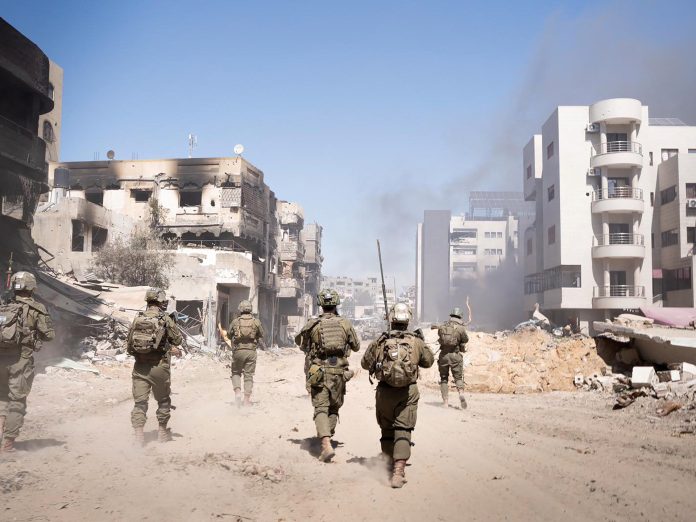
The attacks on Saturday marked one of the deadliest days for Israeli soldiers in Gaza in months as its ground invasion of the southern region continues to ramp up.

Qassam Brigades, Hamas’s armed wing, said in a statement its soldiers “carried out a complex ambush against enemy vehicles” in the Saudi neighbourhood of Tal as-Sultan district, western Rafah city.

The armed group added it fired Yassin-105 RPGs at a D9 military bulldozer, killing and wounding an unidentified number of Israeli soldiers. A “rescue force” vehicle that later arrived was also attacked, “resulting in its destruction and the death of all its occupants”.

Israel’s army announced in a statement the eight soldiers “fell during operational activity in southern Gaza”, without elaborating. Daniel Hagari, Israeli’s military spokesperson, said an investigation will be launched into how exactly the attack occurred.

“We’re working to disarm all the fighters in order to prevent Hamas from targeting civilians again like on October 7. Today, we received another reminder of the high price we are paying because of this war, and we have soldiers ready to sacrifice their lives in order to defend Israel,” Hagari stated in a televised statement.

At least 307 Israeli troops have been killed and thousands wounded since October 27 when the ground invasion of Gaza was launched. At least 37,296 Palestinians – mostly women, children, and elderly – have died since the war began on October 7, according to Gaza’s health ministry.

Saturday’s casualties will likely fuel calls for a ceasefire and heighten Israeli public anger. In January, 21 Israeli troops were killed in a single attack by Palestinian fighters in central Gaza.

Despite international condemnation and censure, Israeli forces continue to push into and surround Rafah. Hundreds of thousands of desperate civilians without food, water, and medicine remain trapped in the city.

Air, sea and artillery attacks on the Tal as-Sultan area intensified after the deadly Hamas ambush.

Despite growing international pressure for a ceasefire, an agreement to halt the fighting still appears distant.

Since a weeklong truce in November that freed more than 100 Israelis, repeated attempts to arrange a ceasefire have failed with Hamas insisting on a permanent end to the war and full Israeli withdrawal from Gaza. Netanyahu refuses to end the invasion before Hamas is “eradicated”.

More than 100 captives are believed to remain in Gaza, though many are believed to be dead. The armed wing of Palestinian Islamic Jihad, al-Quds Brigades, said on Saturday Israel could only regain its people if it ends the war and pulls out troops from the besieged enclave.

US imposes sanction on Israeli group for attacking Gaza aid convoys

Gaza War

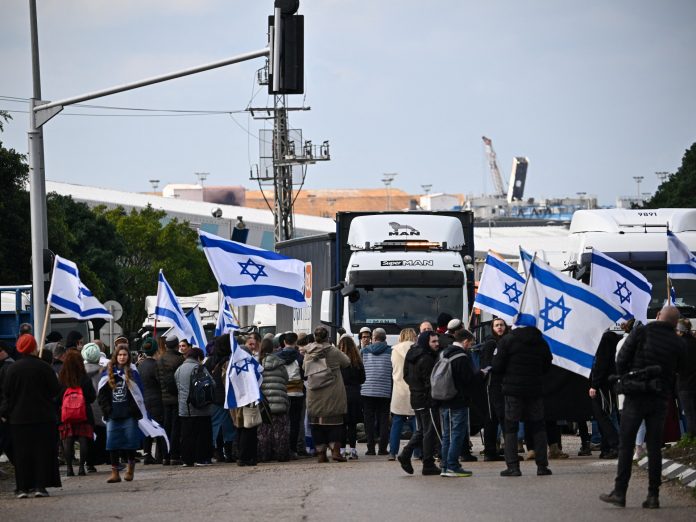
The administration of President Joe Biden on Friday targeted Tzav 9, a group whose stated aim is to prevent any assistance from entering Gaza. It accused the group of looting and setting fire to aid trucks.

“The provision of humanitarian assistance is vital to preventing the humanitarian crisis in Gaza from worsening and to mitigating the risk of famine,” the Department of State said in a statement.

“The government of Israel has a responsibility to ensure the safety and security of humanitarian convoys transiting Israel and the West Bank en route to Gaza. We will not tolerate acts of sabotage and violence targeting this essential humanitarian assistance.”

The sanctions were announced a day after Israeli media outlets cited Israel Police Commissioner Kobi Shabtai as saying far-right National Security Minister Itamar Ben-Gvir pushed to prevent law enforcement from protecting aid convoys to Gaza.

For months, right-wing Israelis have been protesting and blocking roads to prevent aid shipments from reaching Gaza, which is under a suffocating Israeli blockade. The efforts have further strained the flow of desperately needed aid to the territory.

In recent weeks, the protesters have stepped up their attacks on convoys, especially as they go through the occupied West Bank. Last month, they set two aid trucks alight in the Hebron Hills area, an attack the US State Department blamed on Tzav 9.

The sanctions block the group’s assets in the US and largely prohibit American citizens from engaging in transactions with them. They were imposed under an executive order (EO) issued by Biden that set up a legal framework for US penalties against individuals and entities “undermining peace, security and stability” in the occupied West Bank.

Last week, the Biden administration invoked the same order to sanction the Lion’s Den, a Palestinian armed group.

Still, Washington has resisted calls to penalise Israeli officials responsible for abuses against Palestinians in the West Bank, including Ben-Gvir and ultranationalist Finance Minister Bezalel Smotrich.

This month, US Senator Chris Van Hollen urged the Biden administration to use the executive order to target Smotrich.

“In my view, Smotrich should be subject to sanctions under this EO,” Van Hollen stated.

The finance minister has withheld taxes owed to the Palestinian Authority, and in March, he declared 800 hectares (1,977 acres) in the West Bank to be Israeli state land.

“You’ve got this person whose stated goal is for essentially Israel to take over the entire West Bank,” Van Hollen told the Center for American Progress, a liberal think tank.

Democracy for the Arab World Now (DAWN), an advocacy organisation that recommended sanctioning Tzav 9, welcomed Friday’s measures and called on Biden to target entities and individuals that help fund and enable the group as well.

“Recent revelations that Israeli Minister Itamar Ben-Gvir ordered police to stand down and allow Tzav 9 to block humanitarian aid convoys show how this despicable strategy of starvation is coordinated from young settler activists all the way up to the highest levels of the Israeli government,” Michael Schaeffer Omer-Man, director of research for Israel-Palestine at DAWN, said in a statement.

“The US should not continue to ignore Israeli government involvement in these crimes and should apply sanctions to Ben-Gvir next.”

Rights advocates also called on Washington to pressure Israel to lift its siege on Gaza.

US Secretary of State Antony Blinken said this week that Israel has taken “important steps” in recent months to remove obstacles to aid deliveries in Gaza, but he acknowledged it “can and must do more”.

“It is crucial to speed up the inspection of trucks and reduce backlogs, to provide greater clarity on – and shorten the list of – prohibited goods, to increase visas for aid workers and to process them more quickly,” he said at a Gaza aid conference in Jordan on Tuesday.

Blinken also urged “clearer, more effective channels” to protect humanitarian workers from military operations.

EU member states disagree on new sanctions against Russia: Report

Russian Central Bank

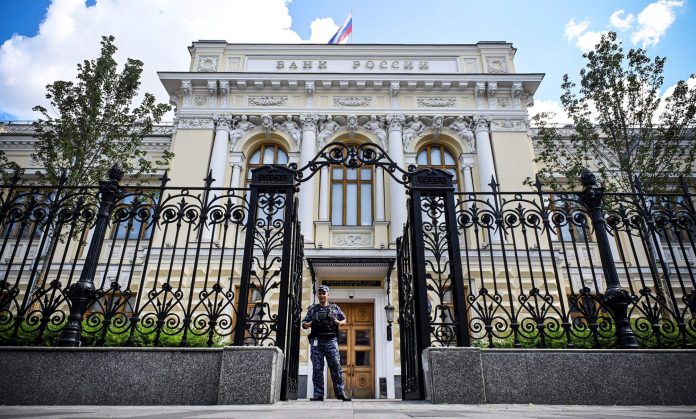
According to Reuters, EU members were scheduled to discuss the sanctions on Friday evening, but the issue was “withdrawn from the meeting agenda at the last moment”.

The potential restrictions would have included a ban on the transit of Russian liquefied natural gas and a plan to crack down on the evasion of sanctions by holding EU operators liable for violations by subsidiaries and partners in third countries.

According to Deutsche Presse-Agentur, Berlin fears that German companies could be hit by proposed regulations and wants to limit the responsibility of subsidiaries to certain goods or remove it altogether.

EU members reportedly hoped to approve the sanctions before the Ukraine peace summit in Switzerland, which is planned for June 15-16. The Alpine nation is expected to host delegates from around 90 countries. However, Russia, as well as China and Saudi Arabia, will not be attending, as Moscow has argued that the West would use the event to “dictate an ultimatum”.

The EU has blacklisted more than 2,100 entities and individuals in response to Russia’s ongoing military operation in Ukraine. The US imposed a new round of restrictions this week, targeting the Moscow Stock Exchange (MOEX) and major banks, as well as the country’s IT sector.

The restrictions prompted MOEX to suspend trading in US dollars and euros on Thursday. Kremlin spokesman Dmitry Peskov stated, however, that Russia’s Central Bank was fully “capable of ensuring the stability of all markets”.

Iran says Sweden freed Hamid Nouri

Hamid Nouri

Kazem Gharibabadi, who serves as head of the Iranian Judiciary’s High Council for Human Rights, announced Nouri’s release in a post on his X account on Saturday.

“I am delighted to inform the esteemed nation of Iran that Mr. Hamid Nouri, who has been under detention in Sweden since 2019, has been released and will be returning to our country within a few hours,” Gharibabadi wrote.

He also attributed this success to the efforts of his colleagues in the Judiciary, the Ministry of Intelligence, and the Ministry of Foreign Affairs, particularly late Foreign Minister Hossein Amir-Abdollahian.

Nouri was arrested upon arrival at Stockholm Airport in November 2019 and was immediately imprisoned. He has been illegally jailed for three and a half years in solitary confinement in Sweden.

He was put on trial on unfounded allegations staged against him by elements representing the Mujahedin-e-Khalq Organization (MKO) terrorist group that has openly boasted about carrying out terrorist operations against Iranian officials and civilians perceived to be supporters of the government.

A Swedish court sentenced Nouri to life imprisonment in 2022. The court, which was described by Iran as illegitimate in the first place, convicted Nouri of “war crimes and crimes against humanity” entirely based on claims made by MKO terrorists living in exile across Europe.

Sweden’s Appeal Court then upheld the verdict in December 2023.

Nouri himself has vehemently denied the charges brought against him in the case while calling them fabricated.

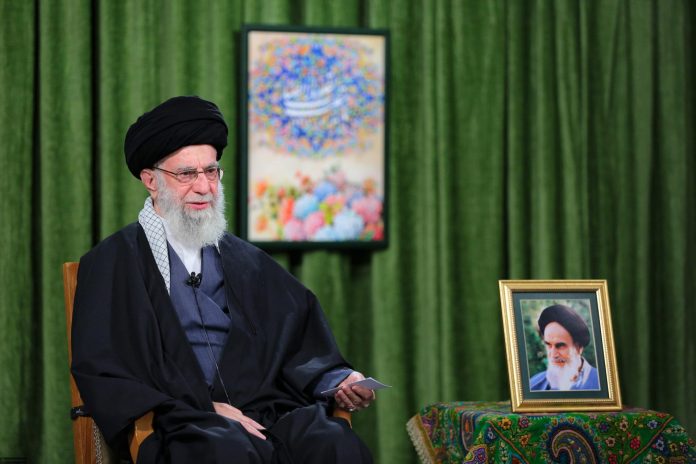
Iran’s Leader calls for constant renunciation of US, Israel

Ayatollah Khamenei

“This renunciation of the Zionist regime and its supporters, in particular the government of the United States of America, must be demonstrated in the words and actions of nations and governments, and it must impede the actions of the murderers,” the Leader stated in a message to the 2024 Hajj pilgrims.

The following is the full text of the message of Ayatollah Khamenei:

In the Name of God, the Compassionate, the Merciful

Praise be to Allah, Lord of the Worlds, and peace and blessings be upon the best of creation, our Master Muhammad al-Mustafa, and upon his Pure Progeny, upon his chosen Companions and upon those who follow them in righteousness until the Day of Judgment.

The appealing Abrahamic call, which by God’s command summons all human beings in all eras to the Kaaba during the time of Hajj, has once again this year, attracted the hearts of a number of Muslims from around the world to this center of tawhid and unity.

It has created this magnificent, diverse gathering of a multitude of people, revealing the human spectrum and spiritual power of Islam both to itself and to others.

When one contemplates this magnificent gathering and the complex Hajj rituals, they are a source of reassurance and increase the confidence for the Muslims, while being intimidating and a cause of trepidation for enemies and for ill-wishers.

It should not come as a surprise if the enemies and ill-wishers of the Islamic Ummah attempt to ruin and sow doubts about both of these aspects of the Hajj – whether it is by accentuating denominational and political differences, or by trying to diminish the importance of its sacred and spiritual aspects.

The Quran introduces Hajj as a manifestation of worship, dhikr (remembering God), humbleness and the equal dignity of all human beings. (It introduces Hajj as) a manifestation of a human being’s organized material and spiritual life, a manifestation of blessings and guidance, and a manifestation of moral peace and harmony between (religious) brothers in practice. And (the Quran introduces Hajj as) a manifestation of repugnance and the establishment of a powerful front against the enemies.

Reflection on the verses related to Hajj and contemplation on the acts and rituals of this unparalleled obligation, reveal these matters and similar secrets and mysteries as these that exist within the intricate arrangement that constitutes Hajj.

Brothers and sisters, as pilgrims undertaking Hajj, you are currently in a place where you can practice these truths and luminous teachings. Bring your thoughts and actions closer and closer to these, and bring back to your homes a reformed identity infused with these lofty concepts. This is the valuable, real souvenir of your Hajj journey.

This year, the issue of bara’at (renunciation of the polytheists) is more significant than ever before. The tragedies in Gaza, which are unparalleled in our contemporary history, along with the audacity of the ruthless Zionist regime, which is the embodiment of cruelty and villainy, and of course the declining state of Zionism, leave no room for any consideration or tolerance by any individual, party, government or Muslim denomination.

This year’s renunciation of the polytheists must continue beyond the time and place of Hajj to all Muslim countries and cities worldwide. It must continue beyond just the Hajj pilgrims and be extended to the general populace.

This renunciation of the Zionist regime and its supporters, in particular the government of the United States of America, must be demonstrated in the words and actions of nations and governments, and it must impede the actions of the murderers.

The ironclad resistance of Palestine and the patient, oppressed people of Gaza – whose remarkable patience and resistance have earned them admiration and respect globally – must be fully supported in every way.

I implore God for their complete and swift victory. And for you dear pilgrims, I pray that your Hajj will be accepted. May the prayers of the Remnant of God on earth (Imam Mahdi (may our souls be sacrificed for him)) be with you.

May Allah’s greetings and mercy be upon you.

Seyyed Ali Khamenei

Dhu al-Hijjah 4, 1445

June 11, 2024