Saturday, December 27, 2025
Home Blog Page 874

EU seeking to hit Russia with stronger tariffs: Report

While most EU trade with Russia has been halted over the Ukraine conflict, some imports are still allowed, either because there are no alternative supplies or due to concerns about global market disruptions.

On Thursday, EU trade ministers asked the European Commission to develop a plan to place duties on imports of food, nuclear fuel, and medicines.

The initiative on a broader use of tariffs was put forward by Sweden, EU Trade Commissioner Valdis Dombrovskis told reporters.

“From the European Commission’s side, we will be assessing this and providing member states with options to move forward,” he stated.

Swedish Trade Minister Johan Forssell told FT it was important to cut Russia’s revenues, so that “the income from these tariffs could be spent to help Ukraine to win this war”.

He called for “broad tariffs on all that trade,” but accepted that “it’s sensitive in some areas”.

On Thursday, EU ministers adopted a regulation hiking import tariffs on Russian and Belarusian grain. The “prohibitive” levies, which will take effect on July 1, will apply to cereals, oilseeds and derived products, as well as beet-pulp pellets and dried peas from both nations.

According to FT, the EU set the tariffs so high – at €95 ($100) per ton – that they amount to an effective ban.

Kremlin spokesperson Dmitry Peskov has said previously that imposing tariffs on Russian grain is an example of “unfair competition”. The measure will hit EU consumers, while Moscow will use alternative supply routes, he argued.

Some EU member states have also proposed extending the bloc’s sanctions to include nuclear fuel sold by Moscow.

However, the head of the International Atomic Energy Agency (IAEA) Rafael Grossi has warned there is no quick way to shift away from Russian nuclear fuel, and that severing ties too soon would harm global energy markets.

The EU is aiming to adopt the new round of sanctions before July. Brussels adopted its 13th package of restrictions against Moscow ahead of the second anniversary of the beginning of the Ukraine conflict in February. The measures were mostly aimed at closing loopholes to prevent Russia from circumventing existing restrictions via third countries.

Some high-ranking EU politicians and diplomats have acknowledged that the scope for further sanctions is narrowing.
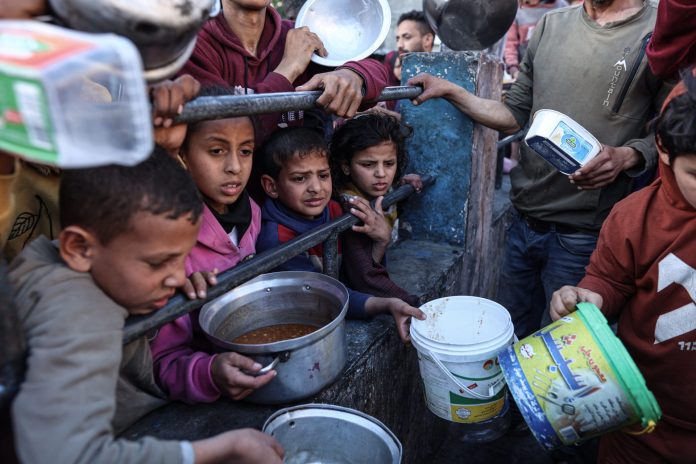

UN food agency warns calls to action for Gaza ‘have predominantly been falling on deaf ears’

Gaza War

Speaking in a virtual news conference, Hollingworth said: “Calls to action (for Gaza) have predominantly been going to deaf ears. But fundamentally what we need of course, is an immediate ceasefire.”

Saying that the “exodus we have seen in past 20 days or so out of Rafah has been a horrific experience for many people,” Hollingworth noted that there is a severe shortage of water, medical supplies, fuel, and food in places people have fled to.

Hollingworth said that the public health situation in these areas are “beyond crisis level,” adding: “The everyday life is terrific and apocalyptic. People sleep to the sounds of bombing, they sleep to the sounds of drones, they sleep to the sounds of war.”

The UN agency for Palestinian refugees (UNRWA) has also warned that the overcrowding and poor sanitation in Gaza’s refugee camps are advancing the spread of infectious diseases.

In a statement released on X, the UNRWA emphasized the urgent need for improved healthcare services. “Our teams continue to provide essential medical care to vulnerable individuals, including children and the elderly,” the agency said.

However, the situation remains critical due to the scarcity of vaccines and medicines, it said, adding the overcrowding and lack of proper sanitation in Gaza’s shelters have contributed significantly to the health crisis.

“Overcrowded shelters and inadequate hygiene practices are fueling the transmission of infectious diseases,” the UNRWA warned.

It called for “safe and unrestricted access” to address the pressing health needs of the refugee population.

Israel has continued its brutal offensive on Gaza following the Oct. 7 Hamas incursion, despite a UN Security Council resolution demanding an immediate cease-fire.

More than 36,000 Palestinians have since been killed in Gaza, the vast majority being women and children, and over 82,000 others injured, according to local health authorities.

Nearly eight months into the Israeli war, vast swathes of Gaza lay in ruins amid a crippling blockade of food, clean water, and medicine.

Israel stands accused of genocide at the International Court of Justice, which in its latest ruling has ordered Tel Aviv to immediately halt its operation in Rafah, where over a million Palestinians had sought refuge from the war before it was invaded on May 6.

The UN humanitarian office and World Health Organization (WHO) has also warned aid is “not getting to people” in Gaza, and as a result “children are starving.”

“They are certainly not getting the amount that they desperately need to prevent a famine,” Jens Laerke, the spokesperson for the UN humanitarian office, stated at a UN briefing in Geneva.

Laerke said: “More military action is not normally helpful for humanitarian action.”

He added that it is “difficult to predict” how it would affect the humanitarian operations as a whole, considering the “very dynamic” situation on the ground with armed forces moving around to different areas.

“We want military action to cease altogether. We want to have a humanitarian pause,” he urged.

“That is the only way we can actually do our jobs properly.”

The UN has recently reported that aid deliveries to Gaza have decreased by 67% since the closure of the Rafah crossing on May 7.

“Our colleagues in the Office for the Coordination of Humanitarian Affairs (OCHA) tell us that widespread Israeli bombardments continue to be reported. Ground incursions and heavy fighting are also affecting northern, central and southern Gaza,” UN spokesperson Stephane Dujarric told reporters at a news conference.

Saying that the “the flow of humanitarian aid into Gaza has dropped by 67% since the seventh of May”, Dujarric attributed this primarily to the closure of the Rafah border crossing.

Dujarric also stated that health and service facilities are shutting down one by one and that displacement due to the attacks is also affecting the distribution of resources.

Noting that only one hospital in Rafah is partially operational, Dujarric added the UN and its partners are trying to do their best under all conditions.

The OCHA has also announced only 14 out of 36 hospitals in the war-torn Gaza Strip are still partially functional, warning about growing environmental risks in the besieged Palestinian territory.

Ukrainian PM: First French forces en route to Kiev

French Army

His statement comes just days after Ukraine’s top commander Aleksandr Syrsky announced that had authorized the presence of the French personnel in the country.

“My sources informed me that the first group of French instructors is already on its way to Ukraine,” Goncharenko, a member of the Ukrainian parliament and a delegate to the Parliamentary Assembly of the Council of Europe, wrote on X (formerly Twitter) on Friday evening.

NATO boots on the ground is a contentious issue inside the US-led alliance, whose members maintain that they are not parties to the conflict between Russia and Ukraine. Moscow, meanwhile, has announced that it views Ukraine’s Western backers as direct participants, stressing that Western-supplied weapons are being used to strike targets on Russian soil.

In February, French President Emmanuel Macron said that he could not rule out the possibility of NATO member states sending troops to Ukraine in the future, although French officials soon clarified that he meant non-combat personnel. Macron later argued that NATO should adopt a policy of “strategic ambiguity” towards Russia. The French leader has been working behind the scenes to forge a coalition of countries willing to dispatch trainers to Kiev, Bloomberg reported on Friday.

Syrsky, who was made Ukraine’s top general in February, said on Monday that he had signed the papers allowing instructors from France to visit Kiev’s training facilities and “familiarize themselves with their infrastructure and personnel,” and had notified French Defense Minister Sebastien Lecornu.

Moscow has warned that any additional military aid to Kiev amounts to serious escalation. Western military personnel are already active in Ukraine and “have been there for a long time,” President Vladimir Putin said on Tuesday.

“They are [foreign] specialists under the guise of mercenaries,” he told the press. He said that the deployment of Western forces to Ukraine would be “another step towards a serious conflict in Europe and a global conflict.”

Zelensky says no peace agreement with Russia now

Volodymyr Zelensky

Zelensky is currently promoting a “peace summit” that Switzerland is organizing on his behalf in mid June. He previously claimed that he insisted on excluding Russia from the event because otherwise it would “hijack” it. There is a legal ban on any talks with Russia in Ukraine as long as President Vladimir Putin remains in power.

During the hour-long interview, which the British daily summarized on Friday, Zelensky reiterated his opposition to signing any treaty with Moscow, stating that Putin “could not be believed” to stick to it. Any pause in hostilities would be used by Russia to “strengthen its muscles on the battlefield,” he predicted.

“[Putin] is not crazy, yes, you understand? He is dangerous. And it’s much more scary,” he said in a mix of English and Ukrainian, according to an excerpt from the interview released by the news outlet.

Russia has rejected the summit in Switzerland as a “scam” meant to deceive neutral nations into supporting Kiev’s “peace formula.” The document is in reality a demand for Russian capitulation that is totally detached from the reality on the ground, according to the Russian Foreign Ministry.

Moscow and Kiev were on the brink of sealing a truce in the early weeks of the conflict, when Türkiye served as a mediator in the talks. Under the preliminary terms, Ukraine would have become a neutral state with a restricted military in exchange for international security guarantees.

The Zelensky government then chose to keep fighting, hoping that Western military assistance would help it prevail over Russia on the battlefield. David Arakhamia, who headed the Ukrainian delegation during negotiations in Istanbul, later acknowledged that then-British Prime Minister Boris Johnson made the Ukrainians reconsider.

This week, the US reportedly lifted its previous ban on using weapons donated to Ukraine to strike targets outside of what Washington and Kiev consider Ukrainian territory. The decision was not formally announced, but was reported in the Western press. The new rules were apparently issued due to Moscow’s advances in the Kharkov Region of Ukraine, and apply to that sector of the front, along with Russia’s Belgorod Region on the border.

Russian Defense Minister Andrey Belousov reported on Friday that Moscow’s troops have pushed the front line in the Kharkov Region back 8-9km. The operation is meant to erode Kiev’s ability to attack Russian territory with shorter-range weapons, such as rocket artillery and drones.

Netanyahu says war will go on after Biden announcement of Gaza ceasefire proposal

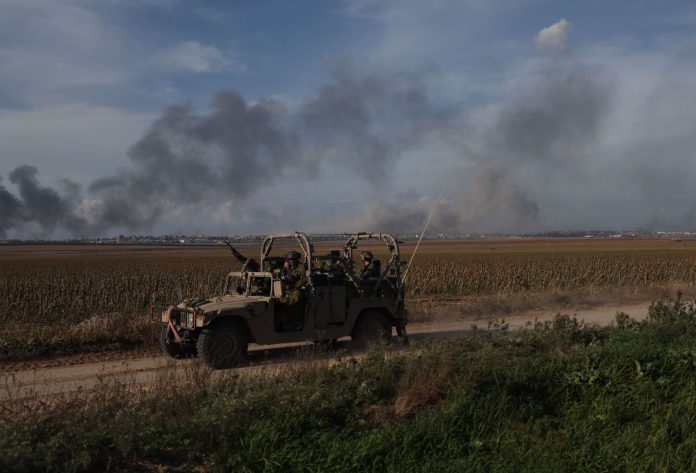
Israeli Army

The statement came on the heels of US President Joe Biden announcing a fresh cease-fire proposal that he said Israel greenlighted, urging Palestinian group Hamas to accept it.

Netanyahu’s office said, “the war will not end until all of its goals are achieved, including the return of all our hostages and the elimination of Hamas’ military and governmental capabilities.”

However it added that Netanyahu had authorized Israel’s negotiating team to “present an outline for achieving this goal,” in reference to the hostages’ release.

“The exact outline proposed by Israel, including the conditional transition from stage to stage, allows Israel to maintain these principles,” the statement concluded.

The proposal, announced by Biden, extends over three phases, the first spanning six weeks and including a full cease-fire, the withdrawal of Israeli forces from populated areas in Gaza, and the exchange of prisoners.

Israel has killed more than 36,000 Palestinians in Gaza since a cross-border attack by Hamas on Oct. 7, 2023 which claimed 1,200 lives and around 250 were taken as hostages. As many as 105 captives were released as part of a brief truce in November in exchange of 240 Palestinian prisoners.

Around 125 people remain held captive, with many of them believed to be dead due to Israeli airstrikes.

Indirect talks between Israel and Hamas, mediated by the US, Qatar and Egypt, have so far failed to agree on a permanent cease-fire.

Hotel fire in Iran’s northern Bandar Anzali city put out

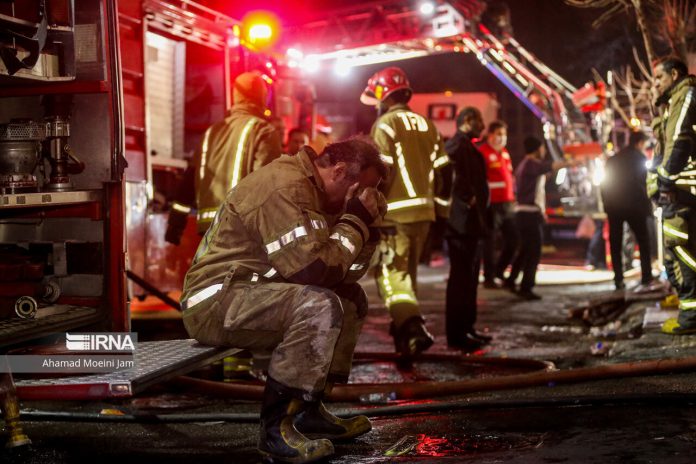
Iran Firefighters

Mehdi Kazemian said the fire in the Pouria Hotel did not leave any casualties however it caused some material damage to the five-star hotel.

The reason behind the incident and the estimated cost of the damage will be announced after investigation, he added.

The Anzali Free Zone is the only free zone in Iran on the Caspian coast and hosts over 11 million domestic and foreign tourists every year, according to official figures.

Iran says reserves right to respond to EU sanctions

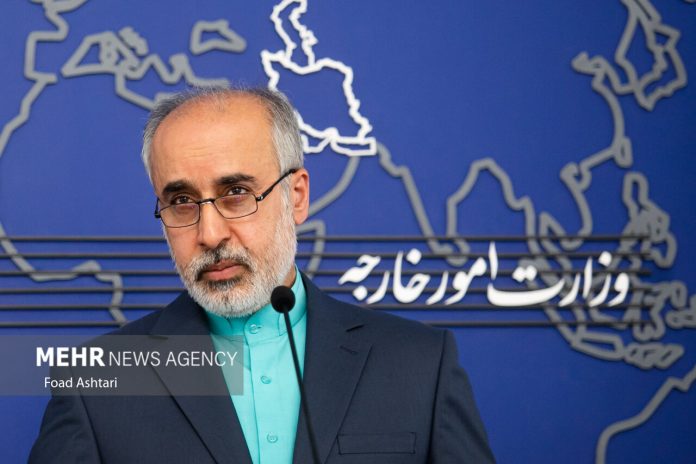
Nasser Kanaani

The EU on Friday levied fresh sanctions on a number of Iranian individuals and entities, accusing them of transferring drones and missiles to Russia and undermining peace and security West Asia.

Kanaani on Saturday shot back, slamming the European Union’s double standards in dealing with Israel’s months-long crimes in the Gaza Strip.

“The European Union, which has been passive and ineffective in dealing with the humanitarian disaster in Gaza and Palestine for the past months and has been criticized by Europe’s public opinion as well as people all over the world, once again instead of focusing on the war crimes of the Zionist regime in Gaza and punishing and banning this criminal regime, has put on its list of sanctions some leading and influential Iranian officials and institutions in the fight against terrorism and ensuring lasting security in the region,” he said.

“It is regrettable that the European Union, by resorting to repeated, absurd and baseless excuses and accusations, ignoring the realities on the ground in West Asia, and continuing its failed and ineffective approach, once again resorted to the outdated and ineffective tool of sanctions against sovereign Iran and preferred the Zionist regime’s and the United States’ satisfaction to the interests of the European Union and nations.”

Kanaani stressed Iran’s principled policies, especially in ensuring regional and international peace and security, and strongly criticized the EU double standards.

“The Islamic Republic of Iran reserves the right to respond to this destructive approach by the European Union,” he added.

The bans targeted six Iranian individuals and three entities, among whom were Iran’s Defense Minister Brigadier General Mohammad Reza Ashtiani and Major General Gholam-Ali Rashid, the commander of Iran’s Khatam al-Anbiya Central Headquarters, the European External Action Service (EEAS) said Friday.

The sanctions prohibit any EU citizen or company doing business with the listed individuals and organizations.

Iran has vehemently denied having supplied drones or missiles, reiterating on numerous occasions that drones supplied to Russia were delivered to Moscow long before the Ukraine war started in February 2022.

Iranian military experts and technicians have in recent years made substantial headways in manufacturing a broad range of indigenous equipment, making the armed forces self-sufficient.

Iranian officials have repeatedly warned that the country will not hesitate to strengthen its military capabilities, which are entirely meant for defense.

Iran’s scientists manufacture Boeing aircraft jet engine blades

Boeing aircraft jet engine blades

As a result, the number of operational Boeing MD aircraft in Iran has increased to 40.

Mani Rezvani, a manager at the knowledge-based Iranian Company, specializing in the manufacture of engines and aviation equipment, told Tasnim News Agency that the very high price of these complex and sensitive aircraft engine parts had posed significant challenges for Iranian airlines in procuring them.

Rezvani added the Boeing MD aircraft is the backbone of Iran’s air transport fleet, which had become inoperative due to US sanctions. However, the MAPNA Aviation Center, through reverse engineering, has started manufacturing the engine blades for these planes.

He added these blades are currently undergoing the necessary tests to obtain certification from the Iranian Civil Aviation Organization, after which mass production of this product will commence.

The manager of this knowledge-based Iranian company stated in the current Iranian month of Khordad (June), the first passenger aircraft engine of the Boeing MD (JT8D 219 engine) will be started using blades manufactured in Iran.

Rezvani said the cost of producing these aircraft engine parts domestically in Iran will be between 7,000 to 8,000 dollars, whereas the price of the foreign-made parts is 22,000 dollars.

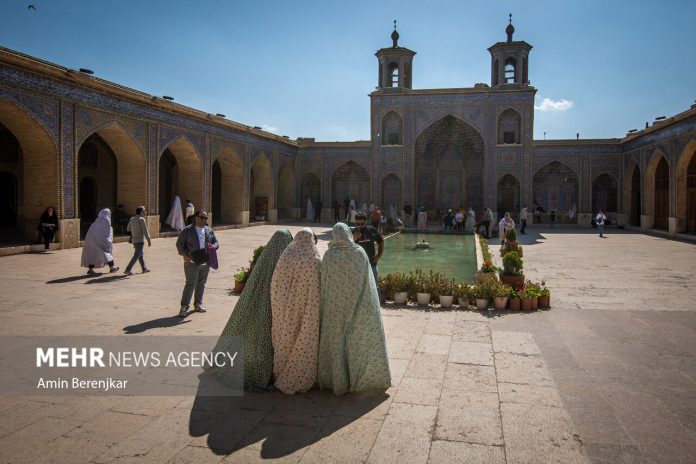
Nasir al-Molk Mosque in Shiraz, a dream of tourists

Watching the mosque with its stained glass, high arches and beautiful tiles is a dream for many tourists infatuated with traditional architecture.

It is located near Shah Cheragh mosque in the southern part of Lotf Ali Khan Zand Street.

The mosque was constructed in 1888 during Qajar Dynasty, although the area is rife with elements that date back to the Zand Dynasty, the Qajarids’ predecessor.

Hamas views Israel’s Gaza ceasefire proposal ‘positively’

Israel Hamas Hostages

“The Islamic Resistance Movement Hamas views positively what was included in US President Joe Biden’s speech today,” the group said in a statement on Saturday.

On Friday, Biden called on Israel and Hamas to accept a three-phase deal which includes the release of hostages in Gaza, the withdrawal of Israeli troops from the enclave, a permanent ceasefire, and an exchange of prisoners.

The proposal Biden outlined in great detail appeared nearly identical to the one Hamas agreed to in early May. The main exception appeared to be no reference to the complete lifting of Israel’s blockade of the Gaza Strip.

US media reports suggested that the US opposed the former agreement Hamas accepted just before the Rafah invasion, but Middle East Eye reported that CIA director Bill Burns, who has led the US negotiating team, reviewed the deal and that the US had backed the agreement.

Biden on Friday put the onus of a deal being reached on Hamas, saying the group “needs to take the deal”.

“The movement affirms its position of readiness to deal positively and constructively with any proposal based on a permanent ceasefire, complete withdrawal from the Gaza Strip, the reconstruction, and the return of the displaced to all their places of residence, and the completion of a serious prisoner exchange deal,” Hamas said.

The group added that it believed Biden’s call for a permanent ceasefire was “the result of the legendary steadfastness of our struggling people and their valiant resistance”.

According to Biden, the first six-week phase of the proposal would include a full ceasefire across Gaza and the withdrawal of all Israeli forces from all population centres.

During the first phase, Hamas would exchange hostages, including women, the elderly and the wounded, for hundreds of Palestinian prisoners. US citizens would also be released as well as the remains of dead hostages.

Palestinians would also be able to return to “all areas of Gaza” Biden promised, and 600 aid trucks would enter the enclave each day.

If Israel and Hamas do move forward with an agreement, mediators will need to work out the logistics of a prisoner swap.

Biden stated to move from phase one to phase two, several details needed to be worked out but promised that the ceasefire would continue to hold as negotiations progress.