Monday, December 29, 2025
Home Blog Page 848

US offers assurances to Israel in the event of full-blown war with Lebanon

Lebanon Israel

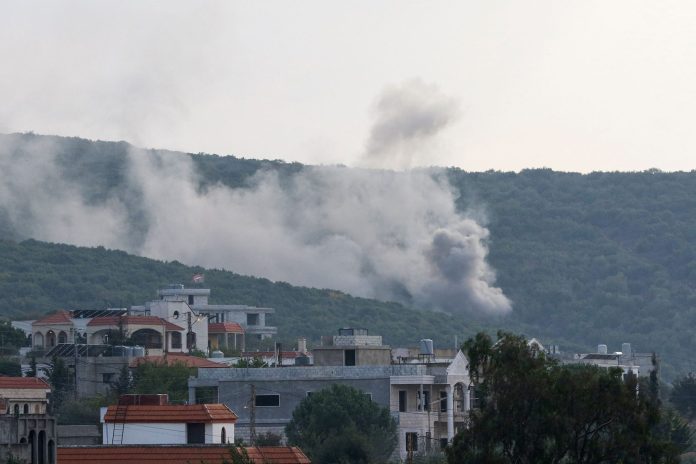
The in-person assurances came as an increase in cross-border attacks in recent weeks between Israel and the Iran-backed group Hezbollah have intensified concerns about the possible outbreak of another full-fledged conflict in the Middle East – and also as Israeli Prime Minister Benjamin Netanyahu has publicly accused the US of withholding weapons and ammunition from Tel Aviv, touching off a tense back-and-forth between Israeli and US officials.

Top Israeli officials including Minister of Strategic Affairs Ron Dermer and national security adviser Tzachi Hanegbi participated in a series of meetings with Biden administration officials like national security adviser Jake Sullivan, Secretary of State Antony Blinken and White House Middle East affairs coordinator Brett McGurk in Washington this week.

They discussed a wide range of topics including the situation on Israel’s northern border, Iran and the ceasefire and hostage negotiations, sources said.

When discussing the issue of “Hezbollah’s provocations”, US officials made clear this week that the Biden administration would offer Israel the security assistance it needs, the senior administration official stated, though the US would not deploy American troops to the ground in such a scenario.

Since Hamas’ attack on Israel on October 7, Hezbollah’s attacks against Israel have continued – and escalated in recent weeks.

Biden administration has repeatedly stated that it does not wish to see yet another war break out on the northern front, urging diplomatic de-escalation. This week, US envoy Amos Hochstein was dispatched to the region to try to help de-escalate the conflict.

Still, with Hezbollah’s attacks across the border into Israel continuing in the absence of a ceasefire in the Israel-Hamas war, US officials are on heightened alert about the eruption of a full-blown conflict in the region. If Hezbollah were to significantly expand the scale of its attacks on Israel, resulting in the deaths of Israelis, US officials expect Israel to respond with full force.

US officials have serious concerns that in the event of a full-blown war between Israel and Hezbollah, the Iran-backed group could overwhelm Israel’s air defenses in the north — including the much-vaunted Iron Dome air defense system. That reality would make the US’ full support of Israel all the more critical.

In this week’s meetings, US and Israeli officials discussed possible “off-ramps” to try to lower the temperature along the so-called Blue Line that separates Lebanon and Israel, the senior administration official stressed. Those talks touched on ways of returning Israelis and Lebanese people who have been displaced from the border back to their homes, they added.
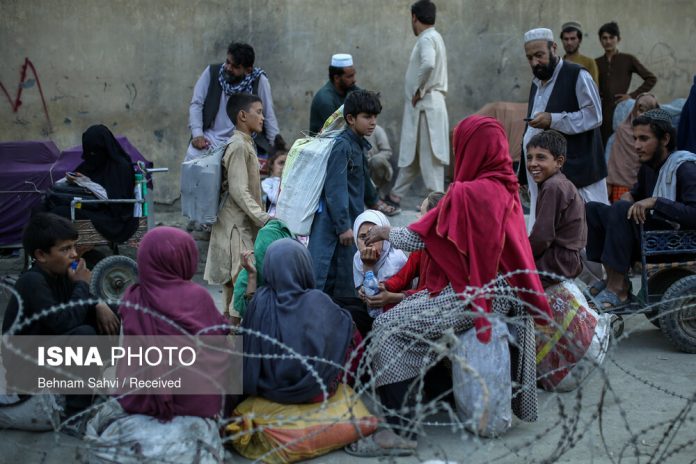

Envoy says Iran hosting over 6mn Afghan refugees

Afghan Refugees in Iran

Iravani made the remarks at a UN Security Council meeting on the situation in Afghanistan and the urgency of providing humanitarian aid to the conflict-ridden country.

“Afghanistan continues to face severe economic and humanitarian crises, worsened by a significant reduction in international aid. This situation is profoundly affecting many people, particularly women and children,” Iravani stated.

UN estimates show 23.7 million Afghans will need humanitarian assistance in 2024, he added.

Afghanistan is still reeling from a decades-long US occupation and its hasty withdrawal which resulted in the country’s lightning takeover by the Taliban.

Iravani asserted that any “politicization of aid” will harm the Afghan people. “Iran advocates for addressing extremism, terrorism and underdevelopment in Afghanistan, and stands ready to play an active role in its reconstruction.”

He said Tehran continues economic and commercial ties with Afghanistan to promote peace and stability and strengthen the Afghan economy.

“Terrorist threats from within Afghanistan continue to pose significant concerns. Iran doubts the de facto authorities’ ability to combat these threats effectively,” Iravani continued, adding, “Continuous international engagement with De facto authorities is crucial for regional peace and stability.”

The Iranian envoy also noted that instability affects neighboring countries and highlighted the need for regional and international cooperation and engagement.

“Iran remains committed to supporting Afghanistan, keeping its borders open to Afghan displaced and refugees during critical times and challenges the Afghan people faced, and hosting more than six million Afghans at an annual cost of 10 billion dollars despite sanctions,” Iravani said, adding that Iran has provided education to 700,000 Afghan students residing in Iran.

He said due to the challenging economic conditions caused by US illegal sanctions and the lack of international aid, Iran cannot manage the influx of Afghan refugees and drugs alone, which impacts the entire region.

“The international community must provide swift, sufficient, and continuous support to host countries like Iran.”

The Iranian envoy stated Afghanistan’s assets frozen by the West should be returned unconditionally, and sanctions should not hinder economic revitalization efforts.

“Western countries, having occupied Afghanistan for over 20 years, must honor their commitments to the country’s reconstruction and the fight against terrorism,” he added.

Lawyer: Iranian rapper Salehi’s death sentence overturned

Toomaj Salehi

Mostafa Nili told ILNA news agency, “The Supreme Court overruled the death sentence of Toomaj Salehi and referred the case for reconsideration.”

Salehi has been arrested for “provoking violence” during 2022 anti-government protests and deadly riots in Iran.

He was briefly released and rearrested earlier this year following a Supreme Court decision to re-examine his case within the Judiciary on charges of spreading falsehoods and causing public unrest.

Protests erupted in Iran after the death of 22-year-old woman Mahsa Amini in the custody of police for not wearing a proper hijab in September 2022.

Salehi was arrested while attempting to flee the country at a border site, according to reports.

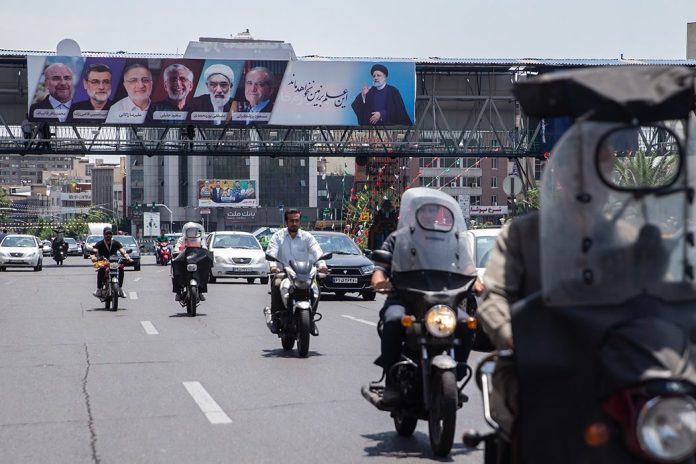
Iranian police summon individuals for manipulating presidential election polls

Iran Presidential Election

Col. Davoud Moazzami Goudarzi, the head of the Iranian cyber police FATA, told ISNA news agency on Saturday that the individuals changed the results of polls by using bots on the internet.

He warned spreading false information about candidates or hurling insults, smear campaigns, fake polls, and calling on people to boycott the elections are instances of crimes that can lead to arrest.

Col. Goudarzi did not specify in favor of which candidates the individuals were tampering the results, but some opinion polls have surfaced on the internet claiming to be conducted by the state television, the Islamic Republic of Iran’s Broadcasting (IRIB). The IRIB, however, has denied the veracity of the polls.

Iranians will go to the polls on Friday, June 28, to elect one of the six presidential hopefuls to succeed the late President Ebrahim Raisi who died in a helicopter crash along with his accompanying delegation on May 19.

World cannot afford Lebanon becoming another Gaza: UN

António Guterres

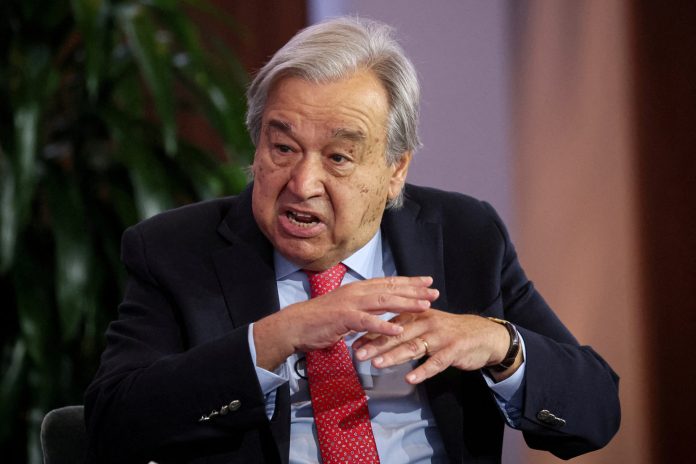
UN peacekeepers are working to calm the situation and prevent “miscalculation” after both sides heightened their rhetoric and raised the possibility of full-scale conflict, he said on Friday.

“One rash move – one miscalculation – could trigger a catastrophe that goes far beyond the border and, frankly, beyond imagination,” Guterres told reporters.

“Let’s be clear: The people of the region and the people of the world cannot afford Lebanon to become another Gaza.”

A UN peacekeeping force UNIFIL, as well as unarmed technical observers known as UNTSO, have long been stationed in southern Lebanon to monitor hostilities along the demarcation line between Lebanon and Israel, known as the Blue Line.

“UN peacekeepers are on the ground working to de-escalate tensions and help prevent miscalculation,” Guterres continued, adding, “The world must say loudly and clearly: immediate de-escalation is not only possible – it is essential. There is no military solution.”

Hezbollah has fired rockets and drones into Israel since it launched the war on Gaza last October with the Israelis responding with deadly air strikes and heavy artillery fire. Hundreds have been killed and tens of thousands displaced along the border.

Israeli Prime Minister Benjamin Netanyahu and Defence Minister Yoav Gallant have previously pledged to “turn Beirut into Gaza”. This week, Hezbollah leader Seyyed Hassan Nasrallah warned of “no restraint and no rules” if Israel launches a major attack on Lebanon.

Hezbollah has indicated it is not seeking a wider conflict, even as it has steadily drawn on more potent weaponry.

The group has thousands of fighters, many with experience in the Syrian war, and an arsenal of tens of thousands of missiles capable of hitting cities all over Israel. It also has a large fleet of drones, one of which appears to have carried out an extended flight over the port city of Haifa this week.

There are fears a wider escalation could overwhelm Israel’s Iron Dome missile defence system, which has so far intercepted most of the hundreds of missiles fired by Hezbollah.

Israel has had bruising experiences in Lebanon in the past. After its forces invaded in 1982, they were stuck holding a buffer zone for nearly two decades after a war that saw the birth of Hezbollah. There was a second 34-day war in 2006 that bloodied both sides.

But the political pressure on Netanyahu has swelled with no indication of when life will return to normal more than eight months after the beginning of the conflict.

Dozens of towns in the occupied territories are deserted with about 60,000 people evacuated to temporary accommodation, leaving empty streets with the occasional building scarred by rocket fire. Some 90,000 have also fled southern Lebanon.

Senior US official resigns amid Gaza war

Gaza War

The newspaper reported that Andrew Miller told his colleagues he had seen his family “sparingly” amid the Israeli war on Gaza that has been going on for more than eight months.

The daily further reported that Miller was one of the officials in the administration who recognised the risks of President Joe Biden’s administration’s “bear hug” strategy, referring to the full-fledged support Washington gave to Israel after it launched a war on Gaza following the 7 October attacks by Hamas.

“Andrew brought deep experience and sharp perspective to the table every day,” State Department spokesman Matthew Miller told the Post.

“Everyone here is sorry to see him go, but we wish him well in his next endeavors.”

Miller is now the most senior official with an Israel-Palestine portfolio to step down from his job since the war on Gaza began in October.

On 7 October, Palestinian fighters led by Hamas broke out of Gaza and launched an attack on southern Israel, resulting in the death of about 1,200 people and taking more than 200 people captive.

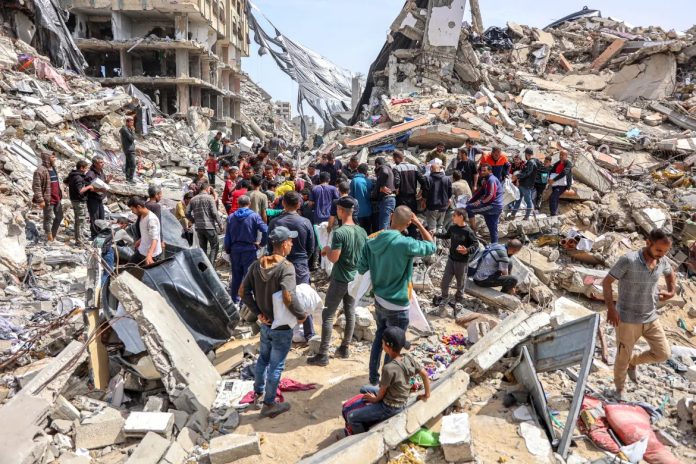
Israel responded with a declaration of war on the besieged Palestinian enclave, launching first an indiscriminate aerial bombardment campaign followed by a ground invasion of Gaza.

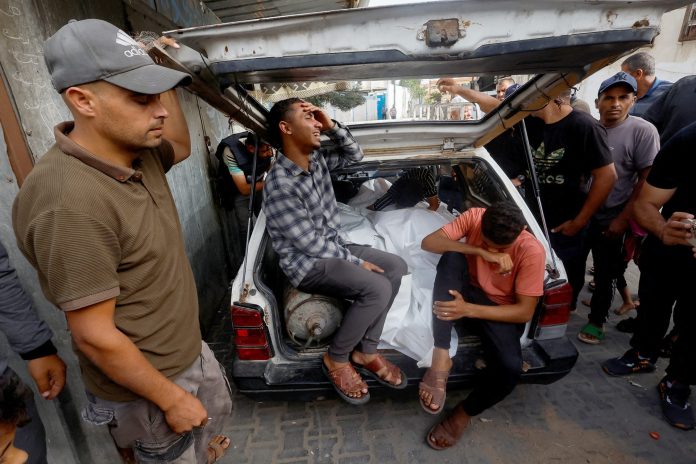
Israeli forces have killed more than 37,000 Palestinians, the majority of whom are women and children, according to the Palestinian health ministry. Israel’s military has also devastated civilian infrastructure, including hospitals, and targeted medical workers, journalists and aid workers.

While Miller did not cite the war as his reason for leaving, he joins more than a dozen staffers and officials across the Biden administration who have left – the latter individuals have cited their opposition to the war as their reason for resigning.

Earlier this week, the Intercept reported that a 16-year veteran of the US air force was resigning from his job because of the war.

Last month, two officials of Jewish heritage, one in the White House and another in the Pentagon, also resigned, similarly citing Washington’s support for the war on Gaza.

And in March, Annelle Sheline, a foreign affairs officer in the State Department, resigned from her position. Sheline said she tried raising concerns about US support for Israel through dissent cables and speaking up at staff meetings, but noted it was pointless “as long as the US continues to send a steady stream of weapons to Israel”.

All of the resignees, save for Miller, have publicly expressed dismay at the fact that Washington has yet to use any real leverage to rein in Israel’s conduct in the war. Legal experts have stated that Israel has committed numerous human rights violations in its war, which could trigger some US laws to halt arms sales to the country.

UK arms exporters warned of criminal liability over weapons sales to Israel

Gaza War

Four campaign groups, including Campaign Against Arms Trade (CAAT) and the International Centre of Justice for Palestinians (ICJP), addressed the directors of British arms companies supplying F-35 fighter jet parts used by Israel’s air force in its ongoing war on Gaza.

The letter cautioned that they could face “potential criminal liability for atrocity crimes currently taking place in Gaza”.

The F-35 stealth fighter jets, heavily deployed in Israel’s war on Gaza, are manufactured by Lockheed Martin in the US with the help of international partners, including British factories supplying essential components to build the warplanes.

In addition to the British arm of Lockheed Martin, the targeted companies include the British arms firm BAE Systems, which manufactures 13 to 15 percent of each jet, and the US company Northrop Grumman.

Citing a section in the 2001 International Criminal Court Act, the letter explains that it is illegal under British law “to engage in ‘conduct ancillary’ to a war crime or a crime against humanity” in foreign jurisdictions.

Other signatories of the letter include War on Want and Global Legal Action Network (GLAN), which is already pursuing legal action against the UK government over its continued arms sales to Israel.

“Individuals transferring weapons to Israel are exposed to criminal liability, plain and simple,” Dearbhla Minogue, a GLAN senior lawyer, said in a statement.

“The fact that they are hiding behind a licencing system which is unfit for purpose will not protect them if and when they face a jury of their peers because ordinary people can see through politicians’ obfuscation.”

Neil Sammonds, senior campaigner at War on Want, emphasised: “There is nowhere to hide for a company director choosing to provide weaponry to a state whose leaders have made clear their intent not to comply with international law and whose armed forces commit atrocity after atrocity.”

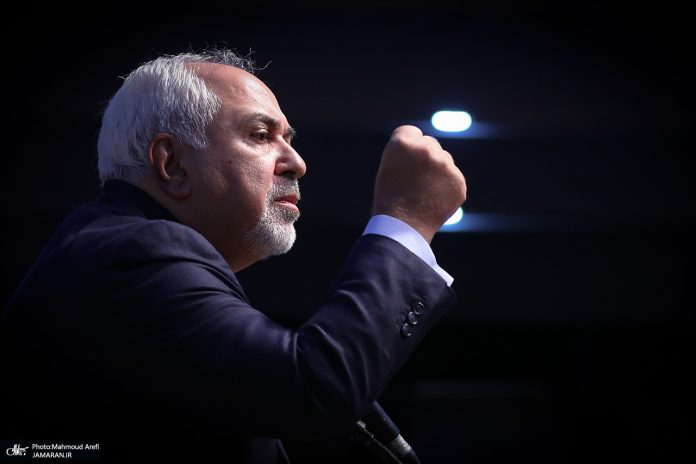
Iran former FM Zarif comes down hard on principlists in election campaign, rivals on defensive

Javad Zarif

Zarif censured the far-right and right-leaning contenders, especially Saeed Jalili, for their “unrelenting policies” at home and anti-Western approach on the international stage, from dealing with women’s ‘lousy’ dressing to failure to revive a landmark nuclear deal with the West which begot more sanctions.

He said, “Unlike the rude minority, we are not looking for chaos and do not want to suppress the voice of the opposition.”

Zarif called for a high turnout in the June 28 presidential elections, warning the hardliners and “their inheritors who have dumped the sanctions onto the nation” and those who seek to topple the government from abroad both favor a low turnout.

“Our future is not determined on the streets. Our future is determined by the ballot box. We want the people to come to the polls so we can make our country stronger so it can stand against the superpowers and no one will dare to threaten Iran,” he added.

Zarif also cited a revelation by another presidential hopeful, Mostafa Pourmohammadi, who made a revelation in a presidential debate on Thursday that Jalili, as the former Secretary of the Supreme National Security Council, opposed Iran’s accession to intergovernmental anti-money laundering Financial Action Task Force (FATF) so then president Hassan Rouhani, who is in the rival camp, would not reap any possible benefits.

Many, including MP Abdolkarim Hosseinzadeh and former minister of information and communications technology Mohammad Javad Azari Jahromi, have slammed Jalili for “taking the livelihood of millions of Iranians hostage” for partisan goals.

However, the principlists argue that both the nuclear deal, known as the Joint Comprehensive Plan of Action (JCPOA), and the FATF are Western-dominated, one-sided, and fail to fulfill the interests of the Iranian nation.

Iran’s UN mission says Israel will be the ‘ultimate loser’ in war with Lebanon

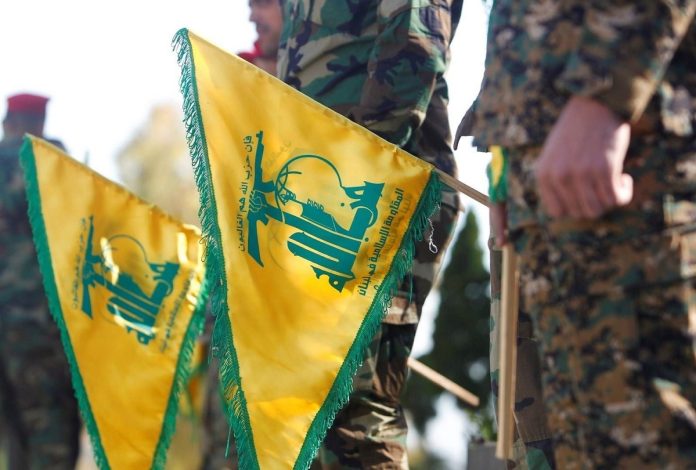
Hezbollah

Iran’s mission to the UN said in a statement on Friday that Israel would be the “ultimate loser” of any military action against Lebanon.

“Undoubtedly, this war will have one ultimate loser, which is the Zionist regime. The Lebanese resistance movement, Hezbollah, has the capability to defend itself and Lebanon – perhaps the time for the self-annihilation of this illegitimate regime has come,” Iran’s mission to the United Nations said.

The statement added Hezbollah is capable of defending both itself and Lebanon.

It also warned that any action by Israel against Lebanon could plunge the region into a new conflict.

“Any imprudent decision by the occupying Israeli regime to save itself could plunge the region into a new war, the consequence of which would be the destruction of Lebanon’s infrastructure as well as that of the 1948 occupied territories,” the statement read.

The Israeli regime and Hezbollah have been exchanging fire along Lebanon’s southern border almost on a daily basis since the Gaza onslaught began on October 7.

The tensions have flared over the past week especially after Israel killed a senior Hezbollah commander last week.

The exchange of fire has intensified following the Israeli assassination of senior Hezbollah commander Sami Taleb Abdallah.

The movement has retaliated by firing hundreds of rockets into the northern parts of the occupied territories.

Hezbollah says its operations are meant to support the Gaza resistance and to put pressure on the regime to stop the genocide in Gaza, which has so far left over 37,400 Gazans dead, most of them women and children.

On Tuesday, the Israeli army said it had approved plans for an attack on Lebanon, raising concerns that the regime might carry out threats that it will turn Lebanon into another Gaza.

On Wednesday, Hezbollah’s Secretary-General Seyyed Hassan Nasrallah vowed that “no place” in the Israeli-occupied territories would “be spared our rockets” if a wider war began.

Nasrallah emphasized that an incursion into the Galilee region remains an option on the table should Israel invade southern Lebanon.

He also stated they would attack any other country in the region that assisted Israel in the war effort, citing Cyprus, which has hosted Israeli forces for training exercises.

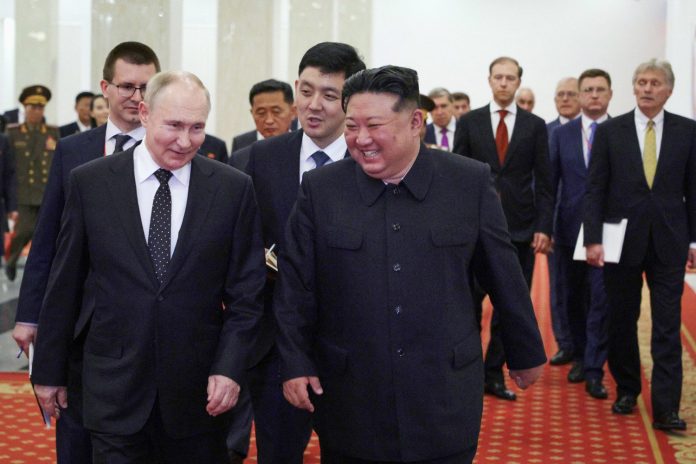
Putin says Russia could arm North Korea

Putin Kim

Putin was speaking with reporters in Hanoi following his meetings with Vietnam’s leadership. One of the questions related to his previous suggestion that Moscow could send missiles to adversaries of the West, in response to the US and its allies greenlighting Ukrainian strikes deep inside Russia.

”We do not rule out supplying weapons to other countries, including the Democratic People’s Republic of Korea,” Putin said, adding, “Let the West think where they might end up.”

Western countries that have supplied long-range and other weapons to Ukraine have said they can’t be held responsible for how Kiev uses them, and insist that it does not make them parties to the conflict, Putin elaborated, adding that Russia therefore reserves the same right for itself.

The Russian president also noted that Moscow is considering modifications to its doctrine on the use of atomic weapons, as the West appears to be working on low-yield weapons to lower the nuclear threshold.

“We don’t need a first strike,” he stated in response to another question.

“Because our return strike is guaranteed to destroy any attacker.”

When asked about the peace terms he offered Ukraine last week, Putin stressed that Russia has always been willing to negotiate, while Kiev and its Western backers sabotaged both the Minsk process and the Istanbul talks. However, the terms he outlined will not be valid forever, Putin cautioned.

”Our terms will change depending on the situation on the ground.”