Tuesday, January 13, 2026
Home Blog Page 789

UK trained Ukrainian troops ahead of Kursk attack: Report

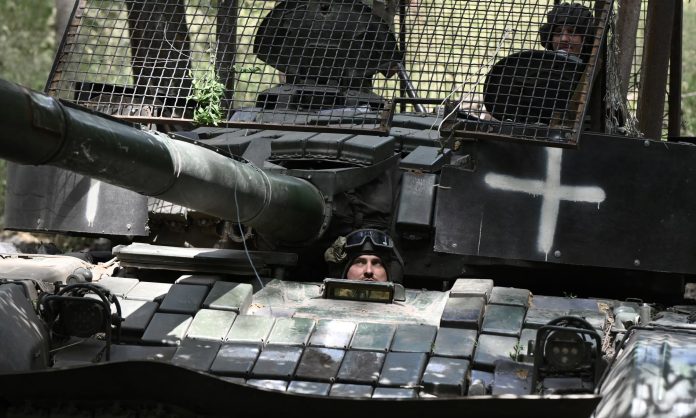
On August 6, Ukrainian forces launched their largest attack on Russian territory since the conflict escalated in February 2022. The advance into Kursk Region was swiftly halted by the Russian military, but Kiev’s troops still hold a number of settlements.

Kiev “utilized some of Ukraine’s most battle-hardened fighters” taken from other parts of the front line during the incursion, the British newspaper claimed in an article on Friday.

A Ukrainian serviceman, who spoke to the Times from a hospital bed after being wounded in clashes in the Russian border town of Sudzha, said his unit had been defending Volchansk in Ukraine’s Kharkov Region when he was told that “today they were going to invade Russia”.

According to the article, the members of this formation were already “specialists in street fighting”, having being involved in “some of the bloodiest battles” of the conflict, including the fight for the strategic settlement of Avdeevka in Russia’s Donetsk People’s Republic, which Ukrainian troops relinquished in February.

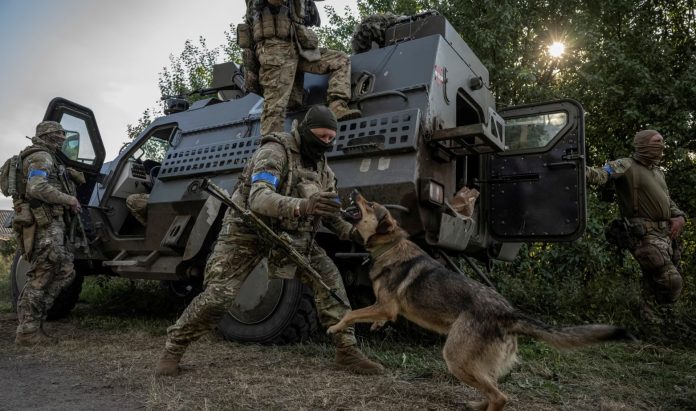
The Times reported that, “a month before they were dispatched into Kursk, some of the unit were sent to England where they underwent a few days of training alongside British soldiers”. The major focus of this training course was “raids on high-rise buildings”, it revealed.

Western officials have celebrated and voiced support for the Ukrainian incursion into Kursk Region, but denied any prior knowledge of the operation or involvement in it. However, Mikhail Podoliak, the top adviser to Ukrainian leader, Volodymyr Zelensky, claimed earlier this week that “there were discussions between partner forces, just not on the public level,” of the attack on Russian territory.

Adviser to Russian President Vladimir Putin and former Security Council secretary, Nikolay Patrushev, told Izvestia newspaper on Friday that Kiev’s incursion was “planned with the involvement of NATO and Western special services”. It was the US and its allies who “put the criminal junta at the head of Ukraine”, while “NATO countries have supplied Kiev with weapons, military instructors, and continuous intelligence while controlling the actions of neo-Nazis”, Patrushev added.

Russia’s Defense Ministry claimed on Friday that, since the start of the incursion, Ukraine had lost up to 2,860 servicemen and several hundred units of military hardware, including 41 tanks, 40 APCs, and three US-supplied HIMARS multiple rocket launchers.

UN urges ‘polio pause’ in Gaza war to tackle virus

Guterres, speaking to reporters at the United Nations, appealed for assurances to be provided right away as he warned that preventing and containing the spread of polio in Gaza would take a massive coordinated and urgent effort.

“It is impossible to conduct a polio vaccination campaign with war raging all over.”

“Let’s be clear: The ultimate vaccine for polio is peace and an immediate humanitarian ceasefire,” Guterres said.

“But in any case, a polio pause is a must. It is impossible to conduct a polio vaccination campaign with war raging all over.”

Guterres added the UN is poised to launch a polio vaccine campaign in Gaza for children under the age of 10, but said the “challenges are grave.”

At least 95% vaccination coverage will be needed during each of the two rounds of the campaign to prevent polio’s spread and reduce its emergence given the devastation in Gaza, Guterres said. He added that a successful campaign will require the facilitation of transport for vaccines and refrigeration equipment at every step, the entry of polio experts into Gaza, reliable internet and phone services, and other elements.

Gaza’s Health Ministry declared a polio epidemic in the Palestinian enclave last month, blaming Israel’s ongoing military offensive.

On Friday, it announced in a statement that it has detected the first confirmed case of polio in the Gaza Strip in the city of Deir el-Balah for a 10-month-old baby who had not received any polio vaccination dose.

The UN says Gaza had been free from polio for 25 years.

Poliomyelitis, which is spread mainly through the fecal-oral route, is a highly infectious virus that can invade the nervous system and cause paralysis.

EU threatens sanctions after Israeli settlers attack on Palestinian village in West Bank

“Day after day, in an almost total impunity, Israeli settlers fuel violence in the occupied West Bank, contributing to endanger any chance of peace,” EU High Representative for Foreign Affairs and Security Policy Josep Borrell said in a post on X on Friday.

“The Israeli government must stop these unacceptable actions immediately. I confirm my intention to table a proposal for EU sanctions against violent settlers’ enablers, including some Israeli government members,” he concluded.

On Thursday, masked Israeli settlers in the occupied West Bank stormed the village of Jit, setting homes and cars on fire.

The settlers opened fire and lobbed tear gas at residents, killing a 23-year-old Palestinian and critically injuring another, Palestinian health officials and local authorities confirmed.

Thursday’s attack was the latest incident since the outbreak of a war in the Gaza Strip in October. In the West Bank, 633 Palestinians have been killed by Israeli fire — most by Israeli raids into Palestinian cities and towns.

Almost 5,500 others were injured by Israeli Army fire in the occupied territories, according to the health ministry.

More than 10,000 Palestinians have been arrested in West Bank since the start of the conflict in the besieged enclave, according to Palestinian prisoner groups.

Over the past few years, the Israeli military has conducted regular raids in the West Bank, which have escalated with the beginning of the Gaza war. Palestinians have also been violently attacked by illegal Israeli settlers.

In a landmark opinion on July 19, the International Court of Justice declared Israel’s decades-long occupation of Palestinian land “illegal” and demanded the evacuation of all existing settlements in the West Bank and East Jerusalem.

Gaza ceasefire deal is closer: Biden

“I don’t want to jinx anything… we may have something. But we’re not there yet,” Biden told reporters in the White House’s Oval Office.

“It’s much, much closer than it was three days ago. So, keep your fingers crossed”, warning all sides not to undermine endeavours for a ceasefire in Gaza.

He told reporters that although he’s “optimistic” about the prospect of a deal being agreed on, nothing is guaranteed.

“As of an hour ago, it’s still in play. I’m optimistic. It’s far from over,” the president continued, adding, “There’s a couple more issues. I think we’ve got a shot.”

When asked when the ceasefire would start if agreed to, Biden stressed: “That remains to be seen.”

Gaza ceasefire negotiations in Doha paused on Friday with negotiators to meet again next week seeking an agreement to end the war in the blockaded territory.

In a joint statement, the US, Qatar and Egypt announced Washington had presented a new proposal that built on points of agreement over the past week, closing gaps in a way that could allow rapid implementation of a deal.

Mediators would keep working on the proposal in coming days, they added.

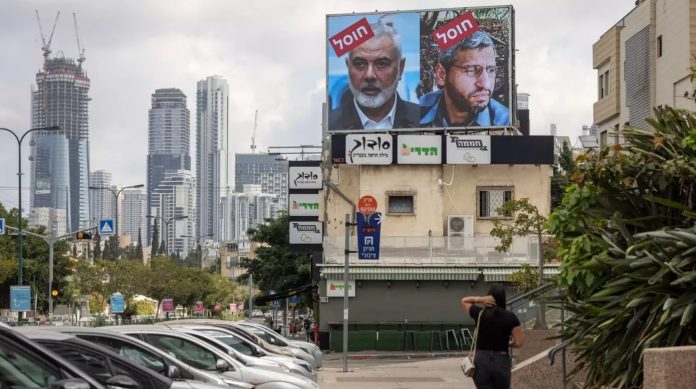
The current round of talks started on Thursday amid growing fears of a regional war after Israel killed a top Hezbollah commander in Beirut and Hamas’s political chief Ismail Haniyeh was assassinated in Tehran.

The White House has also announced that Biden held separate phone calls with Qatari Emir Sheikh Tamim bin Hamad Al Thani and Egyptian President Abdel Fattah el-Sisi to “review the significant progress” in the ceasefire talks.

The US State Department also said Secretary of State Antony Blinken will travel to Israel on Saturday to “continue intensive diplomatic efforts to conclude the agreement”.

“Secretary Blinken will underscore the critical need for all parties in the region to avoid escalation or any other actions that could undermine the ability to finalize an agreement,” the department added.

Biden announced in a statement on Friday that Blinken was travelling to the Middle East in part “to stress that with the comprehensive ceasefire and hostage release agreement now in sight, no one in the region should take actions to undermine this process”.

The overall death toll from the Israeli campaign of death, destruction and genocide in Gaza has surpassed the grim milestone of 40,000, the Gaza Health Ministry announced on Thursday.

US, Qatar and Egypt say to work to finalise Gaza ceasefire agreement

Gaza War

The three countries said on Friday that ceasefire negotiations in Doha were “serious and constructive”.

The current round of talks started on Thursday amid growing fears of a regional war after Israel killed a top Hezbollah commander in Beirut and Hamas’s political chief Ismail Haniyeh was assassinated in Tehran.

Friday’s statement echoed previous remarks by the mediators rejecting any delays in implementing an agreement to reach a ceasefire and release the captives.

“The path is now set for that outcome, saving lives, bringing relief to the people of Gaza, and de-escalation of regional tensions,” the three countries announced on Friday.

The announcement did not provide details about the latest proposal, but it noted it builds on a deal presented by US President Joe Biden in May.

The US-backed plan would see a multiphased attempt to end the war, starting with a six-week pause in fighting that would enable the release of some Israeli captives held in the besieged enclave and Palestinian prisoners in Israeli jails.

In the second phase, there would be a permanent end to the fighting and the release of all remaining Israeli captives.

The final part of the agreement would include the reconstruction of the Gaza Strip, which has been devastated by the Israeli war.

“Working teams will continue technical work over the coming days on the details of implementation, including arrangements to implement the agreements, extensive humanitarian provisions, as well as specifics relating to hostages and detainees,” the mediators’ joint statement added.

Hamas has stressed it would only agree to a deal that would lead to a permanent ceasefire, the complete withdrawal of Israeli soldiers from Gaza and a “serious” prisoner exchange.

The Hamas leadership sees the new US proposal as responding and conforming to Israel’s conditions, a senior Hamas source privy to the details of the negotiations told CNN. The source accused Israel of adding new conditions in order to stall the agreement.

Speaking to Al Jazeera, Hamas official Osama Hamdan reiterated the group’s position earlier on Friday and accused Israel of undermining the talks.

Hamdan stressed that the group, which is not directly participating in the talks, does not yet have a clear picture of where the negotiations stand, but that its officials have no reason to believe Israel is sending any positive signals.

“Mediators are still talking about bridging the gaps, but it is clear that the Israeli side is adding more conditions, talking about new issues,” said Hamdan.

“I believe they are trying to undermine the process.”

If Israel relays any “positive signals”, Hamas would be willing to participate in the talks, but that has not happened yet, Hamdan continued.

A senior Hamas official, Izzat al-Rishq, has also told Reuters that Israel “did not abide by what was agreed upon” in earlier talks, citing what mediators had told them.

Sources from within Hamas also told Middle East Eye on Friday that “the Israeli delegation’s primary efforts were to add Benjamin Netanyahu’s conditions to be part of Biden’s proposal”.

The sources added that “Hamas categorically rejects Netanyahu’s conditions”.

It comes as the Gaza Health Ministry has announced that the overall death toll from the Israeli campaign of death, destruction and genocide in the blockaded territory has surpassed the grim milestone of 40,000.

In a statement late on Thursday, Hamas politburo member Hossam Badran stressed Israel’s continuing military operations were an obstacle to progress on a ceasefire.

Ukraine links Kursk attack to ‘fair talks’

“We need to inflict significant tactical defeats on Russia,” the Ukrainian presidential adviser Mykhailo Podolyak wrote on the Telegram messaging app.

“In the Kursk region, we clearly see how the military tool is objectively used to convince the Russian Federation to enter into a fair negotiation process.”

“We have proven, effective means of coercion. In addition to economic and diplomatic ones … we need to inflict significant tactical defeats on Russia,” he added.

Podolyak made his comments as it appeared that Ukraine had largely cut off a significant area of Glushovsky district of Kursk and Russian troops there after blowing up two important bridges on the Seim river.

As Ukraine appeared to be consolidating its gains in Russia’s Kursk region, Moscow’s forces were advancing rapidly towards Pokrovsk, which for months has been one of their key targets.

Ukrainian military authorities urged civilians living in the city to speed up their evacuation on Friday. Pokrovsk officials stated in a Telegram post that Russian troops were “advancing at a fast pace. With every passing day there is less and less time to collect personal belongings and leave for safer regions”.

Pokrovsk is one of Ukraine’s main defensive strongholds and a key logistics hub in the eastern Donetsk region. Its capture would compromise Ukraine’s defensive abilities and supply routes and bring Russia closer than ever to its stated aim of capturing the whole region.

In an update on Thursday, the Institute for the Study of War thinktank wrote: “Russian troops are maintaining their relatively high offensive tempo in Donetsk oblast, demonstrating that the Russian military command continues to prioritise advances in eastern Ukraine even as Ukraine is pressuring Russian forces within Kursk oblast.”

Russia has accused NATO and the west more widely of aiding the Ukrainian incursion, including by permitting the use of western-supplied equipment.

The US so far has deemed the incursion a protective move in which it is appropriate for Kyiv to use US equipment, officials in Washington said. But they expressed worries about complications as Ukrainian troops pushed further into enemy territory.

One US official, speaking on condition of anonymity, told Reuters that if Ukraine started taking Russian villages and other non-military targets using US weapons and vehicles, it could be seen as stretching the limits Washington has imposed, precisely to avoid any perception of a direct NATO-Russia conflict.

Ukraine has announced that one of the aims of its current incursion into Russia is to counter artillery and missile fire into Ukraine and create a buffer zone.

Footage posted on Russian social media has purported to show western-supplied equipment – including a British-supplied Challenger 2 main battle tank – destroyed or captured during the Kursk offensive, although the tank depicted in the footage appears to be a Soviet-era T-64. Unverified reports have said that Challengers may have been used during the operation.

Russia’s defence ministry has also published footage that it said showed a Russian drone destroying a US-made Stryker armoured combat vehicle in Kursk.

On Friday, Russian forces stated they had destroyed a Ukrainian reconnaissance and sabotage unit in Kursk that was armed with weapons from NATO countries, the state-run media agency RIA reported, citing unidentified security sources.

“Samples of small arms manufactured by the United States and Sweden have been seized at the liquidation site of a Ukrainian sabotage group near the village of Kremyanoe in the Kursk region,” RIA cited a Russian security official as saying.

Ukraine’s attack into Russia began on 6 August, when thousands of Ukrainian troops crossed Russia’s western border, in an embarrassment for the Russian military.

The unprecedented operation hit its 10-day mark on Aug. 15, with Kyiv claiming to have seized 1,150 square kilometers of Russian territory and 82 settlements, including the town of Sudzha.

The US and other western powers, eager to avoid direct confrontation with Russia, noted Ukraine had not given advance notice and that Washington was not involved.

So far Russia has mostly redeployed irregular units in its sluggish response.

Footage geolocated by the ISW placed Ukrainian troops just under 30km (18.6 miles) from the international border in Kursk. Although the Russian defence ministry claimed it had cleared some settlements of Ukrainian forces, Russian military bloggers suggested fighting was continuing.

On Thursday a number of Ukrainian news outlets identified several units of more than 100 recently captured Russian prisoners of war, suggesting a mix of regular and irregular forces, including Chechen fighters.

Fighting also appeared to be continuing at a border crossing into the Belgorod region – a second line of Kyiv’s advance – with conflicting reports over the status of the fighting.

While the Ukrainian attack has revealed weaknesses in Russia’s defences and changed the public narrative of the conflict, Russian officials said what they cast as a Ukrainian “terrorist invasion” would not change the course of the war. Russia has been advancing for most of the year in the key eastern sector of the 1,000km (620 mile) frontline and has vast numerical superiority.

Kremlin aide Nikolai Patrushev stated NATO and the west were directly involved in the planning for Ukraine’s attack on the Kursk region.

“The operation in the Kursk region was also planned with the participation of NATO and Western special services,” Patrushev told the Izvestia newspaper.

US ‘open’ to supplying Ukraine with long-range missiles: Report

The unnamed officials reportedly told the outlet that no final decision has been made on sending the Joint Air-to-Surface Standoff Missile (JASSM), but the Pentagon is currently “working through the complicated details”. Those issues reportedly include reviews of the transfer of sensitive technologies, and ensuring Ukraine’s jets can launch the 2,400-pound missile, which carries a 1,000-pound warhead.

Developed by Lockheed Martin, the JASSM has been shared with only a “handful of close allies”, the report added.

“We consider a range of options to meet Ukraine’s security assistance requirements,” Pentagon spokesperson Jeff Jurgensen told the media outlet, without confirming whether any transfer had been approved.

The JASSM missiles are the “latest in a long line of sophisticated weaponry once considered off-limits for transfer to Ukraine”, Politico said. That list of previously off-limits hardware once included F-16s themselves, along with Abrams tanks and Patriot air defense systems.

While Ukraine already possesses both air- and ground-launched missiles provided by the US, UK and France that can reach almost 200 miles from their launch point, it has been pressing the US for months to supply JASSM missiles.

A host of Western nations have pledged to provide Ukraine with more than 80 F-16 fighters. Ukraine’s President Volodymyr Zelensky confirmed earlier this month that the first batch of the American-built warplanes had arrived in the country and were already being flown by Ukrainian pilots.

“As we bring on the F-16s, it’s not only the airplanes, but the training of the pilots, the training of the maintainers – but also making sure we have the weapons to go with it,” Joint Chiefs Chair Charles Q. Brown told Politico.

“That is the dialogue we’re having, not only to get the airplanes but to get them to full capability.”

Zelensky has admitted that Ukraine does not have enough pilots to fly all of the jets pledged by the West, but said that “many guys are now training”.

Russian President Vladimir Putin has warned that any base hosting Ukrainian F-16s would become a legitimate target for the Russian military, while the Kremlin has declared that no amount of Western hardware will win the conflict for Ukraine.

US says Iran has not withdrawn threat to attack Israel

White House national security spokesman John Kirby, in an interview on CNN, said information shows Iran has not moved off its threat to attack Israel, including potentially through “proxies”.

The US is watching the situation closely and is prepared, though “hopefully it doesn’t come to that”, he added.

Global concern that Israel’s war in the Gaza Strip will escalate into an all-out regional conflict multiplied after the assassination last month of Haniyeh in Tehran, and of Fuad Shukr, a top commander from the Lebanese group Hezbollah, in Beirut.

Leader of the Islamic Revolution Ayatollah Seyyed Ali Khamenei has warned the regime of a “harsh response” for Haniyeh’s assassination, stressing it is Tehran’s duty to avenge the Palestinian resistance leader’s blood.

On Monday, French President Emmanuel Macron, German Chancellor Olaf Scholz and UK Prime Minister Keir Starmer issued a separate joint statement calling for de-escalation.

“We call on Iran and its allies to refrain from attacks that would further escalate regional tensions and jeopardise the opportunity to agree a ceasefire and the release of hostages,” it noted.

“The fighting must end now, and all hostages still detained by Hamas must be released. The people of Gaza need urgent and unfettered delivery and distribution of aid,” it added.

Tehran on Tuesday rejected calls by Western countries to back down from its threat to attack Israel.

Iran’s Foreign Ministry has stressed that the calls from Paris, Berlin and London to exercise restraint “lack political logic and contradict principles of international law”.

Scholz and British Prime Minister Keir Starmer also held separate phone calls with with Iranian President Masoud Pezeshkian on Monday, the German and UK governments announced.

Starmer asked Pezeshkian to refrain from attacking Israel, saying that war was not in anyone’s interest, the prime minister’s office said.

Scholz “appealed to President Pezeshkian to do everything possible to prevent a further military escalation”, expressed “great concern about the danger of a regional conflagration in the Middle East” and said “the spiral of violence in the Middle East must be broken now”, his spokesman Wolfgang Buechner said in a statement.

President Joe Biden had stated he expects Iran to hold off attacking Israel if a Gaza ceasefire agreement is reached.

Asked by reporters during a visit to New Orleans on Tuesday whether a deal could prevent a promised attack, the president replied, “That’s my expectation.”

Ukraine admits Kursk incursion was discussed with Western backers

Western officials have said they supported last week’s incursion into Kursk Region, but have denied any prior knowledge of the operation.

However, Zelensky aide Mikhail Podoliak has told The Independent that these disclaimers were not accurate, the British online newspaper reported on Thursday.

”There are certain things that have to be done with the element of surprise, and that have to happen on a local level,” he was quoted as saying.

“But there were discussions between partner forces, just not on the public level.”

The Ukrainian official reiterated the explanations of the motives behind the operation that he previously offered on national television, stating that Kiev’s objective is to use military “coercion” against the Russian public.

”When the war proceeds into the territory of Russia, they are certainly scared. They are shocked. This has a significant impact on the psychological state of Russia,” he added.

Russian officials have stated that by attacking civilians in Kursk Region Kiev had killed any chance for peace talks – an objective that their Ukrainian counterparts claim the incursion brings closer.

Podoliak urged the British government to permit Kiev to strike Russian territory with the long-range Storm Shadow missiles London has donated. If such attacks happen, “Russia would understand the cost of war is too high,” he told the daily.

According to British media, London allows Ukrainian troops to use any of weapons it sends to them on Russian soil, with the exception of the cruise missiles, which the UK manufactures jointly with France.

Moscow has warned that if any Western weapons are used for strikes deep inside Russia, it would share similar capabilities with parties elsewhere in the world that would use them against Western military assets.

Moscow considers Kiev’s military tactics in Russia to be “terrorist”. Western nations arming Kiev share responsibility for atrocities committed by Ukrainian troops, officials have stressed.

Ukrainian military chief Oleksandr Syrskii claimed on Thursday troops have taken control of dozens of villages and more than 1,000sq kilometres (386sq miles) in Kursk.

“In total, since the start of operations in the Kursk region, our troops have advanced 35 kilometres (22 miles) deep,” Syrskii said.

“We have taken control of 1,150sq km (444sq miles) of territory and 82 settlements,” he added.

Hamas: Mohammed Deif is alive

In an interview with the Associated Press (AP) published on Thursday, Hamdan said Deif is “fine” after Israel claimed to have assassinated him.

Hamdan told AP that Hamas believes Israel mentioned Deif as the target of the July strike to “justify the massacre” that day, in which 88 Palestinians were killed in a bombing of the so-called humanitarian zone.

Israel’s military has claimed it has intelligence confirming that Deif was killed in a July 13 airstrike targeting him in the Gaza Strip.

The attack — which hit tents housing displaced people in the al-Mawasi camp in southern part of the besieged enclave — killed over 90 people, including women and children, and wounded more than 300 others.

Deif is among the founders of Hamas’s military wing in the 1990s and has led the force for more than 20 years.

Israel has identified him and Hamas’s Gaza leader, Yahya Sinwar, as the chief architects of the large-scale and surprise Operation Al-Aqsa Storm, against the regime on October 7.

He is believed to have helped expand Hamas’s labyrinth of tunnels that run beneath Gaza.