Tuesday, January 13, 2026
Home Blog Page 785

Zelensky: Ukraine controlling 92 settlements In Russia

Russia Ukraine War

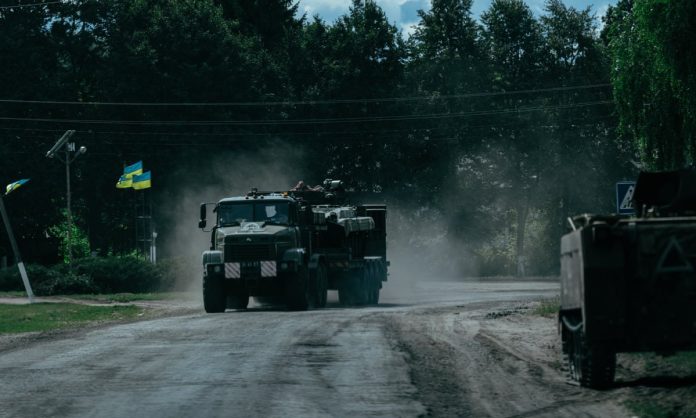
Ukrainian troops are in control of 92 settlements and more than 1,250 square kilometers of Kursk Oblast in Russia as the incursion into the region continues, Zelensky said on Monday.

Kyiv’s unprecedented operation is ongoing for two weeks, with the Ukrainian military capturing the town of Sudzha in Kursk Oblast and allegedly destroyed all three bridges over the Seim River near the border.

Speaking at a meeting in the city of Dnipro, the president stated that Ukraine continues to strengthen its positions, stabilize “certain areas” and continues to take Russian soldiers as POWs.

“This operation has become our largest investment in the process of releasing Ukrainians from Russian captivity. We have already captured the largest number of Russian prisoners in one operation,” he added, without elaborating.

Ukraine declined to provide a full number of Russian captives taken during the Kursk incursion.

Zelensky noted that “hundreds” of Russian soldiers had been captured as of Aug. 13, while an undisclosed Ukrainian colonel has claimed that the number may be as high as 2,000.

The Russian border near Ukraine’s Sumy Oblast has been “largely cleared” of the Russian soldiers, which Zelensky called one of the tactical goals of Kyiv’s incursion.

Russian President Vladimir Putin has warned that Ukraine will receive a proper response. Russia stated that Kiev has made a “conscious decision” to end the possibility of peace talks with Moscow by launching its incursion into Kursk Region.

Gazans ‘live among rubble’ amid relentless Israeli attacks: UN

Gaza War

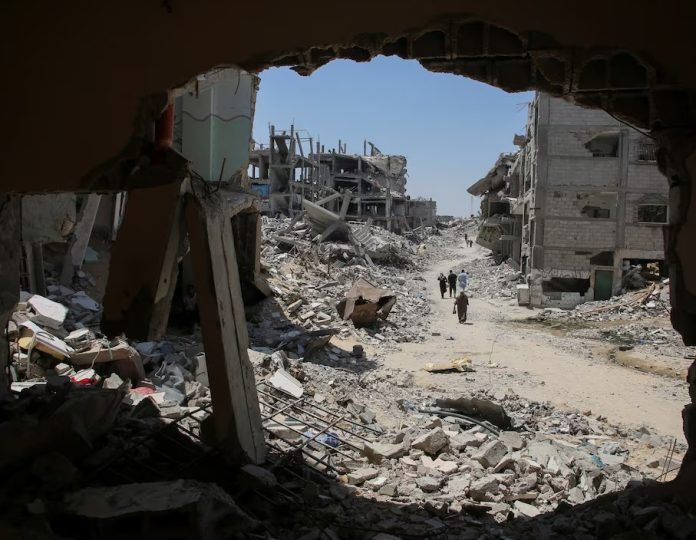
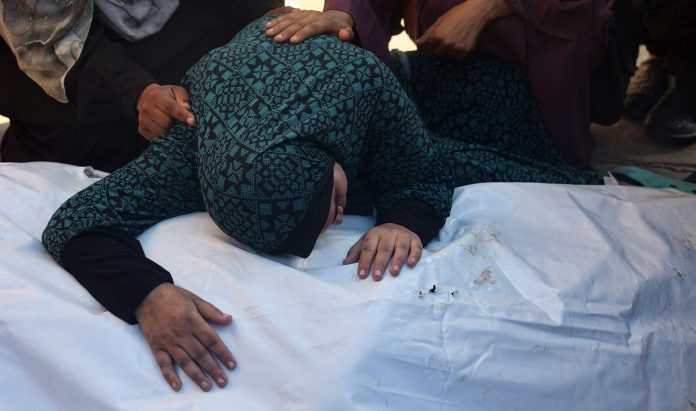
UNRWA spokesperson Louise Wateridge said on Monday that the Israeli forces were massacring more Palestinian civilians in the besieged region and using repeated evacuation orders as cover to commit atrocities.

“Strikes are now relentless: the day starts with people checking if family and friends are still alive, and ends hoping they make it through the night,” she added.

UNRWA has reported that 80 percent of the Gaza Strip’s infrastructure has been destroyed since Israel launched its savage military campaign across the besieged Palestinian territory in early October last year.

The United Nations recently reported that 10 months of Israeli war in Gaza have generated approximately 42 million tons of debris. Clearing the rubble is expected to cost up to $700 million and could take several years to complete.

According to the UN, the scale of destruction in Gaza is unprecedented, with entire neighborhoods reduced to rubble.

The sheer volume of debris poses a significant challenge for recovery efforts, both logistically and financially.

UN estimates suggest that the cleanup operation could extend over several years, some say 15 years given the complexity and scope of the work involved.

The most recent report by the world body has also identified approximately 73 percent of industrial and business facilities as damaged across Gaza.

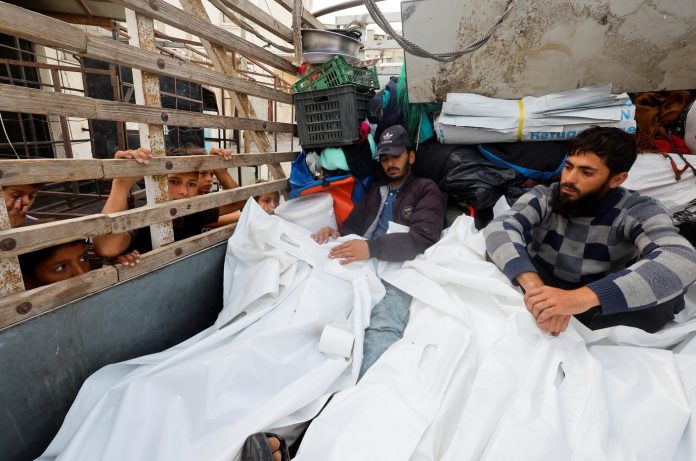
UN also says most of Gaza’s population has been displaced, including many who have been forced to evacuate multiple times.

New reports of death and destruction emerged on Monday as Israeli forces launched more deadly strikes on the central and southern parts of the besieged strip.

According to the Gaza Health Ministry, the total number of Palestinians killed in the Israeli regime’s genocide since early October has topped 40,100, mostly women and children. More than 92,000 people have also been injured.

The Palestinian Civil Defense recently said the catastrophic death toll of more than 40,000 given by health officials fails to capture the full extent of Palestinian losses during Israel’s 10-month-old genocidal war in the Gaza Strip.

This comes as tens of thousands are missing or buried under mountains of rubble, many with “disintegrated bodies”.

The Lancet, a leading general medical journal, earlier estimated that the death toll from Israel’s genocidal war on the Gaza Strip could be 186,000 or even more.

Iran president’s pick for trade ministry says ‘rise in non-oil exports’ on agenda

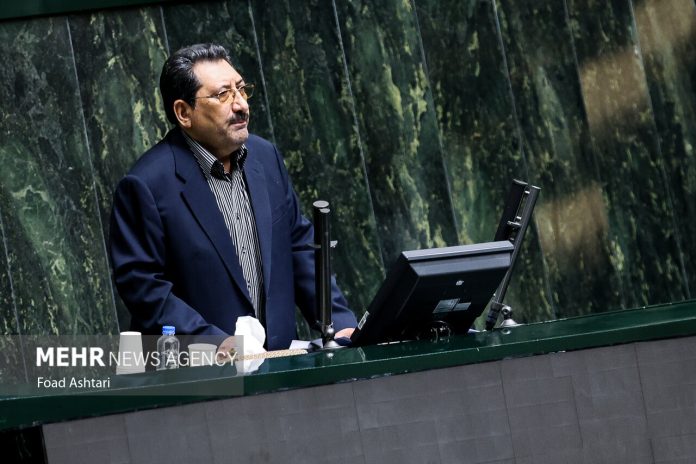
Mohammad Atabak addressed the parliament on Tuesday, the fourth day the lawmakers are assessing the qualifications of the proposed cabinet.

The proposed minister also said “the development of new export blocs with an emphasis on national, provincial zones and target markets, maximum use of capacity, agreements with neighboring countries, preferably through unions, and maximum use of the capacity of various regional agreements” are among his plans.

He also stressed that the trade ministry, under his command, would continue the country’s cordial ties with BRICS and the Shanghai Cooperation Organization (SCO).

Atabak highlighted that he would seek to make plans according to changes, explaining “planning should always be updated depending on the conditions.”

The proposed minister for the ministry of industry, mine, and trade was the first nominee to have been assessed in Tuesday’s session.

The parliament will convene on Wednesday to vote on the cabinet lineup.

Hamas throws cold water on Blinken’s announcement regarding Gaza truce

Gaza War

Hamdan made the comments during an interview with Al Jazeera on Monday evening local time after US Secretary of State Antony Blinken’s meeting with Netanyahu in Israel and announcement that Netanyahu had voiced support for the US-backed bridging proposal.

Hamdan said the movement had agreed to a truce proposal that had been forwarded by the administration of US President Joe Biden last month.

“We agreed to the proposal presented by Biden, but the US administration failed to convince [Israeli Prime Minister Benjamin] Netanyahu,” he added.

“The Israelis backtracked on issues included in Biden’s proposal.”

Following Tel Aviv’s U-turn, the US, Egypt, and Qatar, which have been mediating talks aimed at conclusion of a truce agreement, announced they had come up with a new scheme.

Blinken also claimed afterwards that Netanyahu had “accepted” the plan.

Hamdan, however, asserted that Hamas would only agree to implementation of the previous proposal.

The former proposal had featured, among other things, a permanent ceasefire, the regime’s withdrawal from Gaza, and a reconstruction process.

The Hamas’ spokesman likewise underlined that any agreement “must include five specific points, including stopping the aggression, withdrawing from Gaza, and reconstruction”.

“We are still committed to our obligations and are ready to implement them immediately. The one obstructing the efforts to reach an agreement is Netanyahu,” he underscored.

Flouting a UN Security Council resolution demanding an immediate cease-fire, Israel has continued its brutal offensive on Gaza since an Oct. 7, 2023 attack by Hamas.

The Israeli onslaught has since killed over 40,130 Palestinians, mostly women and children, and injured more than 92,740, according to local health authorities.

More than 10 months into the Israeli onslaught, vast tracts of Gaza lie in ruins amid a crippling blockade of food, clean water, and medicine.

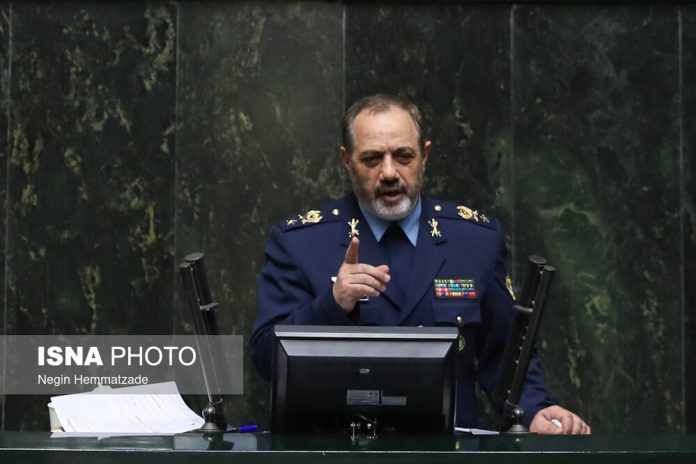
Defense chief pick: Iran has managed to establish deterrence vis-à-vis enemies

Nasirzadeh added that under such circumstances, the pressures of the global arrogance and their regional lackeys against the resistance front and the Islamic Republic of Iran have intensified but despite that, Iran’s influence over the world’s oppressed nations have increased.

He noted that while adversaries of Iran are trying to forge alliances against the Islamic Republic, Tehran has succeeded in creating a powerful detterence.

Nasirzadeh stressed that the main and special task of the Defense Ministry is to maximize the production of power, noting that Iran has achieved this goal because it has managed to establish deterrence vis-à-vis the enemies.

Nasirzadeh made those at a parliamentary session where he was supposed to outline his plans to boost the Defense Ministry in roder for lawmakers to approve him for the key post.

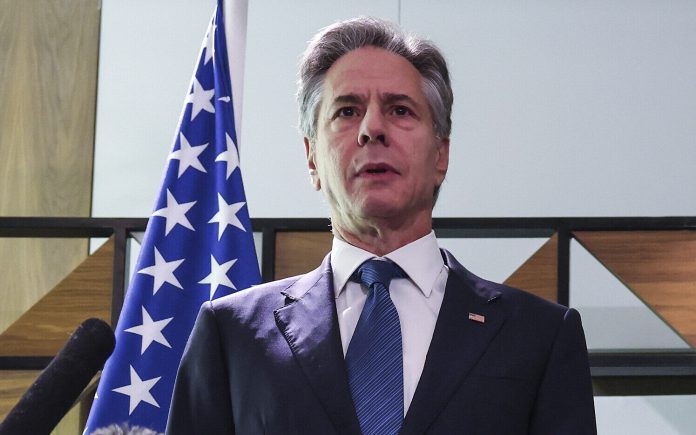
US claims Israel accepted latest Gaza ceasefire proposal, putting onus on Hamas

“In a very constructive meeting with Prime Minister Netanyahu today, he confirmed to me that Israel accepts the bridging proposal, that he supports it,” Blinken said during a press conference from the US Embassy in Jerusalem.

“It’s now incumbent on Hamas to do the same.”

But Hamas has generally rejected the statements coming out of the ceasefire talks over the past few weeks. The group stressed it had agreed to a ceasefire proposal laid out on July 2, but it accused Netanyahu of putting up new conditions that made it impossible for it to accept.

Among Hamas’s demands are agreement on a permanent ceasefire and comprehensive withdrawal of Israeli soldiers from the besieged enclave.

Blinken raised doubts about Hamas’s public statements and apparent rejections of where ceasefire talks currently stand.

“We’ve seen public statements before that don’t fully reflect where Hamas is,” Blinken added.

“The critical next step is for Hamas to accept the bridging proposal that Prime Minister Netanyahu has now accepted, and then to engage with everyone else on making sure that we have clear understandings of how each party would actually implement the commitments that it’s undertaken in this agreement.”

The terms of the ceasefire deal between Israel and Hamas are generally laid out to begin with a six-week truce that would require Hamas to release hostages it kidnapped from Israel on Oct. 7 during its attack and for Tel Aviv to release Palestinian prisoners from Israeli jails.

During this time, the US and partners are expected to dramatically scale up delivery of humanitarian assistance to Palestinian’s in the Gaza Strip. Throughout the six-week truce, the US, Qatar and Egypt are expected to mediate more negotiations between Israel and Hamas for a permanent end to the war.

Blinken stated there is a “real sense of urgency” in Israel and across the region for the need to get the ceasefire deal across the finish line, as fighting has escalated across multiple fronts.

Israel and Hezbollah continue to trade rocket fire over Lebanon’s southern border, as a broader Iranian attack against Israel looms — in retaliation for the assassination of top Hamas political leader Ismail Haniyeh in Tehran on July 31.

The US has dispatched significant military resources to the Middle East to help defend Israel in case of an Iranian attack, with Blinken warning Monday against all parties from taking actions that would escalate conflict.

“What’s most crucial now is that everyone,” he paused and stressed again, “everyone, refrain from taking any actions that could fuel further conflict, escalate tensions and result in the spreading of violence and conflict.”

Iranian pres, Malaysian PM call for ceasefire in Gaza 

Pezeshkian and Ibrahim discussed the current developments in the Middle East, particularly the talks aimed at establishing a ceasefire in Gaza.

The two sides criticized the US and some other Western governments for their policies and actions and their military and media support for the Zionist regime.

Pezeshkian and Ibrahim noted that what these Western countries are doing is at odds with their claim that they defend human rights and make an effort to establish a truce in Gaza.

They stressed that the West’s policies cause the Zionist regime to continue its crimes against the innocent people of Gaza.

The Iranian president and the Malaysian prime minister called on Muslim countries to take a coordinated move to stop the atrocities and the genocide in Gaza by the Zionists and noted that holding a summit of the Organization of Islamic Cooperation would be an effective step to that end.

UN says aid worker deaths soared after Israel launched war on Gaza

Gaza War

The rise in deaths, mainly due to Israeli air attacks in Gaza between October and December last year, represents a 137 percent increase compared with 2022, when 118 aid workers were killed.

The UN’s Office for the Coordination of Humanitarian Affairs (OCHA) said on Monday that aid workers were killed in 33 countries in 2023, the “deadliest year on record for the global humanitarian community”.

But this year “may be on track for an even deadlier outcome”, OCHA warned, with 172 aid workers killed so far this year as of August 7.

Marking World Humanitarian Day, leaders of humanitarian organisations are sending a joint letter to UN General Assembly member states, calling for an end to attacks on civilians, enhanced protection for aid workers, and accountability for those responsible.

Violence in Sudan and South Sudan has contributed to the death toll, both in 2023 and in 2024, said the UN. Meanwhile, several humanitarian workers continue to be detained in Yemen.

The UN’s acting emergency relief coordinator, Joyce Msuya, said in a statement that “the normalisation of violence against aid workers and the lack of accountability are unacceptable, unconscionable and enormously harmful for aid operations everywhere”.

She demanded in a statement that “people in power act to end violations against civilians and the impunity with which these heinous attacks are committed”.

The UN agency for Palestinian refugees, UNRWA, has noted 207 of its staff members have been killed in Gaza since the beginning of the war in October last year.

“We demand an end to impunity so that perpetrators face justice,” said UN Secretary-General Antonio Guterres.

Philippe Lazzarini, the head of UNRWA, wrote on X: “In Gaza, there have been way too many of them since the war started 10 months ago. At least 289 aid workers including 207 UNRWA team members and 885 health workers lost.”

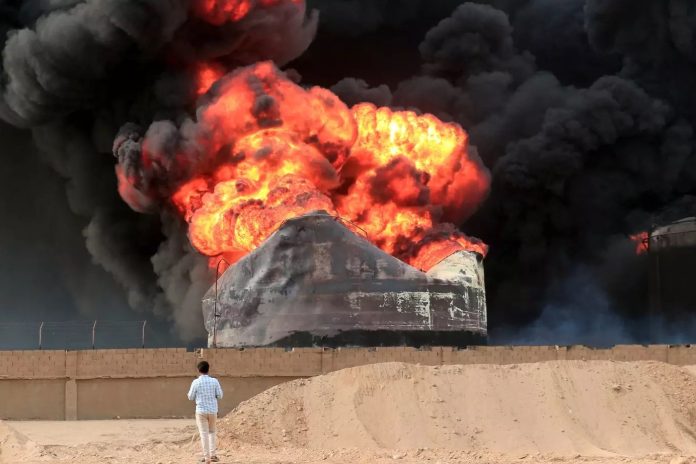
HRW: Yemen’s Hodeidah port attack by Israel likely ‘potential war crime’

The rights group described the attacks as potentially “unlawful, indiscriminate or disproportionate”, and said they were likely to impact civilians in the country.

Israel carried out air strikes on the Yemeni city after a drone launched by the country’s Houthi movement, also known as Ansar Allah, hit central Tel Aviv, killing one person.

The Houthis, who control Sanaa and most of northern and western Yemen, have been launching drone attacks towards Israel in response to its ongoing military campaign against Palestinians in the Gaza Strip.

“Serious violations of the laws of war committed wilfully, that is deliberately or recklessly, are war crimes,” HRW added.

The Israeli strikes hit two dozen oil storage tanks and two shipping cranes, as well as a power plant. At least six were killed and at least 80 people were injured in the attack.

Nasruddin Amer, a spokesman for the Houthi movement, described the strikes as “a brutal act of aggression against Yemen aimed at worsening the suffering of its people and pressuring Yemen to halt its support for Gaza”.

There is no evidence of a Houthi military presence in the port.

In addition to drone attacks, the Houthis have been targeting ships in the Red Sea linked to Israel.

That campaign has drawn a military response from the US and its allies, which has launched air strikes on Houthi positions in the country.

UNSC’s inaction root cause of Israel’s crimes against Palestinians: Iran

“There is no doubt about the necessity of establishing a ceasefire [in Gaza]. The world is fed up with more than 10 months of acts of brutality and audacity of the Israeli regime and cannot accept this amount of crime anymore,” Kanaani said.

He added that Iran welcomes any sincere effort to establish a ceasefire in the war-stricken Gaza Strip and was among the leading countries that used all its capacities to stop the Israeli regime’s “killing machine”.

Iran believes that the US lacks the competence to pursue the ceasefire negotiations as it is one of the Israeli regime’s supporters and is not committed to preserving international security and peace, the spokesman emphasized.

“The US has so far proved that it is a party to the war and killing,” Kanaani said.

He added that the ceasefire talks have been held between Palestinian groups and the Israeli regime, which has so far killed more than 40,000 Palestinians.

As announced by the Palestinian resistance movement Hamas, which is the main Palestinian negotiating party, the Israeli regime has no intention to establish a ceasefire in Gaza, he explained.

“Therefore, the ball is in the court of Israel and the US.”

Kanaani said, “Iran’s response to the assassination of Martyr Haniyeh as an official guest of Iran and the issue of the ceasefire negotiations in Gaza are two separate issues.”

“We have been and are the strongest and most important regional and international supporter of the cessation of war and [establishment of] ceasefire and we still support any action in this regard,” he added.

He, however, emphasized that the ceasefire negotiations have nothing to do with Iran’s “legitimate and legal right to punish the aggressor”.

Iran has the right to defend its security and territorial integrity in accordance with the United Nations Charter and has been committed to political and legal approaches in this regard, the spokesman stressed.

He expressed regret that the Security Council has failed to fulfill its duty vis-à-vis the Israeli regime, adding, “We told our friends that we do not seek to intensify insecurity in the region but we insist on Iran’s legal right to punish the aggressor and we will use it at the appropriate time.”

Elsewhere in his remarks, Kanaani responded to a question about some countries’ mediatory role to dissuade Iran from giving a response to the Israeli regime.

He said, “If the international community and the Security Council were able and had shown in practice that they have the necessary will and ability to maintain regional and international peace in the face of the Zionist regime, we would not have witnessed more than 10 months of crimes in Gaza.”

He rejected the “irrational” request made by some countries from Iran to exercise self-restraint under the circumstances that Israel is posing a serious threat to regional peace and security.

“We are facing a rogue regime that does not adhere to any international regulations. The impunity of this regime is a threat to regional and international peace and security,” the Iranian spokesman emphasized.

Kanaani reiterated the country’s “inherent and legitimate” right to respond to Israel’s act of aggression, saying, “This right will not be lost under any circumstances”.

He stressed that the Israeli regime’s assassination of the Hamas leader was a blatant violation of international law.

It is a definite principle for Iran to support Palestine, he said, adding that the punishment of the aggressor is an action that will promote regional peace and stability and help the settlement of the Palestinian issue.