Sunday, December 28, 2025
Home Blog Page 751

Iran UN envoy warns about threats posed by Israel’s nukes

Amir Saeed Iravani

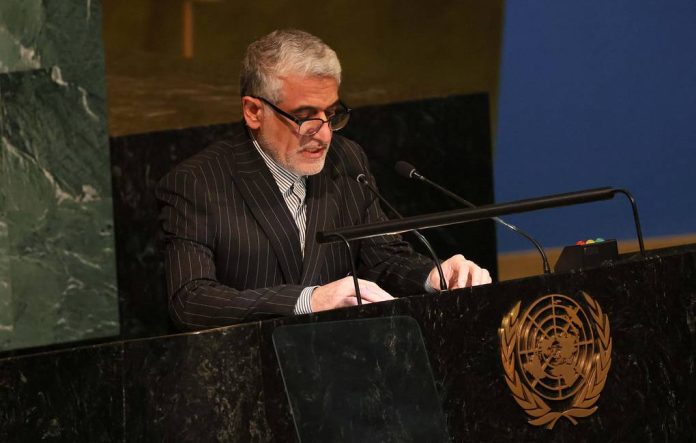
Addressing a meeting of the Untied Nations General Assembly on Wednesday, Amir Saied Iravani said the Israeli regime’s nuclear arsenal poses a significant threat to both regional and global peace and security.

The UNGA meeting was held on the occasion of the International Day Against Nuclear Tests.

Iravani said observing this day is the commemoration of the victims of nuclear tests, the people who suffered, are suffering and will continue to suffer due to the enduring effects of radioactive fallout.

Saying that around 2,000 nuclear tests have been conducted since 1945, the Iranian envoy added 1,045 tests have been carried out by the US alone.

Elsewhere, Iravani called on the international community to make the Israeli regime promptly accede to the NPT (Non-Proliferation Treaty) without any precondition and to place all of its nuclear facilities under the full-scope safeguards of the International Atomic Energy Agency.

The Iranian diplomat urged the elimination of all nuclear weapons worldwide, adding nuclear disarmament must remain a top priority for the international community, and all forms of nuclear testing must be unequivocally prohibited.

Iran parliament to probe death in custody of suspects

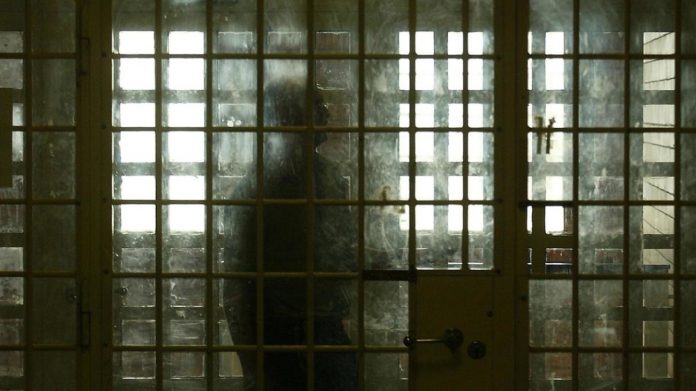
Iran Prison

Valiollah Bayati, the spokesperson for the Parliament’s Commission on Internal Affairs, made the announcement days after an Iranian man died in custody due to police misbehavior in a city north of the country.

He added the parliament is seeking to get a clear picture of the death of Mohammad Mirmousavi who died while in custody at a detention center in northern Gilan province.

Mirmousavi, 36, who had been detained after getting into a brawl and altercation with locals in the city of Lahijan, reportedly misbehaved in detention and provoked the officers to deal with him harshly.

However, the police have confirmed in a statement that the behavior of some law enforcement agents was against the professional policy of the police and the personnel were referred to the judicial authorities for trial. The head of Lahijan police force was also fired following the incident.

“The death of the suspects in the detention center was not the first incident and several cases have occurred in the past months and years, so the parliament investigates the reasons for the deaths in detention centers” he noted.

Bayati said the police authorities need to deal firmly with those who violated the protocols to prevent such incidents from happening again.

Iran’s U20 Greco-Roman wrestlers become world champions

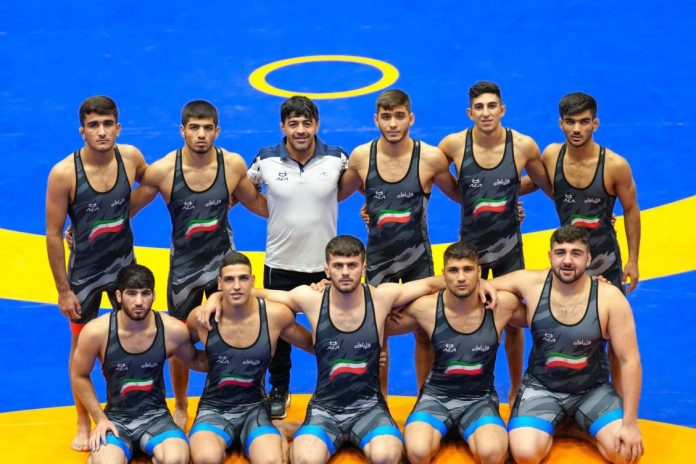
Iran's U20 Greco-Roman wrestlers

Iran has claimed the title at Under-20 World Championships, bringing home six total medals, four golds, one silver, and one bronze.

The competition went underway in the city of Pontevedra in northwestern Spain from Monday to Wednesday, during which Iran’s wrestlers scored the victory with 147 team points.

Ali Ahmadi Vafa, Mohammad Mehdi Gholampour, Ahmad Reza Mohsen Nezhad, and Alireza Abdevali won golds for Iran in the 55kg, 60kg, 67kg, and 77kg categories.

Abolfazl Fathi Tazangi bagged the 130kg category’s silver, while Erfan Jarkani earned the bronze in 63kg.

The championship marked the fifth one to be won by Iran with Hamid Bavafa as head coach.

Kazakhstan became third in the competition with 100 team points, and Turkey ended up third with 98.

UN says Israel using ‘war-like’ tactics in West Bank

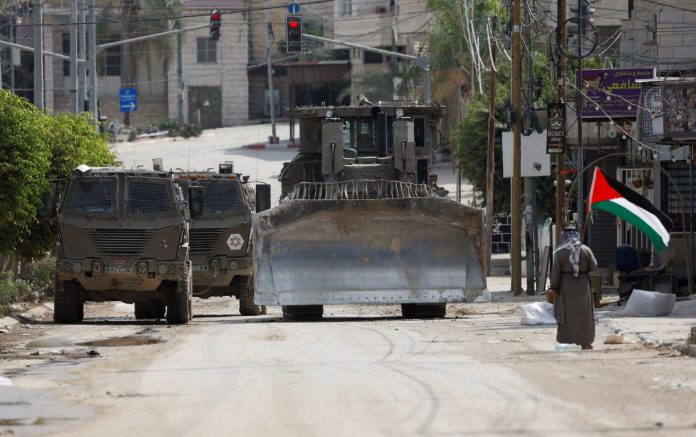
Israel Palestine West Bank

The Office for the Coordination of Humanitarian Affairs (OCHA) said in a statement on Wednesday that Israeli attacks have killed more than two dozen people over the past week or so, including children.

The continuing raids, mostly concentrated on the Tulkarem and Jenin refugee camps, constitute Israel’s largest aggression on the occupied territory since the second Intifada in the early 2000s.

The assault has seen significant violence and numerous arrests, while roads and other infrastructure have been destroyed by Israeli military bulldozers.

OCHA said it had mobilised organisations from the UN and beyond to assess the damage and humanitarian needs on the ground.

Visiting Tulkarem on Saturday, the teams confirmed the displacement of 120 people, including more than 40 children, whose homes were destroyed, the statement said.

“At the time of the assessment, 13,000 people in Nur Shams refugee camp experienced water cut-offs, attributed to damages caused to the water network, and sewage overflow was observed. The teams also noted that the population was traumatized and in need of psychosocial support,” OCHA added.

A similar assessment team was denied access to Jenin by the Israeli authorities on Wednesday.

“OCHA warns that access impediments are impacting the ability to provide meaningful humanitarian response. The movement of ambulances and medical teams has been impeded and delayed since the onset of the now-week-long operation. Humanitarian access must always be facilitated,” the statement reads.

Israeli military’s latest assault in Jenin is in its eighth day, and the third day in Tulkarem, where Israeli troops are inflicting “widespread destruction”, according to the Wafa news agency.

Citing its correspondents on the ground, the agency noted Israeli soldiers dropped bombs on the refugee camp, sparking fires in al-Shamaliya neighbourhood.

Israeli snipers were stationed on tall buildings, while spy drones flew and bulldozers damaged infrastructure, with “no street or alley left without destruction”, Wafa reported.

A siege of al-Israa and Thabet schools was also continuing, it added.

Al Jazeera’s team on the ground also reported an ongoing Israeli raid in the Jalazone refugee camp, north of Ramallah. Sources said that dozens of Palestinians have been detained and questioned in local community centres.

At least 20 Palestinians have also been rounded up from Beit Surik. Most returned after they were interrogated.

Other raids were reported in Qalqilya, Nablus with a focus on Balata and Askar refugee camps, as well as al-Khader town south of Bethlehem and al-Azza refugee camp north of the city.

Israeli security forces have besieged Hebron for a fourth day running and more checkpoints and gates have been erected.

Since the onset of the current aggression in the West Bank, the number of Palestinians killed by Israeli troops has increased to 33.

The heightened tensions in the occupied West Bank come as the Israeli regime has since October been conducting a barbaric onslaught on the besieged Gaza Strip, claiming the lives of nearly 41,000 people, most of them women and children.

Governor of Jenin Kamal Abu al-Rub said the Israeli army is preventing water and food from getting to families trapped in certain besieged areas of the northern West Bank city and its refugee camp and families have been forced to leave their homes.

“Around 700 to 1,000 families, 4,000 to 5,000 residents, from the eastern neighbourhood and the Jenin refugee camp were forced to leave their homes at gunpoint [by the Israeli army],” Abu al-Rub stated.

The Jenin municipality has announced that the Israeli army has bulldozed 70 percent of the city’s streets and water has been cut off from 80 percent of homes.

Additionally, 20 kilometres of water and sewage networks, communication and electricity cables have been demolished.

Nidal al-Obaidi, mayor of Jenin, told Middle East Eye that the Israeli operations have left the city looking like the aftermath of an earthquake.

Israeli forces have been stationed there for several days, besieging the area while carrying out bulldozing operations and demolitions.

“No information has been received from the camp due to the tight siege and the cutting off of electricity, water and communications,” Obeidi added.

“The commercial square area, which is considered the heart of Jenin, has been completely destroyed and shopping has completely stopped. Many shops have been demolished, bulldozed and burned amid a severe shortage of food and medicine.”

Israeli forces have “occupied many homes and expelled their owners”, the mayor continued.

Soldiers have also made holes in the walls to facilitate movement between them.

The Jenin Government Hospital had to stop operations in several departments due to water and electricity shortages and a lack of medical supplies, Obeidi said, adding that dialysis patients were transferred to Nablus to continue their treatment.

“What is happening in Jenin portends an environmental and food catastrophe and complete paralysis of life,” he continued.

“The school year is just around the corner, and teachers were supposed to start their work last Sunday, but they were unable to reach their schools.”

Out of the 33 Palestinians who have been killed since Israel launched their largest invasion of the West Bank since the Second Intifada, 19 were in Jenin, the Palestinian health ministry has confirmed.

Israeli minister warns of worst-ever mental health crisis amid Gaza war

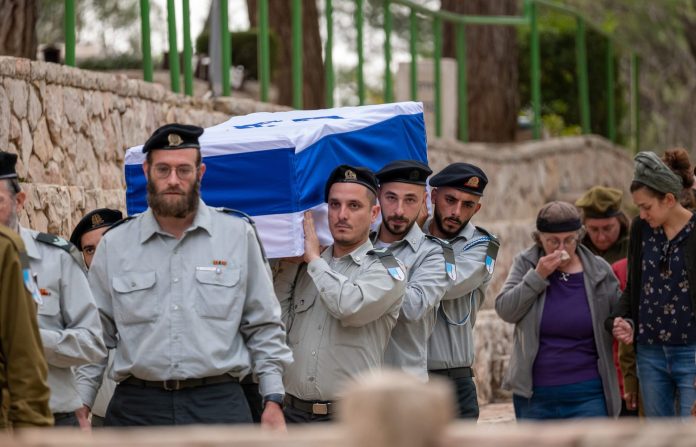
Israel Army

“We are experiencing the largest mental health event the state has known since its establishment. A crisis that requires us, as a state and a society, to change perceptions and upgrade the public mental health system once and for all to meet the challenges posed by the war and the future,” he said at the Enosh Mental Health 2024 Conference in Tel Aviv.

Buso added that ministry assistance to the HMOs to treat mental health issues will double to about 600 million shekels in 2025.

“It is very important to focus on actions that create resilience,” he continued.

The ministry has taken “several significant steps to make the system less deficit-ridden and more stable, with financial certainty and the ability to invest wherever needed”, the minister noted.

“Since October 7, we have increased the capacity of resilience centers at a cost of tens of millions of shekels,” he said, adding, “Thousands of Israelis have been treated to date.”

He said the ministry has integrated new technologies, expanded mental health crisis teams, and trained mental health support professionals.

“Today, mental health is the most important issue in the healthcare system,” adds Moshe Bar Siman-Tov, Health Ministry director general.

In early March, the army announced around 30,000 Israeli soldiers have called up a mental health hotline since the outbreak of the war in the Gaza Strip on Oct. 7.

A military statement said that around 85% of the soldiers who sought psychological treatment had returned to active duty.

“Around 200 soldiers were discharged from the army due to the psychological problems they suffered” from the war, it added.

The Israeli army’s Medical Corps plans to inaugurate a new mental health center for soldiers, amid fears of troops developing post-traumatic stress disorder as a result of the Gaza war.

The new mental health center will include a clinic to treat PTSD among troops, the army noted.

Back in February, Yekhiel Levechitz, the head of the army’s clinical department for mental illnesses, stated around 3,000 soldiers had been examined by mental health experts since Oct. 7.

The ongoing war unleashed trauma across the occupied territories, with the death toll, as well as the issue of Israeli captives and the displacement of tens of thousands of Israelis of affecting the entire Zionist entity.

Senior military official says Israel shouldn’t doubt Iran’s resolve to retaliate over assassination of Haniyeh

Hamas Ismail Haniyeh

The Iranian Armed Forces’ Deputy Chief of Staff for Coordination, Brigadier General Ali Abdollahi made the remarks during a ceremony in the northwestern Iranian city of Koumeleh on Wednesday.

“The Zionist regime should not dream that Iran would not respond to this atrocity…because the Islamic Republic has [already] proven its will to deploy all its capacities towards responding to enemies’ violation of its soil and waters,” he said.

The official quoted remarks made by Leader of the Islamic Revolution Ayatollah Seyyed Ali Khamenei following the assassination, in which the Leader pledged that the Islamic Republic would deliver a “harsh response” to the atrocity.

“The time of the response, however, will be determined by the Leader and the country’s senior commanders,” Abdollahi added.

Haniyeh, the late head of the Palestinian resistance movement Hamas’ Political Bureau, was assassinated alongside one of his bodyguards in the Iranian capital Tehran on July 31, a day after he attended the swearing-in ceremony of Iran’s President Masoud Pezeshkian.

Abdollahi cited several instances of the country’s successful retaliation against aggressors such as its steadfast defense of its soil during the 1980s in the face of former Iraqi dictator Saddam Hussein’s invading army, which was being heavily armed by the West.

“The country’s security, power, and advancement are the results of the sacrifices that were made by its martyrs and fighters [during the war],” he said.

Abdollahi also enumerated Iran’s firing of volleys of ballistic missiles against United States-occupied bases in Iraq in January 2020 in response to Washington’s earlier assassination of the Islamic Republic’s senior anti-terror commander, Lieutenant General Qassem Soleimani.

Iran’s response to the assassination came “while there had been no direct attack [like it] on the US’s interests throughout the previous 70 years”, the official stated.

He also pointed to the country’s retaliation of April 13 against a deadly attack by the Israeli regime that had targeted the consular section of the Islamic Republic’s Embassy in the Syrian capital Damascus earlier that month. The reprisal saw Iran’s Islamic Revolution Guards Corps (IRGC) targeting the occupied Palestinian territories with a barrage of drones and missiles, inflicting damage on Israeli military bases there.

“There are many countries that have [various type of] equipment and weapons, but having the will to deploy these is a different matter, and the enemy knows that Iran possesses the will to do so,” Abdollahi said.

“Our enemies have been humiliated and do not dare to violate the Islamic Republic’s territory…,” he added, asserting, “Therefore, we say this to the global arrogance that it should not test the Iranian nation’s steadfastness once again.”

A commander of the Quds Force of the IRGC has also warned that Tehran’s response to Israel’s assassination of Haniyeh will be “different and surprising”.

Brigadier General Mohsen Chizari, deputy commander for operations of the IRGC Quds Force, made the remarks in an interview with the Islamic Republic of Iran Broadcasting (IRIB) on Wednesday, stressing that Iran will respond to Haniyeh’s assassination “in due time.”

Touching upon “Operation Arbaeen” carried out by Lebanon’s resistance movement Hezbollah against the Israeli regime, Chizari stressed that the attack was in response to the assassination of the group’s top commander Fuad Shukr, adding that Iran’s crushing response will definitely be different.

Hamas says no need for new ceasefire proposals

Gaza War

Hamas has released a statement on ongoing talks for a ceasefire in the Gaza Strip and a deal to exchange Israeli captives for Palestinian prisoners held in Israeli jails.

“We do not need new proposals. What is required now is to pressure Netanyahu and his government and oblige them to what has been agreed upon,” the statement reads.

Hamas maintains that both it and Israel agreed to a deal proposed earlier this year but that Netanyahu has changed the terms.

“We warn against falling into Netanyahu’s trap and tricks, as he uses negotiations to prolong the aggression against our people,” Hamas continued.

“Netanyahu’s decision not to withdraw from the Salah al-Din [Philadelphi] axis aims to thwart reaching an agreement,” it said, referring to the PM’s consistent refusal to withdraw Israeli soldiers from the area which runs along the southern border of the Gaza Strip.

on Wednesday, Netanyahu reiterated this refusal in a news conference in Jerusalem.

For months, Egypt, Qatar and the US have mediated indirect talks between Israel and Hamas, but these efforts have yet to yield results, largely due to Israel’s refusal to meet Hamas’s demands for an end to the war, the withdrawal of Israeli forces from Gaza, and the return of displaced Palestinians to northern Gaza.

More than 40,800 Palestinians, mostly women and children, have been killed since the start of the Israel-Hamas war on Oct. 7 last year and nearly 94,400 others injured, according to local health authorities.

An ongoing blockade of the enclave has led to severe shortages of food, clean water and medicine, leaving much of the region in ruins.

Israel also faces accusations of genocide for its actions in Gaza at the International Court of Justice.

On Tuesday, Hamas issued a stark warning to Israel regarding the ongoing genocide in Gaza, saying the lives of captives held in the besieged territory are in danger unless the regime reverses its course.

In a video message directed at Israeli settlers, Hamas stated that the continuation of military aggression would jeopardize the safety of Israeli captives.

Hamas added if the attacks on Gaza ceases, the captives will be returned safely to their homes in the occupied territories, and if the aggression persists, the fate of these individuals would remain uncertain.

The video message noted, “Every day that Netanyahu continues to rule may mean a new coffin.”

Hamas took a large group of Zionist settlers and soldiers captive in its October 7 Operation Al-Aqsa Storm, which caught the regime off-guard.

The movement initially offered to release the captives in exchange for the release of a large number of Palestinians held by Israel.

But Netanyahu has taken a tough line in the Gaza ceasefire talks, and repeatedly said military pressure is needed to bring home the captives.

According to Israeli media, he has feuded with the regime’s high-profile officials who say a deal should be struck urgently.

Dozens of the captives have so far been killed in the indiscriminate bombardment of the besieged enclave.

During its operation, Hamas took 251 Israelis captive, 97 of whom now remain in Gaza, including the bodies of at least 33 confirmed dead by the Israeli military.

Earlier this week, the military found the bodies of six captives in a tunnel in the southern city of Rafah. Hamas said they were killed in Israeli airstrikes.

The death of the six captives ignited fury among Israelis who have for months denounced Netanyahu’s policy of torpedoing a deal with Hamas in favor of his political interests.

Unofficial sources say several Iranian banks hit by massive cyberattack

Iran ATM Bank

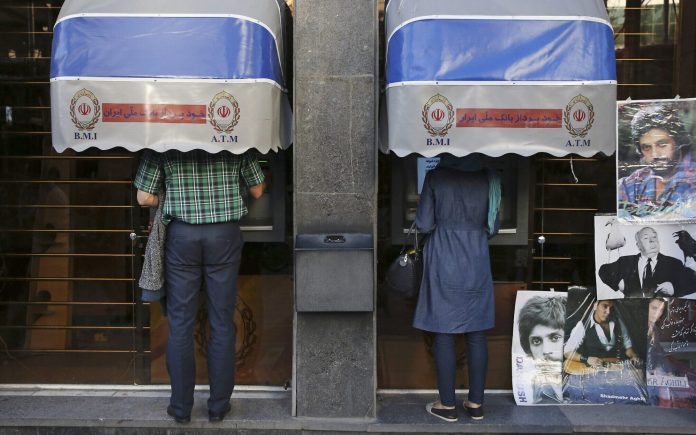
An Iranian firm paid at least $3 million in ransom last month to stop an anonymous group of hackers from releasing individual account data from as many as 20 domestic banks in what appears to be the worst cyberattack the country has seen, according to industry analysts and western officials briefed on the matter.

A group known as IRLeaks, which has a history of hacking Iranian companies, was likely behind the breach, the officials said. The hackers are said to have initially threatened to sell the data they collected, which included the personal account and credit card data of millions of Iranians, on the dark web unless they received $10 million in cryptocurrency, but later settled on a smaller sum.

Iran pushed for a deal, fearing that word of the data theft would destabilize the country’s “already-wobbly financial system”, which is under intense strain amid the international sanctions the country faces, the officials added.

Iran never acknowledged the mid-August breach.

People familiar with the Iranian banking hack told POLITICO that IRLeaks is affiliated with neither the US nor Israel, suggesting the attack may have been the work of freelance hackers driven primarily by financial motives.

Such cases have become increasingly common around the world in recent years as sophisticated hackers seize private data from governments and companies and demand ransom in return for not releasing the information.

Iran is no stranger to such activity. In December, IRLeaks claimed to have stolen the customer data of nearly two dozen Iranian insurance companies, and of hacking into Snapp Food, a delivery service. Though the companies agreed to pay ransom to IRLeaks, it was far less than the group received from the banking hack, the officials noted.

IRleaks entered the banks’ servers via a company called Tosan, which provides data and other digital services to Iran’s financial sector, the officials said. Using Tosan as a Trojan horse, the hackers appear to have siphoned data from both private banks and Iran’s central bank. Of Iran’s 29 active credit institutions, as many as 20 were hit, added the officials, who requested anonymity in order to reveal sensitive information.

Among the affected banks were the Bank of Industry and Mines, Mehr Interest-Free Bank, Post Bank of Iran, Iran Zamin Bank, Sarmayeh Bank, Iran-Venezuela Bi-National Bank, Bank Day, Bank-e Shahr, Eghtesad Novin Bank, and Saman, which also has branches in Italy and Germany.

Iran ultimately forced Tosan to pay the IRLeaks ransom, a personal familiar with the events claimed.

What isn’t clear is whether the hackers used Tosan to hit other targets in Iran. The firm has a wide customer base, including government entities beyond the central bank.

US charges RT employees over alleged election influence

RT

Justice Department officials said the two employees used shell companies and fake personas to pay $10 million to an unnamed Tennessee company to produce online videos aimed at amplifying political divisions in the United States.

The US Treasury and State departments also announced actions targeting RT, including the network’s top editor, Margarita Simonovna Simonyan.

American officials said Russia’s goal is to exacerbate US political divisions and weaken public support for American aid to Ukraine in its war with Russia.

“We will be relentlessly aggressive in countering and disrupting attempts by Russia and Iran, as well as China or any other foreign malign actor, (to) interfere in our elections and undermine our democracy,” US Attorney General Merrick Garland stated.

The FBI separately sought court permission to seize 32 internet domains it said were part of Russia’s foreign influence effort.

RT responded with ridicule, telling Reuters, “Three things are certain in life: death, taxes and RT’s interference in the US elections.”

RT ceased operating in the United States after major television distributors dropped it following Russia’s invasion of Ukraine.

Russian lawmaker Maria Butina told Reuters that Moscow does not think it matters whether Republican Donald Trump or Democrat Kamala Harris wins the Nov. 5 election.

“The only winner of the US election is the US private military industrial complex,” added Butina, who spent 15 months in US prison for acting as an unregistered Russian agent.

Moscow has repeatedly stressed it has not meddled in the upcoming US election.

The criminal indictment charged the two RT employees, Konstantin Kalashnikov and Elena Afanasyeva, with conspiracy to violate US money laundering and foreign agent laws. Both are based in Russia and remain at large, American officials say.

Authorities said the RT employees worked with two foreign nationals in the United States, who set up a company that recruited prominent conservative commentators to post regular videos on topics like immigration and US politics.

Though the company is not named in the indictment, details provided in court filings match up with Tenet Media, a Nashville-based company that has posted nearly 2,000 videos to YouTube in less than a year.

The indictment’s description of a “network of heterodox commentators that focus on Western political and cultural issues” matches Tenet’s own promotional wording on its website. In addition, Tenet’s incorporation date of Feb. 19, 2022, filed with the Tennessee Secretary of State matches the date mentioned in the indictment.

The company paid $8.7 million to the production companies of three of the online stars it recruited, according to the indictment. The company’s founders also received more than $760,000.

The commentators, who were not named in the indictment, did not know they were paid by RT, the Justice Department announced.

In one instance, the indictment said, Afanasyeva asked the company to produce a video that would blame Ukraine and the United States for a mass shooting at a Moscow music venue, the Justice Department said, even though Islamic State had claimed responsibility.

A company founder responded that one of the commentators is “happy to cover it”, added the indictment.

Benny Johnson, one of the commenters who has worked with Tenet, said in a statement he is disturbed by the indictment and added it “makes clear that myself and other influencers were victims in this alleged scheme”.

Tim Pool, another commenter, also said he and the other influencers “were deceived and are victims”. He added no one else had editorial control of his broadcasts.

The Justice Department has not charged Tenet executives with wrongdoing. However, it alleges that the company failed to disclose that it was funded by RT and its executives never registered with the Justice Department that they were acting as agents of a foreign government.

The Justice Department has previously warned that Russia remains a threat in the election and appears to be favoring Trump over Harris.

US intelligence assessments found that Moscow tried to help Trump in 2016, when he defeated Democrat Hillary Clinton, and in 2020 when he lost to Democrat Joe Biden. Moscow has denied the allegations.

After the charges were announced, Trump posted on social media that the Justice Department was working to defeat him in the election.

Majority of Israelis support leaving Philadelphi Corridor to secure deal with Palestinians

Israeli Army

A slim majority of Israelis would support leaving the Philadelphi Corridor if it means reaching a deal with Hamas to release the remaining Israeli hostages held in Gaza, according to a new poll.

53 percent of Israelis would support a pullout if it comes with a captive agreement, Israeli public broadcaster Kan found in a new poll.

The presence of Israeli forces in the narrow strip of land that runs along Gaza’s southern border with Egypt has become a major sticking point in negotiations for a ceasefire in the besieged enclave and an exchange of Palestinian prisoners and Israeli captives.

Prime Minister Benjamin Netanyahu has repeatedly refused to leave the area, even though Hamas stressed a previous version of a ceasefire deal, which included the withdrawal of Israeli troops from the corridor, was already agreed to by Israeli officials.

For months, Egypt, Qatar and the US have mediated indirect talks between Israel and Hamas, but these efforts have yet to yield results, largely due to Israel’s refusal to meet Hamas’s demands for an end to the war, the withdrawal of Israeli soldiers from the besieged enclave, and the return of displaced Palestinians to northern Gaza.

More than 40,800 Palestinians, mostly women and children, have been killed since the start of the Israel-Hamas war on Oct. 7 last year and nearly 94,400 others injured, according to local health authorities.

An ongoing blockade of the enclave has led to severe shortages of food, clean water and medicine, leaving much of the region in ruins.

Israel also faces accusations of genocide for its actions in Gaza at the International Court of Justice.