Friday, December 26, 2025
Home Blog Page 741

Israeli mistreatment of Palestinian detainees could amount to ‘sexualized torture’: UN

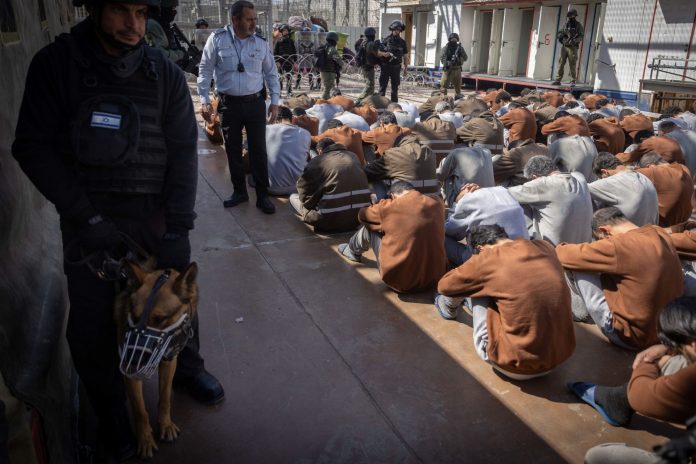
In a statement, the UN representative said Palestinian men and women are reportedly being subject to “widespread sexual slurs and threats of rape and gang rape, repeated and humiliating strip searches and prolonged forced nudity, beatings and electrocution of genitals and anus, insertion of objects into detainees’ anuses, inappropriate touching of women by both male and female soldiers, and photographing or filming of naked or partially undressed detainees in humiliating positions”.

Special Representative Patten recalled the reported recent case of the Palestinian male detainee who was hospitalised in July with severe injuries including to his rectum, due to sexual violence allegedly perpetrated in the Sde Teiman military base.

“I am particularly concerned about recent attempts by some Israeli political actors, to interfere with ongoing justice processes and/or to justify the use of these methods. Sexual violence and sexualized torture in detention settings must never be normalised,” she added.

Israel keeps Palestinian inmates under deplorable conditions without proper hygienic standards, subjecting them to systematic torture, harassment, and repression.

Human rights organizations say Israel continues to violate all rights and freedoms granted to prisoners by the Fourth Geneva Convention and international laws.

According to the Palestine Detainees Studies Center, around 60 percent of the Palestinian prisoners detained in Israeli jails suffer from chronic diseases, a number of whom died in detention or after being released due to the severity of their cases.

Palestinian detainees have continuously resorted to open-ended hunger strikes in an attempt to express outrage at their illegal detention.

Human rights experts say despite the Israeli regime’s denial of “systematic abuse” of defenseless Palestinian inmates, the sheer number of consistent accounts from former detainees, coupled with the testimony of Israeli personnel at the site, proves a disturbing pattern of mistreatment and torture at the Sde Teiman.

In total since October, dozens of Palestinian detainees had died either at the Sde Teiman prison site or after being transferred to nearby hospitals, the report revealed.

Israel’s ongoing war on the Gaza Strip has killed almost 41,000 Palestinians, mostly women and children, and injured nearly 95,000 others, according to local health authorities.

An ongoing blockade of the enclave has led to severe shortages of food, clean water and medicine, leaving much of the region in ruins.

Israel faces accusations of genocide for its actions in Gaza at the International Court of Justice.
Israeli soldiers ‘kill a Palestinian child every two days’ in West Bank: Report

Israeli Army

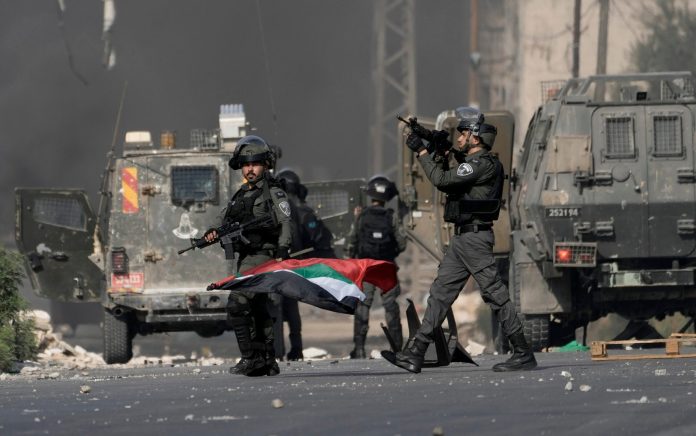
The report by Defence for Children International (DCIP), Targeting childhood: Palestinian children killed by Israeli forces and settlers in the occupied West Bank, is based on eyewitness testimonies, medical reports and CCTV footage. It documents the killing of 141 Palestinian children between 7 October 2023 and 31 July 2024.

Researchers found that on average, Israeli forces have killed a child every two days during this period.

According to the report, most of the victims were shot in the head or torso with live ammunition. It added that 18 children were shot in the back, indicating that they were not facing their assailants.

In many cases, the children were targeted by snipers, who are regularly deployed during military incursions into Palestinian communities across the West Bank.

Researchers said that while some of the children were killed during clashes between Israeli troops and Palestinian communities, snipers “routinely” target Palestinian children while they are “going about their daily lives”.

In one case, a four-year-old named Ruqaya Jahalin was shot in the torso while she was in a van with her mother at a checkpoint near Beit Iksa in the central West Bank.

In another, Mahmoud Amjad Ismail Hamadneh, 15, was shot in the head, torso and limbs by an Israeli sniper while riding his bike home from school in Jenin.

In all cases documented in the report, the DCIP emphasised that the children posed “no imminent threat” and that there was no evidence that Israeli forces issued warnings prior to firing.

It added that, under the UN Basic Principles on the Use of Force, Firearms by Law Enforcement, live ammunition should only be used as a last resort.

“Israeli forces have made clear their contempt for Palestinian children’s lives in their deliberate and systematic disregard for international law and even their own policies permitting the use of live ammunition in circumstances not justified under international law,” the report noted.

According to DCIP, in addition to deliberately targeting children, in 60 percent of the cases, Israeli forces “systematically” blocked paramedics and ambulances from reaching the wounded children.

The NGO has documented more than 700 deaths of Palestinian children in the West Bank, including East Jerusalem, since 2000. It said that, of that figure, 20 percent were killed since 7 October.

“This notable increase, in part, can be attributed to Israeli authorities’ unwillingness to hold individual soldiers accountable for unlawful conduct and war crimes,” the report read.

It added that while no Israeli soldiers have been held accountable for these deaths, their deliberate targeting of children is a breach of international law and means they could be prosecuted at the International Criminal Court (ICC) for the war crime of wilful killing.

Israel lobbying US Congress to pressure South Africa to drop ICJ Gaza genocide case: Report

ICJ

A diplomatic cable sent from Israel’s foreign ministry to Tel Aviv’s embassy in Washington and its consulates in the US reveals these instructions.

The cable, obtained and first reported by Axios, calls on Israeli diplomats to ask US lawmakers to issue statements saying South Africa’s ICJ case could lead to a suspension of US-South Africa trade, an unlikely possibility.

“We are asking you to immediately work with lawmakers on the federal and state level, with governors and Jewish organizations to put pressure on South Africa to change its policy towards Israel and to make clear that continuing their current actions like supporting Hamas and pushing anti-Israeli moves in international courts will come with a heavy price,” read a cable from Israel’s foreign ministry to its embassy and all consulates in the US.

The Israeli diplomats were also instructed to reach out to South African diplomats in the US and tell them their country will “pay a heavy price” if it doesn’t change its policy towards Israel.

On 29 December 2023, South Africa embroiled itself in a major legal battle with Israel when it filed its petition at the ICJ.

The filing came nearly three months after Israel launched its war on Gaza in response to the Hamas-led attacks on southern Israel on 7 October, which killed around 1,200 people.

Israel has since killed at least 41,000 Palestinians in Gaza, according to the official toll by the Palestinian health ministry. One estimate, however, published by the Lancet medical journal, estimates the death toll could be 186,000 Palestinians.

The ICJ submission called on the court to investigate whether Israel was committing genocide against the Palestinians after it launched its offensive on Gaza, where Israeli forces have targeted schools, residential neighbourhoods, hospitals, mosques and UN shelters.

The application says Israel’s actions are “genocidal in character because they are intended to bring about the destruction of a substantial part of the Palestinian national, racial and ethnical group”.

Israel rejected the filing, calling it a “blood libel” – a reference to antisemitic lies originating in the Middle Ages, in which Jews were claimed to have murdered Christian boys to use their blood for religious rituals.

Since its filing, several countries including Turkey and Mexico have joined in South Africa’s case against Israel. The case has sparked other legal interventions as well, including Nicaragua taking Germany to the ICJ over accusations that it has “contributed to the commission of genocide” in Gaza.

The ICJ has not made a decision on the accusations of genocide, but previously issued a partial order calling on Israel to prevent any acts of genocide in Gaza and to stop an invasion of Rafah, Gaza’s southernmost city.

The court is expected to begin discussions about the accusations of genocide in the coming months. It has set 28 October as the deadline for South Africa to submit its written arguments and 28 July 2025 for Israel to do the same.

According to Axios, the Israeli diplomats were also told to push for legislation against South Africa at the state and federal levels in the US, with the foreign ministry stating that “even if they won’t materialize, presenting them and talking about them will be important” in influencing the African nation’s policy.

The cable also asked diplomats to push for hearings about South Africa’s policy towards Israel in US state legislatures.

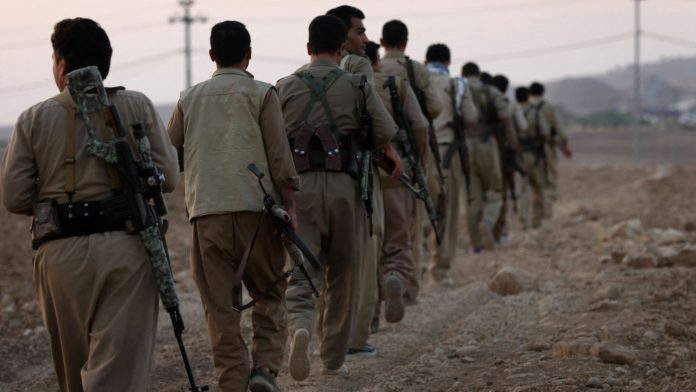
Anti-Iran terrorists relocated under Tehran-Baghdad security pact: Report

Tasnim news agency quoted an unnamed source as saying that security forces from the Kurdistan Regional Government (KRG) entered the Zrgwez bases, where the three Komala branches were based, a few days ago and transported all its residents to a new camp in Surdash area by truck.

The source said the relocation of the anti-Iran Kurdish terrorists came at the request of the Iranian government and was carried out in full coordination between the central Iraqi government as well as all security and political agencies of the Islamic Republic of Iran, including the Supreme National Security Council (SNSC), the Islamic Revolution Guards Corps (IRGC), the Ministry of Intelligence and the Ministry of Foreign Affairs.

According to the report, Iranian and Iraqi Kurdish people had long demanded the disarmament of Komala separatists and their withdrawal from camps in the Zrgwez region, as the militants used the bases to blackmail and assassinate locals and forcibly recruit child soldiers.

“The camps were serving as a venue for conspiring with the Zionist regime against our country. Iran, therefore, pursued and implemented the evacuation of the terror bases in order to ensure durable security,” the source noted.

The Komala is an Iraqi-based terrorist organization that has carried out assassinations in western Iran since the Islamic Revolution in 1979.

Iran and Iraq signed a security agreement that includes coordination in protecting the border between the two countries in the Iraqi capital of Baghdad on March 19 last year.

Anti-Iranian terrorist groups residing in the Iraqi Kurdistan region have increased their malign activities, especially in border areas. Responding to the activities, the IRGC launched several rounds of airstrikes against their positions since September 24, 2022, vowing to continue the attacks till the groups are unarmed.

Iran has, on countless occasions, warned the Iraqi Kurdistan’s local authorities that it will not tolerate the presence and activity of terrorist groups along its northwestern borders, saying the country will give a decisive response should those areas become a hub of anti-Islamic Republic terrorists.

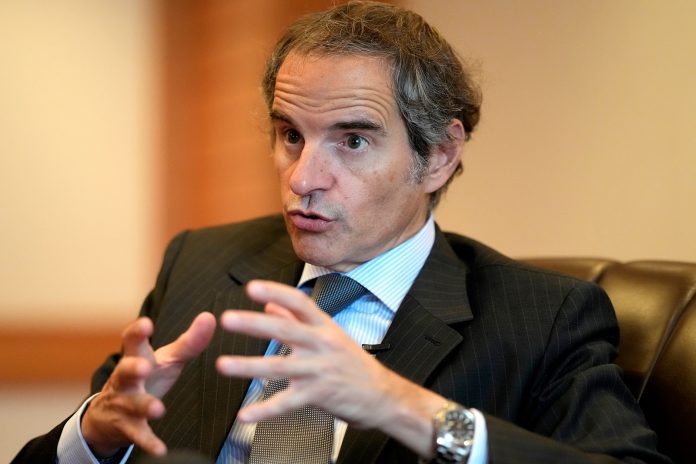
IAEA head hopes to hold talks with Iranian president by November

Rafael Grossi

“After the election in Iran (in July), I corresponded with President Pezeshkian, indicating my disposition to meet him in Tehran to re-launch the dialogue and cooperation between the Agency and Iran,” Grossi said in his introductory statement to a quarterly meeting of the IAEA Board of Governors in Vienna on Monday.

He added that the new Iranian president agreed to meet him “at an appropriate juncture”.

“I encourage Iran to facilitate such a meeting in the not-too-distant future so that we can establish a constructive dialogue that leads swiftly to real results,” stated the UN nuclear agency chief.

Asked at a news conference if his reference to the “not-too-distant future” meant before or after the presidential election in the United States, scheduled on November 5, Grossi said, “No, hopefully before that”.

The IAEA Board of Governors in June passed a resolution against Iran despite warnings from Tehran that it would react decisively to such a measure.

In November, Iran started enriching uranium to the purity level of 60% at its Fordow nuclear facility, after informing the IAEA of its decision via a letter.

Iran also installed two new IR2M and IR4 cascades at Natanz facility, which have now reached the stage prior to the injection of uranium gas into centrifuges.

“What we see is that there is some work, but nothing that indicates a rush to a fast implementation of a big increase in terms of enrichment production,” Grossi added.

Iran has stepped up nuclear work since 2019, after former US President Donald Trump pulled Washington out of the 2015 nuclear agreement, formally known as the Joint Comprehensive Plan of Action (JCPOA), reached under his predecessor Barack Obama.

Tehran started to reduce its commitments under the JCPOA in a series of pre-announced and clear steps after witnessing the other parties’ failure to secure its interests under the agreement.

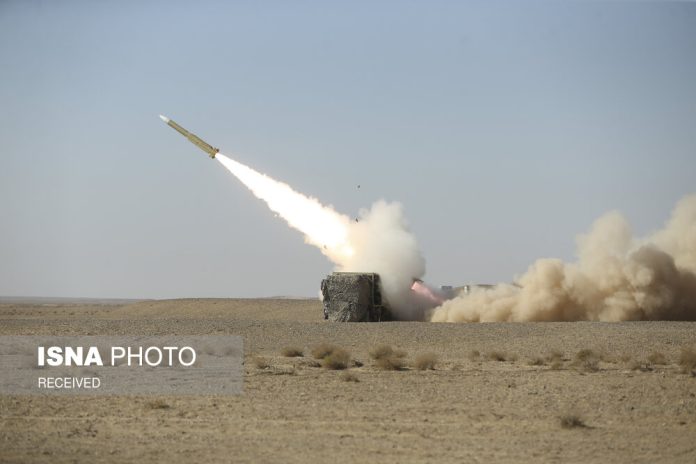
US says cannot confirm report of Iran missile supply to Russia

Iran Missile

“I cannot confirm the reports that the transfer has happened,” Kirby said in Washington on Monday.

Such a scenario would have a deleterious effects on both Ukraine and the Middle East, he added.

CNN and the Wall Street Journal reported last week, citing unidentified sources, that Iran had transferred short-range ballistic missiles to Russia, as Moscow continues to wage war in Ukraine more than two and a half years after its 2022 invasion.

A senior Iranian official denied the reports earlier on Monday, describing them as “psychological warfare”.

Deputy Commander of Iran’s Khatam Al-Anbiya Central Headquarters Fazlollah Nozari was quoted by the Iranian Labour News Agency as saying: “No missile was sent to Russia and this claim is a kind of psychological warfare.”

“Iran does not support any of the parties to the Ukraine-Russia conflict,” Nozari added.

Kremlin spokesman Dmitry Peskov has also said he had seen the report but that not all such reports were correct.

“Iran is our important partner, we are developing our trade and economic relations, we are developing our cooperation and dialogue in all possible areas, including the most sensitive ones,” Peskov told reporters on Monday.

Ukraine announced last week that deepening military cooperation between Tehran and Moscow was a threat to Ukraine, Europe and the Middle East, and called on the international community to increase pressure on Iran and Russia.

The United States also said on Friday any Iranian transfer of ballistic missiles to Russia would mark a sharp escalation in the Ukraine war.

That language was echoed on Monday by a NATO spokesperson, who stated the Western military alliance was aware of the media reports but would not be drawn on whether they were accurate.

“As Allies have stated previously, any transfer of ballistic missiles and related technology by Iran to Russia would represent a substantial escalation,” the spokesperson added.

Moscow has accused Kyiv’s allies of escalating the war by providing weapons used in Ukraine’s recent incursion into Russia’s Kursk region, and has threatened to respond.

UN chief says alarmed by ‘unprecedented’ death, destruction in Gaza

Gaza War

Antonio Guterres made the remarks in an interview with The Associated Press, as more than 11 months of the Israeli onslaught has killed a shocking number of Palestinians and sparked a humanitarian catastrophe in the besieged territory.

“The level of suffering we are witnessing in Gaza is unprecedented in my mandate as secretary-general of the United Nations,” he stated.

“I’ve never seen such a level of death and destruction as we are seeing in Gaza in the last few months.”

Guterres further noted that it’s “unrealistic” to think the UN could play a role in Gaza’s future, either by administering the Palestinian territory or providing a peacekeeping force, because Israel is unlikely to accept a role by the world body.

However, he added, “The UN will be available to support any ceasefire.”

He also expressed the United Nations’ readiness “to do whatever the international community asked for us.”

Israel waged its brutal Gaza offensive on October 7, 2023, after the Palestinian Hamas resistance group carried out a historic operation against the usurping entity in retaliation for its intensified atrocities against the Palestinian people.

So far, the occupying regime has so far killed at least 41,000 Palestinians, mostly women and children, and injured 94,825 others.

In its aggression, Israel has deliberately targeted hospitals and schools sheltering displaced Palestinians, destroying more than 80 percent of buildings in the Gaza Strip.

Israel is currently on trial for genocide at the International Court of Justice (ICJ) over the Gaza onslaught.

Additionally, the chief prosecutor of the International Criminal Court (ICC), a different court in The Hague, has issued arrest warrants for Israeli officials over their war crimes against Palestinians in the Gaza Strip.

Elsewhere in his interview, Guterres said that the so-called two-state framework is not only viable, but “the only solution” to the decades-old Israeli-Palestinian conflict.

“The two-state solution is, in my opinion, a must if we want to have peace in the Middle East,” he emphasized.

UN rights chief calls on states to challenge Israel over occupation

Pro-Palestine Rally

Nearly 41,000 Palestinians have been killed in Gaza, according to Gaza health officials, since Israel unleashed a military campaign in response to cross-border attacks by Hamas fighters on Oct. 7, 2023 in which 1,200 people were killed and a further 250 taken hostage. The conflict has also fuelled a surge in violence in the Israeli-occupied West Bank.

“Ending that war and averting a full-blown regional conflict is an absolute and urgent priority,” the UN High Commissioner for Human Rights, Volker Turk, said in a speech at the start of the five-week UN Human Rights Council session in Geneva.

“States must not – cannot – accept blatant disregard for international law, including binding decisions of the (UN) Security Council and orders of the International Court of Justice, neither in this nor any other situation,” he added.

He stated nearly 1.9 million people have been forcibly displaced across the Gaza Strip.

“While the actual number is likely higher, almost 10,000 Palestinians are held in Israeli prisons or ad hoc military facilities, many arbitrarily, with over 50 people having died due to inhumane conditions and ill-treatment.”

Elsewhere in his remarks, the UN rights chief urged the international community to act on Israel’s “blatant disregard” for international law in the occupied Palestinian territories.

He cited an opinion released by the UN top court in July that called Israel’s occupation illegal and stressed that this situation must be “comprehensively addressed”.

Turk warned that “deadly and destructive” operations in the West Bank are at a scale “not witnessed in the last two decades”, and they are “worsening a calamitous situation” which is already aggravated by settler violence.

The remarks came as Israeli violence against Palestinians in the West Bank, including military raids and settler attacks, has soared since the start of the war in the Gaza Strip in October 2023.

Nearly 690 Palestinians have been killed by Israeli soldiers or settlers in the West Bank since the onset of the Gaza war, according to reports.

At least 23 Israelis, including members of the security forces, have been killed in Palestinian attacks during the same period, Israeli officials say.

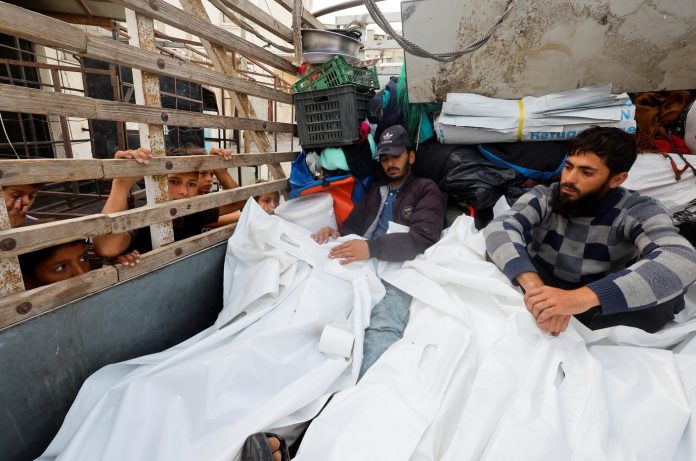
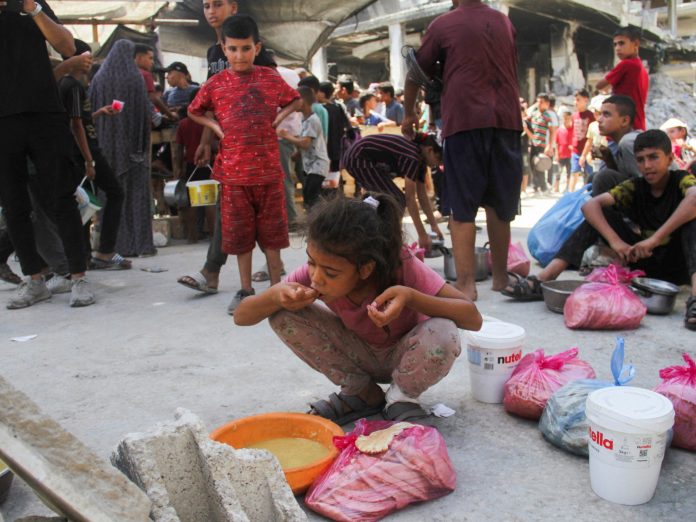
UN warns nearly all Gazans in ‘urgent’ need of aid

In a tweet posted on Monday, the UN aid agency emphasized once more that “a ceasefire is needed!”

According to stats released by the WFP, 96 percent of the population of Gaza is facing acute food insecurity, with 2.15 million people at crisis levels of hunger or worse, as the Israeli regime is using famine as a weapon of war.

Furthermore, the WFP says almost half a million people in Gaza are in “Catastrophic conditions”.

“Increased food deliveries to the north and nutrition services have helped to reduce the very worst levels of hunger. However, a high risk of famine persists across the whole Gaza Strip, as long as the conflict continues,” it noted, adding that UN relief operations are severely affected by the escalation of violence in the south and center of Gaza.

The WFP criticized the Israeli regime for limiting the flow of humanitarian assistance and the worrying security vacuum and lawlessness in the south.

It said despite the dire conditions it is providing assistance to over 1 million people across Gaza each month.

The WFP added that the Israeli regime’s restriction on aid entering southern and central Gaza has forced the UN agency to provide reduced rations and prioritize providing hot meals, especially to newly displaced families from the city of Rafah in the south of the Israeli-besieged Gaza Strip.

The WFP pointed that in order to achieve a breakthrough and prevent famine, adequate and sustained levels of humanitarian assistance must be provided.

It also highlighted the importance of “law and order” for an effective humanitarian response to meet soaring needs.

Israel launched a genocidal war on the besieged enclave in early October last year, killing nearly 41,000 defenses Palestinians trapped in the hands of Tel Aviv’s war machine on the Palestinian land.

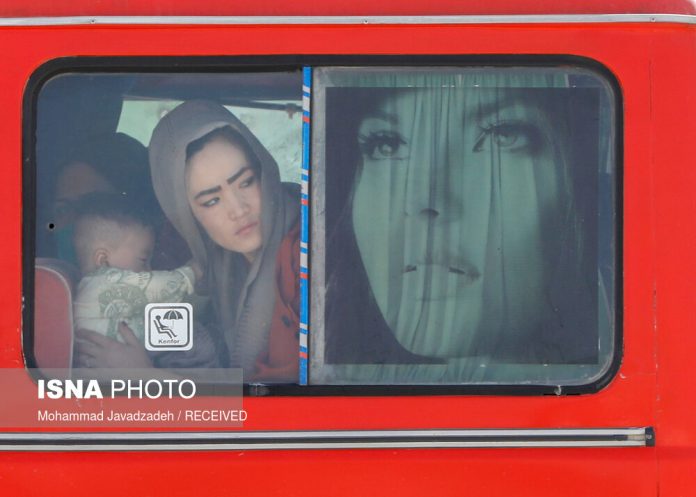
Iranian interior minister tells Afghan nationals to leave Iran 

Momeni noted that the current situation is absolutely intolerable for Iran.

He added that it’s expected that the Afghans will return to their country and build it.

Momeni also said Iran respects all Afghan nationals but the situation in Iran can no longer afford to let them stay here.

The interior minister of Iran underlined that while making an effort to streamline the state of Afghan nationals, the Iranian government prioritizes those who have sneaked into the country illegally.

He also said efforts are underway to control the border with Afghanistan.

Momeni said some measures to that end include the construction of a wall and set up a barbed wire fence along the border.

Iran has been hosting millions of Afghans over the past four decades amid continued wars in their country.

Tehran has criticized the UN for its failure to provide the Islamic Republic with assistance as it struggles to help the Afghan refugees with their livelihoods.

Unofficial sources put the number of Afghans in Iran at 10 million.