Friday, December 26, 2025
Home Blog Page 606

Energy giants voice deep concern over Israel deliberate attacks on Iran

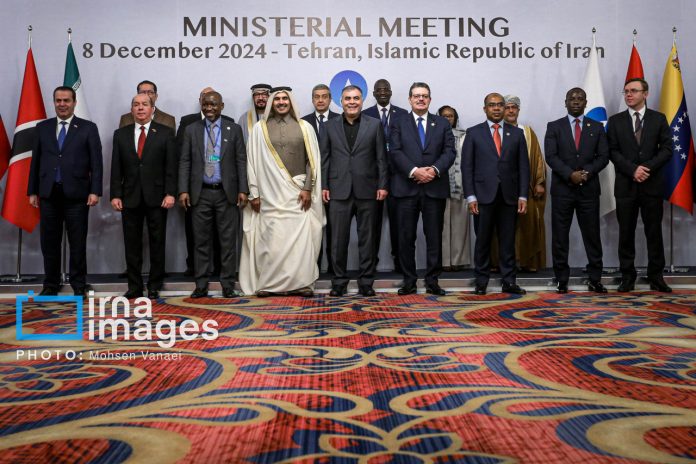
Issuing a final statement at the end of its 26th ministerial meeting in Tehran on Sunday, the GECF said it is deeply concerned over acts of deliberate attacks against Iran and added that such tensions affect vital supply chains, exacerbate energy poverty, and heighten market volatility.

Iran is a key member of the GECF as it sits on the world’s second-largest natural gas reserves and is the world’s third-largest gas producer.

Iran’s Oil Minister Mohsen Paknejad, who chaired GECF’s ministerial meeting, said that his country plays a major role in global energy security through its continued efforts to develop gas export infrastructures.

Paknejad said Iran had expanded its key gas resources, including the South Pars gas field in the Persian Gulf, which is the world’s largest gas field, despite oppressive sanctions imposed by the United States.

In its final statement in the Tehran meeting, the GECF reiterated its commitment to cooperate with other global energy stakeholders and the United Nations agencies to create a more balanced approach in dealing with international energy issues.

The statement highlighted the pivotal role of natural gas in economic development, social progress, and environment protection.

It said stronger multilateral collaboration can “ensure a balanced and inclusive approach to global energy governance,” and can address “challenges related to energy security, affordability, and environmental sustainability.”

The GECF was established in the late 2010s upon an idea raised by Iran earlier that decade. The Forum currently has 11 members and 8 observers.

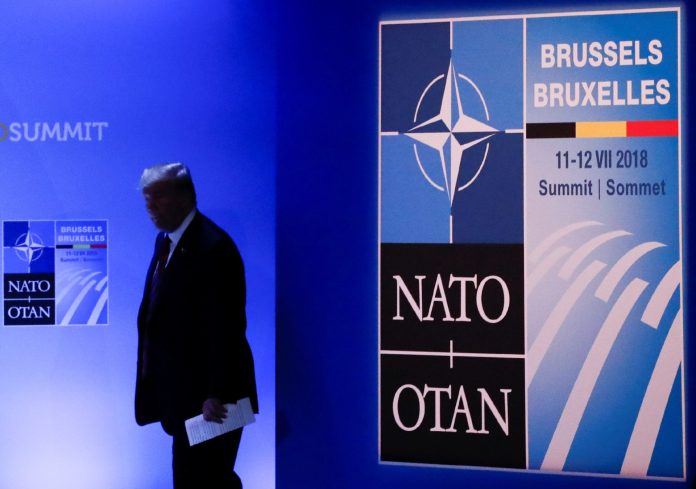
Trump says he will consider leaving NATO

Donald Trump NATO

Trump suggested in a Meet the Press interview aired that Ukraine could receive less aid under his presidency. When asked whether Ukraine should prepare for reduced U.S. assistance, Trump responded, “Possibly, sure.”

Trump reiterated that he is working to end the war in Ukraine, building on his previous campaign claim that he could resolve the war within 24 hours if he were in charge.

However, he confirmed that he has not spoken to Russian President Vladimir Putin recently, adding, “I don’t want to say that because I don’t want to do anything that could impede the negotiations.”

Trump also wrote on his Truth Social platform earlier that President Volodymyr Zelensky “would like to make a deal” and “stop the madness” of the war in Ukraine, following their meeting in Paris.

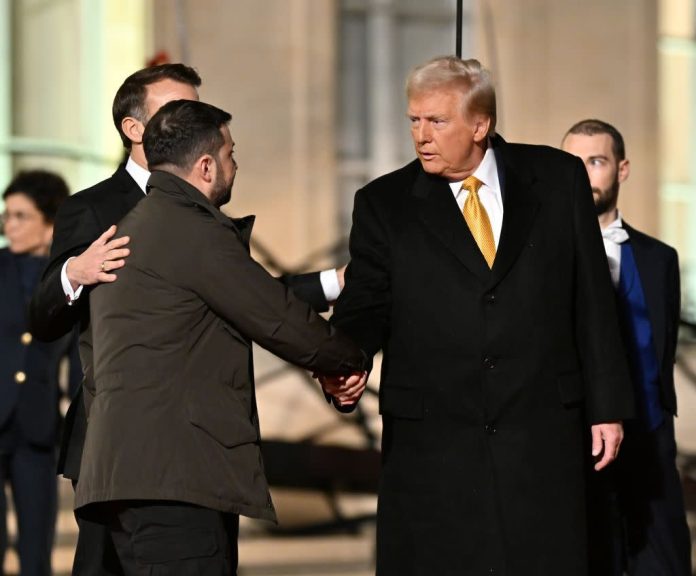
Trump and Zelensky met in Paris as world leaders convened for the reopening of the Notre Dame Cathedral. The meeting, hosted by French President Emmanuel Macron, marked the first in-person discussion between the two since Trump’s election victory in November.

Trump also refrained from guaranteeing the U.S. would remain in NATO but emphasized that the U.S. would continue its membership if treated “fairly” in terms of contributions.

Stability in Syria unlikely in short term, Iranian analyst opines

Syria War

In an interview with Shargh newspaper, Abbas Abdi said that the shift, both psychologically and on the ground, enabled forces opposed to now-toppled president Bashar al-Assad to gain the upper hand.

Abdi explained that Syria’s military-security government heavily relied on military and security measures and over the past 12 years, as public protests emerged, Assad’s reliance on foreign support, particularly from Tehran and Moscow, increased.

He suggested that if Russia had made a behind-the-scenes deal and Iran and Hezbollah’s support weakened, it was natural for the Syrian government to feel vulnerable and surrender.

He also added that the 14-year war in the country exhausted Syria, making it unbearable for its people and weakening the country’s foreign supporters both materially and politically.

Looking ahead, Abdi expressed pessimism about Syria’s post-Assad era, doubting the country’s ability to achieve relative stability in the short term given the myriad of political and armed groups, as well as regional and international actors involved.

US says launched airstrikes against Daesh camps in Syria following Assad fall

Daesh

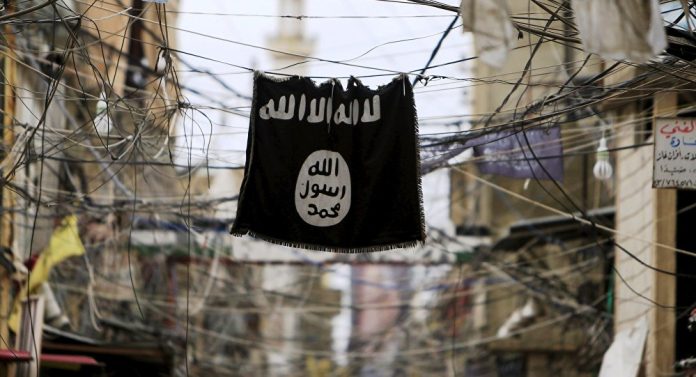
The military operation consisted of “dozens of precision airstrikes” and struck more than 75 targets in central Syria using Air Force assets, including B-52s, F-15s and A-10s.

“The strikes against the Daesh leaders, operatives, and camps were conducted as part of the ongoing mission to disrupt, degrade and defeat ISIS, in order to prevent the terrorist group from conducting external operations and to ensure that ISIS does not seek to take advantage of the current situation to reconstitute in central Syria,” CENTCOM’s statement read.

Earlier Sunday, the Syrian government fell after rebels entered the capital city and ended President Bashar Assad
and his family’s 50-year rule.

Assad and his family fled to Russia, where they were welcomed and approved for asylum.

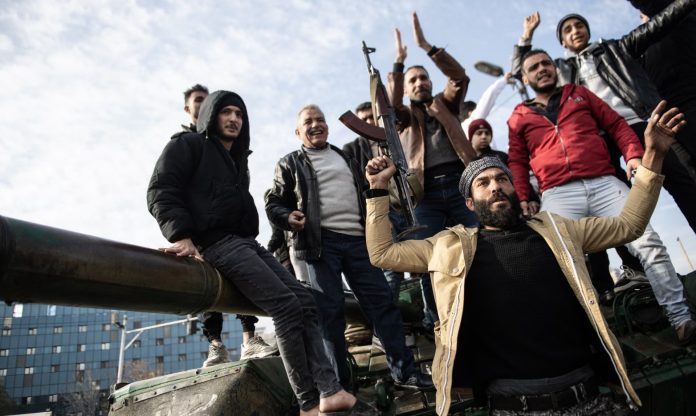
Citizens took to the streets in celebration of the overthrow and pivotal moment in the war.

The uprising has raised questions about what lies ahead for the country and region, but Gen. Michael Erik Kurilla stated there “should be no doubt” that the US will not allow ISIS to reconstitute in the wake of the current situation.

“All organizations in Syria should know that we will hold them accountable if they partner with or support Daesh in any way,” he said in a statement.

President Joe Biden stressed Sunday that the US will continue its anti-Daesh operations. He called Assad’s fall a “fundamental act of justice” but added the current moment was full of “risk and uncertainty”.

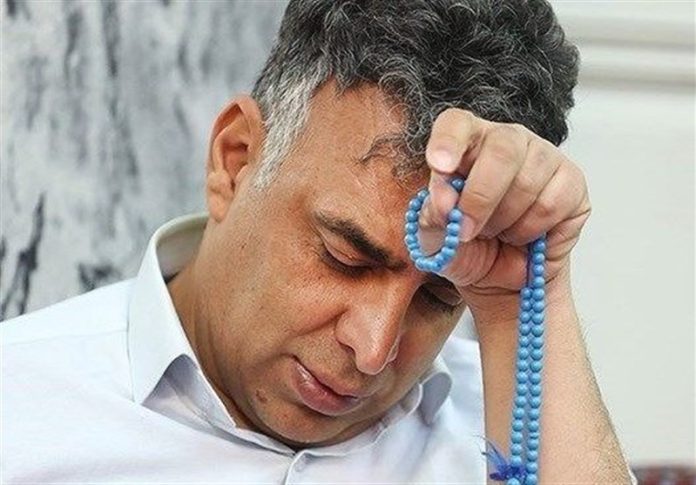
Mehdi Alirezaei, Iran’s Tasnim news agency reporter, passes away

Mehdi Alirezaei

Alirezaei had over 15 years of experience covering various sectors, including municipalities, the Ministry of Interior, social security, and more, contributing to different media outlets such as Hamshahri magazines, urban websites, Fars News Agency, and Tasnim News Agency.

Throughout his career, Alirezaei focused on addressing the needs of vulnerable communities, including those supported by welfare organizations, patients with special conditions, retirees, and persons with disabilities.

His impactful report on child labor gained international attention and was nominated for the 2023 Real Story Award in Switzerland.

His sudden demise has prompted condolences from numerous officials, including the head of the government’s Information Council, Elias Hazrati, and urban managers in Tehran, who expressed their sympathies through various messages.

US officials discussed merits of removing $10m bounty on militant group HTS head: Report

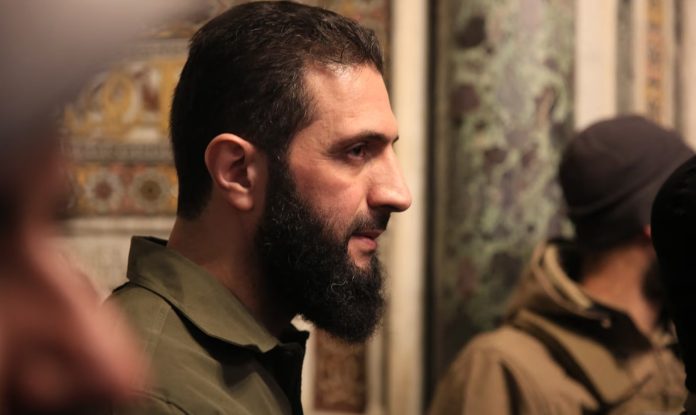
Abu Mohammad al-Jolani

Ahmed al-Sharaa, commonly known as Jolani, has been designated as a terrorist by the United States since 2013, whilst his organisation, HTS, was proscribed by the Trump administration in 2018 when a $10m bounty was placed on his head.

For years, HTS lobbied to be delisted, but its pleas largely fell on deaf years with the group relegated to governing just a sliver of northwest Syria.

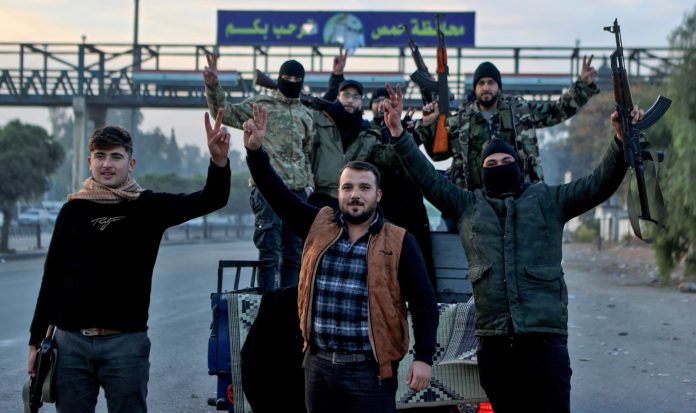
But the lightning blitz by the rebels, which saw Assad’s iron-grip rule end in spectaular fashion on Sunday, has since forced Washington to rethink how it engages with the former al-Qaeda affiliate.

The senior Arab official, who requested anonymity due to sensitivities surrounding the talks, told MEE that the discussions had divided officials in the Biden administration. Meantime, when asked about the discussions, one Trump transition official disparaged the Biden administration.

Jolani, 42, gave a rousing victory speech in Damascus’ iconic Umayyad Mosque on Sunday and is widely expected to play a key role in Syria’s transition after 54 years of Assad family rule.

“Today, Syria is being purified,” Jolani told a crowd of supporters in Damascus, adding that “this victory is born from the people who have languished in prison, and the mujahideen (fighters) broke their chains”.

He said that under Assad, Syria had become a place for “Iranian ambitions, where sectarianism was rife”, in reference to Assad’s allies Tehran and Hezbollah.

Speaking several hours after the fall of Damascus, US President Joe Biden called the rebel takeover a “fundamental act of justice,” but cautioned it was “a moment of risk and uncertainty” for the Middle East.

“We will remain vigilant,” Biden said, adding, “Make no mistake, some of the rebel groups that took down Assad have their own grim record of terrorism and human rights abuses,” adding that the groups are “saying the right things now.”

“But as they take on greater responsibility, we will assess not just their words, but their actions.”

Later, a senior Biden administration official, when asked about contact with HTS leaders, said Washington was in contact with Syrian groups of all kinds.

The official, who was not authorised to publicly discuss the situation and spoke on condition of anonymity, also said the US was focused on ensuring chemical weapons in Assad’s military arsenal were secured.

Meanwhile, the New York Times reported that US intelligence agencies were in the process of evaluating Jolani, who it said had launched a “charm offensive” aimed at allaying concerns over his past affiliations.

Jolani was born to a family originally from the occupied Golan Heights and fought in the Iraq insurgency and served five years in an American-run prison in Iraq, before returning to Syria as the emissary of Islamic State founder Abu Bakr al-Baghdadi.

“A charm offensive might mean that people are turning over a new leaf and they think differently than they used to so you should hear them out. On the other hand, you should be cautious because charm offensives can sometimes be misleading,” the US official said.

“We have to think about it. We have to watch their behavior and we need to do some indirect messaging and see what comes of that,” the official added.

But, US President-elect Donald Trump, who will be entering office in just five weeks, has left few doubts where he stood on the conflict, saying Washington “should have nothing to do with it [Syria]”.

In a social media post on Saturday, Trump wrote that Assad “lost” because “Russia and Iran are in a weakened state right now, one because of Ukraine and a bad economy, the other because of Israel and its fighting success”.

Syrian army’s inability to counter militants was surprising: Iran’s FM

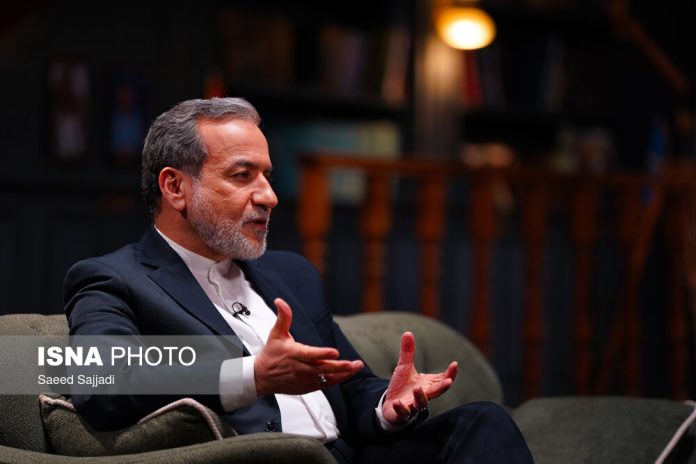
Abbas Araghchi

Araghchi made the remarks on Sunday following the fall of the Syrian government after militant groups led by Hayat Tahrir al-Sham (HTS) stormed the capital Damascus.

The minister said that during his recent meeting, he found President Bashar al-Assad surprised and complaining about the state of his army.

The Iranian foreign minister added that the main responsibility to protect the country was of the Syrian army, and Iran did not consider itself a duty in this regard.

“The Syrian government did not expect this from us either, because this issue was related to the internal matters of Syria, the government’s relationship with the opposition groups and the people of the country.”

“In this regard, Iran could only provide guidance and advice,” he continued.

“I remember that one of our serious recommendations to the Syrian government has always been to have dialogue and interaction with opposition groups and try to resolve issues peacefully without harming the people,” the top Iranian diplomat stated.

“The formation of the Astana process has largely been in this direction. As you know, Iran, Russia and Turkey created an ‘Astana’ negotiation process,” he added.

“The purpose of this process was to provide a basis for these three countries, which are somehow involved in the internal developments of Syria, to help reforms and achieve political solutions,” he said.

“The last meeting of this process was held yesterday, which was the continuation of the same path and goals,” Araghchi stressed.

“The Astana process was trying to help reduce tensions and promote internal reforms in Syria through the cooperation of these three countries,” he noted.

Iran’s foreign minister said the developments in Syria will not weaken the Lebanese resistance movement Hezbollah.

Araghchi added Hezbollah’s current munitions, equipment and facilities are enough for its resistance over the next one or two years.

The top diplomat stated Syria has been one of the important members of the axis of the resistance and played a significant role in confronting Israel and supporting Palestinians.

Araghchi noted that Iran is closely monitoring the developments and its approach will depend on the policy militant groups in the Arab country adopt toward the Islamic Republic.

On Saturday, Araghchi met with the foreign ministers of Russia and Turkey in the Qatari capital of Doha.

The top diplomats of the three guarantor states of the Astana peace process discussed the developments in Syria following the resurgence of militancy in the Arab country.

Araghchi called for a “political dialogue” between the Syrian government and militant groups.

He noted the “most important” issue agreed by the parties was that “political dialogue between the Syrian government and the legitimate opposition groups” should begin.

However, on Sunday, militants seized control of the capital Damascus. President Assad resigned and issued instructions for a peaceful transition of power.

Abu Mohammad al-Jolani, the HTS commander, said Sunday that Syrian state institutions would be supervised by Jalali until a transition of power takes place.

The HTS said it would work with the prime minister and called on Syrian armed forces in Damascus to stay away from public institutions.

In a statement earlier, Russia’s Foreign Ministry announced President Assad had resigned and left Syria, but it did not provide details on where he had gone.

However, later in the day, Russian media reported that Assad arrived in Moscow along with his family.

Citing a source in the Kremlin, several Russian media outlets reported that the Russian government has granted Assad and his family asylum.

Assad’s departure came after armed militants swept through the country in an offensive that saw them first capture Aleppo in the northwest and then advance south towards the key cities of Hama and Homs before storming into Damascus.

Assad’s exit raises concerns about who will lead Syria, a country that has grappled with years of foreign-backed militancy with rival factions vying for control over different areas of the country.

Assad’s fall: Regional power shifts, growing Israeli influence in Syria

Syria War

According to Hossein Shariatmadari, the managing director of Kayhan newspaper, “The infiltration of 20,000 terrorists from northern Syria, controlled by Turkey and the U.S., played a crucial role in Assad’s downfall.”

These terrorists, armed with modern weapons from the U.S. and Israel, launched a coordinated attack, leading to widespread destruction and chaos, he noted.

Shariatmadari highlighted that the Syrian army’s failure to purge elements aligned with the enemy and Assad’s misplaced trust in foreign promises contributed to the swift collapse.

Jomhouri-e Eslami daily also warned that Israel’s influence in Syria is growing, with the new rulers in Damascus showing no opposition to Israel.

The paper emphasized that Israel’s strategic goal of expanding its borders from the Nile to the Euphrates is now closer to realization, posing a direct threat to regional stability and Iran’s security.

It advised Iran to reassess its foreign policy independently of Russia and prepare for potential escalations in Iraq and Yemen.

Meanwhile, the Iranian newspaper Ham-Mihan criticized Iran’s policymakers for ignoring critics and relying on flawed media narratives, which led to ‘misguided strategies’ in Syria.

The lack of transparency and accountability in decision-making processes has been identified as a significant factor in the failure to anticipate and respond to the crisis effectively, the daily wrote in its Monday edition.

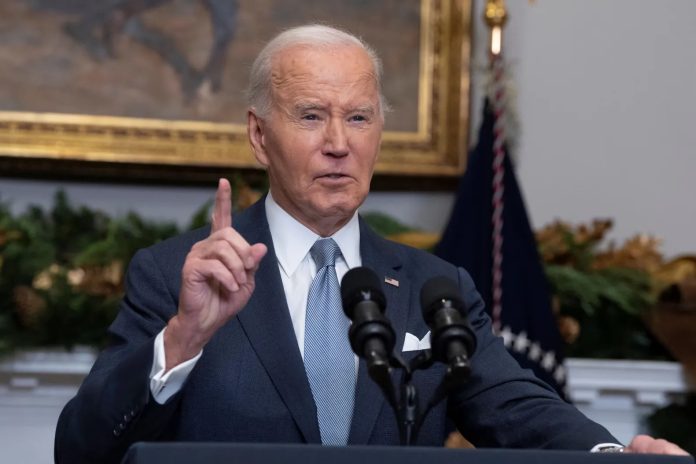
Biden calls Assad fall ‘fundamental act of justice’

Joe Biden

“At long last, the Assad regime has fallen,” Biden said.

“This regime brutalized and tortured and killed literally hundreds of thousands of innocent Syrians. A fall [of the regime] is a fundamental act of justice.”

“It’s a moment of historic opportunity for the long suffering people of Syria to build a better future for their proud country,” he added. “It’s also a moment of risk and uncertainty,” he added.

Early Sunday, the Syrian government fell following the entrance of rebels into the capital of Damascus. The fall of the government marked the end of a 50-year rule of the Assad family in Syria.

The Assad government’s end came after a 10-day offensive by rebels during which fighters made their way quickly across Syria and took large portions of what had been government-held land.

“The United States will work with our partners and the stakeholders in Syria to help them seize an opportunity to manage the risk,” the president stated.

He then pointed to the countries of Russia and Iran, as well as the Lebanese armed group Hezbollah, calling them “the main backers” of Assad in recent years.

“But over the last week, their support collapsed, all three of them, because all three of them are far weaker today than they were when I took office,” Biden added, pointing to conflicts that the countries and group have been recently involved in, including those against Israel and Ukraine.

In his remarks, the president also stressed the importance for “the opposition groups who seek a role in governing Syria, to demonstrate their commitment to the rights of all Syrians, the rule of law and the protection of religious and ethnic minorities”.

Zelensky refutes Trump’s call for peace with Putin

Trump Zelensky

Following a meeting between Trump, Zelensky, and French President Emmanuel Macron in Paris on Saturday, the US president-elect issued a lengthy post on his Truth Social platform saying, “there should be an immediate ceasefire and negotiations should begin” to settle the Ukraine conflict. According to Trump, Ukraine “would like to make a deal and stop the madness”.

However, Zelensky made it clear that this is not the case, in a post published on X on Sunday, in which he said the conflict “cannot simply end with a piece of paper and a few signatures”.

“A ceasefire without guarantees can be reignited at any moment… To ensure that Ukrainians no longer suffer losses, we must guarantee the reliability of peace and not turn a blind eye to occupation,” the Ukrainian leader stated.

He stressed that “in the occupied territories of Ukraine, at least several million people remain”, once again ruling out the possibility of Kiev making any territorial concessions to Moscow in exchange for peace.

”It is precisely such peace through strength that we discuss with all our partners, as well as the steps and guarantees needed for the people and the state attacked by Russia,” Zelensky said.

Trump has repeatedly claimed that he could end the Ukraine conflict within a day of returning to the White House, and has criticized the outgoing US administration for spending too much on arming Kiev. According to earlier media reports, he may try to enforce a freeze of the conflict along the current battle lines, using US aid to Kiev as leverage.

Moscow has repeatedly said it considers a freeze of the conflict unacceptable. It has insisted that any settlement is only possible if Ukraine withdraws its forces from Russian territory, including the former Ukrainian regions, ensures the rights of its Russian-speaking population and adheres to neutrality.