Monday, December 29, 2025
Home Blog Page 561

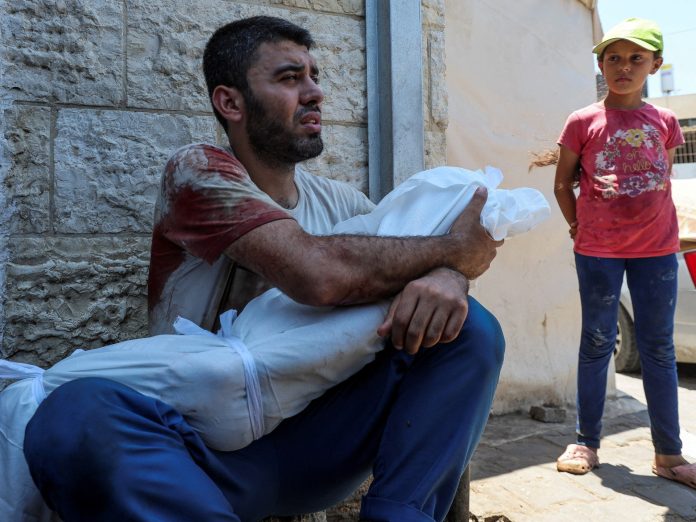
Israel should face ‘consequences’ for undermining international law: UN experts

Gaza War

“As we have repeatedly reminded Israel, international humanitarian law comprises a set of universal and binding rules to protect civilian objects and persons who are not, or are no longer, directly participating in hostilities and limits permissible means and methods of warfare,” the experts said in a statement.

“Rather than abide by these rules, Israel has openly defied international law time and again, inflicting maximum suffering on civilians in the occupied Palestinian territory and beyond,” they added.

Citing Israel’s international law violations, the experts stated Tel Aviv committed “crimes against humanity including murder, torture, sexual violence, and repeated forced displacement amounting to forcible transfer, war crimes encompassing indiscriminate attacks on civilians and civilian objects, including objects indispensable to the survival of the civilian population and educational institutions and cultural heritage, the use of starvation as a weapon of war, the targeting of healthcare workers and health facilities, attacks on humanitarian workers, arbitrary restrictions on access to humanitarian aid, and attacks on journalists, collective punishment and perfidy”.

“Political and judicial actors must consider the totality of such acts against the entire civilian population under Israeli occupation, who are protected persons and do not constitute military objectives under international law,” they continued.

“Acts aimed at their destruction in whole or in part are genocidal.”

Israel “grievously” violated its obligations as an occupying power, the experts said, regarding the situation in northern Gaza.

“Indiscriminate attacks, including on shelters for displaced persons and the Kamal Adwan Hospital and its vicinity, and the intensification of siege conditions on northern Gaza for the last three months run contrary to Israel’s legal duty to ensure the protection of the civilian population,” they added.

“We are disturbed that this siege, coupled with expanding evacuation orders, appears intended to permanently displace the local population as a precursor to Gaza’s annexation in further violation of international law.”

Although Israel’s presence in the occupied Palestinian territory was labeled “unlawful” by the International Court of Justice and International Criminal Court issued arrest warrants for Israel’s Prime Minister Benjamin Netanyahu and former defense minister, the experts said: “Nonetheless, Israel continues to face no real consequences, largely due to protection offered by its allies, who have gone so far as to join Israel in delegitimizing international institutions and besmirching Special Procedures mandate-holders.”

The experts reiterated the urgency of allowing independent and thorough investigations of serious violations of international law.

“Israel’s continued impunity sends a dangerous message suggesting that parties to other conflicts around the world need not comply with their obligations under international humanitarian law,” they noted, adding, “We cannot afford to lose the force of the multilateral system. Israel and its leaders must be held accountable.”
Iran expects major boom in trade ties with EAEU members

Iran Trade

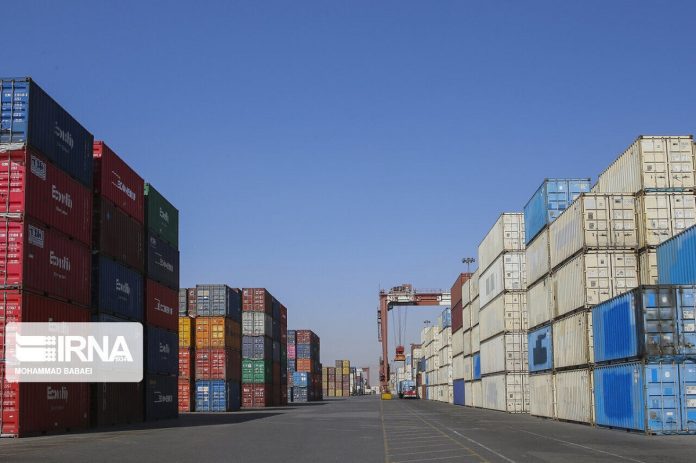
Iran’s trade minister Mohammad Atabak said that observer membership in the EAEU will enable Tehran to increase its presence in the bloc’s meetings and exchange more trade and economic information with its members.

Atabak made the remarks after returning from an EAEU Supreme Council meeting in Saint Petersburg, Russia, where he signed the agreement for Iran to become an observer member in the bloc on December 26.

During the meeting, EAEU members also gave their final endorsement to a free trade agreement signed between Iran and the bloc last year. The agreement, which has been ratified by parliaments of both Iran and five EAEU members, will officially come into effect in the next two months after Iran’s Guardian Council, which vets legislation passed by parliament, approves the deal.

Atabak stated that the free trade deal with the EAEU will eliminate tariffs on nearly 87 percent of Iranian exports to members of the bloc, namely Russia, Belarus, Kazakhstan, Kyrgyzstan, and Armenia.

He expected that trade between Iran and the EAEU would increase several times with the implementation of the free trade deal.

“The Eurasian region is a very good market for Iranian goods. Iranian technical and engineering companies can also expand their activities in these countries,” he continued.

The minister added that Iran is planning to hold a major trade exhibition in Tehran in the coming months to showcase its economic and trade potential to EAEU countries.

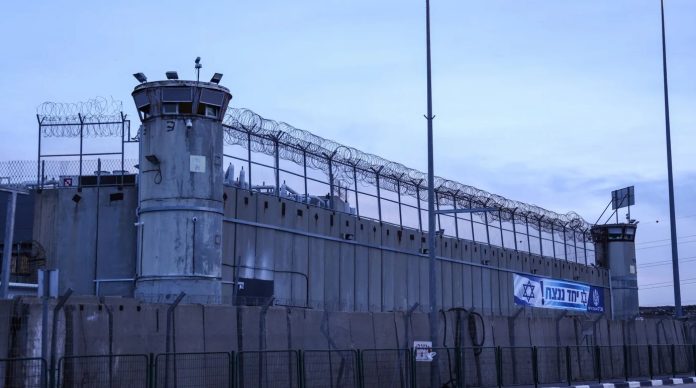
5 Palestinians from Gaza die shortly after abduction by Israeli military

Israel Prison

The Palestinian Prisoners Club on Monday confirmed the deaths of five Palestinians taken from Gaza and held in Israeli prisons.

The prisoners were identified as Ashraf Abu Warda, Mohammed al-Akka, Samir al-Kahlout, Zuhair al-Sharif and Mohammed Labad.

These deaths follow warnings from two Palestinian monitoring groups about “catastrophic conditions” in Israeli jails after the deaths of two other prisoners.

In a joint statement, the Ministry of Detainees and Ex-Detainees Affairs and the Palestinian Prisoners Society announced on Friday the deaths of Samih Aliwi, 61, and Anwar Aslim, 44.

Aliwi, a Hamas leader from Nablus, reportedly died on 6 November, six days after he was transferred from Ramla (Ayalon) Prison clinic to Shamir Medical Center (Assaf Harofeh).

According to the statement from the monitors, one of which is a Palestinian Authority (PA) agency, the Israeli prison administration did not disclose details of his death despite being obligated to release such information.

Aliwi had been held under administrative detention since 21 October of last year despite his pre-existing health issues. Testimony received by his lawyer indicated that Aliwi was suffering from multiple health issues prior to his arrest and had been surgically operated on several times for a benign intestinal tumour.

In early August, the Israeli rights group B’Tselem accused Israeli authorities of systematically abusing Palestinians in torture camps, subjecting them to severe violence and sexual assault.

Torture was recorded in civilian and military detention facilities across Israel, resulting in the deaths of at least 60 Palestinians in Israeli custody in less than 10 months.

The systematic nature of the abuse across all facilities left “no room to doubt an organised, declared policy of the Israeli prison authorities”.

The report, titled “Welcome to Hell”, is based on 55 testimonies from former detainees from the Gaza Strip, the occupied West Bank, East Jerusalem and citizens of Israel. The overwhelming majority of these detainees were held without trial.

The Palestinian Prisoners Society reported that over 11,400 arrests have been made since the start of the war, excluding those detained in Gaza, where the numbers are estimated to be in the thousands.

More than 9,392 administrative detention orders have been issued during this period, ranging from new orders to renewals, including those targeting children and women.

The society’s latest report detailed “detention campaigns carried out since 7 October”, which involved “humiliation, brutal beatings, threats against detainees and their families”, as well as the destruction of detainees’ houses and the looting of their property.

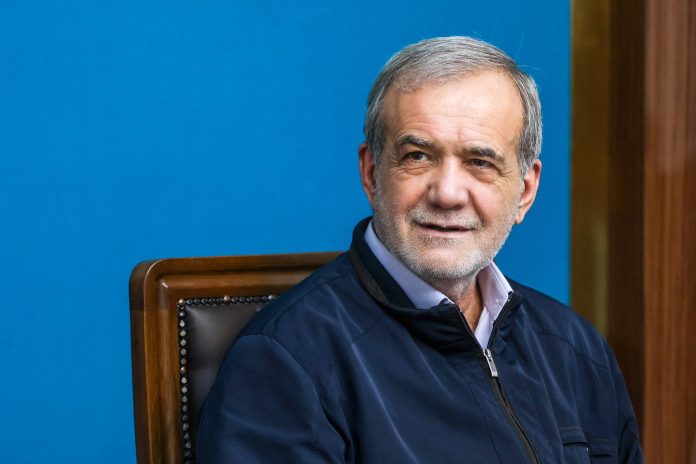
President Pezeshkian hopes war, genocide would end in New Year

Masoud Pezeshkian

In a message on Monday, Pezeshkian extended Christmas and New Year greetings to the leaders and people of the countries celebrating the auspicious occasions.

He expressed hope that peace and tranquility would be established worldwide in 2025.

The Iranian president noted that Jesus Christ is the prophet of light and mercy whose birth is the celebration of peace and morality in human societies.

Like all divine prophets, Christ’s teachings are the solution to eliminating injustice, he added.

In a separate message, Pezeshkian also congratulated the leaders and people of countries that are only celebrating the New Year.

In a post on his official X account on Wednesday, Iranian Foreign Ministry Spokesman Esmaeil Baqaei extended Christmas and New Year greetings to Christians around the globe, including “fellow Christian compatriots” in Iran.

He emphasized that the occasion serves as a reminder of Jesus Christ’s teachings of justice, peace, and love.

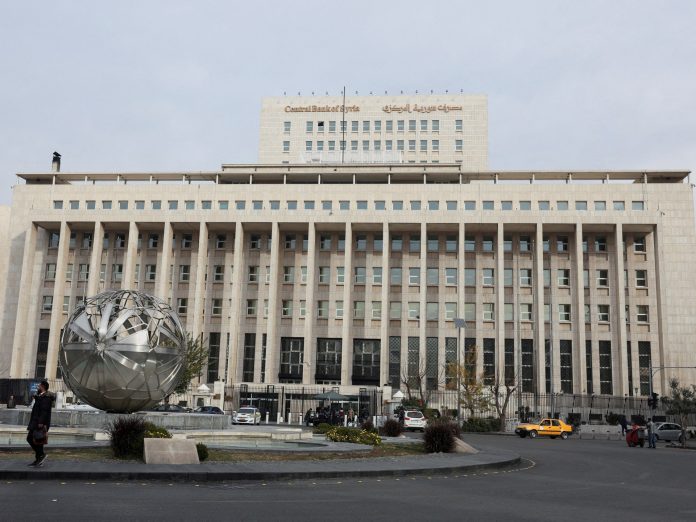
Syria’s new rulers appoint Maysaa Sabrine as first woman to lead central bank

Syria Central Bank

Sabrine, a longtime central bank official mostly focused on oversight of the country’s banking sector, replaces Mohammed Issam Hazime who was appointed governor in 2021 by then-President Bashar al-Assad and remained on after Assad was ousted by a lightning rebel offensive on Dec. 8.

Since the rebel takeover, the bank has taken steps to liberalize an economy that was heavily controlled by the state, including by cancelling the need for pre-approvals for imports and exports and tight controls on the use of foreign currency.

But Syria and the bank itself remain under strict US sanctions.

The bank has also taken stock of the country’s assets after Assad’s fall and a brief spate of looting that saw Syrian currency stolen but the main vaults left unbreached, Reuters reported.

The vault holds nearly 26 tons of gold, the same amount it had at the start of its war in 2011, sources told Reuters, but foreign currency reserves had dwindled from around $18 billion before the war to around $200 million, they added.

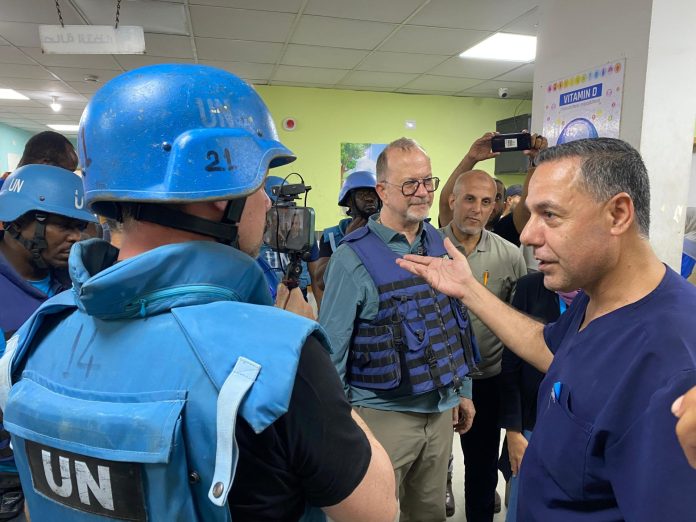
Gaza’s Kamal Adwan Hospital director held at Israeli army base: CNN

Hussam Abu Safia, 51, is reportedly being held in the Sde Teiman base in Israel’s Negev desert, according to former Palestinian prisoners cited by the network, who had been released over the weekend from the controversial facility known for its extreme abuse of detainees.

“Two Palestinian prisoners released this weekend from the facility said they saw Abu Safia at the prison, and another former detainee said he heard Abu Safia’s name being read out,” said the CNN report, published on Monday.

The World Health Organization (WHO) and authorities in Gaza said they lost contact with Abu Safia after the raid on Friday, which saw the Israeli military set fire to Kamal Adwan and forcefully expel dozens of medical staff and patients – shutting down the only partially functioning hospital in northern Gaza.

The Israeli army confirmed on Saturday that it arrested the director as he was “suspected of being a Hamas terrorist operative” and the hospital was used as a “command and control centre” without providing evidence for its claims.

When asked if Abu Safia had been transferred to the occupied territory for further questioning, the military did not offer an immediate comment.

On Monday, Israeli media circulated a video of the moments before Abu Safia was detained by Israeli forces, the footage capturing his efforts to move hundreds of patients and medical staff to safety after the Israeli military issued a 15-minute warning to evacuate the hospital.

Abu Safia had refused multiple Israeli orders to leave Kamal Adwan after the Israeli military imposed a devastating blockade on the northern Gaza Strip on October 5.

The director general of the Health Ministry in Gaza said the medic, who had documented the cruel impact of Israel’s offensive on his hospital, was severely beaten with batons and sticks by Israeli forces during the raid, forced to strip and put on clothes meant for prisoners.

Abu Safia’s family told CNN: “Sde Teiman is known for brutality and torture, we can’t imagine what our father is going through in that place and if he is well or not, warm or cold … hungry or in pain.”

Tedros Adhanom Ghebreyesus, head of WHO, called for Abu Safia’s release in a post on X on Monday, stating that hospitals in Gaza had become “battlegrounds” and that the health system was “under severe threat”.

Tedros added the patients in critical condition at Kamal Adwan had been moved to the Indonesian Hospital, “which is itself out of function”.

“Amid ongoing chaos in northern Gaza, WHO and partners today delivered basic medical and hygiene supplies, food and water to Indonesian Hospital and transferred 10 critical patients to al-Shifa Hospital,” he continued, adding, “We urge Israel to ensure their healthcare needs and rights are upheld.”

He said seven patients along with 15 caregivers and health workers remained at the “severely damaged” Indonesian Hospital.

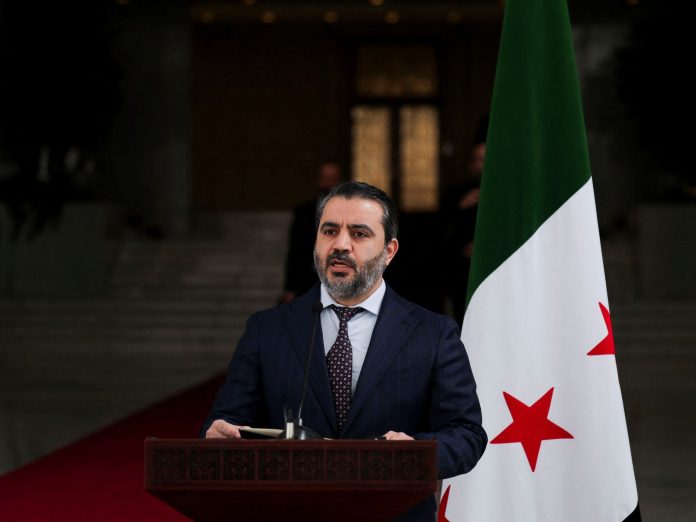
Syria FM says to visit Saudi Arabia in his first official foreign trip

Syria’s new Foreign Minister Asaad Hassan al-Shibani

“I am honoured to represent my country on my first official visit [to Saudi Arabia],” al-Shibani said in a post on X on Monday.

“We look forward to building strategic relations with our brothers in the kingdom in all fields,” he added, describing the visit as a gesture of goodwill and a step towards restoring Syria’s role in the region after the fall of longtime ruler Bashar al-Assad this month.

Al-Shaibani was appointed foreign minister on December 21 by Syria’s interim government, becoming the country’s first top diplomat since al-Assad’s overthrow.

During a news conference with his Kuwaiti counterpart Abdullah al-Yahya in the capital, Damascus, later on Monday, al-Shaibani stated his visit to Saudi Arabia is scheduled in the “first week of the new year”.

He also called on Kuwait, “with all love and joy” to reopen its embassy in Damascus and resume relations with Syria following the downfall of al-Assad.

Kuwait’s foreign minister al-Yahya’s visit was the latest by regional leaders and diplomats as they signal an openness to establishing relations in the wake of the overthrow of al-Assad by rebel forces on December 8.

Al-Yahya and Persian Gulf Cooperation Council (PGCC) Secretary-General Jasem Mohamed Al-Budaiwi also met Syria’s de facto leader, Ahmed al-Sharaa, during their visit. Al-Yahya noted they discussed regional developments and cooperation.

Al-Yahya called on the international community to reconsider sanctions imposed on Syria. He also said Kuwait’s leadership has appealed for aid to be sent to Syria urgently.

“The visit expresses our keenness on opening a new page of regional cooperation … we also value the responsiveness of the new administration in Syria to these efforts,” he added.

Envoy denies as baseless US, UK claims about Iran’s involvement in Red Sea tensions

Amir Saeed Iravani

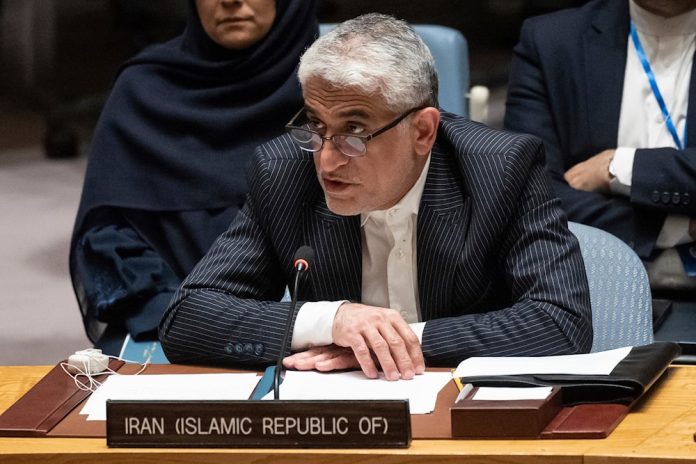
In identical letters addressed to the UN Secretary General António Guterres and the Security Council president on Monday local time, Amir Saeid Iravani reacted to the claims made by representatives of the US and the United Kingdom, and orchestrated by the representative of the Israeli regime, against the Islamic Republic of Iran during the open briefing of the UN Security Council on December 30.

He wrote that the unsubstantiated allegations made by the Israeli representative Danny Danon and supported by the regime’s closest ally, the United States, are an obvious attempt to scapegoat Iran to justify their own illegal actions and malicious activities in the region.

“It is not Iran but the belligerent regime of Israel that has relentlessly pursued a policy of provocation and destabilizing activities, which poses a grave threat to peace and security in the region and beyond,” Iravani pointed out.

The senior Iranian diplomat underlined that his country, as a responsible member of the United Nations, has always adhered to its obligations under international law and the United Nations Charter and has not been involved in any activity inconsistent with the relevant Security Council resolutions.

“Therefore, Iran categorically denies any violation of arms embargoes or any involvement in fueling the conflict in Yemen or elsewhere,” he underscored.

Iran’s UN ambassador went on to describe it as both deeply troubling and highly ironic that the US and Britain, instead of upholding their responsibilities as permanent members of the Security Council to maintain international peace and security, persist in providing political cover and military support for Israel’s reckless actions and violations while fabricating baseless accusations against Iran.

“This blatant complicity has emboldened Israel to act with impunity, fueling regional conflicts and undermining any prospects for lasting peace in Yemen under UN leadership,” he noted.

Iravani emphasized that Iran’s position on Yemen has been consistent and unwavering. From the very onset of the crisis in 2015, Tehran has supported a political resolution to the conflict and called for a comprehensive ceasefire, inclusive dialogue, and a peaceful process that respects the Arab nation’s sovereignty and territorial integrity.

“Regarding the situation in the Red Sea, Iran reiterates its commitment to ensuring the safety and security of international shipping lanes. Accusations of Iranian interference in the Red Sea are baseless fabrications designed to inflame tensions and serve as a pretext for further destabilization of the region by the United States and its allies,” he stated.

The senior Iranian diplomat then called upon the Security Council not to be swayed by Israel’s propaganda, which seeks to divert attention from the ongoing atrocities and ethnic cleansing by the apartheid regime in Gaza.

Instead, the Security Council must confront the root causes of instability in the region, foremost among them Israel’s illegal occupation, aggression, systematic and widespread violations of international law, and blatant disregard for the Council’s resolutions, Iravani highlighted.

Iran’s UN ambassador finally urged the Security Council to live up to its responsibility under the UN Charter and act decisively to hold the occupying regime of Israel and its supporters accountable for grave violations of international law.

“Failure to do so will only erode trust in the United Nations and its ability to fulfill its mandate to maintain international peace and security,” Iravani concluded.

WHO chief urges Israel to stop attacks on Gaza hospitals

WHO

Tedros Adhanom Ghebreyesus wrote on X that “Hospitals in Gaza have once again become battlegrounds and the health system is under severe threat”.

He stressed that the Kamal Adwan Hospital in northern Gaza was “out of service”, and its director doctor Hussam Abu Safiya’s “whereabouts are unknown” since he was detained two days ago.

“The critical patients were moved to Indonesian Hospital, which is itself out of function,” the WHO chief added.

He noted that some patients were detained during hospital transfers, and urged “Israel to ensure their health care needs and rights are upheld”.

“Al-Ahli Hospital and Al-Wafa Rehabilitation Hospital in Gaza City also faced attacks today and both are damaged,” he added.

“We repeat: stop attacks on hospitals. People in Gaza need access to health care. Humanitarians need access to provide health aid. Ceasefire!” he concluded.

On Friday, Israeli forces raided Kamal Adwan Hospital, located in the northern town of Beit Lahia, burning large sections of the medical facility and forcing patients and displaced civilians to flee.

Israel has killed more than 45,500 people in Gaza since a cross-border attack by the Palestinian group Hamas on Oct. 7, 2023 and reduced the enclave to rubble.

In November, the International Criminal Court issued arrest warrants for Israeli Prime Minister Benjamin Netanyahu and his former Defense Minister Yoav Gallant for war crimes and crimes against humanity in Gaza.

Israel also faces a genocide case at the International Court of Justice for its war on the enclave.

Russia says no grounds for ending Ukraine war

Russia Ukraine War

Peskov was asked by RIA-Novosti on Monday if there are currently any prerequisites for ending the Ukraine conflict.

The spokesman gave a short but conclusive reply: “No.”

He had reiterated last week that Russia “remains open to talks” to end the hostilities.

“However, since there has been no progress in terms of Ukraine’s readiness for negotiations, we are continuing with our [military] operation,” Peskov stressed.

According to the spokesman, the dynamics on the battlefield “are self-evident: we are on the advance”.

In the fall of 2022, Ukrainian leader Voldymyr Zelensky signed a decree banning the Kiev government from any talks with Moscow. The legislation remains in force.

Throughout the conflict, Zelensky and his Western backers have been discussing his so-called ‘peace formula’, which demanded that Russia withdraw from Crimea and the other territories claimed by Ukraine – the Donetsk and Lugansk People’s Republics, and the Kherson and Zaporozhye regions, which officially became part of the Russian state as a result of referendums in late 2022. It also called for Moscow to pay reparations and for the formation of a war crimes tribunal.

Russian authorities have rejected this proposal as unacceptable, “detached from reality” and a sign of Kiev’s unwillingness to seek a diplomatic solution to the crisis.

However, the Ukrainian leader has recently abandoned his talk of “victory”, claiming instead that he wants a “just peace,” coupled with security guarantees from the West in the form of NATO membership, with the status of the new Russian regions undetermined.

Last week, the Washington Post reported, citing a senior member of Zelensky’s government, that officials in Kiev are “starting to believe” that the conflict with Russia will be resolved in 2025. The shift in attitude is a direct result of US President-elect Donald Trump’s promise to put a swift end to the fighting once he returns to office, according to the paper.

During his end-of-year press conference earlier this month, Russian President Vladimir Putin said that Moscow is open to negotiations with Kiev without any preconditions other than those already agreed in Istanbul in 2022.

These terms involve a neutral, non-aligned status for Ukraine – prohibiting it from joining NATO – as well as restrictions on the deployment of foreign weaponry in the country. Putin also stressed that any talks must take into account the realities on the ground that have emerged since 2022.