Tuesday, April 7, 2026
Home Blog Page 5139

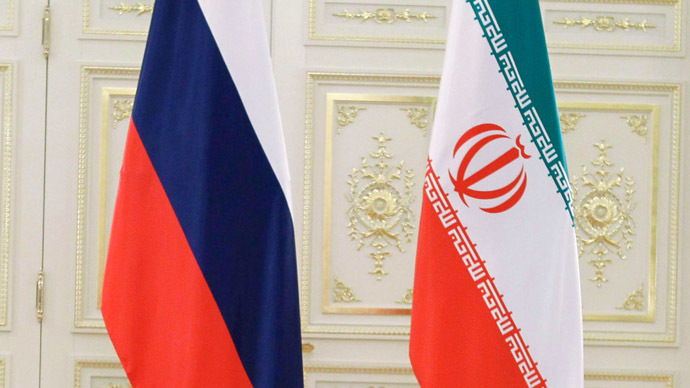
Iran-Russia propose to establish joint financial firm

russia - iran flags
russia - iran flags


Mehdi Senaei met with Alexei Vladimirovich Moiseev, Deputy Minister of Finance of the Russian Federation, where they emphasized upon expansion of economic cooperation between Iran and Russia especially in banking and insurance sector, and also on improved coordination to hold the 11th meeting of the Iran-Russia Joint Economic Commission.

They also proposed that Iran and Russia establish a joint financial firm to ‘facilitate trade exchanges and improve the level of financial services.’

Senaei highlighted the necessity of the addressing the draft of the proposals by the Iranian side on cooperation on stock market and insuracnce.

Russian deputy-minister of finance pointed to western and US sanctions against Iran and Russia, and welcomed using Iran’s experiences in aborting the sanctions.

Moiseev promised addressing the draft of Iran’s proposal as soon as possible and be discussed in the commission.

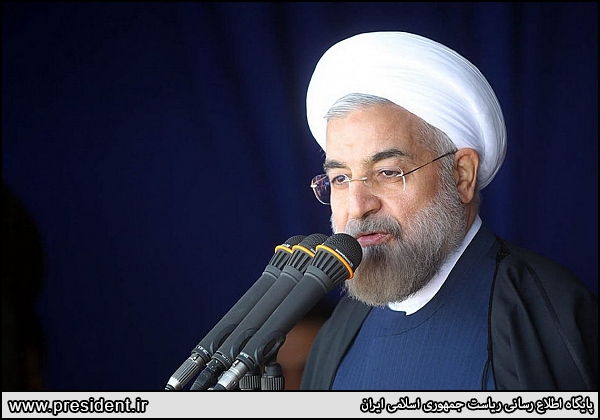
Government has support of Supreme Leader, nation in nuclear talks: Rouhani

president rouhani-illam


He was responding to criticism of the opponents lobbying to withdraw from the nuclear talks.

The president said that the political parties can express their views democratically, but, the government will not allow them to sabotage the nuclear deal struck on Novermber 24.

President Rouhani said that he got manadate from the nation in the presidential election on June 23 and permission from the Supreme Leader to go ahead with nuclear talks with the western governments.

The President said that representatives of the government are currently working with representatives of the western governments to reach a Comprehensive Agreement on the dispute over the national nuclear program.

On domestic policy, the President said that nothing is more important than unity, intimacy and cooperation among the people.

The President said that the government advocates democracy and the democratic decision making allowing the people to speak out their grievances.

ˈToday, the people have become closer to each other and political parties tolerate each other more than before,ˈ Rouhani said.

In light of national unity, the nation will put behind all the difficulties.

The president noted that the government will stand up to extremist measures by those who do not to conform to the demand of the nation.

Islamic Republic News Agency

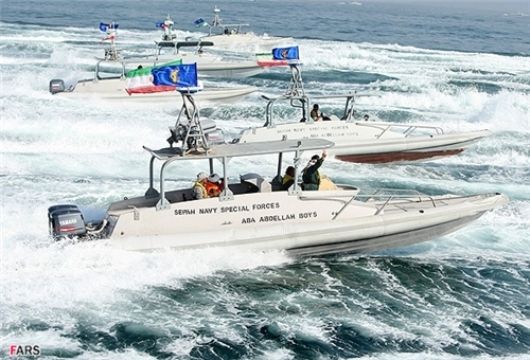
Commander: IRGC Speed Vessels Equipped with Advanced Radar, Telecommunication Systems

Iran Speed Vessels - IRGC


“We have today built highly advanced hulls which are appropriate for high speed and raging seas, state-of-the-art propulsion systems and advanced nano-coverings for the speed vessels,” Lieutenant Commander of the IRGC Navy Rear Admiral Majid Zamani said, addressing the Third Forum on Iran’s Speed Vessels in Tehran on Wednesday.

“We have also acquired radar and telecommunication systems which have been built specifically for speed vessels,” he continued, and boasted that these radar and telecommunication systems are new to the world.

Iran in February unveiled 21 radar and electronic defense projects in a ceremony participated by Defense Minister Brigadier General Hossein Dehqan.

“Today, we are witnessing inauguration of 5 production lines and unveiling of 16 defense projects,” Dehqan told reporters in the Southern city of Shiraz.

He said 2 radar systems for defensive surveillance, which are among the advanced detection radars for high-altitude air surveillance, are ready for being delivered to the Iranian Armed Forces.

Also in the field of radar subsystems, 2 important military lights, one x-ray lamp and a 5-liter oxygen converter for the cockpit have been manufactured, Dehqan said.

He also said that Iran has launched 6 important and strategic products in air and naval electronic fields, including sonar, subsurface telecommunication and ground systems, ground antenna and air computers installed on aircrafts and radars to identify friendly aircraft from enemies.

The Iranian defense minister also said that the country’s experts have built a smart disruptive radar system which can to jam different radar waves and certain missile guidance subsystems.

In recent years, Iran has made great achievements in its defense sector and attained self-sufficiency in producing essential military equipment and systems.

Tehran launched an arms development program during the 1980-88 Iraqi imposed war on Iran to compensate for a US weapons embargo. Since 1992, Iran has produced its own tanks, armored personnel carriers, missiles and fighter planes.

Yet, Iranian officials have always stressed that the country’s military and arms programs serve defensive purposes and should not be perceived as a threat to any other country.

Iran’s naval power has even been acknowledged by foes. In a Sep. 11, 2008 report, the Washington Institute for the Near East Policy said that in the two decades since the Iraqi imposed war on Iran, the IRGC has excelled in naval capabilities and is able to wage unique asymmetric warfare against larger naval forces.

According to the report, the IRGC Navy has been transformed into a highly motivated, well-equipped, and well-financed force and is effectively in control of the world’s oil lifeline, the Strait of Hormuz.

The study says that if Washington takes military action against the Islamic Republic, the scale of Iran’s response would likely be proportional to the scale of the damage inflicted on Iranian assets.

Fars News Agency

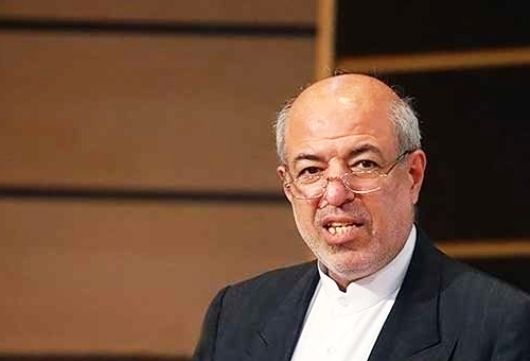
Energy Minister Calls for German Companies’ Cooperation in Iran’s Water Projects

Hamid Chitchian
Hamid Chitchian


“We have a big task to accomplish and the German companies are invited to help us to pave this path,” Chitchian told reporters on the sidelines of Munich International Water and Sewage Exhibition.

He pointed to the participation of German companies in Iran’s water projects in the past, and said, “This cooperation should be increased in the future and the conditions be set for the presence of the German companies in Iran.”

Chitchian reiterated that the Iranian government has facilitated the presence of foreign companies in Iran by providing them with land and other facilities.

Chitchian is in Germany to discuss enhancement of energy cooperation with senior German officials.

Chitchian attended the opening ceremony of Germany’s IFAT Trade Fair 2014 in Munich on Monday morning. He has also met with some of Germany’s high ranking officials and discussed the ways for consolidating Tehran-Berlin cooperation.

He will also take part in a seminar on renewable energies at Iranian Embassy in Berlin on Thursday.


Fars News Agency

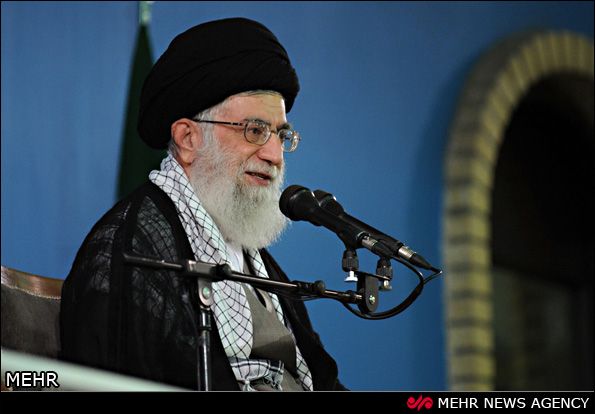
Leader dubs partisan view of education system as ‘lethal poison’

Leader of the Islamic Republic

Ayatollah Seyyed Ali Khamenei addressed a meeting of teachers in the occasion of Teachers’ Day; a day designated by the establishment for veneration of teachers and coincides with the day of martyrdom of Morteza Motahari, widely supposed to be the one of the spiritual fathers of the Revolutionary mentality in Iran.

The Leader said that the more the veneration and tribute paid to teachers, the more their prestige in the society. He addressed specifically the officials of educational system that they should recruit teachers with commitment to the Revolutionary ideas and religious faith.

The Leader believed that the meeting aimed at a singular objective of veneration of teachers, and that “honoring of teachers should be public across the society.”

“Education deals with millions of students and the young generation directly and indirectly, and the priority should be with the recruitment of forces loyal to the Revolutionary ideals of the system and commitment to religious tenets of the Islamic system,” he emphasized.

The Leader also called the authorities to “take serious the Fundamental Change Document,” which he maintained, once was undreamed-of, “beyond the official statements.”

“Recruit managers whose major concerns are education and rearing; fostering partisan views inside the educational system is a lethal poison to the system,” he demanded the authorities.

The Leader also called for “inculcating the thinking” in society, and that “the child should be received due training on how to think rationally,” believing that “superficial learning can cripple society.”

Persian carpet registered as worldˈs intellectual property

Iran hand-woven carpets

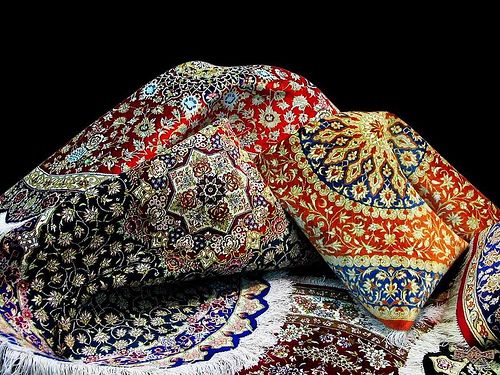
Referrig to the formation of a department to pursue registration of Iranian carpets as the worldˈs intellectual property, Mohammad Bagher Agha Alikhani said that Persian carpet is considered as a national asset and other countries producing carpets immitate Persian carpet designs.

Hand-woven carpet is one of the leading merchandises in the world and Iran is the pioneer in this market, he said, adding that sanctions do not affect Iranˈs carpet exports due to its unique feature on the global markets.

Persian carpets are exported to 70 countries in the world, 45 percent of which were shipped to Asian countries and 43 percent to European states worth dlrs 500 million in the past year.


Islamic Republic News Agency

Expert talks underway with Group 5+1

Iran and 5+1
Iran and 5+1


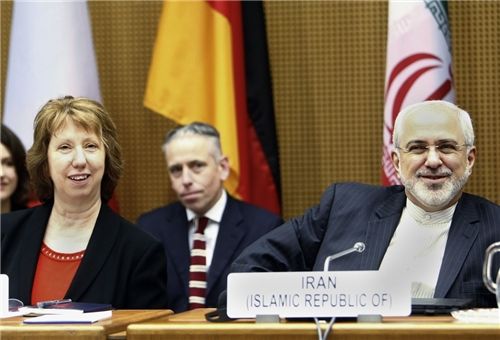
Head of Iranˈs negotiating team for the expert meeting, Hamid Baeedinejad told IRNA prior to the beginning of expert talks that the two sides will continue their technical and expert issues to draft the Comprehensive Agreement for the next round of political meeting to be hosted by Vienna next week.

The expert meeting will run through Wednesday, he said.

Baeedinejad further noted that since the experts of Iran and Group 5+1 are on a visit to New York to take part in the third meeting of preliminary committee for conference on revisiting NPT, they preferred to hold the expert meeting here this time.

Third meeting of preliminary committee for conference on revising NPT opened on April 28 and will continue until May 9.

Foreign Minister Mohammad Javad Zarif told reporters Monday that political talks will be organized next week to draft the Comprehensive Agreement.

He noted that early conclusion of the Comprehensive Agreement depends on the good faith of the western governments.

Four rounds of political talks have been planned, which will begin in Vienna as of next week, he said.

In response to a question whether the Comprehensive Agreement can be concluded according to the six-month timetable set in the interim agreement on November 24, Zarif said that one year had been envisaged for the settlement of the nuclear dispute.


Islamic Republic News Agency

Zarif: Iran’s Foreign Policy Grabs Sleep from Netanyahu’s Eyes

Mohammad Javad Zarif
 

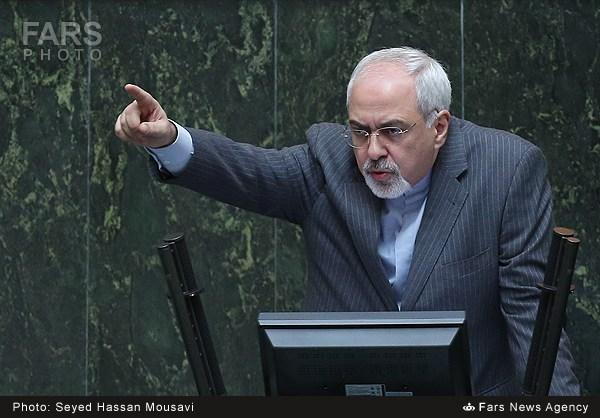
“Iran is a powerful and stable country, but massive propaganda and political activities are made to induce that Iran is a threat to the region and the international peace and stability,” Zarif said, addressing the Iranian parliamentarians in Tehran on Tuesday.

He described the West’s “cruel sanctions” against Iran as among the plots hatched by the enemies to weaken the country’s national might and power, and said such plots have failed and the new government is also trying to make such victories more numerous.

“The government’s foreign policy has taken away peace and comfort from Netanyahu and has isolated him internationally and this is a great victory that all the resistance forces of the region have each appreciated us for,” Zarif underlined.

His remarks came after Iran and the Group 5+1 (the five permanent UN Security Council members plus Germany) sealed a six-month Joint Plan of Action on November 24 to lay the groundwork for the full resolution of the West’s decade-old dispute with Iran over the latter’s nuclear energy program.

In exchange for Tehran’s confidence-building bid to limit certain aspects of its nuclear activities, the Sextet of the world powers agreed to lift some of the existing sanctions against Tehran and impose no nuclear-related sanctions on Iran during the six-month period.

During the talks Iran managed to build confidence and the country’s capital witnessed visits by different European officials and businessmen, foiling enemies’ plots to isolate Tehran.

Fars News Agency

Commander: Iran One of Only Two World Countries in Possession of Super Hi-Tech Torpedo

Super Hi-Tech Torpedo

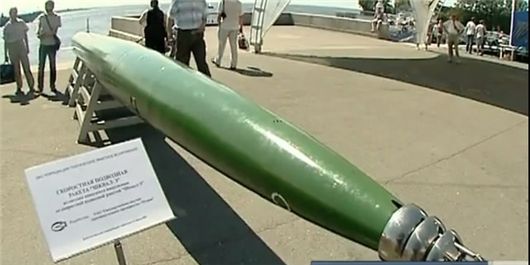
Speaking to FNA, IRGC Navy Commander Rear Admiral Ali Fadavi said when the home-made missile/torpedo, Hout, was displayed in a series of wargames a few years ago, over 2,000 world media covered the news.

He said the speed of the missile is 100 meters per second (360km/h) under water.

The Admiral explained that the gruesome weapons has originally been made by the Russians, adding that Americans have spent a sum of 20 billion dollars in 15 years to develop its technology, but failed.

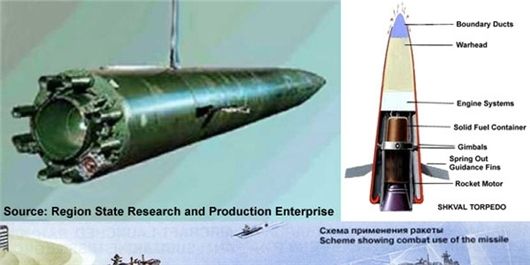
The Russians call the torpedo Shkval. The speed of this missile or torpedo far exceeds that of any standard torpedo currently fielded by NATO. This speed is a result of supercavitation: the torpedo is, in effect, flying in a gas bubble created by outward deflection of water by its specially shaped nose cone and the expansion of gases from its engine. By keeping water from coming into contact with the surface of the body of the torpedo, drag is significantly reduced, allowing extremely high speeds.

The Russians started designing it in the 1960s when the NII-24 research institute was ordered to produce a new weapon system capable of combating nuclear submarines. In 1969, the GSKB-47 merged with NII-24 to create the Research Institute of Applied Hydromechanics in Kiev, Ukraine (constructor Merkulov); the Shkval being a product of this merger.

Super Hi-Tech Torpedo

Announced as being deployed in the early 1990s, although previously operational as early as1977, the Shkval is designed as a countermeasure against torpedoes launched by undetected enemy submarines. It may also be used as a counter to incoming torpedoes whereby it is launched at the enemy submarine, forcing it to evade, and hopefully cutting the guidance wire to the enemy torpedo in the process.

Super Hi-Tech Torpedo

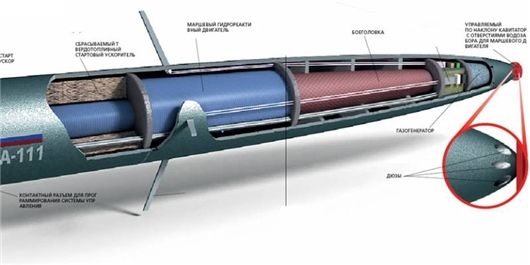
Launched from 533 mm torpedo tubes, the VA-111 exits the tube at 50 knots (93 km/h). Shortly afterwards, its liquid-fuel rocket ignites and propels it to speeds of up to 200 knots (370 km/h). Some reports indicate that speeds of 250+ knots may be achieved, and that work on a 300-knot (560 km/h) version was underway. The rocket engine uses a combination of high test peroxide and kerosene; the propellant tanks contain about 1500 kg of hydrogen peroxide and 500 kg of kerosene.

The torpedo controls its direction using four fins that skim the inner surface of the supercavitation envelope. To change direction, the fin or fins on the inside of the desired turn are extended, and the opposing fins are retracted. To make faster turns, the push plate on the nose can be used to control the shape of the bubble the missile is traveling in.

Super Hi-Tech Torpedo

Spokeswoman: Iran’s N. Rights Only Framework of Talks with Powers

iran p-5+1
iran p-5+1


“The Islamic Republic of Iran’s redlines fall on the people’s inalienable and evident rights to access peaceful nuclear technology and this redline has been under the focus and attention of the (Iranian) negotiating team since the very first day and we won’t withdraw from this right,” Afkham said in her weekly press conference in Tehran on Tuesday.

She also said that the framework of negotiations is Iran’s nuclear rights and maintaining the indigenized nuclear knowhow.

On November 24, Iran and the Group 5+1 sealed a six-month Joint Plan of Action to lay the groundwork for the full resolution of the West’s decade-old dispute with Iran over the latter’s nuclear energy program.

In exchange for Tehran’s confidence-building bid to limit certain aspects of its nuclear activities, the Sextet of the world powers agreed to lift some of the existing sanctions against Tehran and impose no nuclear-related sanctions on Iran during the six-month period.

In April, Iranian Deputy Foreign Minister for legal and international affairs Seyed Abbas Araqchi confirmed that Iran and the Group 5+1 plan to hold an expert-level meeting in New York early in May.

Araqchi, who is also senior Iranian negotiator in talks with the Sextet, said negotiations will be held from May 5-9 on the sidelines of a session of the Preparatory Committee for the 2015 Non-Proliferation Treaty (NPT) Review Conference.

The Iranian official said the talks will take place a few days ahead of the new round of high-level negotiations between Tehran and the six countries, which is scheduled to be held in the Austrian city of Vienna on May 13.

Deputy chief negotiators from Iran and the six world powers wrapped up their last round of talks in Vienna on April 9. The talks were headed by Araqchi and EU foreign policy deputy chief Helga Schmidt.

The Iranian Foreign Ministry in a statement on April 8 reiterated that its team of negotiators would not discuss any topic but the country’s nuclear standoff with the West in its talks with the six world powers, including the present round in Vienna.

The talks between Tehran and the six world powers are part of efforts to seal a final deal on Iran’s nuclear energy program.