Thursday, April 9, 2026
Home Blog Page 5105

Does Japan return to militarism as China’s power grows?

Japan returns to militarism as China’s power grow
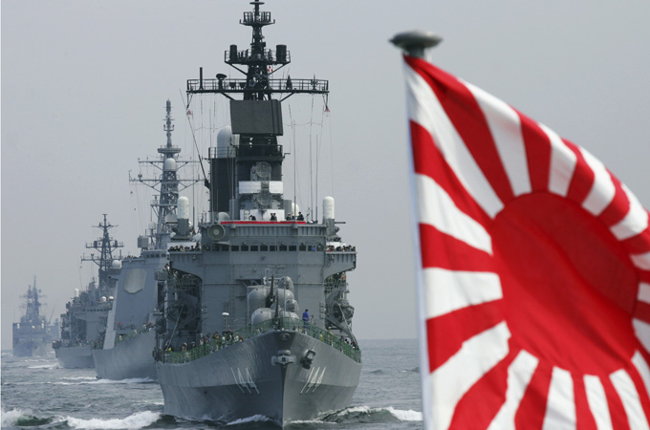
Japanese military navy

In an article published in a July 14th issue of Javan Newspaper, Seyyed Rahim Ne’mati writes:

Japanese Prime Minister Shinzo Abe announced, at the 13th IISS Asia Security Summit in Singapore on May 30, 2014, his country’s decision to play a more active role in defending the territories and waters of its neighbors. It came after officials in Tokyo began to have a new take on Japan’s security and that of the wider Pacific region. As Japan prepares to walk down a path different from the one it chose after World War II, the world must wait to see what impact Tokyo’s new policy will have at home and abroad.

Post-WWII Norm

Japan followed in the footsteps of Germany to concede defeat in the Second World War. This saw the wide expanse of the Japan Empire along the Pacific narrow to mainland Japan and a few disputed islands claimed by neighboring countries. Japan’s defeat called for a future strategy to prevent the island nation in East Asia from returning to pre-war status and posing a threat to its neighbors. The strategy in question found its way into efforts to piece together a post-war Constitution. Article Nine of the charter has explicitly said that Japan can have military power only to defend its territories and people. The constitutional restriction caused the country’s military to be plagued by drastic shortcomings both in terms of talents and objectives, something which barred Japan from establishing extensive military cooperation with the United States, a close ally. Whether Article Nine was enshrined in the Constitution courtesy of pressures from the winning nations or it came thanks to pacifist forces inside the country is still far from clear, but the reality check here is that for more than six decades Japan has acted according to the very article and China’s rapid economic-military growth over the last several years has served as a wakeup call for people like Abe to give a second thought to this constitutional article.

Domestic look

The options Abe has at hand differ from the change he has in mind. According to some, Japan is expected to either lend support to an ally such as the US beyond its own territories, establish direct military cooperation with regional countries or bolster its direct regional presence to defend its interests, to name a few. No matter which option is chosen, Abe still faces key problems at home. A recent survey conducted by a Japanese pollster shows that Abe faces firm opposition to his security reforms. Fifty percent of those polled said they were opposed to Abe’s security plans. Only 34 percent of respondents expressed their approval of his plans. Issues associated with expansionism are among the major concerns of the opponents of Abe’s plan. Apart from possible huge costs the question of expansionism would impose, it remains unclear whether it can practically result in greater security for Japan or not. Moreover, some intellectuals in Japan are concerned that Abe’s interpretation of the constitutional reforms could put in harm’s way the existing political norms which have seen Japan walk down a peaceful path both in the region and beyond since World War Two, or dent and even totally overlook the deals and treaties which were sealed following the 1939-1945 war.

The US military presence in Japan together with the unforgettable scars of the atomic bombings of Japan’s Hiroshima and Nagasaki keeps fuelling anti-war sentiments among the Japanese people. They serve as key psychological factors which disapprove of Japan’s military expansionism. This is why Abe’s insistence on his own version (of the law) and his determination to change the Constitution will carry a political price for him. This is probably a reason for Abe’s guarded moves despite the fact that his party holds a majority in both houses of the country’s bicameral parliament. He has to move cautiously when it comes to advancing his own interpretation which would lead to constitutional reforms and alteration of Article Nine. By no means does he want to miss out on this opportunity only because of hasty decisions or measures.

Outside look

To start with, Abe chose the security conference in Singapore to raise the issue from the perspective of the entire Pacific Ocean region, and not from a domestic angle alone. It added up to a guarded step on his part because such a start at home wouldn’t have come without consequences. The situation beyond national borders is totally different and would come with fewer domestic consequences. On the other hand, his move has naturally met with reactions and concerns in the Pacific region. Such concerns are of more significance when it comes to China and South Korea which still remember the bitter memories of Japan’s colonial past.

Apart from their historical memories, these two countries are currently at odds with Japan over territorial issues. This common concern seems very likely to see these two states take a path different from that of the past and put more and more mutual cooperation on the agenda down the road. A trip by Chinese President Xi Jinping to South Korea back on July 3 was unprecedented; something which may raise concerns for North Korea, China’s traditional ally, but it looks justifiable enough when it comes to the common concerns of the two countries about Japan. There is a faint possibility that China has been thinking about the creation of a coalition to counter the expansionism pursued by Abe and other Japanese officials, and to that end South Korea and their common historical memory on Japan’s colonial past could be a good beginning for Beijing. All in all, the Japanese premier is likely toface serious challenges at home and abroad before achieving his security goals. Domestically, such challenges could deal a heavy political blow to him; and internationally, they could rewrite security rules all across the Pacific.
 

Iran missile capability not negotiable at all: Rouhani

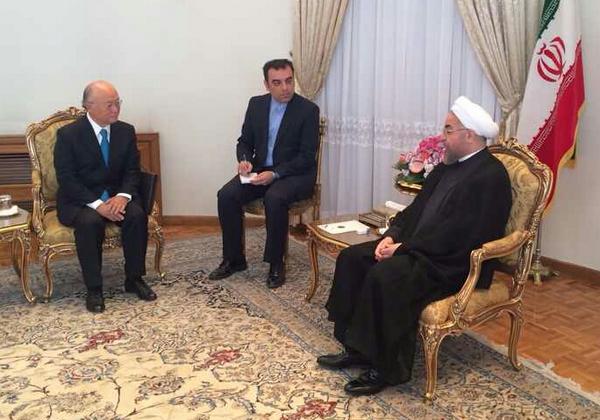
Amano-Rouhani
Amano-Rouhani

The Iranian President Hassan Rouhani has ruled out any negotiations whatsoever over the Islamic Republic’s defensive missile capabilities.

“Iran’s missile capability is by no means and at no level negotiable,” Rouhani said in a meeting with International Atomic Energy Agency (IAEA) Chief Yukia Amano in Tehran on Sunday.

Some Western officials, particularly in the US, have called for Iran’s missile program to be included in the country’s nuclear talks with the P5+1 – Russia, China, France, Britain, the US and Germany.

“Tehran is serious in its negotiations with the P5+1 countries and the International Atomic Energy Agency and wants nothing more than its right including [uranium] enrichment for peaceful purposes,” Rouhani added.

He said the UN nuclear agency has carried out regular inspections of Iran’s nuclear facilities over the past 12 years and repeatedly verified lack of any diversion in the country’s nuclear energy program.

In line with international principles, Iran has always sought technical, legal and transparent cooperation with the IAEA, Rouhani said, adding that Tehran needs modern technologies including a peaceful nuclear program for its development.

The Iranian president further said Iran would only agree to legal inspections by the agency and based on the Non-Proliferation Treaty (NPT) and the IAEA Safeguards, warning that “extralegal surveillance sets a precedent that would be detrimental to all developing countries.”

Rouhani emphasized that in case of a final nuclear deal with the P5+1, according to an agreement reached last November, Iran would proceed with its required enrichment activities inside the country and the other side would lift all the unilateral and international sanctions against Tehran.

“Achieving a comprehensive agreement will undoubtedly be a win-win game for both sides and help [promote] peace and stability in the region and the world,” he pointed out.

Iran and the five permanent members of the UN Security Council plus Germany have been holding talks to sort out their differences and achieve a final comprehensive deal that would end the decade-old dispute over Iran’s nuclear energy program. The two sides reached an interim agreement last November in Geneva dubbed the Joint Plan of Action.

In July, the two sides agreed on the extension of their discussions until November 24 in an effort to achieve a permanent nuclear deal.

Amano, for his part, expressed hope that the dispute over Iran’s nuclear energy program would be resolved soon.

He said the IAEA praises Iran’s readiness to show even more transparency on its nuclear energy activities, adding that this can serve as a model for cooperation.

Iran’s non-oil exports up 21 percent

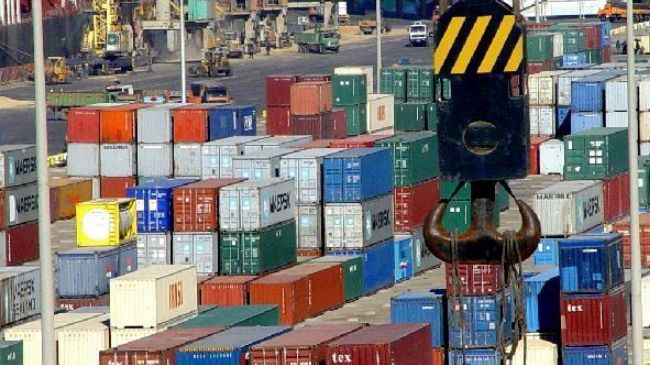
Iran Cargo Containers

Jomhouri Islami Newspaper reported a rise, both in terms of value and weight, in the country’s non-oil exports in the first four months of the current year (starting March 21, 2014). The following is an excerpt of the report the daily ran on the issue:

Iran’s non-oil exports in the four months to July 23, 2014 registered a 21 percent growth in terms of value and a 13 percent increase in terms of weight over the corresponding period last year, bringing in some $16.1 billion in foreign revenues, the head of the Trade Development Organization said.

Valiollah Afkhami-Rad further said China, Iraq and the UAE topped the list of countries importing Iranian goods. […] “During this period, the value of each ton of export items increased 6.7 percent as compared with the similar period last year to stand at $376.”

He added during the 4-month period the country spent $17.6 billion on imports of 13.2 million tons of foreign-made products. […]

Afkhami-Rad went on to say over the past 10 months efforts to ease tensions in international relations have been the cornerstone of the policies adopted by the Trade Development Organization, because with sanctions in place the overall trend of foreign trend cannot be described as positive. […]

Iran’s foreign debts down 9.7 percent

Iran Central Bank
Iran Central Bank

Aftab Yazd Newspaper reported on August 18th that Iran’s foreign debts in the 12 months to March 21, 2014 shrank 9.7 percent to $6.654 billion.

At the end of the yearlong period the country’s short-term debts stood at $834 million while medium- and long-term debts amounted to $5.820 billion. […]

In March 2013 the total amount of Iran’s foreign debts stood at $7.370 billion.

Iranian scientists build biological nano-sensor for early cancer diagnosis

Dna 3d
Dna 3d

Iranian researchers have designed a biological sensor for early detection of cancer.

Dr. Haniyeh Fayazfar, a material engineering student at Sharif University and lead author of the study, said, “Extra-sensitive biological sensor is of significance in early DNA diagnosis of cancer. Biological-electrochemical sensors make it possible.”

She noted that the aim of the project is to build and investigate a biological sensor, extra-sensitive in early diagnosis of DNA mutation consequence.

She also said simple production, low cost, swift response and high sensitivity are some features of the nano-sensor.

The results of the study have been published in Analytica Chimica Acta.

Iranian researcher uses ear for identification at airports, border crossings

Ear Identification Scan

An Iranian researcher at Amir Kabir University has developed a method to identify people at airports and border crossings through ear specifications.

“Biometrics such as fingerprint and iris are used for identification of people. We have used ear as a biometric in this study,” said Mina Shahriari.

She added that some biometric features change over time, but ear functions independently and does not grow old.

The researcher noted that ear images were used for the study and a histogram was used for identification process. “Using ear as a biometric is highly precise for identification of people compared with other methods of identification.”

She also said that taking the image of an individual’s ear does not need his cooperation, while in other methods of identification such as eye-scan and fingerprinting the person needs to work with the operator.

She concluded that the method can be used for identification of terrorists at borders crossings and other ports on entry.

Enhancement of Iran, Italy Economic Ties Discussed

Iran-Italy

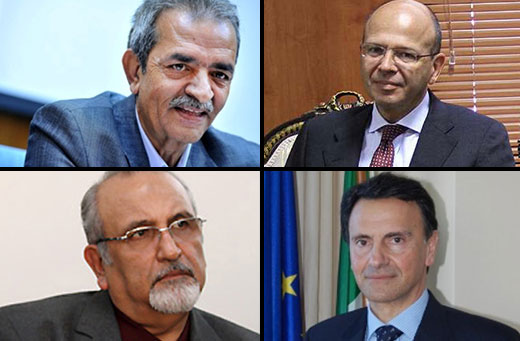
In a meeting which was attended by Head of Iran Chamber of Commerce Gholam Hossein Shafeyee, the Chamber’s Deputy Head for International Affairs Ali Akbar Farazi, Italy’s Ambassador to Tehran Luca Giansanti, Director General for Italian Promotion (economy, culture and science) Andrea Meloni, and President of Italian Foreign Trade Agency Ricardo Monti, the two sides stressed the need for both Tehran and Rome to utilize each and every capacity and potential to broaden and widen economic relations, specially in the fields railway transportation and agriculture.

During the meeting, Shafeyee highlighted the long historic business relationship between Iran and Italy, and said, “Italy was the premiere economic partnership of Iran for past years and Italian heavy machinery in Iran’s industries testify this brilliant relationship.”

Andrea Meloni, for his part, highlighted the longing of Italian companies to boost ties with Iran. Monti, for his part, said Italian bilateral relationships with Iran must be developed in agriculture machinery, medical and pharmaceutical equipment, stone and other fields.

In March, in a meeting between Co-Chairman of Iran-Italy parliamentary friendship group Javad Heravi and Ettore Rosato, head of the Democratic Party at Italy’s Chamber of Deputies in Tehran, the two sides vow to do their best to enhance bilateral ties, specially in parliamentary field.

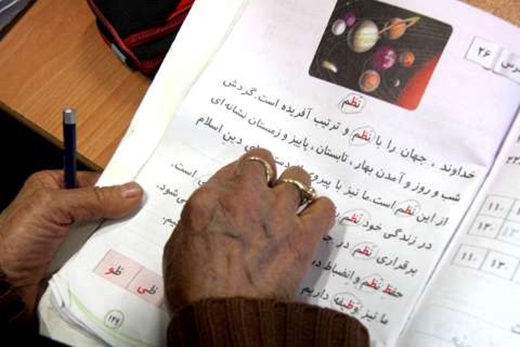
Limited public services for illiterates aged 10-49

Limited public services for illiterates aged 10-49

A July 26th issue of Javan Newspaper cited the head of the Literacy Movement Organization of Iran as saying that in the not-too-distant future illiterate individuals aged between 10 and 49 will receive limited public services. Here is an excerpt of the report the daily ran on the issue:

In the near future, limited public services will be offered to illiterate individuals in the 10-49 age group, said Ali Bagherzadeh, the head of the Literacy Movement Organization of Iran.

He recalled the recent decisions of the Cabinet with regard to literacy and said the Supreme Literacy Council has set the stage for universal literacy in the country and that all illiterate individuals aged 10 to 49 can seize this opportunity to learn reading and writing skills.

He went on to say that illiterate individuals usually have low self-confidence and have to deal with numerous problems in their daily lives.

Bagherzadeh further said those in the 10-49 age group who fail to take advantage of this opportunity by early 2016 will be classified as illiterate and will face difficulty, among other things, securing permits for economic activities and getting cash subsidies.


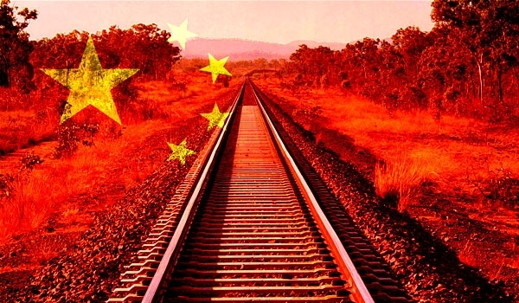
China Plans to Invest in Tabriz Tram Project

China Plans to Invest in Tabriz Tram Project

“The Tabriz tram will have the highest standards in terms of safety, comfort, beauty, speed and quality,” a senior Advisor of China’s CT Group Company said.

He noted that Tabriz tramline will have a maximum speed of 80 kilometers per hour and will work in different weather conditions.

The Chinese official noted that Tabriz tramline can replace 50 buses and 200 taxis while it will cost much less.

Last month, Chinese officials held talks with their Iranian counterparts to finalize a deal on financing railway development projects in Iran.

“Our priority is the development of railway through attracting finance and recently we have reached an understanding with China, which is being finalized now,” Deputy Director of Construction and Development of Infrastructures Transportation Company (CDITC) Seyed Massoud Nasr Azadani told FNA after the talks.

He, meantime, said that proper conditions are also ready for the Iranian companies to invest in building railway lines in the country.

Earlier this month, a senior trade official announced that Chinese companies are interested to invest in strategic projects of Iran.

“Chinese companies are ready to cooperate with this province in the construction of the second phase of the monorail as well as the telecommunication networks, airport and highway construction projects and they intend to sign a memorandum of understanding (MoU) in this regard,” Top Adviser of China’s Gansu Governor General Oyang Jian said in Qom today.

He pointed to the activities of Gansu province in recent years, and said, “Gansu province is the first Chinese province that has set up a trade delegation.”

The Chinese official noted that the value of Gansu-Qom export/import has exceeded $100 million, and said since Gansu and Qom are sister provinces their cooperation should further increase.

He expressed the hope that Gansu and Qom provinces would increase their cooperation in the agriculture and energy sectors.

Gansu is a province of the People’s Republic of China, located in the Northwest of the country.

Iran is currently China’s third largest supplier of crude, providing Beijing with roughly 12 percent of its total annual oil consumption.

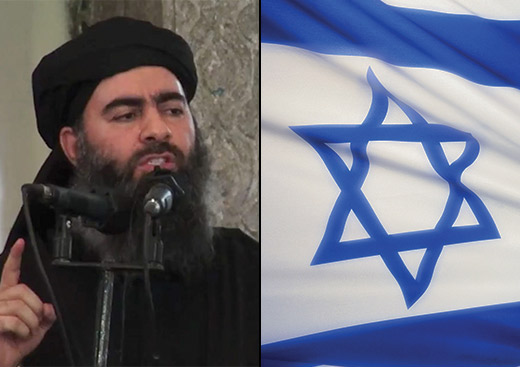
Zionist Regime, ISIL Allies

ISIL-Zionists

Bashar Ja’afari told Press TV on Friday that the ISIL Takfiri terrorists have an undeclared alliance with Israel and are engaged in a secret agreement with the regime.

The Israelis help the Takfiris infiltrate into the separation line on the Golan Heights from Jordan, where their training camps are located, the Syrian diplomat said.

The remarks came after the UN Security Council on Friday unanimously adopted a resolution condemning the ISIL terrorist activities in Syria and Iraq.

The Syrian ambassador to the UN also stated that “everybody knows that Jordan is hosting secret training camps.”

Amman has not commented on this yet. The Syrian envoy to the United Nations has welcomed an anti-ISIL resolution, saying if the Takfiri terrorists’ assaults were not ignored, they would not be wreaking havoc in the region now.

Bashar al-Ja’afari reiterated Damascus’ stance on terrorism, saying the Syrian government is a “necessary partner in the fight against terrorism.”

“For more than three years Syria has been engaged in a very difficult war on behalf of all humankind against terrorist organizations,” during which “the government of Syria has tried to do its utmost to attract the attention of the member states of this organization to the threats facing the region and the world.”

“I would like to know why the member states of the Security Council have not responded to our repeated complaints for more than three years,” he said.

The Syrian ambassador’s remarks came after the UN Security Council unanimously adopted a resolution against the ISIL Takfiri terrorists in Syria and Iraq.

The 15-member world body called for action against the terrorists, who, it said must “disarm and disband with immediate effect.”

ISIL terrorists are currently in control of several oil fields in Iraq and Syria.

Iraq, which has the world’s fifth-biggest crude reserves, came under a massive blitz by the ISIL Takfiri terrorists in June.

Syria has also been gripped by deadly violence since 2011.

More than 170,000 people have been killed and millions displaced due to the violence fueled by the Western-backed terrorists.

The Western powers and their regional allies — especially Qatar, Saudi Arabia and, Turkey — are reportedly supporting the terrorists operating inside Syria.