
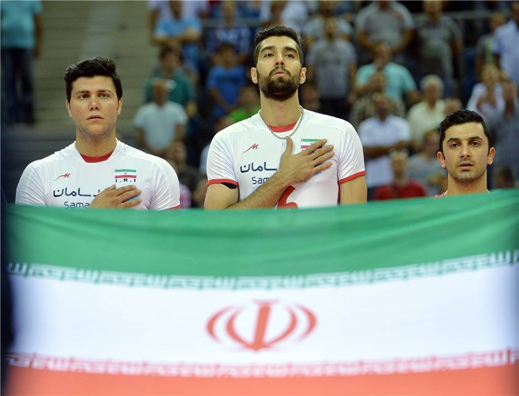
Iran defeated Belgium at the 2014 FIVB Men’s World Championship in Poland on Saturday and advanced to the next stage of the games. The Iranian squad beat Belgium 3-1 (25-23, 25-15, 21-25, 25-20) and secured all three points of the game. The win put Iran after France in second place in Pool D on eight points. The US and Italy are third and fourth respectively. Italy have a game in hand. Iran will line up against Puerto Rico in their final encounter in the group stage on Sunday (14:30 GMT).
A look at newspaper headlines across the country on September 6
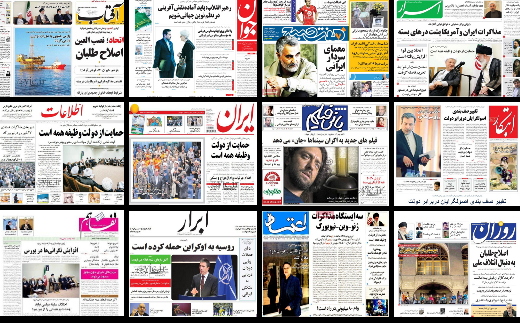
The comments Supreme Leader Ayatollah Ali Khamenei made at a meeting with members of the Assembly of Experts on Thursday were on the front page of almost every newspaper on Saturday (September 6). Depending on their political leanings, different dailies headlined the story differently. For instance, Javan newspaper, which is close to principlists, quoted the leader as saying, “We need to get ready to play a role in a new world order.” Tafahom cited Ayatollah Khamenei as saying, “Differences over political approaches shouldn’t chip away at [national] unity.” Another headline-grabbing story centered on bilateral talks between Tehran and Washington underway in Geneva prior to negotiations later in September between Iran and P5+1 in New York.
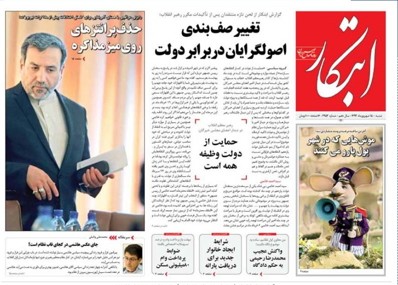
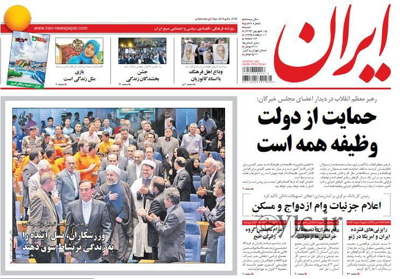
Ebtekar: “Everyone has a duty to support the government,” the Supreme Leader told members of the Assembly of Experts. Following those comments a number of principlists, who have been widely known for their caustic criticism of the 11th government ever since it took office in August 2013, toned down their rhetoric.
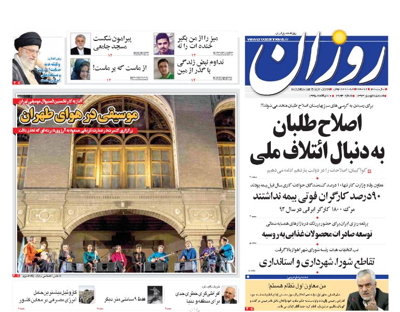
Ebtekar: City of Mice, the latest movie by Marziyeh Borumand rakes in over one billion tomans at the box office in a little more than a week. The puppet show, which makes many Iranians feel nostalgic, has thrown a lifeline to Iranian movie theaters.
Ebtekar: “Where does Hashemi stand in the establishment?” is the title of the newspaper’s editorial by Mohammad Ali Vakili who says in the early years of the revolution Hashemi Rafsanjani was the target of anti-revolutionary elements and later came under attack from hardliners within the establishment. But he managed to ride out the storm and remain part of the system.
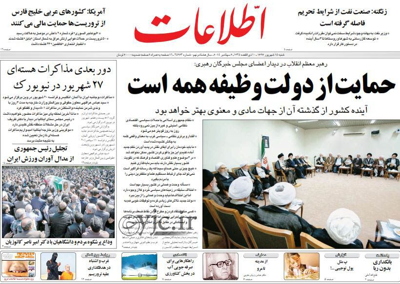
Ettela’at quotes Oil Minister Bijan Namdar Zanganeh as saying that sanctions are no longer as serious an impediment to the Iranian oil industry as they used to be.
Ettela’at:“President Hassan Rouhani has praised Iranian sportsmen and women who have struck medals at international events.”
Tafahom: “News websites which do not have license to operate will be closed down,” deputy Minister of Culture and Islamic Guidance Hossein Entezami said.
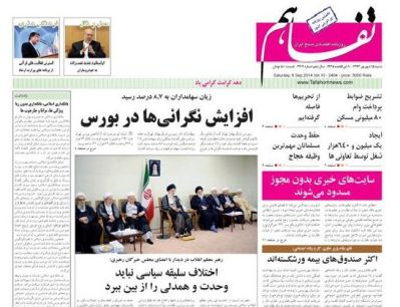
Javan: “Controversial handover of public schools to the private sector.” This headline takes a swipe at the Education Ministry for its decision to hand over some public schools to founders of non-governmental education institutes and says while such a decision could be ideal in reducing the dependence of the education system on state budget, commercialization of educational services is anything but.
Javan, which makes no secret of its critical view of the government and uses every opportunity to imply that nuclear talks with P5+1 would lead nowhere, puts the Iranian deputy foreign minister and his US counterpart on its front page. The image in which the two diplomats are in a face-to-face posture is captioned, “Nuclear talks are not the same as reestablishing ties with the US.”
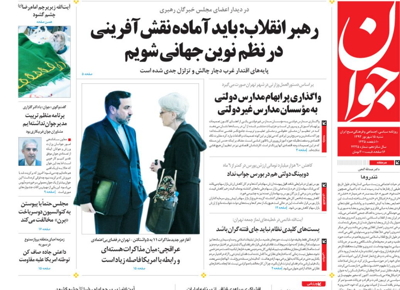
Roozan: “Some 1,800 Iranian workers died in workplace accidents in the 12 months to March 21, 2014. Almost 90 percent of them had no insurance,” the deputy minister of labor said.
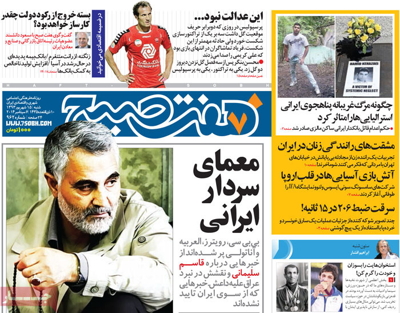
Haft-e Sobh: “The mystery surrounding an Iranian general” is the title of the daily’s lead story which says foreign news outlets keep reporting that Iran’s Ghasem Soleimani [commander of the IRGC’s Quds Force] plays a role in the fight against ISIL militants in Iraq, but Tehran does not confirm the news.
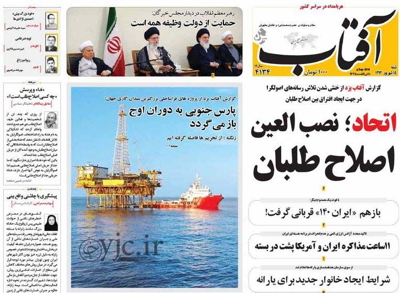
Aftab-e Yazd: “South Pars gas field returns to its glory days,” Oil Minister Bijan Namdar Zanganeh said.
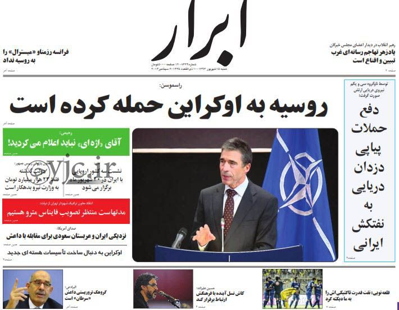
Abrar: “The antidote to Western media onslaught is clarification and reasoning,” said the Supreme Leader in a meeting with the members of the Assembly of Experts.
Abrar: “Repeated attempts by pirates to commandeer an Iranian oil tanker have been foiled by the Iranian Navy.”
Abrar: “Mr. Ejei, you shouldn’t have gone public with a ruling which is subject to appeal,” the vice president under Mahmoud Ahmadinejad has said in reaction to an announcement by the judiciary spokesman that Mohammad Reza Rahimi has been convicted of fraud and sentenced to prison term and fines. It seems the former VP, who is widely known by his initials – M. R. – in the Iranian press, hopes to have the verdict overturned on appeal.
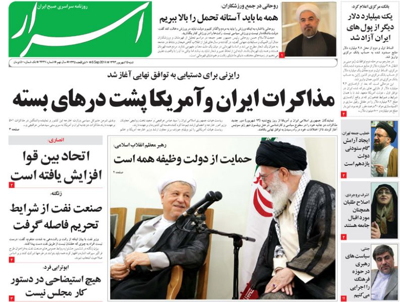
Asrar: “Over one billion dollars in frozen Iranian assets has been released,” the Central Bank of Iran said.
Asrar:“No impeachment is on the agenda of the Islamic Consultative Assembly,” said MPMohammad Hassan Abutorabi-Fard.
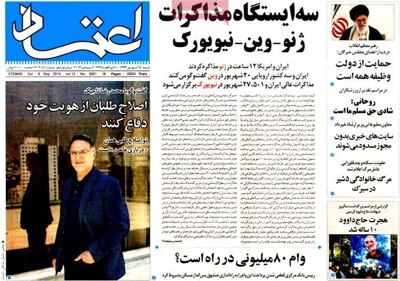
Etemad: “Joyfulness is the inalienable right of all of us,” President Rouhani said at a ceremony to praise athletes.
Iran: Iranians bid final farewell to Amir Nasser Katuzian, who was widely known as the father of Iranian law.
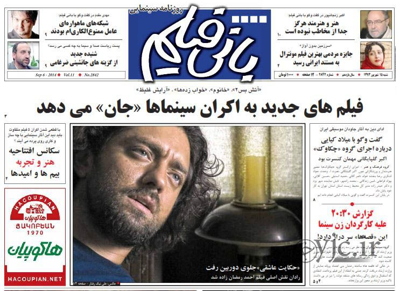
Banifilm: An Iranian documentary has won the People’s Choice Award at the Montreal Film Festival.
New details about American-chartered plane landing at Iranian airport

Following the landing on Iranian soil of a US-chartered plane en route from Bagram Airbase in Afghanistan to Dubai, the governor of the southern Iranian province of Hormozgan, where the plane touched down on Friday, told Tasnim News Agency, “We were forced to order the plane to land because its captain provided us with wrong information. The move was designed to get things cleared up.” The following is an excerpt of the report the news agency filed on the governor’s comments:
Hormozgan Governor Jasem Jaderi said the plane, which belonged to a private UAE company, was in Iranian airspace without having its route registered in the Iranian air corridor. “We asked the captain to provide us with information, but he gave us some contradictory accounts, so we ordered the plane to land at Bandar Abbas Airport.”
He went on to say, “On the ground, the pilot admitted that the information he had provided was wrong. When the plane, which had 140 passengers on board, including 110 Americans and some other military personnel from NATO countries, was cleared to take off, the pilot refused to take the controls, citing it was past his flight time and requested that another pilot take over.”
The governor added, “Bandar Abbas Airport even supplied the plane with fuel. We treated them well, they tried not to cooperate with us, though. Not a single military man approached the plane on the tarmac and the crew was only contacted by the airport manager. They were afraid since their entry into Iranian airspace was illegal and they had given us misleading information. They even turned down our offer to freshen up at the airport.”
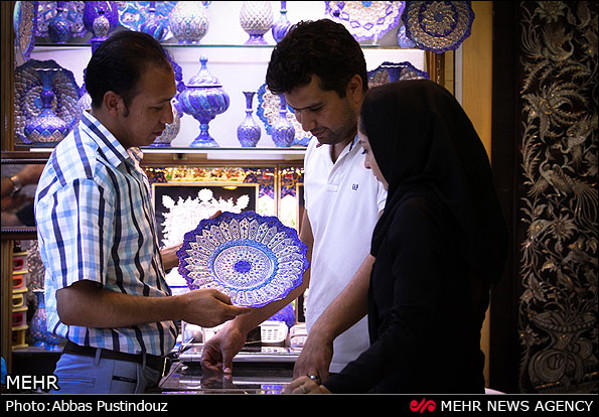
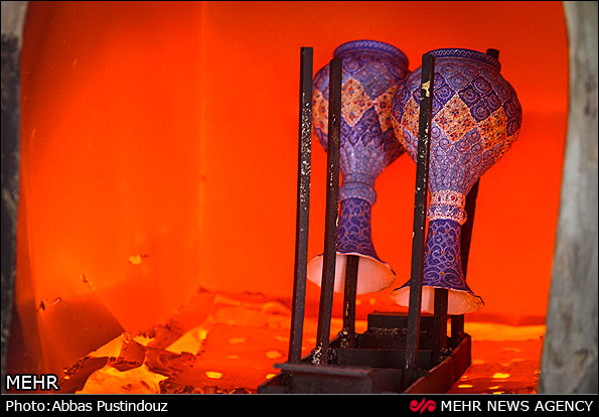
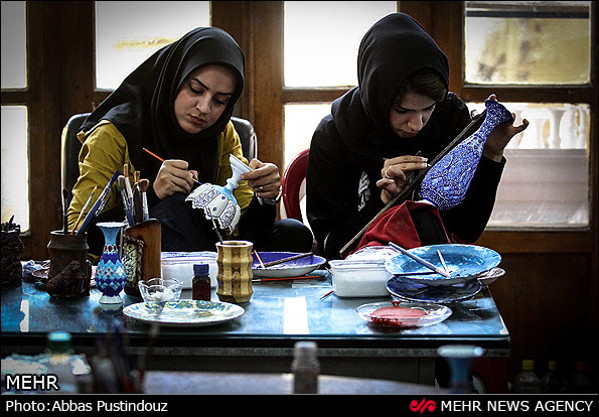
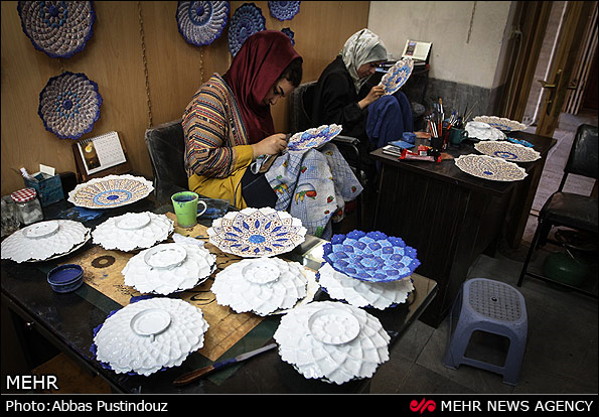
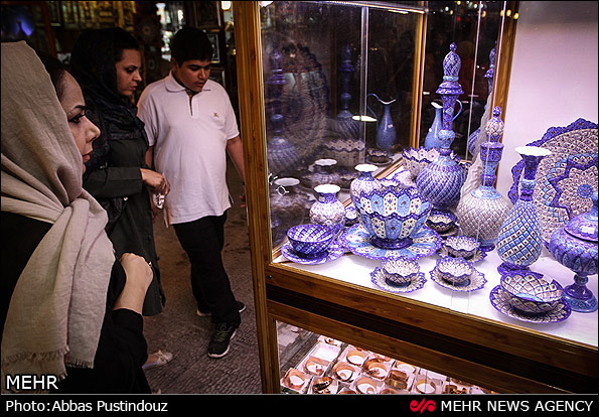
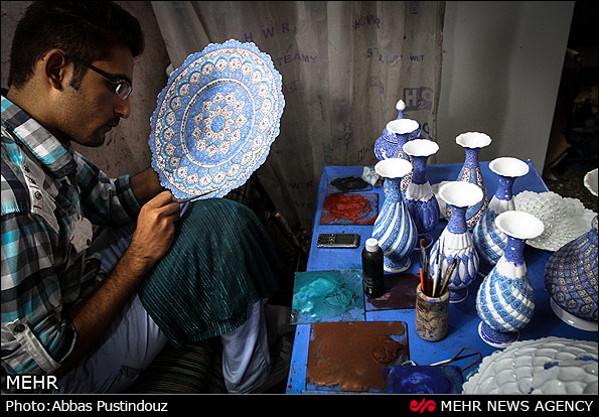
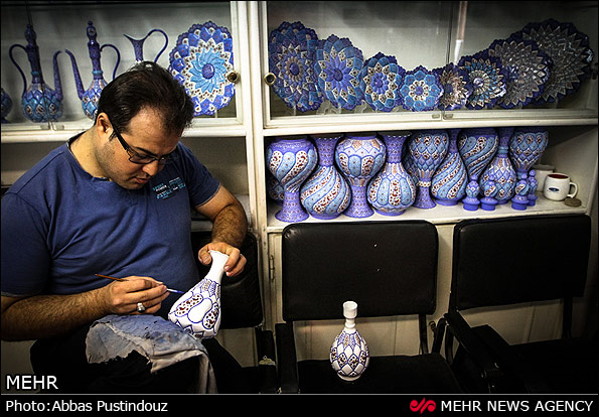
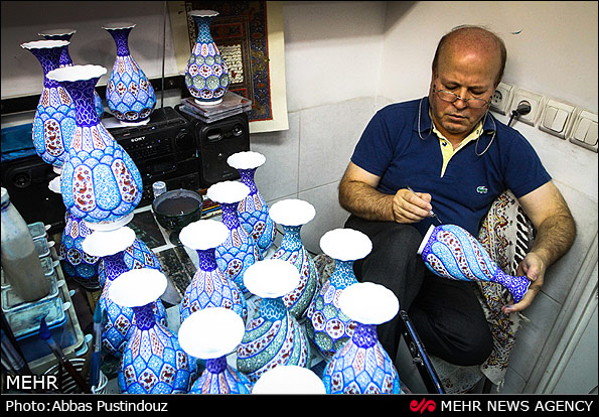
Enamel; Ancient Handicraft Invented by Iranians
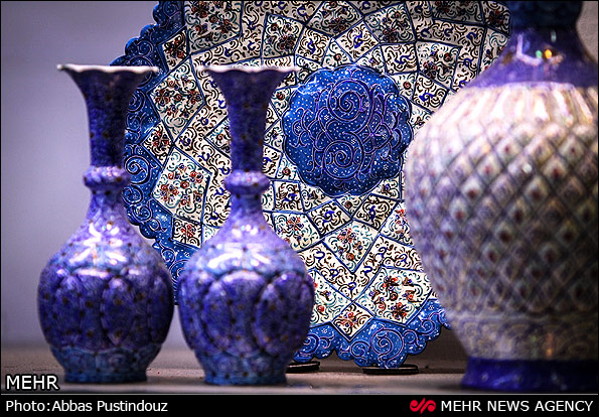
Enamel, a material ancient Persians used to color and decorate the surface of metals, dates back almost 5,000 years.
The craft which involves the fusion of powdered glass to a substrate is said to be invented by Iranian craftsmen. Persian enamelled plates dating back Sassanid era are among famous examples of this ancient handicraft in Iran. Enamelwork was later taken from Iran to other countries by Mongols.
Although enamelwork is often just done on copper today, it can be applied to other metals such as gold and silver, too. Since gold is the only metal not oxidized after the melting of enamel, the enamelwork on gold has far better quality than the one done on silver or copper.
Currently, Isfahan is the hub of enamel in Iran. Great masters live there and make magnificent products.
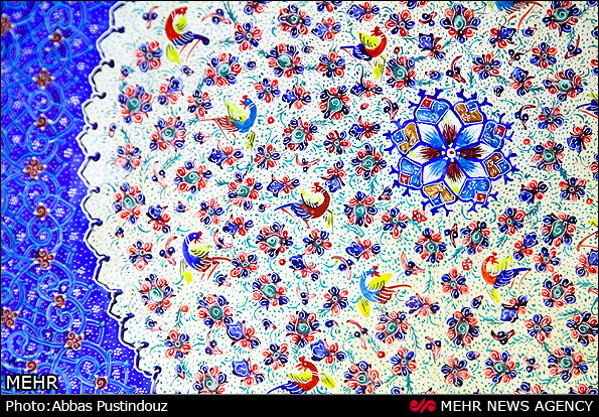
The follows are Mehr News Agency‘s photos of enamel masterpieces in Isfahan:
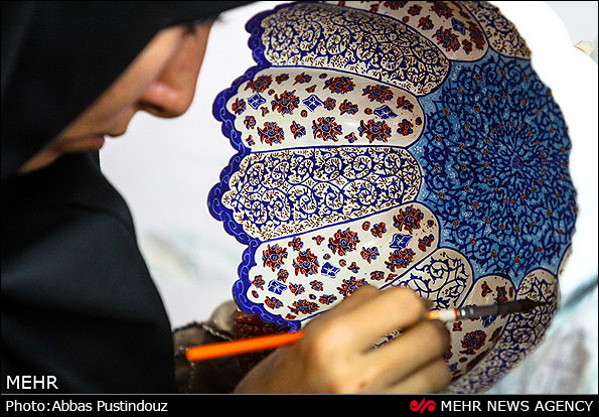
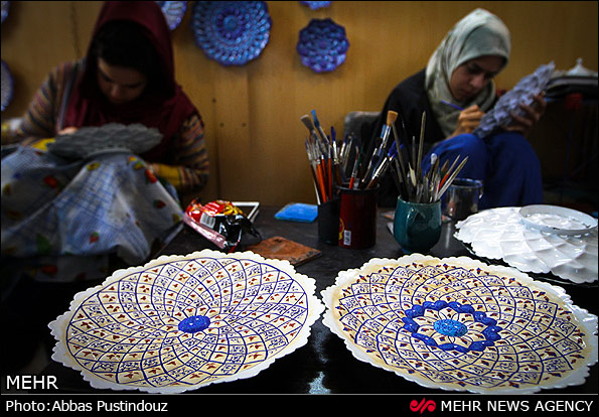
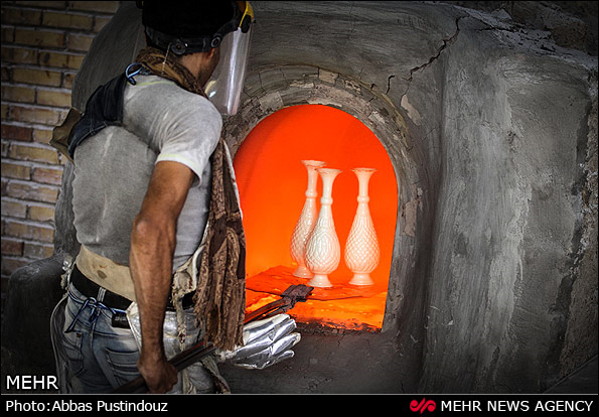
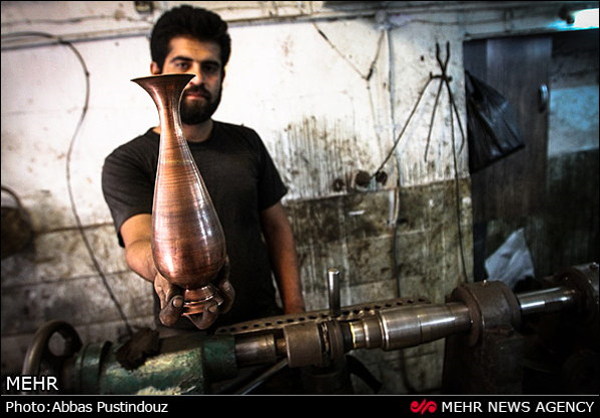


Iran fail to advance to knockout stage of FIBA World Cup
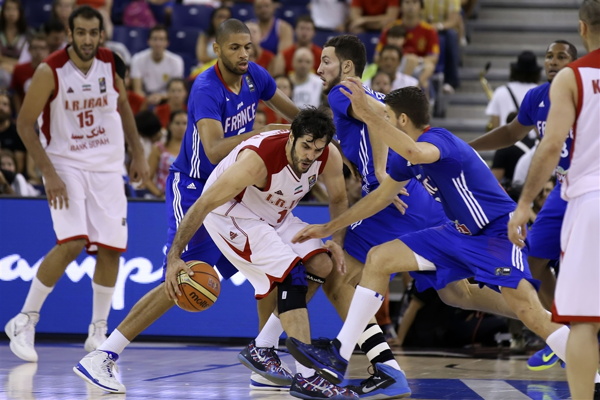
The Iranian Students’ News Agency (ISNA) reported on Friday that Iran’s basketball squad and two fellow Asian teams have been eliminated from the FIBA World Cup in Spain. The following is a translation of an excerpt of the report the news agency filed on the tournament:
Iran’s national basketball team was eliminated from the 2014 FIBA World Cup in Spain after suffering a fourth defeat in group stage at the hands of France.
The 81-76 loss to European Champions put Iran in the 21st place in the overall standings of the event. The Iranian squad is to return home on Saturday [September 6].
















Iran to line up against Belgium at FIVB Men’s World Championship
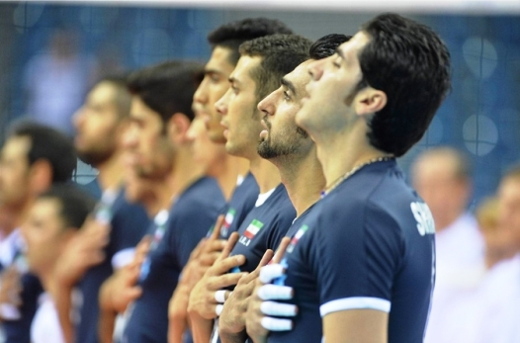
Iran will line up against Belgium at the 2014 FIVB Men’s World Championship in Poland later on Saturday [14:30 GMT, September 6].
Iran are currently fourth in Pool D on five points. Belgium are fifth on four points. Both teams need to win the high-stakes encounter to boost their chances of securing a berth in the next stage of the games.
In their previous three matches Iran have defeated Italy (3-1) and the US (3-2) and have lost to France (3-1).
Belgium have lost to Italy and the US. Puerto Rico is the only team they have beaten in the tournament so far.
Iranian negotiator describes talks with the US “useful”
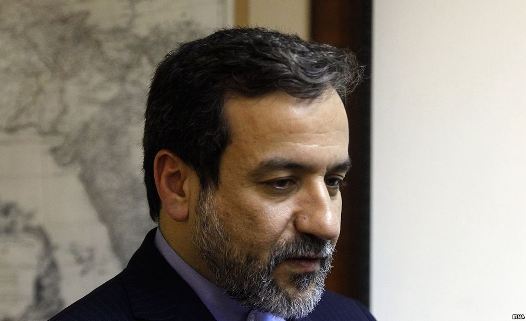
The Islamic Republic News Agency (IRNA) on September 5 quoted senior Iranian nuclear negotiator Abbas Araghchi as describing bilateral talks with the US in Geneva as useful. The following is the translation of an excerpt of the report the official news agency filed on his comments:
In an interview with IRNA in Geneva, Switzerland, the Iranian nuclear negotiator said: “The talks which are expected to run through Saturday [September 6] have been useful so far and we hope they can help us resolve our differences. However, an end to disagreements [over the nuclear case] seems to be away.”
The Iranian top negotiator further said, “God willing, we will have progress before a next round of talks between Iran and P5+1 in New York on September 18.”
Bilateral talks between Iran and the US opened in Geneva on Thursday. Iran’s Abbas Araghchi and Majid Takht Ravanchi and American William Joseph Burns and Wendy Sherman are leading the two sides at the negotiating table.
Tehran denies report on Iran-US cooperation in Iraq
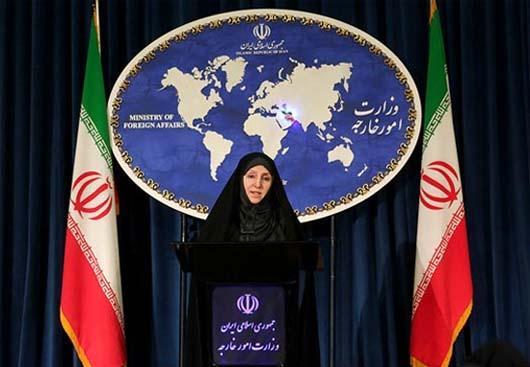
The Iranian Foreign Ministry spokeswoman has denied reports that Tehran has agreed to cooperate with Washington in the fight against ISIL militants in Iraq.
Marzieh Afkham rejected a BBC report which said Leader of the Islamic Revolution Ayatollah Seyyed Ali Khamenei had “authorized his top commander to coordinate military operations with the United States.”
Afkham said the report, in which the BBC has cited unknown sources, is not correct.
The US has also announced that it has no plans to coordinate with Iran on fighting the ISIL.
Tehran has time and again voiced support for the Iraqi government, since it began fighting against the militants in June.
Iran has also criticized Washington for conducting airstrikes on ISIL only after US interests were threatened by the militants.
[….]
Iran Architect Builds Rotating Home in Tehran

The house designed by contemporary Iranian architect Alireza Taghaboni is located in upscale north Tehran and includes rotating levels.
The three revolving bedrooms of the house allow its residents to always enjoy the sun and the best views over the city.
In order to change the view from the windows and enjoy the mid-afternoon sun, all you need to do is to push a button. Alternatively, the windows can tuck into the structure to provide a closed, more private environment.
“Our design scenario was based on seasons. In winter, when balconies are not usually used, and the outside view is not very important, the structure gets closed, and all attention is shifted towards the void inside the house. In summer, the cubes are extended outwards, and balconies are activated. Now all attention is towards the outside,” Taghaboni said.
Privacy has always been a top priority for the Iranians and this was taken seriously in the design of the rotating home. Instead of providing large widows, a void or empty space has been used in the middle of the building to allow sunlight into the house.
The void also resembles ancient Iranian architecture.
“Our main reference for this project is ancient Iranian buildings, but with a complete revision based on a reading of our own, which obviously uses a modern design language,” Taghaboni said.
Around three million euros (USD 4 million) was spent on designing and building the house. Taghaboni says only one seventh of the money was used for building the rotating boxes.
The revolving home has been nominated for an international prize at an event called the World Architecture Festival which is to be held in Singapore in October, 2014.
Ayatollah Khamenei lauds Palestine resistance against Israel
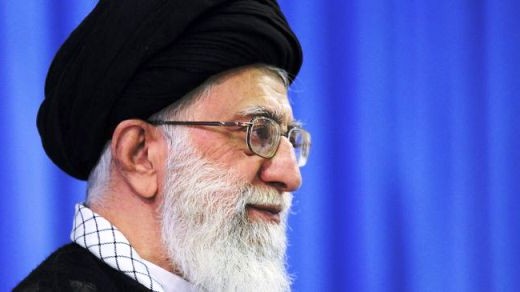
Ayatollah Khamenei said in a meeting with members of Iran’s Assembly of Experts on Thursday that the military achievements of Palestinians against Israel manifested an example of a miracle.
The Leader added that Palestinians had in fact managed to bring the Zionist regime, the symbol of Western power in the region, down to its knees by relying on very limited resources.
Ayatollah Khamenei further said the world is today witnessing a new order, adding that certain countries have failed to understand that, and believe they should stay subordinate to the West.
Iran’s Islamic Revolution was the most important element that challenged the world order, the Leader added, saying that the country ought to become more powerful to play an effective role in the new world order.
Israel started pounding the enclave in early July, inflicting heavy losses on the Palestinian land. Almost 2,140 Palestinians, mostly civilians, including women, children and the elderly, were killed in the 50 days of the Israeli onslaught on Gaza. Around 11,000 others were injured.
Tel Aviv says 69 Israelis were killed in the conflict, but the Palestinian resistance movement Hamas says the number is much higher.
Palestinian Islamic Jihad movement has said it fired over 3,000 rockets on dozens of Israeli cities during the war Tel Aviv imposed on the besieged Gaza Strip.
The resistance group said that over 60 of the projectiles fired by its al-Quds Brigades landed in main Israeli cities, including Tel Aviv, al-Quds (Jerusalem), Dimona and Netanya.
On August 26, a truce took effect between the Israeli regime and the Palestinian resistance movement Hamas. The truce stipulates the ease of Israel’s seven-year-old blockade on Gaza as well as the provision of a guarantee that Palestinian demands will be met.
