Wednesday, December 24, 2025
Home Blog Page 5066

Iran, Russia can boost trade exchanges tenfold

Iran-Russia-ties
Iran-Russia-ties

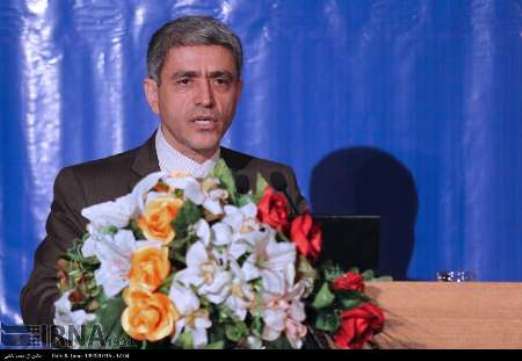
The 11th round of Iran-Russia trade cooperation commission was held in Tehran on Tuesday in the presence of the Iranian oil minister and Russian Energy Minister Alexander Novak along with other members of the Iranian-Russian Joint Business Council (JBC).

“In 1392 (The last Iranian calendar year, which started on March 21, 2013 and ended on March 20, 2014), the volume of bilateral trade between the two countries amounted to $1.5 billion, which has the capacity to be increased to more than 10 times through efforts” made so far, IRNA quoted Zangeneh as saying.

The three-hour long meeting, held in Iran’s Chamber of Commerce, Industries Mines, and Agriculture, focused on the two countries’ technical and technological potentials.

The two sides stressed more comprehensive economic transactions between Tehran and Moscow.

“We can provide Russia with a wide range of commodities and services they may not have access to due to the illegal sanctions. We will sign a memorandum of understanding today with an eye to finalizing the bilateral trade deal,” the Iranian oil minister said.

Zanganeh also called Russia a “great market for Iranian companies.”

Novak, for his part, hailed greater ties with Tehran, saying, “This event is a milestone in Russian-Iranian commercial relations, which will facilitate trade between the two countries.”

The JBC’s Russian members also voiced hope that more ties with Iran could pave the way for neutralization of the US-imposed sanctions on Moscow.

“The latest sanctions imposed by the US and EU disrupted the process of fruit import to Russia from European countries like Poland, said Victor Melinkov, the JBC chairman, adding that the situation provides an opportunity for Russia to “compensate for this problem by importing fruits from Iran.”

Tensions between Russia and the West heightened after Ukraine’s Black Sea peninsula of Crimea joined the Russian Federation following a referendum in March.

The next round of the joint trade commission will be held in Moscow in 2015.

Who is right: Obama or Kissinger?

Obama and Kissinger
Obama and Kissinger

The editorial of Ebtekar daily on September 9 focused on stark differences in recent comments by President Obama and strategist Henry Kissinger about Iran’s regional role and the threat it poses to American interests. It described the comparison the two drew between Iran and ISIL as a blunder. The following is the translation of the editorial in its entirety:


Over the past few days two very prominent American figures none other than President Barack Obama and former Secretary of State Henry Kissinger have made apparently contradictory comments about Iran’s role in the region and the world. The Democrat president told NBC News [Meet the Press] “The problem for Sunni states in the region, many of whom are our allies, is not simply Iran. It’s not simply a Sunni-Shia issue. Sunni extremism, as represented by ISIL, is the biggest danger that they face right now.”

His comments came after veteran US diplomat Henry Kissinger, who has served as the national security adviser [to President Nixon] and secretary of state [in the administrations of Presidents Nixon and Ford], expressed seemingly contradictory views about the role Iran plays in the region and about ties between Tehran and Washington. “I consider Iran a bigger problem than ISIS.”The clout Iran has in the Middle East gives it “the opportunity to reconstruct the ancient Persian Empire”.

At first glance, the gap in the comments by the old diplomat and the relatively young president, is so wide that they sound mutually exclusive in diplomatic terms. In other words, the comments of either one or both should be ignored.

No doubt, a country which has played an undeniable role in human civilization and a terrorist group are like apples and oranges. You can never draw an analogy between them. That is the first fundamental problem one can associate with the remarks of President Obama and Secretary Kissinger.

One can never compare the conduct of a sovereign state which has real social status and a legal political structure with that of a bunch of terrorist militants who flaunt all ethical norms and legal principles of the international community, a group whose structure defies all well-defined standards. Let’s assume the two Americans said what they said to clarify their stance – in Obama’s case – and view – in Kissinger’s case. That would help you take a better look at their remarks.

In addressing America’s Sunni Arab allies, Obama rightly described ISIL [also known as ISIL and IS] as the biggest threat to the region and the wider world. Until very recently this prominent world figure held a very different view. If the international community commissioned a panel to investigate the reasons behind the emergence of ISIL, it would definitely point a finger of blame at Washington, more specifically at the Oval Office.

Between early 2011 and earlier this year, the Americans, who support the so-called Friends of Syria Group, ignored warnings by Iran and some other countries [about ISIL] and thus turned the region into a backyard for the growth of the Islamic State of Iraq and the Levant.

After three years of failure to correctly analyze the realities of Iraq and Syria, American analysts and advisers to President Obama have finally come to the same conclusion that Tehran had drawn a long time ago. Iran had warned the Americans about the dangers of a Western-Turkish-Arabic alliance in a land whose features are unknown to them.

As predicted, the tide has turned for the Americans, so much so that Obama, who is a realist, describes the new policy of his government as “inevitable tactic”. An approach that seeks to place Iran, the US and Sunni Arab countries on the same front. So it is not surprising for a realist American president to seek a new chapter in relations with Iran to extract his country from the quagmire of ISIL, Iraq and Syria.

In parallel, American media covered the new analysis of Henry Kissinger, who is viewed as one of the best US strategists, on ISIL. Although both Obama and Kissinger are more trusted by American realists than by idealists, over the past six years, Kissinger’s analysis of America’s foreign policy and the way the US should handle international affairs has been totally different from that of the president. Kissinger is the same person who handed a signed copy of his book “Diplomacy” to Mohammad Javad Zarif, when he was Iran’s UN ambassador. It was signed “To Zarif, my respectful enemy”.

To better understand the attitude of Kissinger toward Iran, one should explore his views about the role of the US in the world after the Second World War and about America’s handling of the Middle East in recent decades.

As a person whose views took shape largely when the Soviets were in their prime during the Cold War and during the Vietnam War, Kissinger tends to condition the superior power of the US on the bipolarity of the world. That is why he believes the survival of Washington hinges on the existence of a big enemy or enemies that are as strong as an empire. Thus he realistically refers to the clout of Iran in the Middle East and North America and in a place as far away as South America.

With that in mind, Kissinger describes US policy toward Iran as a strategy rather than an inevitable tactic, says he considers “Iran a bigger problem than ISIS”, and calls Iran’s UN ambassador a “respectful enemy”.


A look at Iranian newspaper headlines across the country on September 9

Iran newspapers-09-09

Most Iranian newspapers on Tuesday led on the successful surgery Supreme Leader of the Islamic Revolution Ayatollah Ali Khamenei underwent in Tehran the day before. Images of senior state officials paying bedside visits to him were splashed across their front pages. Comments by Iran’s deputy foreign minister on nuclear talks also generated headlines. “We are having good interactions with the Americans at the negotiating table,” one headline read. Also drawing attention were the interior minister’s remarks that Iranian security forces are well aware of plots by IS to mount attacks on regional countries, including Iran, and that Tehran is ready to nip any such scheme in the bud. And finally, news about the meetings the visiting Danish foreign minister had in Tehran with some senior officials, including the chairman of the Expediency Council, was on the front pages of some dailies.


Ebtekar dedicated its front-page headline to the use of anti-Internet filtering software and said based on the stats released by the Center for Research at the Ministry of Youth and Sports, 69 percent of Iranian youth use software to bypass filtering.

Ebtekar: “A Tangled Knot in Kabul” is another headline the daily carries, implying that talks between Afghanistan’s rival presidential candidates still remain inconclusive.

Ebtekar: “A bizarre about-face by Ahmadinejad on the State Expediency Council” is the headline of a piece by the newspaper to shed light on a shift of stance by the former president toward the council. In light of the fact that the former president is likely to run for parliament, the daily argues, Ahmadinejad, who used to boycott the meetings of the council, attends them regularly to quell accusations that he is arrogant and does not pay attention to the viewpoints of others.

Ebtekar: “Bedside visit to the Supreme Leader by senior statesmen of the establishment” is the title of a story which covers the successful surgery the Leader underwent on September 8 and the satisfaction his medical team expressed with the operation.


Ebtekar Newspaper-09-09


Ettela’at quoted the deputy oil minster as saying that expansion of oil cooperation between Iran, China, and Russia is around the corner.


Ettelaat Newspaper-09-09


Tafahom ran a headline on President Hassan Rouhani’s 5-day tour of Kazakhstan and Tajikistan, among other things, to attend a Shanghai Cooperation Organization summit.


Tafahom Newspaper-09-09


Javan also highlights the figures released by the Center for Research and Strategic Studies and puts “Only 10 percent of the youth use the Internet for research” as its front-page headline.


Javan Newspaper-09-09


Hemayat: Three Iranian volleyball players are on the list of the most valuable players of the 2014 FIVB Men’s World Championship.


Hemayat Newspaper-09-09


Farhikhtegan: “Three requirements to fight terrorism” covers the meeting between Chairman of the Expediency Council Akbar Hashemi Rafsanjani and the Danish foreign minister during which Hashemi said honesty, bravery and elimination of double standards are central to efforts to the fight against terror.


Farhikhtegan Newspaper-09-09


Kar va Kargar reports that a first case of cholera has been spotted in the capital, Tehran.


Karo Kargar Newspaper-09-09


Abrar Eghtesadi: “Chabahar Free Trade-Industrial Zone sees a 47-percent rise in investment.”


Abrar Newspaper-09-09


Asrar quoted the Commander of Khatam ol-Anbia Air Defense Base Brigadier General Farzad Esmaili as saying that jets were scrambled as a NATO plane entered the country’s airspace after providing false information to Iranian aviation officials. The plane was escorted to an airport in the southern Iranian city of Bandar Abbas.

Asrar: “The country is in a good condition as far as security is concerned,” said the Iranian Prosecutor General.

Another headline of Asrar read, “Likelihood of the death penalty for Mohamed Morsi [the ousted Egyptian president].”


Asrar Newspaper-09-09

Etemad: “To address the violation of the Islamic dress code, disciplinary measures should not be the first priority,” said Police ChiefBrigadier General Esmail Ahmadi Moghaddam. His comments came after President Rouhani advised against the exertion of pressureto prevent such violations.

In another news piece, Etemad refers to a recent decision by the government to replace jail terms with community service.


Etemad Newspaper-09-09


Ta’adol: “A halt in the fall of stocks” is the headline of a story that says the weeklong freefall of the index of the Tehran Stock Exchange has stopped.


TaAdol Newspaper-09-09


Jomhouri Islami quoted President Rouhani during a visit to Kazakhstan as saying, “The railway connecting Iran to Turkmenistan and Kazakhstan will open by yearend [March 21, 2015].”


Jomhouri Eslami Newspaper-09-09


Shahrvand quoted the director of the Research Center for HIV as saying, “Transmission of HIV by sexual contact is on the rise.”


Shahrvand Newspaper-09-09


Quds quoted Economy Minister Ali Tayebnia as warning, “Tax evaders will be identified.”


Ghods Newspaper-09-09


Kaenat reports that 250,000 university seats will remain vacant. It came after the results of the nationwide university entrance exam were released.


Kaenat Newspaper-09-09


Hadaf va Eghtesad filed the comments of the deputy governor of the Central Bank of Iran under the following headline: “The foreign currency market is now stable.”


Hadaf Eghtesad Newspaper-09-09


Iran intercepts pro-Takfiris on way to join ISIL in Iraq

Iranian Interior Minister Abdolreza Rahmani-Fazli

Abdolreza Rahmani-Fazli made the announcement on Monday, dismissing claims that the terrorist group is recruiting forces in Iran.

“Of course, there have been cases of Afghan and Pakistani nationals trying to cross the Islamic Republic of Iran’s territory [into Iraq],” he said, adding, “We have on several occasions prevented them from entering the country and crossing the borders of Iran, and we have made several arrests in that respect.”

He further stated that Iranian security forces deployed along the country’s western border are watching out for potential threats posed by terrorist groups.

Iranian officials have, on numerous occasions, expressed support for the restoration of stability and security to Iraq while denying sending military forces to the neighboring country. Tehran says Iraq is fully capable of countering ISIL and there is no need for foreign involvement.

[…]

Persian leopard with implanted gold crowns

Persian Leopard

Persian leopards are the largest ones of their kind in the world. They have a big, muscular, and extremely flexible body and can be found in several habitats across Iran.

Rica, a male Persian leopard whose mother was killed by poachers in northern Iran when he was still a cub, was looked after by the rangers and then was first taken to Darabad Museum and later to Tehran Zoological Garden.

Rica went through a lot of pain because of worn lower fangs, tooth infection and abscess. The infection left a cavity in his lower jaw and caused him a lot of pain. Had it not been treated, it could have put his life in danger.

Unfortunately, in our country there is no veterinary dentist, that’s why wildlife expert Iman Memarian at Tehran Zoo tried to put together a team and use a dentist to treat Rica. He wanted to save the leopard in his care from the pain by any means possible.

Sizing up all factors at play to form a team, he asked Dr. Molazem and Dr. Omidvari, a dentist, and the School of Veterinary to help him with the exclusive treatment project.


Persian LeopardAt Tehran Zoo, Rica was given a general anesthetic by Dr. Memarian who then took the animal to hospital in his own car because there was no ambulance available. What made what he did dangerous was that the animal could come to on the way to hospital. You never know how an aggressive animal like a leopard would react in the enclosed space of a car and what danger it could pose to people. Perhaps that was one of the reasons why his consciousness level was closely monitored by Dr. Ghazalleh.

Eventually, they arrived at the hospital and the unprecedented operation began. Although it was his first experience with animals, Dr. Omidvari along with the medical team performed the multi-step surgery confidently. At the first stage they removed the infected tooth pulp and the nerve.

In the second stage of the procedure, the root canal was carried out. Gold crowns were later made to be put over the top of damaged fangs.

What was interesting was that when Rica came around, he wouldn’t let anyone touch him even from behind the fence – something that he used to do – fearing that zoo keepers might once again want to use a blowpipe [a weapon which is used by inserting projectile inside the pipe, and the force created by one’s breath is used to give the projectile momentum in order to give an animal anesthetic drugs.]


Naarengi [Tangerine], a magazine which is aimed at children and their parents and published by Valeh Education Institute, first reported this story.

Alireza Shahrdari-Panah, who filed this report for Naarengi, served as an assistant to Dr. Memarian all through the process.

Rouhani gives top priority to agriculture

Iran-agriculture
Iran-agriculture

“Ideas and achievements of the elite should be used in agriculture, industry and mining, and people should reap the benefits,” President Hassan Rouhani said at a meeting with the elite in Khorasan Razavi (September 7).

Fortunately, over the last year the Ministry of Agriculture Jihad and the Center for Information and Public Relations have created a good atmosphere, bringing agricultural issues to the attention of the public, the government and parliament and prompting authorities to take the supply of food and improvement in agriculture more seriously.

During the past year, the first vice president has paid five visits to centers for agriculture research, a fact which underlines the importance the government attaches to the sector. Other vice presidents have also paid similar visits.

President Rouhani, who was born and bred in the countryside and is well aware of farming, usually turns to former Agriculture Minister Issa Kalantari for advice. He pays serious attention to ideas floated by Mahmoud Hojati, who was at the helm of the ministry for two terms.

The president’s recent remarks about agriculture indicate that he puts agriculture ahead of industry and mining, signaling that he lays considerable emphasis on the sector responsible for the production of 120 million tons of crops and food.

There is hope his approach will result in a solution to the problems the agriculture sector and farmers are grappling with.


A look at transit and customs problems in Afghanistan

Iran Says Almost All Border Crossings Reopened by Neighbours
Afghanistan Transit

Afghanistan has been trying for a long time to become a member of Transports Internationaux Routiers (International Road Transports, or TIR). “Afghanistan applied for TIR membership in 1976, yet unfortunately, TIR turned down the application, citing civil war in the country. The country eventually managed to become a member of TIR in September 2013,” a report by the Public Relations Department of Iran’s Chamber of Commerce quoted Afghan Customs Agent Alireza Sadrikhah as saying.

Sadrikhah described Iran’s geographic position as important for Afghanistan’s international trade and said, “Iran’s access to high seas makes it the best route for trade exchanges in the region; it can also offer common benefits to all regional nations.”

“Studies suggest Iran’s transit route is the best to Central Asia, Afghanistan and northern Iraq,” said President of the board and CEO of Bar Baran International Shipping Agency and Forwarding Company Farid Saffarzadeh. He called for improvement in the TIR trend as far as transport between the United Arab Emirates, Afghanistan and Iran is concerned.

He added, “In terms of transport, two criteria must be observed. First, transit services should be provided for shipping companies. Second, security is so important. Iran enjoys a better geopolitical position than Turkey and Pakistan, which have a longer transit path with more overheads. All in all, Iran seems to be the best option.”


Iran congratulates Iraq on forming new government

Iraq parliament
Iraq parliament

On Monday, the Iraqi parliament approved the new cabinet proposed by Prime Minister Haider al-Abadi, with the majority of lawmakers backing the prime minister’s programs and his cabinet line-up.

Iranian Deputy Foreign Minister for Arab and African Affairs Hossein Amir-Abdollahian said the Islamic Republic supports the Iraqi parliament’s decision, which was in keeping with the Iraqi constitution.

He further reiterated Iran’s backing for the Iraqi government under the premiership of Abadi.

Emphasizing the need for respecting Iraq’s independence, sovereignty, national unity and territorial integrity, the Iranian official called on regional countries to help Iraq uproot terrorism.

The Iraqi nation as well as the country’s political and religious leaders proved that they will not allow the enemies of the region as well as Takfiri and Ba’athist terrorists to endanger regional security, he added.

[…]

No deal with P5+1 unless Iran demands are met: Araghchi

Iran-Araqchi
Iran-Araqchi

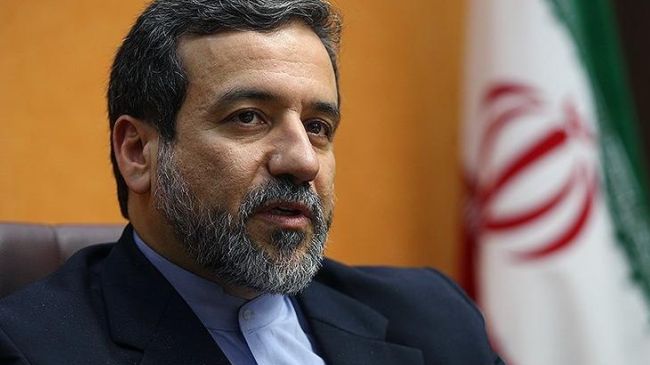
Deputy Foreign Minister for Legal and International Affairs Seyyed Abbas Araghchi said late Monday that Iran will continue the nuclear talks seriously and in good faith, but will not give up its rights.

Araghchi stated that although there is an understanding about the concerns on both sides, deep disagreements remain.

The senior diplomat added that a major persisting difficulty is agreement on a timetable for the lifting of illegal sanctions against Iran.

Araghchi also stated that the recent anti-Iranian sanctions imposed by the United States violate the Geneva Interim Deal and if repeated, Iran will respond.

On August 29, the US government announced the imposition of a new round of sanctions on 25 individuals and companies, including shipping firms, oil companies, airlines and six banks despite the fact that Iran and the six world powers are still in talks to resolve the nuclear dispute.

He added that it will only be possible to reach a nuclear agreement by the November deadline if everyone remains committed to the objective of the negotiations.

The senior Iranian negotiator said that the next round of nuclear talks will be held in New York on September 18.

He added that bilateral discussions are also scheduled to be held before and after those talks.

[…]

Last November, Iran and the United States, Britain, France, Russia, China as well as Germany signed the interim deal in Geneva which took effect on January 20 and expired six months later on July 20.

In July, Tehran and the six countries agreed to extend negotiations until November 24 after they failed to reach common ground on a number of key issues.

[…]


Spanish firms ready to cooperate in Iran mining sector

Iran Mining
Iran Mining

The International Relations Director of Spanish Confederation of Employers’ Organizations (CEOE) Jose Garcia Morales made the remarks on Monday as he along with Spanish Ambassador to Iran Pedro Villena met in Tehran Mehdi Karbasian, the head of the Iranian Mines and Mining Industries Development and Renovation Organization (IMIDRO).

Morales said Spanish companies involved in steel manufacturing and mining are ready to cooperate with Iran.

Villena pointed to the Iranian economy’s exit from the state of stagnation and the country’s success in curbing runaway inflation, and expressed the Spanish government’s interest in cooperating with Iran in the mining sector.

For his part, Karbasian referred to the easing of Western sanctions against Tehran as an opportunity for the Spanish firms to form joint venture projects with Iran’s mining sector.

IMIDRO’s development plans, including the production of 55 million tons of steel, 1.5 million tons of aluminum, 200 million tons of minerals and 800,000 tons of copper, provide suitable opportunities for investment, Karbasian said.