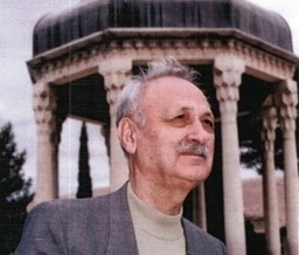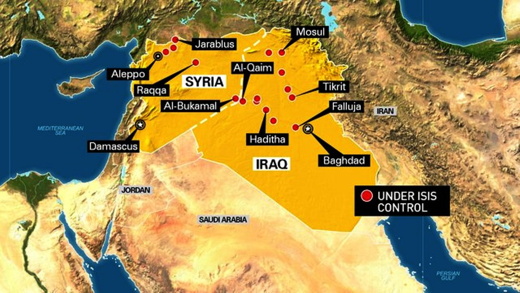
On October 12, Khabar Online posted an analysis of the current state of affairs in the Middle East followed by an interview with political science researcher Dr. Davood Feirahi which mainly revolves around the emergence of the Islamic State of Iraq and the Levant and the crisis which has swept the region. A few days ago we posted part one of the interview on our website. The following is PART TWO of the translation of the interview conducted by saeid jafari:
Basically, why hasn’t a kind of acquiescence to and tolerance of others surfaced in the Arab Middle East and among different religious groups? Having faced many challenges, Europe finally stepped into the right path, but the Shiites and Sunnis have yet to control their intragroup conflicts, despite the fact that they have had numerous experiences. Today we can see that such conflicts have grown [between the Shiites and Sunnis] and have heightened a sense of otherness instead.
Religious conduct is not viewed as sophisticated only because it is religious, something whichcan be seen in the Middle East. The military system, municipalities, education [agencies] and governments in the region are engulfed by tension and are not developed, neither is the religious conduct.
Islam has yet to display a behavior like what happened between various religious groups in Europe and America, and to engage in dialogs which are intended to identify conflictive aspects of the religion. The bone of contention between the Shiites and Sunnis is not stronger than the rift among Catholics, Protestants and Orthodox Christians. One reveres the Pope as a saint and the other disbelieves in his sanctity, whereas Muslim differences are not as stark as Christians’.
Nonetheless, they began to work on their common ground and managed to carry on their debates. Unity among religious denominations is an idea which has failed to grow into something beyond an ideal, and its executive mechanisms have yet to be hammered out.
Therefore, each year we see several theatrical meetings between Shiite and Sunni clerics which end inconclusively. In other words, we have been unable to take even one step toward patching up our differences and as a result we see the literature of negation come to the fore in a tense society.
A process of religious convergence is what is direly needed in such countries, a process which should get three things done simultaneously to help religious development occur. One is for convergence within religion. The second aims to strengthen common literature among religions, something which hasn’t been appreciably successful. The Shiites and Sunnis have failed to take a remarkable step in this regard. When convergence with Sunnism is missing, those who opt for particularism would take the most out of the small holes [created due to the absence of convergence]. And the third is convergence among global religions.
The stunning point is that we can tolerate different religions, but our tolerance does not apply to the denominations of Islam. We have yet to receive training to live peacefully alongside each other. Online videos released by ISIL show that one Arab was enslaved by the militants for having a turbah [or Mohr which is a stone for prayers] in his home.
That’s why it should be said that the Middle East needs development of religious conduct more than any other places and as long as such development is nonexistent, the development of other sciences and technologies would touch off still more divisions and massacre, and would fail to preserve order.
Development of religious conduct, I think, is the Achilles’ heel of democracy in the Middle East. Any solution to this crisis would be a nonstarter unless society becomes more or less democratic. This won’t take place unless the religious conduct is developed, a cycle which is still conspicuous by its absence in the Middle East.
Consequently, we are a long time away from the stage at which we can talk about a type of religious convergence; there are some groups and voices which heed such a point, but they don’t have the needed tools at their disposal. For instance, when the tools are democratic, the democratic interpretations could smooth the way more easily, but when violence serves as a tool and a certain government resorts to violence to attack its opponents, naturally the opposition takes up arms to counter the government. Thus, when the government tries to justify its acts legally, the other side too takes advantage of religious tenets.
What Iraq went through when [former Prime Minister Nouri] al-Maliki was in power showed that as the government overlookedthe Sahwa, [the Sunni] Awakening movement(s), and even disarmed them, Mosul fell easily. As we know, Mosul is the place forces affiliated with the Baath Party hail from, and news streaming from the flashpoint city revealed that Mosul did not come under attack from the outside, rather it imploded.
It is interesting to know that people in Mosul joined ISIL and swelled its ranks. This indicates that wherever a government resorts to such tools, the opposing groups display such behavior. These groups had previously joined battle against Al-Qaeda, and the 70,000-plus Sahwa fighters pushed back Al-Qaeda, whereas Maliki back then was much weaker than now. At the time, the Sahwa movement and the like managed to force Al-Qaeda to retreat to Raqqa.
So this brings us to the conclusion that we need democracy, something which could be established through nothing but religious development. This is the most complicated part of the DNAof developments in the Middle East. Religious development is a must. In case religious reforms are not introduced and religious convergence is not practiced, regional conflicts will use religious wording and, above all, a negative picture – say the blackest in history – will be painted of Islam among other civilizations.
If so, nobody would ever look at this region as a place which has an idea to put forward and talk about. It would be regarded as a region which should be suppressed in order to stay calm, something which would authorize them to be permanently present in the Middle East. And when they are asked to leave the region, they respond, “What happened when we last left the region? Has the situation changed for the better or for the worse?”
What should be done to have development in religious conduct materialized?
The matter in question should be weighed from an expert’s point of view and not from a political perspective. By the latter I mean a perspective in which our analysis relies on antagonistic behavior and conflict. If you go down this path, you will be caught in the trap the enemy has set for you, and there will be no remedy.
In this region, events unfold based on how conflicts are dealt with. For example, Iran says ISIL is what the West has produced and the group is a problem of the West’s own making. ISIL militants claim that Iran is working hand in glove with the US.
Topics as such would inflame the conflicts. For starters, this phenomenon should be recognized as an internal disease of the world of Islam and we need to analytically study the true origin of such a disease. In fact, we cannot solve the problem through expressing strong antagonism.
It is no secret that Western countries have, knowingly or unknowingly, left their mark on this crisis, knowingly on the part of those who have created these currents to eliminate their rivals from the political scene, and unknowingly by those who have feared something and now pour down their bombs on this region unmindful of the fact that such measures bear no fruit. Quite the reverse, these measures will scatter the seeds of radicalism at a micro level. It is more than hard to fully control micro-radicalism from a political angle.
We have to admit that Westerners have left negative impacts on this phenomenon, whether intentionally or unintentionally. I would prefer to crack down on ISIL if I were given a mandate today to call the shots. But the crackdown seems to have more consequences.
This holds true, especially because these groups are smart; they do not gather all in one place so that you can readily drop bombs on them. The large number of bombs that have rained down on ISIL militants inflicted light casualties on the so-called Islamic State (IS). This demonstrates that ISIL has evacuated any location it presumes to be a likely target.
ISIL may fill their trenches with humans; they may fan out in cities and houses. So the death of an ISIL fighter could cost a number of civilians their lives. There will be collateral damage. And more importantly, convincing people who have lost their loved ones in these attacks is not an easy job. We need to start to work for a solution to this problem and we’d better tackle the issue like a firefighter who tries to discover the source of the blaze first.
Where do you think this fire originates from?
I think the source of fire is inside the Muslim community. Some events have taken place in the Muslim community where certain orientations have been adopted and these incidents have ignited the flames of the fire. Therefore, it would be of no use if you kill people, no matter how many of them. [If one is taken out] Nothing happens except for the emergence of a second Caliph succeeding the current IS caliph [Abu Bakr al-Baghdadi]. The ideology would live on until it erupts into flames somewhere else.
The source of this fire should be spotted, and here the source is a lack of democracy, authority and the absence of a channel through which opposing voices could be heard loud and clear. The case in point is when voices are silenced in a society; the muzzled critical voices would make themselves heard through the barrels of guns instead of airwaves.
This is all because of the security atmosphere failed states have created in society. The critical voices get disappointed by the governments’ case-by-case, slow-paced, reforms, and take aim at thecore principles of governments.
A person who kills himself is said to suffer from insanity, but when suicide is committed in strength, there should be a reason behind it. This reason should be established. Now that people in big numbers stage suicidal operations, something must be done about it.
You said that the only solution lies in efforts to bring in religious development and help religious denominations digest [the viewpoints of] each other. In some places like Lebanon different faiths and denominations are living together and have good ties with each other, but their country is always hit by some sort of unrest. Well, if religion offers the answer, why hasn’t it done so in Lebanon?
As far as Lebanon is concerned, one can say that this country has no serious problem if the problems Israel creates die down. Often times the crises Palestinians go through and the operations Israel mounts drag Lebanon into the conflict. The same thing has now happened in northern Turkey, something which is bringing the country’s Kurdish-held areas closer to a highly explosive point.
Let’s assume that the Associative Democracy is fragile in Lebanon, but it is, in any manner, much better than disorder. The fragility in question has something to do with those interferences. The Lebanese government has begun to turn the Hezbollah [Movement] into a political current, trying to incorporate it into the cabinet and maintain its own integrity. However, this did not occur in Iraq where the integration of the Sunnis into the government did not come true. In default of integration, the Sunnis were marginalized and took up arms.
It is true that Hezbollah is seriously under the influence of certain regional countries, but its national identity has been further highlighted ever since it has been given more political weight. So the convergence that exists between followers of different faiths and denominations in Lebanon amounts to deterrence. Big pains are said to have simple cures. One should not necessarily go after complex methods to treat great pains.
In Lebanon when a Shiite holds a gathering in which a Sunni and a Christian take part, he cannot celebrate the killing of Umar [a Sunni Caliph who took over after the demise of the Prophet]. In other words, the organizer lets go of his radical positions. The same thing holds true for the Sunnis. This way a mutual tie is established [between the followers of different beliefs]. This is very simple. These dialogs have helped Lebanon maintain its integrity to some extent.
Another example is Tunisia which successfully restored order in the post-Ben Ali period despite riots which were raging in the country. In Egypt, however, extremist moves by the Muslim Brotherhood that was overjoyed [about its victory] disrupted the affairs.
You mentioned that the Middle East is the focal point of the crisis, whereas we’ve heard in the news that the European and US nationals who have joined ISIL account for the bulk of the group’s fighters. The question is whether this crisis is really confined to the Middle East or a war has been waged affecting areas beyond this region?
I said a phenomenon has emerged which is called migration. Those immigrants, even if they are the third generation, show sympathy for the region. The further you go away from the center of religion, the more serious your religious prejudices would become. This has been proved empirically. It means that radicalism is seen in immigrant youth more than in local people, because they only see a very idealistic picture of what is not satisfactory in their place of living.
In like manner, an Iranian paints an idealistic image of the West in his mind which does not match the reality. Therefore, these young men look at the ideals through realities of the region and feel that they should do something to create a hub in the region.
When religious enthusiasm and youthful energies go hand in hand with social crises, the result would be a lot of uproar. Those people who are away feel that they should return to the region. When they are back, they treat locals as strangers, and not insiders. They argue that they should have done something if they had been true Muslims. They head for this region and resort to violence.
Given the current trend, we should wait to see the birth of a new group, even more violent than ISIL, in the foreseeable future just like today that we have seen the emergence of the so-called Islamic State which is far more radical than al-Qaeda.
It seems that violence will reach its extremity, but I believe that violence cannot curb radicalism. Some believe that the Westerners have created an atmosphere and a proper place allowing terrorists from Europe and the US to come to the region in order to destroy them all. This is the belief of those who say the US is to blame for ISIL.
Well, this fails to uproot a dangerous ideology and only some agents are eliminated, but that dangerous belief would take root in societies.
That’s right. According to the supporters of this theory, this trend would at least delay the re-concentration of forces. Conversely, others are of the opinion that these are some tools to justify the 2011 decision, referring to the time when the Americans failed to build a consensus for attacking Syria.
Now such a trend can disrupt regional governments or cause the infrastructure of these systems to be badly damaged, at the minimum. To some, these groups are linked with MI6, Mossad, and the US intelligence agencies. They say the group continues to perpetrate violence to a predefined level and then interventions stop this trend. But this sounds to be based on conspiracy-based theories.
Another viewpoint says that what is going on is linked to the crisis in Saudi Arabia. Some argue that the radical forces that had gone to Afghanistan came back to Saudi Arabia after a national unity government was formed there and started to provoke a crisis. So Saudi Arabia tried to create a vacant region for them to keep them occupied.
Personally I think all these views could be the reason, but the fact is that the region is set for such a phenomenon. We need to find out where it comes from and review its effects.