Friday, December 26, 2025
Home Blog Page 5043

Professor Majid Samii named world top neurosurgeon

Professor Majid Samii-Golden Neuron Award

The world-renowned Iranian scientist in neurological surgery Professor Majid Samii has garnered the 2014 Golden Neuron Award.

The award was announced during a ceremony held at the biannual meeting of the World Academy of Neurological Surgery in Vienna on October 11.

Many leading scientists and neurological surgery scholars have flocked to the biannual meeting that kicked off on October 9 and will run until October 12.

Iranian neurosurgeon and medical scientist, Professor Samii, had earlier received the 2014 Leibniz Ring Prize in Berlin.

Prof. Samii is renowned worldwide for his life trajectory and especially for his work in the Project Africa 100.

The 70-year-old scientist Professor Samii is known as Iranian-German neurosurgeon that has been the president of the International Society for Neurosurgery. He was also elected as the founding president of the Congress of International Neurosurgeons (MASCIN) in 2003.

While the scientific study of the nervous system has increased significantly during the second half of the twentieth century, Professor Samii has recently launched the project of constructing an advanced neurology center in Iran.

Iran’s saffron exports hit $83 million mark

Iran Saffron
Iran Saffron

A member of Iranian National Saffron Council said the country has exported over 83 million dollars of saffron in the first six months of the Iranian calendar year, (started on March 21, 2014), raising by 20 percent comparing to a similar period last year.

“Iran exported 58 tons of saffron, worth $83.118.000 to 45 countries, mainly to the UAE, Spain, Qatar, Saudi Arabia, the Netherlands, Australia and Canada,” said Ali Hosseini.

He also noted that the country has raised its saffron exports to 22.8 percent in terms of weight. The exports have also posted a 22.5 rise as far as their value is concerned.

Hosseini continued that the amount is expected to rise to 150 tons by the end of fall (mid-December).

Iran accounts for around 96 percent of the world’s total saffron production. The country exports saffron to 46 countries, including European and the Persian Gulf countries.

Due to its diverse climate and fertile soil, Iran’s agriculture products are rated among the best in the world with its saffron being second to none.

Around 300 tons of saffron, which is a spice derived from the flower of the saffron crocus, is produced worldwide each year, with Iran, Spain, India, Greece, Azerbaijan, Morocco and Italy accounting for the largest shares.

Iran Holds Pakistan Accountable for Terrorist Attacks in Saravan

Iranian interior ministry

The Iranian Interior Ministry on Saturday held Islamabad accountable for the terrorist attacks that claimed the lives of several policemen in southeastern Iran recently.

“We don’t expect the Pakistani government to allow terrorist operations to be launched against Iran from the Pakistani soil,” Interior Ministry Spokesman Hossein Ali Amiri told reporters in Tehran on Saturday.

He called on the Iranian Foreign Ministry to take more active measures in contacts with Islamabad to push the neighboring country not to allow its territory become a launching-pad for terrorist operations against Iran.

Yet, the spokesman said the terrorist attacks did not have any military value as they were only some hit-and-run operations by the terrorists who snuck into Iran from a neighboring state, carried out terrorist operations and then escaped to the same country.

Amiri called for Pakistan’s serious cooperation in preventing terrorists’ infiltration into Iran, and said, “The Pakistani government should be held accountable for the terrorist operations.”

Four Iranian police officers, including a conscript, were killed in two terrorist attacks on a border post in the southeastern province of Sistan and Baluchestan.

The tragic event took place on Wednesday and Thursday in the vicinity of the city of Saravan near the border with Pakistan.

[…]

Iran ready to work with IAEA to settle nuclear issues: Deputy FM

iran-araqchi
iran-araqchi

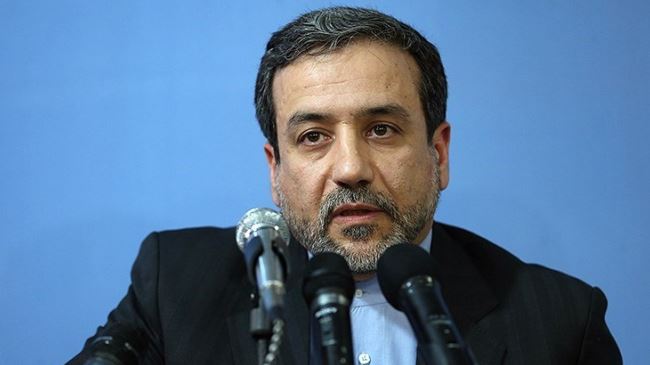
A senior Iranian diplomat says the Islamic Republic is ready to cooperate with the International Atomic Energy Agency (IAEA) to resolve outstanding issues about its nuclear work.

“The Islamic Republic of Iran is ready to speed up resolution of issues through cooperation with the agency, and is prepared to resolve all these issues with the agency one after the other,” Iran’s Deputy Foreign Minister for Legal and International Affairs Seyyed Abbas Araqchi said.

Araqchi made the remarks in a meeting with Russian Ambassador to Tehran Levan Dzhagaryan on Saturday on the verge of the next round of bilateral and trilateral nuclear talks between Tehran and member states of the P5+1 group of countries in the Austrian capital city of Vienna.

He also praised the significant and prominent role played by the Russian and Chinese delegations in the nuclear talks.

Araqchi, who is also a top member of Iran’s nuclear negotiating team, also underscored the need for continued consultation among Tehran, Moscow and Beijing on the Islamic Republic’s atomic work.

The Russian ambassador, for his part, voiced Moscow’s determination to help the conclusion of a permanent nuclear deal.

Iranian Foreign Minister Mohammad Javad Zarif is set to meet with EU foreign policy chief, Catherine Ashton, and US Secretary of State John Kerry in the Austrian capital, Vienna, on October 15, to discuss the progress of the ongoing nuclear negotiations between Tehran and P5+1.

Zarif and Ashton are also slated to sit down for bilateral talks on Iran’s nuclear issue next Tuesday ahead of the trilateral meeting.

Tehran and P5+1 – Russia, China, France, Britain, the US and Germany – wrapped up their latest round of nuclear talks in New York late last month.

The two sides are currently working to reach a final agreement aimed at ending the long-standing dispute over Tehran’s civilian nuclear work as the November 24 deadline approaches.

Foreign threats run counter to UN Charter: Iran

UN-General-Assembly
UN-General-Assembly

Iran has slammed intimidation and pressure against world countries by foreign states as violation of the UN Charter and principles of international law.

Speaking at the United Nations General Assembly Sixth Committee, member of the Iranian mission at the UN Hossein Qaribi noted that unilateral illegal actions by some countries aimed at imposing their policies on other nations through methods such as sanctions, run counter to the collective efforts to promote the rule of law and will bring about adverse consequences.

On Friday, Iran’s Minister of Finance and Economic Affairs Ali Tayyeb-Nia lashed out at the World Bank and the International Monetary Fund (IMF) for having adopted a politically-tainted approach vis-à-vis certain member countries, including the Islamic Republic.

He noted that unfair sanctions against Iran over its nuclear energy program have in fact targeted the Iranian nation.

At the beginning of 2012, the US and EU imposed sanctions on Iran’s oil and financial sectors with the goal of preventing other countries from purchasing Iranian oil and conducting transactions with the Central Bank of Iran.

Police aircraft crashes in southeastern Iran, kills seven

Iran-Plane

An Iranian police airplane has reportedly crashed in the southeastern city of Zahedan, leaving all seven people on board dead.

The Turbo Commander light aircraft went down in the Sabzpoushan mountainous area in Zahedan, the capital of Iran’s southeastern province of Sistan-Baluchestan on Saturday, IRNA reported.

According to the report, the airplane was on its route from the capital, Tehran, to Zahedan where the incident happened. The victims include three senior officers, a police employee and three crew members.

IRNA quoted an unnamed source as saying that the passengers on board were heading to Zahedan for an investigation into the recent slaying of four Iranian police officers by armed bandits in the city of Saravan in the same province.

The wreckage of the aircraft has been found in Sabzpoushan. However, the cause of the fatal incident is still unknown.

Local officials have not made any comments on the plane crash so far.

Politicizing approach towards Iran to hurt World Bank’s credit

Ali Tayyebnia
Ali Tayyebnia

“By politicizing its approach towards Iran the World Bank will put at stake its international credit,” Iran’s economy minister said, addressing 2014 annual meeting of International Monetary Fund and World Bank Group.

Ali Tayyebnia, who was addressing a joint session of the IMF and the WB, made the comment after he elaborated on President Hassan Rouhani’s economy team’s success in harnessing rapid inflation and curbing economic recession.

He, meanwhile, criticized the unjustly imposed sanctions that mainly target the Iranian nation and highlighted the importance of the Iranian government’s achievements in that field under such conditions that oppression and injustice, aggression and extremism, poverty and discrimination have affected the world economy negatively.

“The presence of the extremist and terrorist groups, especially in the Middle East and North Africa has not only seriously threatened peace and stability in those regions, but has also put at stake the required conditions for economic development and campaign against poverty in a vast part of the world,” he said.

Tayyebnia also held a meeting with Iranian expatriates working for the IMF and the World Bank, and explained about the government’s plans to improve the country’s economy.

Tayyebnia and Governor of the Central Bank of Iran Valiollah Seif traveled to Washington on Wednesday to participate in the 2014 annual meeting of the IMF and the World Bank Group.

The 2014 Annual Meetings of the International Monetary Fund and the World Bank Group are held in Washington, D.C. from October 10th to 12th.

Iran Speaker Calls on Regional Countries to Behave Responsibly Toward Kobane

Ali Larijani-Iran Majlis speaker

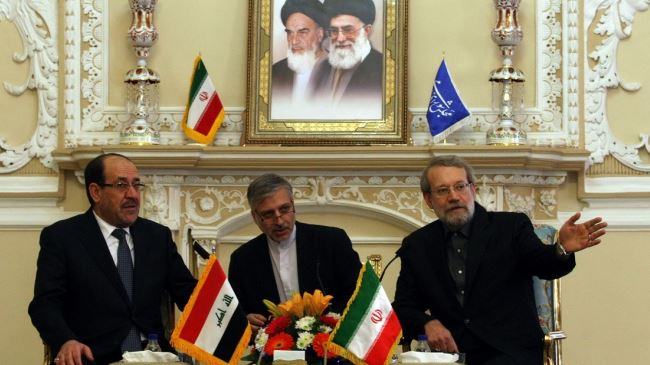
The Iranian parliament speaker on Saturday raised the alarm over enormous loss of lives in the Syrian town of Kobane, which is under siege by the Islamic State in Iraq and the Levant (ISIL) terrorists, and called on the regional countries to behave more responsibly in this regard.

“The issue of Kobane is currently a very significant one and such siege of the Kurdish people in Kobane will lead to major humanitarian losses there,” Ali Larijani told reporters in Iran’s central city of Isfahan on Saturday.

He also urged all-out efforts to help the residents of Kobane, calling on the regional countries to “behave responsibly” toward the threat the Syrian Kurds are now facing.

“We will also do whatever we can to save the Kurdish people in Kobane,” Larijani pledged.

His remarks came as the Kurdish Syrian town has been subject to ferocious attacks by the ISIL militants over the past three weeks.

ISIL fighters have captured hundreds of Kurdish villages around the border town, forcing tens of thousands of people to flee.

ISIL declared a caliphate in June and has seized vast swaths of territory in Iraq and Syria, displacing thousands of people mainly from minority communities.

These serpents are not sterile!

World-Iran Front Page

Finally, the day which was foretold has come, a narrative of history has repeated itself, and the US has to square off against ISIL. It is like someone having a snake tattooed on his arm under the false assumption that it will stay tame. Much to the person’s disbelief, however, this heinous, venomous monster comes to life, literally, and becomes fiercely determined to bite his arm.

In the early 1990s when I ran a journal entitled “Safheyeh Avval” [Front Page], a monthly which published an excerpt in Farsi of news and analyses filed by foreign publications, I came across reports in the Western press about the opening and explosive growth of madrassas [religious schools] in parts of Pakistan, like Waziristan, which is a flashpoint today.

The youth trained in these madrassas by Wahhabi mullahs of Saudi Arabia later became Taliban fighters determined to wrest control of Afghanistan from the Soviet Union or local Shiite jihadists. Although the Soviet Union has vanished, the Taliban are still pretty much alive and kicking and have nurtured their own babies of which “al-Qaeda” is the eldest, the one responsible for the 9/11 disaster and the one which has left its nurturers in a state of panic and bewilderment. Nonetheless, there are still some analysts who have serious doubts about al-Qaeda having been the mastermind of 9/11 terrorist attacks.

No matter who is behind such a catastrophe, what matters is that there are some who take pride in igniting such a harrowing disaster and are not ashamed of masterminding it.

With a black mark as such on its record, al-Qaeda became a forerunner, paving the way for potential followers who lived in countries, which in spite of wealth, were the harvesters of the whirlwind and humiliation. Acting as a torchbearer, Osama bin Laden trained the light of the blasts on the path, inviting those blinded by the light to his beacon of hope.

Americans failed to realize that the opening of such schools for Muslims and any Western manipulation of centuries-old fundamentals of Eastern culture can be very complicated and even impossible, a cause which even great scholars find themselves unable to deliver. If lessons had been learned from the phenomenon of Talibanism, ISIL would have never emerged.

The question as to whether everything is under control still remains unanswered for me. Is what we are witnessing in Syria, Afghanistan, Lebanon, Gaza and some other countries what the White House pursues? Perhaps! Or maybe by capitalizing on US naivety, America’s oldest ally is trying to cause the US vessel to run aground on the shores of uncharted waters?! Is the Western power struggle being fought in the form of civil war between ethnic and religious groups in the Middle East? Is it designed to force the bald eagle fly away from the lion’s den?

As a famous Persian saying goes if the listener is alert enough, one small hint will be sufficient for him to get the point. Couldn’t the passports retrieved from the rubble of the Twin Towers unravel the mystery – if there was any? However, such hints failed to lift a great political analyst like Henry Kissinger out of the dark and help him realize that the perception he had of the menace of terrorism was only the tip of the iceberg.

A while ago, it was the Taliban and al-Qaeda; today it is ISIL; and before long today’s moderates will one more time revolt and prove that the good-looking snakes used arbitrarily by America and its allies to flex their muscle in dealing with the White House’s rivals in the region and the world at large are not sterile. As soon as they reach a reproductive age, these serpents will aim at the closest target: America and its allies.

And the last question is whether President Obama and his allies will gird up their loins before it gets too late to have the snakes removed, so that no cloud of ominous, relentless wars will hang over the future of the world. Of course it takes a great deal of explicitness and courage to make such a decision and before that a voluntary entry into the operating room for this minor surgery is required, the operation which is less risky than the inevitable, life-threatening surgery in the not-too-distant future. In the absence of such surgery, the morbid patient will flat-line soon.

In a man-ruled kingdom, an Iranian woman goes all alone

Iranian bus driver woman

Narges Asadpour is a seasoned long-haul bus driver traveling back and forth between Tehran and Khomein. What makes her stand out from the crowd of her fellow female bus drivers is that she quit driving an inner-city bus – the first job she had when she started her driving career – and hit the intercity roads.

What encouraged IFP to translate an excerpt of her interview with Chaharrah (Intersection) – a monthly journal – were her wisely eloquent answers to questions posed by the magazine’s Mojtaba Kaveh:

Men have a monopoly over driving buses in Iran, how did you develop an interest in this profession and how did you learn it?

It’s true that in our country men hold a monopoly on driving heavy vehicles, but women are not specifically banned from the job. I was interested in it and was able to land my favorite job. Mind you, I took my lumps to get here. That’s the rule of life: One has to go through a lot to achieve his ambitions.

Did your family approve of your decision? Did they talk you into or out of it?

From the get-go, my family did not want me to start this career but when they saw how eager I was, they were convinced and even encouraged me. […] My father was a teacher. He did not disapprove of me becoming a driver.

It’s huge responsibility to be a long-haul bus driver. What stages have you gone through to assume such responsibility?

Before I became a long-haul bus driver, I drove a refrigerated mini-truck for an ice cream factory. Driving such a vehicle helped me learn how to drive semi-heavy vehicles and excel at it. After a while, I felt that I was capable of driving heavy vehicles. That’s why I took a driving test for heavy vehicles and got the license. Afterward, I became a [Tehran] BRT (Bus Rapid Transit) driver and then I was employed by a tourist agency to drive a bus carrying tourists to different cities. Such experience set the stage for me to drive a long-haul bus.

[…]

How do people and passengers treat you? Do they trust you as a reliable bus driver? Do you spot worry and disbelief in their behavior when they see you?

At first, when passengers get on the bus and see me at the wheel, they get startled. Some look at each other in astonishment or even whisper something in each other’s ear. I think such a reaction is natural, because I have stepped into a realm dominated by men. However, it won’t take more than a few minutes for passengers’ curiosity and anxiety to be replaced with calm. People can tell good driving from careless driving, and I can feel the sense of peace on their faces while driving.

Some of my male colleagues used to doubt my driving skills, too. With time, however, they developed confidence in my driving abilities. For Iranian women, it’s not very difficult to make those in charge of male-dominated jobs change their mind and have faith in them. To turn disbelief and distrust into confidence and trust we as women need to have positive thoughts and believe ourselves.

Have you ever had an accident?

Thank God, since I started driving, I have been not in even one accident. I owe this honor to a number of things. I am of the opinion that my safe and good driving has set the stage for other women to embark on driving heavy vehicles. My family’s prayers and the peace of mind that they convey to me contribute substantially to my safe driving.

Do you drive a Scania? What’s your idea about it?

I have driven Volvo and Scania. There are a lot of rumors surrounding the safety of Scania which I think are not true at all. Fueling such rumors which are not confirmed by experts could only take a toll on our national transportation system.

If buses undergo accurate vehicle inspections, if their engines and parts are not tampered with, if their tires, engines and other parts are regularly checked [for safety reasons] and above all if an experienced and committed driver drives them, there will be no problem.

I have a different question to ask you. Ms. Asadpoor, have your wording and behavior been influenced by your job? I mean, in terms of behavior and the words you adopt, have you become violent?

Violent! Why?! [Laughing] Not only will driving, especially driving on intercity roads, not turn you violent, but the peace and quiet of nature along the road will soothe your soul. I have always wanted my behavior to be influenced by my character not by what is going on around me.

The final word: […] hail to my dear compatriots, all passengers, and male and female drivers who protect the lives of their passengers by driving carefully and safely.