Saturday, December 27, 2025
Home Blog Page 5039

Germany hopeful about final nuclear deal by Nov. 24

German FM Spokesman
German FM Spokesman

German Foreign Ministry Spokesman Martin Schaefer said his government “is still hopeful” that a lasting nuclear accord with Iran could be reached by the November 24 deadline.

“We are very much hopeful that an agreement could be reached within the next five weeks with Iran,” Schaefer told reporters on Friday.

The German foreign minister spokesman underlined his country’s firm determination to reach a final deal with Iran.

He urged all sides to show flexibility in their positions in a bid to ink a deal as there was still some time left until November 24.

Iran and the six major world powers ended their 8th round of nuclear negotiations in Vienna on Thursday.

Iranian Foreign Minister Mohammad Javad Zarif and EU Foreign Policy Chief Catherine Ashton presided over the 8th round of the talks between Tehran and P5+1 in the Austrian capital.

The 7th round of talks was held in New York on the sidelines of the UN General Assembly meeting last month.

UN envoy hails Iran’s positive role in resolving Syrian crisis

Syria-UN
Syria-UN

United Nations Envoy for Syria Staffan de Mistura in a meeting with Iranian Ambassador to Beirut Mohammad Fathali on Friday praised Tehran’s constructive role in resolving the Syrian crisis.

During the meeting in the Lebanese capital, Mistura said that Iran has played a positive and constructive role to help resolve the Syrian crisis which is praiseworthy.

He, meantime, expressed concern about the situation in Syria’s Kurdish town of Kobani which is under the brutal attacks of the Islamic State of Iraq and the Levant (ISIL) terrorists.

The Iranian ambassador to Beirut, for his part, stressed the need for expanding cooperation among regional states and international bodies against terrorist groups.

“Certain states’ decisions to arm the so-called moderate opposition groups in Syria are against the international rules and regulations and would complicate the crisis,” he added.

Fathali further underlined that none of the big powers has the right to undermine UN member states’ sovereignty under the pretext of fighting terrorism.

In September, President Assad expressed appreciation for Iran’s stances in support of the Syrian people and sovereignty and independence of nations.

He called for promoting Tehran-Damascus economic cooperation, and said the Syrian nation welcomes Iran’s readiness to help rebuild the country.

Art for Humanity WFP Exhibition opens in Tehran

Art for Humanity

The Art for Humanity WFP Exhibition opened in the presence of the UN representative in Iran and some foreign diplomats residing in Iran at Niavaran Culture House on Friday.

The UN World Food Programme (WFP) exhibition features 130 works by 100 prominent Iranian artists in painting and other fields of visual arts.

“This move can serve as a model for the artists in the other countries,” said UN representative, Garry Lewis, during the opening ceremony of the exhibition.

Appreciating the enthusiasm and love with which the Iranian artists have contributed their works to the WFP philanthropist event, he expressed hope that thanks to proper planning and appropriate distribution of food, the UN would manage to address the hunger challenge in the world effectively.

The opening ceremony of the Art for Humanity WFP Exhibition was held on the World Food Day in the presence of Deputy Minister of Culture and Islamic Guidance for Cultural Affairs Ali Moradkhani, UN representative in Iran Garry Lewis, Head of Niavaran Culture House Abbas Sajjadi, a group of artists, and foreign countries’ ambassadors and diplomats in Iran.

According to IRNA, during the first hours after the opening of the exhibition art works worth one billion rials ($33,000) were sold to the philanthropist visitors.

The exhibition will be open to public till Friday October 24.

Iran nuclear talks at critical stage: Mann

EU-Michael Mann
EU-Michael Mann

“We are trying hard to make progress and remain fully engaged to achieve a comprehensive solution” by the November 24 deadline, Michael Mann, spokesman for EU foreign policy chief Catherine Ashton, said in a Thursday statement after high-level negotiations between the two sides in Vienna.

“Diplomatic efforts to find a resolution to the Iranian nuclear issue are now in a critical phase,” the statement added.

Sources close to the Iranian negotiating team say the main stumbling block in the way of resolving Western disputes over Iran’s nuclear program remains to be the removal of all sanctions and not the number of centrifuges or the level of enrichment.

Tehran wants sanctions entirely lifted while the US, under pressure from the pro-Israeli lobby, insists that at least the UN-imposed sanctions against Iran should remain in place.

Iran and the six powers – the United States, France, Britain, China, Russia and Germany – are in talks to work out a final deal aimed at ending the longstanding dispute over Tehran’s nuclear energy program.

Last November, the two sides clinched an interim nuclear accord, which took effect on January 20 and expired six months later. However, they agreed to extend their talks until November 24 as they remained divided on a number of key issues.

Iran, Russia hold talks on nuclear cooperation: Rosatom

Iran-Russia-nuclear
Iran-Russia-nuclear

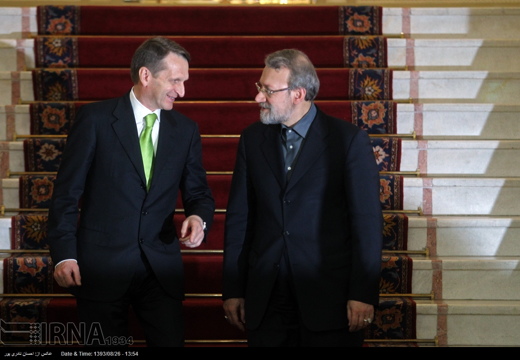
Rosatom’s Communications Department announced on Thursday that Nikolaï Spasski, the deputy director general for international affairs at Rosatom, met with Spokesman for the Atomic Energy Organization of Iran (AEOI) Behrouz Kamalvandi in Tehran on October 15, Ria Novosti reported.

“The parties discussed the current state as well as the prospects of nuclear cooperation between the two countries,” Rosatom added.

Last month, Kamalvandi said Tehran and Moscow were “close to reaching final agreements on the construction of two power plants” in Iran’s southern province of Bushehr before the end of the current Persian calendar year (20 March 2015).

In September 2013, Iran officially took over from Russia the first unit of its first 1,000-megawatt nuclear power plant in Bushehr for two years.

The initial construction of the Bushehr facility began in 1975 by German companies, but the work was halted following the 1979 Islamic Revolution.

After signing a deal on the construction of nuclear plants in 1992, Iran and Russia reached an agreement in 1995 to complete the Bushehr plant.

Iranian Energy Minister Hamid Chitchian said on September 14 that Russia plans to build eight power plants in three Iranian cities.

Four plants will be built in the southern port city of Bandar Abbas, two in the eastern city of Tabas, and two in the northwestern city of Sahand, according to the Iranian minister.

On September 9, Russian Energy Minister Alexander Novak said in Tehran that Iran and Russia had signed projects worth 70 billion euros to develop trade and economic ties.

Iran ready for any outcome in nuclear talks: Official

Iran-Nuclear-Talks
Iran-Nuclear-Talks

“Since the talks with the P5+1 (group of world powers) are likely to result in either agreement, extension or deadlock, the necessary strategies have been designed and we have plans for every one of them,” the head of Iran’s Intelligence Ministry’s Center for Strategic Studies said at a Thursday ceremony.

Iran and the six powers – the United States, France, Britain, China, Russia and Germany – are in talks to work out a final deal aimed at ending the longstanding dispute over Tehran’s nuclear energy program.

Last November, the two sides clinched an interim nuclear accord, which took effect on January 20 and expired six months later. However, they agreed to extend their talks until November 24 as they remained divided on a number of key issues.

The Iranian intelligence official pointed to the ongoing developments across the Middle East, including the ISIL threat in Iraq and Syria and noted that the recent regional events are a scenario aimed at ostracizing Iran which is the “indisputable” regional power.

“The US has realized that [after] the occupation of Iraq [in 2003] and Afghanistan [in 2001], Iran has been the real winner of these wars,” he added.

“We are witnessing the formation of a new order in the region which, God willing, will lead to the triumph of the discourse of the [1979] Islamic Revolution,” the intelligence official pointed out.

The ISIL Takfiri terrorists, who currently control parts of Syria and Iraq, have committed widespread acts of violence, including mass executions, abductions, torture and forcing women into slavery in the areas they have seized in the two countries.

They have threatened all communities, including Shias, Sunnis, Kurds, Christians, Izadi Kurds and others, as they continue their atrocities in Iraq and Syria.

Iran dismisses interference allegations by [P]GCC

Iran Officially Announces Termination of UN Arms Embargo

On October 15, [P]GCC Secretary General Abdullatif bin Rashid al-Zayani claimed that Iran was pursuing the policy of interference in the domestic affairs of Arab countries, alleging that such policies threaten security in those states and in the entire Middle East region.

An informed source at Iran’s Foreign Ministry dismissed the unfounded allegations and said the Islamic Republic’s foreign policy is based on the principles of “moderation, political wisdom, good neighbor policy and non-interference in the affairs of neighboring countries,” IRNA reported on Thursday.

The Iranian official also called on “the countries that have provided a breeding ground for terrorist groups in the region through their political and financial support to make up for this mistake by showing their determination in the fight against terrorists.”

The source further said Iran has played a “constructive role” in the restoration of stability to the Middle East by adopting a “responsible” approach towards the developments in the troubled region, which has witnessed a spike in the violence fueled by foreign-backed Takfiri groups.

The Islamic Republic has on numerous occasions reaffirmed its determination to establish good relations with all neighbors, particularly Arab countries, emphasizing the need for collective cooperation in the region to counter terror threats.

This is while some members of the [P]GCC, including Saudi Arabia and Qatar, have been among the major supports of Takfiri terrorists wreaking havoc on Syria and Iraq.

Iran, six powers hold fresh nuclear talks in Vienna

Iran-Nuclear-Talks
Iran-Nuclear-Talks

Representatives of Iran and the six states – Russia, China, France, Britain, the US and Germany – held their eighth round of negotiations this year on Tehran’s nuclear energy program in Austrian capital on Thursday.

The talks were led by Iranian Foreign Minister Mohammad Javad Zarif and EU foreign policy chief, Catherine Ashton.

Following the discussions, Iranian negotiators held an expert-level meeting with their counterparts from France, Britain and Germany in the Austrian city.

Moreover, Iranian Deputy Foreign Minister for Legal and International Affairs Seyyed Abbas Araqchi, also a top nuclear negotiator, held separate talks with senior Chinese and Russian negotiators.

The Thursday talks came a day after closed-door trilateral discussions between Zarif, Ashton and US Secretary of State John Kerry in the Austrian capital.

The Iranian foreign minister said on Thursday that he will sit down for another trilateral meeting with Ashton and Kerry in a city other than Vienna within the next three or four weeks.

Iran and the six countries, also known as the P5+1 group, are currently in talks to sort out their differences and reach a comprehensive agreement aimed at ending the longstanding dispute over Iran’s civilian nuclear activities as a November 24 deadline approaches.

Last November, the two sides clinched an interim nuclear deal, which took effect on January 20 and expired six months later. However, they agreed to extend their talks until November 24, as they remained split on a number of key issues.

Iran, P5+1 working hard to resolve differences: Zarif

Zarif_Iran-foreign-minister

Zarif made the remarks following a six-hour long trilateral meeting with European Union foreign policy chief Catherine Ashton and US Secretary of State John Kerry in the Austrian capital, Vienna.

Zarif, who heads the Iranian negotiating team in nuclear talks with the six countries, also described the trilateral talks as “very difficult”, but said progress was made and possible solutions discussed.

“It was very difficult, serious and intensive … but instead of focusing on problems, we discussed solutions as well,” Zarif said. “There was progress in all the fields.”

Zarif also told online news site al-Monitor that the gaps were “narrowing, but we still have a long way to go.”

“It is reconcilable, provided everyone makes the tough decisions,” he said.

Tehran and the six major world powers – the United States, France, Britain, China, Russia and Germany – have started a fresh round of negotiations on Tehran’s nuclear energy program in Vienna on Thursday.

Zarif and Ashton jointly lead the negotiations, which will center on outstanding issues related to Tehran’s nuclear program.

Iran and its negotiating partners are currently working to reach a final agreement aimed at ending the longstanding dispute over Tehran’s civilian nuclear work as a November 24 deadline approaches.

Last November, the two sides clinched an interim nuclear accord, which took effect on January 20 and expired six months later. However, they agreed to extend their talks until November 24, as they remained split on a number of key issues.

Palestine resistance should boost defense abilities

Iran-Leader-Khamenei

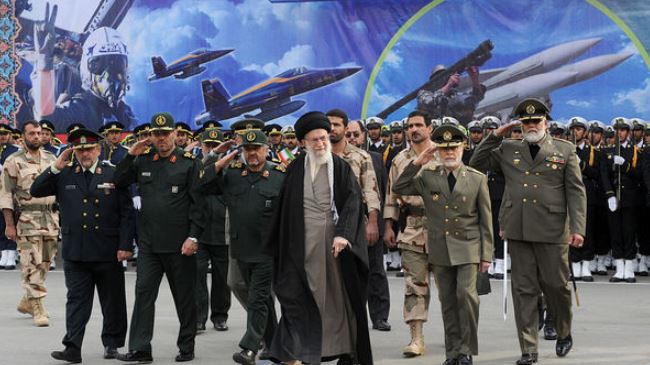
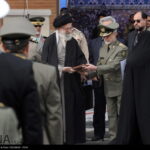
“The Resistance current should boost its preparedness day by day and reinforce its power resources inside Gaza,” Ayatollah Khamenei said in a meeting with Secretary General of the Islamic Jihad of Palestine Ramadan Abdullah in Tehran on Thursday.

The Leader said the Palestinian resistance’s recent victory against the Israeli regime’s 50-day war indicated the realization of the “divine promise”, which will pave the way for greater triumphs.

The Leader also anticipated a promising future for the Palestinian people, saying, “The outlook of the developments is bright and good.”

Ayatollah Khamenei urged Palestinians in the West Bank to get on board in the fight against the Israeli regime, saying, “Fighting the Zionist regime (Israel) is a war of destiny.”

“The enemy should feel the same worries in the West Bank as it does in Gaza,” the Leader added.

Ayatollah Khamenei further vowed more support for the Palestinian people, stating, “The Islamic Republic and the Iranian people are proud of your victory and resistance, and hope that the back-to-back triumphs of resistance [groups] will continue until final victory.”

Abdullah, for his part, extended to the Leader the greetings of senior officials from Islamic Jihad and other Palestinian resistance groups, and presented a report on the latest Israeli war on Gaza.

“Definitely, the victory was achieved with the assistance of the Islamic Republic,” the senior Palestinian official said, adding, “Without Iran’s strategic and efficient help, resistance and victory in Gaza would have been impossible.”

Abdullah further assessed as strategic and effective the Leader’s guidelines on the necessity of arming the West Bank for countering the Israeli regime’s aggression, saying the remarks have re-energized the Palestinian fighters and raised their spirits.

On July 23, Ayatollah Khamenei said armed resistance by Palestinians is “the only way” to confront the Zionist regime.

“We believe that the West Bank should also be armed like Gaza and those who are interested in Palestine’s destiny should act in this regard,” the Leader said at the time.

Israeli launched a deadly onslaught on the besieged Gaza Strip on July 8. Gaza health officials say over 2,140 Palestinians, including 577 children, were killed in the Israeli onslaught. Over 11,100 others, including 3,374 children, 2,088 women and 410 elderly people, were injured. Tens of Israelis were also killed by the Palestinian resistance retaliatory rockets.

The Israeli aggression ended on August 26 with an Egyptian-brokered truce.