Thursday, April 9, 2026
Home Blog Page 5039

Ayatollah Khamenei warns against Islamophobia

Ayatollah- Khamenei
Ayatollah- Khamenei

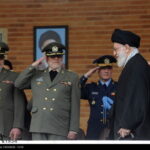
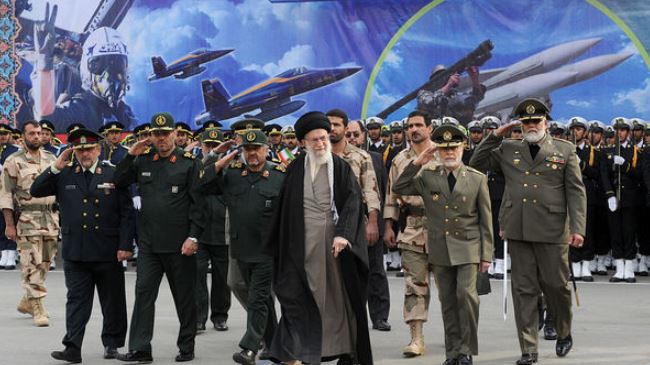
Leader of the Islamic Revolution Ayatollah Seyyed Ali Khamenei has warned against enemy plots aimed at spreading Islamophobia.

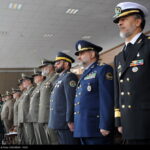
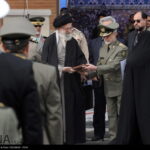
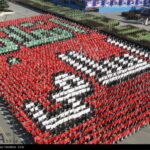
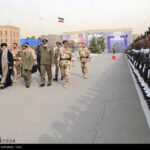
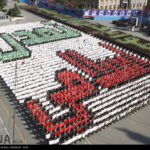
“Global ill-wishers and bullying powers are trying to use art, politics, militarism and all [other] means to keep the voice of pure Islam from being heard, but the voice has been heard, and an indication of that is hegemonic powers’ growing fear,” said the leader at a commencement ceremony at Imam Ali Military Academy on Monday in Tehran.

The leader said the enemies promote Islamophobia by creating armed groups that massacre civilians in the name of Islam.

Ayatollah Khamenei emphasized that today, global tyrants are deeply worried about Islam’s power and that is why they are doing all in their power to spread Islamophobia across the world.

Ayatollah Khamenei said that Islam conveys the message of welfare, dignity, honor and peace for humanity but that the “ill-wishers” are plotting to prevent Islam’s real message from reaching other nations.

The Leader’s comments come as ISIL militants, who are currently wreaking havoc on Iraq and Syria, have been committing heinous crimes in the areas they have taken, including the mass execution of civilians as well as army troops and officers.
 

Larijani: Iran, Russia enjoy amicable ties

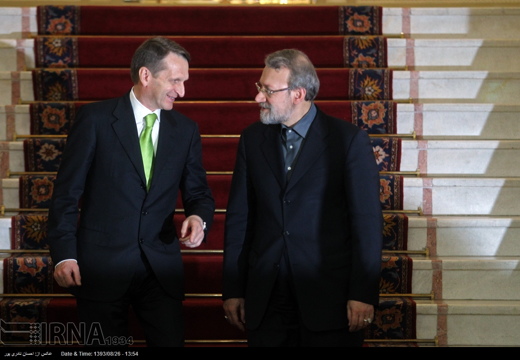
Larijani and Sergei Naryshkin

Speaker of the Islamic Consultative Assembly Ali Larijani said that Iran and Russia enjoy very close relations.

Following his meeting with visiting Speaker of Russian State Duma Sergei Naryshkin on Monday, the top MP said in a press conference that the two sides have discussed Iran’s nuclear issue, presence of terrorists in the region and the latest developments in Iraq and Syria.

Larijani also underscored that Iran and Russia have constant political consultations on vital regional issues.

With no doubt, Naryshkin’s visit to Tehran would facilitate bilateral parliamentary ties, he added.

The parliament speaker also expressed hope that the visit could reinforce the levels of mutual relations.

Naryshkin, heading a parliamentary delegation, arrived in Tehran late Sunday.


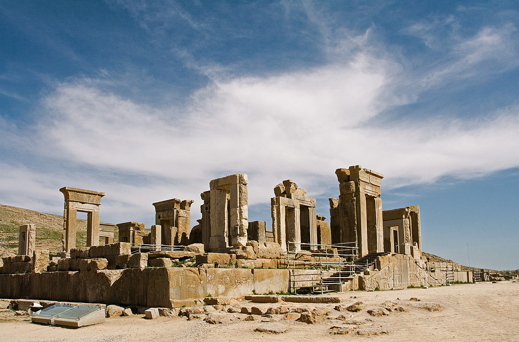
Excavations uncover ancient gate in Persepolis

Iran-Persepolis
Iran-Persepolis

Excavations have uncovered a great ancient gate in Persepolis in Tale-Ajori.

Alireza Askari Chavardi, the head of Iranian excavation group, said that the archeologists have been working to develop an insight into the functions of the ancient complex in Persepolis during the past 100 years, and present a spatial analysis of coherence and conceptual links in the meaning of polis in the royal construction and the surrounding buildings.

[…]

A joint Iranian-Italian expedition explored Tale-Ajori for nearly 50 days in October and November 2013. The expedition was led by Dr. Chavardi, of Shiraz University and Professor Pierre Francesco Caglieri, of Italian University of Bologna, and was financed by provincial office of the Cultural Heritage Organization.

[…]

Persepolis was founded by Darius of Achaemenid in 521 BC, and was the dynasty’s political and religious capital up to the decline of the empire in 331 BC.

[…]

China praises Iran’s efforts to facilitate nuclear deal

Wang-Yi
Wang-Yi

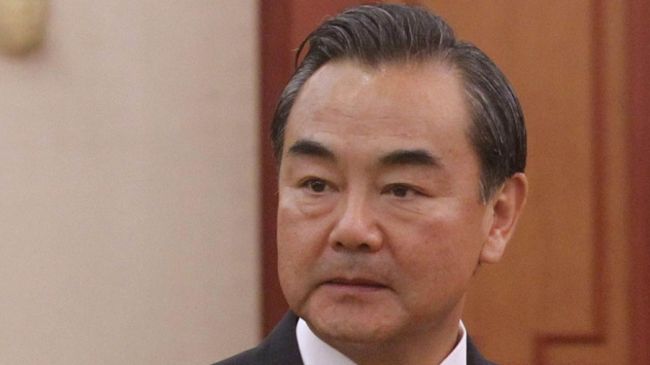
China’s Foreign Minister Wang Yi has praised Iran’s efforts to help clinch a nuclear agreement in the course of its negotiations with P5+1.

Wang and his Iranian counterpart Mohammad Javad Zarif exchanged views in a telephone conversation about the Islamic Republic’s nuclear program.

Wang hoped that Iran and the six powers would achieve satisfactory results in their nuclear talks.

He noted that the talks have entered a “key stage” and urged the two sides to devote joint efforts and show flexibility to create balance in the negotiations and achieve a comprehensive and just agreement.

The Chinese foreign minister also expressed Beijing’s preparedness to assume a constructive role to help the two sides maintain close interactions.

Zarif, for his part, elaborated on Tehran’s stances and praised China’s helpful role in the course of the nuclear talks.

The next round of the nuclear talks between Iran and the five permanent members of the United Nations Security Council, Russia, China, France, the US and Britain, plus Germany is set to be held in the Austrian capital of Vienna on November 18-24.

Last November, Iran and P5+1 clinched an interim nuclear accord, which took effect on January 20 and expired six months later. However, the two sides agreed to extend the deal for another six months and continue to hold talks to reach a comprehensive deal until November 24.

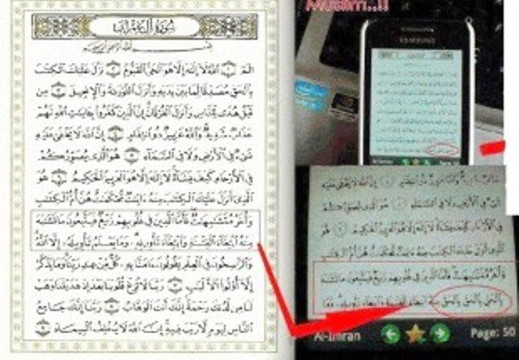
A distorted Koranic application appears in Apple and Samsung app stores

A distorted Koranic application

Electronic giants Apple and Samsung have recently put on their platforms a Koranic app which is a distortion of the Muslim holy book. According to Mehr News Agency, the new app which features distorted verses is fraught with typos.

The app which is called The Holy Quran has drawn objection from many Muslims around the world. Some have taken their objection to social networking sites, urging fellow Muslims not to download the app.

Culture minister condoles with nation on demise of pop singer

Ali Jannati
Ali Jannati

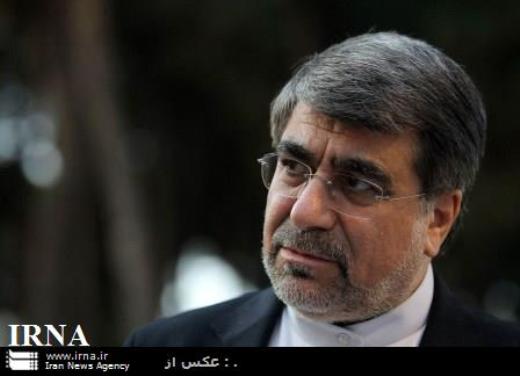
In a note appearing on his Facebook page on Sunday, Culture and Islamic Guidance Minister Ali Jannati condoled with the Iranian nation on the untimely death of young, popular pop singer, Morteza Pasha’ie.

“I hereby condole with the entire elites, artists and fans of the popular singer of the Iranian nation Morteza Pasha’ie, especially with his revered family members, on his heart breaking demise and pray to Almighty Allah for the salvation of his soul and for granting patience and peace of mind to those who love him,” reads the culture minister’s note.

Iranian pop singer Pasha’ie died from acute stomach cancer on Friday morning at the age of 30 in a Tehran hospital.

His funeral procession began on Sunday afternoon in front of Tehran’s Vahdat Concert Hall moving towards the city’s Behesht-e Zahra Cemetery followed by a large crowd of his fans, some of whom were singing a number of his famous songs.

Due to the dense population of Pasha’ie’s fans, his burial was delayed for a couple of hours till the police forces at the cemetery managed to somehow disperse the crowd.

It was earlier announced that the burial had been delayed to a later time.

Iran plans to offer Alamut Fortress to UNESCO

Alamut-Fortress
Alamut-Fortress

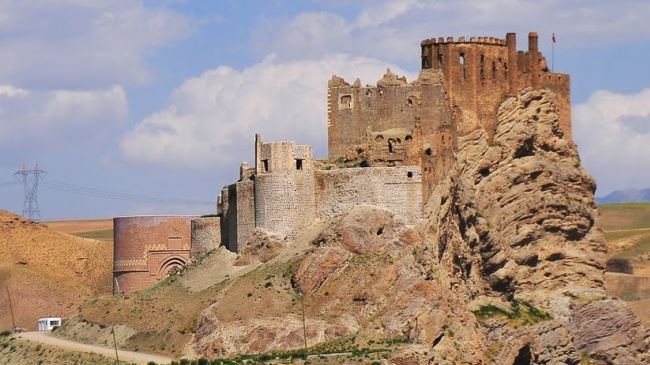
Iran plans to offer the historical Alamut Fortress to UNESCO to be listed as a World Heritage site.

Located in Alamut region in Iran’s Qazvin Province, the castle is a mountain structure built on a massive rock in an altitude of 2,100 meters above sea level.

The fabled ruin of Alamut Castle which is of historical significance dates back to around 1090 AD, when Hassan Sabbah, the leader of Ismailites in Iran, chose the Alamut region as his headquarters.

The origins of the Alamut Fortress can be traced back to the Kings of Daylam, a Justanid ruler, at the end of the 8th century, who selected the area for the construction of a fortress.

The fortress was demolished and set ablaze by Hulagu of Mongolia in 1256. Later the site was only used as prison and a place of exile.

World Heritage site is a title that is given to locations that have “outstanding universal value” to humanity, according to the UNESCO description.

Armenian monastic ensembles of Iran, Bam and its cultural landscape, Bisotoun, Naqsh-e Jahan Square, Pasargadae, Persepolis, Sheikh Safi al-din shrine, Shoushtar historical hydraulic system, Tabriz historic bazaar complex, Chogha Zanbil and the Persian garden are some of the Iranian historical heritage sites that have been inscribed on the UNESCO World Heritage List.

Iranian researchers develop anti-cancer nano-drug

anti cancer research

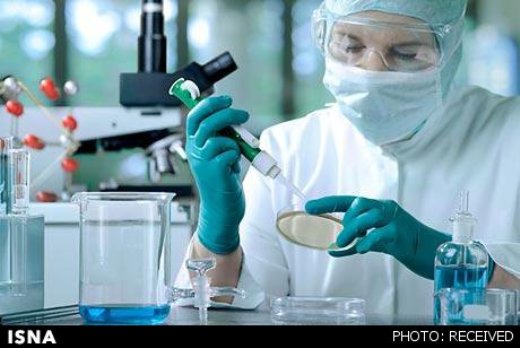
Iranian researchers have developed a new anti-cancer nano-drug using artificial biocompatible and biodegradable polymers.

Mohammad Irani, a Ph.D. student in chemistry engineering at Amirkabir University of Technology and lead author of the study, said the project aims to design and build a nano-drug which increases the chemo efficiency and reduces the poisonous effects of anti-cancer drugs.

He said he and his fellow researchers have designed a nano-fiber scaffold carrying multi-walled nano-carbon pipes as drug carrier.

Using the nano-fiber scaffold carrying the Doxorubicin, the anti-cancer drug improves the treatment process and lowers the level of poison in the drug.

It takes the scaffold 30 days to get released. The anti-poison properties stay in the scaffold for three days.

An electro process method has been used to produce the nano-drug. The research also studied the way the drug is released into cancer cells in laboratories.

The results of the study have been published in Applied Polymer Science Journal.

Iran: Any nuclear deal should lift sanctions entirely

Iran-shamkhani
Iran-shamkhani

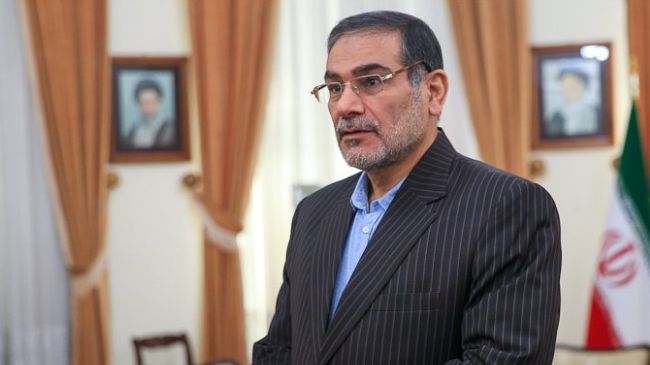
Secretary of Iran’s Supreme National Security Council (SNSC) has emphasized that any nuclear deal between Tehran and world powers should have the whole “cruel sanctions” imposed on Iran removed.

The full abolition of cruel anti-Iran sanctions and Tehran’s entitlement to the whole legal rights within the framework of the nuclear Non-Proliferation Treaty (NPT) should be stipulated at any nuclear agreement, Ali Shamkhani said of a long-awaited nuclear deal between Iran and the sextet of world powers.

He made the remarks in a meeting with Meng Jianzhu, a member of the Central Committee of the Communist Party of China, in Tehran on Sunday evening.

“In case the other side takes a logical, non-political approach on the basis of realities, reaching an agreement in the nuclear talks will be possible immediately,” Shamkhani added.

The senior official also made it clear that “internal problems” among P5+1 members or the “excessive demands” will have no bearing on the resolve of the Iranian team of negotiators in the course of talks.

The Chinese politician, for his part, reaffirmed Beijing’s support for Iran’s civilian nuclear program, and stressed, “Iran has the right to enjoy peaceful nuclear energy, and we will definitely support Iran in the 5+1 talks.”

Iran and P5+1 (Russia, China, the US, Britain, France and Germany) are in talks to hammer out a final deal to end a decade of impasse over Tehran’s peaceful nuclear energy program.

On November 24, 2013, Iran P5+1 signed an interim nuclear deal in the Swiss city of Geneva. Based on the interim deal, the world powers agreed to suspend some non-essential sanctions and impose no new nuclear-related bans in return for Tehran’s decision to freeze parts of its nuclear activities.

The Geneva deal (the Joint Plan of Action) came into effect in January and expired in July, when the parties decided to extend negotiations until November 24 in the hope of clinching a final deal that would end a decade of impasse over Tehran’s peaceful nuclear energy program.

In July, Tehran and the six countries agreed to extend negotiations until November 24 in the hope of striking a final deal.

Iranian president, Omani foreign minister meet in Tehran

Oman-foreign-minister

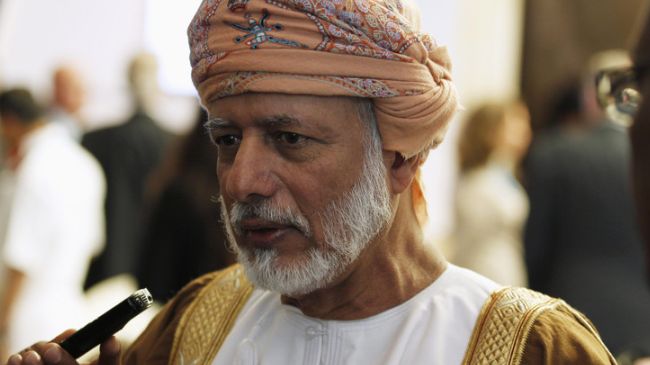
Omani Foreign Minister Youssef bin Alawi bin Abdullah has paid an unofficial visit to Iran and held talks with Iran’s President Hassan Rouhani over regional developments in the capital, Tehran.

In his Sunday visit, Alawi also met with his Iranian counterpart Mohammad Javad Zarif.

An informed official told IRNA that Alawi’s one-day visit was aimed at discussing bilateral ties and ways to tackle extremism in the region.

The visit came a week after the Omani capital, Muscat, hosted three days of nuclear talks between Iran, the United States and the European Union. The talks were meant to facilitate the conclusion of a final deal between Iran and P5+1 over the Iranian nuclear program before a November 24 deadline.

On the top of the agenda of the Muscat talks were the extent of Iran’s uranium enrichment and the timetable for the removal of anti-Iran sanctions.

On November 11, Alawi expressed optimism that a final nuclear agreement between Iran and P5+1 – Russia, China, Britain, France, the US and Germany – is within reach.

Oman has played an intermediary role between Iran and the US since Tehran and Washington severed diplomatic ties in 1979.

In late August, Oman’s Sultan Qaboos bin Said Al Said visited Iran at the head of a high-ranking delegation.