“…The West has tried to create a fake entity named the Salafi group which has no task but to kill people and commit [acts of] aggression,” Secretary of Iran’s High Council for Human Rights Mohammad Javad Larijani told state television.
He added that the West is horrified by the spread of Islam and the Islamic Revolution of Iran, saying, “The West has moved to form terrorist groups… such as Taliban, al-Qaeda and ISIL, to stem the spread [of Islam].”
Turkey has been a staunch supporter of the ISIL Takfiri militants who have been wreaking havoc in Iraq and Syria, where they have seized large swathes of land. They have also committed heinous crimes including mass executions and beheadings of thousands of people in the areas under their control.
Turkey’s stance on the Syrian Kurdish city of Kobani has also drawn harsh criticism. The city of and its surroundings have been under attack since mid-September, with the ISIL militants capturing dozens of nearby Kurdish villages. The Kurdish military sources say Kurdish fighters are gaining more ground against the ISIL Takfiri terrorists in and around Kobani, adding they managed to force out the militants from most of the city’s areas.
Turkey continues to block any delivery of military, medical or humanitarian assistance into Kobani where the ISIL terrorists are feared to be aiming at massive bloodletting.
Analysts say Ankara plans to let the terrorists seize Kobani before sending tanks and troops to fight them in a bid to capture and possibly annex the Syrian territory.
Meanwhile, Press TV has learned that Washington has moved its base from Jordan to Turkey to train radical extremists who are fighting the Syrian government.
“The IRGC Ground Forces have submitted sufficient evidence to Foreign Ministry and Ministry of the Interior regarding the infiltration of bandits from inside Pakistan [to Iran],” IRGC Ground Forces’ second-in-command, Brigadier General Abdollah Araqi, said on Saturday.
Noting that the Islamic Republic will respond “legally and politically” to cross-border attacks, the general said, “We are trying to establish lasting security in [border] areas by fortifying borders, exercising further intelligence control and boosting our military capability.”
Araqi added that due to measures taken by the IRGC, police and the Intelligence Ministry, terrorist operations, which used to be carried out in more internal parts of the southeastern province of Sistan-Baluchestan up to five years ago, are now carried out only in border areas.
He also criticized Iran’s eastern neighbors for failing to rein in terrorists who cross back borders into these countries after carrying out their attacks on Iran’s soil.
Three Iranian police officers were killed when they, along with other patrol police forces, came under a night attack by armed bandits while on a mission in the city of Saravan in the southeastern province of Sistan-Baluchestan on October 8.
Another police officer was killed after an explosives-laden car taken to the police station by terrorists went off hours after the first incident.
Iranian security forces have apprehended a number of perpetrators behind the recent killings.
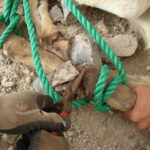
Iran’s Cultural Heritage, Handcrafts and Tourism Organization in September 2014 issued a leaflet on Darband Caves, which have been home to humans as far back in history as more than 200,000 years ago. What comes below is the translation of the information the leaflet provides on this ancient natural site:
Some 230,000 years ago, concurrent with a warm interglacial period, Darband Rashi Caves were a safe haven for humans who used them as makeshift shelters. What is left behind by the ancient hunters offers the oldest evidence [the age of which can be determined by modern-day dating methodologies in archeology] about the early inhabitants of Iran.
Darband Rashi Caves are to the south of Rashi village, nestled, at an altitude of 750 meters, between Rahmatabad and Blukat villages of Rudbar, in the northern Iranian Province of Gilan. Mount Dorfak, which is also known as Dolfak [nest of eagle], with the elevation of 2,720 meters is located in this region too.
On the southern flank of the slope leading to the mountain, there are deep, narrow valleys which channel the water coming from the mountain springs to the Siah-Rud River from the eastern tributaries of the river. Darband Rashi Caves are located on the northern side of one of these valleys and their walls are all but vertical.
The archeological site has two major caves. The larger one is as long as 60 meters and the other one is 30 meters in length. Both caves face south. Also, both caves have sedimentary floors, which are in some parts composed of Travertine [a limestone deposited by mineral springs]. The floor composition indicates that water and humidity have penetrated the cave.
The shorter cave was first explored and studied by archeologists with Iran’s Cultural Heritage, Handcrafts and Tourism Organization in 2005. Further examination of the cave produced a collection of animal and human remains, and a number of earthenware items which date back to the first millennium B.C.
Excavations of the nearby cave uncovered a number of terracotta objects which were as old as the items unearthed in the first cave. After preliminary examinations, applications to have the caves registered as a national site were prepared and in August 2005 they were registered as a national heritage site. On further examination, some animal fossil remains such as those of cave bears as well as stone artifacts including a cleaver and a carved chip were discovered.
In April 2012, a team of archeologists headed by Dr. Fereydoun Biglari from the National Museum of Iran with the help of Dr. Vali Jahani, the head of Gilan’s Archeological Research Center, along with an interdisciplinary team of experts carried out more detailed research to dig out more information about the Median culture of cave inhabitants during the Paleolithic Era, their exploitation of ecology and resources in the vicinity of the cave, the regional vegetation and climatic conditions and the way such caves and their ancient sediments tool shape throughout history.
Such examination and speculation resulted in a rich collection of animal fossils and stone artifacts crafted by the cave inhabitants which helped archeologists get a better insight into one of the most unknown and ancient prehistoric periods of Iran.
Preliminary studies of the fossils indicated that the now-extinct cave bears, as well as deer, bulls, and wild goats used to live there. In addition, a number of tools belonging to the Paleolithic Era, including an ax and some other objects were among the archeological finds.
Further studies can shed light on the way such tools were crafted out of parent material by cavemen. Besides, examination of geological composition in the region can help experts find out what stones were used in crafting such tools and consequently develop an understanding about the geological changes of Darband Valley throughout history. A sample containing a few animal teeth was collected from a layer to have the age of them determined through uranium dating. The results can play an important role in specifying the exact date when humans started dwelling in these caves.
Preliminary dating has indicated a hunter-gatherer society used these caves in the mid Pleistocene era (about 200,000 years ago). Darband Caves offer the most ancient evidence, dated by modern, definite methods, about human habitation in Iran.
On the whole, the properties of stone tools and animal remains as well as their age suggest that Darband Caves served as a makeshift shelter to hunter-gatherers toward the end of the Paleolithic Era.
Darband Caves were probably a place where one of the subspecies of cave bear hibernated; their remains in the caves presented the first evidence about the existence of such animals during the Quaternary Period.
Initial studies into the archaeological finds discovered in the caves suggest that this site can clear up a lot of confusion about the cultures of the Paleolithic Era and the environment of the early communities who lived to the west of the Alborz Mountains, and Iran at large.
Darband Caves, the only known caves with archeological finds belonging to the Paleolithic Era in Iran, offer us a unique opportunity to add new chapters to the history book of human habitation in Iran. More in-depth archeological and interdisciplinary studies into Darband Caves, their preservation and introduction as the earliest recorded human habitation in Iran are some of the most important goals that Iran’s Cultural Heritage Organization hopes to fulfill in the not-too-distant future.
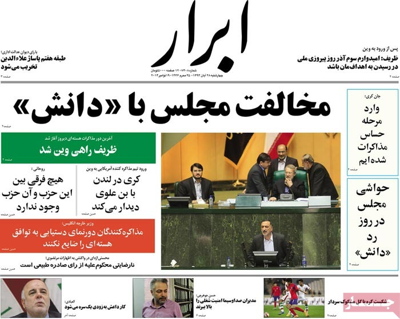
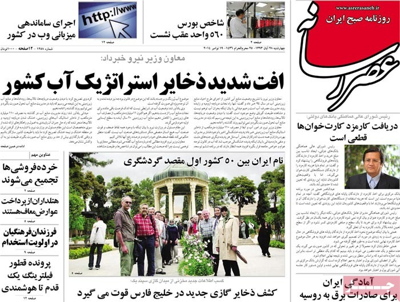
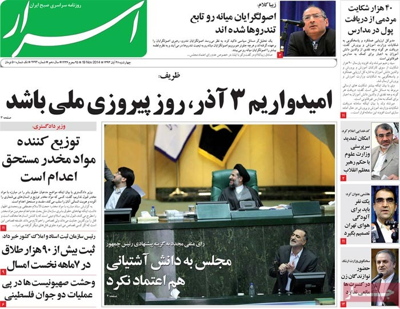
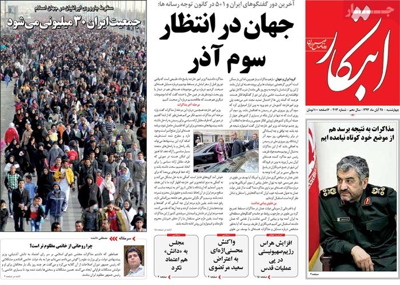
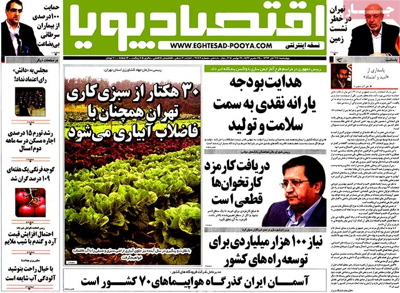
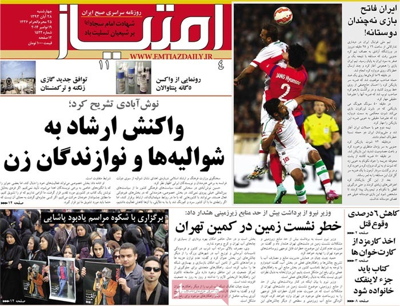
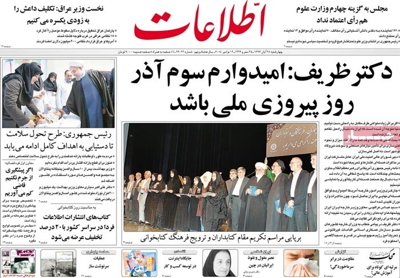
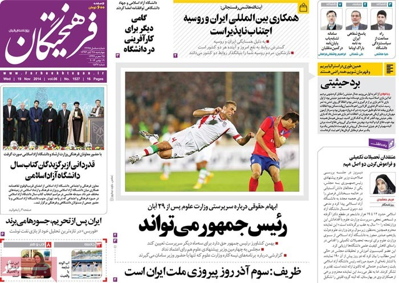
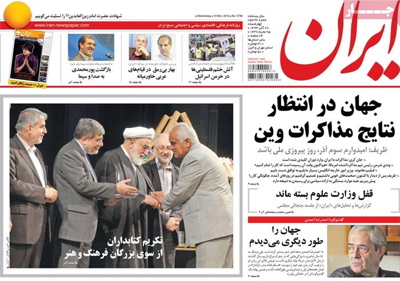
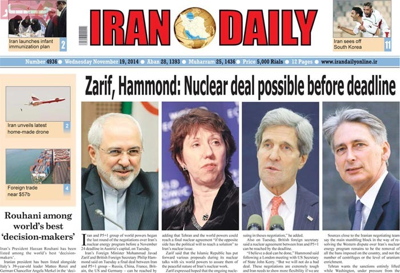
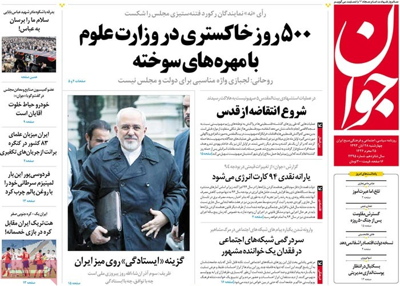
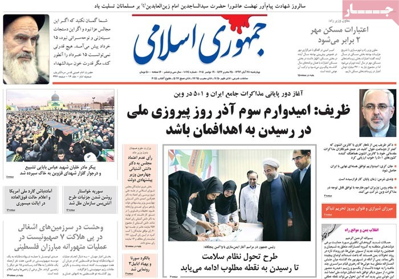
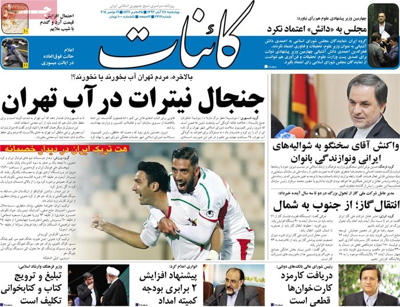
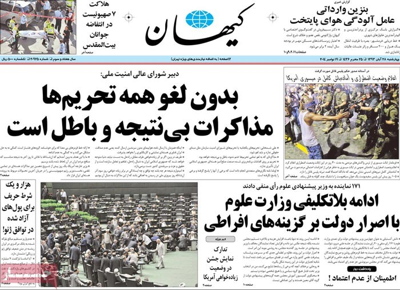
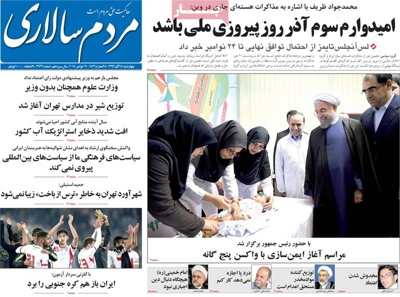
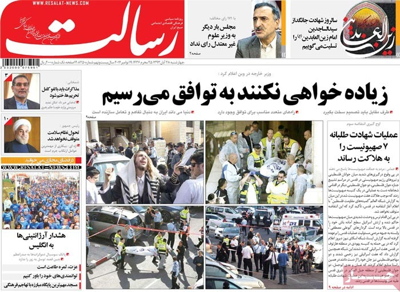
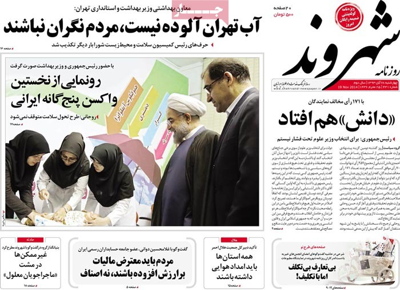
Iranian dailies on Saturday gave extensive coverage to the comments of the Supreme Leader in a meeting with Ramadan Abdullah, the leader of the Palestinian Islamic Jihad. The other top story of the day was the end of an 8th round of nuclear talks between Iran and P5+1 and the comments of both sides afterward. On the international front, the dailies featured the latest news about the developments of Kobani, including the retreat of ISIL militants to the outskirts of the Syrian town on the border with Turkey.
Abrar: “Iran stands first in the world as far as the number of rhinoplasties is concerned,” said the Head of Iran’s Association of Surgeons Dr. Iraj Fazel.
Abrar-e Eghtesadi: “The reduction of interest rate has been officially put on the agenda of Iran’s Money and Credit Council.”
Abrar-e Eghtesadi: “Iran’s foreign currency reserves have seen a three-billion-dollar rise despite sanctions.”
Afarinesh: “Islam does not allow us to pry into the personal lives of people; such privacy should not be undermined,” said Intelligence Minister Seyyed Mahmoud Alavi.
Afarinesh: “There has been some progress. However, there is a lot to be done yet,” said an American official after talks with Iranian and European envoys.
Afkar: “[Nuclear] talks will come to a good end,” said Head of the Atomic Energy Organization of Iran Ali Akbar Salehi.
Aftab-e Yazd: “My son and I do not see eye to eye on some matters,” said Ayatollah Ahmad Jannati [who is the secretary of the Guardian Council, when asked about the management of the Ministry of Culture and Islamic Guidance by Ali Jannati].
Aftab-e Yazd: “The 8th round of nuclear talks came to an end with both sides determined to finalize a deal within 40 days.”
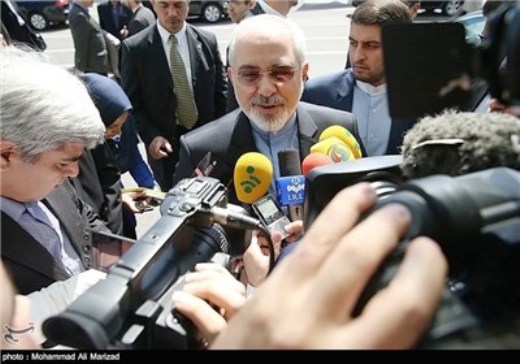
Arman-e Emrooz: “The two sides involved in nuclear talks [Iran and P5+1] view an extension of the negotiations as inappropriate [for the time being],” said Foreign Minister Mohammad Javad Zarif.
Arman-e Emrooz: “Khatami is the best candidate to represent the establishment in Europe,” said Deputy Leader of the Islamic Coalition Party Asadollah Badamchian in a surprise comment by a dyed-in-the-wool principlist.
Asia: “CEOs of 200 world corporations sized up trade diplomacy with Iran” is the headline of a report the daily filed on its front page about the first Europe-Iran Forum in London.
Asr-e Rasaneh: “Effective management of the economy has made sanctions ineffective,” said the economy minister.
Asrar: “Saudi Arabia is to blame for all regional problems; the execution of Sheikh Nimr al-Nimr, a Saudi Shiite cleric, will cost the Saudi [Royal] family dearly,” said Tehran Friday Prayer Leader Ayatollah Ahmad Khatami.
Emtiaz: “Ebola is highly unlikely to find its way to Iran,” said the director of the Center for Management of Contagious Disease.
Emtiaz: “All evidence presented by the Environment Protection Organization to parliament suggests that the gas produced in petrochemical plants was carcinogenic.”
Emtiaz: “The tune of Kitaro’s music has echoed in Tehran.”
Ettela’at: “There are 250,000 vacant seats at universities, yet there are still some who seek to establish new universities,” said acting Minister of Science, Research and Technology Dr. Mohammad Ali Najafi in a thinly-veiled reference to efforts by former President Mahmoud Ahmadinejad and his close allies to found a new university.
Ettela’at: “Victory of Gaza is the fulfillment of the divine pledge, heralding greater triumphs down the road,” the Supreme Leader said in his meeting with Ramadan Abdullah, the leader of the Palestinian Islamic Jihad.
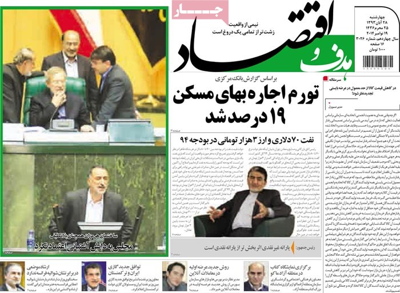
Hadaf va Eghtesad: “A budgetary red flag has been raised for the government after oil prices have gone into free fall.”
Hemayat: “Ahmed Shaheed [UN Human Rights Special Rapporteur] is a staunch advocate of terrorism,” said Secretary of the Iranian Judiciary’s Human Rights Council Mohammad Javad Larijani.
Hemayat: “If it wasn’t for the kindness of the establishment, the leaders of the sedition [a reference to Mir-Hossein Mousavi and Mehdi Karroubi who challenged the results of the 2009 presidential elections] would have been sentenced to death,” said Ayatollah Ahmad Jannati.
Iran Daily: “Leader calls on Palestinian resistance groups to boost defense capabilities.”
Jomhouri Islami: “President Rouhani has ordered his oil minister to warn OPEC members that sell crude at a lower-than-agreed price.”
Jomhouri Islami: “ISIL fighters were pushed back into the suburbs of Kobani; ‘The liberation of Kobani is immediate,’ Kurds predicted.”
Kaenat: “Another clash between bandits and Iranian border guards; terrorists escaped to Pakistan again, two border guards were martyred and as many villains were killed.”
Kayhan: “To clinch a final deal, the West needs to surmount the psychological barrier of sanctions,” said Foreign Minister Mohammad Javad Zarif.
Khorasan: “Iran has become self-sufficient in manufacturing centrifuges used in the production of vaccines,” said Ali Akbar Salehi, the head of the Atomic Energy Organization of Iran.
Mardomsalari: “Reformists are utterly determined to secure a majority of seats in the 10th parliament,” emphasized the secretary general of Democracy Party in a news conference in Isfahan.
Rah-e Mardom: “Canadian firms have voiced readiness for presence in Iran’s oil industry.”
Roozan: “Iran-Turkey borders have been closed; hundreds of trucks have been left stranded.” The problem emerged after both countries raised border tariffs. As a result, 1,700 Iranian and 2,500 Turkish trucks have been stuck at the border.
On October 14, Alef, a news website, pitched a book entitled Government and Economic Development by Dr. Mohammad Taghi Delforooz which has been recently published by Agah Press. What appears next is the translation of a review by Dr. Ali Sarzaim of the book and the reasons as to why it is a good read:
The Iranian intellectual community has held the viewpoint that there have always been some elites seeking the country’s development, but the political system has erected barriers in their way.
The Sociology of Elite-killing*, a once blockbusting book by Ali Rezagholi, was written from this perspective. The concept of slow development in Iran is far more complicated and cannot be dissected merely on the basis of a single factor. Different periods of Iranian history have dealt with different phenomena. Therefore, each stage has its own distinctive analysis and one general explanation cannot apply to all stages.
For instance, during some periods of Iranian history, many reformist intellectuals tried to gird up their loins and be part of the ruling system to exploit its power, rather than distancing themselves from the governing system and just adopting a critical approach toward it.
That move was designed to have the state of affairs in the country reformed.
Contrary to popular belief that the government has always been an impediment to development, it can be suggested that at some stages during pre-and post-revolution eras, there were some governments which paid special attention to development and struggled to turn the government into a driving force behind development, prompting other sectors contributing to economic growth to follow in the footsteps of the government in its march toward development.
At times, such measures turned out to be effective and brought about high growth for a short period of time and consequently helped establish the foundations of modern governments and institutions in the country to the extent that today Iran is classified as a country with moderate per capita income. That we expect more is quite natural, though.
Iran is among a handful of countries which accepted Constitutionalism ahead of other developing nations and accordingly founded modern institutions. In practice, nonetheless, such moves have not proved adequate and sustainable enough to help Iran catch up with developed countries. The question that arises here is that which one of the different governments which have risen to power in contemporary Iranian history can be regarded as a development-oriented government. The second question that follows is that why such governments acted hastily and the trend that they set did not last long; why did they fail in practice?
The recent experience of some developing nations suggests that their governments have played an important role in leading the economy and society at large toward development, whereas according to the common Western model, it is the market and the developments within it that move a society in the direction of development.
During a long process that lasted a few hundred years, Western countries have secured development and welfare. In getting where they are, they have been dependent on measures taken by private institutions and on the market economy.
However, many developing countries have contended that they cannot wait for such a long time to foster development. The private sector in such countries is fragile and cannot stimulate development within a short and reasonable period of time. That’s why governments in such countries took action and played a pioneering role in moving toward development. In other words, the leaders who sought development used power and state facilities to jump-start the economy.
The interesting point about such governments is that the political system in most of those countries is non-democratic, but the nature of a system as such has helped those in authority ensure coordination between different sectors, rather than prompt them to feel freer to exert more pressure on people and plunder more public funds.
However, many developed countries which were in better conditions in terms of democracy, couldn’t make development-related decisions and failed to ensure the required coordination. The non-democratic nature of such systems has resulted in the relative independence of the government from the public and civil society. Instead of acting as a hindrance to development, it has offered an opportunity for those who make economic policies to be immune from the pressure exerted by influential figures.
The oppressive nature of these governments has stopped social and public resistance to change from surfacing; therefore, it has facilitated economic reforms. Altogether, these characteristics have been seen in so many development-oriented governments which make the study into this phenomenon interesting and can offer us an insight into the lack of development in Iran.
Government and Economic Development is designed to get readers familiar with the development-oriented governments and their pioneering role in pushing society toward development. In one chapter, the author has discussed four special examples, including South Korea, Taiwan, Singapore and Malaysia.
Dr. Delforooz, the writer, has tried to extract qualities of development-oriented governments through this comparative study. Among other things, the role of the elite, the independence of the government from influential figures and its extent, the relation between the government with the working class, feudalists, serfs and capitalists, the extent of bureaucracy, the interaction of the government with civil society and the international community are the points taken into consideration. These characteristics have set a standard that helps identify development-oriented Iranian governments.
Drawing an analogy between the development-oriented governments and Iranian governments can pave the way for answering questions as to why Iranian development-oriented governments unlike their successful Asian peers, failed to land Iran in the territory of development.
Also, this book offers readers a theoretical framework by which they can take another look at the link between democracy and economic growth. Instead of considering that there is always a direct and ideal relation between the two factors, they should try to realize the complexity of the relation and analyze different factual evidence.
This book is recommended to those who are interested in development in general, and Iran’s development in particular.
*The Sociology of Elite-killing is a book by Ali Rezagholi about the performance of the political elites and how Iranian society treated them. In the domain of political studies in 1998, it turned out to be a bestseller in Iran. The book offers a sociological analysis about the historical roots of dictatorship and backwardness in Iran.
The book was first published by Ney Press in 1998. It has since been reprinted several times. Throughout the book, the author is in quest of finding an answer to the question as to whether reforms in the structure of society are introduced by the elite or that they are brought about by social developments.
To that end, the writer tries to dissect the political, social and cultural conditions of different times when some political elites were in power. Based on historical evidence, he concludes that the political, economic and social structure of Iranian society won’t let the elite revamp the state of affairs, because the community can’t stand reforms and consequently kills the elite.
Speaking on Wednesday, Aghil Yousefi-Koma, the director of the national android project, said, “The Surena 3 project or the third generation of the Iranian android started roughly two years ago.”
“Surena 3 is roughly 10 times faster than its second generation [version] and enjoys various capabilities like moving over obstacles, online control, climbing stairs and moving on inclined surfaces, rotating on spot, reverse movement, and interaction with humans,” said Yousefi-Koma, who is a professor at the Faculty of Mechanical Engineering in the University of Tehran.
He noted that Surena’s original developing team has been joined by new cooperators from the University of Tehran, Sharif University of Technology, Khajeh Nasir Toosi University of Technology, Tarbiat Modares University, and Shiraz University.
Yousefi-Koma said, “The field of androids is one of robotics’ most intriguing and challenging areas, wherein researchers try to imitate aspects of humans’ appearance and attitude.”
Surena is named after the Parthian Iranian warrior Surena (84 BCE-54 BCE), who defeated the Roman General Crassus at the Battle of Carrhae.
Chief of the Atomic Energy Organization of Iran (AEOI) Ali Akbar Salehi said the country was able to manufacture high speed centrifuges needed for its medical centers.
Speaking to reporters on the sidelines of the 18th Annual ASPA International Conference in Iran’s southern city of Shiraz, Salehi said that the AEOI has provided Razi Vaccine and Serum Research Institute and Pasteur Institute of Iran (IPI) with high speed centrifuges.
“The centrifuges are needed for producing vaccines. The centrifuges with a speed of 16,000 to 80,000 rpm (revolutions per minute) have been produced in the country for the first time. That was an accomplishment by scientists at the country’s Atomic Energy Organization,” Salehi said.
Salehi also emphasized that previously, Iran was not allowed to have the high speed centrifuges because of their dual use nature.
He also said that now the country is able to produce different types of vaccines through utilizing the domestically-made centrifuges.
Despite three decades of sanctions, Iran has made great achievements in diverse areas, including science and technology, and has attained self-sufficiency in producing equipment and systems needed for the country’s health sector.
The 18th Annual ASPA International Conference (ASPA 2014) started on Thursday with representatives from 50 countries in attendance, and will last until Saturday.
German Foreign Ministry Spokesman Martin Schaefer said his government “is still hopeful” that a lasting nuclear accord with Iran could be reached by the November 24 deadline.
“We are very much hopeful that an agreement could be reached within the next five weeks with Iran,” Schaefer told reporters on Friday.
The German foreign minister spokesman underlined his country’s firm determination to reach a final deal with Iran.
He urged all sides to show flexibility in their positions in a bid to ink a deal as there was still some time left until November 24.
Iran and the six major world powers ended their 8th round of nuclear negotiations in Vienna on Thursday.
Iranian Foreign Minister Mohammad Javad Zarif and EU Foreign Policy Chief Catherine Ashton presided over the 8th round of the talks between Tehran and P5+1 in the Austrian capital.
The 7th round of talks was held in New York on the sidelines of the UN General Assembly meeting last month.
United Nations Envoy for Syria Staffan de Mistura in a meeting with Iranian Ambassador to Beirut Mohammad Fathali on Friday praised Tehran’s constructive role in resolving the Syrian crisis.
During the meeting in the Lebanese capital, Mistura said that Iran has played a positive and constructive role to help resolve the Syrian crisis which is praiseworthy.
He, meantime, expressed concern about the situation in Syria’s Kurdish town of Kobani which is under the brutal attacks of the Islamic State of Iraq and the Levant (ISIL) terrorists.
The Iranian ambassador to Beirut, for his part, stressed the need for expanding cooperation among regional states and international bodies against terrorist groups.
“Certain states’ decisions to arm the so-called moderate opposition groups in Syria are against the international rules and regulations and would complicate the crisis,” he added.
Fathali further underlined that none of the big powers has the right to undermine UN member states’ sovereignty under the pretext of fighting terrorism.
In September, President Assad expressed appreciation for Iran’s stances in support of the Syrian people and sovereignty and independence of nations.
He called for promoting Tehran-Damascus economic cooperation, and said the Syrian nation welcomes Iran’s readiness to help rebuild the country.
The Art for Humanity WFP Exhibition opened in the presence of the UN representative in Iran and some foreign diplomats residing in Iran at Niavaran Culture House on Friday.
The UN World Food Programme (WFP) exhibition features 130 works by 100 prominent Iranian artists in painting and other fields of visual arts.
“This move can serve as a model for the artists in the other countries,” said UN representative, Garry Lewis, during the opening ceremony of the exhibition.
Appreciating the enthusiasm and love with which the Iranian artists have contributed their works to the WFP philanthropist event, he expressed hope that thanks to proper planning and appropriate distribution of food, the UN would manage to address the hunger challenge in the world effectively.
The opening ceremony of the Art for Humanity WFP Exhibition was held on the World Food Day in the presence of Deputy Minister of Culture and Islamic Guidance for Cultural Affairs Ali Moradkhani, UN representative in Iran Garry Lewis, Head of Niavaran Culture House Abbas Sajjadi, a group of artists, and foreign countries’ ambassadors and diplomats in Iran.
According to IRNA, during the first hours after the opening of the exhibition art works worth one billion rials ($33,000) were sold to the philanthropist visitors.
The exhibition will be open to public till Friday October 24.