Sunday, December 21, 2025
Home Blog Page 4976

Persian translation of world’s first surrealist novel ended

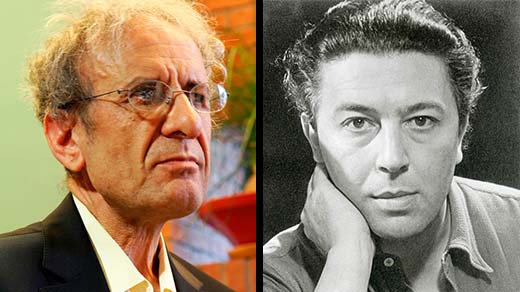
Abbas-Pejman-André Breton

Speaking to IBNA correspondent, Pejman pointed out: “When I studied about this book, I found notions which demanded further elaboration. I added 100 pages of explanation to the original text and provided 30 other pages as introduction”

‘Nadja’ is seen as a semi-autobiographical description of Breton’s connection with a mad patient of the French psychologist and philosopher Pierre Janet.

“’Nadja’ will be published by Hermes Publication Institute, moreover, a new version of ‘The Farewell Waltz’ by Milan Kundra which I translated in 1994, is due to be published. In fact, because Kundra edited all French translations of his works a gain and reprinted them, I also decided to translate this novel again into Persian,” Pjman said.

As writer, Pejman has also two novels, ‘I and the Blind Owl’ (2012) and ‘Youth’ (2013) in his career.

Iranian Books to Be Presented at Frankfurt Book Fair 2014

Frankfurt Book Fair 2014

Nearly 200 titles in diverse sections will take part in this year’s Frankfurt Book Fair 2014 , the Secretary of Tehran Publishers and Booksellers Association (TPBA) Mahmoud Amouzegar announced.

It is also predicted that 20 publishers, literary associations or literary agencies would participate independently at the fair.

The books will cover different subjects including history, religion, poetry, art, literature, Sacred Defense, wisdom, philosophy, Amouzegar noted.

The London-based Iranian publisher Candle and Fog also invited three Iranian authors to introduce English versions of their books at the 2014 Frankfurt Book Fair.

The Big Clay Jar by Hushang Moradi Kermani, Democracy or DemoCrazy by Seyyed Mehdi Shojaei, and Redfish by actress-author Katayun Riahi are the books that will be promoted by the Candle and Fog publisher.

All the three books have been translated into English by the American Iranologist Caroline Croskery.

Established in1949, Frankfurt International Book Fair is the world’s largest book exhibition.

The fair which is always exciting and innovative plays an important part in the publication industry in the world.

This year’s exhibition is programmed to be held from October 8 to 12, 2014.

Egypt asks Iran to back its ceasefire plan to end Gaza war

ceasefire plan to end Gaza war

The call to back the ceasefire proposal came after a telephone conversation between Egyptian Foreign Minister Sameh Shukri and his Iranian counterpart Mohammad Javad Zarif.

In the telephone call it was stated that the main purpose behind the plan is to stop “the daily killings of the Gazan people.”

The request was announced in a statement that was issued by the Egyptian Foreign Ministry on Friday.

The statement said the initiative is the “only” way to support the “innocent” Palestinian people and stop “incessant bloodshed and killings” of people by the Israeli military.

Egypt presented the ceasefire plan on Monday.

Iran Defines Six-Point Gas Development Plan

gas development

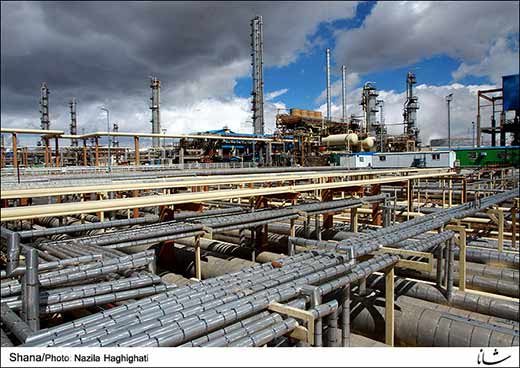
Hassan Montazer Torbati said NIGC has set six bases for the gas industry within the framework of the economy of resistance instructed by Supreme Leader Ayatollah Ali Khamenei.

He said that strategies have been worked out for the implementation of these policies.

“The general indicators of the objectives have been defined and the policies of the economy of resistance are followed up based on these indices,” said Torbati.

He said that NIGC is also pursuing the issue of self-sufficiency in the gas industry.

“Effective measures have been undertaken for the domestic manufacturing of basic commodities. Turbine manufacturing is among the activities of NIGC,” he said.

source: shana

Iran FM urges Egypt to open Rafah border crossing

Iran FM urges Egypt to open Rafah border crossing
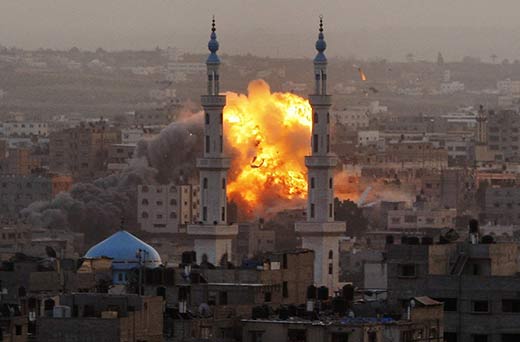
Isreal was Vs. Gaza -Rafah border crossing

In a telephone conversation with his Egyptian opposite number Sameh Hassan Shoukry on Friday, Zarif called on Egypt to play a more active role as a big Arab and Muslim country to help end the killing of innocent Palestinian people in Gaza by the Israeli regime.

He said the Iranian nation and the Muslim world have been saddened by the miserable situation in the Gaza Strip and the Israeli regime’s brutal crimes against Palestinians.

Also referring to the talks between Palestinian factions in Cairo, the Iranian minister stressed the importance of considering views of the Palestinian resistance and protecting Palestinians’ rights.

Thousands of Israeli soldiers launched a ground invasion of Gaza on Thursday after days of strikes from air and sea on the Palestinian territory.

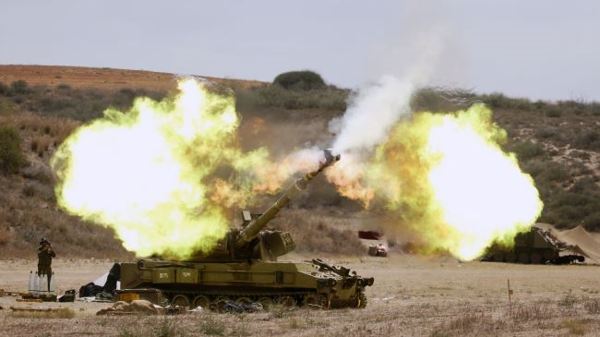
Israeli tanks have also pounded different parts of the blockaded sliver on the eleventh day of Tel Aviv’s aggression.

Israeli began its latest attacks on Palestinians in the besieged coastal territory on July 8. So far, nearly 310 people have been killed with about a third of the fatalities being women and children.

Human Rights Watch: ISIL killing, expelling Iraq religious minorities

Human Rights Watch ISIL killing expelling Iraq religious minorities
ISIL killing expelling Iraq religious minorities

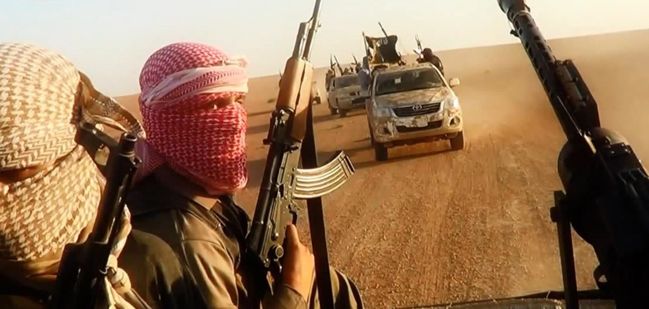
The terrorist group “seems intent on wiping out all traces of minority groups from areas it now controls in Iraq,” HRW said in a statement Saturday.

Human Rights Watch urged the Takfiri group to immediately halt its vicious campaign against minorities in and around Mosul.

The ISIL Takfiri militants recently started marking houses belonging to the Christian community and issued a statement which told them to convert, pay a special tax, leave the city, or face death by noon on Saturday.

Thousands of Iraqi Christians have been forced out of their homes in the city of Mosul following the ultimatum by ISIL terrorists.

“Christian families are on their way to Dohuk and Arbil,” said Chaldean Patriarch Louis Sako, who heads Iraq’s largest Christian community, on Friday, adding, “For the first time in the history of Iraq, Mosul is now empty of Christians.”

Most Christians in Nineveh Province escaped after the Takfiris overran the region.

ISIL Takfiri militants have already kidnapped large numbers of people from other minority groups in the region and many bodies of the abductees have been found.

Crisis in Iraq escalated after ISIL terrorists took control of Mosul, in a lightning advance on June 10.

The United Nations said in a new report on Friday that more than 5,570 people have been killed and over 11,600 others wounded in Iraq since January.

Iran anti-war photos exhibited in French museum

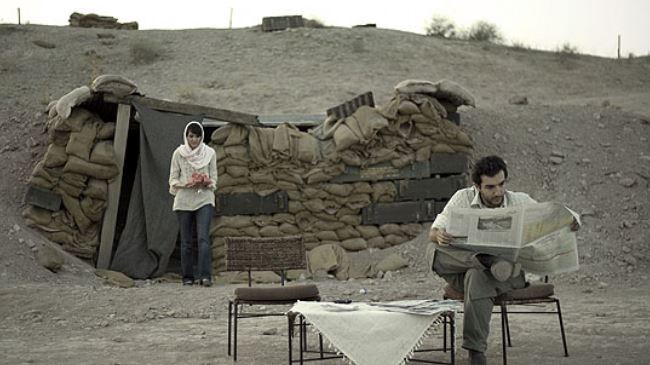
A photo by Gohar Dashti from her series “Today’s Life and War”

Dashti’s two works selected from her series “Today’s Life and War”, along with many other photos have been displayed at the anti-war group exhibition entitled “Disasters of War.”

In “Today’s Life and War”, Gohar Dashti presents ten remade abstract scenes from Iran-Iraq war.

The Iranian artist’s photos show the 1980s Iran-Iraq war during which several Iranian cities had to bear hard conditions of the imposed war.

Iran is one the countries that experienced the bitter consequences of chemical warfare attacks, in particular, the 1987 Chemical gas attack on the Iranian town of Sardasht.

Over 1000 individuals were killed and more than 8000 were permanently disabled due to the attack. Many children gradually lost their vision after birth due to the consequences of the chemical bombardment at the area.

While the photos on Iran-Iraq war have rarely entered the international exhibitions, participating in this exhibition is a great achievement for me, Dashti said.

The exhibited photos depict wars that have occurred between the years 1800 to 2014 in different parts of the world.

Some 450 works created by 200 photo artists from across the world have been displayed at the exhibition kicked off on May 28.

Mounted at the Louvre-Lens museum in Pas-de-Calais, the exhibition will be running until October 6, 2014.

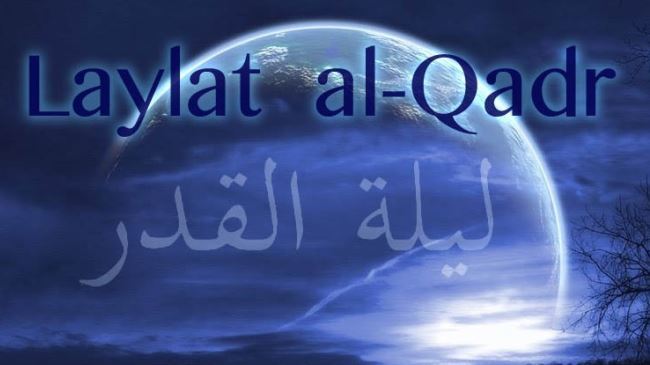
World’s Muslims celebrate ‘Laylat al-Qadr’

World's Muslims celebrate Laylat al-Qadr

Muslims believe Ramadan is an auspicious month for the revelations of God to humankind.

‘Laylat al-Qadr’ in Ramadan is believed to be the night when first verses of Qur’an were revealed to the Prophet Muhammad (PBUH): “Read! In the Name of your Lord, Who has created (all that exists),” Qur’an, Surat Al-Alaq.

It is also believed to be the night when God decides the destiny of everyone for the coming year. Muslims believe Laylat al-Qadr is a good time to ask for forgiveness.

During the ‘Night of Destiny’ or ‘Night of Power’ the angels and the Spirit descend therein, by God’s permission, to carry out every command.

While the exact date of the great night has not been mentioned, most scholars believe it falls on one of the odd-numbered nights of the final ten days of Ramadan, such as the 19th, 21st, 23rd, 25th, or 27th days of Ramadan.

Ramadan, the ninth month of the lunar Islamic calendar, is the time to focus on self-reformation and prayer. Muslims throughout the world spend the nights worshipping God.

They recite the holy book of Qur’an more, hold vigils until dawn in prayers and supplications and ask God to forgive their sins. Muslims on this night have also special wishes and prayers.

Laylat al-Qadr has double significance for Shia Muslims as the night of the 21st of Ramadan marks the anniversary of the martyrdom of the first Shia Imam, Ali Ibn-Abi Taleb (PBUH).

Shia Muslims mourn the martyrdom anniversary of Imam Ali from the 19th of Ramadan, marking the day he was wounded and the day of his martyrdom, two days later.


Iran nuclear talks extended for 4 months

Vienna-zarif and ashton Press Confrence
Vienna-zarif and ashton Confrence

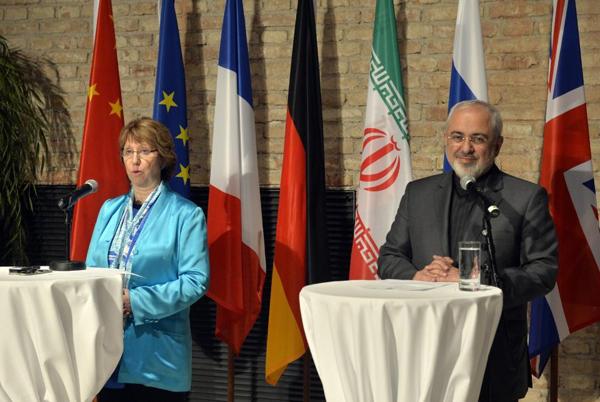
Iranian Foreign Minister Mohammad Javad Zarif and European Union foreign policy chief Catherine Ashton made the announcement at a joint press conference on Friday after extensive negotiations between the two sides continued in the Austrian capital Vienna.

The original deadline for a comprehensive deal between the two sides was due to expire on Sunday.

“We have made tangible process on some of the issues,” a joint statement said, adding that there were still “significant gaps on some core issues, which will require more time and effort.”

The statement said a new round of negotiations will kick off in the “coming weeks.”

US Secretary of State John Kerry said at a different presser in Vienna that 2.8 billion dollars of Iranian funds will be unfrozen during the new round of talks.

Iran and the five permanent members of the United Nations Security Council – China, Russia, Britain, France and the United States – plus Germany clinched a landmark interim deal in Geneva on November 24, 2013.

Under the deal, dubbed the Geneva Joint Plan of Action, the six countries undertook to provide Iran with some sanctions relief in exchange for Iran agreeing to limit certain aspects of its nuclear activities during a six-month period. It was also agreed that no nuclear-related sanctions will be imposed on Iran within the same timeframe. The agreement took effect on January 20.


ICHHTO introduces Tabriz and Yazd as Iranian creative cities to OIC

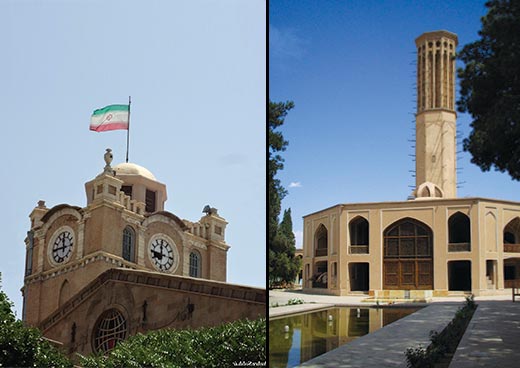
Iran tourism Yazd Tabriz
ICHHTO has introduced Tabriz in northwest Iran and Yazd in central Iran as creative cities to the Organization of Islamic Cooperation.

Mohammad Reza Pouyandeh added that UNESCO’s Cultural Department has implemented a project named “Creative Cities”.

“OIC has also defined a similar project and asked member-states to introduce two creative cities for 2016 and 2017,” he said.

“We introduced Tabriz for 2016 and Yazd for 2017 to OIC on the basis of seven UNESCO criteria for creative cities such as food, music, literature, customs and urban furniture. “

Pouyandeh noted that all information regarding these cities are prepared and will be sent to the OIC Secretariat.

“Recently, in a global conference held in Malaysia, good ideas titled Think City were raised. Currently, it is being implemented in some cities of Malaysia,” he said.

The official also said the plan to designate creative cities could also be implemented at the national level.

“We have planned a similar project inside Iran to select certain cities to create competition and use the potentials of their municipalities. This is a plan implemented by ICHHTO annually to introduce the iranian creative cities ,” he said.

 Tabriz is the fifth most populous city in Iran after Tehran, Mashhad, Isfahan and Karaj, one of the historical capitals of Iran and the present capital of East Azarbaijan province.

Tabriz

Tabriz is the fifth most populous city in Iran after Tehran, Mashhad, Isfahan and Karaj, one of the historical capitals of Iran and the present capital of East Azarbaijan province.The city boasts many historical monuments, but repeated devastating earthquakes and several invasions caused substantial damage, Wikipedia reported.

Many monuments in the city date back to the Ilkhanid, Safavid and Qajar periods, including the large Tabriz Bazaar Complex which was registered as a World Heritage Site in 2010.

The oldest signs of the city’s ancient civilization are an excavation site and museum in the city center with a history dating back to 2,500 years.

The early history of Tabriz is not well documented. Some archeologists believe Garden of Eden was located in Tabriz.

A recent excavation at the site of the Iron Age Museum, in the northern section of Blue Mosque, uncovered a graveyard of 1st millennium BCE.

The city was destroyed several times either by natural disasters or by invading armies.

The oldest elements of present-day Tabriz are claimed to be built at either in the Sassanid era in the 3rd or 4th century CE, or later in the 7th century.

Tabriz Bazaar

The historical bazaar of Tabriz is one of the oldest marketplaces of Middle East and an Iranian architectural masterpiece.

The historical bazaar of Tabriz is one of the oldest marketplaces of Middle East and an Iranian architectural masterpiece.

Tabriz Bazaar’s foundation is dated 2nd millennium BC. It is about three square kilometers in area and the largest roofed brick complex in the world.

The main structure of the bazaar consists of two main roofed north-south lanes and several west-east lanes.

The bazaar complex consists of a series of interconnected brick structures, buildings and enclosed spaces for different functions.

Souvenirs of Tabriz include carpet tableaux, metalwork, dried fruits and nuts, as well as chocolates.

Yazd

Yazd is the capital of Yazd province and a center of Zoroastrian culture. The city is located 270 km southeast of Isfahan.

Yazd is the capital of Yazd province and a center of Zoroastrian culture. The city is located 270 km southeast of Isfahan.

Because of generations of adaptations to its desert surroundings, Yazd is an architecturally unique city. It is also known for the high quality of its handicrafts, especially silk weaving, and its confectionary.

The city has a history of over 3,000 years and dates back to the time of Medean Empire when it was known as Ysatis or Isatis.

The city’s name is linked to Yazdegerd I, a Sassanid ruler. The city was definitely a Zoroastrian center during the Sassanid rule.

Under the Safavid rule (16th century), some people migrated from Yazd and settled in an area along the Iran-Afghanistan border.

The settlement named Yazdi was located in what is now Farah city in the province of the same name in Afghanistan.

Even today, people from the area speak with an accent very similar to that of the people of Yazd.

People of Yazd are well known for their peaceful, hardworking and systematic nature.

One of the notable things about Yazd is its very family-centric culture.

Its historical monuments, especially Amir Chakhmaq monument, Fire Temple and Jame’ Mosque, and famous sweets, such as

baqlava, qottab and loz-e badam, appeal to domestic and foreign tourists.