Friday, April 24, 2026
Home Blog Page 4937

Iranian women as old as millennia-old history

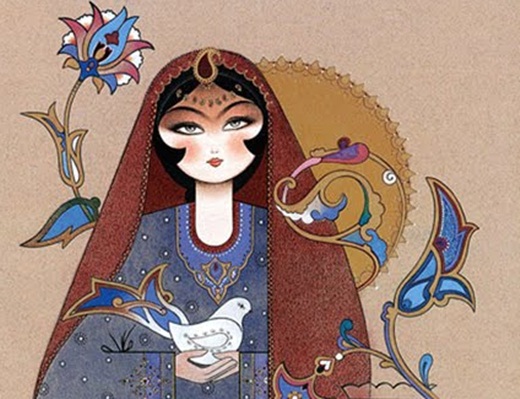
Iranian-Woman-Mitra

“In the future the world has to live with the equality of men and women’s rights, irrespective of their ethnicity, nationality and gender. In its march toward perfection, the world has to treat both men and women as equals. This seems to be a sign of hope for humans who seek to make spiritual progress. The man, who has missed his missing half over the course of history, now needs that half as he walks down the path of perfection. This way he can reveal and restore the integrity of his values.”

Sharq daily on March 8 [marking the International Women’s Day] published an opinion piece on Iranian women by Mrs. Iran Darroudi, a contemporary Iranian artist whose works consist of surreal paintings with Iranian-themed imagery and strong lighting.What you read above are a few lines of her book, The Distance between Two Points. The following is a partial translation of the piece:

Primary tribes in Iran used to respect women as powerful and highly esteemed individuals so much so that women were admired as worship-worthy creatures. Back then the deities were all feminine, chief among them: Mitra, the goddess of Sun which was also the embodiment of light on planet earth; and Anahita, the best ancient goddess and the symbol of giving life. The literal meaning of Anahita is pure and immaculate. That’s why up until the latter-day centuries, women had been revered as valuable creatures in the culture and creed of our land.

Ancient Iranians believed in mother goddess and this helped elevate women to the level of divinity. They would argue that like a creator women have the power to give life to the creatures they give birth to. They are also capable of terminating the lives of those creatures by withdrawing their support, they said.

In the distant past, Iranians celebrated the fifth of Esfand, Sepandarmaz – which falls on 29th of Bahman in the current Iranian calendar – as women’s day. Sepandarmaz is the goddess of earth, and in mythological beliefs earth was feminine.

Earth – which is the place where plants, humans and animals grow – acts like the mother of existence which, in its expanse, paves the way for the emergence of creatures. That is one reason why the day of Sepandarmaz had been designated as women’s day, an occasion which was also marked as the day of love and a day in which women were the absolute rulers.

[…]

I wish Iranian women had learned more about the history of our ancestors and about the fact that our ancestors, living several thousand years ago, had named a day after women. […]

I still believe that Iranian women – if they learn about what has happened to them over centuries – will at one point in history return to their glorious past, and alongside men they will contribute to efforts to build a developed Iran in the capacity of mothers, holding different social positions.

Here are some sentences from my book, The Distance between Two Points: In today’s male-dominated world where women account for more than half of the population on earth, men have domination over women and trample upon their social and even human rights under different pretexts.

[…]

We should not forget that God has said in the holy Koran that He will not forgive two groups of people: those who do injustice and those who are denied justice and live with injustice.

A look at Iranian newspaper front pages on March 12

Iranian Newspapers Headlines

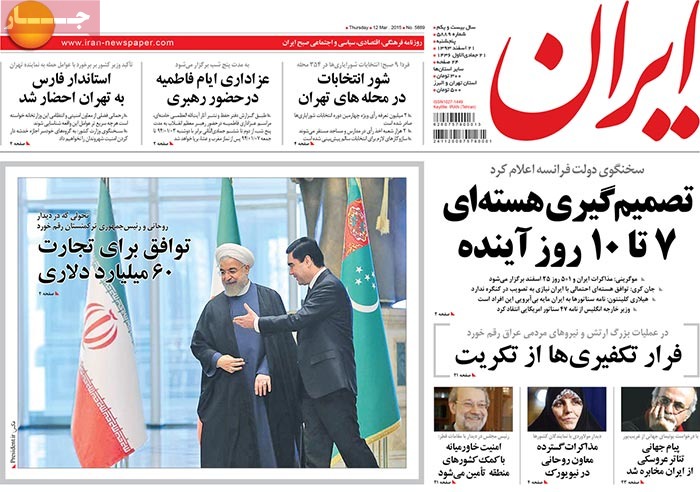
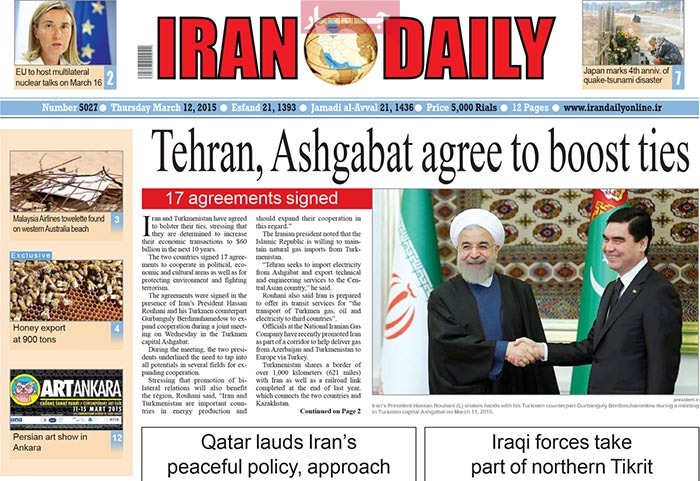
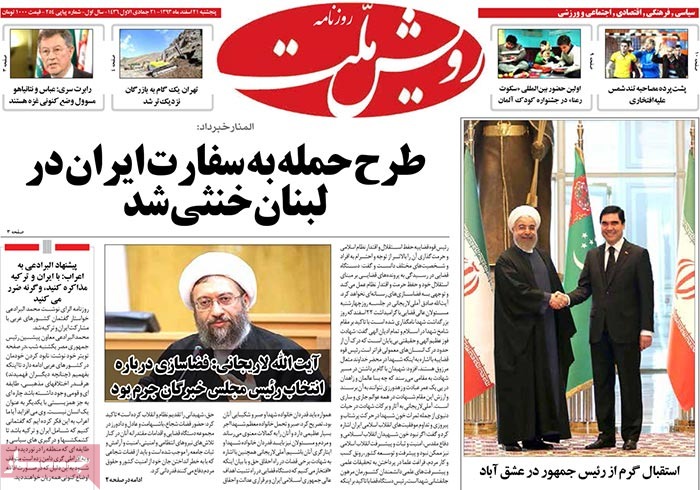
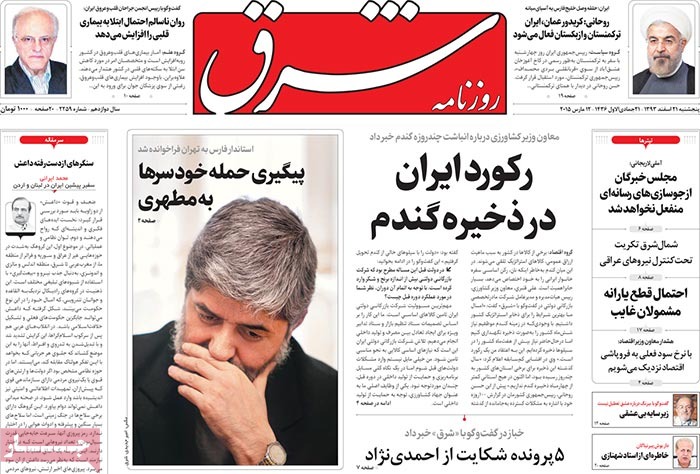
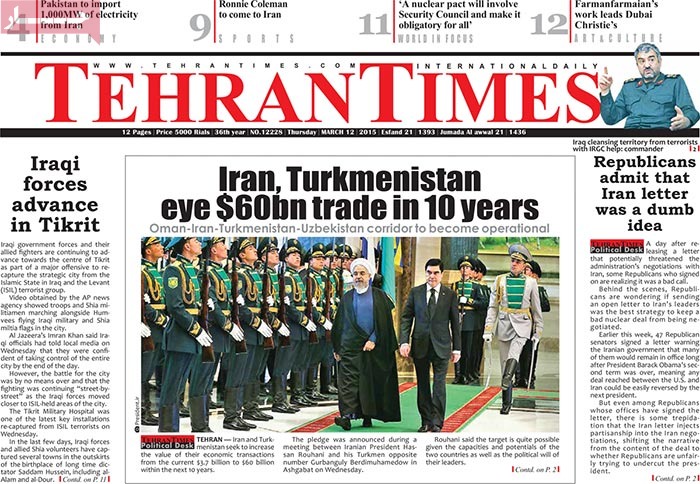
President Rouhani’s trip to Turkmenistan where the two countries inked 17 cooperation deals made headlines in most Iranian dailies on Thursday. The final statement of a 17th meeting of the Assembly of Experts thanking the Iranian nuclear negotiation team for their endeavors on the diplomatic front dominated the Iranian newspapers too. Also in the news was the operation by the Iraqi army, backed by Iran’s IRGC, to recapture Tikrit from the ISIL terrorists.


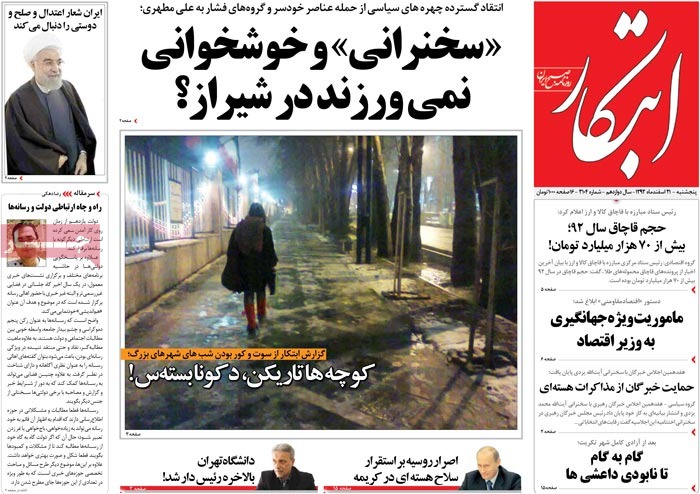
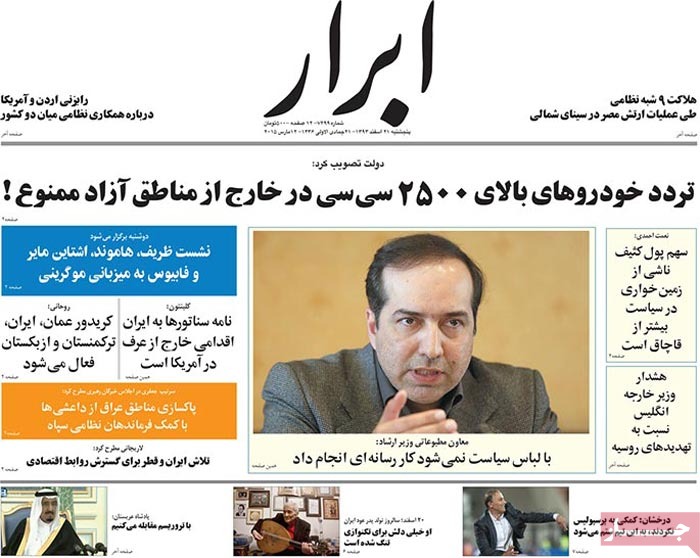
Abrar: “Those who have outfitsof politics on cannot engage in media activities,” said the deputy culture minister for press affairs.


A look at Iranian newspaper front pages on March 12


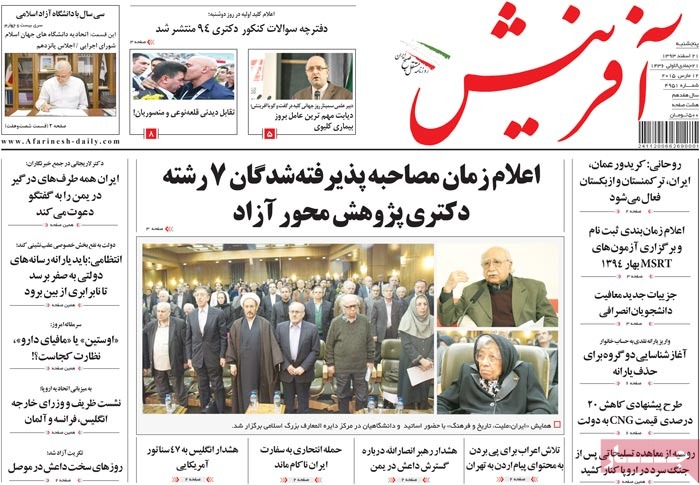
Afarinesh: “Iran has asked all parties involved in the Yemini conflict to participate in the [crisis] talks,” said Parliament Speaker Ali Larijani in Qatar.


A look at Iranian newspaper front pages on March 12


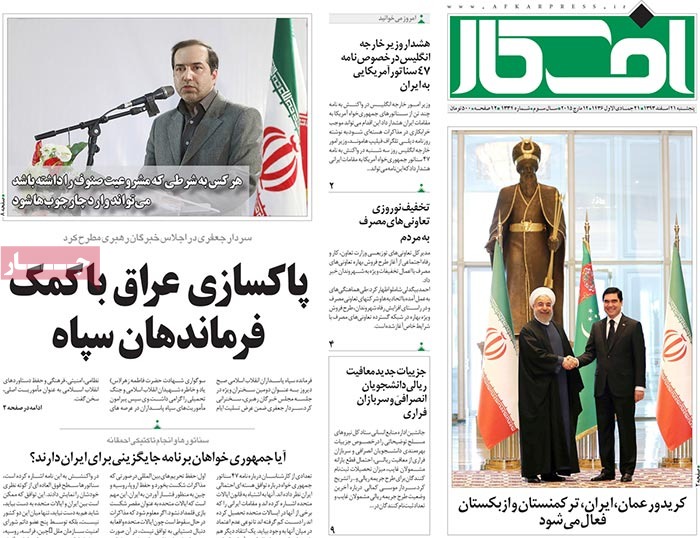
Afkar: Parts of Iraq have been purged [of ISIL terrorists] with the help of the commanders of the Islamic Revolution Guard Corps.

IRGC Commander Major General Mohammad Ali Jafari made the remark in a session of the Assembly of Experts.


A look at Iranian newspaper front pages on March 12


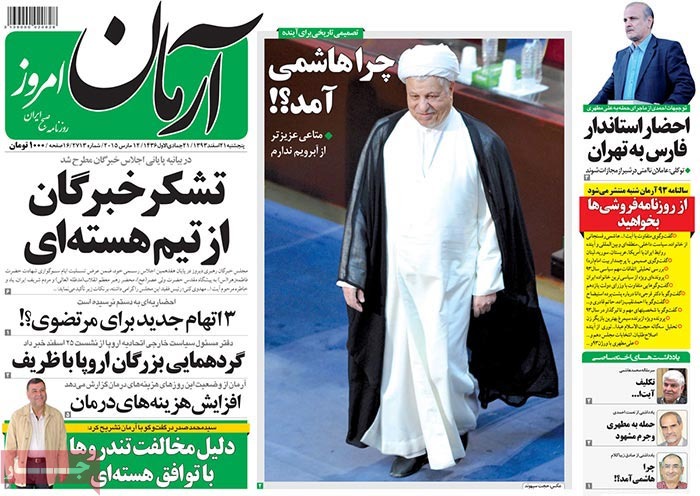
Arman-e Emrooz: In a final statement, members of the Assembly of Experts have thanked the Iranian team in the nuclear talks [with P5+1].


A look at Iranian newspaper front pages on March 12


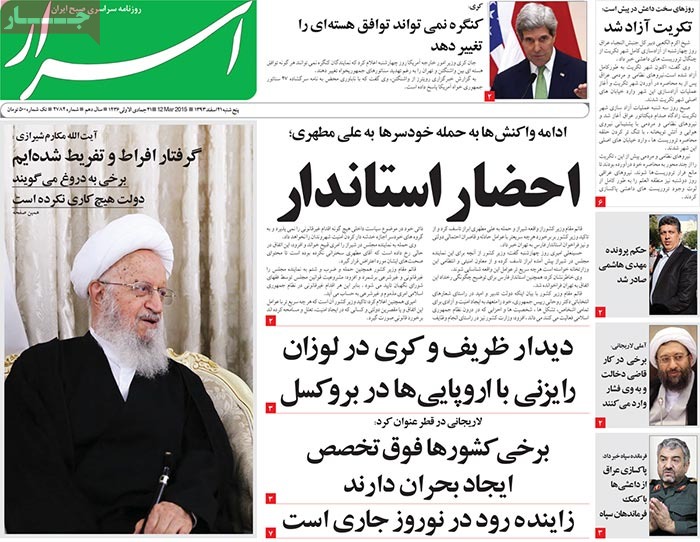
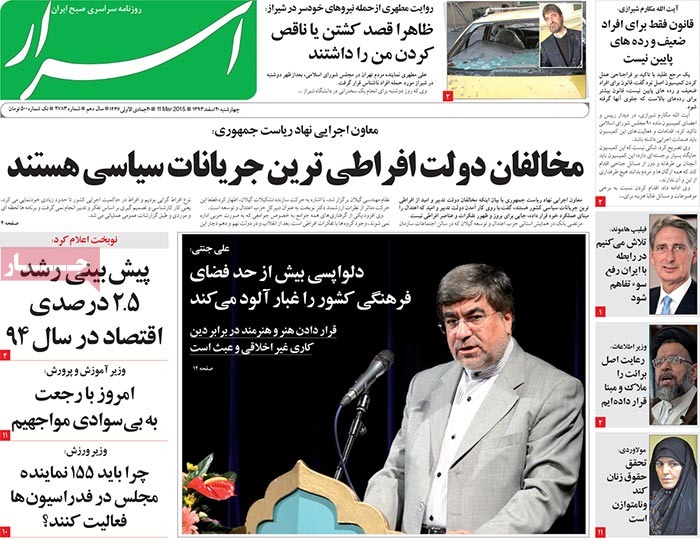
Asrar: “Some are going to extremes”.

Grand Ayatollah Nasser Makarem Shirazi made the remark, adding that certain people wrongly claim that the government has done nothing [for the public].


A look at Iranian newspaper front pages on March 12


Ebtekar: “Iran is pursuing the slogan of moderation, peace and friendship,” said President Rouhani.


A look at Iranian newspaper front pages on March 12


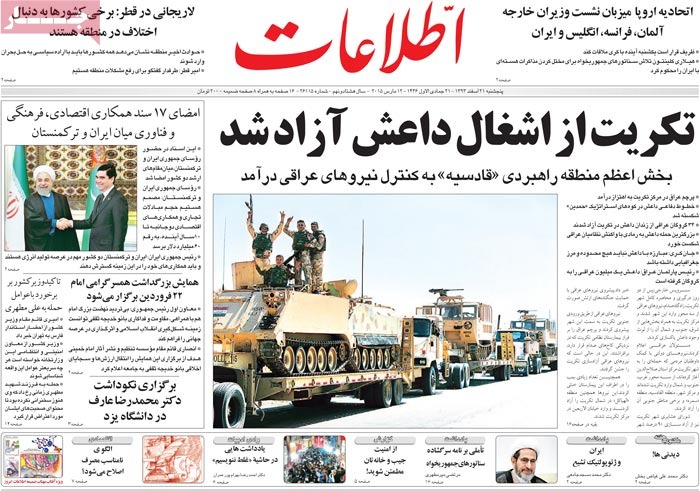
Ettela’at: Tikrit has been taken back from ISIL.

Ettela’at: Iran’s top MP has said that certain countries are seeking to create divisions in the region.


A look at Iranian newspaper front pages on March 12


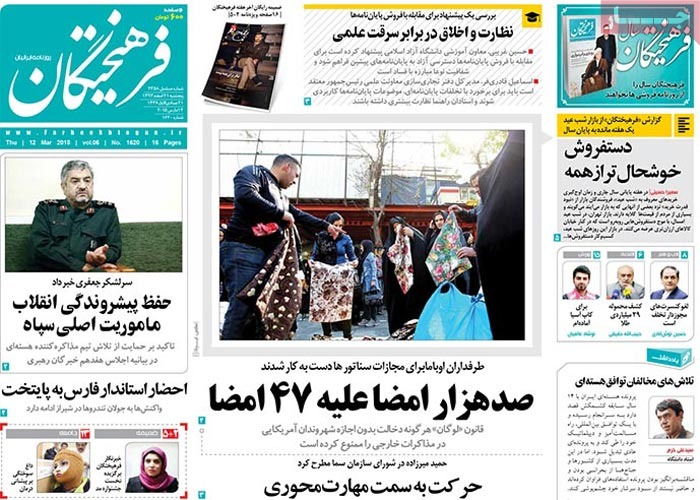
Farhikhtegan: Supporters of [President] Obama have started to take measures; one-hundred thousand signatures against 47 signatures [a reference to 47 US Republican Senators who sent a letter to Iranian officials saying that any nuclear deal with Iran would last as long as Obama is in office]

[The Logan Act says that a US citizen who communicates with a foreign government to influence the government’s actions could be jailed and face a fine.]


A look at Iranian newspaper front pages on March 12


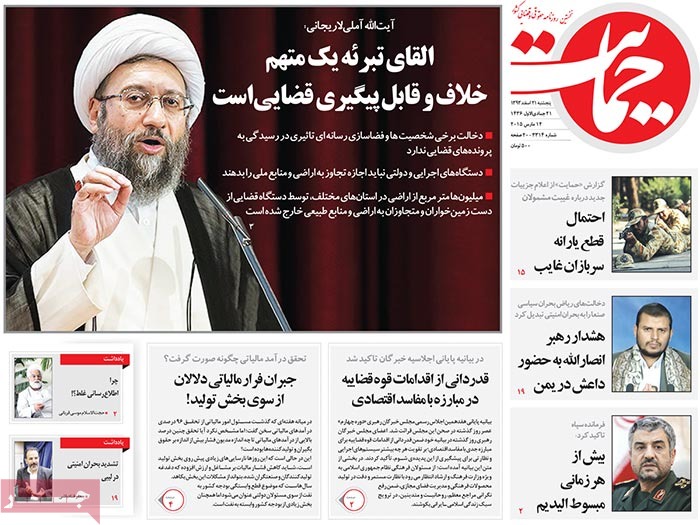
Hemayat: “Efforts to [wrongly] announce that a defendant has been exonerated run counter to the law and can be prosecuted,” Judiciary Chief Ayatollah Sadegh Amoli Larijani said.


A look at Iranian newspaper front pages on March 12


Iran: The French government spokesman has said that a [final] nuclear decision will be made within 7 to 10 days.


A look at Iranian newspaper front pages on March 12


Iran Daily: Iraqi forces take part of northern Tikrit


A look at Iranian newspaper front pages on March 12


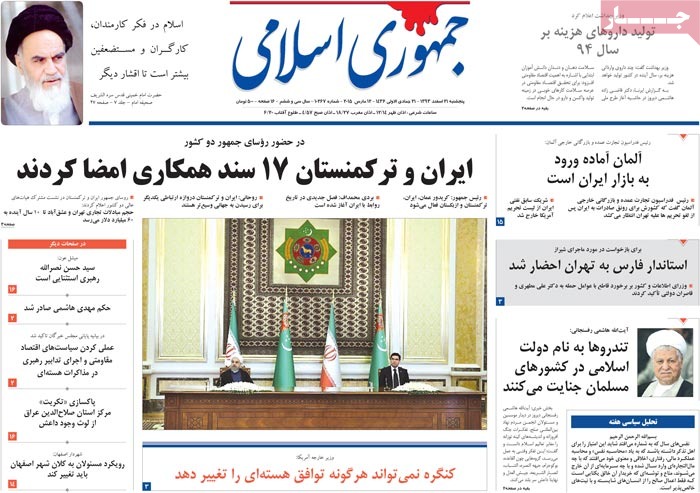
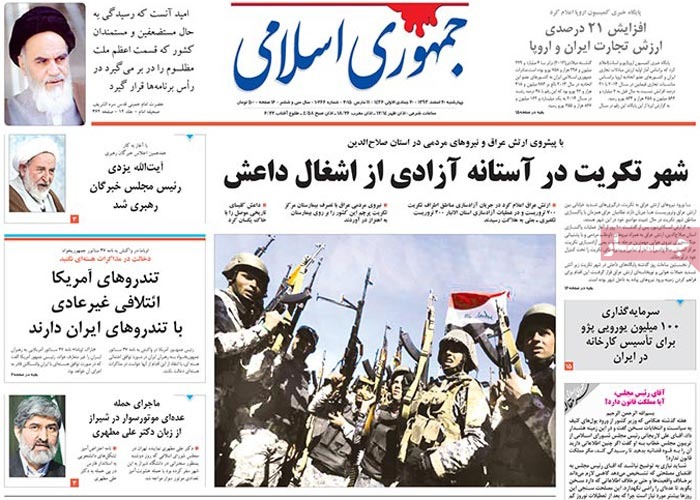
Jomhouri Islami: Iran and Turkmenistan have signed 17 cooperation agreements with the presidents of the two countries in attendance.

Jomhouri Islami: The governor of Fars Province has been summoned to Tehran in connection with a recent attack on Tehran MP Ali Motahari in the provincial capital Shiraz.

The ministers of intelligence and interior have said that those who attacked the parliament deputy in the southern city should be seriously dealt with.

Jomhouri Islami: “Hardliners are committing crimes in Muslim nations in the name of Islamic State,” said Chairman of the Expediency Council Ayatollah Akbar Hashemi Rafsanjani.


A look at Iranian newspaper front pages on March 12


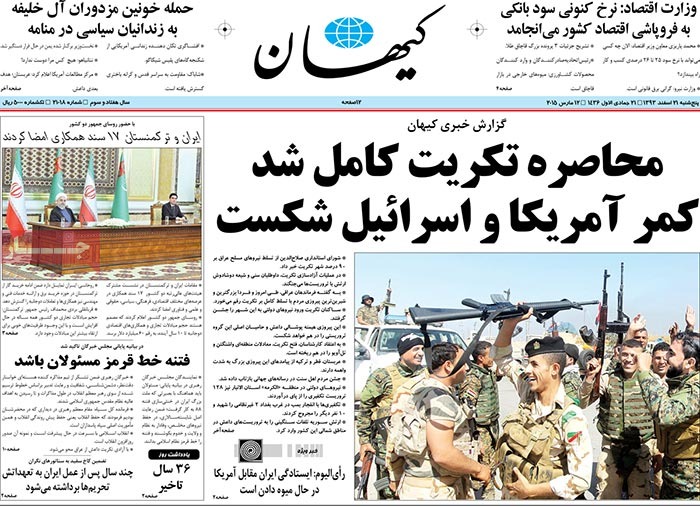
Kayhan: “The current interest rates will lead to the collapse of the economy,” said the Ministry of Economy and Financial Affairs.

Kayhan: Members of the Assembly of Experts have stressed in their final statement that sedition [a reference to post-election unrest in 2009 and those candidates who questioned the election results] should be a red line for the country’s officials.


A look at Iranian newspaper front pages on March 12


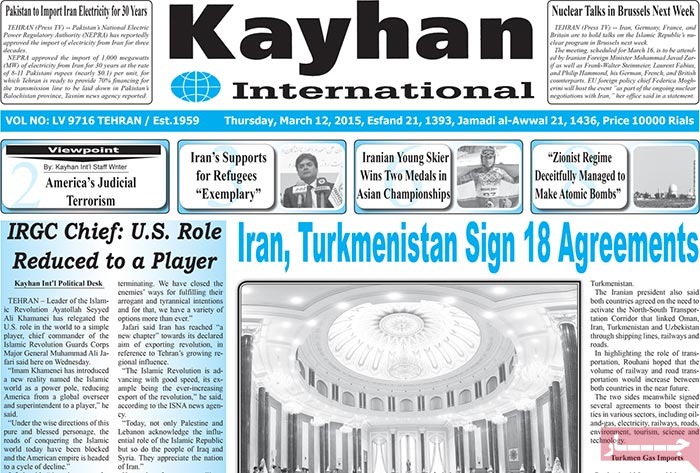
Kayhan International: IRGC Chief: US role reduced to a player


A look at Iranian newspaper front pages on March 12


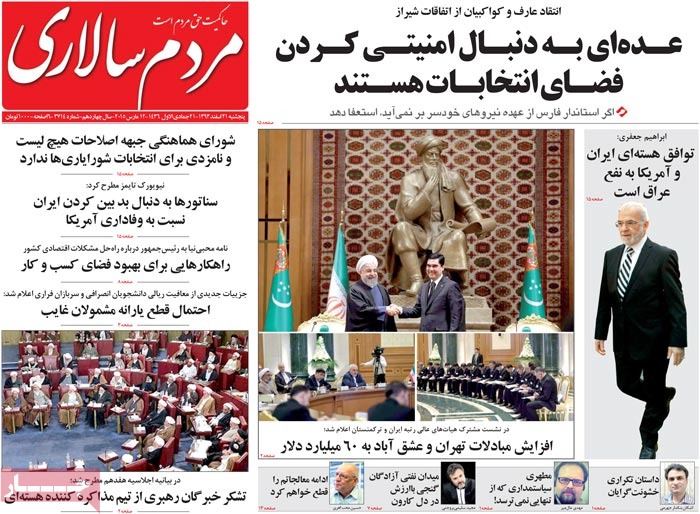
Mardomsalari: The Iraqi foreign minister has said that a nuclear deal between Iran and the United Sates will serve Iraqi interests too.


A look at Iranian newspaper front pages on March 12


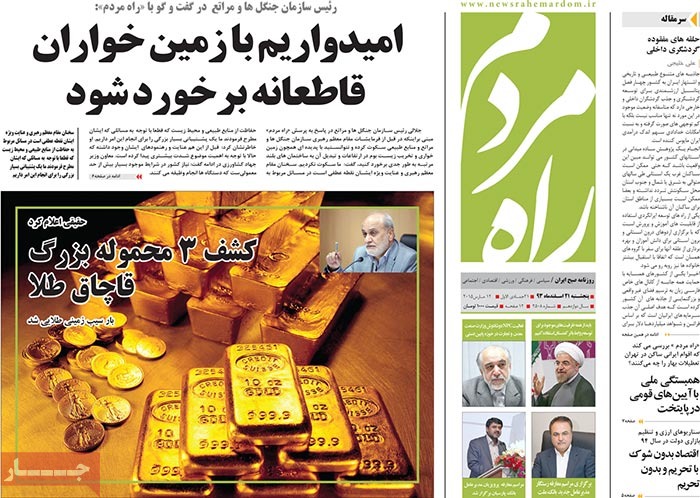
Rah-e Mardom: “We hope land gabbers will be dealt with seriously,” said the head of the Forests, Range and Watershed Management Organization.


A look at Iranian newspaper front pages on March 12


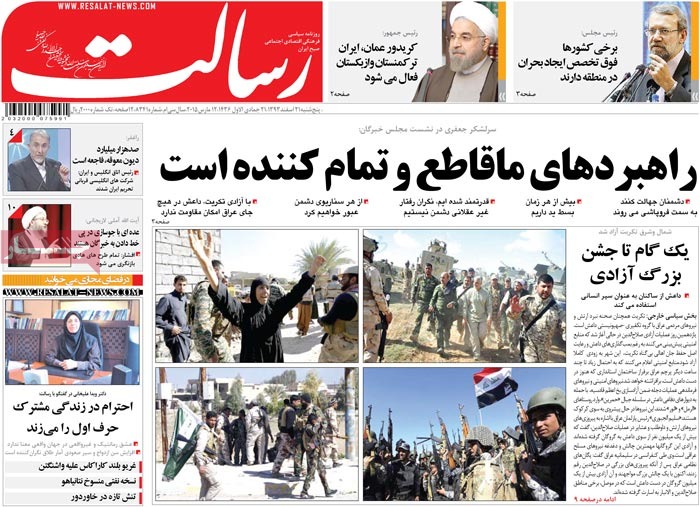
Resalat: “ISIL cannot resist [the Iraqi army’s operation to defeat the terrorist group] anywhere in the country,” said the IRGC commander.


A look at Iranian newspaper front pages on March 12


Rooyesh-e Mellat has quoted Al-Manar [a Lebanese satellite television station] as reporting that a plot to target the Iranian embassy in Lebanon has been foiled.


A look at Iranian newspaper front pages on March 12


Sharq: “An Oman-Iran-Turkmenistan-Uzbekistan corridor will be activated,” said President Rouhani.


A look at Iranian newspaper front pages on March 12


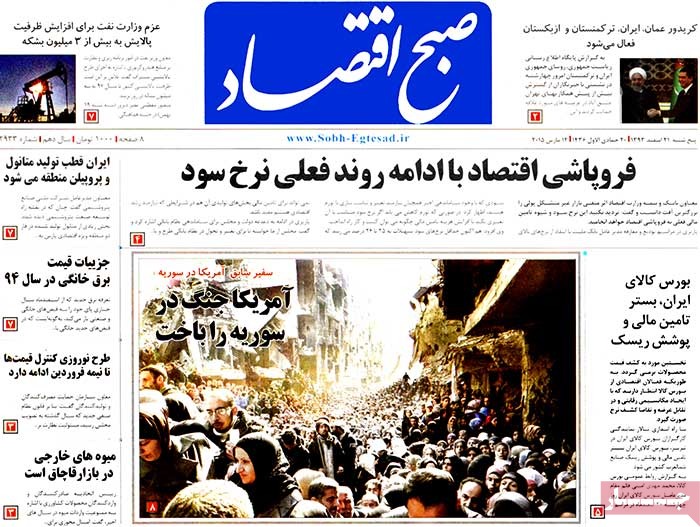
Sobh-e Eghtesad: The Oil Ministry is determined to raise its refining capacity to more than 3 million barrels a day.


A look at Iranian newspaper front pages on March 12


Tehran Times: Republicans admit that Iran letter was a dumb idea.


A look at Iranian newspaper front pages on March 12


Iran stopped ISIL invasion spread: Larijani

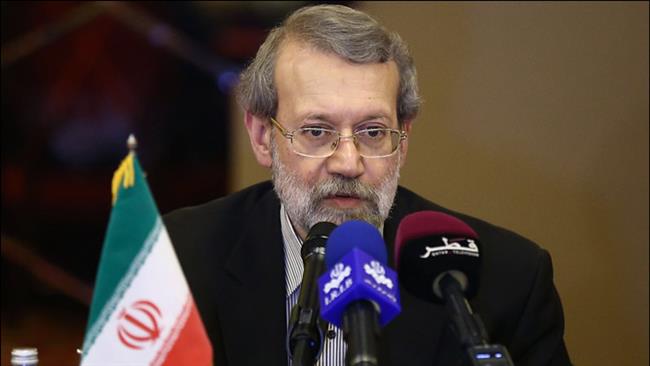
Ali larijani-qatar

Iran’s parliament speaker says the country’s assisting Iraq to fight ISIL prevented the terrorist group from invading other countries in the region.

If Iran had not helped Iraq, ISIL would have invaded countries in the region too, Ali Larijani said at a press conference held at the end of his visit to Qatar on Wednesday.

“Iran stood in the face of ISIL to help Iraq and also the (other) countries of the region, although the main responsibility rested on the shoulders of the people of the country,” he said.

ISIL currently controls parts of Iraq and Syria. It started its campaign of terror in Iraq in early June 2014. The heavily-armed militants took control of Mosul before sweeping through parts of the country’s Sunni Arab heartland.

Iran has repeatedly stressed that it will not interfere militarily in Iraq and Syria, but that it will continue to provide support for both countries against ISIL in the form of defense consultation and humanitarian aid.

Iraq’s President Fuad Masum and First Vice President Nouri al-Maliki have acknowledged Tehran’s assistance in the anti-terror campaign.

Iran-Qatar ties

The visit saw the senior Iranian official meeting with Qatari Emir Sheikh Tamim bin Hamad Al Thani, Foreign Minister Khalid bin Mohammad Al Attiyah, and Chairman of the Qatari Consultative Assembly Mohammed bin Mubarak al-Khulaifi.

Meeting with the Qatari foreign minister, Larijani said, “The Islamic Republic of Iran treats the Qatari emir’s observations regarding the regional issues as positive and is after the expansion of cooperation based on mutual respect.”

“The establishment of security and development in the Middle East region would materialize through the assistance of all the regional countries,” the Iranian official added.

The Qatari official said what the two countries shared was more than what they differed on and that they had to take steps towards the development of bilateral relations based on common ground.

Nuclear talks

Larijani said Iran’s nuclear talks with P5+1 — Britain, France, China, the United States and Russia plus Germany — have featured progress.

However, he said, “We had to prioritize an intellectual perspective of the talks over a business-minded one.”

Iran and P5+1 are seeking to seal a comprehensive nuclear deal by July 1. The two sides have already missed two self-imposed deadlines for inking a final agreement since they signed an interim one in the Swiss city of Geneva in November 2013.

Iran respects Iraq’s sovereign territory

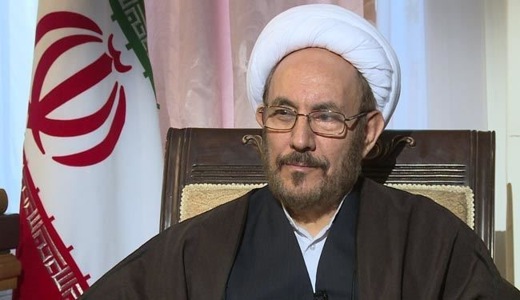
Ali Younesi

Iran’s presidential advisor on ethnic and religious minorities’ affairs, Ali Younesi, has said that Tehran respects the independence and sovereignty of its neighbors, including Iraq.

Younesi made the remark in reaction to comments by the Iraqi Foreign Ministry that had expressed surprise at what he had earlier said.

Iraq’s Foreign Ministry has condemned comments by Younesi saying that Iraq, which is a sovereign state administered by Iraqis, has positive relations with its neighbors including Iran, but does not allow any countries to interfere in its internal affairs.

In response Ali Younesi said in an exclusive interview with AL-ALAM that never does Iran want to damage the sovereignty and independence of its neighbors, especially Iraq, and it does not seek to interfere in their internal affairs.

Recalling his comments on Iran’s cultural similarities with Iraq, Azerbaijan and Afghanistan, Younesi said that we can stop expansionist plans of extra-regional countries thanks to unity among regional countries.

Younesi said what I said meant that cultural, economic and political cooperation between countries in the region (which in the past composed the Persian Empire) could take the place of the ancient empires.

If the evil-doers do not stop what they are doing [right now], ISIL can spread to the whole region, the presidential advisor further said.

He then pointed to the military cooperation between Iran and Iraq and said that today Iraqis themselves have engaged in [military] operations and are fighting with ISIL terrorists, adding Iran helps Iraqis if they ask for consultation and weapons.

He then criticized the all-talks-no-action policy of certain states and said that the Western countries just resort to propaganda and do nothing in practice.
Iran urges activation of North-South Transport Corridor

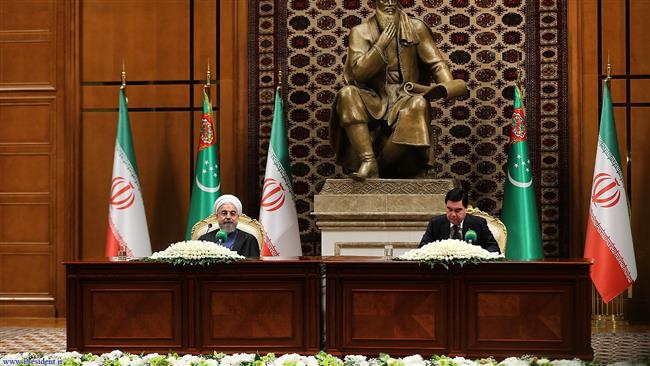
Rouhani-Torkmenistan

Iranian President Hassan Rouhani has called for the further enhancement of trade exchanges along a transportation corridor which connects Oman, Iran, Turkmenistan and Uzbekistan.

Rouhani on Wednesday said more efforts are needed for the major transportation line, known as the North-South Transport Corridor, to be activated as it can serve the business and economic interests of the countries in the region.

“The two countries (of Iran and Turkmenistan) are determined to activate the North-South Corridor, which goes through Oman, Iran, Turkmenistan and Uzbekistan, in order to meet the interests of the all countries in the region,” Rouhani said in a press conference with his Turkmen counterpart, Gurbanguly Berdimuhamedow, in Ashgabat.

Rouhani added that Iran and Turkmenistan have agreed to expand their trade volume from the current $3.7 billion to $60 billion in the next 10 years, adding that the two sides have also decided to increase the volume of their trade via railway and road by three and two folds, respectively, in the same period.

Rouhani also stated that Iran is ready to help Turkmenistan’s industrial enterprises by providing technical assistance and basic materials.

He touched upon the potential for the cooperation of the two countries in the Caspian Sea, saying that Tehran is ready to engage in a joint operation with Ashgabat on marine-related activities including the activation of seaports and shipping lines.

“Iran and Turkmenistan view the Caspian Sea as the sea of peace, friendship and brotherhood,” Rouhani said.

In a meeting with Berdimuhamedow earlier in the day, Iranian President said Iran and Turkmenistan should tap into their potential to improve their bilateral relations.

Leader’s letter marks new chapter in spread of Islamic Revolution

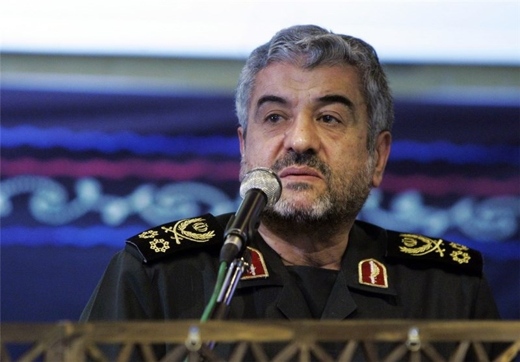
Major General Mohammad Ali Jafari

A recent letter by Supreme Leader of the Islamic Revolution Ayatollah Seyyed Ali Khamenei to the Western youth marked a new chapter in the spread of the Islamic Revolution in the world, said the commander of the Islamic Revolution Guards Corps (IRGC).

“The export of the Islamic Revolution has entered a new stage today,” Major General Mohammad Ali Jafari said in a Wednesday address to Iran’s Assembly of Experts, referring to the Supreme Leader’s letter to the youth in Europe and America as one of its signs.

On January 21, Ayatollah Khamenei wrote a letter asking the European and North American youths not to judge Islam based on the recent terrorist attacks in Paris.

In his letter, the Supreme Leader urged Western youths to try to gain direct and firsthand knowledge of the religion in reaction to the flood of prejudgments and disinformation campaigns.

The commander also highlighted the Islamic Revolution’s regional clout, saying, “the Lebanese Hezbollah and its resistance against… the Zionist regime’s army is a miracle worked by the Islamic Revolution and (an indication of) the Islamic establishment’s powerful influence… in the region.”

Major General Jafari further stressed Iran’s effective advisory role in Iraq and Syria, saying that the IRGC commanders’ advisory assistance helped Iraq cleanse some of its regions of the ISIL terrorists.

“Today, not only Palestine and Lebanon, but also the people of Iraq and Syria acknowledge the Islamic Revolution’s influential role,” the commander added.

The ISIL militants made advances in northern and western Iraq last summer after capturing swaths of northern Syria.

However, a combination of concentrated attacks by the Iraqi military and the popular forces, who rushed to take arms after top Iraqi cleric Ayatollah Ali al-Sistani issued a fatwa calling for fight against the militants, have blunted the edge of the ISIL offensive.

Iran has repeatedly stressed that it will not interfere militarily in Iraq and Syria, but the Islamic Republic continues to provide support to both countries against ISIL in the form of defense consultancy and humanitarian aid.

Gen. Soleimani knows his stuff; the West should abandon adventurism

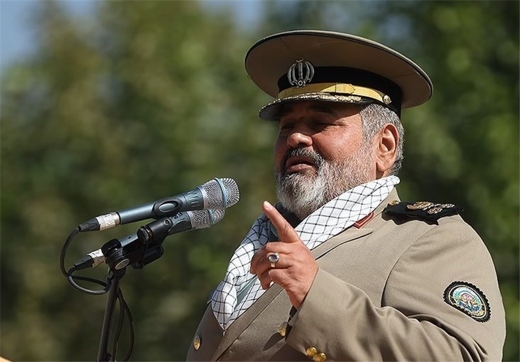
Major General Hassan Firouzabadi
Major General Ghasem Soleimani

Tasnim News Agency has quoted Chief of Staff of the Iranian Armed Forces Major General Hassan Firouzabadi as saying, “Commander of the IRGC’s Quds Force Major General Ghasem Soleimani is in Iraq in an advisory capacity. He is a senior commander who is good at fighting. He knows how to mobilize and guide forces against terrorists.”

Major General Firouzabadi added, “The Iraqis are extremely wise and the reason why services of our military advisors were required in Iraq was a breakdown of the Iraqi military order for which the Americans are to blame.”

When asked whether Iran is planning to have military presence in neighboring countries in case of an escalation, the general said, “Definitely, we won’t have a military presence. It’s up to nations to stand up for their own rights, so it’s not acceptable to send armed forces to other countries under the pretext of defense or establishment of peace. That’s why we have expressed opposition to what the Americans are doing.”
The top general added, “Every individual is morally and religiously duty-bound to make sacrifices in defense of his homeland.”

On Palestine, he said, “Jews who have formed a government in occupied territories are usurpers and cannot stay there. Holding democratic elections to ensure people’s right to self-determination is the way to settle the dispute. After democratic elections, Israeli Zionists can decide whether they want to stay or leave; basically it’s not a complicated issue to make so much fuss about.”
On Iran’s stance in nuclear talks, Firouzabadi said, “Time and again, we have said that we are not in pursuit of nuclear weapons. Everyone knows well the world will depend on nuclear energy when oil reserves are finished. The world powers want to keep us dependent and impoverished.”

He concluded, “It’s to the benefit of the West to come to an agreement with Iran and abandon its adventurism and plots. The West should let Iran develop and defend its neighbors.”

Iran, Turkmenistan should use potential to boost ties: Rouhani

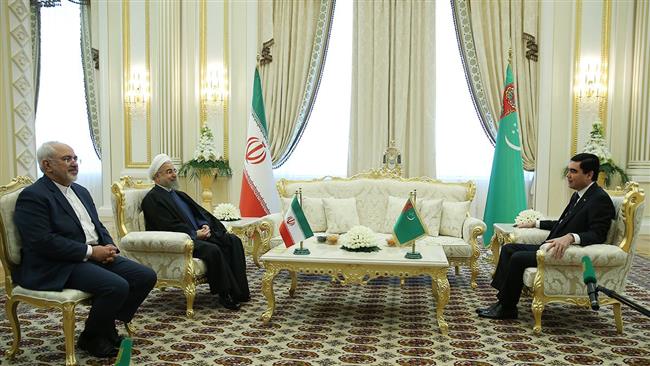
Iran-Turkmenistan-Rouhani-Zarif

Iranian President Hassan Rouhani says the Islamic Republic and Turkmenistan should tap into their potential to improve their bilateral relations.

“The officials of the two countries are well aware of the significance of very good bilateral relations, and we believe that we should utilize all existing potential to develop the ties,” Rouhani said during a meeting with his Turkmen counterpart Gurbanguly Berdimuhamedow in the Turkmen capital of Ashgabat on Wednesday.

Rouhani expressed hope that his talks with Turkmen officials during his visit to the Central Asian country would contribute to the promotion of reciprocal ties.

He welcomed his Turkmen counterpart’s invitation to attend a peace conference in the Central Asian country in late 2015 and said Iran always supports Turkmenistan’s policy of peace, friendship and impartiality.

The Turkmen president, for his part, praised friendly ties between Tehran and Ashgabat, saying the two countries have maintained good ties. He welcomed the further expansion of bilateral cooperation in different fields.

Stressing that the two neighboring countries enjoy common ground on the political front, Berdimuhamedow said that the Iranian and Turkmen governments have been working to contribute to global peace and security.

He also called for further enhancement of ties, particularly in the economic sector.

Heading a delegation, President Rouhani arrived in Ashgabat on Tuesday night on a two-day visit to discuss the expansion of ties between Tehran and Ashgabat.

A look at Iranian newspaper front pages on March 11

Iranian Newspapers Headlines

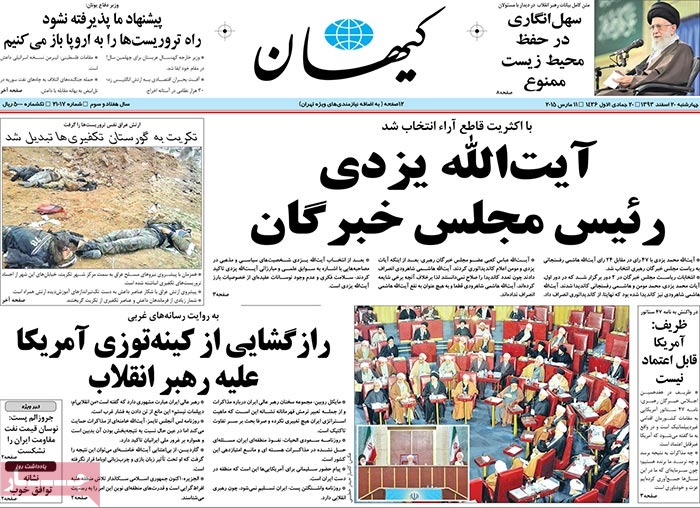
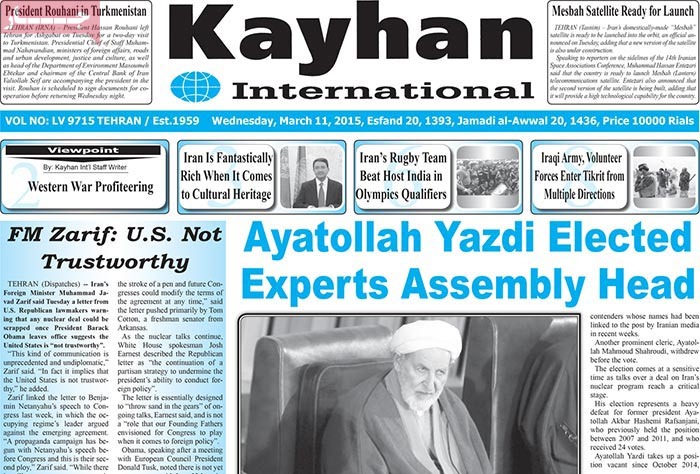
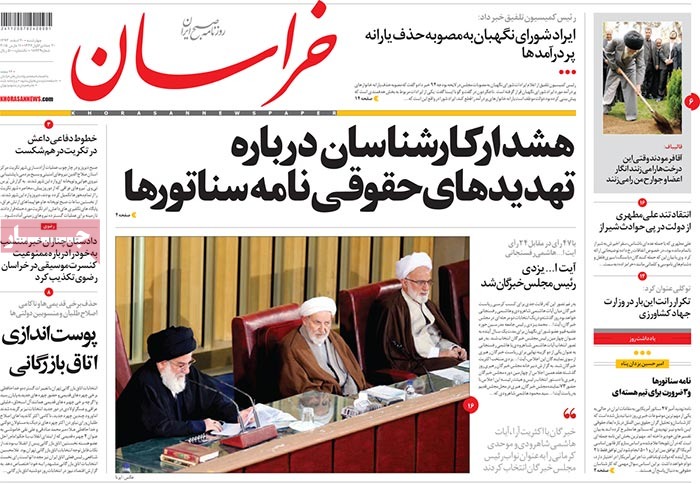
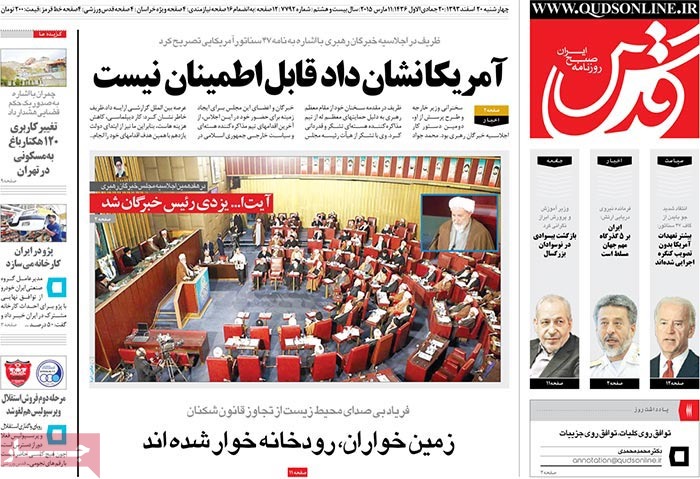
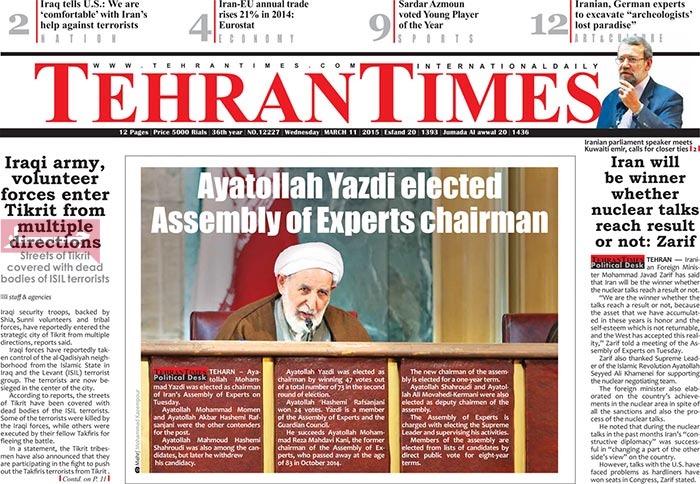
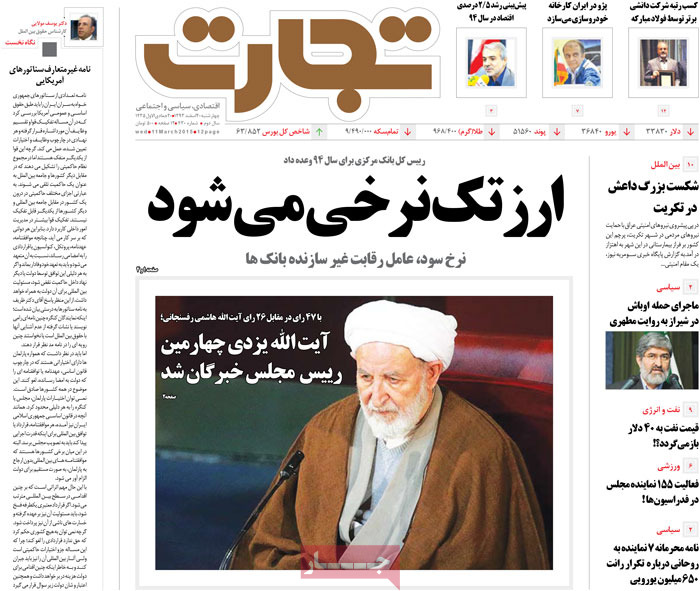
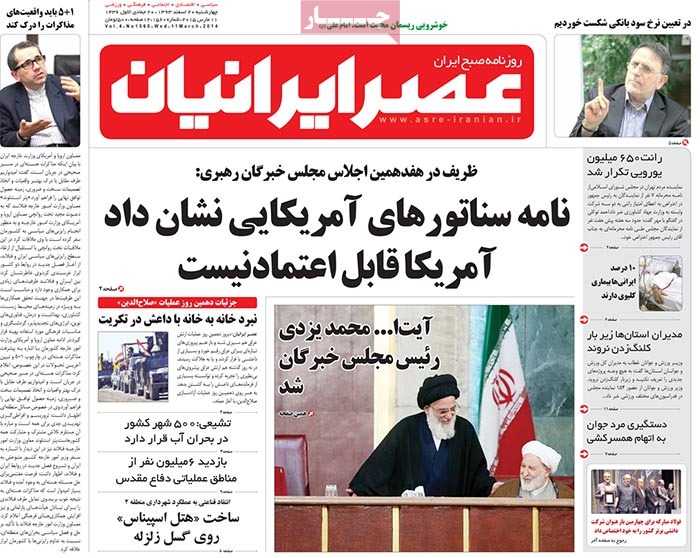
The election of Ayatollah Mohammad Yazdi as chairman of the Assembly of Experts dominated the front pages of Iranian dailies on Wednesday. Prediction by the government spokesman that the country’s economy will grow 2.5 percent next year was also in the news. Remarks by the foreign minister in a session of the Assembly of Experts on nuclear talks came under the spotlight too.


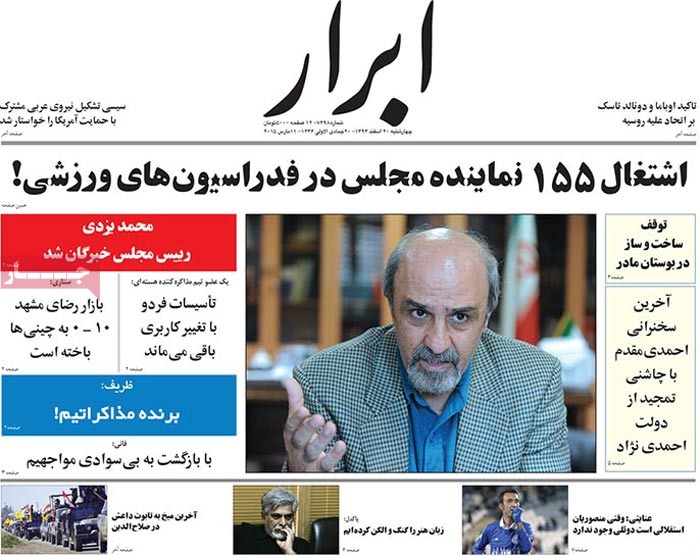
Abrar: As many as 155 Iranian MPs are working in sport federations.

[The minister of sports and youth made the remark, taking a swipe at members of parliament who are engaged in sporting activities.]


A look at Iranian newspaper front pages on March 11


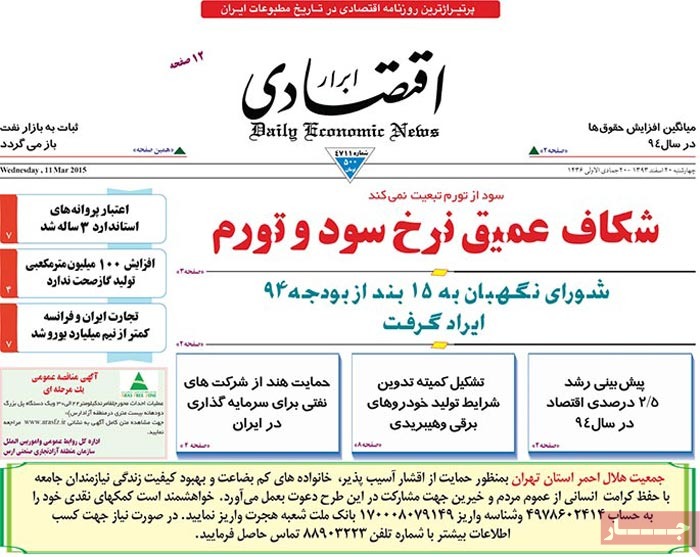
Abrar-e Eghtesadi: India lends support to oil companies seeking to invest in Iran.


A look at Iranian newspaper front pages on March 11


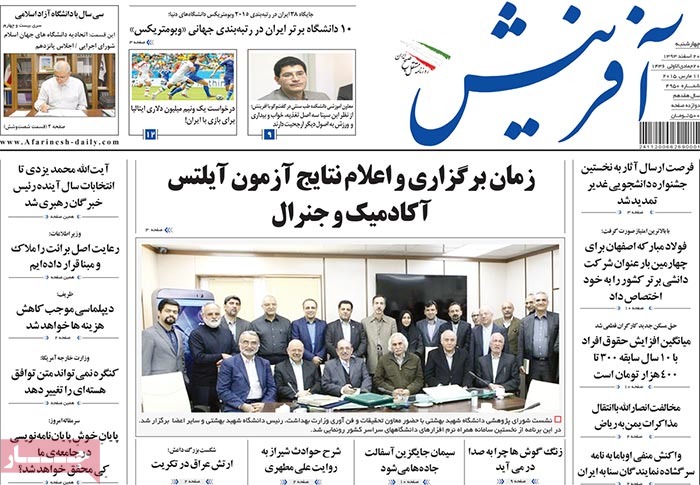
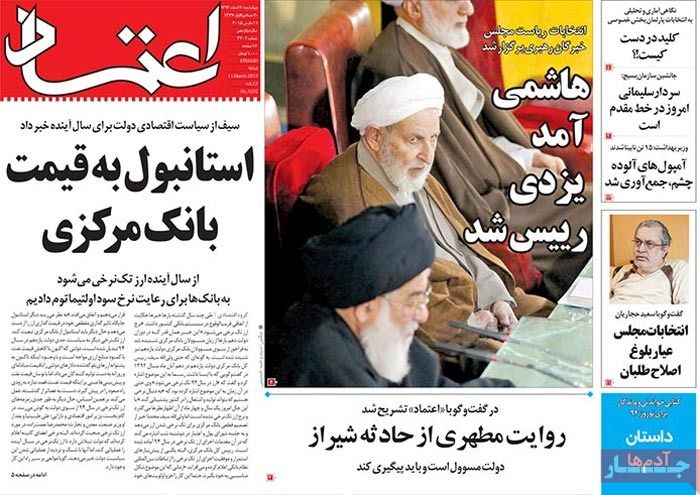
Afarinesh: Ayatollah Mohammad Yazdi was elected Chairman of the Expediency Council for one year.


A look at Iranian newspaper front pages on March 11


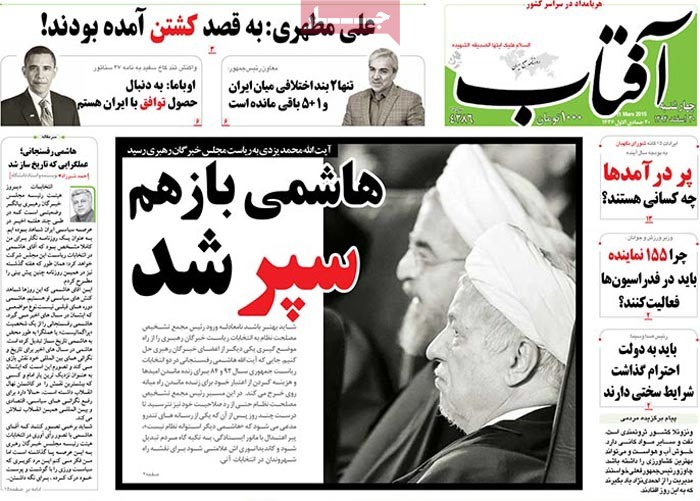
Aftab-e Yazd: “We should respect government officials. They are going through tough times,” said the president of Islamic Republic of Iran Broadcasting.


A look at Iranian newspaper front pages on March 11


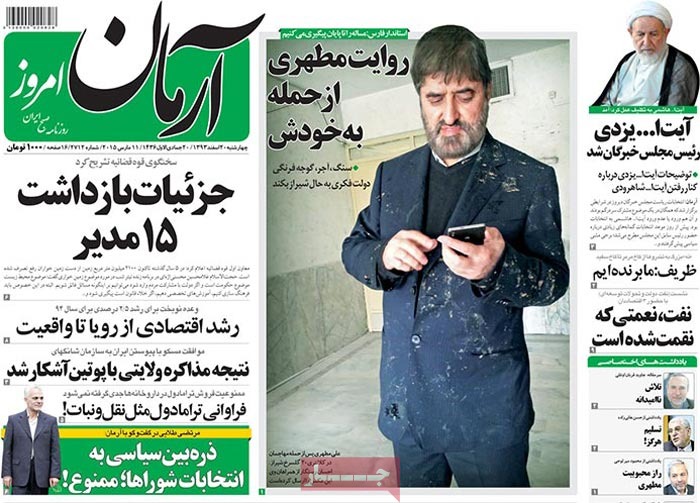
Arman-e Emrooz: Moscow has agreed to Iran joining the Shanghai Cooperation Organization.

Iranian president’s special envoy to Russia, Ali Akbar Velayati, made the remark about his meeting with President Putin.


A look at Iranian newspaper front pages on March 11


Asr-e Iranian: “We have failed in fixing the interest rates,” said Valiollah Seif, the governor of the Central Bank of Iran.


A look at Iranian newspaper front pages on March 11


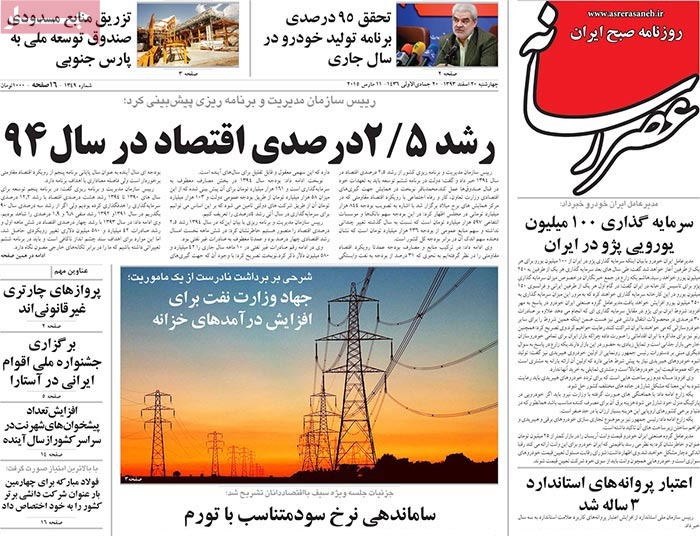
Asr-e Rasaneh: “Peugeot [a French car giant] is to invest €100 million in Iran,” announced the head of Iran Khodro Industrial Group.


A look at Iranian newspaper front pages on March 11


Asrar: “Apparently they wanted to kill or amputate me,” said Ali Motahari, a Tehran MP, about unknown assailants who recently targeted him in Shiraz.

Asrar: “Iran is expected to post a 2.5 percent economic growth next year [starting March 21, 2015],” said the government spokesman.


A look at Iranian newspaper front pages on March 11


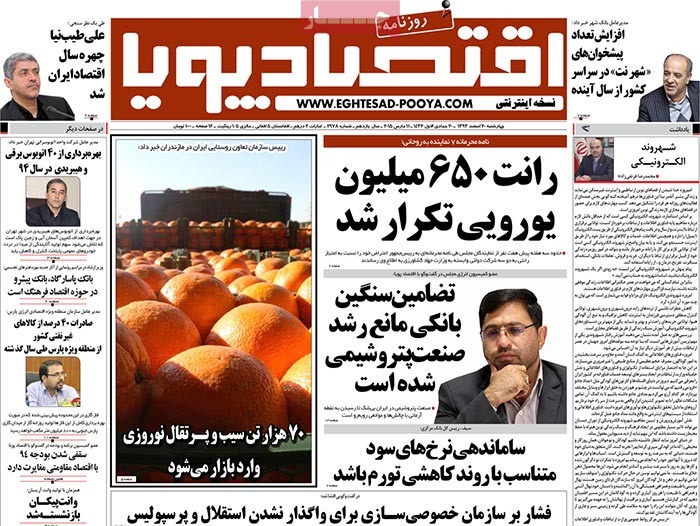
Eghtesad-e Pooya: ” Pars Special Energy Economic Zone exported 40 percent of the country’s non-oil items last year [ending March 2014],” said the managing director of the zone on the Persian Gulf.


A look at Iranian newspaper front pages on March 11


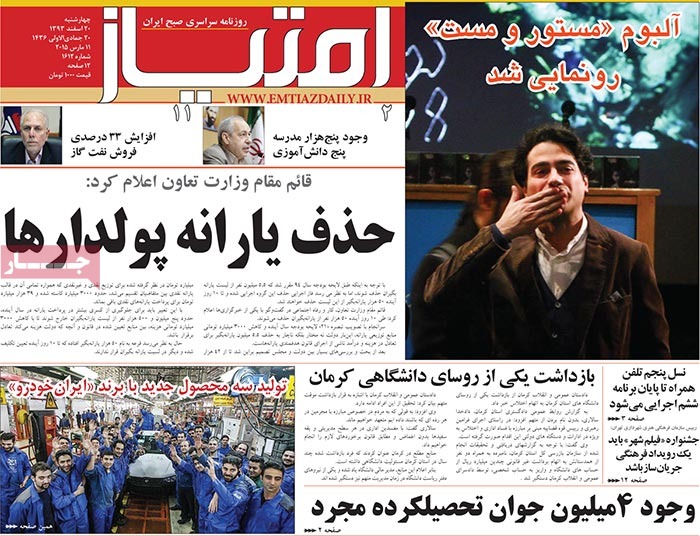
Emtiaz: “High-income families will stop to get monthly cash subsidies,” said the deputy minister of cooperatives, labor and social welfare.
A look at Iranian newspaper front pages on March 11


Etemad: “Contaminated ampoules were withdrawn from the market,” said the health minister, adding that 15 people lost their vision as a result of taking the fake eye drug.


A look at Iranian newspaper front pages on March 11


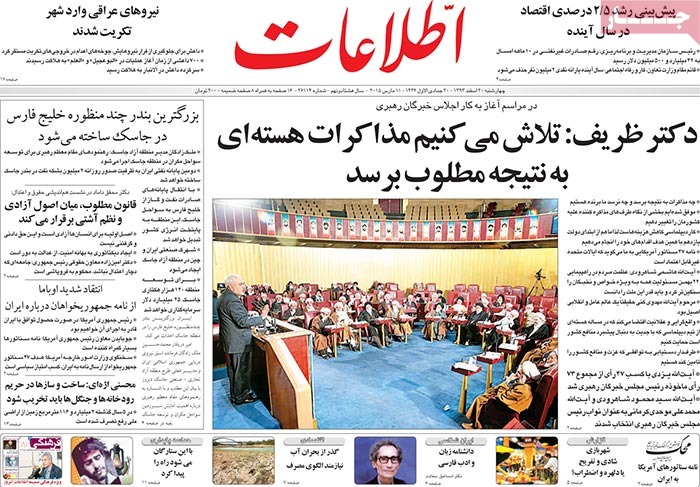
Ettela’at: “We try to help nuclear talks produce satisfactory results.”

Foreign Minister Mohammad Javad Zarif made the remark in the opening session of the Assembly of Experts.

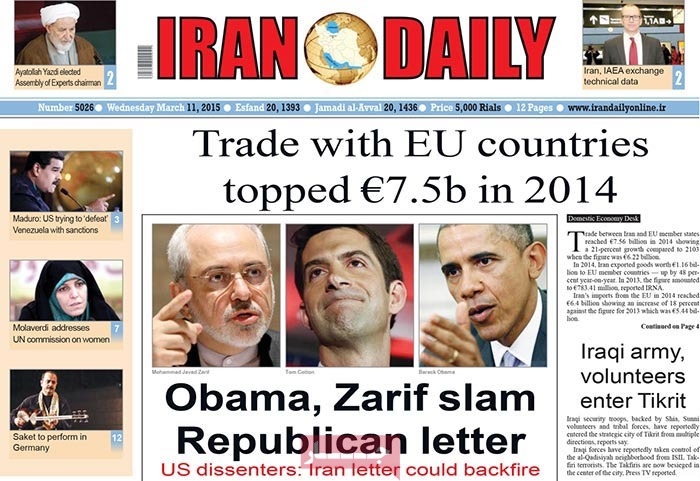
Ettela’at: President Obama has strongly slammed Republicans for their letter to Iranian officials.


A look at Iranian newspaper front pages on March 11


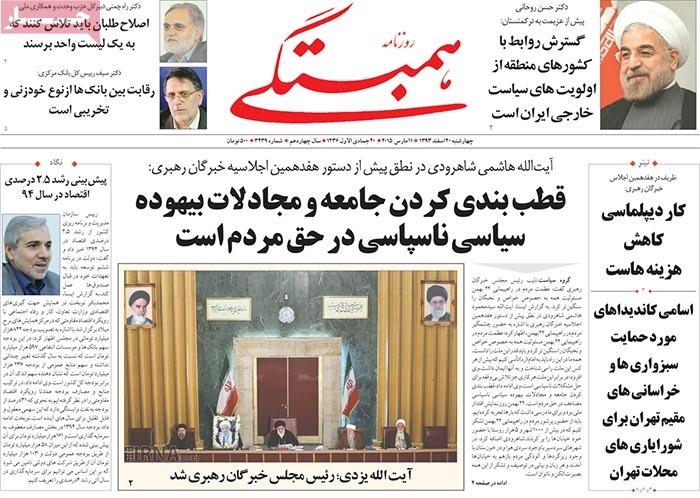
Hambastegi: “Expansion of ties with regional countries is one of the top priorities of Iran’s foreign policy,” said President Rouhani before leaving for Turkmenistan.


A look at Iranian newspaper front pages on March 11


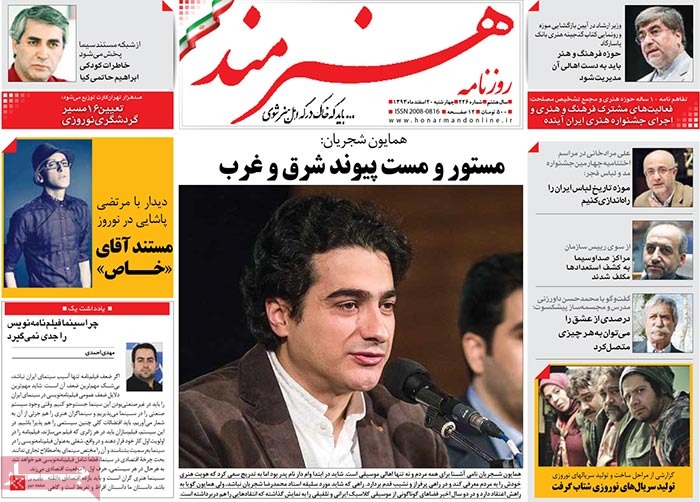
Honarmand: “Mastoor-o Mast links the East and the West,” said Homayoon Shajarian about his new album.


A look at Iranian newspaper front pages on March 11


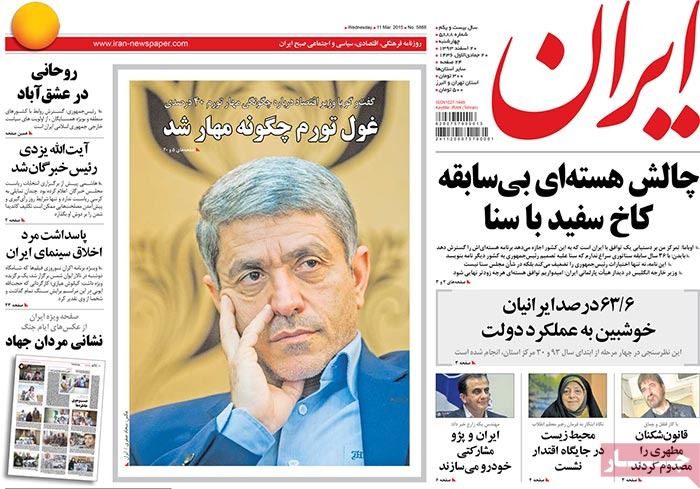
Iran: Some 63.6 percent of Iranians are optimistic about the government performance.

This is the result of a poll conducted in four stages in 30 provincial capitals.


A look at Iranian newspaper front pages on March 11


Iran Daily: Trade with EU countries topped €7.5 billion in 2014.


A look at Iranian newspaper front pages on March 11


Jomhouri Islami: The European Commission’s news website has announced that the value of trade between Europe and Iran has increased 21 percent.


A look at Iranian newspaper front pages on March 11


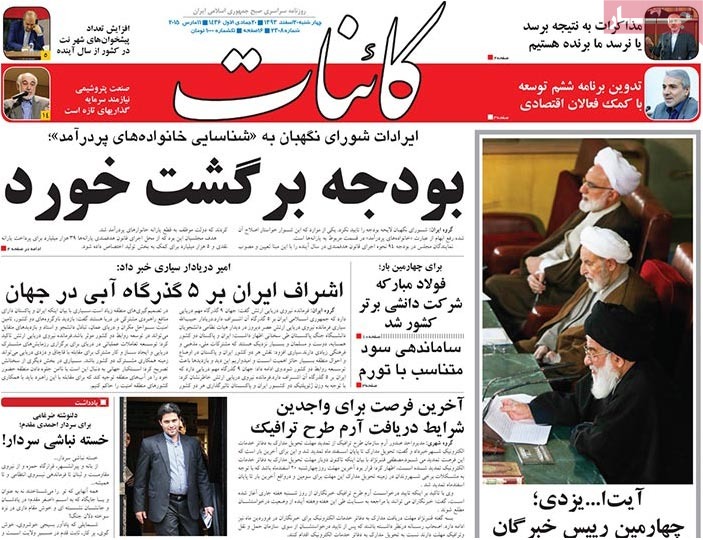
Kaenat: The budget bill was returned to parliament; the Guardian Council has found fault with [an article that deals with ways of] identifying high-income families.


A look at Iranian newspaper front pages on March 11


Kayhan: “If our proposal is rejected, Greece will open Europe’s doors to terrorists,” said the Greek defense minister.

[Athens has asked Europe to find a solution to the Greek debt crisis.]

Kayhan: The Iraqi army took the breath of terrorists; Tikrit turned into the graveyard of Takfiri terrorists.


A look at Iranian newspaper front pages on March 11


Kayhan International: Iran is fantastically rich when it comes to cultural heritage.


A look at Iranian newspaper front pages on March 11


Khorasan: “The Guardian Council has faulted a parliamentary decision which calls for the removal of the cash subsidies of high-income people,” said the chairman of parliament’s Budget Committee.


A look at Iranian newspaper front pages on March 11


Qods: “The US showed that it is not trustworthy,” said the foreign minister in reaction to the US Senators’ letter to Iranian officials.


A look at Iranian newspaper front pages on March 11


Sayeh: “The Education Ministry should sow the seeds of learning in the country,” said President Rouhani.


A look at Iranian newspaper front pages on March 11


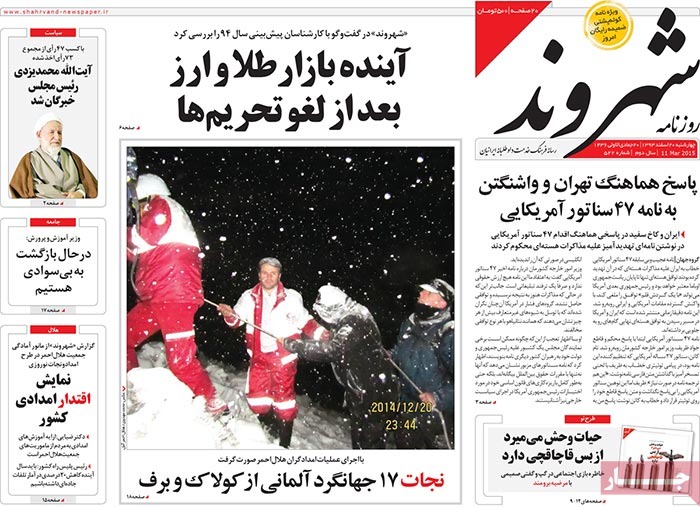
Shahrvand: A coordinated response by Tehran and Washington to 47 US Senators

Shahrvand: “We are moving back toward illiteracy,” said the education minister.


A look at Iranian newspaper front pages on March 11


Sharq: “Common sense dictates that we should support the country’s diplomacy team [in nuclear talks with P5+1],” said Ayatollah Mahmoud Hashemi Shahroudi, a member of the Assembly of Experts.

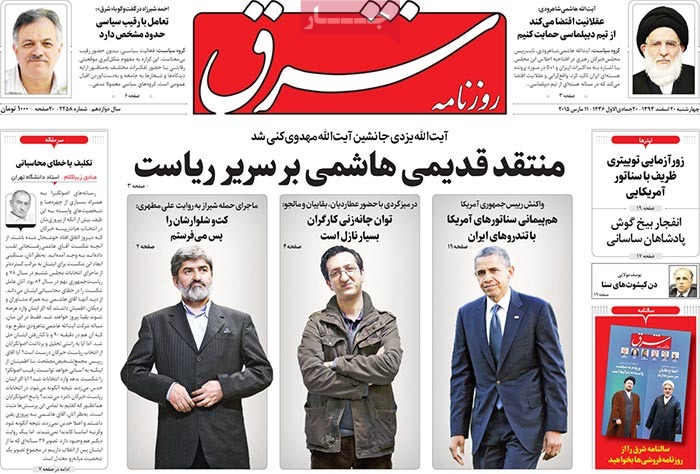
Sharq: A former critic of Hashemi [Rafsanjani] takes the chairmanship [of the Assembly of Experts]; Ayatollah Yazdi replaced the late Ayatollah Mahdavi Kani.


A look at Iranian newspaper front pages on March 11


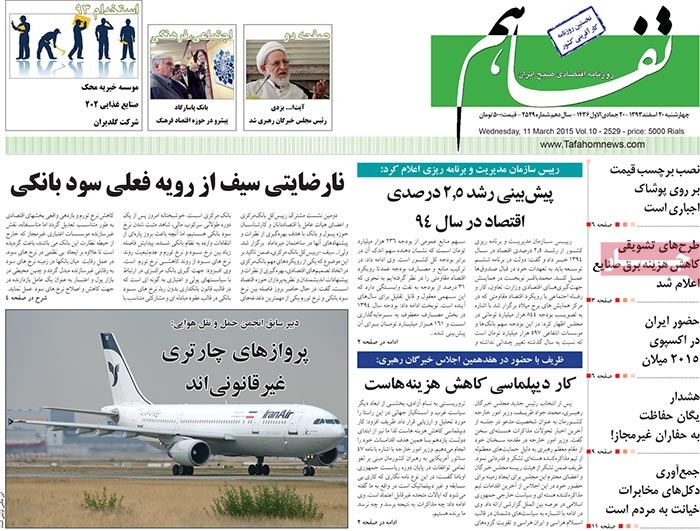
Tafahom: “Diplomacy is there to reduce costs,” said FM Zarif in the Assembly of Expert.


A look at Iranian newspaper front pages on March 11


Tehran Times: Iraqi army, volunteer forces enter Tikrit from multiple directions.


A look at Iranian newspaper front pages on March 11


Tejarat: “We are planning to unify the foreign exchange rate next year,” the governor of the Central Bank of Iran promised.


A look at Iranian newspaper front pages on March 11


Zarif-Kerry to meet in Lausanne next week

Iran-US-IranTalks

Iranian and US nuclear negotiators are to conduct concise talks in the Swiss city of Lausanne next week.

They will also have a short visit to Brussels for discussions.

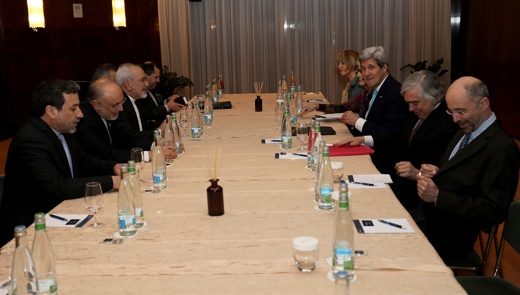
The Iranian team will be led by Foreign Minister Mohammad Javad Zarif who is going to hold talks with his American counterpart John Kerry.

They are planning to resume the talks and pick up where they left off in Monteux, Switzerland last week. A European Union (EU) representative will also attend the talks.

Zarif, accompanied by his deputies Abbas Araghchi and Majid Takht Ravanchi will be hosted by the EU Foreign Policy Chief Federica Mogherini during his brief Brussels visit.

Mogherini has invited Foreign Ministers of Iran, Britain, France and Germany to Brussels.

Zarif will return to Laussane then to resume talks with US nuclear delegation.

All sides in Iran’s nuclear negotiation process hope to clinch a political agreement by the end of March and a comprehensive accord by July to finally end the 12-year nuclear row.