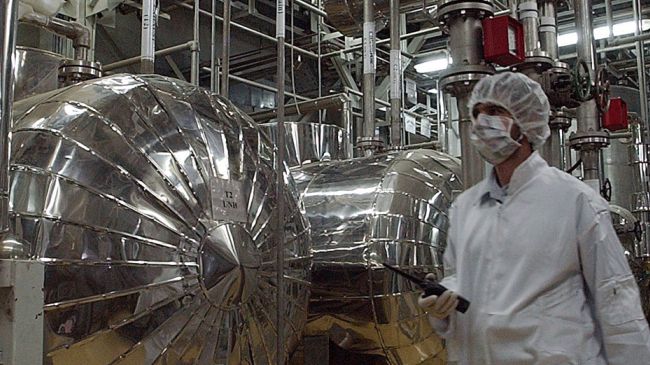
The Islamic Republic of Iran has played down reports that it has agreed to stop injecting gas into its first-generation centrifuges.
Iranian Foreign Ministry Spokesperson Marzieh Afkham said on Tuesday that Iran began testing the IR-5 centrifuges before it reached an interim nuclear deal with P5+1 in Geneva last November, adding the tests have continued after the agreement as well.
Under a deal reached between Iran and the five permanent members of the UN Security Council – the US, France, Britain, Russia and China – plus Germany, the six countries undertook to provide Tehran with some sanctions relief in exchange for Tehran agreeing to limit certain aspects of its nuclear activities.
Afkham said Tehran once again tested the IR-5 centrifuges in March in line with nuclear research agenda of the Atomic Energy Organization of Iran.
“All reports by the [International Atomic Energy] Agency over the past seven months verified the Islamic Republic of Iran’s commitment to the Geneva deal and no case has been reported about any violation of the agreement,” the Iranian spokeswoman added.
She described such reports as media propaganda and said Iran would test the centrifuges whenever it deems necessary.
Afkham’s remarks came after the Washington-based Institute for Science and International Security (ISIS) claimed that Iran may have violated the interim deal by starting to inject natural uranium gas into its IR-5 centrifuges.
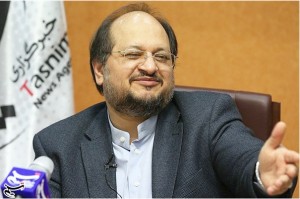
Tehran and Baghdad are planning to establish a joint bank to facilitate trade transactions and money transferring between the two sides, Iranian Vice President Mohammad Shariatmadari announced on Tuesday.
“The Iran-Iraq bank will be established with the help of the private sector,” Shariatmadari said, addressing the First International Iran-Iraq Trade Conference in Tehran today.
He reiterated that Iran and Iraq have strategic relations, and said, “The two countries’ ties have moved on an upward trend since the coming to power of the Islamic government in Iraq to the extent that the volume of Iran-Iraq trade balance has increased by more than 20 times, while there is still a capacity for increasing their trade balance to $30 million.”
Last month, Head of the Trade Promotion Organization of Iran Valiollah Afkhamirad announced that Iran and Iraq have signed a trade protocol for the promotion of cooperation between the two countries.
“This protocol has 15 paragraphs and it has been signed to facilitate trade transactions between Iran and Iraq,” told Fars News Agency at the time.
He pointed to the recent visit of Iraqi Trade Minister Mohammed Abdul Karim to Iran and his meetings with senior Iranian officials, and said, “The Iraqi minister discussed the problems Iranian businessmen face for exporting their goods to Iraq.”
Afkhamirad, meantime, pointed to the recent visit of Qatari Economy Minister Abdullah bin Jassim al-Thani to Iran and said, “The Iranian and Qatari officials discussed facilitating expansion of trade exchanges between the two countries’ businessmen.”
Iran and Iraq have enjoyed growing ties ever since the overthrow of the former Iraqi dictator, Saddam Hussein, during the 2003 US invasion of the Muslim country.
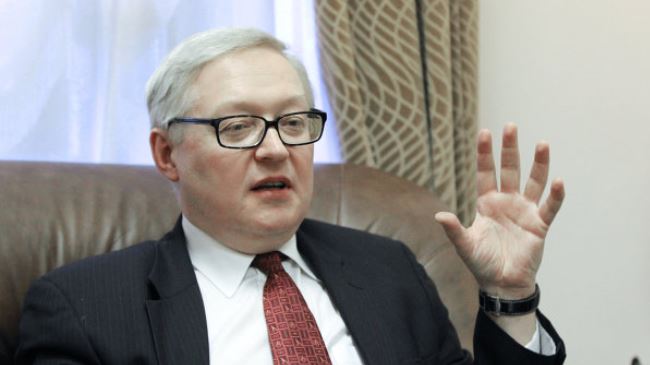
Russia’s deputy foreign minister says he is “reasonably optimistic” that Iran and P5+1 can reach a comprehensive nuclear deal before the November 24 deadline despite the remaining disagreements.
“The glass is not half empty. We are reasonably optimistic but not to an extent that we are sure that this agreement can be achieved. It is really a unique and never-tried-before effort,” said Sergei Ryabkov in the Omani capital city of Muscat on Tuesday.
Ryabkov added that Russia is “fully committed” to the talks between Iran and the six world powers and is doing its best to help the negotiations end in an agreement.
“Russia nationally has done a lot to facilitate progress. Russia is very interested in achieving this agreement and very wrong are those who believe that — for whatever reasons — because of our complications with the West, with the US, we are now less interested in this agreement. This is not true, we are fully committed and we are working towards this end,” the Russian official stated.
Top officials from Iran and P5+1 wrapped up talks over Iran’s nuclear program in Muscat on Tuesday.
The meeting was led by Iran’s Foreign Minister Mohammad Javad Zarif and European Union’s envoy, Catherine Ashton, who represents the six countries in the talks.
Sources close to the Iranian negotiating team say the main stumbling block in the way of resolving the Western dispute over Iran’s nuclear energy program remains to be the removal of all the bans imposed on the country, and not the number of centrifuges or the level of uranium enrichment.
Tehran wants the sanctions entirely lifted while Washington, under pressure from the pro-Israeli lobby, insists that at least the UN-imposed sanctions should remain in place.
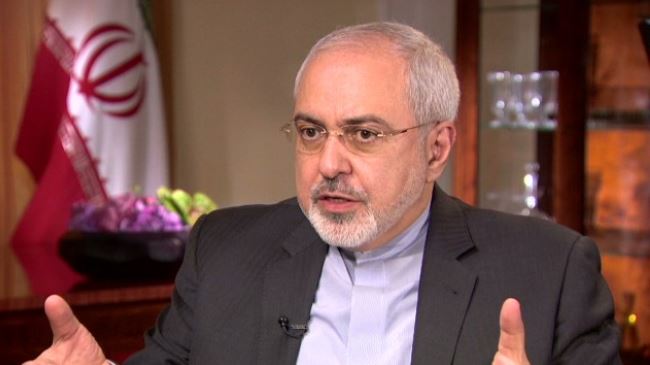
Iran’s foreign minister says the country is serious in its pursuit of the resolution of the “artificial crisis” about its nuclear energy program.
“Iran is seriously after the resolution of the artificial nuclear crisis and has entered negotiation with absolute good will,” Mohammad Javad Zarif said in a meeting with Oman’s Deputy Prime Minister Sayyid Fahd bin Mahmoud Al Said in Muscat on Tuesday.
Muscat began hosting three days of crucial negotiations over the Islamic Republic’s nuclear energy program on Sunday.
On Monday, Zarif, US Secretary of State John Kerry and European Union envoy Catherine Ashton wrapped up two days of discussions in the Omani capital. On Tuesday, top officials from Iran and P5+1 wrapped up the talks, which were led by Zarif and Ashton.
The Muscat meetings discussed the outstanding issues that must be resolved before the conclusion of a final deal on Iran’s nuclear energy program.
On the top of the agenda were the volume of Iran’s uranium enrichment and the timetable for the removal of sanctions. The next round of nuclear talks between Iran and the world powers is set to be held in the Austrian capital Vienna on November 18-24.
“The issue of sanctions and the issues surrounding it have had no effect on the Iranian nation’s will… to possess peaceful nuclear energy,” said the Iranian top diplomat.
“Some countries have fallen prey to miscalculation owing to wrong analysis.”
The Omani official termed the holding of the nuclear negotiations and trying to reach a solution as intelligent and judicious.
“Oman hopes this trend leads to good results,” he said, adding that “should such a thing happen, its positive effects would be in favor of all.”
The two sides also expressed satisfaction with the trend of bilateral relations, described the capacity of the bilateral cooperation as vast and diverse, and laid emphasis on the two sides’ will to improve bilateral ties.
They also discussed the latest developments in the region.
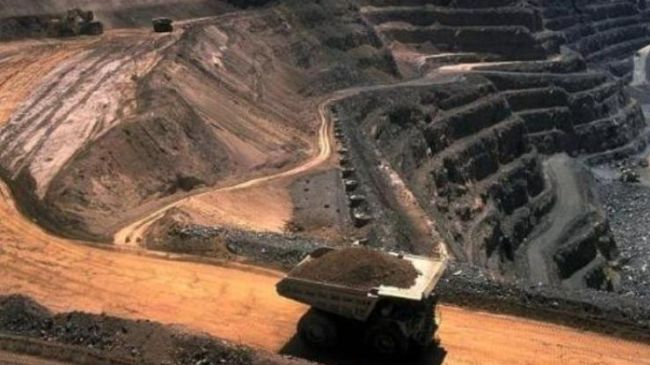
Presence of foreign investors in the country’s mining sector will result in a decline in exports of unprocessed materials and a hike in government’s tax revenues, SMT, a Tehran-based daily, quoted Seyyed Mohammad Bayatian, a member of parliament’s Industries and Mining Committee, as saying.
By levying high tariffs and enforcing tough regulations, parliament and government seek to encourage mine owners to process their products, he said.
Bayatian, who represents Bijar in the Islamic Consultative Assembly, went on to say that heavier tariffs will also push up added value, create jobs and prevent exports of raw materials.
Of course, tax incentives and provision of low-interest loans to mine owners should be part of government plans to encourage the industry to process materials before putting them for sale on the market, he concluded.
There is enormous potential for Azerbaijan to invest in copper and zinc mines located in Iran’s border provinces, according to SMT, a daily, Azerbaijan’s Trend News Agency quoted Ali Alilu, a member of Parliament’s Industries and Mining Committee, as saying.
He further said the stage is set for Azeri investment in Shabestar mines, [in Iran’s East Azerbaijan Province] Turkey and Russia have already invested in.
Recalling the attention the Iranian government has begun to pay to the mining sector of late, the MP said there are additional opportunities for foreign investment in iron ore reserves in Yazd, Kerman, and Kurdistan provinces and in coal mines in Khorasan Razavi.
“Sanandaj, the capital of Kurdistan Province, is to play host to a national gathering of senior officials of the Ministry of Industry, Mines and Trade, including Minister Mohammad Reza Nematzadeh,” SMT, a daily, quoted Head of Kurdistan Provincial Industry, Mines, and Trade Department Mohammad Darehvazmi as saying on November 11.
At the 2-day meeting, opening on November 12, structural matters about the ministry as well as new domestic and foreign trade policies will be discussed, said Darehvazmi.
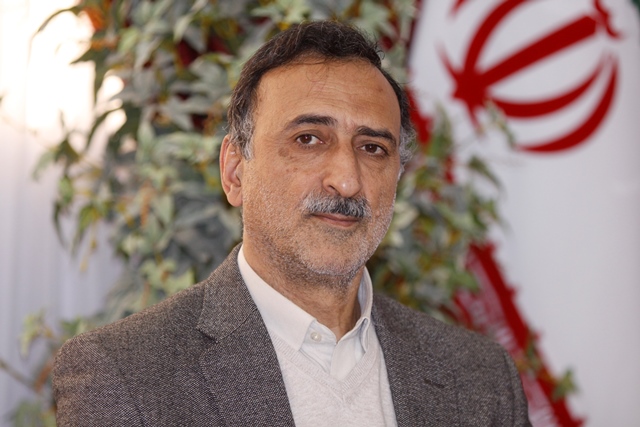
President Hassan Rouhani in a letter to parliament introduced Dr. Fakhreddin Ahmadi Danesh-Ashtiani as his new nominee to lead the Ministry of Science, Research and Technology, the Islamic Republic News Agency (IRNA) reported on November 11.
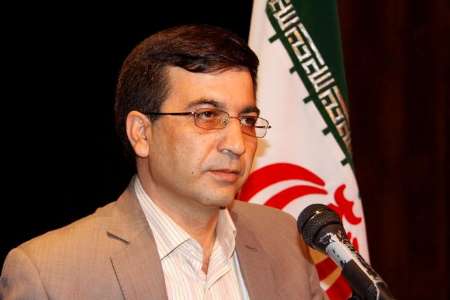
Dr. Fakhreddin Ahmadi Danesh-Ashtiani
“According to parliamentary regulations, the Islamic Consultative Assembly has 10 days to analyze the plans of the proposed minister and organize a vote of confidence which is most likely to be held on either November 18 or 19,” said Vice President for Parliamentary Affairs Majid Nasirpour.
Ahmadi Danesh-Ashtiani was deputy science minister at the helm of the planning and finance departments under President Khatami.
Earlier the chamber failed to vote for Mahmoud Nili Ahmadabadi, a replacement candidate introduced by the government of Prudence and Hope to take over the science ministry after Reza Faraji-Dana was impeached on October 29, ten months after the Islamic Consultative Assembly endorsed him for the portfolio.
Ja’far Mili-Monfared, President Rouhani’s first pick for the job, failed to garner a vote of confidence from the chamber too.
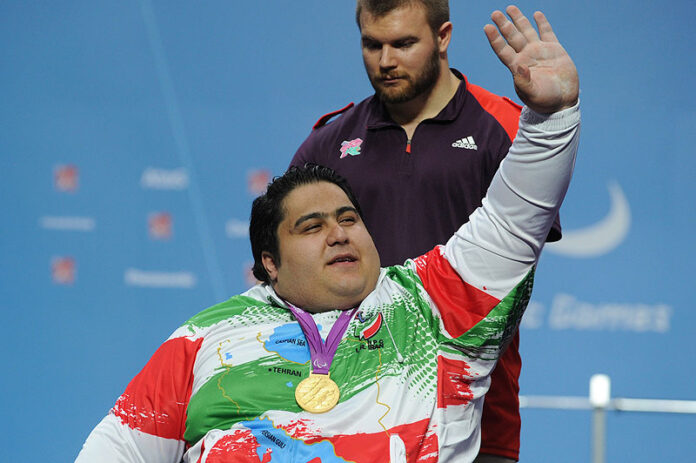
In a poll conducted by the International Paralympic Committee (IPC) Iran’s Siamand Rahman, the world’s strongest Paralympian, secured more than 60 percent of the public vote to become October’s ‘Athlete of the Month, the Islamic Republic News Agency (IRNA) reported on November 11.
The gold medalist in Men’s +107 kg in the 2014 Asian Para Games in South Korea garnered 63.9 percent of the vote.
His fellow Iranian Sareh Javanmardi, a female Paralympic shooter, placed second with 34.3 percent of the vote.
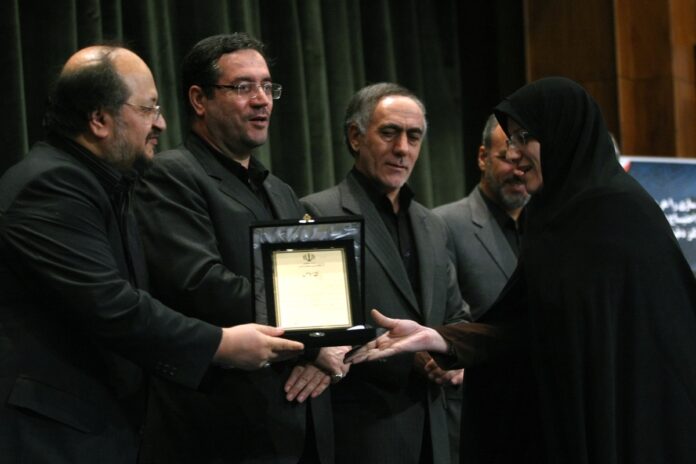
A ceremony to celebrate National Quality Day in Iran has failed to pick a top unit this year, as it has been the case during the past [few] years. The ceremony attended by the health minister, a number of MPs and a host of university professors as well as producers and industrialists evaluated the performance of over 100 production units and organizations and found only two of them eligible for a bronze statuette.
The participants underlined a special look at quality and the role it plays in economic development, calling for a new approach to the quality of items and services in the country. The following is a partial translation of a report filed by SMT daily on Monday November 10 on what some participants had to say:
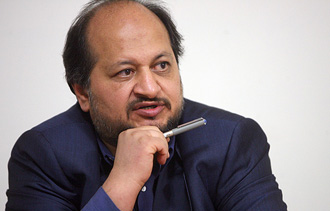
M. Shariatmadari – Vice-president for Executive Affairs
Quality plays a matchless role in reducing poverty
Vice-president for Executive Affairs Mohammad Shariatmadari, said in the ceremony that society should view quality as public discourse.
He said that quality and standards are instrumental for business institutions to achieve profitability. They play a key role in eradicating poverty, too. […]
A classified list of harmful actions and products is being drawn up
At the ceremony Health Minister Seyyed Hassan Hashemi took the stage and said:
The Health Ministry is making a confidential list of products and actions it deems harmful to public health and will later hand it over to related officials.
I hope those in charge take heed of that list because the items on it harm people’s souls, minds and bodies.
I also hope the side effects of these items on people’s health could be minimized.
The Health Ministry has on its agenda plans to improve [the quality of] domestically produced or imported food supplies. To that end, the ministry and the Iranian National Standards Organization should pursue common goals.
Seyed Hassan Hashemi – Iran Health Minister
Plans to reduce the public consumption of salt, sugar and oil, and efforts to promote a better lifestyle are the main topics of the food quality improvement plan. The cooperation of the Iranian National Standards Organization is needed to make considerable improvements in the quality of air, water and roads.
Enrichment of foodstuffs
Hashemi went on to say:
We are trying to implement plans to enrich food with micronutrients. A majority of Iranians suffer from vitamins A and D deficiencies; that’s why the ministry is trying to alleviate the problem through food fortification projects.
As for other food-related programs of the Health Ministry, I should say that plans will be carried out in cooperation with the Agriculture Ministry and the National Standards Organization in ten regional hubs in the country to upgrade the quality of agricultural products and lessen the effects of pesticides and herbicides on food products.
By implementing a nutrition facts plan, we will label food items to let consumers know if the products they are having are approved by the Health Ministry in terms of the amount of fat, sugar and salt they bear.
As part of a soon-to-be-announced plan to transform the healthcare system, foodstuff production processes will be supervised.
Customer satisfaction does not necessarily mean that products are qualitatively perfect, because customers may be unaware of the fake items. To oversee the quality of products and services, they should be exported to foreign destinations so that these items could be assessed in a competitive market.
Nayereh Pirouzbakht – Head of Standards Org.
A new approach to quality is needed
Head of the Iranian National Standards Organization (INSO) Nayereh Pirouzbakht was another speaker at the ceremony. She said:
A new quality approach should be adopted in the country to be pursued by all institutions and organizations. The National Standards Organization cannot deal with the question of quality alone; it calls for a collective will.
People expect the National Standards Organization to not only set standards but also manage and evaluate the quality of products. A new department has been established at INSO of late to focus on quality.
[…]
Farshid Shokrkhodaee – Secretary of INQA
Two bronzes awarded
Secretary of Iran National Quality Award (INQA) Assessment Committee Farshid Shokrkhodaee, for his part, said:
The INQA is awarded to an institution which is graded over 700. So far, none of the institutions has secured the golden prize and only two units (Avrand Plastic Co. and Isfahan Province Gas Company which managed to secure the four-star “Recognized for Excellence” certificate) were given the bronze statuettes for scoring at least 500 out of 1,000 [on the basis of the EFQM Excellence Model].
Quality in Iran faces multiple challenges such as inattention to the concept of quality management; failure to develop standards for services; inability to manage new resources such asscience technology; inability to analyze data and learn from the results; and failure to promote the concept of quality in agriculture, animal husbandry, and construction industries.
National assessment of quality is a new concept which points up the significance of quality management. The assessments are not done just for the sake of granting awards; rather, they seek to identify and highlight the upsides of business institutions and organizations.