Sunday, April 26, 2026
Home Blog Page 4906

Saudi decision to end Yemeni strikes “one step forward”: FM spokeswoman

Iran-Afkham
Iran-Afkham

The Foreign Ministry has welcomed Saudi Arabia’s halt to its aerial campaign against Yemen, expressing hope that all parties to the conflict would try to resolve the crisis in the impoverished Arab country through diplomatic means.

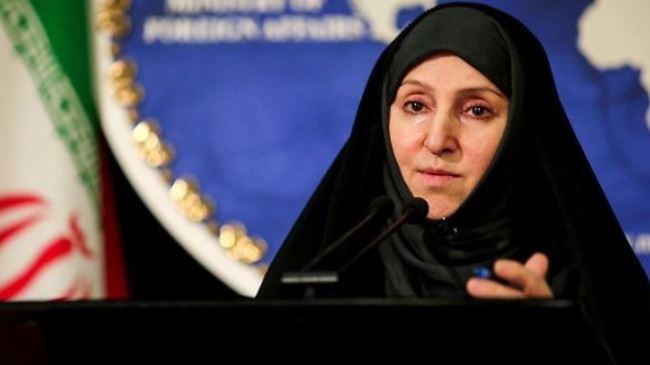
“We had previously announced that the crisis in Yemen has no military solution,” Foreign Ministry Spokeswoman Marzieh Afkham said on Tuesday night.

“Establishment of truce and a halt to the killing of innocent and defenseless human beings is certainly one step forward,” Afkham said.

She expressed hope that immediate measures will be taken to send humanitarian aid to Yemen and conditions will be provided for negotiations between all the Yemeni groups and parties to form a broad based government.

Afkham made the remarks shortly after Riyadh declared the end of ‘Storm of Resolve’ operation against Yemen and announced the beginning of a new phase dubbed Operation “Restoring Hope”.

The mission, the statement said, would focus on security at home and counter-terrorism, aid and a political solution in Yemen.

The announcement came hours after Riyadh said it was preparing to send its elite National Guard to reinforce its border with Yemen.

The National Guard is regarded as the country’s best equipped military force, and until now has not been involved in the campaign, Aljazeera reported.

Led by Miteb, the son of the late King Abdullah, the unit is recruited from tribes that have traditionally backed the Saud royal family.

Two airstrikes in Yemen on Tuesday killed at least 40 people, most of them civilians and wounded dozens of others, medical sources said.

One strike hit a bridge in central Ibb province as cars carrying militia members were driving on it, residents said, killing at least 20 people, mostly civilians. Another, on a security building in the city of Haradh near Yemen’s border with Saudi Arabia, killed 13 civilians and seven soldiers.

Saudi Arabia and its Sunni Arab allies have been bombing Yemen for almost a month in a bid to weaken the country’s dominant force, the Shi’ite Houthi militia movement.

The Saudi Ministry of Defense had earlier said that all heavy weapons and ballistic missiles belonging to the Houthis had been destroyed, that they had imposed restrictions over Yemen’s airspace, and that they had removed any possible threats on the kingdom and neighboring countries.
Video on killing stray dogs goes viral, sparking protest

dogs in Shiraz11

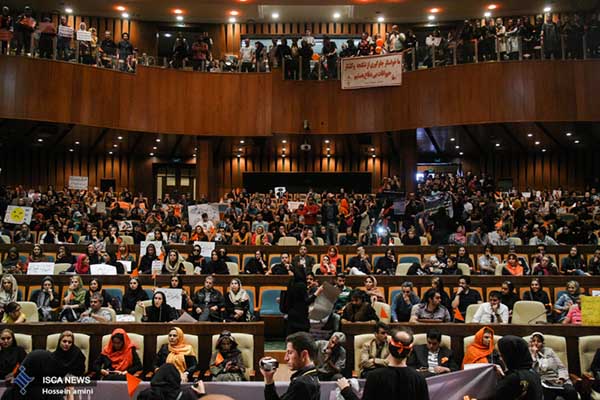
Protest rallies have been held across Iran after a gruesome video went viral featuring the brutal killing of several stray dogs in an industrial park in Shiraz. The three-minute video shows the dogs dying after apparently being injected acid by men wearing masks.

Shiraz Municipality has denied any involvement in the killing of the dogs, saying it does not supervise the industrial parks.

The recent video has prompted people and officials to ask sources of emulation about the Islamic view on animal abuse.

Senior Shiite clerics have unanimously rejected the killing of animals as religiously and ethically unjustifiable. For instance, Grand Ayatollah Hossein Nouri Hamedani has said that the killing of non-harmful animals is not [religiously] permissible.

Grand Ayatollah Seyyed Mohammad Ali Hosseini Alavi Gorgani has said that it is not acceptable to kill animals under the pretext of protecting the environment and [people’s] health by arguing that there are other means to that end.

Grand Ayatollah Nasser Makarem Shirazi has said that the killing of animals is permissible only when they endanger human lives and there is no other way [to eliminate the threat].

Officials too have condemned the brutal act, vowing to pursue the case and bring those behind it to justice. It came as a group of animal lovers gathered outside the Environment Protection Organization in Tehran on Sunday, protesting against the killing of stray dogs in Shiraz.

The following is a partial translation of a report published by Ebtekar daily on April 20 about the protest rally:

Ahmad Nabavi, an official with the Environment Protection Organization, told the protesters that the EPO has sent a letter to a Shiraz court asking for the punishment of those involved in the brutal killing of stray dogs in the city.

He further said that the environment organization stands by the protesters until the cold-blooded killers of the dogs are punished.

Nabavi went on to say that measures should be adopted to help animals be treated properly, adding that rabidanimals should be identified and collected.

Protesters also signed a petition, asking for an immediate end to the inhumane act.

Mohammad Darvish, another EPO official, said in the protest rally that the environment chief has – in a letter – asked the head of the Fars Provincial Environment Department to follow up the case and identify and hand in the dog killers to judicial officials.

The environment organization has released guidelines on treatment of unclaimed dogs and other animals which wander in cities, he said, adding that we need to adopt ethical methods to neuter the homeless dogs and identify the rabid canines.

This way we can control the stray dog population, he stressed.

[…]

Darvish went on to say that Iran’s wildlife will definitely undergo change after the current protests against the gruesome killing of stray dogs, adding that the environment protection will become legally mandatory [in the country].

We are following the case through legal channels, trying to bring to justice both the perpetrators of these savage killings and those who have ordered it [the acid injection], he said.

Darvish also said that the organization has studied the world’s valuable scientific experiences and compiled a style book on treatment of such animals, adding the style book will be communicated by the Interior Ministry [to government agencies] to help make such inhuman acts a thing of the past.

[…]


Ebtekar: Animal cruelty is unacceptable on any ground


dogs in Shiraz28The EPO director thanked people for the responsibility they feel toward the wildlife and said that animal cruelty is not acceptable under any circumstances, adding that the EPO will follow the Shiraz case through the provincial department of environment protection.

She also said that officials in Fars Provincial Environment Department have said that several leads have been found, but that there are some gray areas in the case because the municipality has denied the incident.

Ebtekar then criticized the legal loopholes that exist in animal protection law, saying that the EPO has general regulations on the wildlife, but there is nothing specific on the rights of dogs and cats.

We are trying to define a legal framework for animal rights so that we know what should be done in such conditions, she said.

The environment chief further said that all responsibility lies with the municipality and its districts and that the Environment Protection Organization is not legally responsible for such cases.

She concluded, “We want to get involved in this case because we seek to defend the rights of animals and we will tap into the organization’s potential to shed more light on this case.”

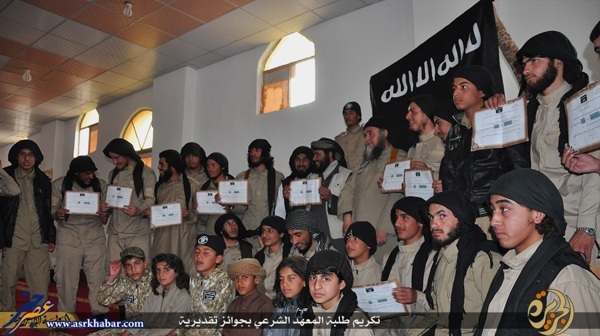
Commencement of ISIL students

ISIS-6

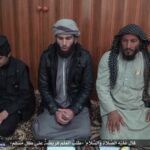
A university, run by the Islamic State of Iraq and the Levant (ISIL), has held a graduation ceremony for its students.

Photos of the terrorist group in a commencement have gone viral recently, featuring the notorious group training Takfiri forces and offering them degrees.


Iran seeking to increase oil exports to pre-sanctions level: Minister

Zangeneh-Venezuela

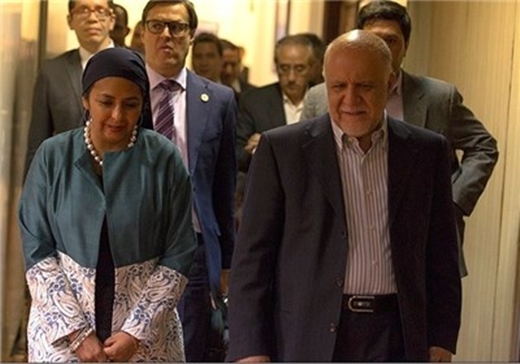
Iran’s Oil Minister Bijan Namdar Zanganeh said Tehran is seeking to scale up its oil exports to pre-sanctions levels.

Speaking at a Monday meeting with his Venezuelan counterpart Asdrubal Chavez in Tehran, Zanganeh said Iran, as a member of the Organization of the Petroleum Exporting Countries (OPEC), wants its share of crude exports to return to the pre-sanctions level.

“It is expected that the OPEC members provide space for an increase of Iran’s oil production in the global markets,” the Iranian oil minister said.

During the meeting, Zanganeh and Chavez also exchanged views on ways to promote Tehran-Caracas cooperation in different areas, including in the energy sector.

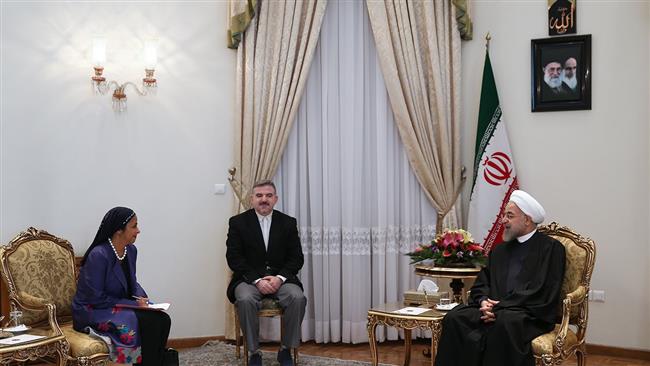
In a meeting with visiting Venezuelan Foreign Minister Delcy Rodriguez in Tehran earlier on Monday, Iranian President Hassan Rouhani expressed hope that concerted action by the oil producers would help restore balance to the global market in the wake of the decline in oil prices.

Rouhani said today’s oil prices are to the detriment of crude producers as well as global market stability, adding “We hope that concerted efforts by the oil exporters to bring balance back to the oil market would continue.”

Crude oil prices have fallen by about 50 percent since last June.

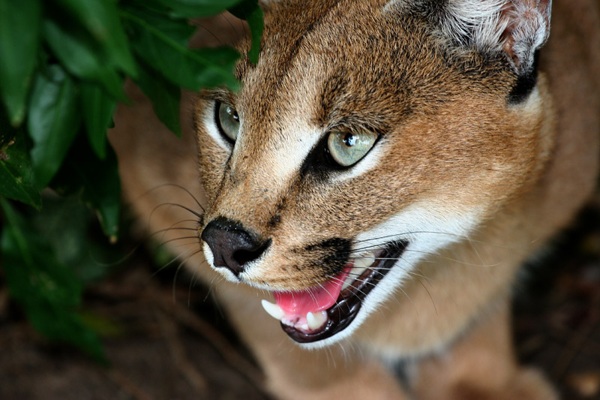
Caracals in Iran

Iran-caracal

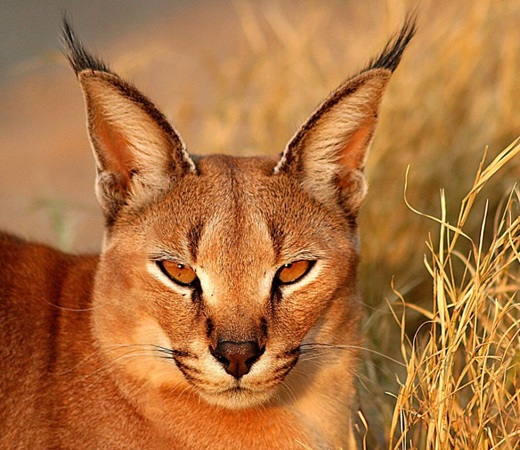
Caracals are indigenous to Africa and Central Asia and mostly reported to be sighted in deserts and grasslands in Iran. The wild cat is bigger than a domestic cat and has tufted ears.

The big cat is good at hunting rodents, birds, reptiles, rabbits and snakes. They are mainly nocturnal creatures which live on their own, but join partners during the mating season: winter.

The wild cat is an exclusive, fast hunter whose skills at lurking, camouflaging and hunting have drawn admiration from wildlife enthusiasts and researchers.


caracal-Iran


All those who have caught caracals hunting describe them as fast hunters. At times they can run faster than cheetahs. They can even jump as high as six feet into the air to hunt crows.

The big cat doesn’t have a particular natural predator. Fortunately, in protected areas in Africa, caracals are sitting pretty. Beyond such areas, however, they are hunted by poachers and farmers.

As for Asia including Iran, things seem worrisome for the wild cat. These animals are fortunately present in different habitats across the vast country of Iran and in terms of population and the variety in habitat are in better conditions than other members of felidae.

The information above along with the following photo gallery appeared in a report published by Yooznameh [Journal of Cheetahs] in its 20th issue.


caracal-cat

Iran rejects US call for ‘anywhere, anytime access’ to military sites

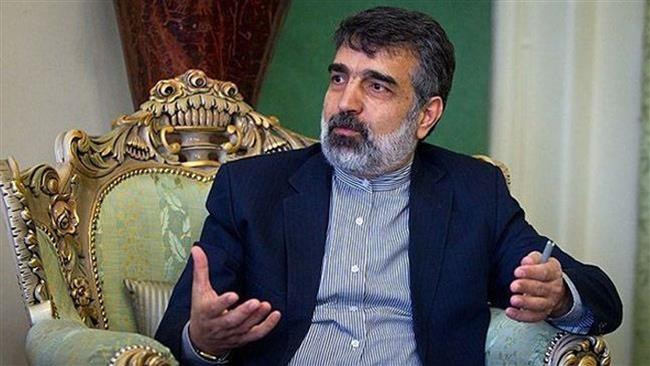
Kamalvand

Iran has rejected a call by US Energy Secretary Ernest Moniz for unlimited access of the International Atomic Energy Agency (IAEA) inspectors to the Islamic Republic’s military sites.

In a Monday interview with ISNA news agency, the spokesman of the Atomic Energy Organization of Iran (AEOI) described Moniz’s demand as “not practical and acceptable.”

Behrouz Kamalvandi noted that negotiations aimed at reaching an agreement over Iran’s nuclear program “are still underway,” urging the other side to put forward its views during the talks.

Kamalvandi stressed that Tehran will not undertake any commitments beyond “common laws and regulations.”

Earlier on Monday, Moniz said nuclear inspectors will need free access in Iran as part of a possible deal on the Iranian nuclear program.

“We expect to have anywhere, anytime access,” added the nuclear physicist, who has been part of the recent nuclear talks between Iran and P5+1.

He stated that inspections of Iran’s military sites under a proposed long-term agreement would not be “frivolous” and would be part of “a well-defined process.”

Moniz also said it would take at least six months to lift nuclear-related anti-Iran sanctions. However, Tehran insists that the sanctions must be lifted immediately after the nuclear deal takes effect.

The comments came after Brigadier General Hossein Salami, the second-in-command of the Islamic Revolution Guards Corps (IRGC), said the Islamic Republic will never permit inspections of its military sites.

“Not only will we not grant foreigners the permission to inspect our military sites, we will not even give them permission to think about such a subject,” he said.

He added that a harsh response awaits anyone who talks about such inspections.

There have been reports in the Western media that a final deal between Iran and P5+1 could see Tehran allow international inspectors to visit its military sites. Tehran has categorically denied the reports, describing them as mere rumors and wrong interpretations of the understanding reached in early April in Switzerland.

Iran and P5+1– comprised of Russia, China, France, Britain and the US plus Germany – reached a mutual understanding on Tehran’s nuclear program on April 2 in Switzerland. The two sides are expected to start drafting a final inclusive deal which they seek to sign by the end of June.

Iran protests Saudi airstrike on vicinity of Embassy

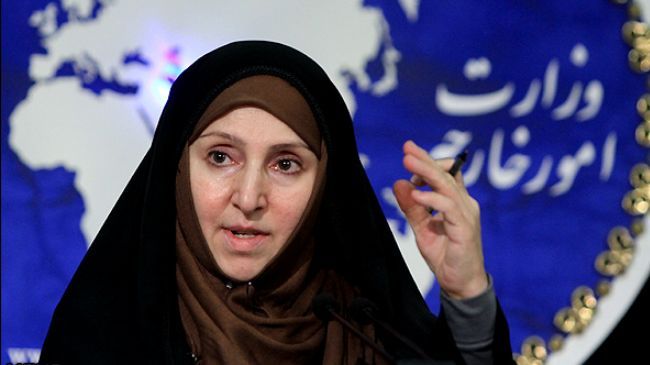
Ms. Marzieh Afkham

Iran on Monday protested to the Saudi government over the airstrike near Iranian Embassy in Sana’a, Yemen.

Foreign Ministry Spokeswoman Marzieh Afkham said Monday that Iran has summoned Saudi charge d’affaires to Tehran to protest air strikes near the Iranian embassy in Sana’a.

Afkham told IRNA that Iran has called for a clear response from the Saudi government about today’s attack near the Iranian Embassy.

The spokeswoman said that Iran holds the Saudi government responsible for the air strike by the Saudi-led coalition launching attacks on Yemen.

She said that the Saudi government is accountable for the probable damage to the Iranian embassy, reminding their responsibility to ensure the safety of the Iranian diplomats in Sana’a.

Meanwhile, Deputy Foreign Minister for Arab-African Affairs Hossein Amir Abdollahian said that unfortunately air strike damaged building of the Iranian Embassy in Sana’a, the windows of the embassy were shattered, but, fortunately our ambassador and the diplomatic staff were not hurt.

Amir Abdollahian said that the Iranian Embassy will continue with humanitarian relief operations in Sana’a.

He said that Saudi Arabia, as the aggressor, will be held accountable for any damage to the Iranian Embassy.

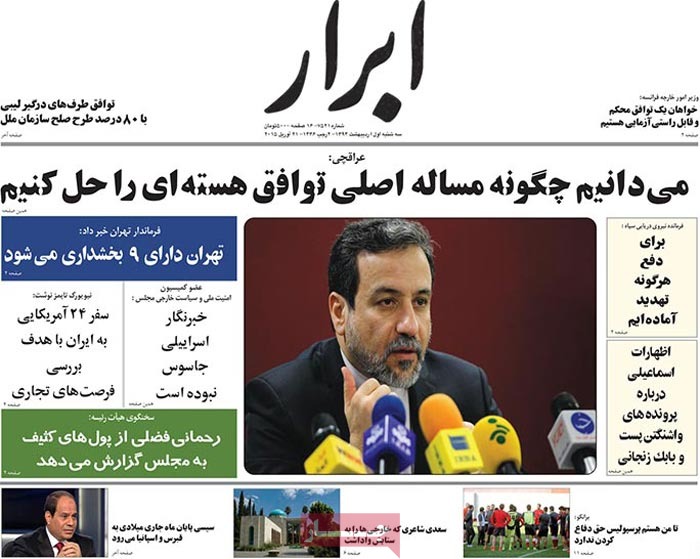
A look at Iranian newspaper front pages on April 21

Iranian Newspapers Headlines

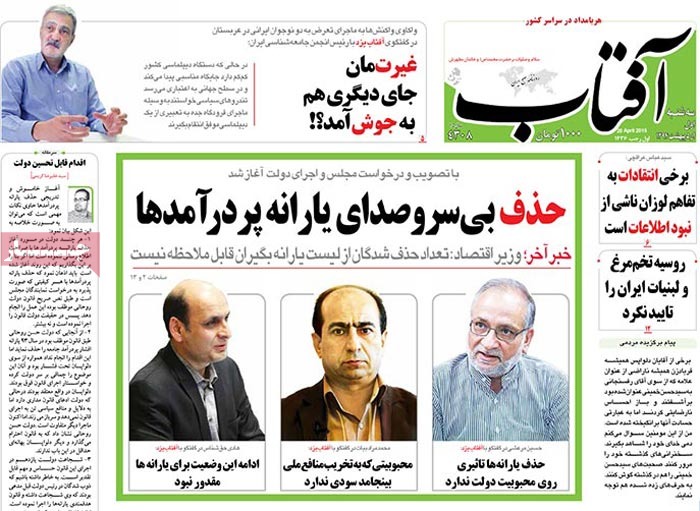
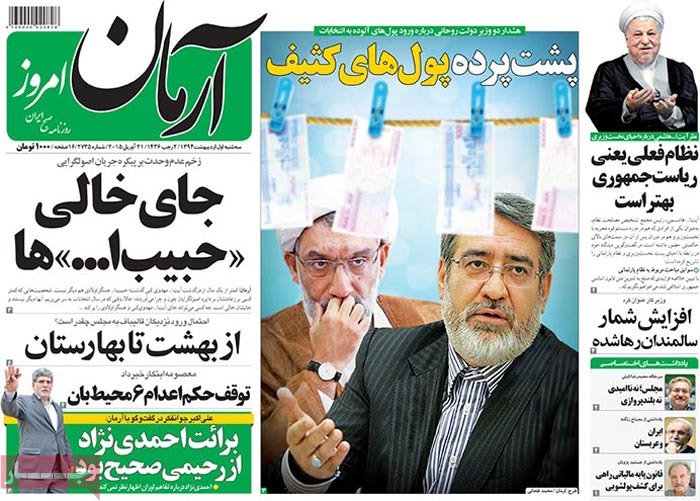
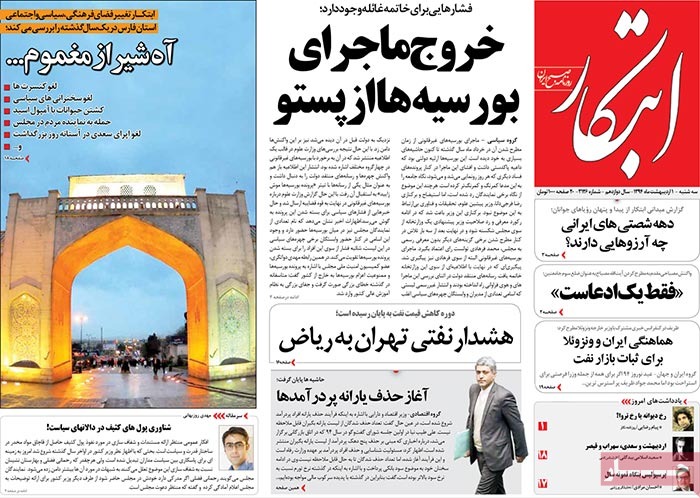
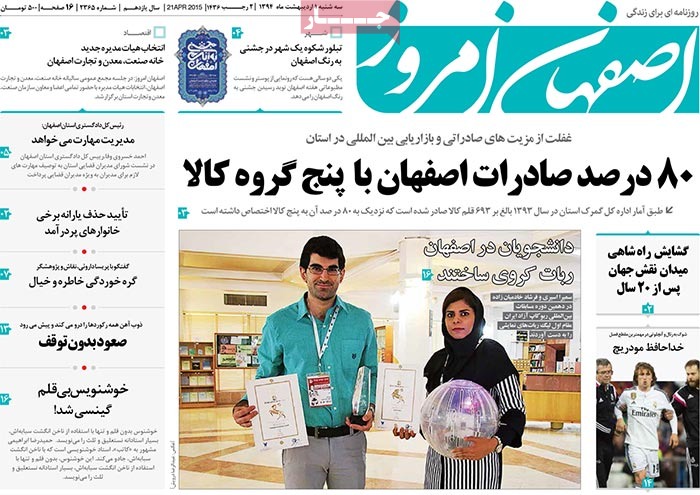
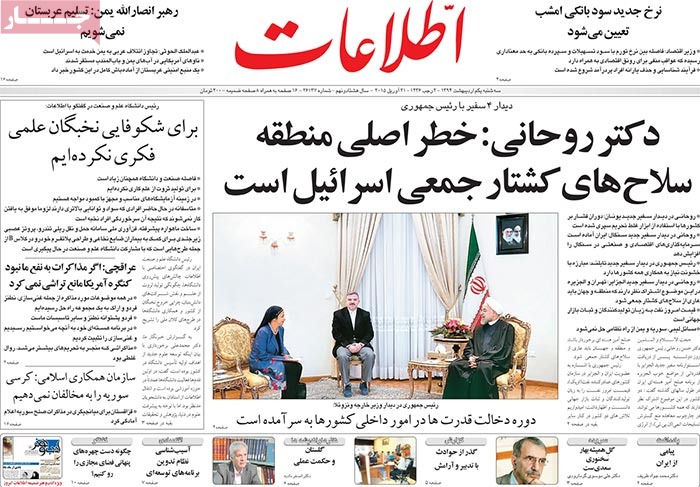
President Rouhani’s comments at meetings with the new ambassadors of Greece, Algeria, Senegal and Thailand dominated the front pages of Iranian newspapers on Tuesday. A gathering in Tehran in which Iranian Foreign Ministry officials answered the questions of those critical of the Lausanne statement also appeared on the covers of several dailies.


Abrar: The Israeli reporter [who visited Iran on her American passport] was not a spy.

The comment was made by a member of parliament’s National Security and Foreign Policy Committee.


A look at Iranian newspaper front pages on April 21


Aftab-e Yazd: Some critical comments about the Lausanne statement stem from lack of information.

Iranian nuclear negotiator Seyyed Abbas Araghchi said that at a gathering on the tentative nuclear deal Iran and P5+1 struck in the Swiss city in early April.

Aftab-e Yazd: Government has stopped handing cash subsidies to high-income individuals.

The move came after parliament required the Executive to stop the handout.

The economy minister has said the number of individuals taken off the list is not substantial.


A look at Iranian newspaper front pages on April 21


Arman-e Emrooz: The Chairman of the Expediency Council says he prefers presidential democracy to parliamentary democracy.

[The comment by Ayatollah Hashemi Rafsanjani came after the idea of reviving premiership was floated.]


A look at Iranian newspaper front pages on April 21


Ebtekar: Iran and Venezuela are coordinating efforts to stabilize the oil market.

Iranian Foreign Minister Mohammad Javad Zarif made the comment at a joint press conference with his Venezuelan counterpart.

Ebtekar: Tehran issues an oil warning to Riyadh. The time of crude price decline is up.


A look at Iranian newspaper front pages on April 21


Esfahan Emrooz: Students in Isfahan have developed a spherical robot.


A look at Iranian newspaper front pages on April 21


Ettela’at: “Israel’s weapons of mass destruction pose the gravest threat to regional security,” said the President.

Hassan Rouhani made the comment at separate meetings with four new foreign ambassadors who met him on Monday to hand in their credentials.

Ettela’at: “If the talks had not been moving forward in our favor, the US Congress would not have tried to sabotage the process,” Iranian nuclear negotiator Abbas Araghchi said.


A look at Iranian newspaper front pages on April 21


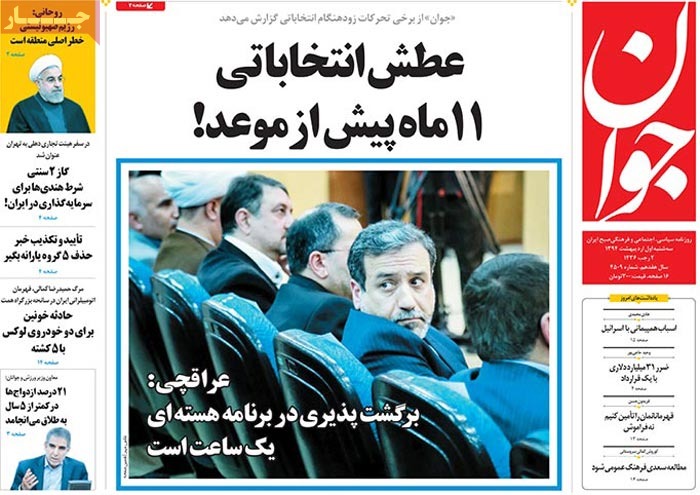
Javan: Hamid Reza Kamali, an Iranian racing champion, has died in a car accident on a Tehran highway.

Javan: “Some 21 percent of marriages lead to divorce in less than five years,” said a deputy minister of sports.


A look at Iranian newspaper front pages on April 21


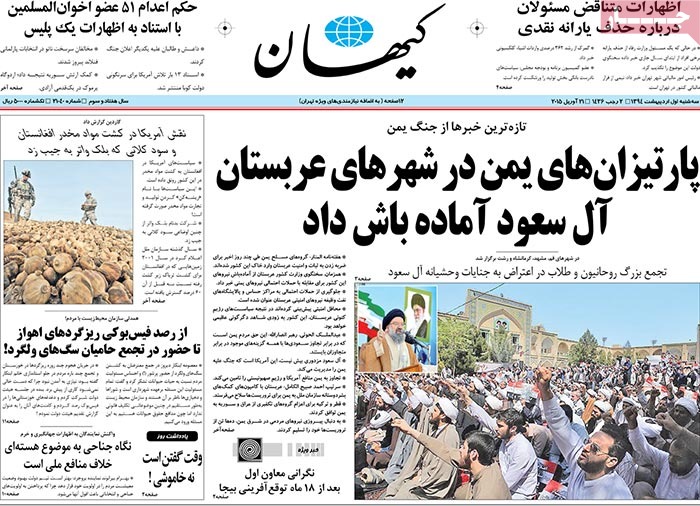
Kayhan: Officials make contradictory remarks about elimination of cash subsidies.


A look at Iranian newspaper front pages on April 21 


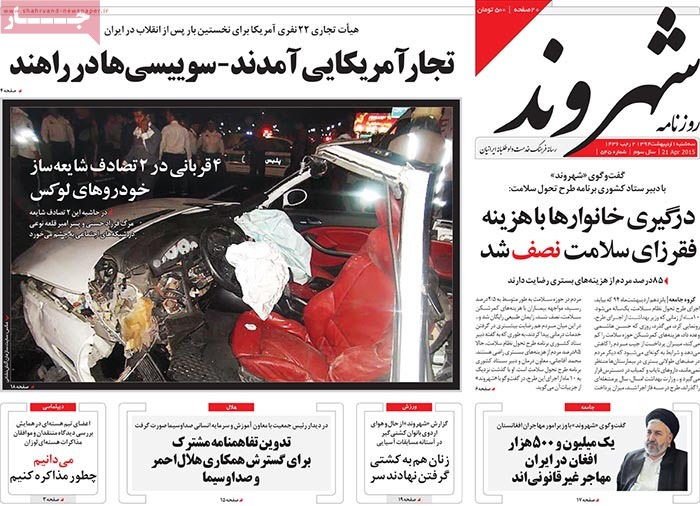
Shahrvand: “There are some 1.5 million illegal Afghans in Iran,” said the Afghan minister of refugees in an exclusive interview with the daily.


A look at Iranian newspaper front pages on April 21


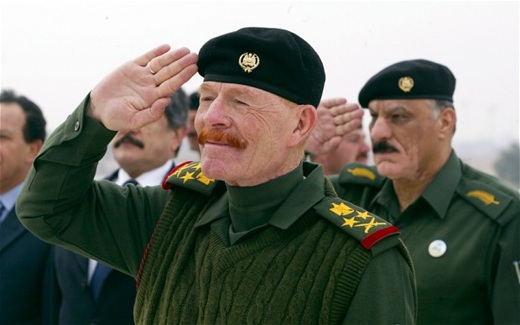
Izzat al-Douri’s son killed in Iraq too

izzat-al-douri

Ibrahim al-Douri, the son of Saddam Hussein’s right-hand man, was killed in Iraq on Monday just a few days after the death of his notorious father Izzat al-Douri.

Security Sources announced that Ibrahim al-Douri was killed during an operation by Iraqi Counter Terrorism Service in the strategic city of Tikrit on Monday.

Izzat Ibrahim al-Douri, former Iraqi general and Vice Chairman of the Iraqi Revolutionary Command Council, also was killed in Iraq on Friday.

Results of the DNA tests conducted on his dead body also confirmed his identity as Izzat al-Douri.

“The final results prove that the body belongs to the criminal Izzat al-Douri,” Iraqi Kataib Hezbollah Group’s Spokesman Jaafar Husseini said, adding that his DNA had gone under test in specialized hospitals.

“We are 100 percent sure,” he added.

Al-Douri, 73, was a former Iraqi general and a commander of the Army of Saddam Hussein’s regime. He was an Iraqi military commander and Vice Chairman of the Iraqi Revolutionary Command Council, until the 2003 US-led invasion of Iraq.

Following the US invasion, he escaped and remained at large. But after a few months, intelligence reports showed that he was leading rebel operations in the country.

Al-Douri masterminded and led terrorist operations, especially those of the Al-Qaeda in Iraq.

Regional intelligence agencies had chased him down in Western and Northwestern Iraq.

Al-Douri was one of the main officials of Saddam Hussein’s chemical arms program and played a major role in the chemical attacks on Iran during the 1980s war as well as the attack on the Northern Iraqi city of Halabche that killed 5,000 civilians.

According to Iranian and Russian intelligence, he provided terrorists in Syria with chemical agents and trained them to manufacture chemical weapons.

Low oil prices harm producers, global market: Rouhani

Rouhani-Venezuela

Iranian President Hassan Rouhani says the current falling oil prices will be harmful to producers and will threaten the stability of global market.

“Today’s oil price is to the detriment of producers and the world market stability. We hope that coordinated efforts by oil exporters to bring balance back to the oil market would continue,” Rouhani said in a meeting with Venezuelan Foreign Minister Delcy Rodriguez in Tehran on Monday.

He added that “stability and balance” in the oil market will be beneficial to all, expressing hope that Venezuela’s efforts to restore balance to global oil market would lead to balance in the price of oil.

Iran and Venezuela are member states in the Organization of the Petroleum Exporting Countries (OPEC).

Oil prices have nearly halved since the summer of 2014, and currently slightly above 60 dollars per barrel. The fall in prices is blamed on global supply glut and weak demand.

If oil prices remain at current levels, the profits for investors would shrink by up to USD 1,000 billion in 2015. In this case, they would have far less capital for new projects and would be more cautious about their investments.

The Iranian president further said Tehran is keen to improve ties with Caracas, particularly in the economic sector.

“The Iranian nation and government’s will is [based on] expansion of friendly relations and cooperation with Venezuela in all fields,” Rouhani stated.

He emphasized that the era of big powers’ interference in internal affairs of countries is coming to a close and said Iran regards as “unacceptable” the meddling of some powers in domestic affairs of independent countries including Venezuela.

The Venezuelan foreign minister, for her part, underlined the importance of bolstering Tehran-Caracas ties.

Tehran is a strategic partner for Caracas and the Venezuelan government and nation would always stand by the Iranian people, Rodriguez said.