Sunday, December 28, 2025
Home Blog Page 4905

Bad luck often brings good luck

Donyaye Eghtesad
Donyaye Eghtesad

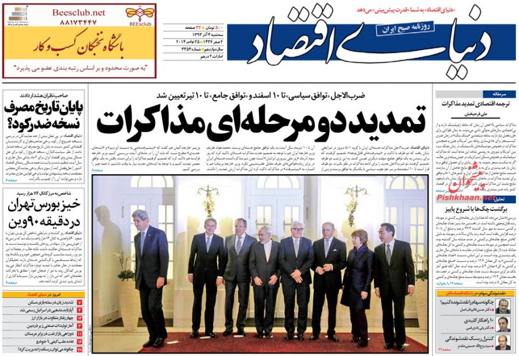
On November 25, one day after the closing of nuclear talks between Iran and world powers, Donyay-e Eghtesad, a daily, carried a piece on what the extension of Vienna talks translates into, economically. The following is the translation of how the paper’s Ali Farahbakhsh assessed the outcome of the talks through an economic prism:

Political negotiations, in particular those with a geopolitical background which have dragged on for quite a few years thanks to distrust, require a long time to produce results.

A look at Ping-Pong Diplomacy pursued by Henry Kissinger, which was aimed at normalizing relations between America and China, as well as at the talks over ballistic missiles during the Cold War between the US and the Soviet Union clearly highlights the fact that in the most ideal of conditions, diplomatic negotiations over strategic issues either fail, or need quite a while to produce an agreement. Even more time is required to see such a deal come to fruition.

The outcome of the recent talks between Iran and P5+1 and the agreement over extension of the negotiations into the months ahead one more time showed that in spite of positive results coming out of the talks, we need to exercise more patience to witness a profound impact on the economy.

Although over the past few months, politicians and those active on the economic front have outlined the probable scenarios for the talks and sized up the likely impact of each on the economy, the important question is: “Now that the scenario of extension has been played out, based on what assumptions, should macroeconomic policies, by the government, and microeconomic policies, by economic institutions, be formulated?”

Although a nuclear deal could play an effective role in turning the economy around, policies at home seem to determine where the economy is heading for.

In fact, external factors resulting from diplomatic developments could have more effects on the pace of developments rather than giving directions to the economy.

As a matter of fact, the positive effects of the removal of sanctions should not be blown out of proportion, nor should it be assumed that all economic woes, several of which have cropped up on the back of dysfunctional structures, would be addressed overnight as soon as sanctions are lifted.

Actually, sanctions have exposed many of our internal flaws. When the previous government [Ahmadinejad’s] was in office, a lot of mismanagement was kept hidden behind sanctions without drawing a distinction between the ramifications of wrong macroeconomic policies and those of sanctions.

If our politicians are under the impression that the removal of sanctions will see an inflow of foreign currency which could act as a panacea for our economic problems, they are making a strategic miscalculation.

As it was mentioned, for one thing, there is no silver bullet for strategic disputes. For another, in the highly unlikely event of easy access to all foreign currency revenues of the country, history suggests that substantial amounts of petrodollars not only may fail to address the economic woes of the country, but they may give rise to a more deepening crisis.

For instance, the 1973 oil shock [which began in October when members of the Organization of Arab Petroleum Exporting Countries (OAPEC), consisting of the Arab members of the OPEC, plus Egypt, Syria and Tunisia, proclaimed an oil embargo which saw oil prices rise from $3 per barrel to nearly $12 by the end of the embargo in March 1974] which swelled the coffers of the previous regime did nothing to prevent the collapse of the Pahlavi Regime in 1979.

Nor did the petrodollars of the previous government – nearly $120 billion in annual revenues – lead to a pretty pass, and the baton was passed on to Rouhani in conditions that the country’s economic growth was languishing in negative territory while Iran’s economy was fighting a losing battle against an unprecedented recession which had spiraled out of control.

Which direction the economy at home takes is more influenced by our politicians rather than by uncontrollable external factors. Among other things, the mounting growth of liquidity, unbalanced interest rates, a big and dysfunctional state sector, an unsuited atmosphere for business, and implementation of privatization at a snail’s pace are key factors at play which can be streamlined by our politicians rather than by nuclear talks.

Above all, the process of economic policymaking in Iran reveals that the driving force behind the economy has usually gathered more momentum and turned out to be more functional in the face of uphill challenges. That has added more weight to implementation of economic reforms.

However, whenever Iran’s economy rakes in petrodollars, it simply invests its focus in how such additional revenues must be allocated, and it suddenly gets forgetful of transforming the economic structure of the country.

Although, to arrive at a multilateral deal, there is a bumpy road ahead, returning to the point where we were before the start of the talks is impossible.

Even if a minimum agreement is reached in the upcoming months, a new raft of sanctions is unlikely to be implemented. Besides, under the new accord in Vienna, in the next seven months, nearly $5 billion of Iran’s foreign currency revenues will return to government coffers.

The bottom line is that our policymakers should not attach the fate of the economy to the outcome of the negotiations. Rather, they should make efforts to put forth a coherent economic overhaul plan to lay the groundwork for economic growth. As an old saying goes, “Bad luck often brings good luck”, we can turn curses into blessings.
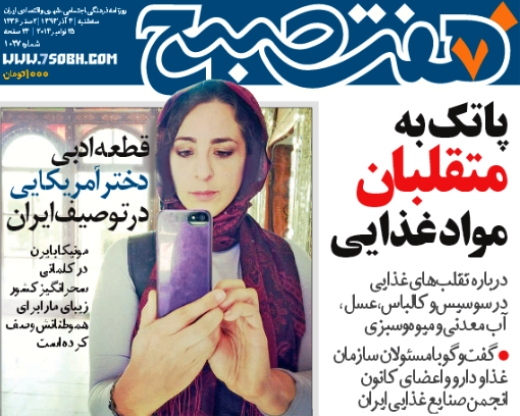
Iran in the eyes of an American traveler

hafte sobh
hafte sobh

On November 25, the front page of Haft-e Sobh newspaper featured the translation of a piece on how American Monica Byrne has described Iran in her fantastic words. The simple, still very beautiful and emotion-filled, wording of this American novelist and playwright was good-enough reason for IFP to surf the net for the original piece. We eventually found it at http://www.lobelog.com/iran-reconciliation/. IFP decided to put the entire piece on its website, although the Persian-language paper had only parts of it translated:

Before I traveled to Iran, I didn’t want to read anything about Iran. Certainly nothing written by mainstream American news media, which often draws an absurdist caricature of the country. I wanted to arrive with an open heart.

But I knew that having an open heart wasn’t the same thing as an ignorant mind. I didn’t pretend to have more than a superficial knowledge of Iranian-American relations. I didn’t wish to gloss over the misdeeds of either country, including human rights abuses. I was just a writer, with three motivations:

  1. Travel is essential to my writing;
  2. I have Iranian friends in America who are passionate about their homeland, which made me curious; and
  3. for their sake and mine, I want reconciliation between our countries.

No small task, of course. Not when people from both countries have been working toward that goal ever since the 1979 revolution ousted a pro-American monarch and replaced it with an Islamic Republic.

The revolution has impacted a whole generation of people in both Iran and America. But a new generation – including my friends and I – born after 1979, don’t have a memory of the revolution, or the occupation of the US Embassy in Tehran. There’s no case to be made for ignorance, but there is a case to be made for innocence: To us, the estrangement of Iran and America makes neither political nor intuitive sense. America’s simultaneous fidelity to Saudi Arabia and Israel feels odd and hypocritical. While I was in Iran, I asked my guide to explain the reason behind the sanctions. He couldn’t really explain it. I researched the sanctions. I couldn’t even explain them to myself. They just seemed pointless and arbitrary.

An older generation resigns itself to everything being the way it is. A younger generation questions why any of it has to be.

So where do we begin? And by “we,” I don’t mean the nation states; I mean “we” as individual citizens. Do we seek common ground? I’m not going to insult everyone’s intelligence by saying Iranians are just like Americans. That not only implies that Iranian lives only have value insofar as they resemble American ones; it also obscures our differences, including the religious orientations of our current governments, and the effects those orientations have on the public and private behavior of individual citizens. Those differences are real and important.

Yet those differences are not a real barrier to reconciliation. And as an American, I see the primary responsibility for reconciliation in America’s court. We are far more ignorant about, and hostile toward Iranians than Iranians are toward us. That is our shame. Are there people in Iran who chant “Death to America”? Sure, I guess, somewhere. I didn’t meet any of them. Are there people in America who can’t even locate Iran on a map? Yes. I meet them every day.

The good news is that both countries have made small acts of good faith over time, which then led to acts of good faith among individual citizens; my homeland became a home for people of Iranian origin and descent. They grew up in (or came to) America and made friends, including me. Those friendships then inspired me to travel to Iran.

While staying near the historical city of Pasargad, the final resting place of Cyrus the Great, I had a wonderful experience playing the part of an American tourist in a documentary that happened to be shooting near my guesthouse. The producers gave me a verse of Hafez, the great Persian poet, to say in Farsi:

The Tomb of Hafez, Shiraz, Iran. Credit: Monica Byrne

Derakhte doosti benshan,

ke kame del be bar arad.

Which means:

Plant the tree of friendship,

and it will give the fruit of the heart’s desire.

Even now, two weeks after leaving Iran, the line still resonates with me. I’m not a politician. I don’t have the ear of anyone in power. The negotiations over Iran’s nuclear program are not accessible to me. But travel and friendship: these are tools that are available to me. They’re also available to millions of Americans, especially after Hassan Rouhani – known inside Iran as a moderate cleric with reformist ambitions ­– was elected president last year. By travel I don’t mean joining a mindless mega-tour group, whose members don’t interact with anyone except through the viewfinder of their cameras. I mean travel as a mindful and radical act: to seek one-on-one consensual reconciliation of Other and Self, of mutual transformation that leaves both parties more perfectly themselves than they were before.

The state will act at the level of the state, in Vienna or wherever. But individuals can act at the level of individuals, on American and Iranian soil: seeing and being seen, hearing and being heard, knowing and being known.

My last night in Iran, I went back to the Tomb of Hafez. The first time I’d gone was daytime, when tourists go; evening is when Iranians go.

The air was cool and electric. In the northeast corner of the courtyard, a square of rugs was set down for evening prayer. Up and down the steps of the tomb came students, artists, professors, pairs of women, pairs of men, parents with teenagers, parents with toddlers. A young couple – the girl wearing a scarf fashionably high on her head, the boy wearing all black, with a gold chain – walked up to the tomb and fidgeted there, unsure of how to behave. Some placed their fingers on the tomb, their lips moving. Others checked their smartphones, or took selfies. A man in a grey suit hovered by one of the columns, reciting Hafez to whoever would listen.

As per an Iranian tradition I’d read about, I circled the tomb seven times and then sat down, legs crossed, with my back to one of the pillars, and asked the question in my mind: How do Iran and America reconcile?

And then I opened my English translation of The Divan of Hafez, which my guide Mohamad had bought me as a gift. This was the first verse my eyes fell upon:

Joyous that day from when this desolate abode, I go:

The ease of soul, I seek: and for the sake of the Beloved I go.

The answer gave me chills.

But I didn’t have time to think more about it, because just then, the men who’d finished praying came to take a group picture on the steps of the tomb. They asked me where I was from, and like everyone who heard I was from America, were delighted and extremely welcoming. We could communicate very little, but they managed to tell me they were from nearby Estahban, a city famous for figs.

Our conversation drew onlookers. Soon it was a crowd of twenty or more. Someone asked if I spoke any Farsi. I got really excited because I remembered my line from the vineyard documentary, so I started:

Derakhte doosti benshan—

And the entire crowd finished it with me as if it were a song we’d long rehearsed.

—ke kame del be bar arad!

The man in the grey suit who’d been reciting Hafez behind us called “Yes! Yes! Thank you!” and rushed forward to pour peanuts and raisins into my hand.

A translator materialized; the crowd was now asking me why I’d come to Iran. “I want Iran and America to reconcile,” I said. Immediately applause broke out. “Tell your government!” someone called out. “I’m trying!” I said, waving my Moleskin. It felt like such a paltry gesture. But I have to believe that it was something. That these gestures of good faith would also come to bear fruit, like the gestures of good faith that had sent me there in the first place.

American news outlets often portray Iran as something like Mordor, the strange and unknown wasteland from J. R. R. Tolkien’s Middle Earth. The average American mostly follows suit. Now that I’ve been there, what can I say to that? Where can I even begin?

What I saw was a vast, gorgeous, brilliant country at the crossroads of the world, with an ancient culture seasoned by peoples from the north, south, east, and west who’d broken over Persia like waves for three thousand years. I fell in love with Hafez and the reverence of artists that his veneration represents. I fell in love with Iranian food (I’m rationing my remaining saffron sugar sticks like bars of gold). I fell in love with Iranian landscapes—Alamut, Abyaneh, Persepolis, Garmeh. I fell in love with Iranian places—the Zurkhaneh in Yazd, the homestay in Farahzad, the garden in Kashan. And Iranians themselves were unfailingly kind to me. How is it even possible that our peoples are still estranged? It makes no sense.

I spent my last night in Iran on the steps of Hafez’s tomb, talking. Men, women, mothers, fathers, teenagers, girls, boys, children—all eager to talk. A daughter translated, and a father filmed the impromptu interview. A son translated, and told me the meanings of all his family’s names. I ripped pages out of my Moleskin and wrote down my contact information for five, ten, twenty people; and got theirs in return. Blog, Gmail, Twitter, Facebook, Viber, Whatsapp, Instagram—we would find each other there (even if some of those applications are illegal in Iran). The men from Estahban returned with a handful of figs and poured them into my hand on top of the peanuts and raisins. My heart overflowed. I didn’t want to leave. In just thirty days, Iran had become beloved to me.

I’ll be back soon, inshallah. In the meantime, to every single American who is able, I echo Hafez:

For the sake of the Beloved, go.


Monica Byrne is a novelist, playwright, and traveler based in Durham, NC. Her first novel The Girl in the Road was published by Penguin Random House in May. She writes from home and abroad on her blog.

Iran animation bags award at Munich film festival

animation- Scale-Munich film festival

Iranian short animation Scale has scooped a prestigious award at the 2014 edition of Munich International Festival of Film Schools in Germany.

Directed by Amin Rahbar, the animation garnered the high-profile Climate Award of this year’s edition of the film event.

Scale is a two-minute film which was produced by cutout animation technique,” the director said.

Some 42 screen productions from 22 countries, displaying various themes, took part in the festival.

Scale has been screened and awarded at several international festivals including Hamburg Festival in Germany, Con i minuti contati Festival in Italy, and SHNIT Festival in Switzerland.

The jury congratulated Amin Rahbar on the successful artistic and technical realization of his film, saying, “In just one and a half minutes, the clip illustrates how drastically our environment has changed, the severe damage that has been done to it and the current consequences such as climate change.”

The Munich International Festival of Film Schools is held annually (November 16-22).

Farhadi receives vote of confidence

Farhadi

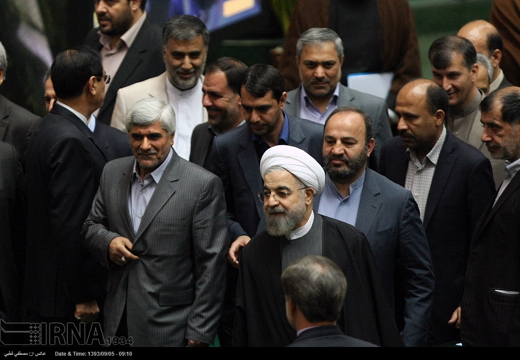
In an open session Wednesday Majlis (parliament) endorsed President Hassan Rouhani’s fifth nominee to head the Ministry of Science, Research and Technology.

The parliamentary session was held in the presence of President Rouhani during which he urged the lawmakers to support his nominee. It was attended by 235 lawmakers and chaired by Speaker Ali Larijani.

The chamber approved Mohammad Farhadi as the minister of science, research and technology with 197 votes in favor, 28 against, and 10 abstentions.

Farhadi needed 50 percent plus one of the votes to become minister.

Last Tuesday, Majlis turned down Rouhani’s fourth nominee Fakhreddin Ahmadi Danesh-Ashtiani.

Danesh-Ashtiani failed to obtain a vote of confidence when 171 lawmakers voted against him, 70 in favor, and 13 abstained.

Iran strongly supports Iraq in fight against terrorism: Deputy FM

Hassan Qashqavi
Hassan Qashqavi

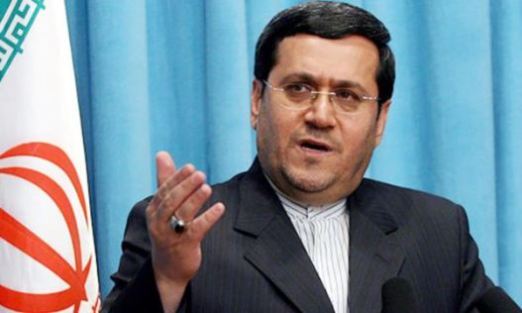
Hassan Qashghavi, a high-ranking Iranian diplomat who is in Baghdad, in a meeting with chairman of the Islamic Supreme Council of Iraq underlined Iran’s strong support for Iraqi government and people in the fight against terrorism.

Deputy Foreign Minister for Consular and Parliamentary Affairs Hassan Qashghavi, in a meeting with Ammar al-Hakim, offered congratulations on recent victories of the Iraqi military and people in the fight against terrorists and expressed hope for continuation of such victories.

Ammar al-Hakim, for his part, called Iran’s role in helping Iraqi government in fight against terrorist groups valuable and appreciated Iran’s support for Iraq.

He also underlined the necessity of promoting ties between the two countries in all fields.

[…]

Iran, Turkey will solve Syrian crisis politically: Official

Hossein-Amir-Abdollahian

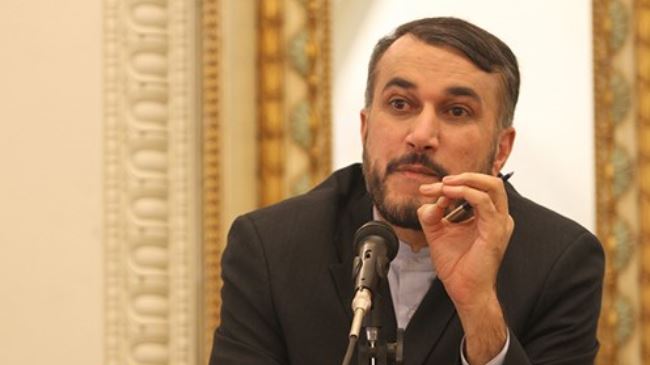
Iran’s Deputy Foreign Minister for Arab and African Affairs Hossein Amir-Abdollahian says the Islamic Republic and Turkey will succeed in finding a political solution to the Syrian crisis.

In a meeting Tuesday with Umit Yalcın, Director General for Bilateral Political Affairs at Turkey’s Foreign Ministry, the Iranian official said Tehran and Ankara play a strategic role in the Middle East and should stay in touch about regional developments.

“Given the [present] circumstances in the region, Tehran and Ankara can play a leading political role in settling the crises and we are ready to turn consultation in this regard into practical cooperation,” Amir-Abdollahian said.

Reiterating that the Syrian conflict should be solved through democratic ways without any military intervention, he said Iran backs “broad-based national dialog” and opposes foreign governments’ arming of the Syrian opposition.

The Iranian diplomat noted that any solution to the ongoing problems in the Middle East, particularly in Syria and Iraq, would not bear fruit without Iran’s involvement.

Amir-Abdollahian further expressed Iran’s determination to cooperate with Iraq in the fight against terrorism, saying, “We respect Iraq’s national unity, sovereignty, independence and territorial integrity and explicitly oppose measures by certain parties to disintegrate Iraq.”

The Turkish official, for his part, said Iran and Turkey share views on the importance of restoration of peace and stability to the region, maintenance of territorial integrity and security of Iraq and Syria and eradication of terrorism in the region.

Yalcın added that settlement of the ongoing problems in the Muslim world is a top priority in Tehran-Ankara cooperation.

[…]

Iran, China agree to broaden cooperation in fight against terrorism, money laundering

Nasser Seraj

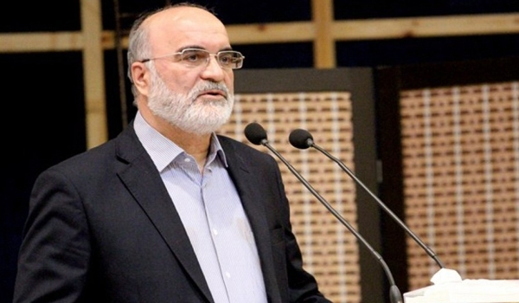
Iranian and Chinese officials in a meeting in Tehran Tuesday agreed to increase cooperation in several areas, including in the campaign against money laundering and extradition of financial offenders.

The agreement was reached between Head of Iran’s General Inspectorate Nasser Seraj and Chinese Deputy Prosecutor General Jiang Xian Chu.

“We are willing to increase our cooperation in the campaign against financial and political corruption, terrorism and money laundering,” Seraj said during the meeting.

The senior Chinese official, for his part, pointed to the age-old relations between the two nations, and expressed hope that mutual cooperation would further expand in the fight against terrorism and financial corruption.

[…]

Trade between Iran and China last year was estimated at $45 billion.

Iran is currently China’s third largest supplier of crude, providing Beijing with roughly 12 percent of its total oil consumption annually.

Iran condemns raid on prominent Bahraini Shiite cleric’s house

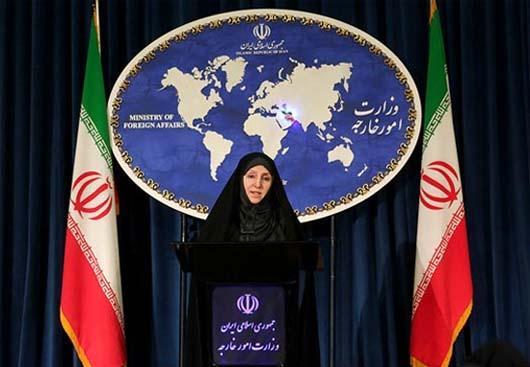
Iranian Foreign Ministry Spokeswoman Marziyeh Afkham

The Iranian Foreign Ministry on Tuesday strongly condemned Bahraini forces’ raid on the house of prominent Shiite cleric Ayatollah Sheikh Issa Ahmed Qassem a day earlier.

“Desecration of religious symbols and insulting popular religious leaders and scholars signify the Bahraini government’s failed security and ethnic approaches to dealing with peaceful protests by the people of the country,” Foreign Ministry Spokeswoman Marziyeh Afkham said.

Bahraini security forces raided the house of Ayatollah Sheikh Issa Qassem on Monday. Witnesses say regime forces even took photos of the ID cards of everyone who was inside the house in Diraz, west of the capital Manama.

The Iranian spokeswoman called on Bahraini authorities to show respect for the highly respected position of Muslim scholars and religious leadership in the country and punish those who committed this “unacceptable measure” [raid on Sheikh Issa’s house].

The raid on the home of the spiritual leader of the opposition al-Wefaq group came just a few days after people voted in an alternative election held by the main opposition parties of Bahrain.

The opposition had boycotted the parliamentary elections which were held with a low turnout on the same day across the tiny kingdom.

West cannot bring Iran to knees over N-issue: Leader

Leader-meeting
Leader-meeting

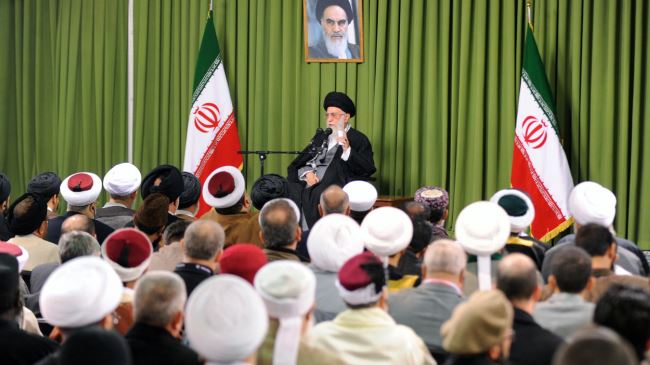
Ayatollah Khamenei made the statements in a Tuesday meeting with participants in the World Congress on Extremist and Takfiri Movements in the Islamic Scholars’ View, held in the Iranian holy city of Qom on November 23-24.

“In the nuclear issue, the United States and colonial European countries got together and did their utmost to bring the Islamic Republic to its knees, but they failed, and will continue to fail,” Ayatollah Khamenei noted.

Iran and the P5+1 states – Russia, China, Britain, France, the US and Germany – wrapped up a week of closed-door nuclear negotiations in Vienna, Austria, on Monday.

The two sides decided to extend their discussions for seven more months in the search for a comprehensive agreement that would end a 12-year dispute on Iran’s peaceful nuclear work.

The Leader further referred to the violence by Takfiri ISIL extremists operating in the Middle East, stressing that such a Takfiri current serves the objectives of the hegemonic powers.

Ayatollah Khamenei said the aim of the so-called coalition, led by the United States to fight the ISIL is a “mere lie,” adding that Washington actually “seeks to keep this scourge alive, which of course it won’t be able to.”

Elsewhere in his remarks, Ayatollah Khamenei reaffirmed Iran’s support for the Palestinians in Gaza and the Israeli-occupied territories, adding the Palestinians in the occupied West Bank should be armed to defend their land, just like the Gazans.

“We are not entangled in religious divisions, and we will provide Hamas and Islamic Jihad in Palestine with the same assistance we offered to Shia Hezbollah in Lebanon,” the Leader noted.

Ayatollah Khamenei also called on Muslim scholars to help uproot the Takfiri current, which has diverted the Islamic world’s attention from the Israeli regime’s atrocities against the holy al-Aqsa Mosque in East Jerusalem al-Quds.


Rafsanjani warns Islamic countries against impact of discord

hashemi-Qatar
hashemi-Qatar

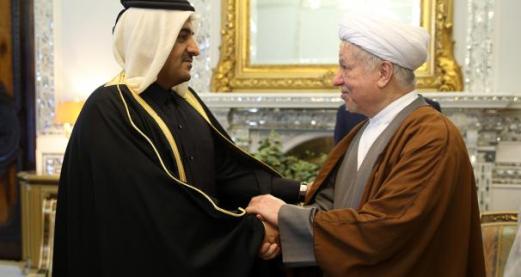
Chairman of Iran’s Expediency Council Ayatollah Akbar Hashemi Rafsanjani on Monday warned the Islamic countries about the weakening impact of discord, calling for religious solidarity.

At a meeting in Tehran with visiting Qatari Judiciary Chief Ali Bin Fatis al-Marri, Ayatollah Rafsanjani said Iran has always attached special significance to expansion of relations with the neighboring and Muslim Qatar.

‘With a population of 1.7 billion and enormous resources, nearly 60 Islamic countries could turn into the top decision-maker in regional and international arenas,’ the Ayatollah said.

Ayatollah Rafsanjani, who has also served as Iran’s president for two terms, recalled his administration’s policies for promotion of cooperation with Persian Gulf Arab states and Central Asian countries and said, ‘Cooperation with Persian Gulf states, particularly Qatar, on drinking water supplies was one of our plans.’

Rafsanjani said in addition to personal efforts, he endeavors, as part of the official policy of the Islamic establishment, to ensure Islamic solidarity.

He went on to say Islamic scholars are duty-bound to prevent ignorance from spreading to Islamic communities.

The Qatari judiciary chief, for his part, said that the Qatari Emir favors enhanced relations between the two countries, adding, ‘We know that our common ground outweighs what divides us.’

Recalling to the role of Ayatollah Rafsanjani in the Muslim world, al-Marri called on the Iranian veteran politician to step in and help narrow the gap among the Muslims.