Tuesday, December 30, 2025
Home Blog Page 4876

President Rouhani: No need for foreign forces in region

Rouhani-President-Iran

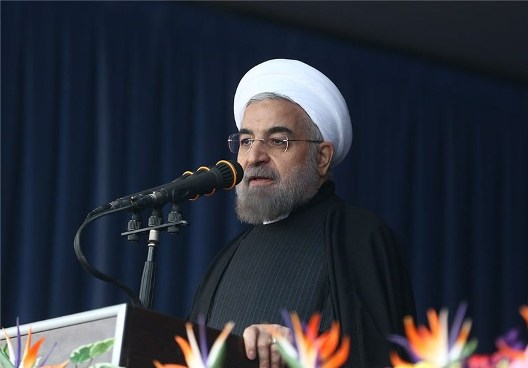
Iranian President Hassan Rouhani on Wednesday renewed Iran’s opposition to the presence of foreign forces in the region, adding that regional states are capable of ensuring security of the region.

“The Islamic Republic of Iran and countries in the region can defend their territory and region well, and there is no need for foreign forces in the region under any pretext,” the Iranian president told reporters in a visit to Iranian army’s massive military drills.

Pointing to the efforts to spread Iranophobia in the region, Rouhani stressed that Iranian Armed Forces are not after aggression against any other country, and reiterated that Iran alongside regional countries can defend the region.

He further underscored that the power and capabilities of Iranian Armed Forces are a source of tranquility, confidence, and security not only for the Iranian people, but also for the regional nations.

Iran and several regional countries have repeatedly stressed that foreign forces should not interfere in the affairs of the region.

Among others, Iraqi Prime Minister Haider al-Abadi had earlier announced that his country does not need foreign troops in the battle against the Islamic State of Iraq and the Levant (ISIL) terrorist group, and Iraq is completely capable of defeating ISIL terrorists.

Rafsanjani urges OPEC cooperation to prevent further drop in oil prices

Hashemi Rafsanjani
Hashemi Rafsanjani

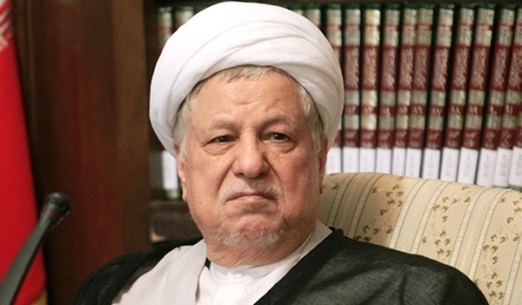
Chairman of the Expediency Council Akbar Hashemi Rafsanjani called on OPEC member-states to stop falling crude prices in international markets through unity against consumers’ excessive demands.

“OPEC is an organization for supporting oil producers and it should not be influenced by the excessive demands of oil consumers,” Rafsanjani said in a meeting with Algerian Ambassador to Iran Sofiane Mimouni in Tehran on Wednesday.

The Algerian envoy, for his part, pointed to the sudden fall of oil prices in international markets, and said, “OPEC should regulate its policies within the framework specified by oil producers.”

Earlier, Iranian Deputy Foreign Minister Hossein Amir Abdollahian strongly criticized Saudi Arabia for not cooperating with other OPEC member-states to prevent further fall in oil prices.

“Riyadh’s lack of effort in preventing the price drop is at odds with the atmosphere of the diplomatic negotiations between Iran and Saudi Arabia,” Amir Abdollahian told reporters.

The Iranian deputy foreign minister reiterated that the Saudi Arabia’s strategic mistake will be harmful to the entire Middle East and it will only benefit the foreigners.

Also, President Hassan Rouhani warned that the sudden decrease in oil prices in recent months is a plot hatched by the enemies against the regional people and Muslims.

“The fall of crude prices is not merely an economic issue, rather it is the result of certain states’ political plot and planning,” Rouhani said, addressing a cabinet meeting in Tehran.

[…]

In relevant remarks, President Rouhani downplayed the effects of falling oil price, and underlined his government’s plans to boost non-oil exports to $50bln next year.

“One of the most important topics of the government’s economic plans is increasing non-oil exports and this growth will help our economy,” Rouhani said in Tehran, addressing an open session of the parliament in which he presented the budget bill for the next Iranian year (to start on March 21) to the legislative body.

“We hope to see a considerable share of non-oil exports next year and by continuing this trend, (the country’ revenues from) non-oil exports will surpass $50bln,” he added.

Iran decries deadly bombing in Yemen

Marziyeh-Afkham
Marziyeh-Afkham

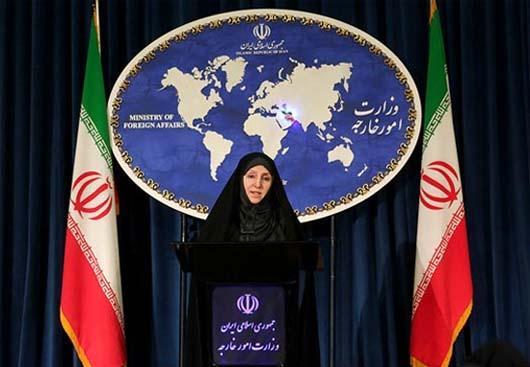
Iran has strongly condemned the recent deadly terrorist attack against Shiites in central Yemen, expressing sympathy with the families of the victims.

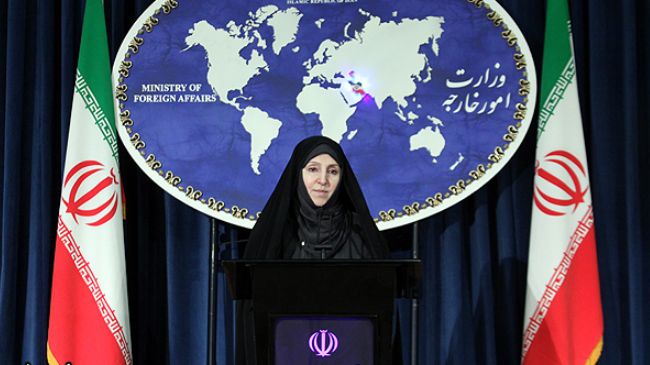
On Wednesday, Foreign Ministry spokeswoman Marzieh Afkham underlined the necessity for cooperation among all political and social parties in Yemen in implementing the recent UN-brokered peace deal between the government and Ansarullah fighters.

Yemen has been grappling with a tough political conflict between the central government and Ansarullah revolutionaries, also known as Houthis, who played a major role in the ouster of the country’s longtime dictator Ali Abdullah Saleh.

The Iranian official said the Yemeni people’s vigilance will uproot the scourge of terrorism in the country.

On Wednesday, over 30 people were killed and dozens of others wounded after an assailant blew his explosives in a cultural center in the city of Ibb, where a group of the Shiite Houthi movement’s Ansarullah fighters were preparing to celebrate the anniversary of the birth of Prophet Muhammad (Peace Be upon Him).

No group has claimed responsibility for the deadly attack, but the al-Qaeda group in Yemen has targeted Houthis in the past.

Over the past months, al-Qaeda militants have frequently carried out attacks on Yemen’s security forces. The militants have also been engaged in battles with the Shiite Ansarullah fighters.

Yemen’s central government has so far failed to confront the terrorist threat.

A dress with a message of peace and solidarity with the world

Asia Cup 2015

A report posted by honaronline.ir on December 30 focused on a traditionally-designed dress which is meant to be a representative of Iranian culture in the Asian Cup 2015. What appears below is a partial translation of the item:


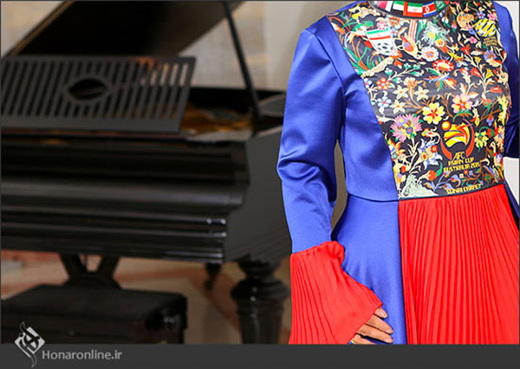
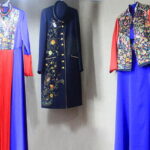
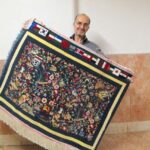
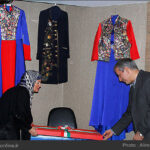
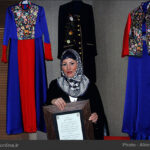
asia cup 2015Dresses represent the cultural and national identity of nations. The dress named Golestan after a namesake framed rug is designed to represent the Iranian culture on the international stage too. The Golestan dress has been designed by Mahnaz Armin to be presented at the Asian Cup 2015 in Australia. The pattern of the bodice has been inspired by the Golestan framed rug.

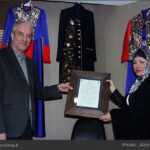
Mahnaz Armin is an international dress designer focusing on Islamic designs. Earlier, at the 2014 World Cup in Brazil in cooperation with Hossein Kazemi, an artist who wove a Persian rug for the 2014 event, and Adel Gheybi, the sponsor of the carpet for Brazil World Cup, she designed a dress she called Vida. The dress was later handed over to the Brazilian deputy ambassador to Tehran as a symbol of Iran’s cultural identity.

The Golestan dress has been made in two forms with the same color and design and is expected to be presented to Football Federation of Australia (FFA) by the Football Federation of the Islamic Republic of Iran.

As for the idea and inspiration behind the dress, Armin said, “As a designer, in order to support the Iranian national soccer team in Australia, I sought to offer the best cultural design which can convey the message of the Iranian nation.”

“Azure blue is the dominant color of the dress. The red which appears in the pleated parts of the dress is the color that the flags of Iran and Australia have in common. Simplicity was of great importance to me.

“The folds in the loose-fitting red part of the skirt are a symbol of solidarity and harmony between nations. The descent of folds has been inspired by solidarity marches. The collar of the dress features the flags of all Asian nations. The bodice of the two-piece dress is like a picture whose margins are azure blue,” said the designer.

She added, “In the framed rug woven for the Asian Cup 2015, silk warps and merino threads in 20 colors have been used.”

Foreign direct investment in South Asia

South_Asia

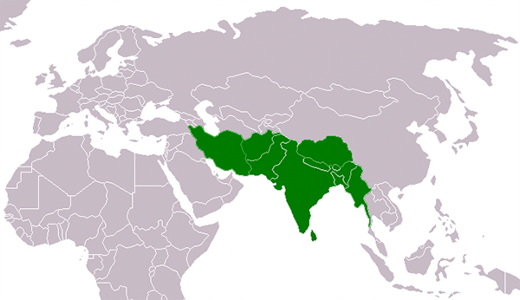
The Foreign Direct Investment (FDI) South Asia attracted in 2013 stood at $35.6 billion, a 10 percent growth over the year before. In West Asia, it had a downward spiral for the fifth year in a row due to tensions sweeping the region, and declined 8.6 percent to $44.2 billion in 2013. The overall foreign investment absorbed by South and West Asia surpassed $79.8 billion, a 1.5 percent drop over 2012.

The Institute for Trade Studies and Research (ITSR) has released an article by Amir-Reza Souri, Ph.D., on FDI in South Asia which is in the grip of unrest and political uncertainty. The following is the translation of the article which also looks at the good chance Iran stands of absorbing more foreign investment:

A look at regional countries shows that India tops the list of countries with highest absorption of FDI. With a 17 percent rise over the previous year, India secured $28.2 billion in foreign investment in 2013. India which has opened its services sector to foreign investors and developed its retail industry claimed a 35.5 percent share of FDI in the region.

Turkey ranks second with its overall FDI standing at $12.9 billion. Germany has the biggest share of foreign investment in Turkey followed by the Netherlands, Russia, Azerbaijan and Austria. The country’s finance, energy and production sectors have taken in $3.7 billion, $2.5 billion and $2 billion in FDI respectively. Turkey continues to diversify its foreign investment sources, trying to pull in finances from India, Japan, Russia, Malaysia, and Persian Gulf states as well as the US.

The United Arab Emirates is next. The UAE, which attracted $10.5 billion in FDI in 2013, experienced an increase in FDI absorption for the fourth consecutive year. The Persian Gulf country saw its aluminum, petrochemicals, tourism, transportation, and real estate industries grow after it increased foreign investment, and banks were encouraged to grant loans to real estate owners. This demonstrates that the country successfully managed to ride out the 2009 economic crisis.

Foreign investment in Saudi Arabia landed in negative territory for the fifth year running. In 2013, it stood at $9.3 billion, dropping 24 percent over the previous year. As a result Saudi Arabia slipped from the region’s third largest country to the fourth as far as foreign investment went.

More than one million foreign workers left the kingdom in this period. It comes as mega investment projects are to be carried out in Saudi Arabia’s refineries and petrochemical plants. The gap has created an imbalance between supply and demand in the country.

Iran stands fifth. Foreign investment has mainly been funneled into oil exploration and production. According to a report by the United Nations Conference on Trade and Development (UNCTAD), as a result of sanctions imposed against Iran, FDI declined to $3.0 billion in 2013, a 36 percent decrease from $4.7 billion in 2012.

Although Iran has huge potential for attracting FDI, it has absorbed a meager $41 billion over the past 23 years; this amounts to four percent of the money poured into the region, whereas rival countries such as Saudi Arabia and the UAE have claimed 21 and 11 percent of foreign investment in the region respectively.

Iraq is sixth in the region. Its foreign investment, mainly in hydrocarbon reserves, climbed 20 percent over the year before to hit $2.9 billion despite the instability of the central government.

Lebanon comes after Iraq. Its FDI reached $2.8 billion in 2013, a 24.3 percent decline on the year before. Persian Gulf Cooperation Council (PGCC) members were the main foreign investors who put their money in Lebanon’s real estate.

The eighth country is Kuwait which oversaw the inflow of $2.3 billion in FDI in 2013, 41 percent down from $3.9 billion in 2012.

Jordan and Oman are among a handful of countries in the region which had growing foreign investment despite regional unrest. They attracted $1.8 and $1.6 billion in 2013, showing 20 and 60 percent growth respectively.

A look at FDI in the region shows that a downward trend in Saudi Arabia and Qatar since 2009 and a steady rate in Kuwait and Iraq – foreign investment has improved in some regional country such as the UAE, though – are mainly to blame for a drop in regional investment.

The regional prospect of foreign investment, especially in PGCC states, is bleak because of political uncertainty, even in countries which are not directly involved in regional unrest. Huge hydrocarbon deposits are credited for a relative rally of FDI in some regional countries. This comes as some companies have shown interest in making a comeback to the US market which is the [world’s] biggest oil and gas consumer because new technologies have helped this country extract hydrocarbon resources (oil sands).

On the other hand, the growing oil and gas revenues have swelled PGCC countries’ foreign exchange reserves and prompted them to send money abroad. In Qatar and Kuwait, for instance, the capital flight in 2013 quadrupled and doubled – respectively – over 2012.

This trend is projected to persist due to the small size of PGCC economies and their lack of diversified businesses. It has opened up an opportunity for Iran – a stable country in the region – to adopt appropriate policies to attract uninvested capital.

Tragic back-to-back losses of a cheetah cub and its mother

cheetah cub

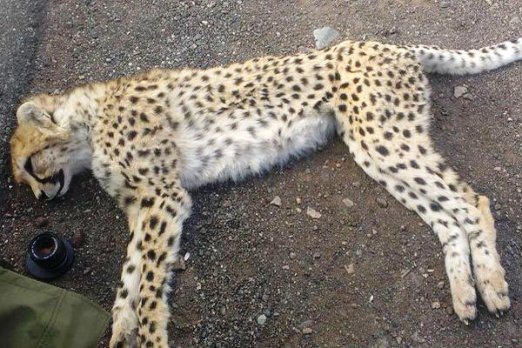
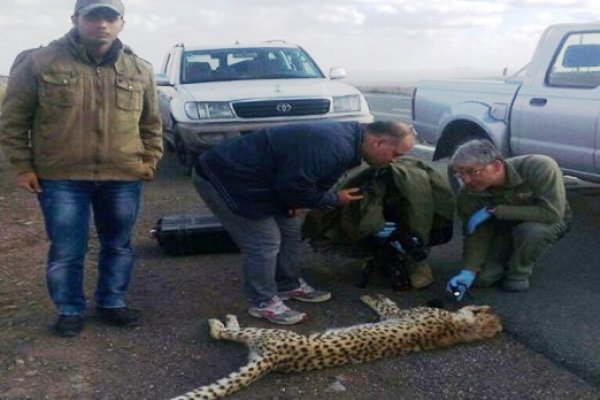
On December 25, Mehr News Agency reported on the tragic losses of two Asiatic cheetahs in car accidents in northeastern Iran only four days apart. The following is the translation of the report as well as photos that the website of Iran Environment and Wildlife Watch (www.iew.ir) has put online:

“Iran’s environmentalists and wildlife enthusiasts received two devastating pieces of news only four days apart,” Director of Iran Environment and Wildlife Watch Keyvan Houshmand told the news agency.

He added that after a female cheetah was killed in a car accident on Semnan-Mashhad Road in the vicinity of Khar Turan National Park on December 17, one of her cubs was found dead on the same spot after being run over on December 21.

He went on to say that the photos are those of the dead cheetah cub and there is no shot available of its dead mother.

“The loss of these two cheetahs has caused irreparable damage to the ever-shrinking and fragile population of Asiatic cheetahs,” he concluded.


Iranian-cheetah cub

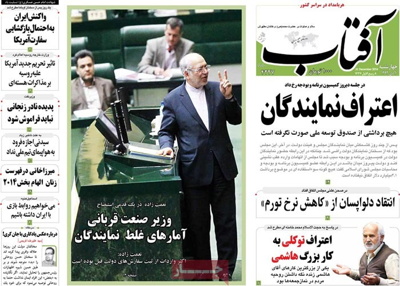
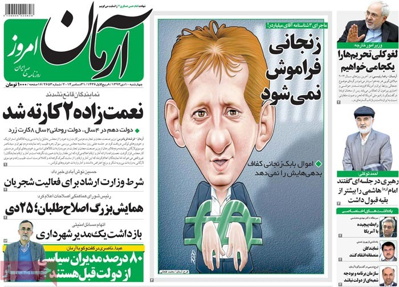
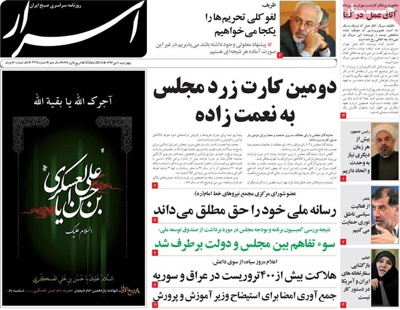
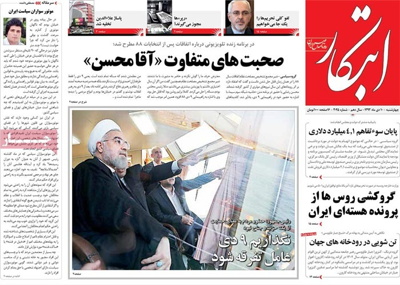
A look at Iranian newspaper front pages on Dec. 31

Iranian Newspapers Headlines

Many Iranian dailies on Wednesday led on the comments of Foreign Minister Mohammad Javad Zarif in parliament that Iran seeks all sanctions to be lifted at the same time. The second yellow card of the Islamic Consultative Assembly to the minister of trade over imports of rice and luxury cars and an end to a row between parliament and the executive over alleged withdrawal by the latter of money from the National Development Fund also dominated the front pages of Iranian newspapers.

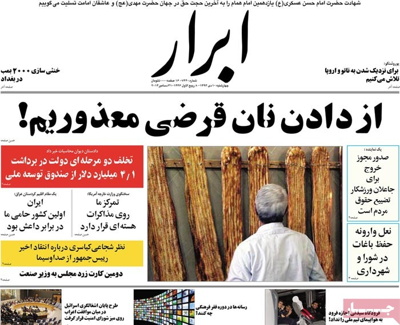
Abrar: The plane carrying members of the Iranian national soccer team landed in Melbourne rather than in Sydney. [The Iranian squad is in Australia to take part in the Asian Cup 2015.]


Abrar daily-12-31


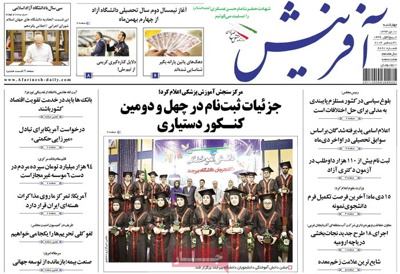
Afarinesh: “Political maturity in the country requires commitment to a model to settle differences,” said the Iranian parliament speaker.


Afarinesh daily-12-31


Aftab-e Yazd: The minister of mines, industries and trade is on the verge of being impeached by the Islamic Consultative Assembly. Wrong figures presented by some MPs are to blame.

Aftab-e Yazd: At a meeting of parliament’s Planning and Budget Committee, MPs admitted that there has been no withdrawal by the government from the National Development Fund.


Aftab Yazd daily-12-31


Arman-e Emrooz: “We want all sanctions to be lifted at the same time,” said Iranian Foreign Minister Mohammad Javad Zarif.

Arman-e Emrooz: The assets of Babak Zanjani [who stands accused of massive corruption] are not enough to pay off his debts.


Arman Emrooz daily-12-31


Asrar: Some MPs are collecting signatures to have the minister of education impeached.


Asrar daily-12-31


Ebtekar: Alaeddin Shopping Center, a cell phone hub in the capital,has been evacuated after a court ordered its illegally-built seventh floor removed.

Ebtekar: Russia is using Iran’s case as a bargaining chip. The Russian Foreign Ministry has announced that in case the US imposed new sanctions against Moscow, Russia would prevent the conclusion of a nuclear deal between Iran and P5+1.


Ebtekar daily-12-31


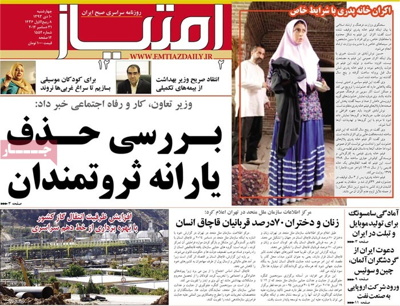
Emtiaz: Samsung Electronics has signaled its readiness to make cell phones and tablet computers in Iran.

Emtiaz: Iran has extended invitations to German, Swiss and Chinese tourists to visit the country.


Emtiaz daily-12-31


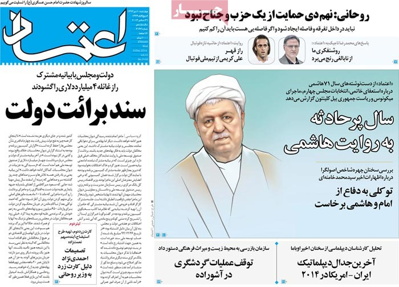
Etemad: The Inspectorate General has ordered a halt to all tourism development efforts on the Caspian island of Ashuradeh.

Etemad: The decisions made by the Ahmadinejad government [the green-light to imports of rice and luxury cars] have led MPs to issue a second yellow card to President Rouhani’s trade and industry chief.


Etemad daily-12-31


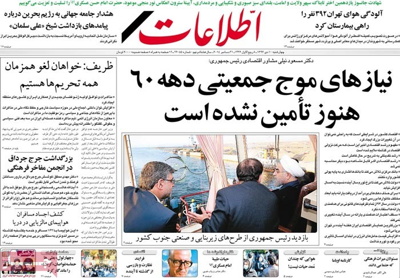
Ettela’at: Air pollution in Tehran has sent 392 people to hospital emergency rooms.

Ettela’at: President Rouhani has inspected development projects underway in the south.

Ettela’at: “The needs of those born during the baby boom of the 1980s have yet to be met,” Masoud Nili, an economic advisor to President Rouhani, said.


Ettelaat daily-12-31


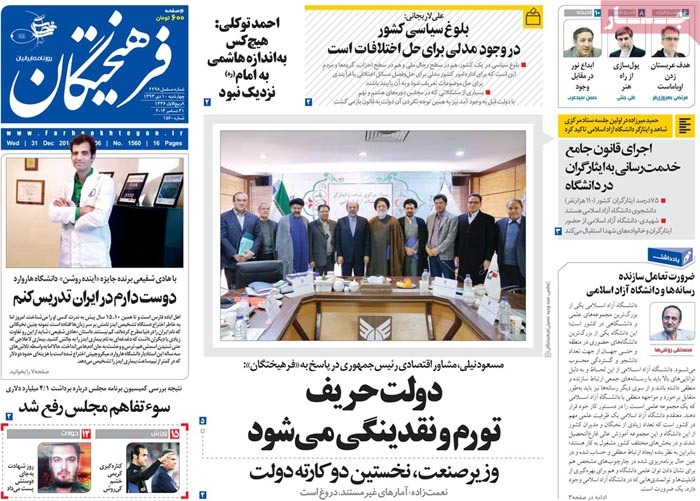
Farhikhtegan: [Principlist MP Ahmad] Tavakoli said no one was as close to Imam Khomeini as [Akbar Hashemi] Rafsanjani.


Farhikhtegan daily-12-31


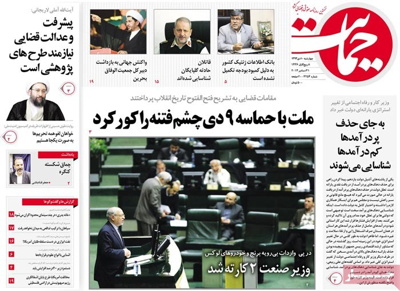
Hemayat: “The killers involved in a deadly armed robbery in central Iran have been identified,” said Police Chief Brigadier General Esmail Ahmadi Moghaddam.


Hemayat daily-12-31


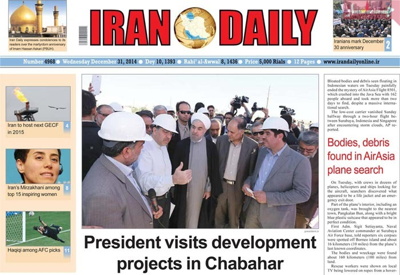
Iran Daily: Iran’s Mirzakhani [a professor of mathematics at Stanford University] among top 15 inspiring women.


Iran daily-12-31


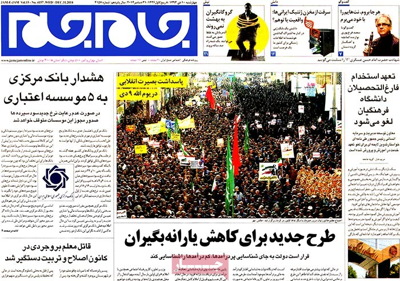
Jamejam: The Central Bank of Iran has warned banks to fully comply with regulations governing interest rates.


Jame Jam daily-12-31


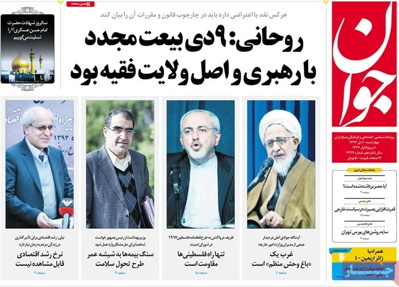
Javan: President Rouhani said the massive turnout of people on December 30, 2009 amounted to renewal of public allegiance to the leader and the rule of the jurisprudent.


Javan daily-12-31


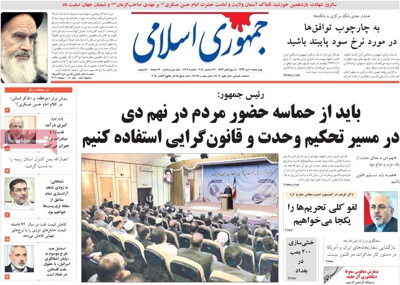
Jomhouri Islami: “All Iraqi territory will soon be purged of terrorists,” said the secretary of Iran’s Supreme National Security Council.

Jomhouri Islami: “The reopening of embassies is not on the agenda of talks between Iran and the US,” said Iranian Foreign Ministry Spokeswomen Marzieh Afkham.


Jomhouri Eslami daily-12-31


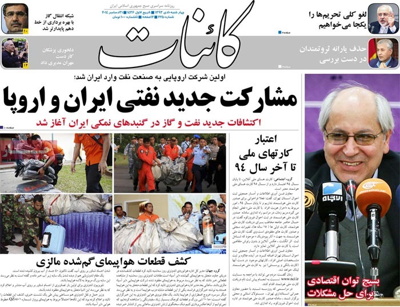
Kaenat: Inauguration of a tenth national gas line has shored up the country’s national gas supply.

Kaenat: New oil cooperation between Iran and Europe. A fresh round of oil and gas explorations has started in Iran.


Kaenat daily-12-31


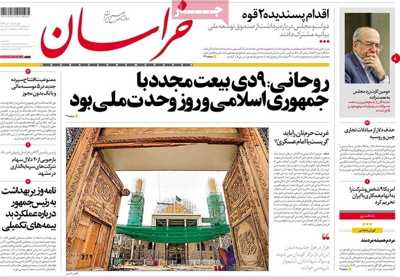
Khorasan: The Iranian health minister has written a letter to the president complaining about the performance of companies that offer complimentary insurance to the public.


Khorasan daily-12-31


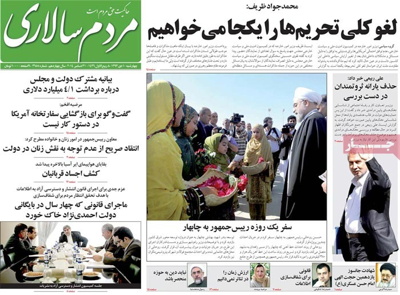
Mardomsalari: The minister of labor and social welfare has said that a plan to cut the cash subsidies of the rich is under study.


Mardom Salari daily-12-31


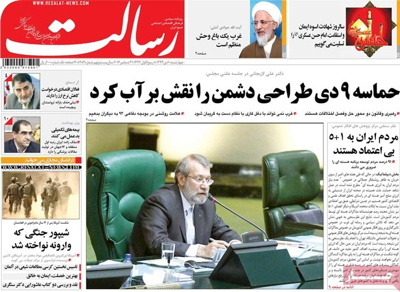
Resalat: A poll conducted by the Center for Public Opinion Studies shows that Iranians are distrustful of P5+1.


Resalat daily-12-31


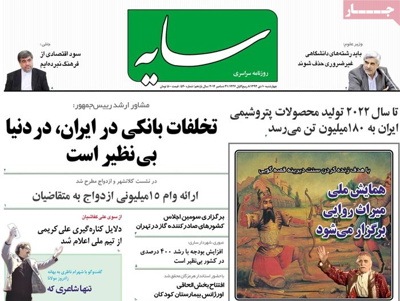
Sayeh: Tehran is to play host to a third meeting of the natural-gas exporting countries.

Sayeh: A national gathering on the “Heritage of Storytelling” is to be held.


Sayeh daily-12-31


Zarif: Resistance is the only way to restore rights of Palestinians

Zarif-Tunis

Foreign Minister Mohammad Javad Zarif said on Tuesday that resistance is the only way to restore the rights of the Palestinian nation.

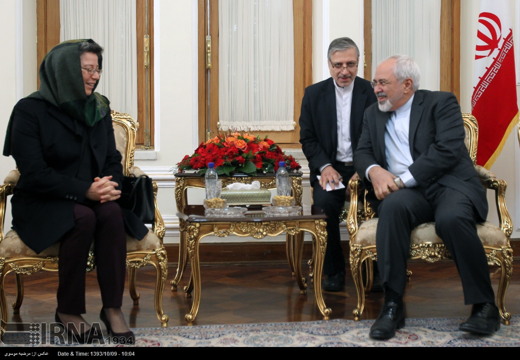
He made the remarks in a meeting with visiting Tunisian Minister of Trade and Handicrafts, Najla Harrouche.

He expressed pleasure with the UN draft resolution to recognize the state of Palestine and said that resistance is the only way for the Palestinian nation to reclaim their legitimate rights and liberate the occupied territories of Palestine from the Israeli occupation.

The support lent by Tunisia to Palestinian aspirations is praiseworthy, Zarif said.

On successful holding of election in Tunisia, Zarif said this success has been achieved through collective contribution and solidarity of all the Tunisian people.

Referring to extremism and terrorism as a common threat to all countries in the region, he called for active and collective contribution of all governments to the fight against such extremism and terrorism.

Expressing satisfaction over the holding of ‘Tunisian Cultural Week’ in Iran, he said the Islamic Republic of Iran attaches importance to expansion of relations with Tunisia and welcomes expansion of mutual and regional relations and closer cooperation.

Given the scientific and industrial advancement of the Islamic Republic of Iran, he said Tehran is to put all its capabilities at the disposal of its friends in the region and is to broaden all-out cooperation with Tunisia mainly in the transfer of new technological know-how, Zarif said.

Iran supports any policy or approach leading to restoration of tranquility and sovereignty of people and is to spare no efforts to this end, said the Iranian foreign minister.

The Tunisian minister, for her part, said Tunis underlined expansion of economic, political, commercial, scientific, cultural and tourism cooperation with Iran.

She also underscored that Tunis backs Iran’s legitimate right to peaceful nuclear energy and said that she believes the issue should be resolved only through political means.

On the issue of Palestine, she said Tunis has always backed Palestine and all countries in the region are expected to fully back Palestine.

The Tunisian minister lauded Iran’s significant achievements in various scientific fields and technological know-how and expressed hope to use Tehran’s invaluable experiences.

FM: Iran seeks removal of all sanctions

Mohammad Javad ZArif

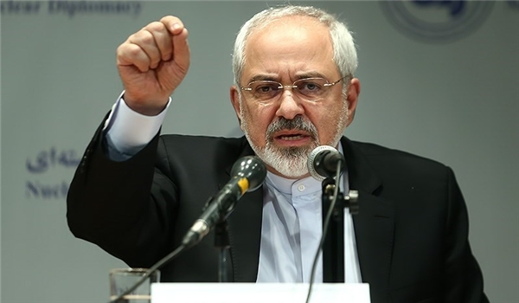
Iranian Foreign Minister Mohammad Javad Zarif underlined the country’s determination to settle its nuclear dispute with the West, and said Tehran wants a full removal of all sanctions if there is to be a deal with the world powers.

“The negotiating team backed by the Iranian nation’s resistance, seeks the removal of sanctions all at once,” Zarif said, addressing a meeting with Iranian lawmakers on Tuesday.

Noting that the sensitive nature of the negotiations and the differences have prolonged the negotiations between Tehran and P5+1 (the US, Russia, China, Britain and France plus Germany), he said, “The negotiations continue in a precise manner.”

Zarif underscored that the Iranian side is aware of the pressures exerted on the other side and will continue the talks, adding that based on Supreme Leader of the Islamic Revolution Ayatollah Seyyed Ali Khamenei’s order, “if there is a logical proposal, we will accept it, otherwise, we will be ready for any outcome”.

In a relevant development earlier this month, Zarif sent separate letters to his counterparts around the world to reiterate that any nuclear deal with the world powers should include the annulment of all sanctions against Tehran.

“… lifting of all sanctions, is an essential component of any agreement. But some members of P5+1 have become increasingly reluctant to abandon this counterproductive, illegal and inhuman instrument of coercion even at the expense of putting in jeopardy the entire process that provides certainty and assures transparency,” Zarif said in separate letters to his counterparts around the world.

He briefed his counterparts on the latest developments in the negotiations between the Islamic Republic of Iran and P5+1 on Tehran’s peaceful nuclear program.

Reopening of US, Iran embassies not on talks agenda: Afkham

Iranian Foreign Ministry Spokeswoman Marziyeh Afkham

The two countries’ talks are solely about the nuclear issue and the issue (reopening of embassies) is not on the agenda of the two countries’ talks,” said Foreign Ministry Spokeswoman Marzieh Afkham.

She made the comments in reaction to a report published by an Arab media outlet, alleging that Iran and the US will discuss reopening embassies in the talks.

On November 4, 1979, a group of revolutionary Iranian university students took over the US Embassy, which they believed had turned into a “den of espionage” that aimed to overthrow the nascent Islamic Republic establishment. Documents found at the compound later corroborated the claims by the students.

Tehran and Washington broke their diplomatic ties in 1980.