Thursday, December 25, 2025
Home Blog Page 4677

GECF urges cooperation over market issues

GEFC

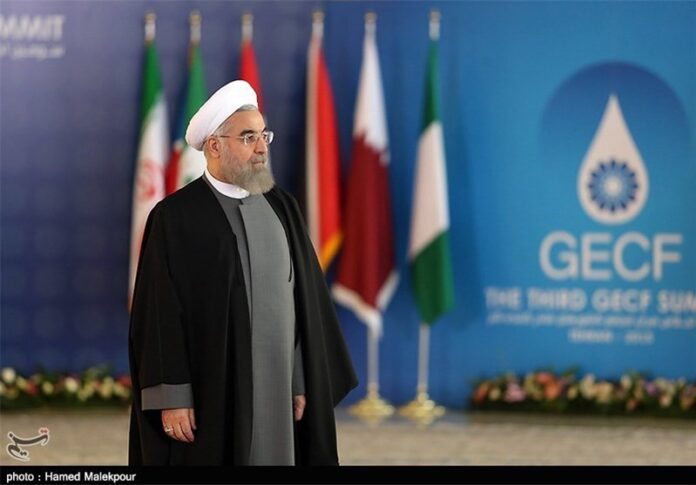
A landmark summit of the Gas Exporting Countries Forum (GECF) wrapped up in Iran’s capital on Monday evening.

The GECF member states at the end of the summit issued a declaration that underscored the need to facilitate stronger cooperation over a series of industry issues including the transfer of expertise and pricing mechanisms.

The declaration also highlighted the need for member states to work together over the security of natural gas supplies to the markets worldwide.

It further echoed the objection of the member states against the application of extraterritorial laws and regulations and economic sanctions in gas trade and against the GECF states.

The full text of the Tehran Summit Declaration is as follows:

Tehran Summit Declaration of the Heads of State and Government of GECF Member Countries

23 November, 2015

Tehran, Islamic Republic of Iran

Natural Gas: A fuel of choice for sustainable development

We, the Heads of State and Government of the Gas Exporting Countries Forum (GECF) gathered in Tehran, Islamic Republic of Iran on November 23, 2015, upon the invitation extended by HE Dr. Hassan Rouhani, President of the Islamic Republic of Iran, to meet for our Third GECF Summit in the spirit of solidarity and cooperation:

(i) Reaffirming the absolute and permanent sovereignty of GECF member countries over their natural gas resources and their commitment to the principles and objectives of the statues of the Forum;

(ii) Recalling the declarations of the First Summit in Doha on November 15, 2011, and the Second Summit held in Moscow on July 1, 2013;

(iii) Cognizant of the member countries abilities, as reliable exporters of natural gas, to plan and manage effectively the development of their natural gas resources and to contribute to enhancing the security of natural gas supply;

(iv) Acknowledging the importance of gas energy and financial market stability in ensuring sufficient investments in current and future natural gas projects;

(v) Highlighting the importance of cooperation and coordination among member countries through exchange of information on gas industry and sharing of best practices as well as collaborative actions in promoting the use of natural gas worldwide;

(vi) Emphasizing the benefits of natural gas as a clean and abundant energy source and its potential contribution to global sustainable development;

(vii)  Stressing the importance of a fair and reasonable value for natural gas resources in a level playing field environment in the face of challenges posed by economic and political uncertainties as well as environmental concerns;

(viii)  Recognizing that the rising demand for natural gas driven by population growth, economic growth and environmental considerations calls for a greeted focus on the security of demand and supply and the application of stable, reliable and transparent market mechanisms free of politically motivated restrictions and unilateral decisions and interventions;

(ix)  Underscoring the need to support a collaborative approach and mechanism of policy coordination and strategy alignment on the world gas markets to enhance the prosperity and welfare of the member nations.

Declare our common determination to:

1.  Support the common interests of GECF member countries by implementing coordinated policies and strategies at the international level to enhance the overall socio-economic benefits of their natural gas resources,

2.  Promote natural gas consumption as the cleanest fossil fuel with a vital role in the global energy mix aiming to archived Sustainable Development Goals (SDG) for a clear, reliable and efficient source of energy, [to be convened and integrated international deliberations of COP 21],

3.  Enhance efforts in joint investments among member countries with the aim of providing efficient and reliable natural gas supply to world markets,

4.  Emphasize the fundamental role of long-term gas contracts in financing large-scale gas projects along the value chain, and develop contractual frameworks, taking into account the extensive efforts, investments, commitments and risks undertaken by member countries,

5.  Promote an open and constructive dialogue with natural gas importers through international and regional energy organizations on the issues including the demand for natural gas and necessary cross-border gas infrastructure development with the purpose of sharing risks equitably between suppliers and consumers of natural gas through the implementation of predictable and noon-discriminatory fiscal, trade, energy, and environmental policies.

6.  Enhance and strengthen, [through the creation of the GECF Gas Research Institute to be based in Algeria], cooperation, coordination and exchange of views among member countries and all stakeholders in the industry to achieve the GECF objectives, particularly in the fields of technology, logistics, management and development of human resources in order to promote efficiency, innovation, technology transfer and international best practices.

7.  Acknowledge the need to take a risk sharing approach to the issue of price formation and pricing mechanism with the linkage to crude oil and its products for natural gas in long-term contracts to ensure timely investment in the gas chain and recognize the need to reach a fair and reasonable price for natural gas by taking into account the nature of natural gas as a non-renewable and exhaustible resource as well as its advantages in terms of energy efficiency and environmental premiums.

8.  [Reiterate our firm objection to the application of extraterritorial laws and regulations and economic sanctions in gas trade and against GECF member countries].

9.  Strengthen the role of the GECF, as a platform for defining and advancing the member countries’ position on challenges in the global energy scene.

10.  Urge the GECF to develop new and effective dialogue between member countries, consuming countries and gas industry stakeholders to promote market transparency, stability and to facilitate transfer of technology in the interests of member countries.

The GECF member states at the end of their declaration thanked Iran’s President Hassan Rouhani for his “excellent leadership of the Third GECF Summit”.
Commander: No Iranian Basij, IRGC forces in Iraq, Syria

Naqdi

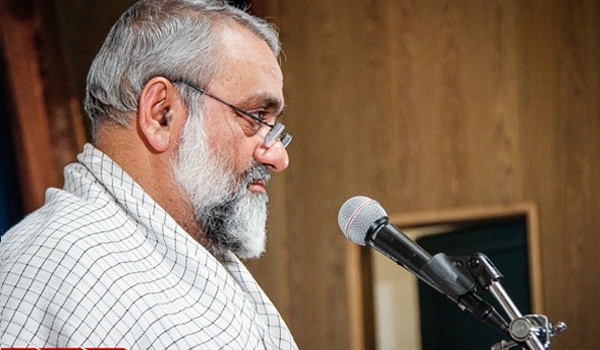
Commander of Iran’s Basij (volunteer) Force Brigadier General Mohammad Reza Naghdi underlined Tehran’s military advisory role in Iraq and Syria, and said no Iranian Basij or IRGC forces have been sent to the two Arab states.

“As it was said before, Basij and the Islamic Revolution Guards Corps (IRGC) play an advisory role on the resistance fronts and they are transferring their experiences to the fighters and this need is felt more in Syria and less in Iraq,” Naghdi said in an interview with Iran’s state-run TV on Sunday night.

“We help the two countries at the request of their armies and we are just transferring our experience, but haven’t sent any forces to these states,” he reiterated.

Naghdi, meantime, said that there are many Basiji and IRGC forces who have demanded to be deployed in Iraq and Syria to defend the Shiites’ holy shrines and the Iraqi and Syrian people against the terrorists, but they have not been dispatched to these countries.

Rouhani: Coordination among GECF members main goal of Tehran summit

Rouhani

Iran’s President Hassan Rouhani underlined that leaders of gas-producing countries tried to boost coordination in different areas during the GECF summit in Tehran.

“In today’s Summit, the main focus was on strengthening collaboration and coordination between the countries in areas such as consumer market and the needed technology,” Rouhani said at a press conference at the end of a third summit of GECF on Monday evening.

Stressing the significance of GECF Summit, Rouhani stated, “Virtually 70 percent of the world’s gas reserves belong to the member states of the summit and these countries can have effects on important international issues, especially on energy-related issues.”

“The presence of 9 heads of states in the Tehran summit shows that these collaborations should continue and develop” said Rouhani, adding that Iran will continue along this path for fostering cooperation with gas-producing countries.

“The Islamic Republic of Iran will take significant steps in gas production and export in the coming years and this will be beneficial to all nations and humanity’s health, as well as saving the environment.”

The Iranian government is trying to boost natural gas production to 1bn CBM compared to the current 600mn.

Thanking the participants in the summit, President said, “Participation of nine heads of state shows that all countries are seeking to establish more communication with the region and the whole world, especially Iran.”

“Twelve member states and six observer states participated in this summit and it was decided that the Republic of Azerbaijan be added to the list of observer states,” Rouhani reiterated. “It was also agreed that the next summit be held in Bolivia.”

Iranian, Russian Presidents Ink 7 Cooperation Agreements

Rouhani-Putin

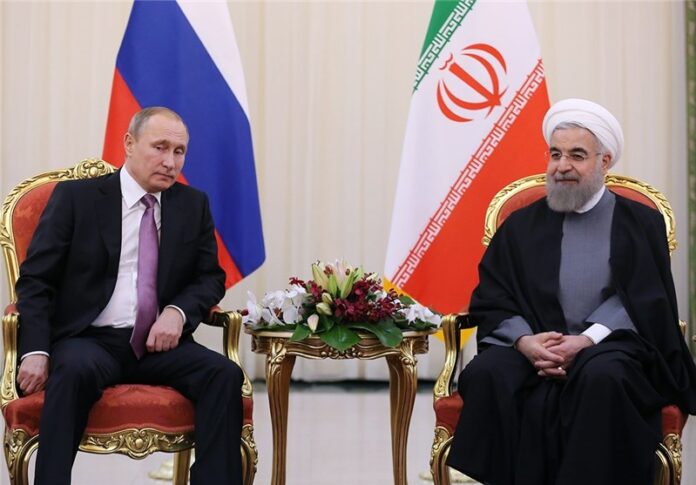
Iranian President Hassan Rouhani and his Russian counterpart Vladimir Putin inked seven agreements and MoUs to boost mutual cooperation.

The documents are aimed at deepening and strengthening the existing cooperation and ties between the two countries.

The deals were signed by the two countries’ high ranking officials in the presence of the two presidents on the sidelines of the 3rd Gas Exporting Countries Forum on Monday.

In one agreement between the governments of the Islamic Republic of Iran and the Russian Federation, the two countries’ foreign ministers agreed to facilitate mutual travel conditions for the citizens of the two countries.

The Iranian Minister of Health and Medical Education signed a memorandum of understanding with the Russian Minister of Health. The electrification of railways between Garmsar and Inchebroon (in Iran) was agreed in another MoU between the Iranian Deputy Minister of Roads and Urban Development and the Manager of the Russian International Railway Company.

Two other MoUs have been inked between the deputy governor of the Central Bank of Iran and the Presidents of the Russian state-owned Vonesh Economic Bank and the Russian Export Credit Insurance Agency (Akzir), as well.

Iranian Deputy Minister of Energy and the President of the Russian Energy Agency in this ceremony signed another Memorandum of Understanding to assimilate the two countries’ power transmission networks.

Two other MoUs have also been inked between the two countries for the exploration and evaluation of deep groundwater reserves and for the construction of a power plant in Bandar Abbas.


Iran slams West double standards on human rights

9cfbff75-e761-4587-82a8-258026f5d7e8

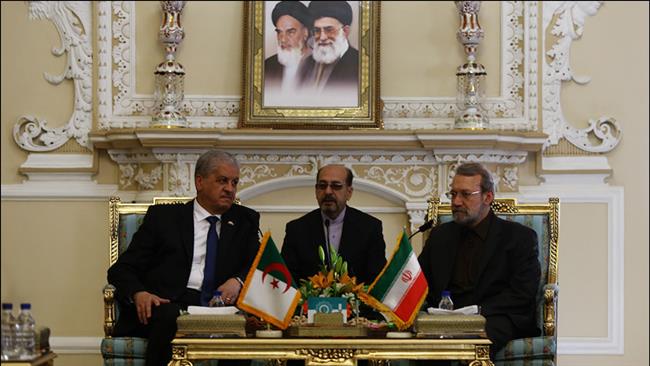
Iran’s Parliament Speaker Ali Larijani has criticized Western countries for pursuing double standard policies on human rights.

The issue of human rights has been used as a tool by some countries to create insecurity and instability, Larijani said in a meeting with Algerian Prime Minister Abdelmalek Sellal in Tehran on Monday.

He added that certain regional countries’ support has helped terrorist groups cause insecurity in the Middle East.

The Majlis speaker further pointed to appropriate capacities of Algeria and North African countries to boost economic and political cooperation with Iran and expressed hope that the formation of Iran-Algeria Joint Economic Commission would improve mutual cooperation.

Larijani said Algeria has always pursued an appropriate stance on Iran’s nuclear issue and the Syrian crisis, which will consolidate Tehran-Algiers cooperation as the two countries hold a similar position on international developments.

The Algerian premier, for his part, called on all countries to strengthen their cooperation in fighting terrorist groups, including Daesh [Arabic acronym for ISIS].

Sellal said Daesh terrorist group is tarnishing the image of Islam and added that Muslim countries should remain vigilant to prevent Westerners from achieving their own objectives.

He emphasized that Iran can play an effective role in restoring security to the region and improving economic relations with countries, including Algeria.

The Algerian prime minister traveled to Tehran to attend the third summit of the Gas Exporting Countries Forum (GECF) which was held on Monday.

Leader urges vigilance to thwart US plot for West Asia

Leader-Putin

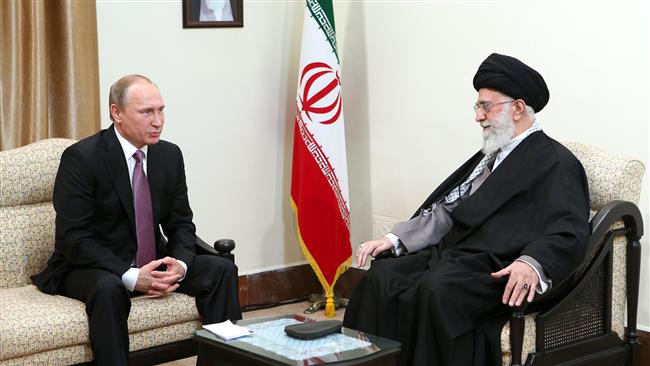
In a meeting with visiting Russian President Vladimir Putin in Tehran on Monday, Ayatollah Khamenei said the US has a long-term plot to take control of the whole of West Asia by dominating Syria and then expanding its dominion over the entire region, saying, “This plot is a threat to all nations and countries, particularly Russia and Iran.”

The Leader hailed Russia’s influential role in regional issues, particularly in the Syrian conflict, and said Moscow’s decisions and measures in dealing with developments in Damascus enhanced the regional and international standing of Russia and President Putin in particular.

“The Americans have always been trying to place their rivals in a position of passivity but you have foiled such a policy,” Ayatollah Khamenei said.

The US and its followers are seeking to achieve through political means and negotiations the objectives that they have failed to obtain via military approaches, the Leader said, adding vigilance and a proactive stance are necessary to prevent this goal from being realized.

Ayatollah Khamenei said Washington’s insistence on the ouster of Syria’s legitimate and democratically-elected President Bashar al-Assad is among the weaknesses of the US policies.

The Leader said the Syrian president, in a national election, succeeded in winning the majority of votes of the Syrian people with “different political, religious and ethnic” viewpoints and emphasized that the US has no right to ignore the Syrians’ choice.

Ayatollah Khamenei said every solution on the Syrian crisis should be endorsed by the country’s nation and officials.

The Leader stated that Washington’s direct and indirect aid to terrorist groups, including Daesh, is among other obvious flaws in Washington’s policies.

Washington’s “cooperation with countries which have no standing in the public opinion of regional and world [nations] due to their support for terrorists shows that the Americans have no honorable diplomacy,” Ayatollah Khamenei said.

The Leader stressed that with the particular exception of the nuclear issue, Iran does not and will not engage in mutual negotiations with the US about Syria or any other issues.

Ayatollah Khamenei said the proper settlement of the Syrian issue will be “very important” and will play an effective role on determining the future of the region.

If the terrorists who are committing atrocious crimes in Syria are not crushed, the expanse of their activities will spill over into the Central Asia and other parts of the world, the Leader warned.

Iran-Russia relations

Elsewhere, the Leader welcomed the further enhancement of Tehran-Moscow cooperation on bilateral, regional and international issues.

Ayatollah Khamenei commended Russia’s efforts on the Iranian nuclear issue and said, “This issue came to a conclusion but we have no trust in the Americans and are monitoring the US government’s attitude and performance in this regard with open eyes.”

The Leader said President Putin and Iranian officials are determined to expand mutual relations and added that the two countries should further improve cooperation, particularly in economy.

Ayatollah Khamenei pointed to the appropriate level of cooperation between Tehran and Moscow in politics and security and said the Russian president has pursued a “very good and innovative” stance on different issues, particularly over the past 1.5 years.

Political solution to Syria crisis

The Russian president, for his part, said Tehran and Moscow have very close positions on the Syrian crisis and added that his country emphasizes that the conflict should be solved through the adoption of political approaches and resignation to the demands of the Syrian people and groups.

No country has the right to impose its views on the Syrian people and make decisions about the structure of the government and the nation’s president on behalf of them, Putin said.

He added that Russia would proceed with its airstrikes against terrorist groups in Syria and stressed the importance of Tehran-Moscow cooperation about solving the Syrian crisis through political approaches.

Putin praised his country’s very active cooperation with Iran on security issues and the settlement of regional and global crises.


Quran-Leader-Putin


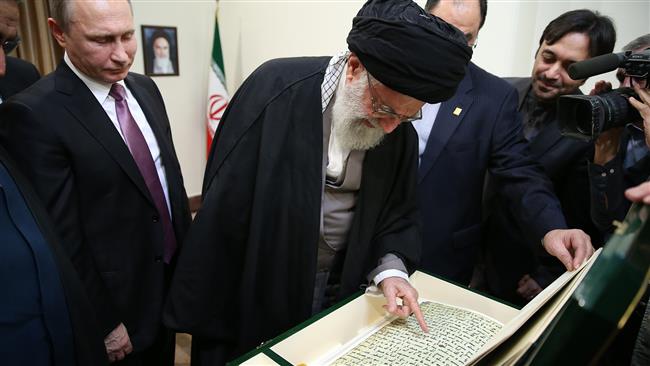
At the end of the meeting, the Russian president presented Ayatollah Khamenei with one of the oldest manuscripts of the Holy Qur’an as a very precious gift. The Leader thanked Putin for the gift.

What helped President Assad weather the political storm in Syria

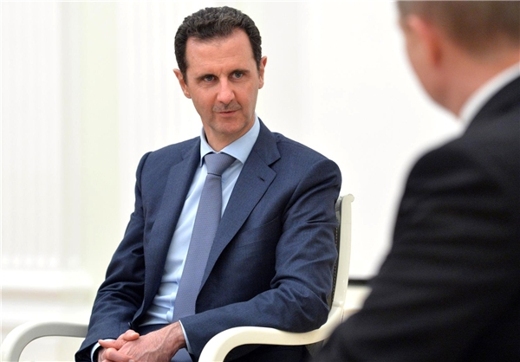
Asaad

A former Iranian diplomat says that the nuclear deal Iran struck with P5+1 back in July is a key factor in Iran’s growing influence in the region.

Khabaronline.ir on November 23 published an interview with Javid Ghorban Oghli, a former Foreign Ministry official, on Iran’s regional diplomacy, including the Syrian crisis. The following is the translation of part of the interview as picked by Khabaronline.ir:

Q: Four years after the eruption of the Syrian crisis, Iran – which used to be viewed as part of the crisis in Syria – is invited to a conference which seeks to resolve the Syrian crisis and is introduced as part of the solution. What is behind this?

A: The fact of the matter is that the world has come to the conclusion that it cannot solve the Syrian crisis without Iran’s help. Iran tried to act in line with its own strategies in Syria and help protect the Syrian establishment with Mr. Assad remaining at the center. It is no secret that certain regional countries such as Saudi Arabia, Turkey and Qatar were opposed to Iran’s efforts and mobilized their energies to topple the Syrian regime and oust Assad. Moreover, they also had the support of the international backers such as France and the US.

This did not happen. It seems to be a tough job to assess the role Iran plays [in the Syrian crisis]. A combination of factors such as the will of Syria to stand [on its own two feet] with the help of Iran as well as assistance by international allies such as Russia and, to a lesser extent, China contributed to this.

Consequently these factors joined hands to help Mr. Assad ride out this crisis. There is no denying the fact that it came at a cost. Syria was destroyed, more than 250,000 people were killed and around 10 million people were displaced. This was a hefty price.

To assess the upsides and downsides, we should say that the situation would have been different if Assad had made reforms and held dialogue with the opposition at the right time. The reason why the developments led up to the current situation is not what matters here. These three factors contributed to Assad’s survival. Prior to this, the West denied Iran’s role in the efforts to settle the Syrian crisis.

Iran was not invited to the Geneva Conference. In spite of being invited by the UN secretary general, Iran was not allowed by the Americans to attend the conference. Over time, the supporters of the Syrian opposition came to realize that the question will remain unsolved without Iran’s involvement.

On the other hand, Iraq’s experience helped them realize that the Syrian disintegration does not serve their interests and that the ouster of Assad removes no problem. All these factors which were at play helped all parties involved to opt for a diplomatic solution to the conflict in Syria.

Q: What happened that they decided to invite Iran to the international conference on Syria this time around?

A: It is a key point. That the stage has been set for working out a political solution is a sine qua non, and its adequate condition was created by the conclusion of the Joint Comprehensive Plan of Action (JCPOA). Had it not because of JCPOA, I think it would have been unlikely for Iran to be invited.

I should say that the role Iran [is to play in the settlement of crisis] in Syria is one of the big achievements of the Joint Comprehensive Plan of Action. Its achievements will not be confined to the Syrian question and will be extended to other issues as well.

The fact of the matter is that the psychological barriers to Iran’s presence in the Syria talks were removed. If it [JCPOA] had not been the case, Iran would not have been invited. In addition to what I have already mentioned, JCPOA produced other results on the diplomacy front such as the removal of barriers standing in the way of Iran taking part in such conferences.

Q. After two rounds of talks in Vienna with Iran in attendance, it seems that the major bone of contention among players is the future of Assad. How do you see this?
A: The conference dealt with several questions. Whether or not Assad should be part of the peace process was only one of them. Countries were unwilling to accept Assad’s role in the process, and that was the main bone of contention. It seems an agreement has been struck on that too. The Saudis were the last one to oppose. [Their foreign minister] Adel Al-Jubeir said that Riyadh was in favor of a political solution provided that at the end of the day Assad was not in power and the process led to the formation of a transition government.

On the international front, the French were insistent on that [formation of a transition government]. Despite their initial harsh rhetoric, the diplomatic language the Americans have adopted of late shows that they have backed down. Whether it is the result of talks between Foreign Minister Zarif and Secretary Kerry I don’t know. Despite all the denials, I am sure the question of Syria has come up for discussion in their meetings.

The other issue parties to the talks agreed to in Vienna 2 was the ceasefire. Deciding a timetable for the formation of a transition government within six months and one for a referendum within 18 months was a positive thing many never imagined they would agree on. But it was achieved.

Another important issue, which in progress, is that groups which can be represented in the transition government are being named. The criteria which allow opposition groups to be part of the transition process and the political order are important too. As you said for now the future of Assad is the main bone of contention between Iran and its allies on the one hand and the Western countries on the other.

I believe insistence on the survival of Assad does not serve our interests at this juncture. President Putin has reportedly told President Assad during a recent visit to Moscow that he needs to prepare to pack his bags. If that is really the case, our disagreements take on a serious dimension. We had better base our Syria strategy on realities on the ground.

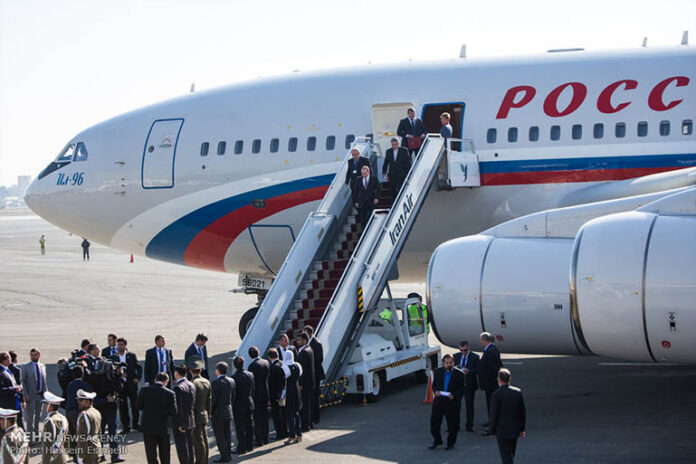
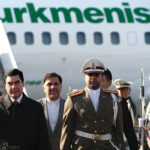
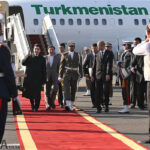
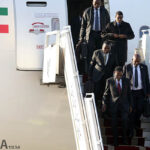
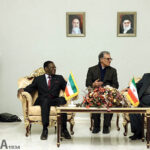
Heads of state arrive in Tehran for GECF summit (PHOTOS)

GECF000

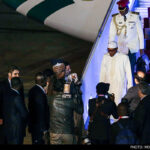
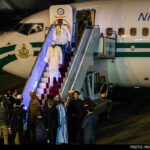
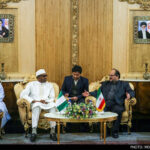
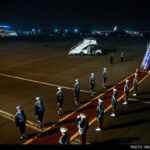
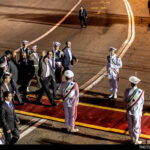
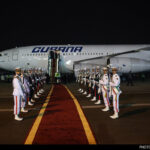
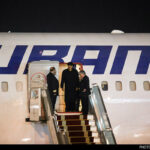
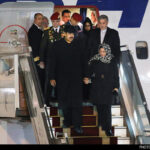
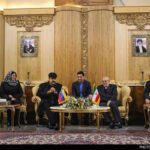
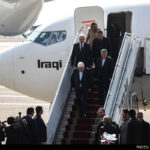
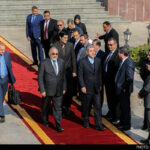
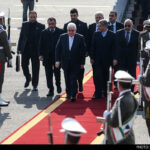
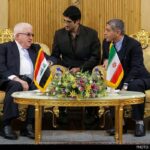
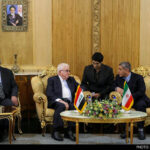
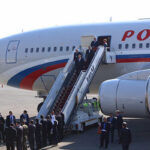
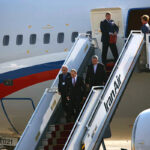
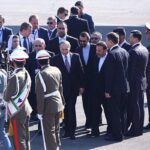
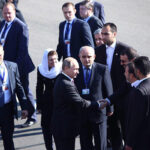
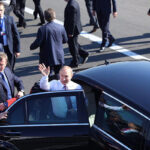
Presidents of Bolivia, Russia, Equatorial Guinea, Nigeria, Venezuela, Iraq and Turkmenistan have arrived in Tehran to attend a summit of Gas Exporting Countries Forum (GECF).

The following images of their arrival have been released by different websites:

Coalitions claiming to fight terror unreliable: Leader

Leader-Nigerian president

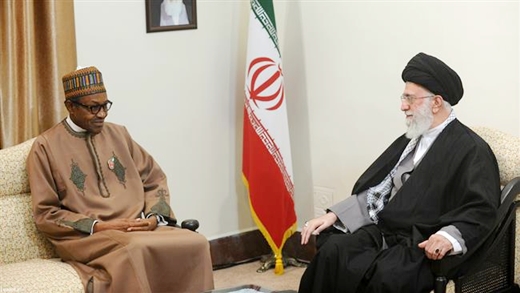
Supreme Leader of the Islamic Revolution Ayatollah Seyyed Ali Khamenei says the international coalitions that purport to be fighting terrorism cannot be trusted as their members are sponsoring terrorist groups.

The Leader made the remarks in a Monday meeting with Nigerian President Muhammadu Buhari in the Iranian capital, Tehran, where Buhari is to take part in the third summit of the Gas Exporting Countries Forum (GECF).

“International coalitions claiming to fight terrorist currents are by no means trustworthy, since the very destructive elements such as the US are behind the scenes of creating or supporting terrorists like Daesh,” Ayatollah Khamenei said.

The Leader said “Islam’s open enemies” and “foes that bear enmity with Islam in the name of Islam” are the “two blades of the same scissors.”

“Islamic countries must safeguard their identity and interests against these dangerous enemies by stepping up their cooperation,” Ayatollah Khamenei said.

The Leader warned against pinning hopes on the West, particularly the US, in the fight against terrorist groups such as Daesh and Boko Haram, saying, “According to accurate intelligence, the US and some reactionary regional countries are directly helping Daesh in Iraq and are playing a destructive role.”

Ayatollah Khamenei welcomed the election of Buhari, “a committed Muslim,” as the president of Nigeria and called for the identification and exploitation of the capacities for interaction and cooperation between Iran and Nigeria.

The Nigerian president, for his part, described the relations between Iran and Nigeria as solid and long-lasting, saying, “Iran is a major and advanced country and enjoys many capacities for cooperation.”

The Leader separately met with Venezuelan President Nicolas Maduro on Monday.

During the meeting with Maduro, Ayatollah Khamenei said that resistance is the sole way for independent countries to progress.

“Today, the policies of [global] arrogance have afflicted humanity like a blight; and the sole way for progress and victory by independent countries is ‘resistance’ and ‘relying on masses of people’ in the ‘war of wills,” Ayatollah Khamenei said.

The Leader pointed to the United States’ policies toward Latin America, and noted that the US used to regard the region as its “backyard;” however, Venezuela managed to turn the region into an independent one and one with an identity of its own.

Ayatollah Khamenei pointed to the scientific and technological advancements by Iran and said such progress in the face of pressure and sanctions by enemies was made possible by the presence and cooperation of the people.

The Leader emphasized the boosting of ties between the Islamic Republic and Venezuela, and noted, “Iran considers Venezuela’s progress and success as those of its own.”

Maduro said Iran and Venezuela are true friends.

He said imperialist countries seek to destroy the independence of other states by stoking unrest and attempting to humiliate them and their identities.

‎‏Iran’s principles to solve the Syrian crisis

Mohammad Javad Zarif

By Foreign Minister Mohammad Javad Zarif

Respect for the nations’ right to self-determination, opposition to imposition of the will of foreign players on independent nations, and opposition to arbitrary use of terrorism as a means to secure political objectives are the guiding principles of Iran’s Syria policy, said Foreign Minister Mohammad Javad Zarif in an opinion piece Ettela’at daily published on Monday November 23.

The following is the translation of the piece is in its entirety:

Recent developments, including two conferences in Vienna, Austria, have put the Syrian crisis on a new track, creating a ray of hope for the first time that one of the biggest human tragedies of our time might come to an end.

At the beginning of this trend, attention to the framework of Iran’s stance on the Syrian crisis and the way out of it seems necessary.

1. Since the beginning, the policy of the Islamic Republic of Iran on ending the Syrian crisis has been based on three principles: First, respect for the nations’ right to self-determination and reformation of their own affairs; Second, opposition to imposition of the will of foreign players on an independent state and nation; Third, opposition to arbitrary use of terrorism as a means to secure political objectives in internal disputes of the countries.

2. Based on these three principles, Iran has always believed that there is no military solution to the Syrian crisis and the only way out of the current situation goes through political measures to secure a deal in all-Syrian talks involving the government and the anti-terrorist opposition.

To that end, players whose expensive arms purchases have given them the illusion that a military solution is possible should end their illusory mentality. It should be noted that if a fraction of the money they are spending on buying arms from Western companies had been channeled to the economic development in Islamic countries and Muslim communities, one of the root causes of violence and terrorism would have been wiped out.

3. Prolongation of the Syrian crisis which has plunged the country into an appalling condition comes on the back of massive foreign intervention and adoption of policies that promote violence, extremism and terror simply to score a point with the Syrian people and government.

Unfortunately, some states still view IS and Al-Nusra Front and other Takfiri terrorist groups and their offshoots not as a collective threat but as an asset they can use to advance their regional cause. Conditioning a serious, all-out fight against Takfiri terrorists on the political future of Syria is the biggest sign of this dangerous regional and global strategy.

Takfiri terrorists have proven time and again that in pursuing their unholy goals, they show no mercy to their allies, past or present. Unfortunately, however, supporters of these groups have yet to appreciate this reality.

4. States to which fundamental democratic means and principles such as the Constitution and elections are alien are hiding behind support for the democratic aspirations of the Syrian people to impose impractical and unacceptable conditions on them. In practice, they have interfered with efforts to work out a political solution to the crisis and dragged out the war for four years. Their hopes of securing a swift political victory have fanned the flames of violence and terrorism in the region and around the world and prolonged the crisis in Syria.

5. Formulating a process to end the Syrian crisis calls for attention to the root causes of the crisis and its persistence. So we believe any solution to the Syrian crisis should be based on the following principles:

A. The only way to solve the Syrian crisis goes through the views of the Syrian people. Foreign players should not speak in the name of the Syrian nation who is free and independent and does not need a custodian. Besides, gone are the times that nations needed guardians.

B. An immediate ceasefire to end bloodshed along with coordinated international efforts to take on terrorism and extremism is the first step in settling the crisis and paving the way for parallel measures in the future.

C. Instead of making efforts to interfere in Syria and impose their will, foreign players should stage an unconditional campaign against known Takfiri terrorists and help the Syrian government and opposition launch all-Syrian talks to set the stage for a political agreement to make national reconciliation a reality and work out an exit from the current crisis through the votes of the Syrian people.

D. All players contributing to efforts to end the crisis should shelve their inefficient policy of making arbitrary use of terrorism and avoid distinguishing between good and bad terrorists.

Terrorism in all shapes and forms should be dismissed and players who have spent a lot on supporting terrorist groups and thus plunged the region and the world into instability and insecurity should discontinue their policies. To that end, the following take top priority: stopping the purchase of IS oil, preventing the transfer of its oil revenues and stemming the flow of foreign fighters [into Syria].

‏6. A united front in the fight against terrorism and parallel progress in talks to secure an all-Syrian deal can pave the way for departure from the current conditions and mark the beginning of the end of this massive tragedy.

7. In addition to inevitable military and security approaches, an effective long-term fight against terror requires an all-out social, cultural and economic drive. In the absence of such a push, military and even political solutions will remain temporary at best.

8. Also to that end, ending Islamophobia and desecration of Muslim sanctities in the West which have marginalized the Muslim community and caused indignation in its ranks is inevitable. In parallel, promotion of Takfiri mentality which is drawing huge investment in the name of Islam around the world should come to a halt.

9. In the meantime, until a political solution is nailed down, measures to meet the urgent needs of refugees, both internal and external, are inevitable.