Wednesday, December 24, 2025
Home Blog Page 4553

Iran commemorates Islamic Republic Day

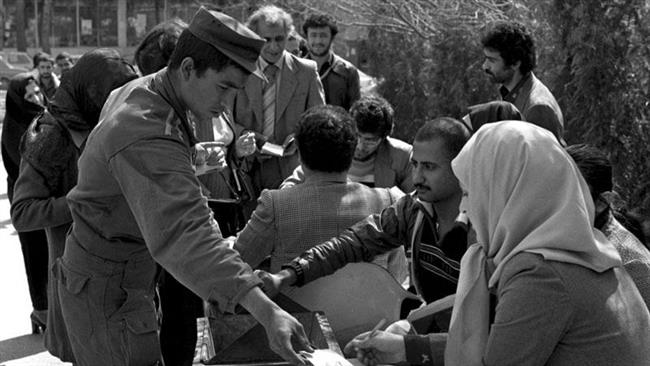
In a landmark two-day referendum held on March 30-31, 1979, more than 98.2 percent of eligible Iranians voted “yes” to the establishment of an Islamic republic in the country.

It came as the popular motto marking the days after the 1979 Islamic Revolution was “Independence, Freedom and the Islamic Republic” on every corner.

Since then, the nation annually celebrates Farvardin 12 on the Iranian calendar year as the Islamic Republic Day.

The Islamic Revolution, led by late Imam Khomeini, culminated in the overthrow of Mohammad Reza Pahlavi and put an end to 2,500 years of monarchic rule in Iran.

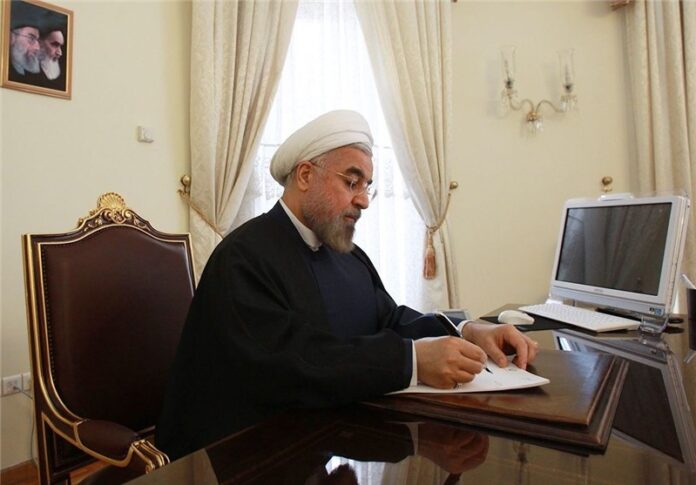
Addressing a Wednesday cabinet meeting in Tehran, President Hassan Rouhani praised the Islamic Republic Day as the day of the realization of democracy and Islamic values.

He added that the late Imam Khomeini proposed a referendum on the establishment of an Islamic system in Iran less than two months after the triumph of the Islamic Revolution.

“Democracy and Islam have materialized in the country in the real sense where the victory of the revolution has provided for the people to comfortably go to the polls and cast their ballots,” Rouhani said.

“We must employ all our energies to safeguard the Islamic Republic of Iran and strive on the path of the country’s development and progress,” he added.

Iran won’t need permission on defense capabilities: Minister Dehqan

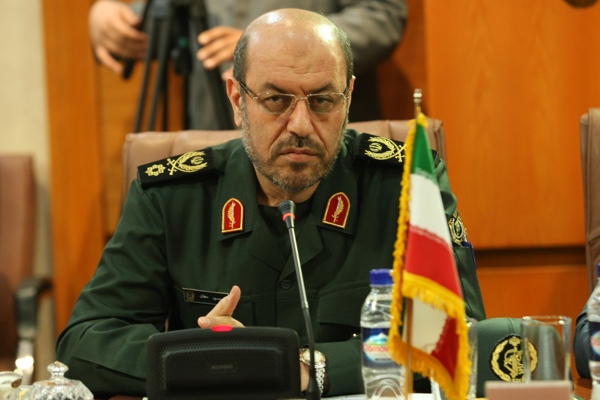
General Hossein Dehghan

Brigadier General Hossein Dehqan said what constitutes Iran’s regular missile drills “is based on pre-arranged plans which are carried out in order to assess the degree of its preparedness and capabilities.”

“We will continue to act on achieving defense capabilities with the aim of responding to any threat. In this course, we will not need any authorization or approval from others,” he told the state television Wednesday night.

Dehqan stressed that Iran would never move toward developing unconventional weapons.

“The Islamic Republic of Iran has never had and will never have an aggressive attitude toward any nation or country, (but) in defending itself, it will use all means possible on the basis of its national interests.”

His remarks came after the US, France, Britain and Germany were reported to have called for a Security Council meeting to respond to Iran’s recent ballistic missile tests.

The Reuters news agency, citing unnamed diplomats, said experts from the 15-nation body would discuss Iran’s missile program on Friday and were expected to consider the possibility of a statement condemning it.

Dehqan predicted that the council would not take any action against Iran because its tests didn’t violate either a July nuclear agreement or a UN resolution on Tehran’s missiles.

“I am confident that the Security Council and the United Nations will not respond as our actions are neither a breach of the Joint Comprehensive Plan of Action nor are they against Resolution 2231,” he said.

In their letter to the UN chief Ban Ki-moon on Monday, the US and its three European allies stopped short of calling Iran’s missile launches a “violation” of the resolution.

The tests, they claimed, were “inconsistent with” and “in defiance of” council resolution 2231, because they were “inherently capable of delivering nuclear weapons,” a charge Iran vehemently denies.

“I think America, England and France must look a bit at their own national interests and stand less as an advocate of the interests of Israel as an aggressive, murderer and illegitimate regime,” Dehqan said.

UN’s Resolution 2231 “calls upon” Iran to refrain for up to eight years from activity related to ballistic missiles designed with the capability of delivering nuclear weapons.

Russia, a veto-wielding permanent member, has made clear it considers compliance with the appeal in resolution to be voluntary.

On Wednesday, the Russian Foreign Ministry’s Mikhail Ulyanov said Iran’s test launches did not violate the UN resolution.

“The resolution does not ban the tests,” said Ulyanov, who is the head of the ministry’s department for non-proliferation.

Tehran has also said it is under no obligation to comply with the appeal to refrain from missile work and vowed to continue developing ballistic missiles in the face of threats.

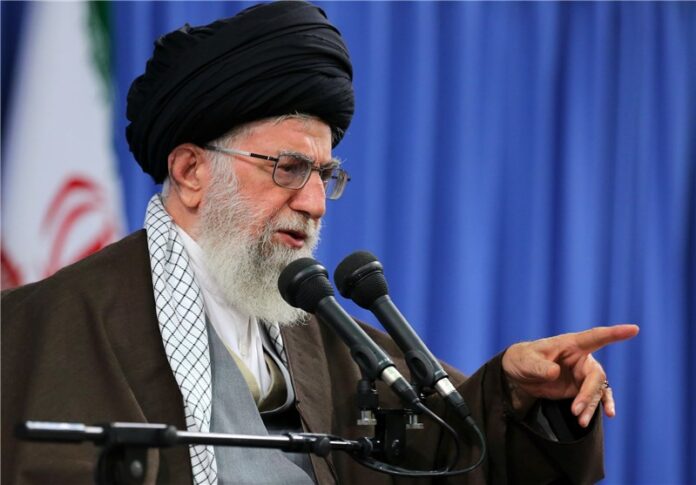
Leader of the Islamic Revolution Ayatollah Seyyed Ali Khamenei said on Wednesday that missile power is key to Iran’s future security.

“In this jungle-like world, if the Islamic Republic seeks negotiations, trade and even technology and science, but has no defense power, won’t even small countries dare threaten Iran?” the Leader said.

“Our enemies are constantly enhancing their military and missile capabilities and given this how can we say the age of missiles has passed?” he added.

Chairman of the US Senate Foreign Relations Committee expressed indignation at the prospects that there was no ground for new UN sanctions on Iran.

“As many of us feared, now it appears Iran can defy those restrictions with impunity fearing no pushback from the UN Security Council,” Republican Senator Bob Corker said.

Corker is among many US lawmakers who have demanded more sanctions on Iran over the missile tests.

Dehqan said, “The Americans basically don’t want our national power to expand in various aspects.”

“This issue attests to the efficiency and ability of our democratic, religious system which can become a model for oppressed countries and motivate them to stand against the demands” of arrogant powers, he added.

Leader Underlines Need for Boosting Iran’s Defense Capabilities

In a meeting with eulogists on the occasion of the birthday anniversary of Hazrat Fatemeh Zahra (SA), the daughter of Prophet Muhammad (PBUH), on Wednesday, Ayatollah Khamenei said that if the Islamic establishment seeks technology and negotiations but lacks defense might, it will have to buckle in the face of any weak country that poses threat to it.

Stressing that negotiations should be conducted intelligently so that the enemies cannot cheat on us, the Leader said, “I am not opposed to political dialog, not with everyone of course. I am fine with political dialog at the international level. These are times of both missiles and negotiations.”

In March, the country’s Islamic Revolution Guards Corps (IRGC) forces test-fired two types of Qadr ballistic missiles during the large-scale drills, codenamed “Might of Velayat”.

The two ballistic missiles, Qadr-H and Qadr-F, were launched from the heights of East Alborz Mountains, north of Iran, and hit targets on the Makran coasts, southeast of the country.

According to reports, Qadr-H missile has a range of 1,700 kilometers while Qadr-F missile can destroy targets some 2,000 kilometers away.


Iran’s FM Congratulates Syria on Regaining Palmyra

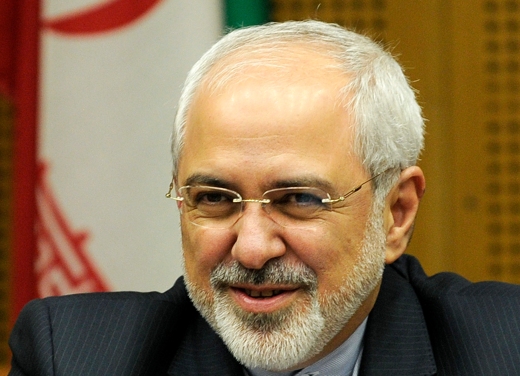
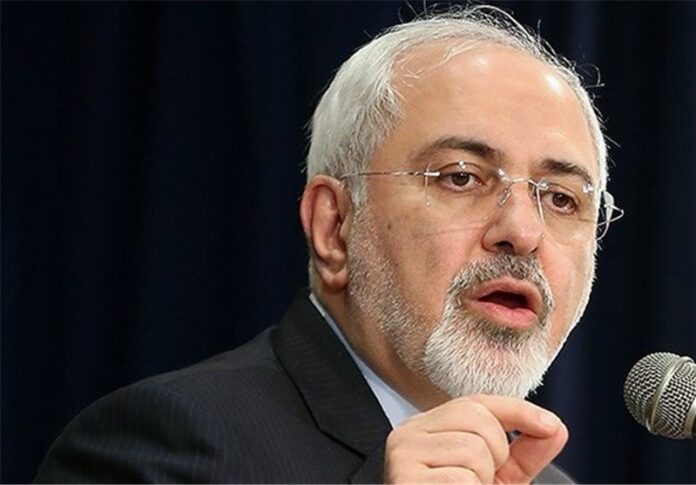
Zarif-Iran-FM

In a message to his Syrian counterpart Walid al-Muallem, the Iranian foreign minister hailed the resistance of the Syrian people in the face of terrorism, stressing that the Arab country will continue to move forward on the path of maintaining unity, safeguarding its territorial integrity, and fighting terrorism in the region.

Highlighting the importance for pushing a political approach to contain emergence and growth of terrorism in the country, Zarif expressed the hope that “welfare”, “peace” and “security” will once again return to the country after a final victory against terrorists.

On Sunday, Syrian state television quoted a military source as saying the army had taken “complete control over the city of Palmyra”.

Palmyra, known as the “bride of the desert”, used to attract tens of thousands of tourists a year before the Syrian conflict started in 2011.

In May 2015, Daesh (also known as ISIL or ISIS) took the city and later demolished some of its best-known monuments.

Capturing the city is a major victory for President Assad’s government.

With Russian support, it has made steady gains in recent months against Daesh and other groups it is fighting.

Syria has been gripped by civil war since March 2011 with Takfiri terrorists, including Daesh, currently controlling parts of it, mostly in the east.

The Syrian conflict has killed at least 260,000 people, according to the UN, and more than half of Syria’s pre-war population of 22.4 million has been internally displaced or fled abroad.


Iran to Keep Boosting Defense Might: Commander

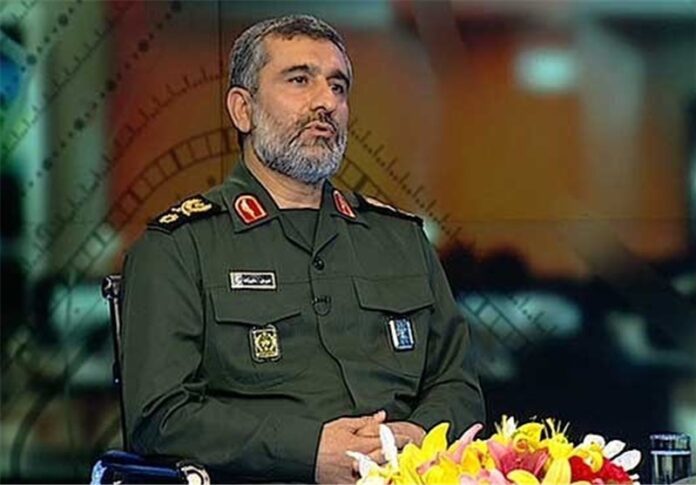
Hajizadeh told the state television that enemies are seeking to undermine Iran’s defense and missile capabilities but the process of boosting the country’s defense power has not stopped even for a single day during the past 31 years.

He added that expansion of the Islamic Republic’s defense and missile might will insure the Iranian nation and deter enemies from even thinking to attack Iran.

Elsewhere in his remarks, the Iranian general downplayed the recent sanctions by the US against Iranian companies and individuals, describing them as futile.

The US Treasury Department on Thursday blacklisted two Iranian companies for supporting Iran’s missile program. It also sanctioned two British businessmen it said were helping an airline used by the IRGC.

The new US sanctions against Iran came following the successful test-firing of ballistic missiles by the IRGC earlier this month, which Iran insists are rightful and aimed at enhancing the country’s defense and deterrence capabilities.

The IRGC forces test-fired two types of Qadr ballistic missiles during the ‘Might of Velayat’ drills in north of Iran on March 9.


Iran to continue full support for Syria: Official

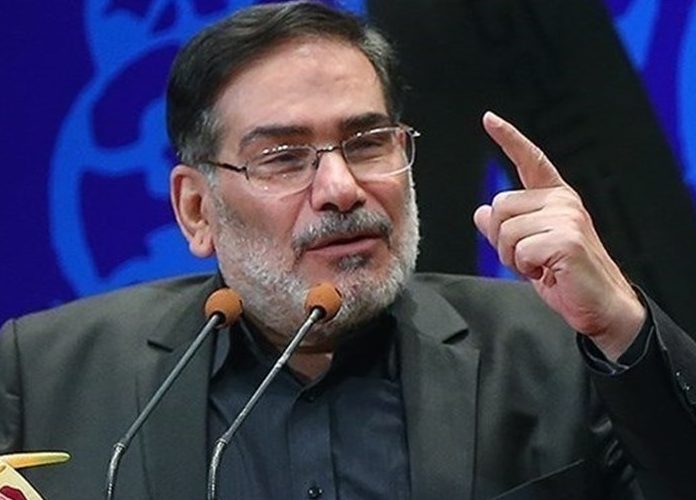
Secretary of Iran’s Supreme National Security Council (SNSC) Ali Shamkhani made the remarks in a congratulatory message to Syria’s President Bashar al-Assad on the recent gains by Syrian forces against Takfiri militants and the liberation of the ancient city of Palmyra in the west-central Homs Province.

“The real resolve and determination of the Syrian nation, government and army to purge the territories occupied by terrorist and Takfiri groups is reason for praise and pride, and these sacrifices and acts of gallantry will be registered in the region’s history,” Shamkhani said.

“On this path, the Iranian government and armed forces will continue their full support for Syria and the axis of resistance,” he added.

Pointing out that the Takfiri Daesh terrorists threaten the entire world, Shamkhani described Syria as the front-line of the fight against terrorism, calling on the international bodies to support Damascus in its anti-terror campaign.

“International organizations and countries claiming [to fight terrorism] should stop whitewashing the image of certain terrorist groups and getting them involved in peace talks and, instead, focus their efforts on support for the Syrian government and a real fight against terrorism,” Shamkhani said.

On Sunday, Syrian armed forces successfully established full control over Palmyra, inflicting what the army called a “mortal blow” to militants.

The major gain came after Syrian army advances in the western and northern parts of Palmyra during the previous several days and intensive military operations in the south.

The ancient city had fallen to Daesh last May. The Syrian army and allied forces kicked off an assault earlier this month to take Palmyra back with the help of Russian airstrikes.

The liberation of Palmyra now opens up eastern Syria to the army and deals a heavy blow to the Takfiri Daesh terrorists, who are in control of most of the two provinces of Dayr al-Zawr and Raqqah.

Since 2011, Syria has been gripped by a militancy it blames on some foreign governments. The conflict has reportedly claimed the lives of more than 470,000 people.

President Rouhani Offers Condolences to Pakistan over Lahore Terrorist Attack

In a message to Pakistani Prime Minister Nawaz Sharif, the Iranian chief executive offered condolences to the premier and nation of the neighboring country and the bereaved families of the victims of the “painful tragedy”.

He underlined that the Islamic Republic of Iran condemns any act of terrorism and believes that violent acts and killing innocent people are only committed by those who see their survival in creating insecurity, instability and spreading hatred and extremism.

At least 70 people were killed and 300 others, mostly women and children, wounded after a bomb went off outside a park in the city of Lahore in northeastern Pakistan on Sunday.

A faction of Taliban, which calls itself Jamaat-ul-Ahrar, claimed responsibility for the attack.

It was Pakistan’s deadliest attack since the December 2014 massacre of 134 school children at a military-run academy in the city of Peshawar that prompted a government crackdown on extremists.


Iran condemns terrorist attacks in Iraq, Pakistan

At least 65 people were killed and 280 others, mostly women and children, wounded after a bomb went off outside a park in the city of Lahore in northeastern Pakistan on Sunday. A faction of Taliban, which calls itself Jamaat-ul-Ahrar, claimed responsibility for the attack.

On Friday, a bomb explosion at a soccer stadium near the Iraqi capital, Baghdad, claimed the lives of 41 people and injured 105 others. The Takfiri Daesh terrorist group claimed responsibility for that bombing attack.

Iran’s Foreign Ministry Spokesman Hossein Jaberi Ansari on Monday said the two terrorist attacks once again demonstrated that terrorists and extremists are targeting all manifestations of ordinary life in human societies.

“No place and no echelon of societies is spared their (the terrorists’) danger,” he said.

The recurrence of terrorist attacks in the different parts of the world puts further emphasis on the necessity for an immediate, comprehensive, and international confrontation with the ominous phenomenon of terrorism and extremism, said the Iranian official.

Jaberi Ansari also offered Tehran’s condolences to the Iraqi and Pakistani nations and governments and the bereaved families of the victims.

On Sunday, UN Secretary General Ban Ki-moon condemned the bombing attack at Gulshan-i-Iqbal Park in the Pakistani city of Lahore, calling it an “appalling” act of terrorism.

“The secretary general calls for the perpetrators of this appalling terrorist act to be brought swiftly to justice, consistent with human rights obligations,” a UN statement said.

Ban called on the Pakistani government “to do its utmost to put in place protective measures to ensure the personal security of all individuals, including religious minority communities living in the country.”

The UN chief added that he “extends his heartfelt condolences to the victims and their families, and expresses his solidarity with the people and government of Pakistan.”

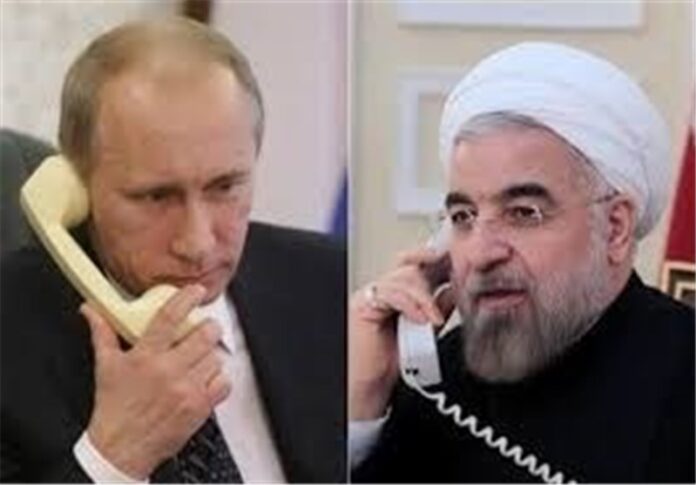
Iran’s Rouhani, Russia’s Putin Discuss Latest Developments in Syria

“A detailed discussion was held on the Syrian issue, first and foremost in regard to the successful actions of the Syrian army, which was able to push Daesh extremists out of the historic city of Palmyra with the help of Russian Air Forces. It was noted that this was a truly significant event,” Kremlin said in a statement on Monday, Sputnik reported.

The two leaders also exchanged views on a number of bilateral issues and agreed to intensify bilateral contacts at various levels, according to the statement.

Early on Sunday, Syrian state television quoted a military source as saying the army had taken “complete control over the city of Palmyra”.

Palmyra, known as the “bride of the desert”, used to attract tens of thousands of tourists a year before the Syrian conflict started in 2011.

In May 2015, Daesh (also known as ISIL or ISIS) took the city and later demolished some of its best-known monuments.

Capturing the city is a major victory for Syrian President Bashar al-Assad’s government.

With Russian support, it has made steady gains in recent months against Daesh and other groups it is fighting.

Earlier this month, Putin ordered the withdrawal of some fighter jets from Syria, but said that strikes against Daesh and another group, the Nusra Front, would continue.

Those groups have been excluded from a Russian and US-brokered ceasefire that began on February 27 and has largely held.

Syria has been gripped by civil war since March 2011 with Takfiri terrorists, including Daesh, currently controlling parts of it, mostly in the east.

The Syrian conflict has killed at least 260,000 people, according to the UN, and more than half of Syria’s pre-war population of 22.4 million has been internally displaced or fled abroad.

Iran responds to US actions by boosting missile power: Zarif

“We will respond to recent US measures against Iran’s missile program by further boosting our missile power,” Zarif said on Saturday.

He added that Tehran has no limitations on developing its missile program “because this program has nothing to do with nuclear weapons.”

In line with Iranian President Hassan Rouhani’s order, Iran will continue to enhance its missile capabilities, Zarif stressed.

In an order to Iran’s Defense Minister Brigadier General Hossein Dehqan on December 31, 2015, Rouhani urged acceleration in the production of “various types of missiles” needed to improve the country’s defense capabilities..

On Thursday, the US Treasury Department blacklisted two Iranian companies claiming that the firms backed Iran’s ballistic missile program. Washington also claimed that the companies are working for an industrial group, which the US alleges is in charge of Iran’s ballistic missile program.

The blacklisting came after the Islamic Revolution Guards Corps (IRGC) successfully test-fired two more ballistic missiles on March 9 as part of military drills to assess the IRGC’s capabilities. The missiles dubbed Qadr-H and Qadr-F were fired during large-scale drills, code-named Eqtedar-e-Velayat.

On March 8, Iran fired another ballistic missile called Qiam from silo-based launchers in different locations across the country.

Zarif, who was accompanying Iran’s President Hassan Rouhani in his two-day visit to Pakistan, also said comments by the US presidential candidates regarding the Islamic Republic’s missile program should not be taken seriously.

He added that personal views of the person in charge will not change the fact that Washington is legally bound to respect the nuclear agreement, dubbed the Joint Comprehensive Plan of Action (JCPOA), reached between Iran and the six world powers in July 2015.

The US administration should comply with its obligations in practice, Zarif said, stressing that some US presidential candidates, under the influence of the Zionist lobby, are making such comments against Iran which should not be heeded.

Last week, US presidential candidates took the stage at the 2016 American Israel Public Affairs Committee (AIPAC) policy conference to voice unconditional support for the Israeli regime in an apparent attempt to attract more campaign funding from the influential Zionist lobby in the run-up to the 2016 presidential election.

To get the green light, the hopefuls voiced support for Israel by attacking Iran and Palestine more than ever before.

Republican hopeful Donald Trump said he would end the JCPOA, calling the agreement “catastrophic.”

“My number one priority is to dismantle the disastrous deal with Iran,” he said, adding, “I have been in business a long time. I know deal making. And let me tell you, this deal is catastrophic. For America, for Israel and for the whole of the Middle East.”

Ted Cruz also did his best not to fall behind in the race to win Israel’s support, saying, “On the first day in office, I will rip this catastrophic Iranian nuclear deal to shreds.”

On Iran’s recent missile tests, the Texas senator said, “If I am president, and Iran launches a missile test, we will shoot that missile down.”

Republicans claim that Tehran’s missile program poses a threat to global security, while Iran categorically denies the claim, arguing that it is solely defensive.