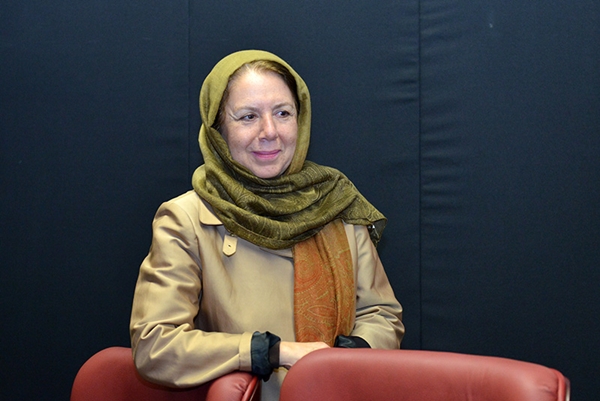
In an interview with the Tehran Times, Hall says, “This complexity is exacerbated by the fact that this schema is state-centric and presumes states to be unitary, and not politically divided regarding societal preferences towards domestic and international outcomes.”
Following is the full text of the interview:
Q: Has the political logic dominating the Middle East in recent years been Hobbesian, Lockean, or Kantian?
A: My interviewer poses this question in the terminology of my colleague at Ohio State University, Alexander Wendt. Wendt has argued that “anarchy is what states make of it,” that the settlement of security disputes among states has grown up as a practice oriented around a convention. Why is there fisticuffs in professional ice hockey in the West? Because it’s allowed. Why do states settle disputes with armed conflict? Because they generated a convention over the centuries to do so. However, the presumption of “anarchy” in the international system (or in a regional system such as the Middle East) presumes a Hobbesian logic on interstate interaction whereby all states reflect negatively on measures by other states to enhance their security. In this logic, we are playing a zero sum game and your security can only come at the expense of my insecurity, and vice versa. In a Lockean system the game is a mixed motives game. I can reflect positively, negatively or indifferently to measures by a given state to enhance their security. It largely depends upon whether I regard you to be a threat, and ally, or an indifferent bystander in the security arena. In a Kantian system states respond positively to measures by other states to enhance their security. They presume these other states to be either allies or indifferent bystanders, thus no threat to their security. I can identify positively with the security of my friends, and wish them to enhance their security stature.
In terms of this analytical schema, the contemporary international politics of the Middle East is bewilderingly complex. This complexity is exacerbated by the fact that this schema is state-centric and presumes states to be unitary, and not politically divided regarding societal preferences towards domestic and international outcomes. This has never been the case and is clearly less so since the Arab Spring revolutions in Tunisia, Libya, Egypt, and the ongoing horrors in the Syrian conflict. It seemed for a time that Islamicist oriented states in the region, including Turkey under Erdogan, were oriented toward Egypt under Morsi and the Muslim Brotherhood in a quite Kantian fashion. Unfortunately for Mr. Morsi, he confused “ballot-ocracy” with democracy, and failed to understand that winning a single election was not equivalent to a mandate to create an Islamic state in Egypt. The orientation of Islamicist states in the region to Egypt under General Sisi is more Hobbesian, but at the same time more Lockean by “moderate” Arab states like Jordan, Bahrain, the UAE, and perhaps Lebanon and post-Baathi Iraq. Saudi Arabia is now quite busy with its own war with an Islamicized Yemen. Meanwhile, aside from Egypt, re-secularized as a post-Mubarak regime under the harsh rule of General Sisi and his coterie, various parties still contend for power in states that experienced revolutions during the Arab Spring. I don’t think it’s possible to characterize the “system” of Middle Eastern international relations as a whole as Hobbesian, Lockean or Kantian, but only specific dyadic and triadic relations between states that are often less than domestically stable.
Q: Don’t you think that the collapse of hegemonic system is the main reason behind the crises in the Middle East?
A: Hegemonic stability theory largely argues that the hegemon makes the rules for the international system and creates international institutions that enforce those rules and serve its interests. Realists therefore expect that the institutions that the hegemon establishes will decay as the hegemon suffers a decline in power relative to other actors. This analytical framework was largely constructed to explain the construction and maintenance of the Bretton Woods institutions (the IMF, World Bank, GATT now morphed into the WTO and the international monetary system). I would argue that the “America in decline” argument (and an accompanying body of literature) turns up every 25 years or so. In 1987 one of the books near the top of the New York Times bestseller’s list for weeks and months was a book by a previously obscure Yale University historian called The Rise and Fall of the Great Powers. At the time Germany and Japan were at the peak of their economic power relative to the U.S., whose productivity and competitiveness had suffered during the 1970s and early 1980s. The book argued U.S. “imperial overstretch” had doomed it to decline and Germany and especially Japan would replace the U.S. at the top of the economic power charts. This, of course, failed to happen. The Reagan defense build-up was financed rather cheaply, largely with the savings of the Japanese, and resulted in numerous new technologies with lucrative applications in the consumer and commercial sectors. The Japanese bubble economy burst and the East bloc and the Soviet Union collapsed by 1991. Never had the international system looked more unipolar, nor had U.S. hegemony appeared more dominating.
I don’t think it’s possible to characterize the “system” of Middle Eastern international relations as a whole as Hobbesian, Lockean or Kantian, but only specific dyadic and triadic relations between states that are often less than domestically stable.
The current round of this academic fad sees a rising China replacing the U.S. This thinking ignores the fact that the global economy is lately like an engine firing on only one cylinder, with persistent weakness in Europe and Japan and increasing difficulties with a needed economic transition in China. It also ignores un-addressable demographic trends with ageing Chinese and Japanese work forces coupled with inability to replace those work forces, along with a number of other difficulties. It ignores the fact that the United States retains at least 11 operation aircraft carrier task forces complete with full complements of guided missile cruisers, destroyers, mine sweepers, troop transports, etc. with which to project power globally. These capabilities will be unmatched for decades under the most optimistic assumptions regarding the growth of the military capabilities of others. The U.S. also has battle hardened combat veterans who have seen service in Iraq, Afghanistan and elsewhere numbering in the hundreds of thousands including reservists, recallable and deployable in a matter of hours to days.
In short, the rise of China by no means entails the “decline” of the United States except in relative terms, and the figures I cite above leads us to question how meaningful are these relative terms to international power structures. While some underlying weaknesses persist in the U.S. economy, America’s economic recovery from its 2008 financial crisis is well developed, U.S. public sector debt has been paid down to some of the lowest levels in a decade or two, and this would enable the U.S. to finance another major military expansion of the order of the Reagan defense buildup should the need be perceived, due to strong challenges by others of a magnitude that I do not think we should expect. It appears to many analysts that the U.S. largely retains its military AND economic “hegemony” and has the means to maintain it for decades to come. Joseph Nye has made similar arguments in his most recent book.
Yet one might argue that U.S. “regional hegemony” in the Middle East has declined in recent years. I can credit that assertion, while questioning whether it is a problem for U.S. security or U.S. “hegemony” elsewhere. This relative decline in U.S. hegemony in the Middle East has three sources in my view: 1) the destabilizing consequences of the U.S. destruction of Iraqi power, 2) the destabilizing consequences of the Arab Spring revolts, initially welcomed by the U.S., 3) the expansion of the Islamic State into the power vacuum resulting from numbers 1 and 2 above.
While I believe any U.S. President that might have refrained from military engagement in Afghanistan after Mullah Omar declined to assist the U.S. with locating bin Laden and other al Qaeda operatives, I and others strongly opposed the second invasion of Iraq and the Second (Persian) Gulf War at the onset explicitly due to concern about destabilization of the region as a consequence. To be brutally frank, President George Herbert Walker Bush (father of President George W. Bush) had intentionally left Sadaam in power at the end of the First (Persian) Gulf War, as a counterweight to other potential belligerents in the region. The U.S. invaded Iraq, destroyed the country, killed hundreds of thousands of troops, and decapitated the Baathi regime. The U.S. did so in part because President George W. Bush was surrounded by people telling this was the American moment to achieve democratic governments in the region and effect “regime change.” It is in retrospect (and I believe it should have been before the fact) clear that it is rather naive to expect a country full of people with major ethnic and religious cleavages, people with no history of democratic institutions, to suddenly spontaneously form themselves into a functioning democratic society with the removal of the Baathi regime. Iraq has since been and remains destabilized. The destabilization of the neighboring Syrian regime, and the continuing fratricidal carnage there, has created a vacuum into which the political entrepreneurs and self-gratifying adventurers of the Islamic State are expanding. Terror activity sponsored from this base is now attacking the stability of other states as nearby as Turkey and as distant as France, and more recently Cote d’Ivoire.
I worry that a larger problem is that with oil trading at $30 a barrel, and the U.S. largely enjoying energy self-sufficiency due to new technologies, the U.S. is simply losing interest in the Middle East.
U.S. actions in the region then have, in my view, certainly contributed to any “lost hegemony” that the U.S. suffers there, yet the U.S. does not regard the results of the Arab Spring uprisings to be all negative, and the U.S. and its allies continue to believe the Islamic State phenomenon is ultimately containable if not eradicable. I worry that a larger problem is that with oil trading at $30 a barrel, and the U.S. largely enjoying energy self-sufficiency due to new technologies, the U.S. is simply losing interest in the Middle East. True, the Saudis are trying to ruin American shale oil and fracking producers with over-production, but all that can accomplish is that the U.S. producers go under for a time, the U.S. burns cheap gulf oil in the interim, and when the price rises again, U.S. entrepreneurs who bought out the stakes of the failed producers will start up production again. The Saudis and OPEC have lost their status as the global swing producer in the global oil markets to the United States. This is not repairable. Without a critical national security concern such as energy security to keep U.S. attention focused on the Middle East, U.S. policy to the region will continually suffer a likely progressive benign neglect. Energy poor China has many more reasons to concern herself with Middle Eastern developments than does the U.S. on energy security related, or economic grounds.
Q: French President Hollande has called for a greater role for his country in Syria. Does this mean that the EU is seeking a stronger voice in international structure?
A: The EU clearly has its hands full at present with the consequences of a major humanitarian crisis due to the escalating inhumanity attending the Syrian civil conflict, and the escalating inhumanity attending the expansion of the Islamic State. France, in particular, has suffered loss of 130 innocent lives in the crimes perpetrated in Paris in August of last year by putative agents of the Islamic State. France is also obligated, as a core EU member, to accommodate large numbers of Syrian and other Muslim refugees from the present wave of immigration on humanitarian grounds. With a large extant Muslim population from Algeria and Morocco as a legacy of its colonial days, it has long been unclear how Muslim immigrants who end up agitating for the introduction of sharia in France can be integrated into France’s self-consciously aggressive secularism. A new wave of Muslim immigration presents even larger potential difficulties for French national and cultural coherence. As Germany under Merkel is the voice of an essentially Christian European humanitarianism – agitating for admission of the refugees on humanitarian grounds, France, already so badly injured by IS violence, might rather naturally, pose the voice of European security against perceived threats in the region, and act on Europe’s behalf.
(The interview is conducted by Javad Heirannia)