Friday, December 26, 2025
Home Blog Page 4344

JCPOA Proved Iran Was Telling the Truth: President

President Hassan Rouhani

Addressing a ceremony to mark the National Day of Defence Industry, Rouhani said the country achieved many accomplishments and victories in JCPOA, one of which was the nation’s ‘ethical victory’.

“For 12 or 13 years, or even more, they accused us of secretly pursuing the development of Weapons of Mass Destruction (WMDs); however, Iran’s accession to the chemical convention and the inspections carried out at Iran at that time proved that our enemies had been raising false and groundless charges against us,” Rouhani said, as reported by IRNA and translated by IFP.

“We were not looking for chemical weapons and stockpiling them, and this was made clear to the world.”

“The next issue used by them as a pretext to raise anti-Iran propaganda and put the country under pressure by passing Resolutions was that Tehran was secretly seeking to develop nuclear weapon,” Rouhani noted, referring to the anti-Iran claims commonly known as PMD (Possible Military Dimension) case.

He went on to say that the country responded to tens of questions by the International Atomic Energy Agency (IAEA) and managed to close the PMD case.

“The settlement of PMD case was an ethical victory for Iran. We proved to the world that we were honest and our enemies are liars,” he said.

He described the IAEA’s move to close the PMD case as a legal, technical, and ethical success for Iran and a great job that no one can deny.

“We proved to the international community that if the Leader of the Islamic Revolution issues a fatwa against the development, stockpiling, and use of nuclear weapons, we adhere to the order.”

President Reiterates Iran’s Resolution to Side with Iraq against Terrorism

President Hassan Rouhani

“As it has stood by the Iraqi people and government up to now, the Islamic Republic of Iran will continue to side with them in the fight against terrorism,” Rouhani said in a meeting with visiting Iraqi Parliament Speaker Salim al-Jabouri in Tehran on Saturday evening.

He further pointed to the recent achievements of the Iraqi Army and popular forces against terrorists, saying that undoubtedly, strengthening “foundations of unity” among all Iraqi political and ethnic groups would guarantee the continuation of such victories against terrorism.

The Iranian president also emphasized that the Iraqi parliament is a symbol of unity and fraternity among all Iraqis and can promote national unity through taking on an integrated role in the anti-terrorism campaign.

The Iraqi parliament speaker, for his part, underlined that Iran has played a leading role in the fight against terrorism and sided with the Iraqi nation.

Jabouri added that Iran and Iraq must promote cooperation and make efforts to restore peace and security to Iraq and across the Middle East region.

Iraq has been facing the growing threat of terrorism, mainly posed by the Daesh (ISIL) terrorist group.

Daesh militants made swift advances in much of northern and western Iraq over the summer of 2014, after capturing large swaths of northern Syria.

However, a combination of concentrated attacks by the Iraqi military and the volunteer forces, who rushed to take arms after top Iraqi cleric Ayatollah Ali al-Sistani issued a fatwa calling for fight against the militants, have blunted the edge of Daesh offensive.

Iran’s Homegrown Air Defence Missile System Unveiled

Bavar-373

The president went to the Defence Ministry’s Aerospace Industries Organization this morning, on Iran’s Defence Industry Day, and visited the latest military products developed by local experts in the aeronautical sphere.

Bavar 373-IranAccompanied by Defence Minister Brigadier General Hossein Dehqan,President Rouhani saw different units of Bavar-373, a long-range air defence missile system developed jointly by the Defence Ministry, the Air Defence Force, as well as academic and research centers.

The president was also briefed on different stages of manufacturing Iran’s ‘national turbojet engine’, and visited other units displaying achievements in the production of fighter and cargo jets, helicopters and drones.

Iranian military technicians have in recent years made great headways in manufacturing a broad range of indigenous equipment, making the armed forces self-sufficient in the arms sphere.

Tehran has always assured other nations that its military might poses no threat to the regional countries, saying that the Islamic Republic’s defence doctrine is entirely based on deterrence.

Iran FM Heads to Latin America for Six-Nation Tour

Mohammad Javad Zarif

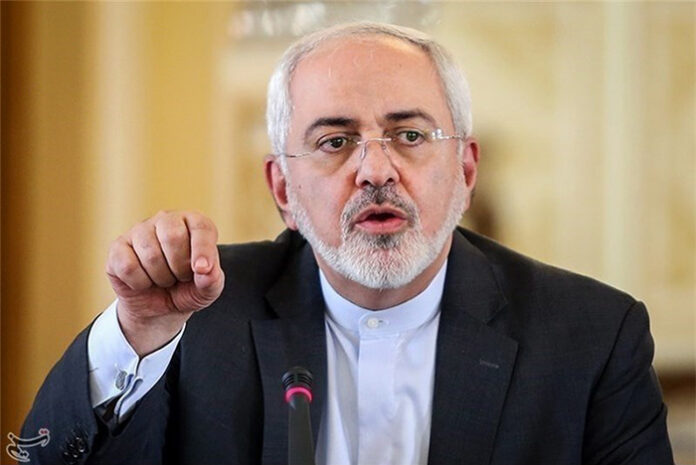
On Sunday morning, Zarif left Tehran for Cuba as the first leg of his official visit to Latin America, leading a group comprised of 120 merchants, businessmen and financial executives in government and private sectors.

After a working day, the Iranian top diplomat will then travel to Nicaragua to discuss the promotion of economic cooperation with senior leaders and officials in the Central American country.

The Iranian delegation will then visit Ecuador, Chile, Bolivia and Venezuela, where he is slated to sit down for talks with high-ranking officials and take part in joint economic seminars.

Zarif’s trip to Chile comes a few months after the reopening of the South American state’s embassy in Tehran 37 years following the victory of the 1979 Islamic Revolution.

The top Iranian diplomat posted a tweet last week, saying his tour is aimed at boosting political and economic relations with Latin American countries.

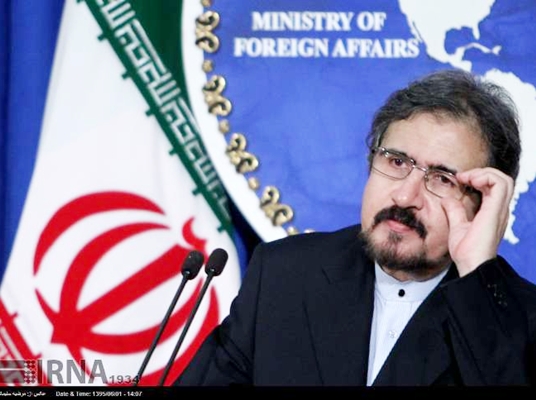
Mohammad Javad ZarifPrior to Zarif’s departure, Iranian Foreign Ministry Spokesman Bahram Qasemi said Saturday that the expansion of ties with Latin American and African countries has always been on the agenda of the Islamic Republic’s foreign policy.

He further noted that the Latin American countries are important for Iran due to political and cultural commonalities and congruity at international organizations and circles, particularly at the Non-Aligned Movement (NAM).

“Today, Iran has such a position that it can pick its political friends and trade partners and does not have to cooperate with a specific country or region in the world,” he added.

On Wednesday, Iran’s Deputy Foreign Minister for European and American Affairs Majid Takht-e-Ravanchi underlined the importance of Zarif’s tour, saying it will open a “new chapter in the relations between Iran and Latin America.”

He also described Latin America of “high significance” to Tehran and stressed that “there are many areas for cooperation between Iran and the countries of that region despite a long distance.”

Comments (0)

Iran’s Qassemi Bags Silver in Rio 2016 Wrestling

Qasemi

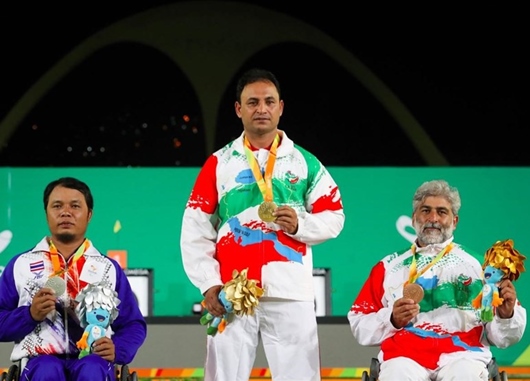
Qassemi had already received one silver and two bronze medals in free-style wrestling before the Rio 2016 wrestling competitions.

The 31st Olympic Games officially started in Rio, Brazil, on August 6.

A sum of 10,444 athletes from 206 countries compete in 28 sport fields in Rio.

64 Iranian athletes are competing in 14 sport fields of boxing, table tennis, shooting, bow and arrow, rowing, weightlifting, track and field, taekwondo, judo, fencing, volleyball, free-style wrestling, Greco-Roman wrestling, swimming and cycling.

Photos Reveal ISIS’ Use of Civilians as Human Shields to Flee Syrian Town

The pictures, tweeted by the SDF on Friday, show a long convoy of vehicles fleeing the town, each purportedly containing non-combatants to prevent attacks by coalition forces.

ISIS2The militants were fleeing north, towards Turkey, after being pushed out of Manbij following weeks of fighting, as reported by The Guardian, and covered by Al Alam.

It was unclear whether the civilians were hostages or family members of the ISIS fighters.

On Tuesday, Col Chris Garver, a spokesman for the US-led coalition against ISIS, said SDF fighters had allowed 100 to 200 vehicles of ISIS fighters to leave Manbij as they contained civilians.

“Civilians were observed in the convoy intermingled with fighters in every vehicle,” Garver said in a press briefing.

He said it was unclear how many of the civilians were in the cars voluntarily, but it was likely some were hostages.

The SDF, an Arab-Kurdish alliance of fighters, took control of the northern Syrian city of Manbij last week after 10 weeks of fierce fighting. According to the British-based Syrian Observatory for Human Rights, the battle claimed the lives of at least 437 civilians, 299 SDF fighters and 1,019 extremists.

ISIS3According to the SDF, ISIS took 2,000 hostages as they were fleeing the city to the north to use as human shields, but the hostages were later released.

The extremist group has repeatedly used human shields during combat in its ongoing conflicts in Iraq and Syria.

During fighting in Fallujah in May and June, ISIS held thousands of civilians captive to use as human shields in order to blunt the advance of Iraqi and coalition forces.

There was also confusion surrounding the presence of civilians in another ISIS convoy which came under fire as it was leaving Falluja, after the militants were pushed out of the city in late June.

Why Is It Important for Iran to Fight in Syria

Syria

Here is IFP’s translation of a report by Khabar Online on the picture published by the Leader’s office:


On the top left side of the picture, we see a photo of Aleppo in Syria before the beginning of the civil war, and on the top right, we can see what happened to the same place after the war.

On the bottom right, a photo of Avicenna’s mausoleum in Hamadan is portrayed, and on the bottom right, we can read the remarks by the Leader of the Islamic Revolution about the necessity for Iran’s advisory presence in Syria.

“A person who goes from Iran to Iraq and to Syria in order to stand up against these Takfiris [extremists] in the name of defending the Ahlul Bayt’s shrines is, in fact, defending his own city,” the Leader said in an address on June 25, 2016.

“They went to fight the enemy and if they did not, this enemy would be inside the country. … If they were not stopped, we would have to fight them in Kermanshah and Hamadan and other provinces,” Ayatollah Khamenei said in a January 25 meeting with families of Iranian martyrs killed in the fight against terrorism.

Iran-Syria

Death of Afghan Girl Leads to a Call for Revision of Iranian Law

Latifeh

According to a report by Young Journalists’ Club (YJC), as translated by IFP, Latifeh Rahmani, a 12-year-old Afghan immigrant died in Namazi Hospital in southern Iranian city of Shiraz on Friday afternoon.

She was in dire need of a liver transplant, but could not receive the organ because of a law that bans such procedures for illegal immigrants.

Her father told YJC that the hospital had refused to do the procedure because Latifeh was an illegal immigrant, her family could not afford the expenses, and the hospital did not have empty room for her.

However, Salamat Online has quoted the hospital officials as saying that the child was in a dire situation, and the time was not enough for such a procedure.

According to the hospital officials, Latifeh did not have enough time for the tests required for receiving the liver from a living body.

They noted that the country’s rules, as in many other countries, do not allow the transplant of body organs from the dead bodies of Iranians to the living bodies of foreign nationals.


Law Should Be Revised

In one of the first official reactions to the tragic incident, Mohammad Hossein Qorbani, the deputy chairman of Iranian Parliament’s Health Commission, underlined the need for a revision in the ban on transplant of body organs to foreign nationals.

In an interview with ISNA, as translated by IFP, Qorbani said that changes can be made to the law in case of necessity.

“Wherever people’s lives are in danger, we should not deprive them of medical services because of their foreign nationality. We should also take into the account the humanitarian aspect of the issue,” he noted.

The Parliament is ready to revise the law that bans the transplant of body organs to foreign nationals, Qorbani stressed.

Economic Goals High on Agenda in Iranian FM’s Latin America Tour: Spokesman

zarif

In comments on Saturday, Bahram Qassemi underlined that expansion of relations with Latin American and African nations have been always high on Iran’s foreign policy agenda, noting, “Strategically, the Foreign Ministry believes in a balanced approach to all countries and geographical regions in the foreign policy.”

As regards Zarif’s upcoming trip to Cuba, Nicaragua, Ecuador, Chile, Bolivia and Venezuela, Qassemi said representatives from tens of Iranian companies will be in the entourage in line with Iran’s policy of “export of technical and engineering services and promotion of non-oil exports” to achieve the Resistance Economy goals.

The spokesman also hailed the political and cultural commonalities between Iran and Latin America nations, as well as their common stances in international organizations, the Non-Aligned Movement (NAM) in particular.

“Today, the Islamic Republic of Iran has such a position that it can pick its political friends and trade partners, and does not have to cooperate with certain countries or regions in the world,” Qassemi went on to say.

Zarif is scheduled to begin the six-nation tour of Latin America on Sunday with a 60-strong delegation of trade officials.

A previous trip in May 2016 took Zarif to Brazil, Nicaragua, Bolivia, Venezuela and Cuba.

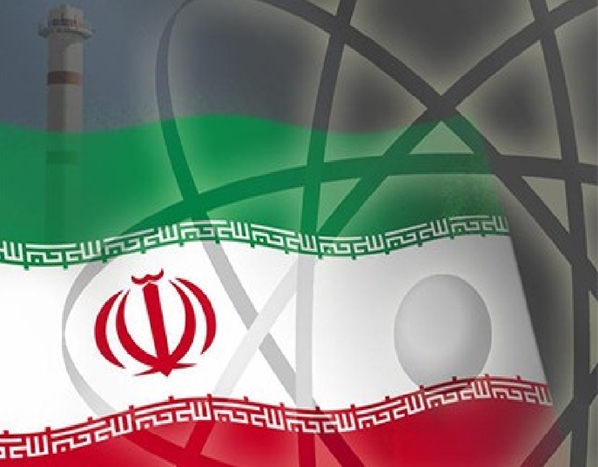
The visits come against the backdrop of growing interests in ties with Iran after Tehran and the Group 5+1 (Russia, China, the US, Britain, France and Germany) on July 14, 2015 reached a conclusion over the text of the comprehensive 159-page deal on Tehran’s nuclear program.

The JCPOA came into force on January 16 and terminated all nuclear-related anti-Iran sanctions.

Iranian Referee to Make History by Officiating Olympic Football Final: AFC

alireza_faghani_md5_rio2016

According to a report by AFC’s official website, as covered by Fars, since becoming a FIFA International referee in 2011, Faghani has been entrusted with a host of high profile matches.

He was named the fourth referee for the opening match of the 2014 FIFA World Cup between Brazil and Croatia.

He was also tasked to officiate the 2014 AFC Champions League Final first leg match between Al-Hilal and Western Sydney Wanderers.

During the hugely successful Asian Cup 2015 Australia, Faghani was appointed to officiate the final match between Korea Republic and host nation Australia.

Faghani also refereed the 2015 FIFA Club World Cup final, which saw Barcelona take on Argentina’s River Plate.

The 38-year-old Faghani will be joined by assistant referees and compatriots Reza Sokhandan and Mohammadreza Mansouri as well Ghanaian fourth official Joseph Lamptey.