Monday, April 27, 2026
Home Blog Page 4265

Iranian Athlete Struggles to Become a Champion Once Again

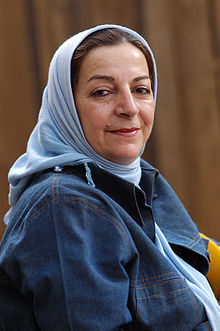
Sara Abdolmaleki

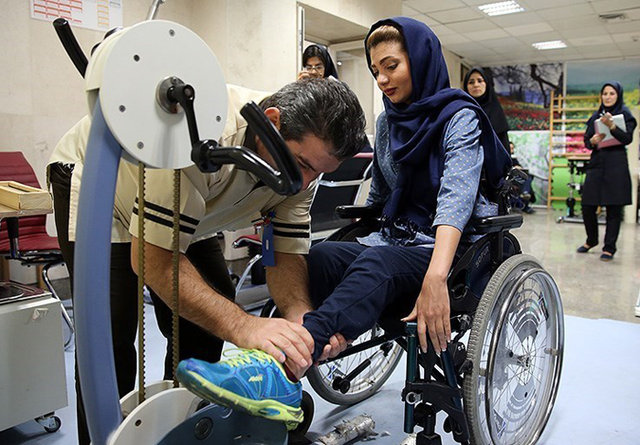
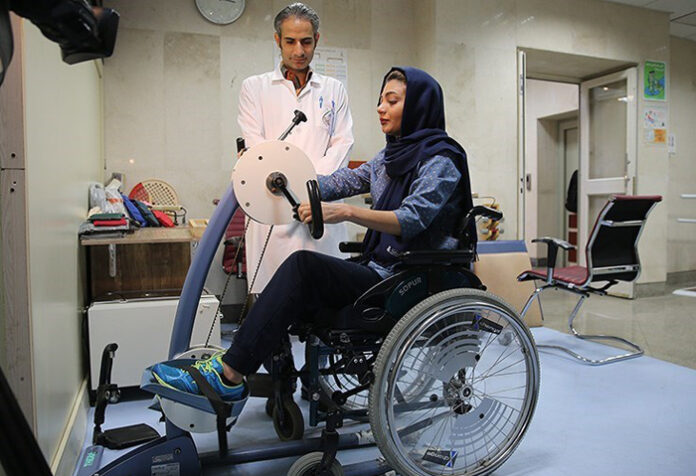
Formerly a champion in women’s rugby, Sara Abdolmaleki recently took the tests of Iran’s Sports Federation for the Disabled to restart her activities as a professional athlete.

Here is IFP’s translation of her interview with Arya News Agency:

We saw a cheerful, dynamic and hopeful girl in Sara Abdolmaleki. She talked about her desires, cheering up her parents, her trust in God, and her efforts to stand up, struggle and have a life again.


I adored dangerous sports

“I was a martial artist before attending sports school. I even didn’t consider ball games as sporting activities. But when I entered Physical Education school and knew ball games better, my talent was identified for handball. Then I found that this type of sports isn’t safe too! In my second year in high school, Mrs. Nouri [Zahra Nouri, the head coach of women’s national rugby team] introduced this field [rugby] to us. […] That year I was selected for Tehran Suburbs’ team. I did track and field before and had achieved some national and provincial titles. I was very faster than others. I learned not to look, to just run after receiving the ball. Next year I decided to join Tehran’s main team; I was invited to national team in the same year,” Sara said.

Sara AbdolmalekiI know that nothing is impossible

On January 19, 2016, Sara was seriously injured in a car accident when she was coming from Kermanshah [in Western Iran] to Tehran. In this accident, her hands, skull, and spinal cord were injured.

“When I visited my doctor for the first time, he said I will be on wheelchairs forever and there is no room to improve. Next time he said that at the best case scenario, I could walk using a cane or walker. Last time he told me that you will be recovered in less than two years. You hear a lot of words. I ignored much of them, I heard and forgot.”

“It was very hard at the beginning. I exactly couldn’t understand what happened to me for four or five months. I didn’t know it is so serious that the recovery would take a lot of time. I imagined it was like sport injuries that recover in one or two months. (She laughs) Of course I still say that I will recover in one or two months! Nothing is impossible … I can’t imagine myself on wheelchairs for the rest of my life.”


I’m resolved to struggle again to be a champion

“When the spinal cord is in shock, you can’t walk for about six months. Then you can’t expect a damaged spinal cord to recover in one or two years. It requires several years to improve and I strive for it. I am 22 now, I will be 27 after my recovery, and maybe it is too late to start again. So I decided to start my exercises now, and I will participate in higher ranks if my condition improves. After the tests of Sports Federation for the Disabled, I wanted to do boating; however, I finally chose javelin throw because of some problems.”


I love to compete!

“I’m decided to struggle to be a champion in javelin throw. I try to get prepared for Asian Para Games. Maybe I have less than a year, but I do my best.”

“God created the man who can reach any goal by making efforts. Surely, a wish without a goal is merely a dream. Your wish should be purposeful,” she noted.

Iran’s Faghani Nominated for Globe Soccer Awards

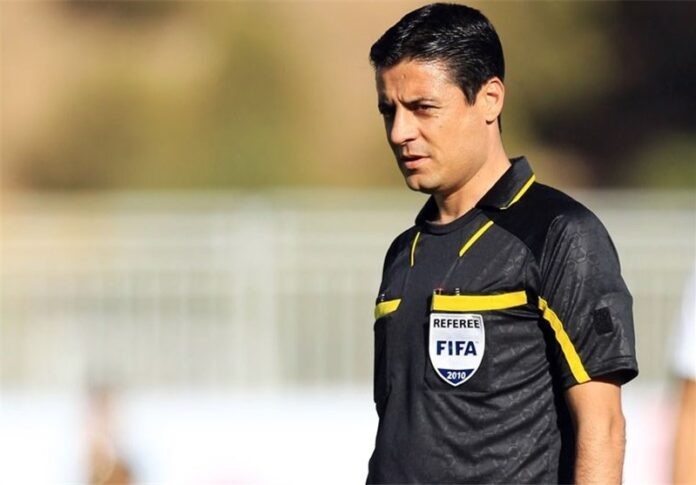
Alireza Faghani

Entering its seventh edition, the Globe Soccer Awards were created to recognize the best contributors to football — globally and regionally — both on and off the field.

Alireza Faghani, Bakary Papa Gassama (Gambia), Mark Clattenburg (England), Nestor Pitana (Argentina) and Joel Antonio Aguilar (El Salvador) have been nominated for the best referee of the year.

The award candidates have been chosen by the Globe Soccer jury, which includes international footballing coaches, directors and chairmen.

The full list of nominees for each category is as follows:

Player of the year
• Cristiano Ronaldo
• Lionel Messi
• Gareth Bale
• Antoine Griezmann
• Jamie Vardy
• Gonzalo Higuain

Club of the year
• Legia Warsaw
• Leicester City
• Sevilla
• Molde FK
• Real Madrid

Coach of the year
• Claudio Ranieri
• Fernando Santos
• Massimiliano Allegri
• Unai Emery
• Zinedine Zidane

Referee of the year
• Alireza Faghani
• Bankary Papa Gassama
• Mark Clattenburg
• Nestor Pitana
• Joel Antonio Aguilar

Saudi-Proposed Anti-Syria Resolution Rewarding Terror Sponsors: Iran

Aleppo
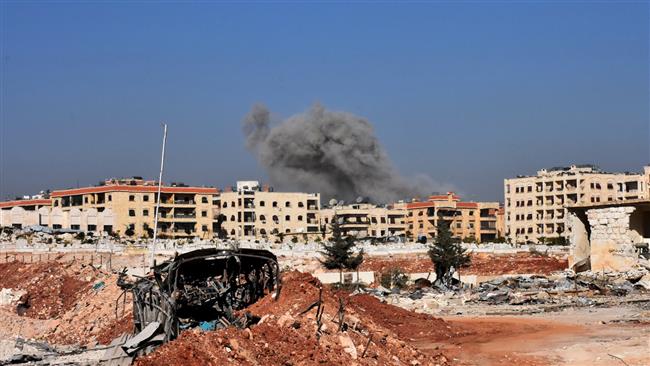
Smoke billows after rockets fired by militants exploded in an area near Aleppo's western Minyan district on November 10, 2016. (Photo by AFP)

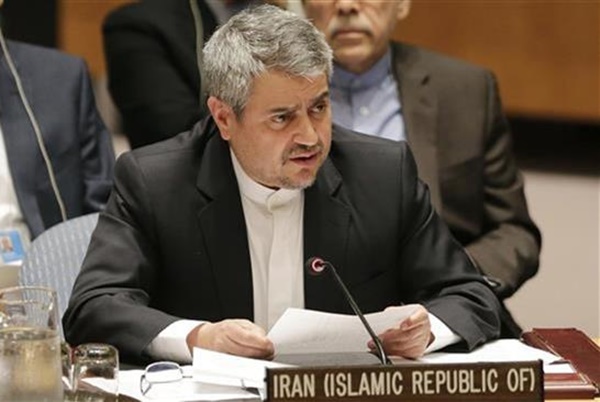
Gholam-Hossein Dehqani made the remarks on Wednesday while addressing the Third Committee of the 71st session of the General Assembly.

He stressed that the draft resolution is without a doubt against the basic principles of international law and a “disservice” to the UN.

“It does nothing but rewarding violent extremism and terrorism and those who have helped them develop extreme ideologies and corresponding financial and logistical resources in the past many years,” he added.

He noted that the structural weakness of the UN human rights mechanisms gives the countries that are actually exporting “violent extremism and terrorism” the opportunity to abuse the system and pass such resolutions.

“Let me, however, assure those who initiated this resolution and those who abetted them to push it through this committee, that this and similar acts won’t dissuade us from our fight against violent extremism, as we are determined to clean our environment from extremists who try to sow terror in our neighborhood and export it to the entire world,” he added.

Syria’s Ambassador Bashar al-Ja’afari also condemned the resolution, noting that the “Saudi regime should be the last to talk about human rights.”

The West and its regional allies, particularly Turkey, Qatar and Saudi Arabia, are widely reported to be supporting the militants fighting the government of Syrian President Bashar al-Assad since March 2011.

In September, media reports quoted unnamed US officials as saying that large numbers of man-portable missile systems, or MANPADS, could be delivered to militants in Syria through Washington’s Western and regional allies, particularly Persian Gulf Arab states and Turkey.

“The Saudis have always thought that the way to get the Russians to back off is what worked in Afghanistan 30 years ago – negating their air power (in Syria) by giving MANPADS to” the Takfiri militants, Reuters quoted one of the US officials as saying.

Iran rejects ‘baseless’ claims by Arab states

khoshrou

Gholam-Ali Khoshroo wrote to UN chief Ban Ki-moon on Wednesday after Bahrain, Egypt, Jordan, Kuwait, Morocco, Oman, Qatar, Saudi Arabia, Sudan, UAE and Yemen accused Iran of seeking to destabilize their countries.

Khoshroo denounced the accusation by those who “had been providing unwavering military and financial support” to  former Iraqi dictator Saddam Hussein in his eight-year bloody war against Iran in the 1980s.

The Iranian diplomat also dismissed accusations made by the same countries that Tehran was supporting terrorist groups in the region.

“It is ridiculous that those regimes who themselves are the nurturers and exporters of extremism and Takfiri dogma to Iraq, Syria and other countries are now accusing Iran of supporting terrorism,” he said.

Khoshroo also rejected “baseless” allegations that Iran was meddling in Bahrain’s internal affairs.

The official further censured UAE claims about Iranian islands of Abu Musa, Greater Tunb and Lesser Tunb, reaffirming that the three islands are an “inseparable” part of Iran.

The three Persian Gulf islands have always been part of Iran historically, the proof of which can be found in and corroborated by countless historical, legal, and geographical documents.

Golden Memories of Swedish Woman Who Ran across Iran All Alone

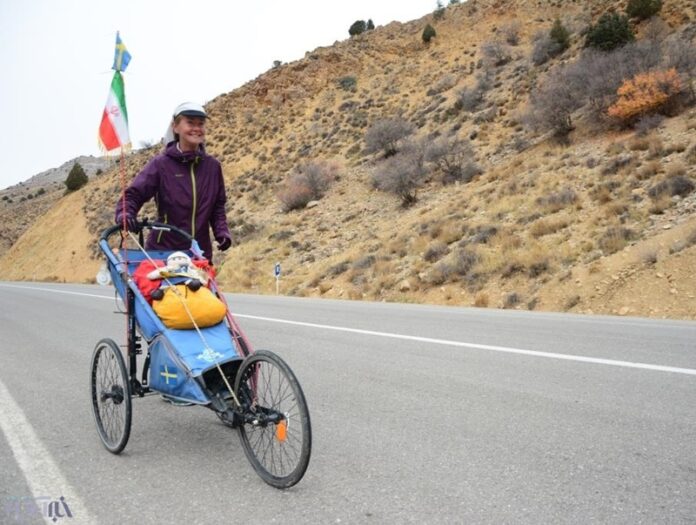
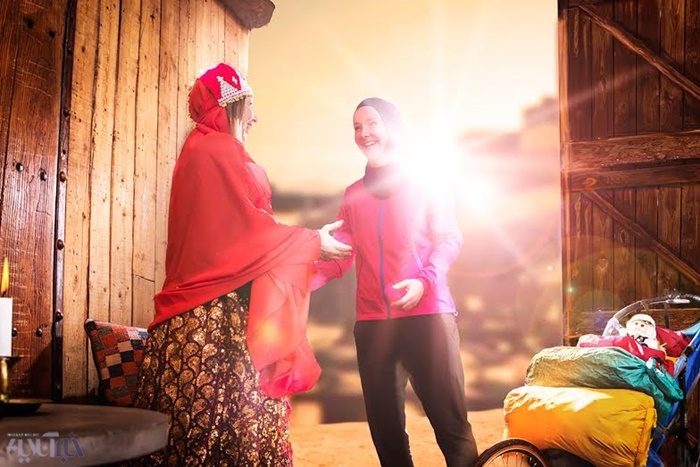
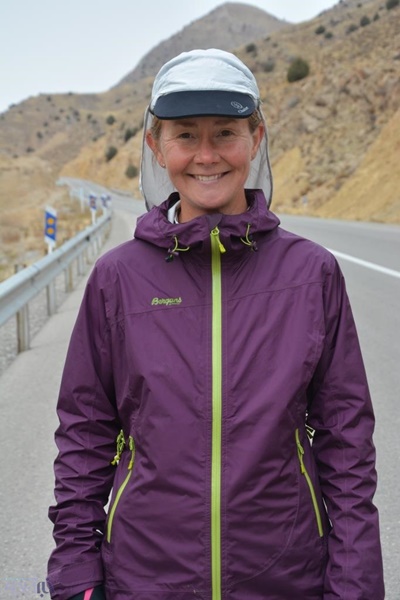
“It was mutual: I trusted people and they received me kindly in their homes,” said Kristina Palten, the Swedish runner who travelled to Iran with the motto of “trust”.

Here’s IFP’s translation of Khabar Online’s interview with Palten, a 45-year-old Swedish ultra-runner who ran across lots of Iranian towns and cities:

A lot of tourists travel to Iran from different countries and visit its cities during the year, but Kristina Palten, the 45-year-old Swedish woman who is the subject of our interview, is different as she travelled alone, visited some cities not very well known to foreign tourists, and passed through them on foot.

Carrying her brief luggage, she has been in different Iranian cities for about two months, running in our country with the motto of “trust”; a slogan that, she says, has become obvious to her during the journey.

During this interview, she talks about her agreeable and disagreeable experiences during her journey to Iran.

Why did you choose Iran?

The important reasons were nature and people`s culture; however, another reason that pushed me into visiting Iran was the existing prejudice about the country. In Sweden, and in Western countries in general, you can`t imagine a woman travelling to Iran by herself and be secure. This is why I chose “trust” as the slogan of my journey; I wanted to convey the message that people should trust each other.

I wanted to say that it is possible for people, especially people from different nations, to be curious about one another, to get to know each other; and we should be prepared for that. I wanted to be a window to knowing Iranian people, and introducing my country`s people to them. This is why I got prepared for this journey. I started to trust people I didn`t know, and the result was wonderful. During my journey, I lived with 34 different families. They received me with various foods; I entered Iran with a weight of 70kg and left the country with the same weight, despite having run for 1,840km. I never bought fruit in Iran since people used to give me fruit and food, and helped me in everything. Iranians showed me a big trust as they let me stay at their places. In fact, there is a mutual trust and an important, beautiful message for humankind.
swedish tourist

I wanted to be a window to knowing Iranian people, and introducing my country`s people to them. This is why I got prepared for this journey. I started to trust people I didn`t know, and the result was wonderful.

Didn`t you have such a slogan in your other journeys?

With this slogan I only travelled to Iran. I travelled with a friend to Turkey, Bulgaria, Romania, Ukraine, Poland, Lithuania, Estonia, Finland and some other countries in 2013, and it included 3,262 kilometres of running and 493 km of boating. We had no slogan at that time. I thought of this slogan before travelling to Iran.

Wasn`t the choice of “trust” caused by your mind-set? What did you think of Iran before your journey? Weren`t your family and friends opposed to your decision?

I should tell you that I had a lot of preconceptions, and my friends and family had a lot of pictures of Iran in their heads. Iran isn`t well-known for my people, I just heard some Iranian friends saying that Iran is a very beautiful country with hospitable people; but what I read in the news was different. They suggested that Iran is a horrible country with odd, severe laws. I had heard about the hatred between Iran and United States, and I thought maybe people will not like and accept me as someone from a Western country.

In the video clips taken from your journey, somewhere you mention “I am very afraid”. What was the reason?

In my journey to Iran, I was alone and as I intended to have a documentary about my trip, I was accompanied by a professional photographer named Soroush Morshedian for eight days of this 58-day journey. In all other days I was alone. It is frightening to be alone in a country where you don`t understand people`s language and you have difficulty in expressing yourself. Particularly because there, the majority of signs were written in Persian and I couldn`t find my way. I felt lonely and stranger, so I was frightened. Of course it was the beginning and these feelings disappeared gradually. Besides, I think another reason for fear at the beginning of my journey was that, in last days before my departure, my friend died of cancer and one of my family members was hospitalized because of diabetes. That caused me an unpleasant feeling, and made it more tragic to be far from my home country and family.

I have hundreds of pleasant, golden memories from my journey to Iran. I wrote them in my blog and a lot of people from different countries read them. By doing this, I guess many people developed a better viewpoint of Iran and my friendship with Iranians is passed to them.
Were other parts of your journey enjoyable?

Very much. I met very gentle people. Iranians are really kind and hospitable. I was surprised and gladdened by their hospitality. I have hundreds of pleasant, golden memories from my journey to Iran. I wrote them in my blog and a lot of people from different countries read them. By doing this, I guess many people developed a better viewpoint of Iran and my friendship with Iranians is passed to them.

swedish tourist

What cities did you visit?

I travelled to Tehran by airplane; then a friend drove me to Bazargan and that was where I began to run. I visited Maku, Marand, Tabriz, Sareyn, Ardabil, Astara, Talesh, Bandar-e-Anzali, Kianshahr, Lahijan, Ramsar, Tonekabon, Chalus, Nur, Amol, Babol, Sari, Neka, Behshahr, Galougah, Gorgan, Aliabad, Galikash, Bojnord, Shirvan, Ghuchan and finally, Bajgiran.
At the end, what I can say is that I love Iran very much. I wished I could speak Persian and talk and communicate more with Iranians.

Did you have any particular problem during your journey?

I`m not going to say there wasn`t any problem, but not a big and important one. There were some usual problems; for example early in my way, a man who I guess was a drug addict held my little carriage in which I carry my things and didn`t let me go; he insisted that I sit down and have a tea with him, which I refused because it didn`t feel good and he didn`t behave respectfully; however, he still didn`t let me go so that I had to blow him and pass through. I was very afraid when I looked at his very large and red eyes, but such a thing didn`t happen again.

Another case that hurt me was a man beating his son in a restaurant. I believe that someone who uses his physical force against others is a coward and not a brave person. That little boy was beaten, scared and crying, to the point that I interfered and asked the man to end his misbehaviour. I found his conduct very ill-bred. No discerning person behaves the younger or weaker like that.

Are you decided to continue your trips? Will you travel again to Iran?

I should see. I have no detailed plan for the future, but I`m sure that plans will find their way into me. Now I work on my documentary about my journey to Iran and I`m willing to write a book on that. On whether I travel to Iran again or not, I should say why not, I will be glad if I can.

 

Iranian Official Pledges Unwavering Support for Iraq’s Anti-Terror Fight

ali larijan and sheikh humam hamoudi

“The Islamic Republic of Iran always stands by the Iraqi nation and government and is fully ready to render any type of assistance [to Iraq],” Larijani said on Wednesday during a meeting with First Deputy Speaker of the Iraqi Parliament Sheikh Humam Hamoudi in Tehran on Wednesday.

Iran supports Iraq’s territorial integrity and unity among Iraqi groups, including Sunnis, Shias and Kurds, Larijani said, expressing optimism that the Arab country could overcome its problems through solidarity.

He also hailed recent gains made by the Iraqi troops and volunteer forces against terrorists and hoped for their final victory against terrorism.

The Iranian official warned against rifts among Muslims and said, “The biggest threat to security and stability in the Islamic world is fanning the flames of religious strife and stoking tensions among Muslim brethren.”

The Iraqi official, for his part, lauded Iran’s full support for his country.

He described terrorism as the biggest challenge gripping his country and expressed hope that stability would be restored to Iraq in the near future.

This comes as the Iraqi forces are heading toward the final liberation of the northern city of Mosul from Daesh terrorists.

The key city of Mosul fell into the hands of the Takfiri group in June 2014.

Iran Attaches Importance to Ties with China: Official

velayati china

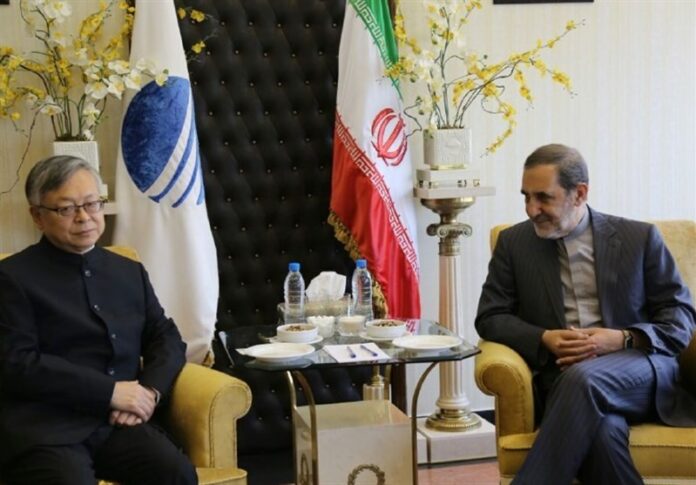
The Islamic Republic of Iran attaches significance to elevating the relations between the two countries to broad and strategic ties, Velayati said Wednesday in a meeting in Tehran with Chinese Ambassador to Iran Pang Sen.

He also called for more cooperation between Iran and China on resolving regional and international issues.

Pang Sen, for his part, described the level of bilateral ties as satisfactory, saying that since the Chinese president’s visit to Iran earlier this year, the Sino-Iranian relations have significantly developed.

During Chinese President Xi Jinping’s official visit to Iran back in January, the two country’s officials signed 17 documents for cooperation in economic, industrial, cultural and judicial fields.

The documents included one signed between Iranian and Chinese nuclear chiefs for peaceful energy cooperation.

Others involved documents for environmental cooperation, financing of a bullet train railway and banking cooperation.

China remains Iran’s top trade partner. The value of trade transactions between Tehran and Beijing stood at some $52 billion in 2014.

In recent years, the two countries have developed their military relations as well.

Earlier this week, the defense ministers of Iran and China signed an agreement in Tehran to enhance military and defense cooperation between the two sides.

The agreement entails closer defense-military cooperation between Tehran and Beijing, sharing military experience, particularly in the field of training, as well as combatting terrorism and causes of regional insecurity.

Iran Renews Support for Political Solution to Yemeni Crisis

Iran Blasts Saudi Airstrike on Civilians in Yemen

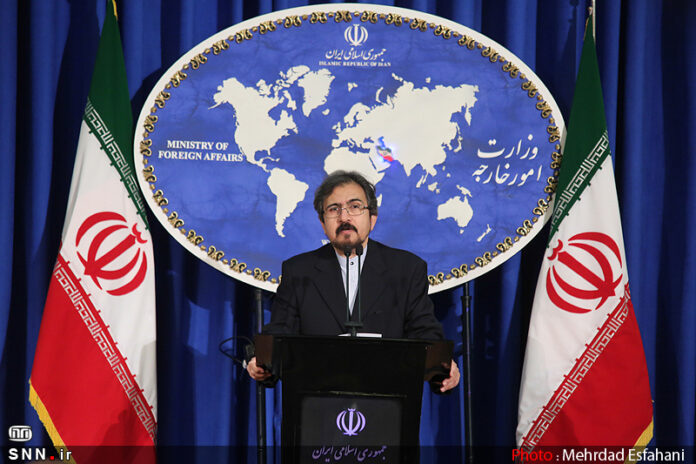
In a statement, the ministry spokesman Bahram Qassemi said Tehran supports the resumption of talks between Yemeni parties.

“The Islamic Republic of Iran has always stressed a political solution to the Yemeni crisis through dialogue between Yemen’s political groups and avoiding a military approach,” Qassem underlined.

He said that Iran welcomes a political agreement and a full ceasefire that would restore stability and peace to the Arab country and alleviate the suffering of the Yemeni nation.

The announcement came after US Secretary of State John Kerry said that both the Houthi Ansarullah movement and an alliance of militants loyal to Yemen’s resigned president, Abd Rabbuh Mansur Hadi, had agreed to a cessation of hostilities starting on November 17.

While Yemen’s former government denied that it had agreed to a ceasefire, Houthi Ansarullah movement expressed its readiness to end fighting and join a national unity government.

How Reading Can Resolve Issue of Air Pollution

book

Marziyeh Boroumand, a well-known Iranian filmmaker, has written an article about air pollution in Etemad Newspaper. Here’s IFP’s translation of her solution:

Marziyeh Boroumand
Marziyeh Boroumand

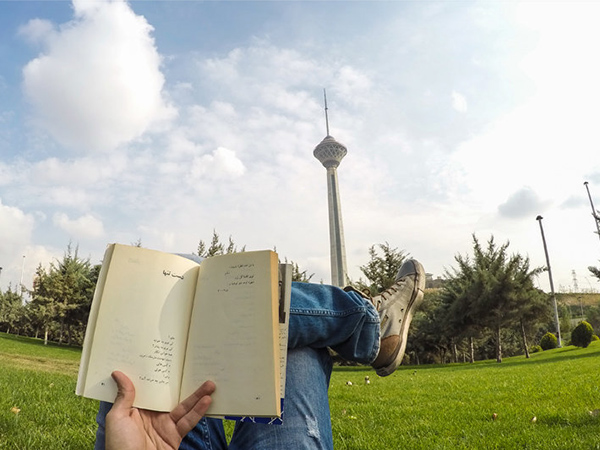
Read to avoid air pollution, to stop environment destruction, to keep the trees green, to keep the soil healthy, to let the rain drop, to improve our wisdom, to be grateful for our gifts, to understand the relationship between natural resources, to be aware that all natural elements are linked to each other, to consider “us” and not “me”, to think as a group and not be individualist, to be more of a farsighted, deep thinker.

Read to use others’ experiences and not to repeat them. If our people and officials read, they would learn that by building towers in lieu of trees, they block Tehran’s breathing roots and prevent the wind from blowing. If they read a book before any activity, our country’s environment wouldn’t have such a disastrous condition.

Books affect our lives considerably. If our officials and citizens read, they would have more foresight and could have a long-term perspective on things. As they make houses for their children, grandchildren, and descendants to ensure their comfort in future as they do now, they would also pay attention to future conditions of environment and climate; they could understand that the issue of air pollution affects all: poor and rich, educated and ignorant, grand and little; because all people live in such air and this is a common pain. But we don`t learn our lessons; the wind stands in same quarter for years, and in the last minute, when the air pollution is most critical than ever, we remember that we had to do something about it.

It seems that we, the artists, are more sensible to this case than our officials. Mr. [Dariush] Mehrjui and I noticed the environmental crisis years ago. I made “Ab-Paryia” TV series and he made “Narenji Poosh” many years ago; however, it seems that no one hears us. How much should we shout that we are committing a crime against our own people? That they are dying gradually in this air? It is really painful that people live in this polluted air. It is not a matter of today; we have faced this crisis for years, but we got used to it and it looks normal to us. Our words and repetitions don’t solve the problem. For many years, we have no fall and winter, we just hear the name of these seasons and live with their memories. I used to love them and in recent years I lost my interest. Now they are the seasons of air pollution; the seasons of snow-less mountains, even it doesn’t rain anymore. It hurts me.

In the excessive air pollution of these days, not only people’s bodies are at risk, but they experience this crisis with their minds and souls. I wish we understand that there is a direct relationship between people’s mind and soul and their living conditions. We, alongside officials, haven’t refined our body and mind, though, and we faced such misfortunes as air pollution. Believe that all things are linked!

Israeli, Saudi-Backed Human Rights Resolutions Ludicrous: Iranian Diplomat

jaberi

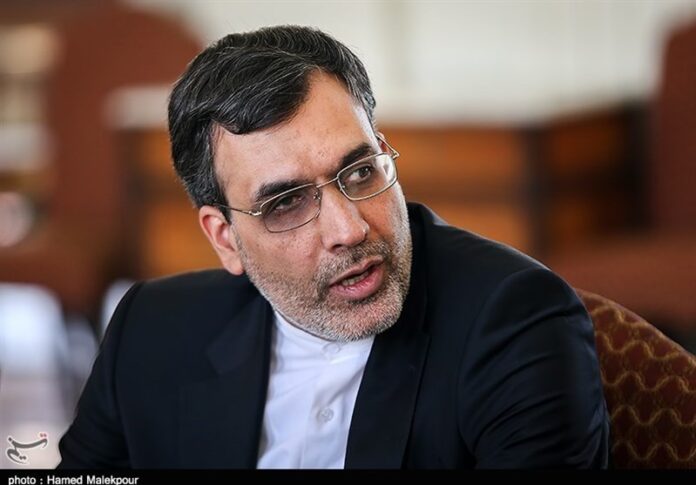
Speaking in a meeting with visiting Zimbabwean Permanent Secretary of Ministry of Foreign Affairs Joey Bimha in Tehran on Wednesday, Jaberi Ansari enumerated the Saudi and Israeli crimes and violations of human rights and said it is ridiculous that such regimes talk about human rights.

“Over 2 million Palestinians are living in the worst of conditions under an Israeli blockade in the Gaza Strip,” he noted, adding that the Zionist regime of Israel has constantly resorted to state terrorism in the past decades and violated Palestinians’ fundamental rights.

He also highlighted the massacre of the Yemeni people by a Saudi-led coalition in the past one and a half years as a clear example of Riyadh’s human rights violations.

Jaberi Ansari’s comments came after the UN General Assembly’s 3rd Committee in its 71st session on Tuesday approved five draft resolutions, including one on Iran, which calls “for greater accountability for human rights abuses and for the Iranian Government to ensure transparent and inclusive presidential elections in 2017.”

The draft resolution on Iran was approved by a vote of 85, including Saudi Arabia and Israel, in favour to 35 against with 63 abstentions.

Iran’s Foreign Ministry Spokesman Bahram Qassemi has also slammed the anti-Iran resolution, saying a stark sign of its illegitimacy is that it has been endorsed by the Zionist regime of Israel and by Saudi Arabia and a handful of regional countries that are unfamiliar with democracy and freedom and are also known as the main supporters of terrorism, violence and extremism.