Monday, May 4, 2026
Home Blog Page 422

Palestinian activist denied release for son’s birth: Wife

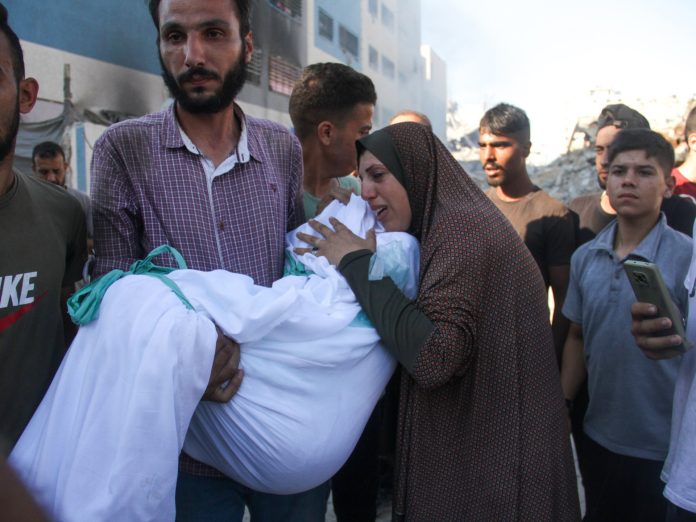
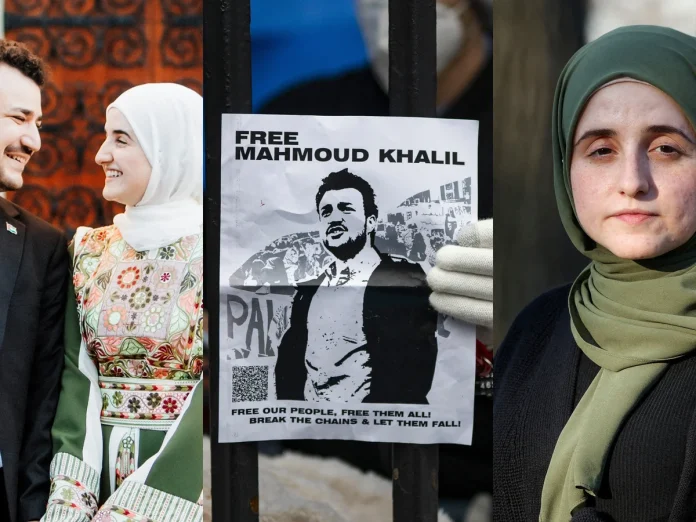
Noor Abdalla announced on Monday that she gave birth to the couple’s first child in New York without Khalil present after US Immigration and Customs Enforcement made the “purposeful decision” to make her family suffer.

“My son and I should not be navigating his first days on earth without Mahmoud,” Abdalla, a US citizen, said in a statement.

“ICE and the Trump administration have stolen these precious moments from our family in an attempt to silence Mahmoud’s support for Palestinian freedom.”

“I will continue to fight every day for Mahmoud to come home to us,” Abdalla added.

“I know when Mahmoud is freed, he will show our son how to be brave, thoughtful, and compassionate, just like his dad.”

Khalil, a graduate student at Columbia University who played a prominent role in last year’s campus protests against Israel’s war in Gaza, was detained by immigration authorities on March 8 as part of US President Donald Trump’s crackdown on pro-Palestinian activism.

The Trump administration is seeking to deport Khalil, who is being detained at an ICE facility in Louisiana, claiming that his advocacy has undermined US efforts to “combat anti-Semitism” and “protect Jewish students from harassment and violence”.

Khalil, who is a permanent US resident, has denied engaging in anti-Semitism.

An immigration judge in Louisiana earlier this month ruled that the Trump administration could proceed with deportation proceedings against Khalil, finding that the government had “established by clear and convincing evidence that he is removable”.

Khalil’s lawyers have said they will appeal the decision.

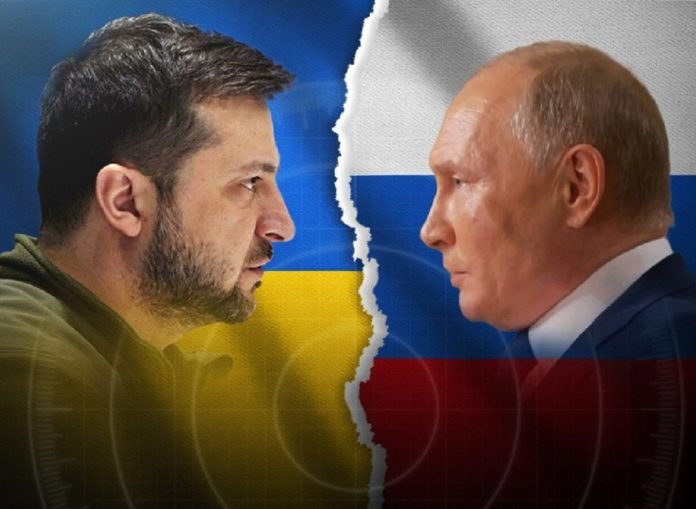
Putin says he’s open to direct negotiations with Ukraine

Putin and Zelensky

US, European and Ukrainian officials are set to meet this week in London after Washington warned that it could abandon its efforts on ending the conflict if there were no signs of progress.

Speaking to reporters, Putin said it could be possible to discuss the halting of strikes against civilian infrastructure directly with Kyiv.

“We have a positive attitude towards a ceasefire,” Putin added, referencing Russia’s decision to implement a surprise 30-hour Easter truce – which both sides accused each other of violating.

“That is why we have always said that we take a positive attitude to any peace initiatives. We hope that the representatives of the Kyiv regime will feel the same way.”

Ukraine, which called for the extension of the truce before it expired Sunday, has repeatedly accused Russia of deliberately targeting civilians with air and drone strikes, and President Volodymyr Zelensky has called for Moscow to halt such attacks.

Putin acknowledged that recent Russian strikes had hit civilian facilities in Ukraine, but claimed that they were being used for military purposes.

“That’s what we need to look into,” he said, adding, “It’s all a subject to be thoroughly investigated. Maybe bilaterally, as a result of dialogue. We don’t rule that out.”

“So we will analyze all of this and make appropriate decisions for the future,” he stated.

Kremlin spokesman Dmitry Peskov confirmed Putin’s remarks to journalists, Reuters reported citing Russia’s Interfax news agency.

“When the president said that it was possible to discuss the issue of not striking civilian targets, including bilaterally, the president had in mind negotiations and discussions with the Ukrainian side,” the news agency quoted Peskov as saying.

Ukraine and Russia have not held direct talks since the early weeks of Moscow’s invasion in 2022.

Last Friday, US Secretary of State Marco Rubio warned that the US could walk away from its efforts to end the Ukrainian conflict within “days” if there were no signs of progress. President Donald Trump later confirmed the sentiment, but did not provide a timeline.

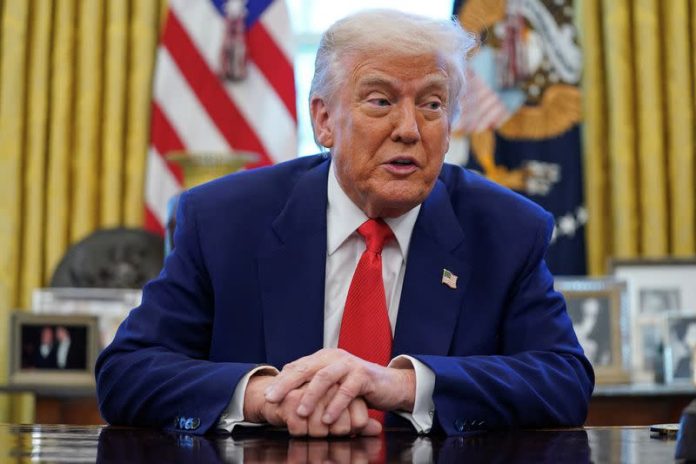
Asked what progress he would need to see to continue negotiations, Trump stressed he would “have to see an enthusiasm to want to end it” from both sides, predicting he would know “soon.”

The remarks came after a broad framework was presented by the US to both sides, Rubio and the State Department have said, to determine whether differences between Kyiv and Moscow can be narrowed.

The proposal would see Washington ready to recognize Russian control of Crimea, which Moscow annexed in 2014, an official familiar with the framework told CNN. The proposal would also put a ceasefire in place along the frontlines of the war, the official added.

There are still pieces of the framework to be filled out and the US plans to work with the Europeans and the Ukrainians during talks this week in London, the person said. The Trump administration is simultaneously planning another meeting between Middle East envoy Steve Witkoff and Russia to get Moscow on board with the framework, the source said.

Moscow has previously stalled on negotiations and rejected an earlier US proposal for a 30-day ceasefire agreed to by Kyiv.

Zelensky has not publicly commented on the latest US proposal. On Tuesday, he said Ukraine will send a delegation to the follow up talks in London.

“Ukraine, the United Kingdom, France, and the United States — we are ready to move forward as constructively as possible… to achieve an unconditional ceasefire, followed by the establishment of a real and lasting peace,” he wrote in a statement on X.

“An unconditional ceasefire must be the first step toward peace,” he added.

Zelensky has expressed willingness to agree to a peace deal with Moscow but said last month that his government would not recognize any occupied territories as Russian, calling that a “red line.”

Trump has declined to say whether he is prepared to walk away completely from the talks or whether the US would support Ukraine militarily if talks fall through.

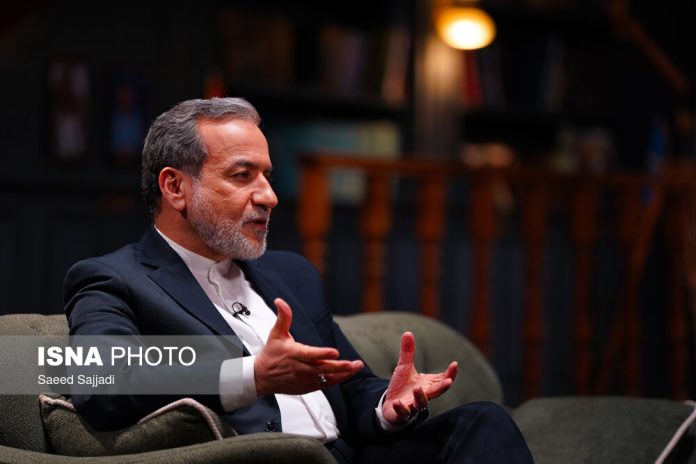
Certain groups manipulating Iran-US negotiations: FM

Abbas Araghchi

In a post published on his official X account on Tuesday, the top diplomat emphasized that these groups were laboring to manipulate the course of diplomacy and goad the US administration into making excessive demands.​

Araghchi’s remarks followed cancellation of his scheduled keynote address at the Carnegie International Nuclear Policy Conference.

The cancellation followed, what turned out to be, an “orchestrated pressure” campaign from “Israeli-affiliated hawkish elements” and officials from administrations of former US presidents Joe Biden and Barack Obama.

The official clarified that his intention was not to use the speech to address the nuances of ongoing indirect talks between the two sides in public, but to explain Iran’s mindset and aspirations.​

He expressed regret over the decision, attributing it to a lack of understanding of the sensitive dynamics involved in the diplomatic process.

Iran and the United States held their first round of indirect talks during US President Donald Trump’s second tenure, in the Omani capital Muscat on April 13, with the Persian Gulf state serving as the mediator.

The talks were followed by another round in Rome, which were likewise mediated by Muscat.

The process will continue at the expert level on Wednesday and at the principals’ level on Saturday.

So far, both sides have expressed optimism regarding the process, while Tehran has underscored that it has to remain still greatly cautious concerning Washington’s intentions.

The post also featured the complete text of the foreign minister’s speech, in which he reiterated Iran’s longstanding commitment to the principles of the Nuclear Non-Proliferation Treaty (NPT).

He emphasized the country’s opposition to nuclear weapons on moral and religious grounds.

“As one of the founding signatories of the NPT back in the 1960s, Iran has long been committed to the principles of universal access to peaceful nuclear technology and rejection of atomic weapons,” the official wrote in the speech.

“We are also the only country on the planet that officially opposes nuclear arms on moral and religious grounds,” through a religious decree (fatwa) by Leader of the Islamic Revolution Ayatollah Seyyed Ali Khamenei.

Araghchi further highlighted Iran’s advocacy for a nuclear weapon-free zone in the West Asia region and criticized Western countries for turning a blind eye to the Israeli regime’s expansive nuclear arsenal, calling for an end to this double standard.​

Looking ahead, the foreign minister stressed that any future agreement had to guarantee Iran’s economic benefits, besides addressing “concerns of all parties.”

Accordingly, he stressed that talks had to remain focused solely on the removal of the US’s illegal and unilateral sanctions against the Islamic Republic as well as the nuclear issue.

The Islamic Republic’s security would, therefore, never be subject to negotiation, he asserted.

“In a region as rough and volatile as ours, Iran will never put its security up for negotiation.”

The official pointed out that Iran’s pursuit of civilian nuclear energy aligned with its national developmental and economic goals.

He emphasized that the Islamic Republic had never opposed economic and scientific collaboration with the United States, noting that previous American administrations had been the obstacle, often influenced by Special Interest groups.

Araghchi, however, mentioned that Iran’s economy presented significant opportunities for US enterprises, particularly in generating clean electricity from non-hydrocarbon sources.

The top diplomat concluded by emphasizing the need to respect Iran’s civilizational past and cultural and political identity.

He argued that threats and pressure against the Iranian nation had been counterproductive throughout history, closing avenues for compromise.

The official called for constructive engagement rooted in mutual respect and equal standing, asserting that Iran should not be treated as an exception within the global nonproliferation framework, and that nuclear-armed states also had to accept elimination of their non-conventional arsenals.

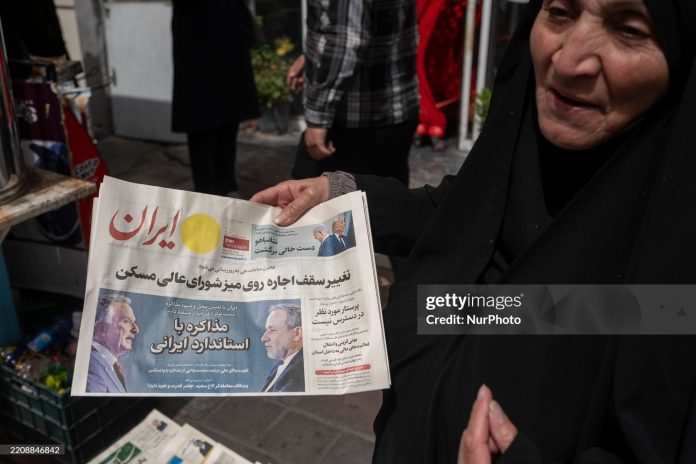
Iranian newspaper slams three groups for seeking to torpedo negotiations, détente with US

The editorial published on Tuesday asserts that the first group consists of domestic critics who “speak from a position of self-proclaimed wisdom,” questioning the timing and costs of diplomacy without offering solutions.

The second group is the one that is framing detente as “treason,” using inflammatory rhetoric to stoke unrest in Iran and create diplomatic complications.

The most scathing criticism is reserved for the third group that Etela’at calls a “bankrupt, mercenary opposition,” including exiled factions that supports “a dictatorship” and sought to disrupt Iran’s recent presidential elections and derail the democratic process.

The warning by Etela’at comes as Kayhan, a hardline Iranian newspaper also ran an article on Tuesday, warning of Trump’s “Plan B” regarding the nuclear negotiations.

Kayhan has claimed that the US president likely has an alternative strategy should the current talks fail, suggesting Washington remains focused on Iran’s missile program and regional influence despite diplomatic engagement.

The newspaper argued that when the US sets a 60-day deadline for talks, it implies the existence of a backup plan.

According to Kayhan, Trump’s primary concern during his first presidency was countering not just the JCPOA nuclear deal but Iran’s “growing power” in the region.

The report noted that the Trump administration believed a comprehensive strategy on Iran was necessary before making any policy decisions, criticizing the Obama administration for signing the 2015 nuclear deal without what it deemed a “grand strategy” in place.

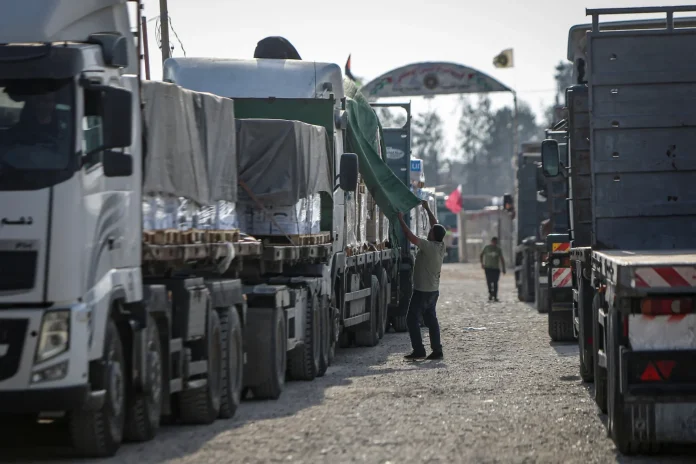
Israel ‘completely’ blocked all humanitarian aid into Gaza for 50 days: UN

“Today marks 50 days since the Israeli authorities have completely blocked incoming supplies of any kind into the Gaza Strip,” UN spokesperson Stephane Dujarric said at a news conference on Monday.

Citing the UN Office for the Coordination of Humanitarian Affairs (OCHA), Dujarric stated: “Since early March, not a single truck carrying food, fuel, medicine or any other essentials have been allowed in no matter how critical they are for people’s survival.”

Warning over the “dangerously low” food stocks in the enclave, Dujarric added: “Rations have been cut. Critical medicines, vaccines and medical supplies are all running low.”

“Ambulances have had to scale back life-saving services because there’s almost no fuel to power these ambulances. Cooking gas has disappeared from markets. Bakeries have been forced to shut down,” he continued.

He warned that “the impact of the full block of this continued blocking of humanitarian aid is devastating. Children and adults alike are going hungry. Access to health care is falling apart,” adding that “attacks on civilians, including emergency teams and aid workers have surged again.”

Following Israel’s internal probe into an airstrike that killed aid workers in Rafah, Dujarric said: “Based on those findings, it is clear that too many civilians, including aid workers, have been killed in Gaza.”

“There needs to be accountability, and serious accountability for all those who’ve committed them,” he stressed, noting that a UN investigation would require a specific mandate.

On the ceasefire talks, Dujarric stated: “All we can hope for is for an agreement to be reached to ensure that humanitarian aid once again flows freely and unhindered into Gaza.”

The Israeli army resumed its onslaught on Gaza on March 18, shattering a Jan. 19 ceasefire and prisoner exchange agreement.

Overall, it has killed more than 51,200 Palestinians in Gaza since October 2023.

Israel halted the delivery of aid to the enclave on March 2, hours after the end of truce deal’s 42-day first phase.

Nearly 600 children killed, 1,600 injured in renewed Israeli onslaught on Gaza: UN

Gaza War

Citing figures released by the UN children’s agency (UNICEF), UNRWA said that over 1,600 other children have also been injured since Israel resumed its assaults on March 18.

“The humanitarian crisis in the Gaza Strip is now likely at its worst point since October 2023,” it added.

The Israeli army resumed its deadly aggression on the Gaza Strip on March 18 and has since killed 1,864 people and injured nearly 4,900 others despite a ceasefire and prisoner exchange agreement that took hold in January.

More than 51,200 Palestinians have been killed in Gaza in a brutal Israeli onslaught since October 2023, most of them women and children.

Last November, the International Criminal Court issued arrest warrants for Israeli Prime Minister Benjamin Netanyahu and his former Defense Minister Yoav Gallant for war crimes and crimes against humanity in Gaza.

Israel also faces a genocide case at the International Court of Justice for its war on the enclave.

Washington had ‘very good’ meetings with Tehran: Trump

Referencing the second round of discussions with Iran over the weekend, Trump told reports on Monday, “We had very good meetings actually on Iran.”

Asked what will happen next, Trump responds, “The next step is we need a little time.”

Iranian Foreign Minister Seyed Abbas Araqchi and Steve Witkoff, the US president’s special envoy for West Asia affairs, led two rounds of indirect talks about Iran’s nuclear program and the termination of US sanctions in the Omani capital of Muscat and the Italian capital, Rome, on April 12 and 19, respectively.

Iran and the US agreed to open expert-level technical discussions in Oman on April 23. A third round of high-level indirect negotiations between Araghchi and Witkoff would kick off in Oman on April 26 to evaluate the results of the expert meetings and see how close they will be to an agreement.

President Pezeshkian: Iran ready for agreement but not to give in to bullying

Masoud Pezeshkian

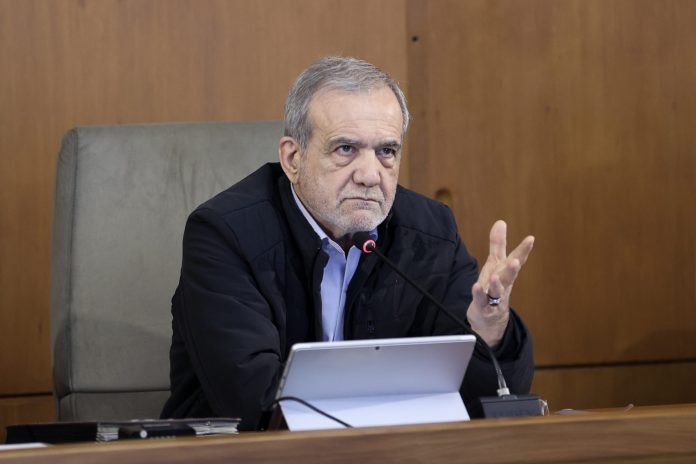
Pezeshkian said, “As the leader of the Islamic Revolution said, we are neither optimistic nor pessimistic”.

He added that Iran does not seek conflict, but it does not give in to bullying and coercion.

The president stressed that his administration has from the start insisted on strengthening political, economic, scientific, and cultural relations with other countries, especially Muslim and neighboring nations but ties with others are also pursued based on mutual respect and constructive interaction.

Pezeshkian added that with piety and reliance on their own capabilities, the Iranians can build their country. “We Iranians are capable people and never underestimate ourselves”, he said.

Pezeshkian noted that many of Iran’s scientific, cultural, religious, and academic elites have been assassinated because the enemy does not want capable people to remain in the country.

US wants territory surrounding Europe’s largest nuclear power plant: WSJ

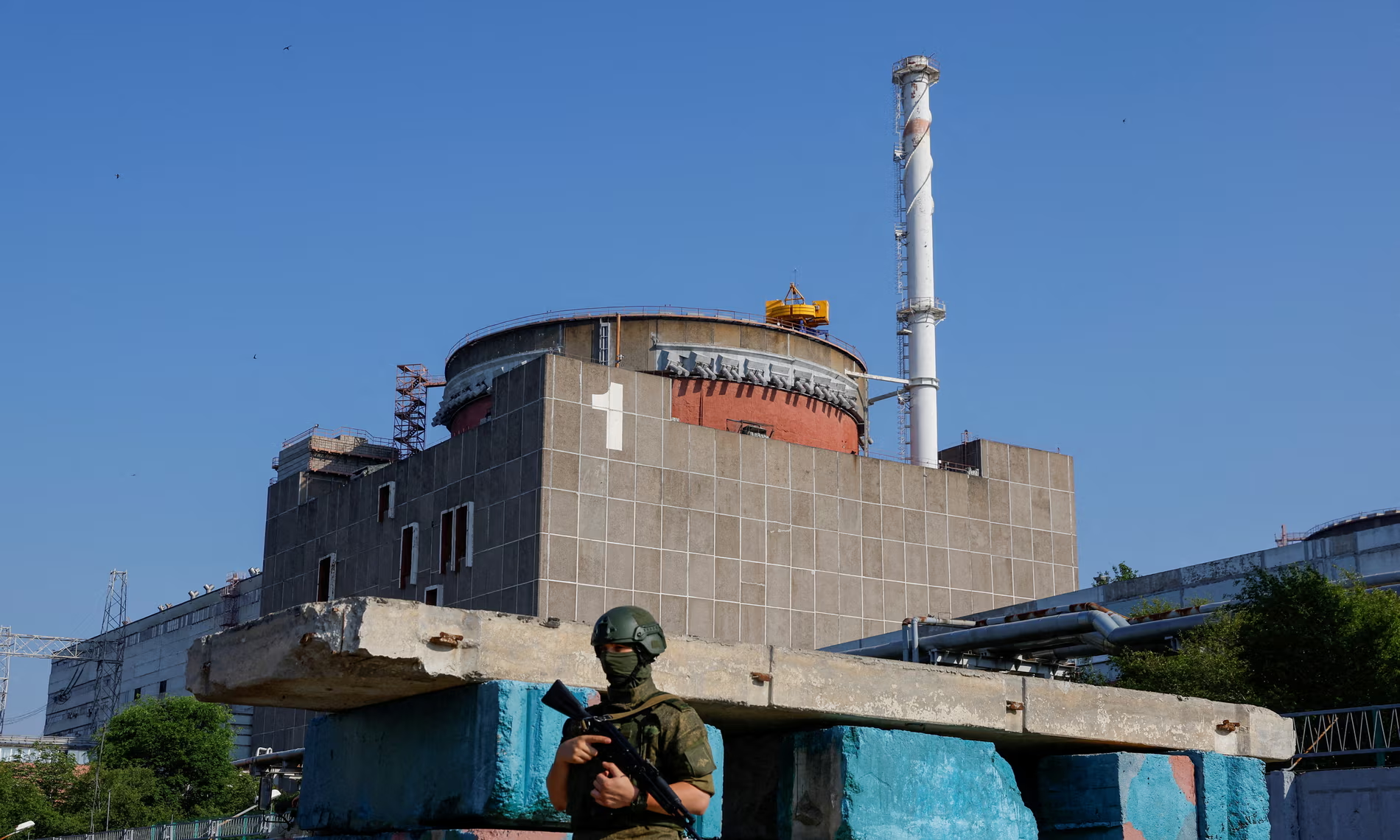
Last Thursday, senior members of US President Donald Trump’s administration met with Ukrainian and European officials in Paris. One of their ideas aimed at facilitating a peace agreement between Kiev and Moscow involves designating the land around the Zaporozhye nuclear power plant (NPP) as neutral territory under US control, the newspaper reported Sunday, citing anonymous sources.

The former Ukrainian region hosting the facility voted to join Russia in 2022, though Kiev has dismissed the referendum as a sham. In March, Trump claimed that Ukraine’s President Volodymyr Zelensky had proposed that the US take ownership of his country’s nuclear power plants. Zelensky, however, refuted this assertion, stating that he and Trump only discussed potential US investments in the Zaporozhye NPP.

Additionally, Washington has suggested recognizing Russian sovereignty over Crimea, not opposing Russian control over four other former Ukrainian regions, including Zaporozhye, and rejecting Ukraine’s bid for NATO membership, according to the WSJ.

However, the list of proposals does not include any cap on the strength of the Ukrainian army or ban on troop deployments by European NATO members in Ukraine, the newspaper noted. If the US, its European allies, and Ukraine achieve a “convergence” this week, the package will be presented to Moscow, the WSJ reported.

Russian president ratifies agreement on strategic partnership with Iran

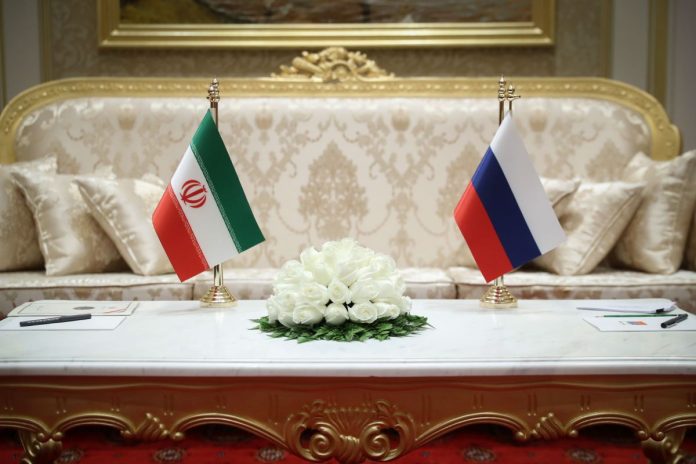
Iran and Russia Flags

The document was posted on the official web portal of legal information.

The deal sets out the legal framework for further development of cooperation between Moscow and Tehran for the long-term perspective.

It enshrines the status of Russia and Iran as strategic partners and covers all the spheres, including defense, combating terrorism, energy, finance, transport, industry, agriculture, science, culture and technologies.