Monday, May 4, 2026
Home Blog Page 420

Yemen’s Houthis conduct rare aerial attack on northern Israel

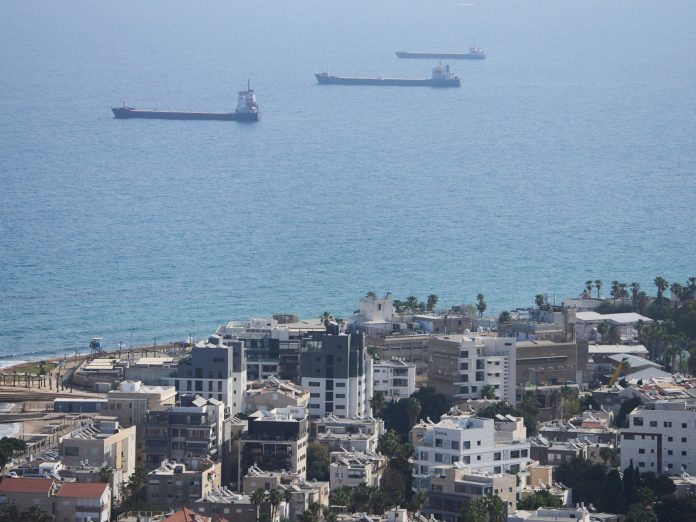
On Wednesday, the Israeli army said that the missile triggered air raid sirens in Haifa, Krayot and other areas west of the Sea of Galilee.

This area is a rare target for the Houthi rebels, who continue to be the target of an intense United States air strike campaign.

Since the war in Gaza broke out in October 2023, the Houthis have repeatedly fired missiles and drones at Israel in what they say is a show of solidarity with the Palestinians.

The rebel group controls swaths of Yemen, and Israel has struck Houthi targets several times inside the country, including in the capital, Sanaa.

The Houthis did not immediately claim the attack, though it can take them hours or even days to acknowledge their assaults.

Meanwhile, US air raids, part of an almost daily campaign that began on March 15, continued targeting the Houthis on Wednesday morning. The Houthis reported US strikes on the Hodeidah, Marib and Saada governorates.

In Marib, the Houthis described a strike hitting telecommunications equipment, which had previously been a US target.

The Houthis, in response, have stepped up their targeting of US drones flying over the country. Houthi military spokesman Brigadier General Yahya Saree stated late on Tuesday that the rebels had shot down an MQ-9 Reaper drone over Yemen’s northwest Hajjah governorate.

MQ-9 Reaper drones, which cost about $30m apiece, can fly at altitudes of more than 40,000 feet (12,100 metres) and remain in the air for more than 30 hours.

The US military and CIA have flown them for years over Afghanistan, Iraq, and now Yemen.

The Houthis claim to have downed 26 MQ-9s over the past decade of the Yemen war.

The US military acknowledged the report of the drone being downed but announced it could not comment further.

The US military says it is targeting Houthi “terrorists” to stop attacks on international shipping in the Red Sea, a crucial global trade route, and Israel.
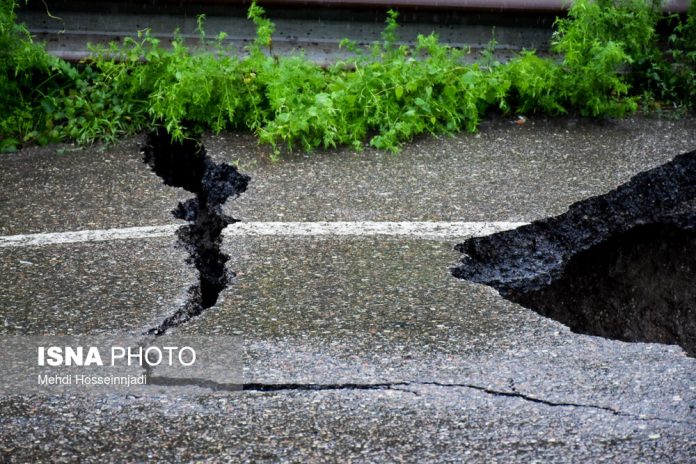
Official: 30 Iranian provinces face land subsidence crisis as wetlands disappear

Iran Flood

The head of Iran’s Department of Environment, Shina Ansari, spoke at a meeting with provincial governors, explaining that climate change and poor water management have created a dangerous situation.

“Subsidence is no longer localized – it threatens national infrastructure and population centers,” said Ansari, demanding urgent policy reforms to address root causes.

The crisis stems from a dangerous combination of climate change impacts and water mismanagement.

“We’ve lost 27 billion cubic meters of renewable water resources,” Ansari stated, noting rainfall has dropped 13% below historical averages while unsustainable agricultural and industrial practices continue draining reserves.

The devastation extends to Iran’s wetlands, with Ansari reporting “66% of our wetlands have become sources of dust storms.” These dried-out ecosystems no longer provide their critical functions of maintaining soil moisture and preventing erosion.

“What we’re seeing is a vicious cycle,” Ansari explained. “Climate change reduces rainfall, we over-extract groundwater, wetlands disappear, and the land sinks further – each problem makes the others worse.”

Environmental experts warn that without immediate policy changes, the damage could soon become irreversible.

IMF cuts growth forecasts for most countries in wake of trade war

imf

The IMF released an update to its World Economic Outlook compiled in just 10 days after U.S. President Donald Trump announced universal tariffs on nearly all trading partners and higher rates – currently suspended – on many countries.

It cut its forecast for global growth by 0.5 percentage point to 2.8% for 2025, and by 0.3 percentage point to 3% from its January forecast that growth would reach 3.3% in both years.

It said inflation was expected to decline more slowly than expected in January, given the impact of tariffs, reaching 4.3% in 2025 and 3.6% in 2026, with “notable” upward revisions for the U.S. and other advanced economies.

The IMF called the report a “reference forecast” based on developments through April 4, citing the extreme complexity and fluidity of the current moment.

“We are entering a new era as the global economic system that has operated for the last 80 years is being reset,” IMF chief economist Pierre-Olivier Gourinchas told reporters.

The IMF said the swift escalation of trade tensions and “extremely high levels” of uncertainty about future policies would have a significant impact on global economic activity.

“It’s quite significant and it’s hitting all the regions of the world. We’re seeing lower growth in the U.S., lower growth in the euro area, lower growth in China, lower growth in other parts of the world,” Gourinchas told Reuters in an interview.

“If we get an escalation of trade tensions between the U.S. and other countries, that will fuel additional uncertainty, that will create additional financial market volatility, that will tighten financial conditions,” he said, adding the bundled effect would further lower global growth prospects.

Weaker growth prospects had already lowered demand for the dollar, but the adjustment in currency markets and portfolio rebalancing seen to date had been orderly, he said.

“We are not seeing a stampede or a run to the exits,” Gourinchas stated, adding, “We’re not concerned at this stage about the resilience of the international monetary system. It would take something much bigger than this.”

However, medium-term growth prospects remained mediocre, with the five-year forecast stuck at 3.2%, below the historical average of 3.7% from 2000-2019, with no relief in sight absent significant structural reforms.

The IMF slashed its forecast for growth in global trade by 1.5 percentage point to 1.7%, half the growth seen in 2024, reflecting the accelerating fragmentation of the global economy.

Sharply increased tariffs between the United States and China will result in much lower bilateral trade between the world’s two largest economies, Gourinchas said, adding, “That is weighing down on global trade growth.”

Trade would continue, but it would cost more and it would be less efficient, he stated, citing confusion and uncertainty about where to invest and where to source products and components.

“Restoring predictability, clarity to the trading system in whatever form is absolutely critical,” he told Reuters.

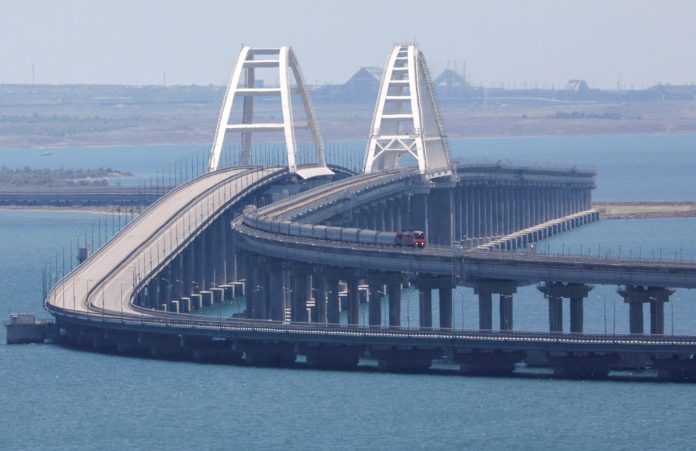
EU says will never recognize Crimea as Russian

Crimean Bridge

Kallas’ comments come in response to reports that the recognition of Crimea as Russian territory is being considered as part of a U.S.-backed proposal to end the war in Ukraine.

“Crimea is Ukraine,” Kallas told the AFP.

“It means a lot for the ones who are occupied that others don’t recognize this as Russian.”

Russia illegally annexed Crimea in 2014, occupying the peninsula with troops and staging sham referendums to justify the seizure of territory. The move was widely condemned as a violation of international law.

Kallas said it would be a mistake to reward Moscow’s land grab by including recognition of Crimea as part of a ceasefire deal.

“Then Russia clearly gets what they want,” she added.

Kallas stated Washington should instead look to mount pressure on Moscow, rather than ceding to Kremlin demands.

“They have tools in their hands to use, actually, to pressure Russia. They haven’t used those tools,” she continued.

“If they are now walking away without using the tools that they have actually in their hands, then my big question mark is, why? Why aren’t they using the tools to really end this war?”

While Europe has largely been shut out of the U.S.-brokered peace negotiations with Ukraine and Russia, talks in Paris on April 17 brought Europe back to the table. U.S. delegates reportedly unveiled their ceasefire proposal during the Paris talks — and are expecting a response from Ukraine during follow-up talks in London on April 23.

Representatives from Ukraine, the U.K., France, and the U.S. will convene in London to continue discussions.

President Volodymyr Zelensky has already ruled out recognizing Crimea as Russian.

Iran parliament rejects urgency bills on daylight saving time changes

Iran's parliament

In Wednesday’s session, lawmakers rejected the “double urgency” and “single urgency” statuses for the bill, meaning the legislation will now undergo standard parliamentary review procedures without expedited processing.

The proposed bill would have empowered the administration to modify Iran’s time zone offset and set official working hours for civil servants.

The country abolished seasonal clock changes in 2022, maintaining UTC+3:30 year-round despite some calls to revert to DST (daylight saving time) as the change adds nearly 1,000 megawatts to peak loads, equivalent to the output of the Bushehr nuclear plant.

Iran’s power grid is under severe strain as a prolonged drought reduces hydropower generation while summer electricity demand reaches record levels, raising fears of widespread blackouts in coming months.

In addition, with rainfall 40% below normal this year, reservoir levels at hydroelectric dams have dropped to critical lows, cutting a key power source just as air conditioning use spikes.

The CEO of state-run Tavanir Power Company, Mostafa Rajabi Mashhadi, said earlier this month that restoring daylight saving time could alleviate up to 15% of Iran’s expected shortfall this summer.

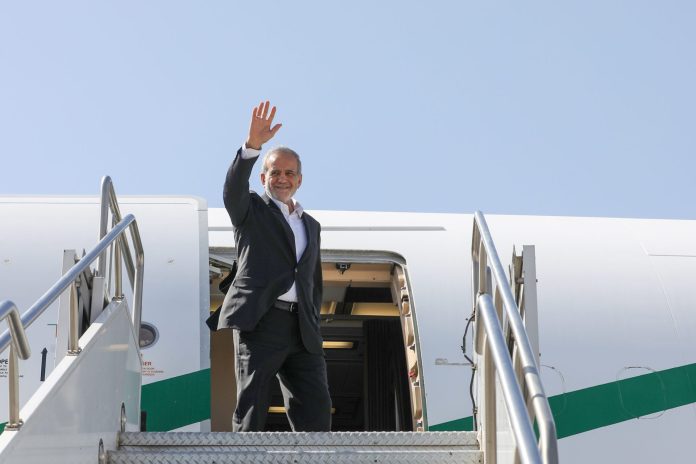
President Pezeshkian emphasizes Iran’s historic ties with Republic of Azerbaijan ahead of visit to Baku

Masoud Pezeshkian

In a coordination meeting ahead of his official visit to Baku, President Pezeshkian said on Wednesday, “The Republic of Azerbaijan and Iran are parts of one body, with peoples on both sides of the border sharing extensive mutual interests rooted in millennia-old bonds of deep friendship and common values.”

The high-level meeting, chaired by President Pezeshkian, brought together Iran’s foreign, roads, energy, tourism, communications, and agriculture ministers, as well as the Central Bank governor, political advisors, and governors of border provinces.

Officials reviewed the latest developments in bilateral relations and discussed ways to enhance cooperation in trade, energy, transportation, and tourism.

The president highlighted the “vast and diverse” potential for deeper ties, expressing optimism that ongoing efforts to resolve misunderstandings would soon lead to a significant boost in relations.

He emphasized that strengthening government, private-sector, and people-to-people collaborations could rapidly advance economic and cultural exchanges.

The Iranian president will travel to Baku on Monday at the invitation of Azerbaijan’s President Ilham Aliyev, the Iranian presidential office confirmed the date on Wednesday.

The official visit, described by Tehran as opening “a new chapter” in bilateral relations, is expected to focus on boosting trade and cross-border cooperation between the neighboring nations.

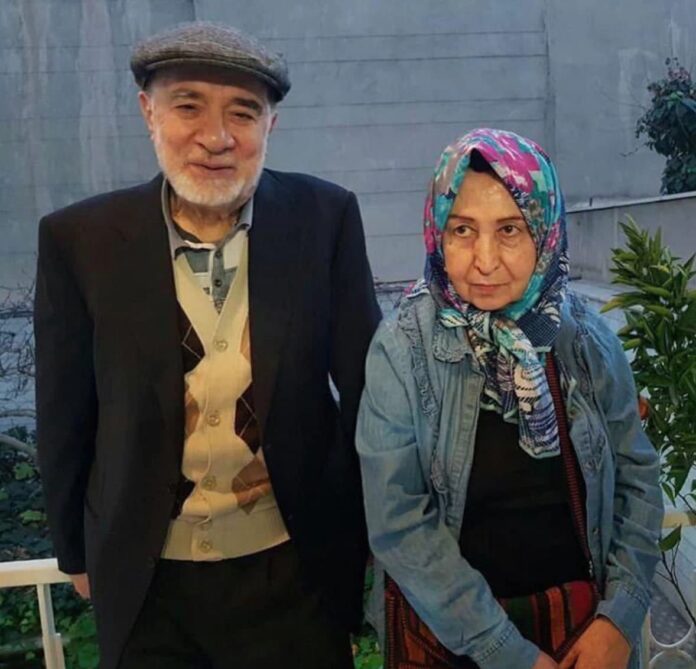
Wife: Iranian political detainee Tajzadeh makes phone call with incarcerated opposition leaders Mousavi, Rahnavard

The news was confirmed by Tajzadeh’s wife, Fakhr al-Sadat Mohtashamipour, in a social media post on Tuesday.

Mohtashamipour stated that her husband called her from Evin Prison, expressing joy over the rare conversation.

She described the contact as a “positive step” toward resolving the long-standing isolation of the detained Green Movement leaders.

The development follows reports of security personnel withdrawing from the home of Mehdi Karroubi, another opposition leader under house arrest, as noted by Karroubi’s son on Tuesday.

Mousavi, Rahnavard, and Karroubi have been confined since 2011 following their objection to the outcome of the 2009 presidential election that triggered deadly demonstrations by his supporters.

Tajzadeh, a former deputy interior minister and advisor to reformist former president Mohammad Khatami, is serving a prison sentence for “assembly and propaganda against the state.”

No official comment has been issued by Iranian authorities yet regarding the reported phone calls.

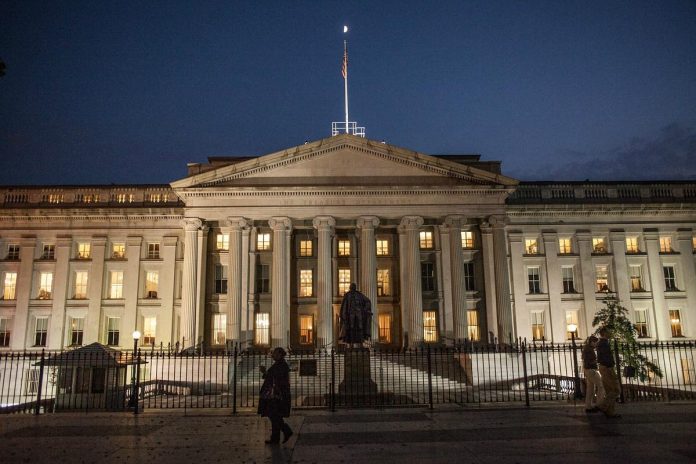
US imposes sanctions on Iranian businessman, his company

United States Department of the Treasury

The US Treasury Department’s Office of Foreign Assets Control (OFAC) said in a statement on Tuesday that it had designated an Iranian businessman identified as Seyed Asadoollah Emamjomeh and his corporation for their role in Iran’s crude oil and liquefied petroleum gas (LPG) exports.

OFAC claimed Emamjomeh and his network have been “collectively responsible for shipping hundreds of millions of dollars’ worth of Iranian LPG and crude oil to foreign markets.”

It even claimed that the businessman, who is based in Iran, and his son, who it said was a British and Iranian national based in the United Arab Emirates, have sought to export LPG even from the United States to evade US sanctions and generate revenue for Iran.

The Treasury said that Emamjomeh’s company had exported thousands of shipments of LPG from Iran to Pakistan and had conducted tens of millions of dollars’ worth of business on behalf of the PGPICC, an Iranian state-run petrochemical company.

The new sanctions are the seventh such action taken by the US government against Iran since February 4, when US President Donald Trump signed a presidential memorandum ordering a campaign of maximum pressure on the country.

They come despite the fact that Iran and the US have held two rounds of reportedly positive talks to settle disputes about Tehran’s nuclear program. The indirect talks started earlier this month in Oman’s capital, Muscat, and continued over the weekend in Italy’s Rome.

Top representatives from Iran and the US are scheduled to meet again on Saturday in Muscat to review technical negotiations between their exports that will start on Wednesday in Rome.

Iran’s FM lauds cooperation with China against unilateralism

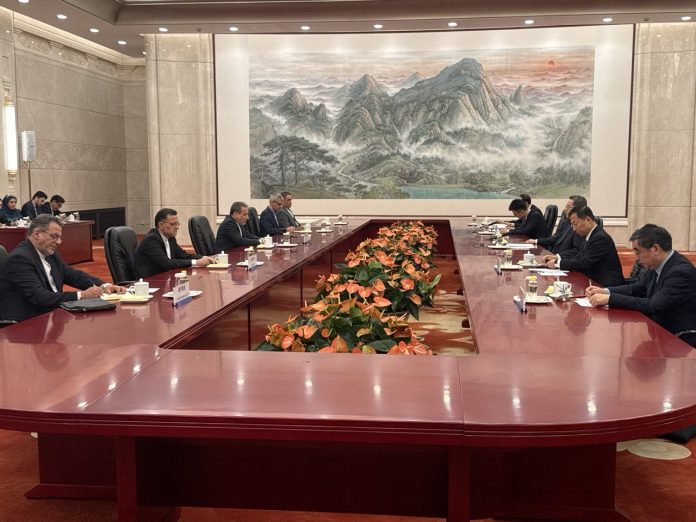
Araqchi, who is in Beijing at the official invitation of his Chinese counterpart, met on Wednesday morning with Ding Xuexiang, a member of the Standing Committee of the Political Bureau of the Communist Party of China and China’s First Vice Premier. During the meeting, he reiterated the Islamic Republic of Iran’s policy of prioritizing Asia in its foreign relations.

Araqchi referred to China as a strategic and reliable partner of the Islamic Republic of Iran and stressed the importance of enhancing bilateral and multilateral cooperation between the two countries, including within frameworks such as the Shanghai Cooperation Organization (SCO) and BRICS.

The two sides exchanged views on ways to accelerate the implementation of the 25-year comprehensive cooperation agreement between Iran and China.

Araqchi also briefed Ding Xuexiang on the progress of the indirect nuclear talks between Iran and the US, emphasizing that despite past bitter experiences, the Islamic Republic of Iran has engaged in diplomacy with goodwill and seriousness.

The Iranian Foreign Minister further highlighted the ongoing genocide by the Zionist regime in occupied Palestine and its warmongering in the region, as well as repeated US aggressions against Yemen.

He stressed the urgent need for an effective global response to prevent further violations of international law.

Ding Xuexiang, in turn, expressed satisfaction with the expansion of comprehensive Iran-China relations across all fields and described the strategic partnership between the two countries as highly significant.

The Chinese Vice Premier emphasized the importance of strengthening coordination and cooperation between Iran and China to uphold multilateralism and the rule of law in international affairs.

He reiterated China’s support for Iran’s efforts to lift sanctions and engage in dialogue on the nuclear issue.

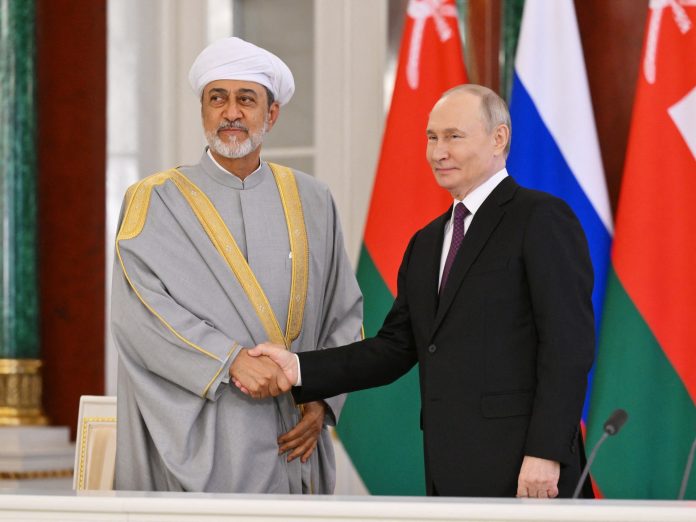
Putin discusses US-Iran negotiations with leader of Oman

Oman has been mediating between Iran and the United States as US President Donald Trump seeks an agreement that would curb Iran’s nuclear programme, which Washington believes is aimed at developing a nuclear weapon – something that Iran denies.

“This topic was touched on … in the context of mediation efforts by Oman,” Kremlin spokesman Dmitry Peskov told reporters during a briefing at the Kremlin on Tuesday.

Kremlin foreign policy aide Yury Ushakov also stated both sides “discussed the progress of negotiations between Iranian and American representatives”, according to remarks carried by Interfax.

“We will see what the result will be. We maintain close contact with our Iranian colleagues. Where we can, we help,” Ushakov was quoted as saying.

Trump has threatened to bomb Iran unless a deal is reached. Tehran has stressed there can be no deal under threat of bombardment.

Russia signed a strategic partnership treaty with Iran in January and is also trying to improve relations with the Trump administration.

Moscow has a role in nuclear talks with Iran as a signatory to a previous landmark 2015 nuclear deal that Trump abandoned during his first term as US president in 2018 – a move that prompted Iran to breach its terms a year later.

Russia has warned that any US military action against Iran would be illegal.

In televised comments, Putin was shown telling the sultan that Russian energy companies were interested in developing relations with Oman.

Meanwhile, Putin announced plans to stage a summit with the Arab League group of states later this year as Moscow searches for new partners as it continues its three-year offensive on Ukraine.

Slapped with sweeping Western sanctions after sending troops into Ukraine, Russia has turned towards Asian, African and Arab countries for political and economic ties.

“We plan to hold a summit between Russia and Arab countries this year,” Putin told the Omani leader.

“Many of our friends in the Arab world support this idea,” he added, inviting Sultan Haitham bin Tariq Al Said to the summit, without specifying the date and location.

The visit comes days after Putin hosted Qatar’s Emir Sheikh Tamim bin Hamad Al Thani in Moscow for talks on Syria and the besieged and bombarded Gaza Strip. Doha is a key mediator between Israel and the Palestinian group Hamas.

The Persian Gulf states are gaining ever-growing diplomatic influence as mediators in negotiations to resolve the world’s most pressing crises, which have claimed thousands of lives, such as the conflict in Ukraine and Israel’s genocidal war in Gaza.

A third round of negotiations between Tehran and Washington is scheduled to take place in Oman on Saturday.

Iran’s Foreign Minister Seyed Abbas Araghchi visited China on Wednesday at the invitation of Beijing, according to the Chinese Foreign Ministry.

The two sides will discuss bilateral relations and international and regional hot-spot issues of common concern, ministry spokesperson Guo Jiakun told a regular press conference.

The visit is believed to have great significance for deepening political mutual trust between the two countries, Guo told reporters.

Araghchi previously visited China, which was a signatory to the since-abandoned 2015 agreement brokered by world powers that both reined in Tehran’s nuclear programme and provided it with substantial financial relief, in December.

During a trip to Moscow last week, Araghchi told state TV that Tehran always closely consults with its friends, Russia and China, over nuclear issues.