Monday, May 4, 2026
Home Blog Page 418

Beirut secures $250 million loan from World Bank to rehabilitate Lebanon’s electricity sector

“This loan will give strong momentum for the reform steps taken by Lebanon to rehabilitate the (electricity) sector,” Jaber said.

“We are confident that this loan will be highly beneficial in advancing and supporting the reforms we are implementing in Lebanon’s electricity sector,” he added.

The loan agreement was signed by Jaber with Jean-Christophe Carret, the World Bank country director for the Middle East Department.

Carret described the agreement as “a pivotal moment in the Bank’s partnership with Lebanon” and a decisive turning point toward implementing the vital reforms needed for Lebanon’s electricity sector.

According to the state news agency NNA, the loan agreement includes establishing a nationwide electricity control unit, improving the accounting and bill collection system, and developing solar energy units.

Over the past couple of years, the frequency of power outages in Lebanon has significantly increased due to the government’s financial distress, which led to its inability to provide foreign currency to import fuel.

Lebanon’s power production earlier ranged between 1,600 and 2,000 megawatts daily, but the fuel shortage in recent years has gradually reduced production to unprecedentedly low levels.

UK lifts sanctions against Syrian defense, interior ministries, intelligence agencies

Syria War

In its update regrading sanctions on Syria, the ministry announced Syrian defense ministry, interior ministry, general intelligence directorate, air force intelligence agency, and political security directorate are no longer subject to an asset freeze.

The sanctions have also been lifted against Syrian National Security Bureau, military intelligence directorate, army supply bureau, general organization of radio and TV, Al Watan, Cham Press TV, and Sama TV according to the update.

It came after the foreign office updated the UK sanctions list which was imposed against Syrian entities during Bashar Assad government.

Assad, who ruled Syria for nearly 25 years, fled to Russia in December, ending the Baath Party’s decades-long rule that began in 1963.

A transitional administration was formed in Syria in late January, dissolving the constitution, security services, armed factions, parliament, and the Baath Party.

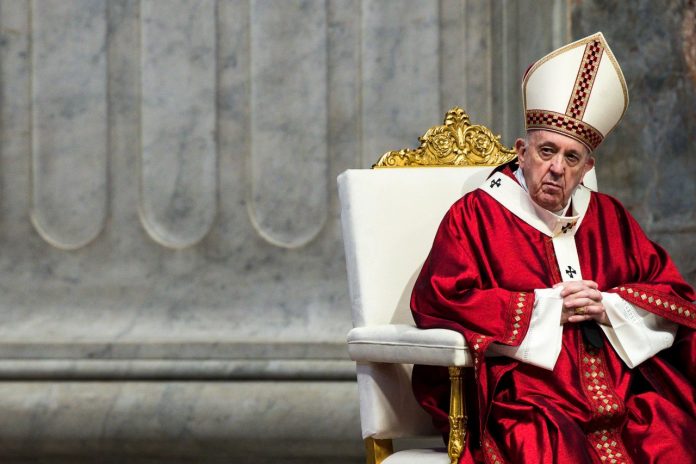
Tel Aviv cracks down on official posts mourning Pope Francis

In several now-deleted posts, accounts belonging to the Israeli foreign ministry in various countries mourned the pontiff’s death on X following the announcement of his passing, writing: “Rest in peace, Pope Francis. May his memory be a blessing.”

Many users have criticised the decision, with some calling it offensive to Catholics around the world.

Several Israeli ambassadors echoed these sentiments, with the Israeli daily Yedioth Ahronoth reporting that the removal of the post has sparked “internal resentment” over the ministry’s handling of the announcement.

The newspaper noted that some ambassadors had even voiced their disapproval to the ministry’s decision in internal WhatsApp group chats. Several diplomats warned that such a move could harm Israel’s reputation among Christians.

“We are deleting a simple, innocent tweet that expresses basic condolences – and it is clear to everyone that this is only because of the Pope’s criticism of Israel for the fighting in Gaza,” one diplomat said.

Without providing an explanation, the ministry instructed its missions and diplomats to delete any social media posts mourning the former pope, according to Yedioth Ahronoth.

One Israeli ambassador said they were given “an unequivocal order to delete” without any further clarification.

“When we asked, we were told that the issue was ‘under review’. This does not satisfy us, and certainly not the public to whom we represent Israel,” they added.

The ministry also directed ambassadors not to sign condolence books for Pope Francis at Vatican embassies.

Diplomats representing Israel cautioned that such a move could create long-lasting damage to Israel’s public image, with one saying: “Not only did we not say words of condolence, but we chose to delete them – and that looks bad. Very bad.”

Raphael Schutz, who once served as Israel’s ambassador to the Vatican, told The Jerusalem Post that deleting messages of mourning is a “mistake”.

“We shouldn’t keep score like this after someone’s death,” he said, adding that Israel should have responded to the pope’s stance diplomatically while he was still alive.

“But now, we’re not only talking about a head of state, but also a spiritual leader for over a billion people – nearly 20 percent of humanity. I don’t think silence sends the right message.”

Foreign ministry officials speaking to the Jerusalem Post said that the online messages were “posted in error”.

“We responded to the Pope’s statements against Israel and the war during his lifetime, and we will not do so after his death. We respect the feelings of his believers,” they said.

Other prominent Israeli officials, notably Prime Minister Benjamin Netanyahu, were silent amid the worldwide mourning.

Meanwhile, some officials like the former ambassador to Italy, Dror Idar, said that there should be no representatives to the pope’s funeral on Saturday because he “incited antisemitism”.

However, Schutz believes Israel should send delegates, especially as it is an event that will be attended by world leaders.

“If we are absent, it will be conspicuous and reflect poorly on us. It could reinforce a sense of isolation, already heightened by the ongoing war, and unnecessarily add fuel to that fire. That would be unfortunate,” he said.

Pope Francis, who died at the age of 88, was an outspoken supporter of the Palestinian people during Israel’s ongoing 18-month assault on the besieged Gaza Strip.

Thousands of pro-Palestinian social media users, including many from Gaza, have paid tributes to him.

In his final Easter Sunday address, delivered from the balcony of St. Peter’s Basilica, Pope Francis called for a ceasefire in Gaza. An aide read out a benediction in which the pontiff condemned the “deplorable humanitarian situation” caused by Israel’s war – a statement widely praised on social media.

Meanwhile, the Vatican’s announcement of his passing on Monday morning was met in Israel with a mix of celebration and criticism, as politicians, commentators and social media users focused on his condemnation of the war.

The pope had been vocal in his criticism of the conflict, particularly over the killing of Palestinian children, drawing sharp rebukes from Israeli officials.

Throughout the war, he held near-nightly calls with members of Gaza’s Christian community, conversations they described as a source of solace and comfort.

Pope Francis also openly called for an an investigation to determine if Israel’s attacks in Gaza constitute genocide.


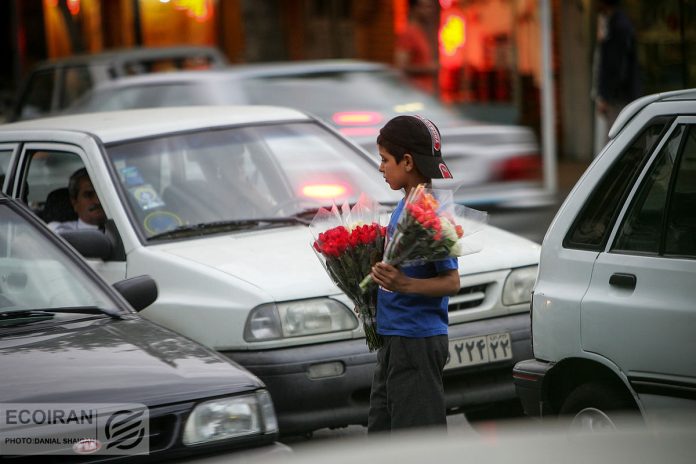
85% of child laborers in Tehran are Afghan nationals, deputy governor reports

The disclosure by Hossein Kaghazloo came during a meeting of Tehran’s Social Council on Wednesday, where officials reviewed last year’s efforts and outlined plans to address social issues in the Iranian capital, including addiction, begging, child labor, and divorce.

Kaghazloo said government agencies have been given a one-month deadline to submit actionable plans to the provincial government.

During the meeting, officials reviewed several key social indicators. Last year, approximately 2,300 homeless addicts received assistance in Tehran, with plans to expand the services this year.

Particular attention will be given to implementing Iran’s Anti-Narcotics Law, with special focus on female addicts.

The council emphasized the need for urgent action to address the persistent social challenges in Tehran while maintaining systematic oversight of all initiatives.

The existence of over 10 million undocumented Afghan nationals in Iran – based on unofficial figures – further adds to the challenges amid limited resources.

Nine killed, dozens injured in Russian attack on Kyiv

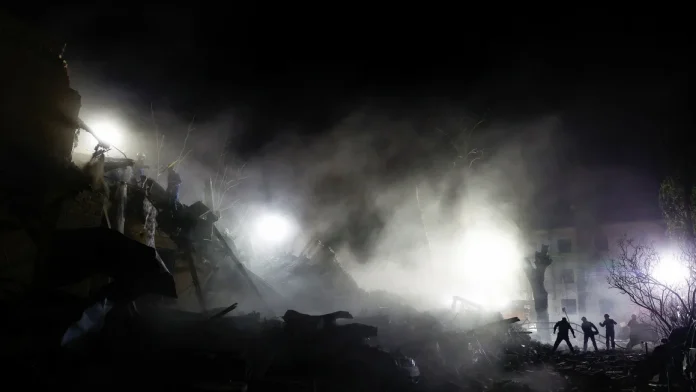
Waves of drones as well as ballistic and guided missiles struck the Ukrainian capital early on Thursday. There were explosions for much of the night, beginning at about 1am local time, and the rattle of anti-aircraft fire as Ukrainian defences tried to shoot the missiles down.

Kyiv’s mayor, Vitali Klitschko, said rescuers were pulling survivors from under the rubble. The injured included six children and a pregnant woman. A house, cars, and other buildings were set on fire, with extensive damage caused by falling debris in several districts, he said.

“Russia has launched a massive combined strike on Kyiv,” Ukraine’s state emergency service wrote on Telegram.

“According to preliminary data, nine people were killed, 70 injured.”

Ukraine’s interior minister, Ihor Klymenko, stated a big rescue operation was under way in the Svyatoshinsky district of Kyiv, involving dogs and engineering teams.

“Mobile phones can be heard ringing under the ruins. The search will continue until everybody is got out. We have information about two children who cannot be found at the scene of the incident,” he added.

According to Kharkiv’s mayor, several private houses, a factory and a high-rise apartment block were hit.

The onslaught came as Donald Trump lashed out at Volodymyr Zelenskyy for failing to support a US “peace plan”, in which Crimea and other Ukrainian territories would be handed to Russia.

On Wednesday, Trump accused Ukraine’s president of prolonging the “killing field” and making “very harmful” statements. Zelenskyy has ruled out recognising Crimea as Russian and says a complete ceasefire is needed before any settlement can be discussed.

The Ukrainian foreign minister, Andriy Sybiga, said Russia’s “maximalist demands for Ukraine to withdraw from its regions, combined with these brutal strikes, show that Russia, not Ukraine, is the obstacle to peace”.

He added: “Moscow, not Kyiv, is where pressure should be applied. Putin demonstrates through his actions, not words, that he does not respect any peace efforts and only wants to continue the war. Weakness and concessions will not stop his terror and aggression. Only strength and pressure will.”

Kyiv was last hit by missiles in early April when at least three people were hurt. It has been the target of sporadic attacks since Russia launched its full-scale invasion in February 2022.

Andriy Yermak, the head of President Volodymyr Zelenksy’s office said: “Putin shows only a desire to kill. The attacks on civilians must stop.”

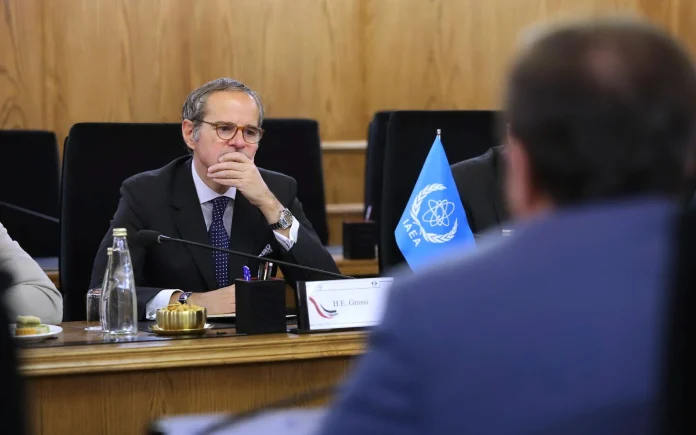
Tehran agrees to let in team to discuss restoring nuclear monitoring: IAEA chief

Rafael Mariano Grossi, speaking to reporters in Washington after meeting with Iranian officials in Tehran last week, joined the American and Iranian sides in projecting optimism after a second round of negotiations Saturday over Iran’s nuclear program.

Iranian leaders were engaged “with a sense of trying to get to an agreement,” Grossi said.

“That is my impression,” he added.

Grossi claimed Iranian officials during his visit there last week agreed to allow an IAEA technical team to come to the country to discuss resuming access to and monitoring of nuclear sites, among other issues.

While that move was not directly linked to the US talks, Grossi called it an encouraging sign of Iran’s willingness to reach terms in a potential deal. The IAEA is not playing a direct role in the talks, and Donald Trump’s administration has not asked it to, Grossi told reporters.

That Iran and the US sought to resolve the issue peacefully was more important than whether UN nuclear monitors take part, he said. But when it comes to ensuring Iranian compliance with any deal, he added, “This will have to be verified by the IAEA.”

“I cannot imagine how you could put … a corps of invented international or national inspectors to inspect Iran” without having the agency’s decades of expertise, he continued.

“I think it would be problematic and strange.”

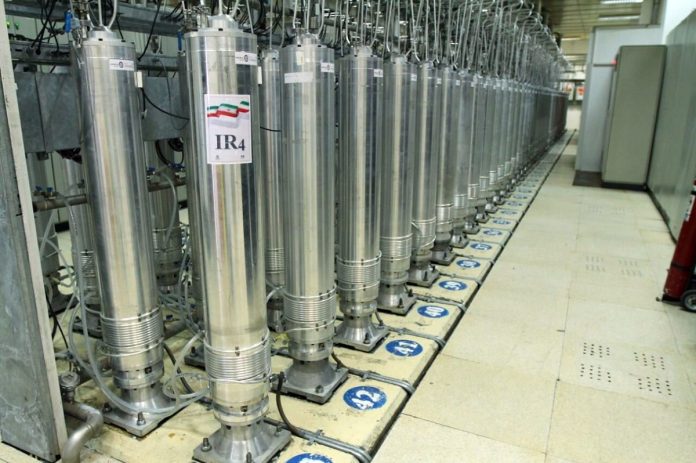
Iran can’t enrich uranium, could only import it for civilian program: US

Iran nuclear program

However, Iran has already made clear that its right to enrich uranium is not negotiable.

When asked about Rubio’s comments, a senior Iranian official, close to Iran’s negotiating team, again said on Wednesday “zero enrichment is unacceptable.”

The U.S. is seeking to prevent Iran from developing a nuclear bomb and President Donald Trump has imposed a “maximum pressure” campaign of sanctions and threatened to use military force if Iran does not end its nuclear program.

Iran has denied wanting to develop a nuclear weapon and says its nuclear program is peaceful.

U.S. and Iranian officials will meet in Oman on Saturday for a third round of talks on Tehran’s nuclear program.

“There’s a pathway to a civil, peaceful nuclear program if they want one,” Rubio told the “Honestly with Bari Weiss” podcast on Tuesday.

“But if they insist on enriching, then they will be the only country in the world that doesn’t have a ‘weapons program,’ … but is enriching. And so I think that’s problematic,” he added.

U.S. Middle East envoy Steve Witkoff last week said Iran does not need to enrich past 3.67% – a remark that raised questions as to whether Washington still wanted Tehran to dismantle its enrichment program.

Witkoff then stated a day later that Iran must “stop and eliminate its nuclear enrichment.”

Rubio stressed on Tuesday that Witkoff was initially talking about “the level of enriched material that they would be allowed to import from outside, like multiple countries around the world do for their peaceful civil nuclear programs.”

“If Iran wants a civil nuclear program, they can have one just like many other countries in the world have one, and that is they import enriched material,” he added.

Israeli minister: US Republicans support bombing Gaza ‘food and aid depots’

Gaza War

The statement, made in a social media post on Wednesday, came after the Israeli national security minister said he had met with “senior Republican Party officials at [US President Donald] Trump’s Mar-a-Lago estate” in Florida in the United States.

“They expressed support for my very clear position on how to act in Gaza and that the food and aid depots should be bombed in order to create military and political pressure to bring our hostages home safely,” Ben-Gvir posted on X in Hebrew.

The US president was not at the event, according to his public schedule.

Ben-Gvir’s post did not specify which Republicans were in attendance. However, Ben-Gvir’s office told Israeli media that Republican Congressman Tom Emmer, considered to be the third-highest-ranking member of the US House of Representatives, was among the lawmakers present.

The Times of Israel and the Jewish News Syndicate were among the news outlets that cited Ben-Gvir’s office in reporting Emmer’s presence, which also appeared to be confirmed by video of the event.

The congressman has been one of the leading voices in the US Congress supporting Israel amid the war in Gaza, and has regularly said that Hamas, and not Israel, was to blame for the high rate of civilian deaths in the Palestinian enclave.

To date, the Health Ministry in Gaza has reported at least 51,300 Palestinians have been killed since the war began in the wake of the October 7 attack by Hamas on southern Israel, during which at least 1,200 people were killed.

Ben-Gvir has been one of the leading voices in Israel calling for the escalation of Israel’s assault on Gaza.

A resident of an illegal Israeli settlement in the occupied West Bank, he has called for the resettlement of Gaza and glowingly endorsed Trump’s plan to forcibly displace residents of the Palestinian enclave.

He initially resigned from the government of Israeli Prime Minister Benjamin Netanyahu in January, in opposition to a temporary ceasefire deal.

Before rejoining the government in March, he called for Israel to cut off electricity and water and to bomb aid depots in Gaza as a six-week pause in fighting reached its end.

Israeli attacks have continued after military operations resumed on March 18, with 1,928 Palestinians killed since then.

While Trump had vowed to end the war upon taking office, a lasting ceasefire agreement has remained elusive.

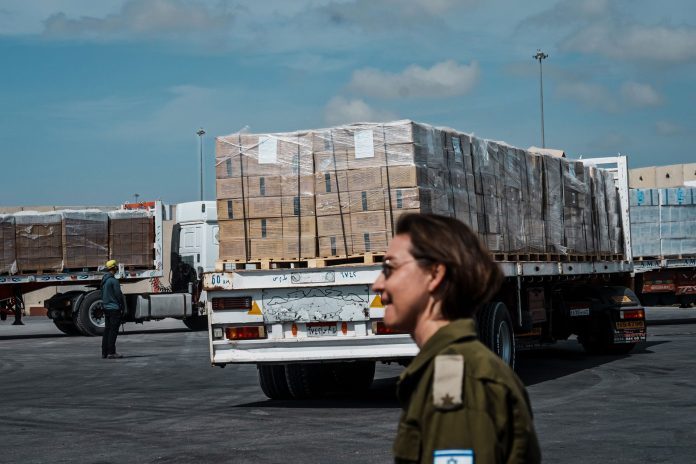
Meanwhile, France, Germany and the United Kingdom condemned on Wednesday the ongoing Israeli blocking of aid, food and medicine entering Gaza.

They called the actions “intolerable”.

Iranian filmmaker Saeed Roustaee’s “Woman and Child” selected for Cannes Film Festival’s Main Competition

The film stars renowned Iranian actors Payman Maadi, Parinaz Izadyar, and Fereshteh Sadr Orafaee.

This marks Roustaee’s return to Cannes after his acclaimed Just 6.5 (2019).

His other well-received movie, Leila’s Brothers, was selected for the main competition for the Palme d’Or at the 2022 Cannes Film Festival.

He will be joined by fellow Iranian filmmaker Jafar Panahi, whose A Simple Accident is also competing.

Internationally, Lynne Ramsay’s Die, My Love was another notable addition to the lineup.

The festival, running from May 13-24, 2025, will feature Juliette Binoche as president of the competition jury.

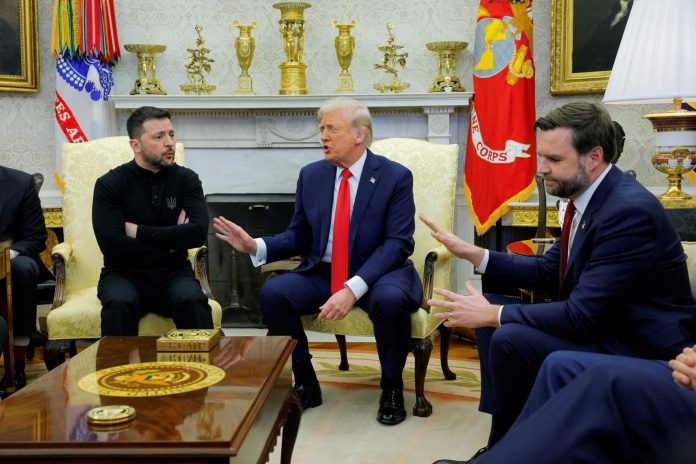
Trump and Zelensky clash again as US warns it could abandon Ukraine peace negotiations

Vice President JD Vance said it was time for Russia and Ukraine to either agree to a US peace proposal “or for the United States to walk away from this process”, echoing a warning from Trump last week.

Speaking to reporters in India, Vance said the proposal called for freezing territorial lines “at some level close to where they are today” and a “long-term diplomatic settlement that hopefully will lead to long-term peace”.

“The only way to really stop the killing is for the armies to both put down their weapons, to freeze this thing,” he added.

A former Western official familiar with the US proposal stated it also called for the recognition of Russia’s annexation of Crimea.

Since taking office in January, Trump has upended US policy toward the war in Ukraine, pressing Zelensky to agree to a ceasefire while easing pressure on Russia, which unleashed a war against its neighbor in 2022.

Zelensky on Tuesday reiterated that Ukraine would never cede Crimea to Russia, which seized control of the peninsula in 2014 in a move that was condemned internationally.
“There’s nothing to talk about here. This is against our constitution,” he stressed.

Trump, who argued with Zelensky in a disastrous Oval Office meeting in March, called this an inflammatory statement that made peace harder to achieve.

He said in a social media post that Crimea was lost years ago “and is not even a point of discussion”.

Zelensky acknowledged later in an X post that the London talks among US, Ukrainian and European officials were marked by high emotions but expressed hope that future joint work would lead to peace.

He pledged again that Ukraine would abide by its constitution and said he was sure Kyiv’s partners, in particular the United States, “will act in line with its strong decisions”.

He attached to his post a 2018 Crimea Declaration from Mike Pompeo, Trump’s Secretary of State during his first term, which stressed, “The United States rejects Russia’s attempted annexation of Crimea and pledges to maintain this policy until Ukraine’s territorial integrity is restored.”

Trump, who promised during his election campaign to end the war within his first 24 hours back in the White House, scolded Zelensky and said on Truth Social the US was trying to stop the killing in Ukraine and that they were “very close to a deal” for peace.

Trump told reporters later he thought the London talks had gone “pretty well”, although he also noted, in apparent reference to Russian President Vladimir Putin and Zelensky, “We’ve got to get two people, two strong people, two smart people, to agree. And as soon as they agree, the killing will stop.”

US Secretary of State Marco Rubio cancelled his trip to attend the London talks, prompting cancellation of a broader meeting with foreign ministers from Ukraine, Britain, France and Germany and underscoring the gaps between Washington, Kyiv and its European allies over how to end the war.

White House Spokeswoman Karoline Leavitt told reporters Trump is “frustrated” with the pace of negotiations and that Zelensky “seems to be moving in the wrong direction”.

Several sources have said proposals from Trump’s envoy Steve Witkoff include not only recognizing Russia’s annexation of Crimea, but accepting Russia’s control of the 20% of Ukraine’s territory it has gained in the war, ruling out Ukrainian membership of NATO and lifting of Western sanctions.

Trump’s Ukraine envoy Keith Kellogg wrote on X that there were positive talks in London with Zelensky’s Chief of Staff, Andriy Yermak, and added, “It’s time to move forward on President Trump’s UKR-RU war directive: stop the killing, achieve peace, and put America First.”

Trump raised the pressure on Sunday when he said he hoped Moscow and Kyiv would make a deal this week to end the conflict.

At the heart of Wednesday’s talks was an attempt to establish what Kyiv could possibly accept after Witkoff presented proposals to a similar session in Paris last week. Three diplomats stated those proposals appeared to demand more concessions from Ukraine than Russia.

Witkoff is expected to meet Putin again on Friday, a US official told Reuters.

Witkoff has already met Putin three times to discuss prospects for an end to the war and will visit Moscow this week for a new round of talks, the White House announced earlier.

Since Trump expressed his desire to broker peace in Ukraine and made a surprise call to Putin in February, European nations have scrambled to find ways to support Kyiv against Moscow while keeping the US onside.

A joint statement from Britain, France and Germany after the London talks said all parties had reiterated strong support for Trump’s “commitment to stopping the killing and achieving a just and lasting peace”.

It added “significant progress was made on reaching a common position on next steps” and “all agreed to continue their close coordination and looked forward to further talks soon”.